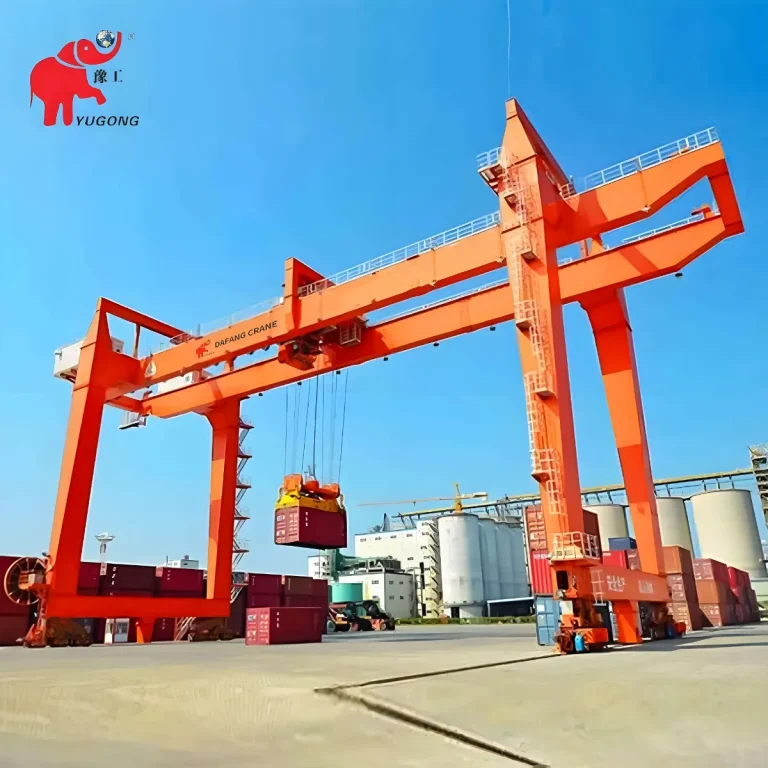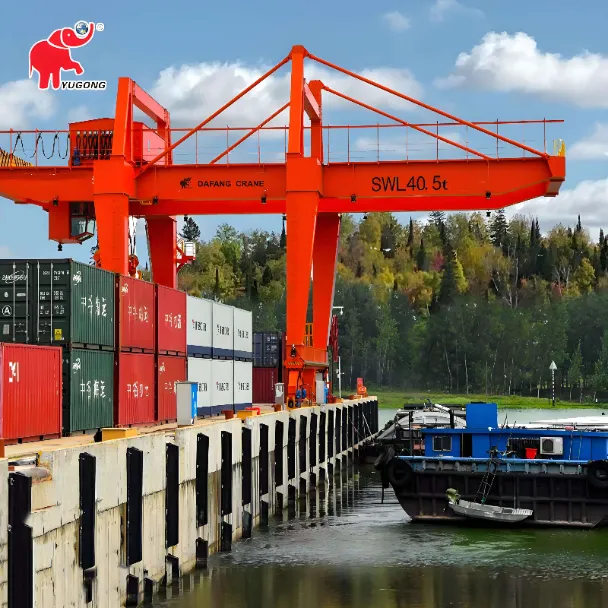







An RTG crane (Rubber-tyred Gantry Crane) is a mobile, tyre-driven portal crane that stacks and transfers ISO containers in port terminals and intermodal yards — lifting 35–70 ton across spans of 23.47–26 m and lifting heights of 15.5–18.5 m. It serves three primary sectors: container ports, intermodal rail terminals, and inland container depots. Dafang RTG cranes carry CE certification under Machinery Directive 2006/42/EC and conform to ISO 9001:2015.
In this article, RTG container gantry crane is introduced in detail, including its definition, structure and parts, components function, application, specs, price etc. This article will help you learn more info about RTG crane for your handling needs.
What Is RTG Crane?
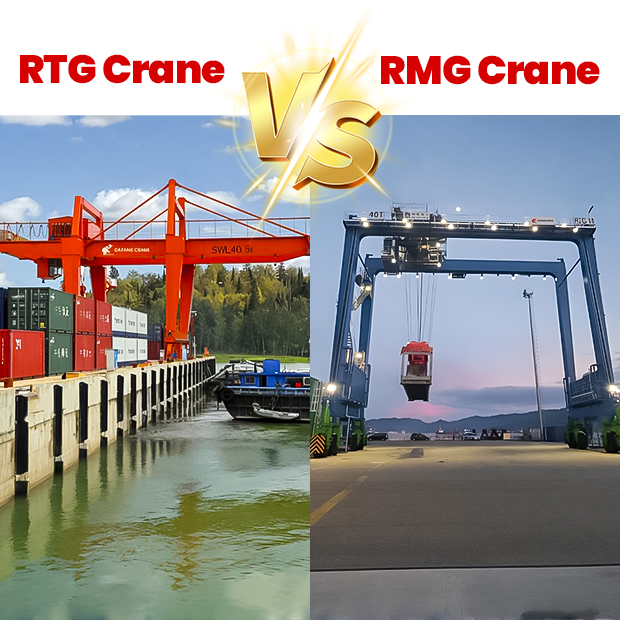
RTG Crane is a self-propelled portal crane that travels on rubber tyres rather than fixed rails, making it the most flexible container-stacking machine in ports, intermodal yards, and logistics hubs. Unlike its rail-mounted counterpart (RMG Crane), the RTG steers freely across a paved yard surface, repositioning between container rows without civil track installation.
Structurally, the crane straddles a stack of ISO containers up to 6 high and 1 over, hoisting each box with a spreader attached to the trolley. Lifting capacity ranges from 35 to 65 ton under the spreader; span covers 23.47 m or 26 m depending on the number of container lanes served. Moreover, the 15.5–18.5 m lifting height accommodates six-high stacking — the industry standard for mid-size terminal operations.
For fixed-rail automated alternatives, RMG Crane trades flexibility for higher throughput in large automated container terminals.
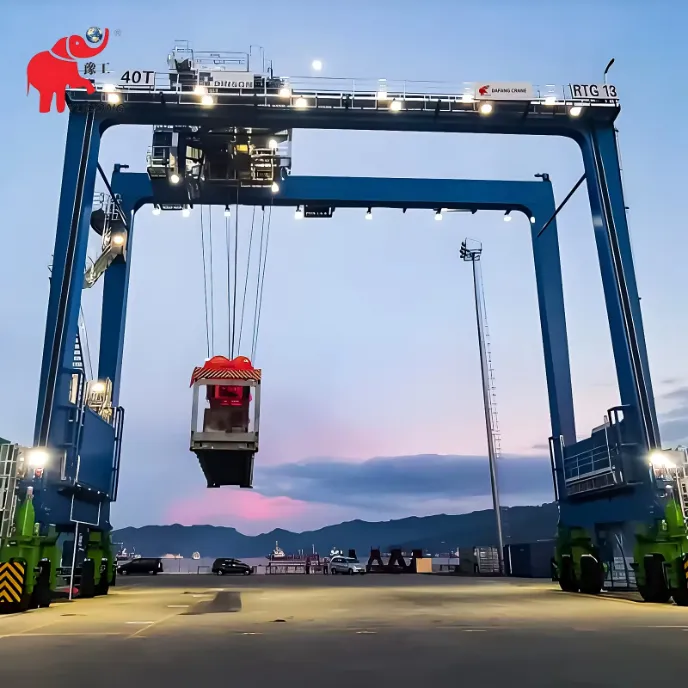
Container Yards
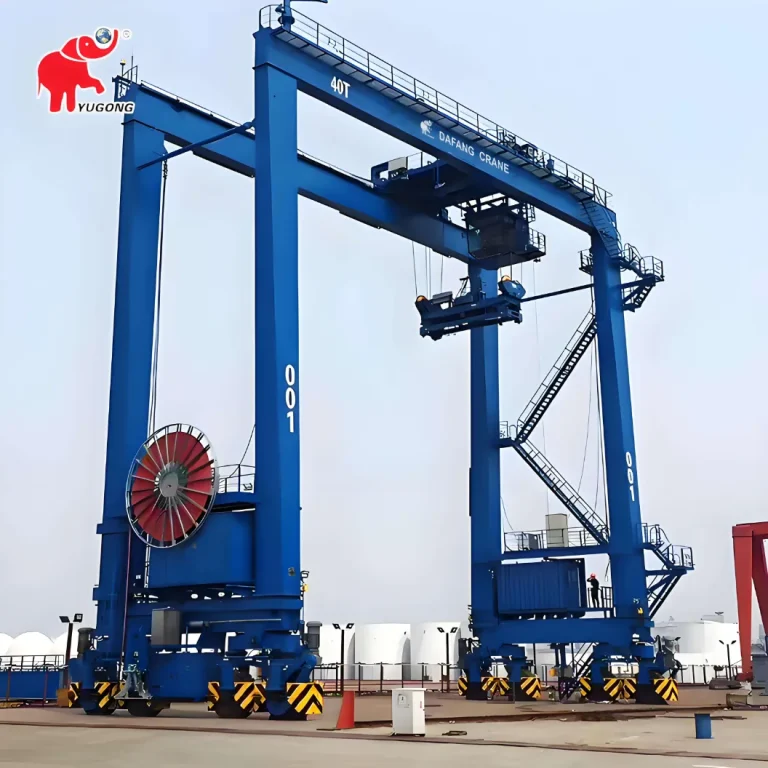
Rtg Container Gantry Crane Main
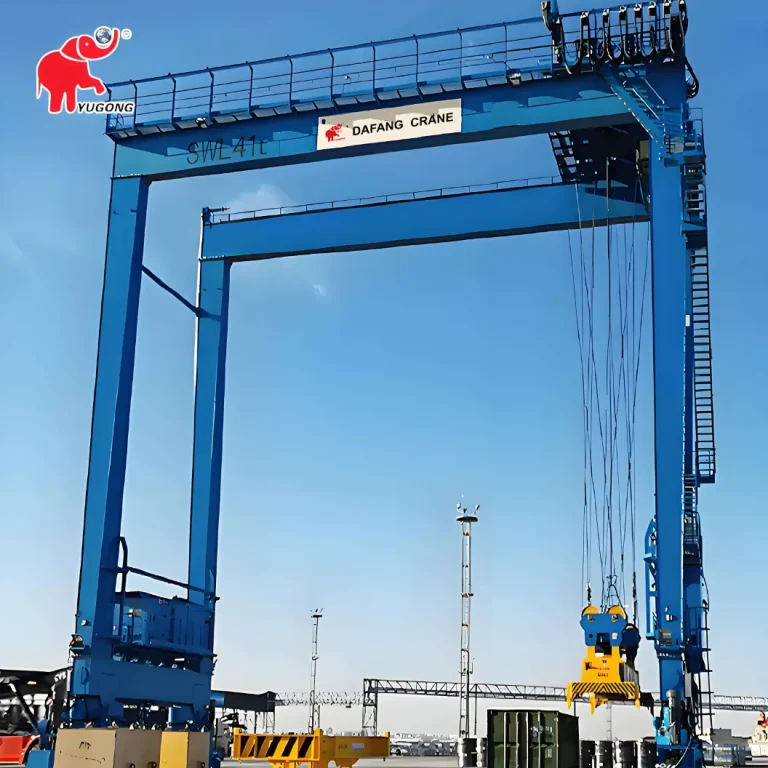
Freight Ports
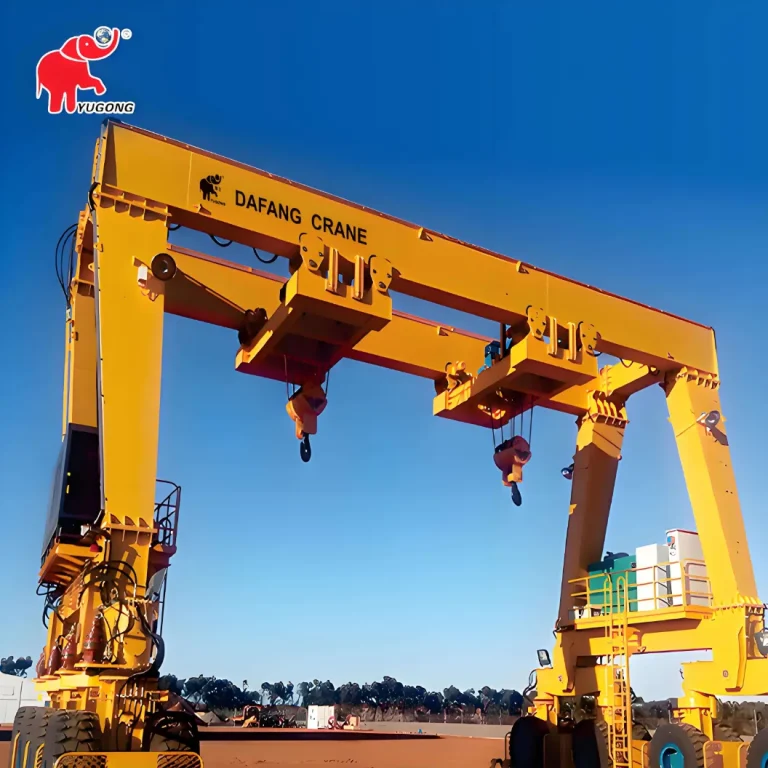
Freight Sites
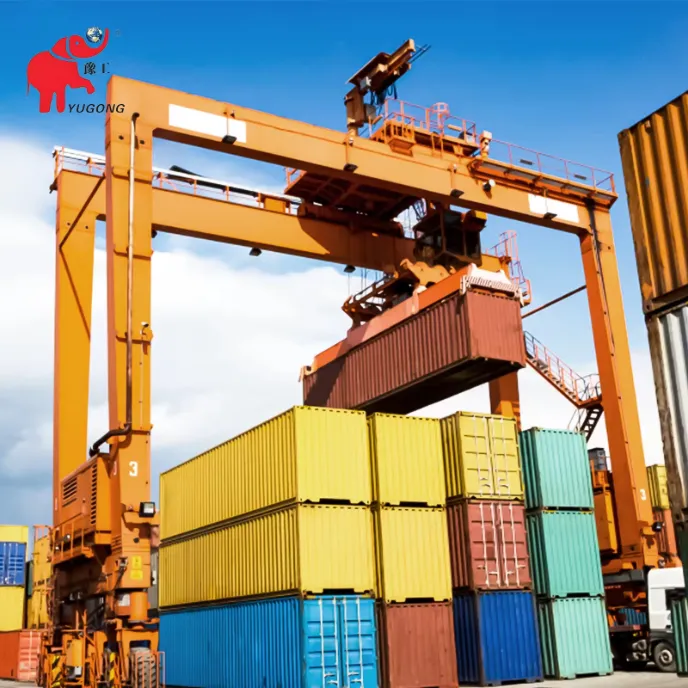
Bulk Cargo Areas
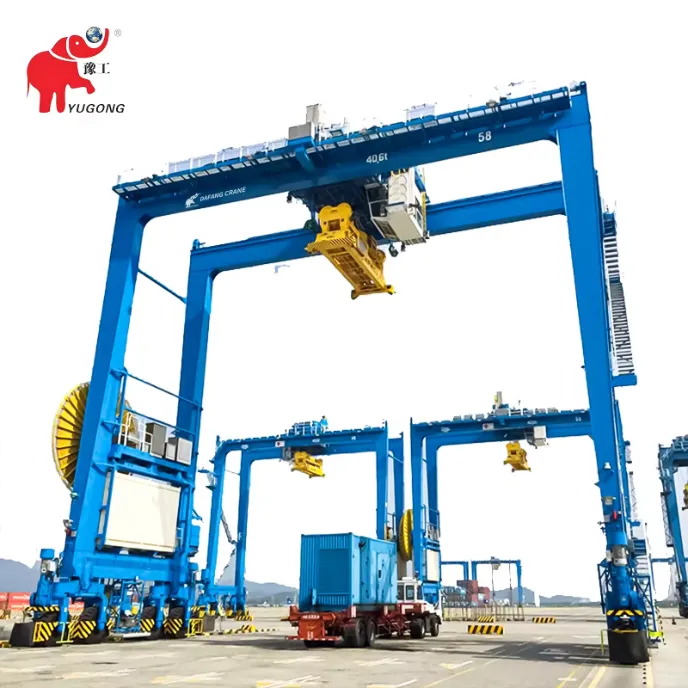
Temporary Logistics Hubs
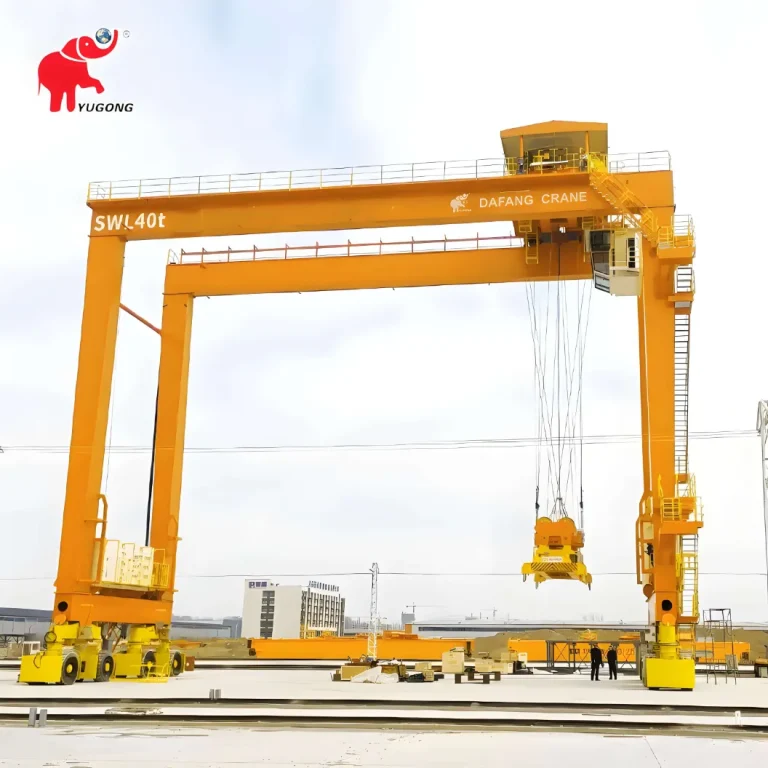
Industrial Parks
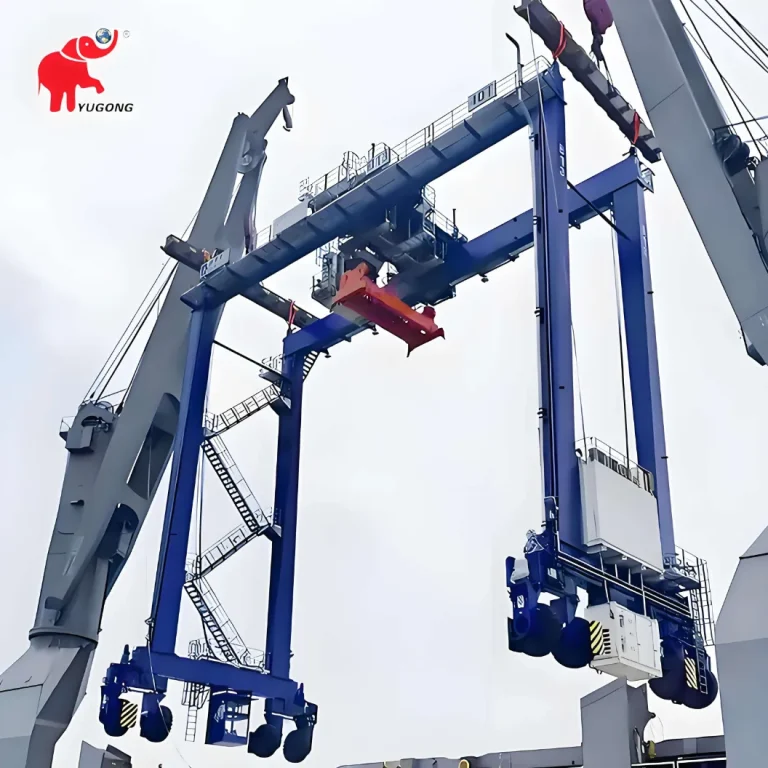
Container Terminal Yard
RTG Crane Structure And Parts
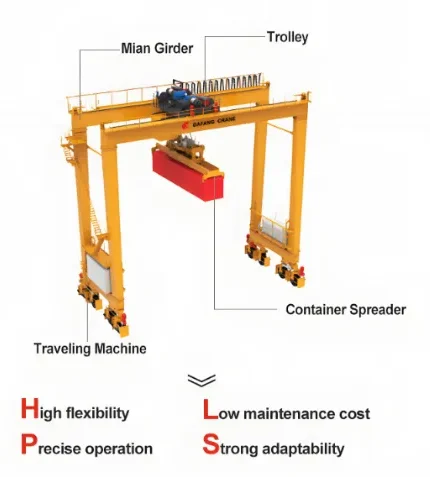
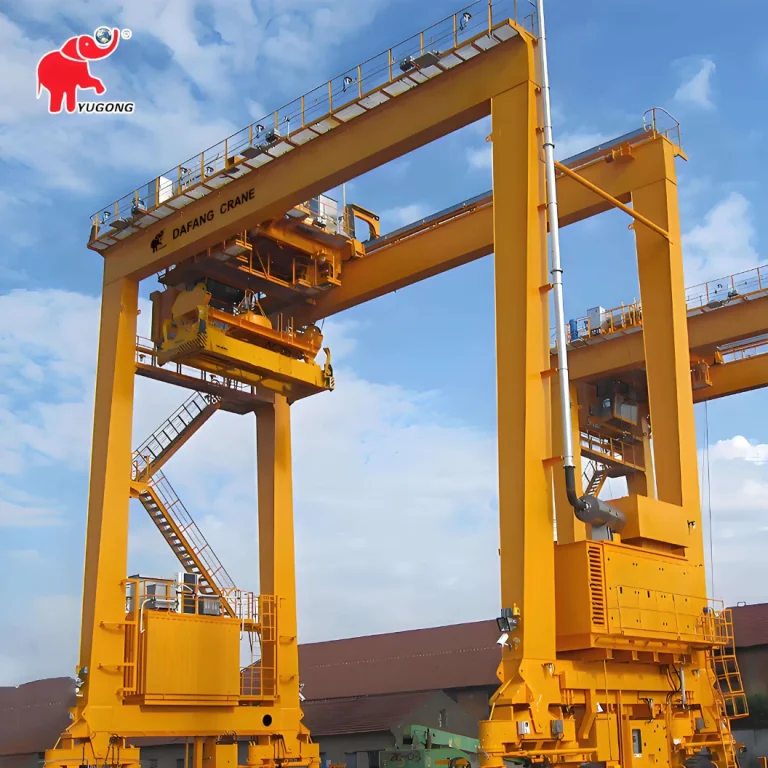
The RTG gantry crane is a highly efficient container handling equipment widely used in ports and storage yards. Its main structure includes a main girder, outriggers, a tire-operated system, and a lifting trolley.
- Main Structure: Q235/Q345 carbon structural steel, large span and high lifting capacity.
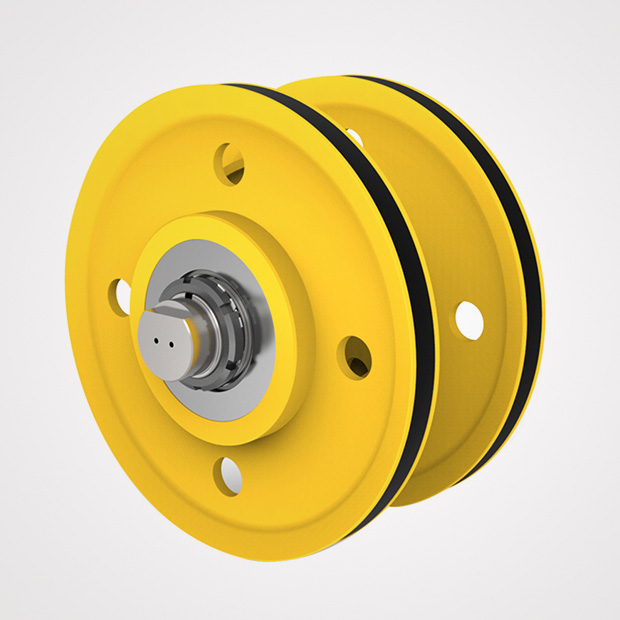
- Traveling Machine: Top-quality rubber, good abrasion resistance, flexible turning.
- Trolley: Smooth running, no rail gnawing, low noise, safe and reliable.
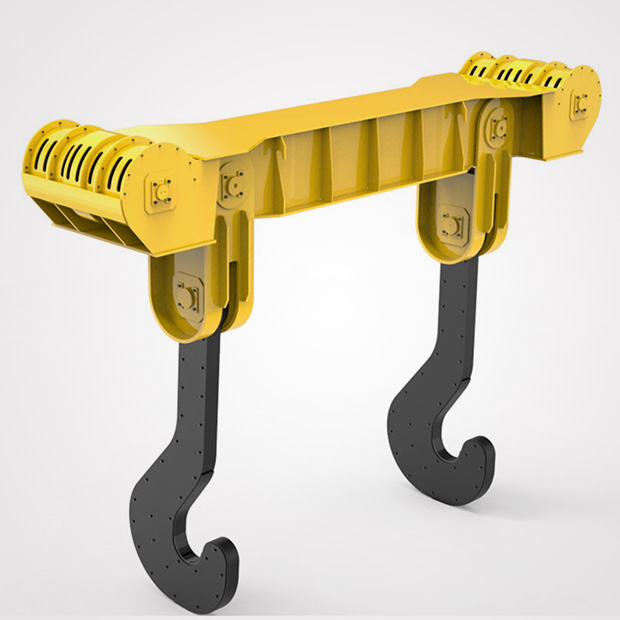
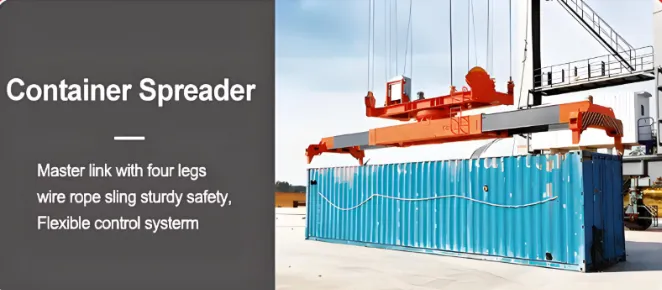
- Container Spreader: Master link with four legs, wire rope sling sturdy safety, flexible control system.
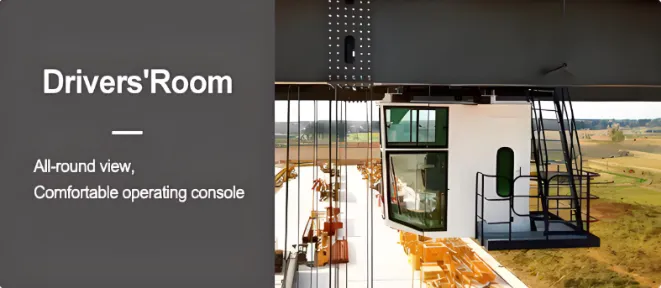
- Drivers' room: all-round view, comfortable operating console.
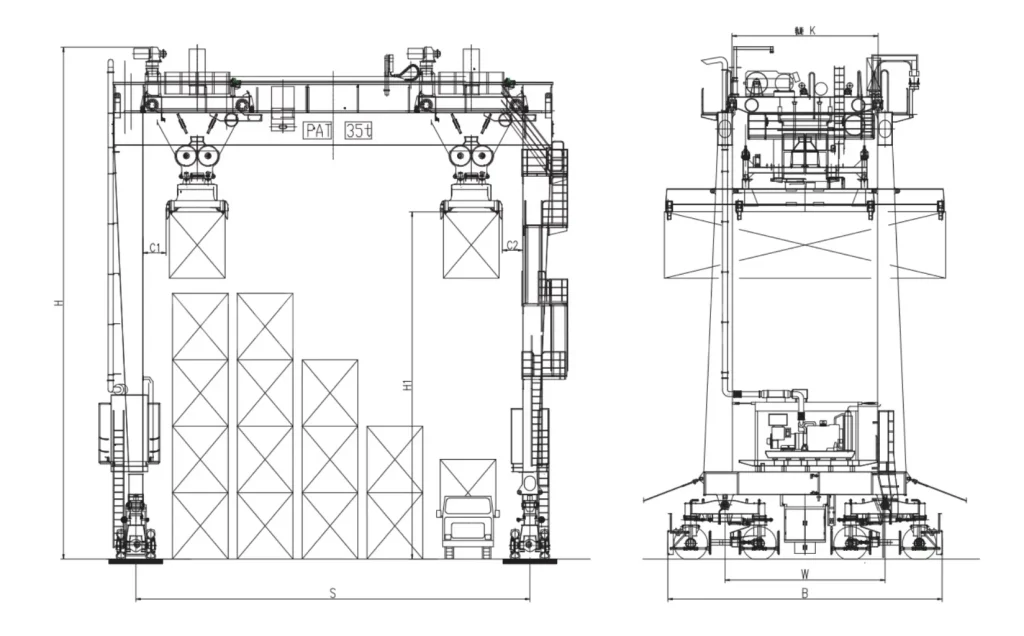
Structural Drawings
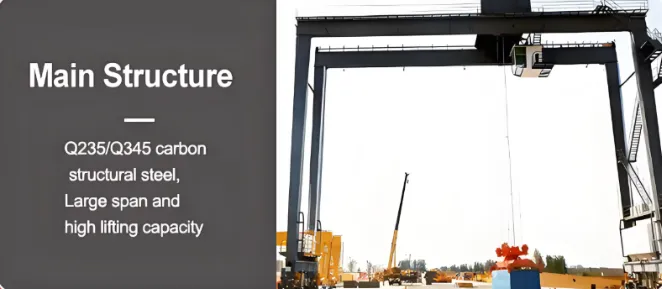
Main Structure
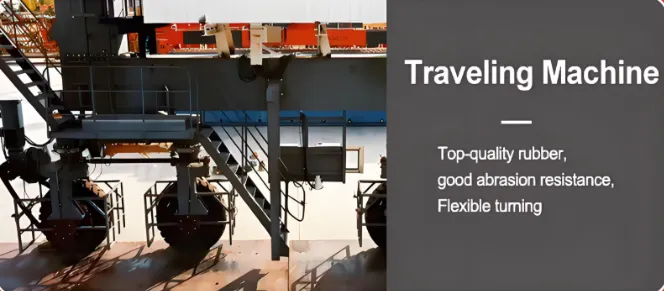
Traveling Machine
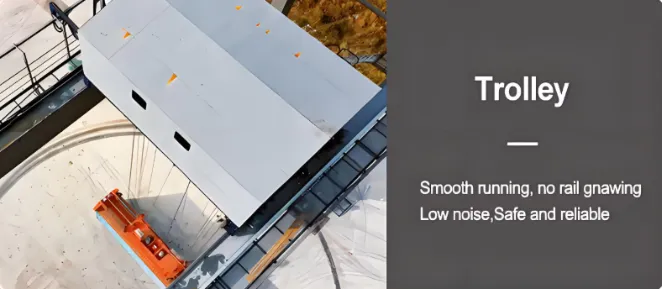
Crane Trolley
Container Spreader
Drivers' Room
RTG Crane Components Function
3D Structure and Parts
- Rubber Tyres: Bear weight of cranes, adapt to unpaved ground in yards, enable flexible movement and require no fixed rails.
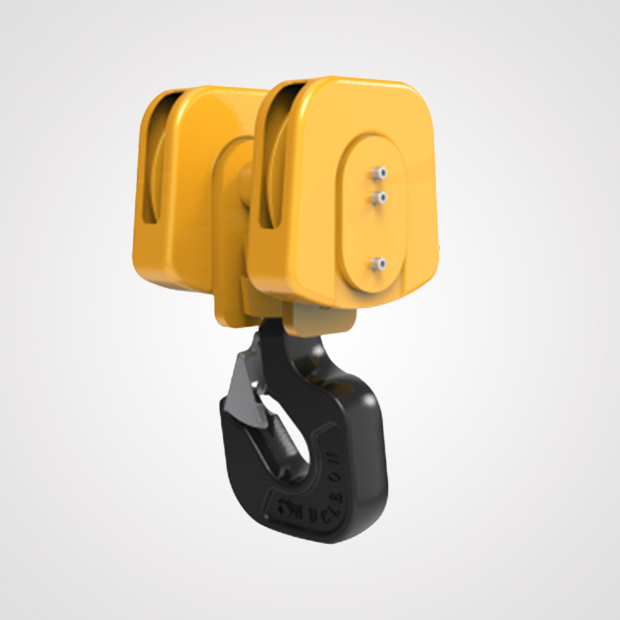
- Trolley Device: Moves horizontally along main girder, drives spreader to adjust precise position.
- Container Spreader: Locks with the corner fittings of containers to achieve reliable grabbing/releasing.
- Hoisting Mechanism: Drives spreader to achieve vertical lifting/lowering of containers.
- Anti-Sway System: Suppresses sway of spreader and prevents container collision.
- PLC Control System: Realize coordinated movements, control operating parameters, and simplify operation.
- Steering Control System: Controls the steering angle, supporting 90° right-angle steering and diagonal movement.
- Safety Monitoring System: Displays the load and position in real time, alarms when overloading or over-limiting occurs.
What Is RTG Crane Used For?
RTG crane is mainly used to remove, load and unload international standard containers. Widely used in container yards, they handle light-to-medium loads for efficient stacking.
- Container Terminal Yards: No fixed rails required, enabling flexible adjustment of operation areas. They meet the needs of container storage and transfer at terminals, efficiently completing container loading, unloading, and stacking.
- Inland Container Transfer Stations: Smaller in scale than ports, these stations need flexible cross-area scheduling for cargo turnover. RTG’s mobility improves transfer efficiency and reduces rail construction costs.
- Bulk/Cargo General Areas in Freight Ports: For short-distance handling of small containers and piece goods in the area, RTGs can move flexibly between bulk storage areas and loading/unloading points, adapting to multi-category cargo operations.
- Container Loading/Unloading Areas in Industrial Parks: Serving container receipt/dispatch for multiple workshops and warehouses in the park, they can move between different workshops without site modification for fixed rails.
- Temporary Logistics Hubs: Such as emergency material transfer stations and temporary freight sites. No long-term infrastructure is needed—RTGs can be quickly deployed to flexibly adapt to temporarily adjusted operation scopes.
Click to view Dafang's Kazakhstan export case study — 10 RTG cranes delivered to an inland container terminal.
Deciding between RTG and RMG for your terminal? See the full side-by-side comparison: RTG vs RMG Crane: Which Is Right for Your Port?
Bulk Cargo Areas
Container Terminal Yard
Temporary Logistics Hubs
Container Yards
Inland Container Transfer Stations
Industrial Parks
RTG Crane Features
Flexible Trackless Movement: Independently driven tires adapt to various site layouts, providing high maneuverability and rapid response to varying operational needs.
Energy-Efficient Design: Optimized energy management systems improve operational efficiency, reduce operating costs, and minimize environmental impact.
Intelligent Security System: Integrated PLC and remote monitoring, real-time diagnostics and maintenance ensure safe and reliable operation and minimize downtime.
For a deeper look at how RTG automation and smart port integration work in practice, see the Automated RTG Crane: Smart Port Technology & Implementation Guide.
Container Gantry Crane Types
Dafang Crane, as a professional container crane manufacturer and supplier, offers diverse gantry cranes, such as RTG container gantry crane, RMG container gantry crane, STS quay crane and so on.
If you want to choose the most suitable types of container gantry cranes to enhance efficiency and productivity. The following content will bring you a deeper understanding of RTG and RMG container cranes.
RTG Container Gantry Crane
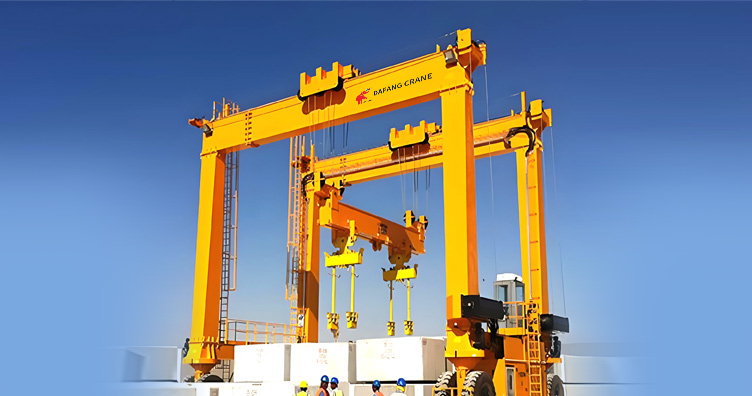
Rubber Tyre Gantry (RTG) Cranes are tyre-mounted gantry cranes, for flexible movement in yards.
They are special equipment to remove, load and unload international standard containers. Widely used in container yards, they handle light-medium loads for efficient stacking, reducing infrastructure costs.
RMG Container Gantry Crane
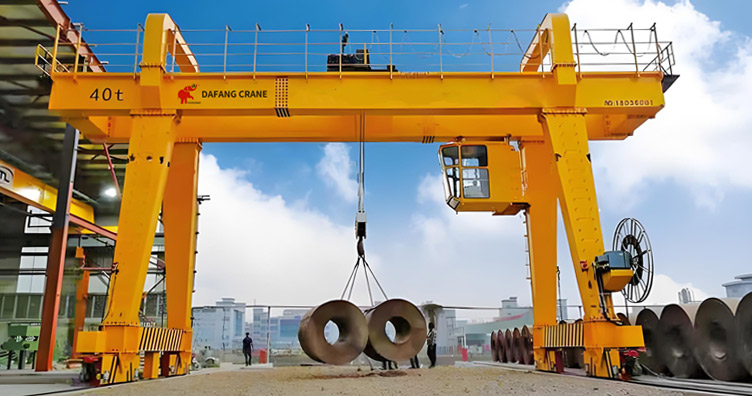
Rail mounted container gantry (RMG) crane is a kind of rail mounted crane used to unload, stack and load 20ft, 40ft, 45ft lSO standard containers.
They run on fixed rails, designed for container handling. With high load capacity and stable operation, they excel in dense stacking at ports or large container yards, boosting storage efficiency.
Container Gantry Crane Specification
| Mode | RTG Container Gantry Crane |
|---|---|
| Deadweight | 7592 KG |
| Lifting Capacity | 35-70 ton |
| Span | 23.47/26 m |
| Lifting Height | 15.5/18.5 m |
| Traveling Speed | 0-20 m/min |
| Wheel number | 16 |
| Maximum wheel load | 300 KN |
| Power Supply | 3 Phase AC 380V 50HZ |
| Control mode | Ground Control + Cabin Control (customized) |
| Work Duty | A4-A7 |
| Mode | RMG Container Gantry Crane |
|---|---|
| Deadweight | 10000 KG |
| Lifting Capacity | 10-100 ton |
| Span | 30/35/40 m |
| Lifting Height | 12.5/15.3/18.3 m |
| Cargo loading and unloading | 20ft 40ft container |
| Steel track recommendation | P43 |
| Power Supply | 3 Phase AC 380V 50HZ |
| Control mode | Ground Control + Cabin Control (customized) |
| Work Duty | A4-A7 |
Notice: The items listed only for reference. Customizable solutions are available.
RTG & RMG Crane Price
| Types | Lifting Capacity | Span | Lifting Height | Specifications | Price(USD) |
|---|---|---|---|---|---|
| RTG Container Gantry Crane | 35-70 ton | 23.47/26 m | 15.5/18.5 m | 20', 40', 45' | $230000 ~ $350000, depending on specifications |
| RMG Container Gantry Crane | 10-100 ton | 30/35/40 m | 12.5/15.3/18.3 m | 20', 40', 45'; 双20 ', 20', 40 ', 45' | $150000 ~ $500000, depending on specifications |
Standards & Compliance
- CE Declaration of Conformity — Machinery Directive 2006/42/EC
- ISO 9001:2015 Quality Management System — full production and material traceability
- Structural design per FEM 1.001 (European Federation of Materials Handling — crane classification)
- Working grade classification per ISO 4301 (A4–A7 range)
- Spreader design and testing per ISO 3874 (series 1 freight containers — handling and securing)
- Electrical equipment per IEC 60204-1 / GB 5226.1
- Wire rope selection per ISO 2408 (steel wire ropes — specifications)
- Rubber tyre load rating: max 300 kN per wheel, validated per GB/T 14406
- Anti-corrosion coating per ISO 12944-5 (C4 industrial / coastal environment category)
- Full load test certificate and factory acceptance report with each delivery
Reference standards: ISO 9927 (crane periodic inspection), EN 13001-2 (crane load actions), FEM 1.001 Section 9 (structural calculation).
Why Choose Dafang for Your RTG Crane Project?
Henan Dafang Crane has manufactured container handling equipment and heavy port cranes since 2006, delivering units to terminals and inland depots across more than 30 countries. The company serves container terminals, port operators, intermodal facilities. However, the differentiating factors centre on project execution and technical depth:
- Full-scope project delivery — site survey, civil foundation drawings, crane manufacture, sea-freight supervision, site installation, statutory load testing, and operator training from a single contract.
- VFD and anti-sway tuning on site — Dafang commissioning engineers tune motion profiles and anti-sway gain on-site to match actual yard surface conditions and operator preferences.
- A4–A7 duty class in a single product family — one engineering team covers the full operating range, from light depot duty to intensive 24/7 terminal cycles.
- Shore-power and diesel-hybrid configuration — reduces terminal operating emissions without sacrificing crane mobility or repositioning capability.
- CE and ISO documentation package — CE declaration, load test report, weld records, electrical schematics, and O&M manual ship with every unit as standard.
Contact the Dafang engineering team for terminal layout analysis, duty class calculation, or a full RTG crane project proposal.
Conclusion
Now, you must have a more comprehensive understanding of RTG container gantry cranes and RMG gantry cranes. And you must know how to choose right container gantry cranes to improve the work efficiency.
If you want to know more about gantry cranes, port cranes, overhead cranes, jib cranes, or crane parts, please contact our technicians and business managers. We will offer you the most professional guidance and support.

Frequently Asked Questions About RTG Cranes
What does RTG stand for?
RTG stands for Rubber-Tyred Gantry. The name refers to the rubber-tyred wheel bogies that replace fixed rails, giving the crane free movement across any paved yard surface. As a result, terminal operators reposition the crane between yard blocks without civil modification.
How many containers can an RTG crane stack?
With a 15.5 m lifting height, an RTG stacks containers five-high plus one over the spreader (5+1). At 18.5 m, it reaches six-high (6+1). Therefore, a standard Dafang RTG operating in a six-high block creates approximately 30–42 ground slot positions per crane bay, depending on lane count.
What is the difference between an RTG crane and an RMG crane?
RTG cranes travel on rubber tyres and reposition freely; RMG cranes run on fixed steel rails and cannot change lanes without civil track modification. However, RMG cranes reach higher automation levels and faster travel speeds. Moreover, RMG suits large automated terminals while RTG suits mid-size or flexible-layout yards.
Which working grade should a container port terminal specify?
ISO 4301 grade A6 or A7 applies to container terminals operating 18–24 hours daily. A6 covers two-shift intensive operations; A7 applies to 24/7 continuous-cycle terminals with high load factors. Therefore, Dafang supplies structural members, wire ropes, and gearboxes rated to the specified duty class as matched components.
Can an RTG crane integrate with a terminal operating system (TOS)?
Yes. PLC-equipped RTG cranes support OPC-UA, Modbus/TCP, or PROFINET interfaces that connect to terminal operating systems for automated work order dispatch, position reporting, and predictive maintenance data feeds. Semi-automated and fully automated RTG configurations are available on request.