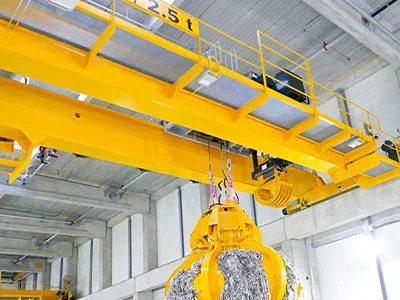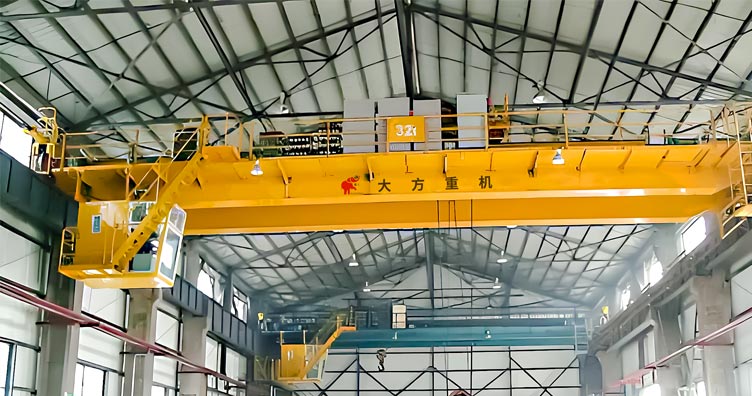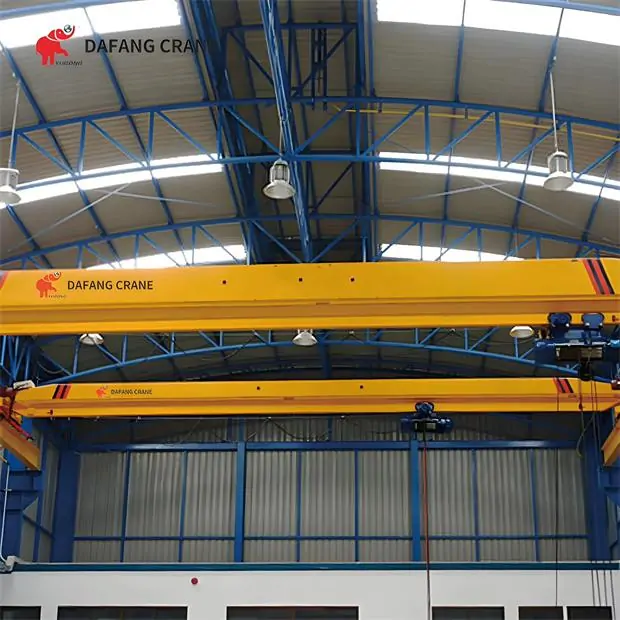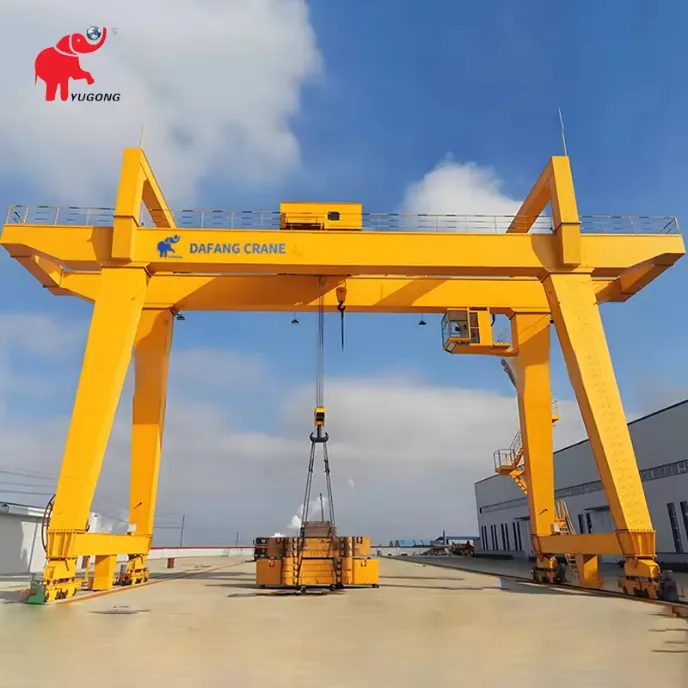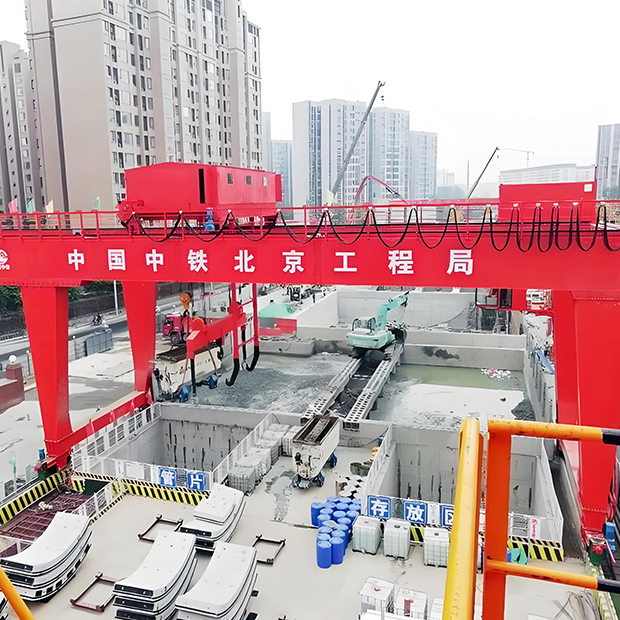







Selecting the right overhead crane for steel mill is an engineering decision, not a catalog lookup. A 200-ton ladle crane transporting molten steel at 1,550 °C and a 20-ton double-girder crane shifting steel billets in a rolling bay share almost nothing in design: different structural standards, different duty classes, different safety systems — and a price gap that can exceed $200,000. Getting this wrong does not just affect the budget; underspecifying duty class alone can cut a crane's service life from 15–20 years to under five.
The confusion typically comes from two places: buyers who specify only by lifting capacity ("I need a 100-ton crane"), and suppliers who respond without asking the right follow-up questions. The result is a crane matched to the heaviest load but not to the actual working rhythm of the bay it will run in.
This guide walks through every major crane type used in a steel plant, maps each to its correct bay, explains how to validate duty class before issuing an RFQ, and outlines what certifications to ask for — so you arrive at any supplier conversation with a grounded specification.
Quick Reference: Overhead Crane Types for Steel Mill Bays
| Type de grue | Dafang Model | Gamme de capacités | Classe de service | Typical Bay | Indicative Price (FOB) |
|---|---|---|---|---|---|
| Ladle Crane | Grue à louche pour aciérie | 10–300T | A7-A8 | Converter / EAF / Refining | $120,000–$350,000+ |
| Metallurgy Crane (double girder) | YZ Type | 3–125T | A7-A8 | Continuous casting / Pouring | $80,000–$250,000 |
| Metallurgy Crane (four girder) | YZS Type | 125T+ | A7-A8 | High-tonnage EAF / BOF bay | $180,000–$350,000+ |
| Grue électromagnétique | QC Type | 5–64T | A5–A8 | Scrap yard / Finishing | $25,000–$95,000 |
| Grue à godet | QZ Type | 5–60T | A6 | Raw material yard / Slag | $18,000–$65,000 |
| Double Girder General Crane | QD / QDY Type | 5–320T | A3–A6 | Rolling mill / Maintenance | $18,000–$180,000 |
Prices are indicative market reference (FOB). Final pricing depends on span, lifting height, duty class, control system, and under-hook attachments.
Obtenir un devis gratuitTypes of Overhead Crane for Steel Mill
Ladle Crane — Highest-Risk Bay in the Plant
A steel mill ladle crane is purpose-built for one task: transporting ladles of molten steel between steelmaking furnaces, refining stations, and continuous casting machines. At rated capacity, a single lift may involve 150–300 tonnes of steel at temperatures exceeding 1,500 °C. Structural failure in this bay is not a maintenance event — it is a life-safety emergency.
The minimum specification for this crane type is non-negotiable: work grade A7–A8 per GB/T 3811 (or FEM 1.001 equivalent), dual independent hoisting mechanisms (main hook plus auxiliary hook), at least two independent braking systems per hoist mechanism, and heat-resistant structural steel with thermal insulation boards along the underside of the main girder to reduce radiant heat absorption.
Dafang's Steel Mill Ladle Crane covers 10–300T capacity, span 4.5–31.5 m, lifting height 3–30 m, and is equipped with intelligent monitoring for real-time load, temperature, and braking status. Anti-sway control is standard on larger configurations to achieve positioning accuracy over casting molds. → Product page
YZ and YZS Metallurgy Cranes — Casting and Pouring Bays
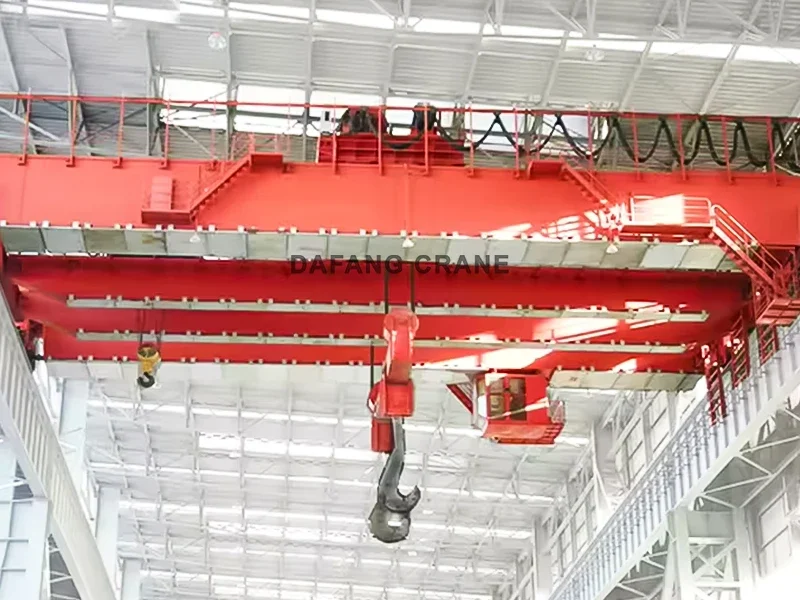
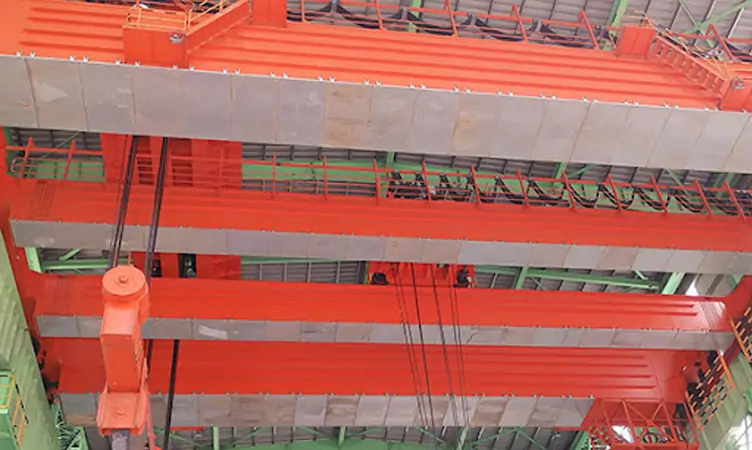
The YZ-type and YZS-type steel mill cranes handle molten metal transport across the three core spans of steelmaking: the converter charging span (moving molten iron from torpedo cars), the refining span (lifting molten steel to refining furnaces), and the continuous casting span (positioning ladles over tundishes).
The structural difference between the two types is significant and driven by tonnage:
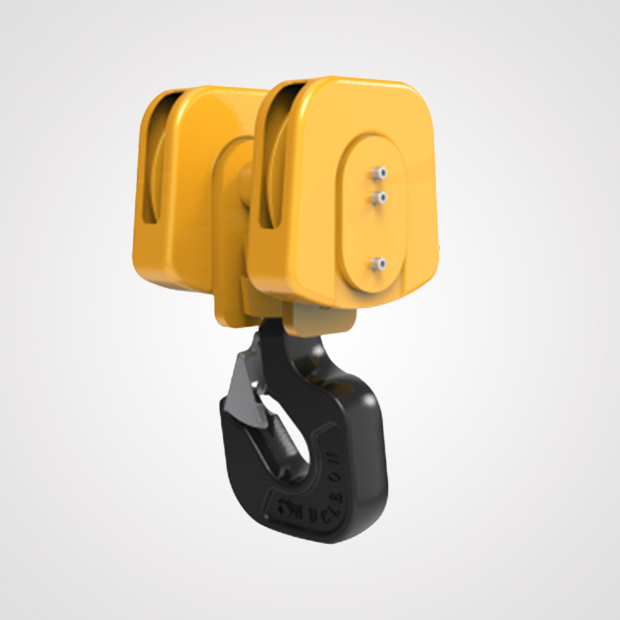
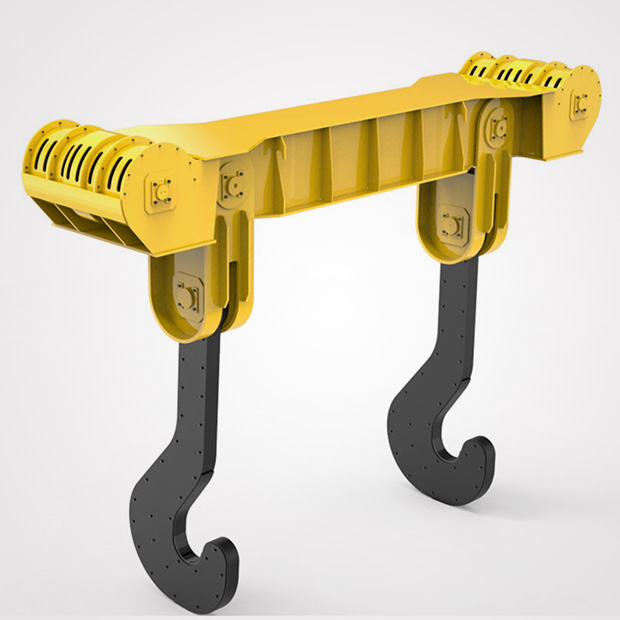
YZ type uses a double girder, single trolley structure with a fixed-pitch hook beam. The main hook is specifically designed for ladle lifting; the auxiliary hook handles steel dumping, slag removal, and other secondary tasks. A chiller unit inside the main girder electrical room maintains component stability in high-ambient environments. This type handles up to 125T.
YZS type uses four girders and four rails, with separate main and auxiliary trolleys. The main trolley runs on the outer tracks and lifts the ladle; the auxiliary trolley traverses under the main trolley on inner tracks to cooperate with the main hook for dumping and slag handling. The four-corner drive on the trolley travel mechanism provides the smooth, vibration-damped movement essential when positioning over an active caster. This type is standard for capacities above 125T.
Both types run at work grade A7, with PLC control, high-precision load weighing, fault detection, and built-in anti-collision systems for plants running multiple cranes on the same span. → Product page
Electromagnetic Crane — Scrap Yard to Finishing Bay
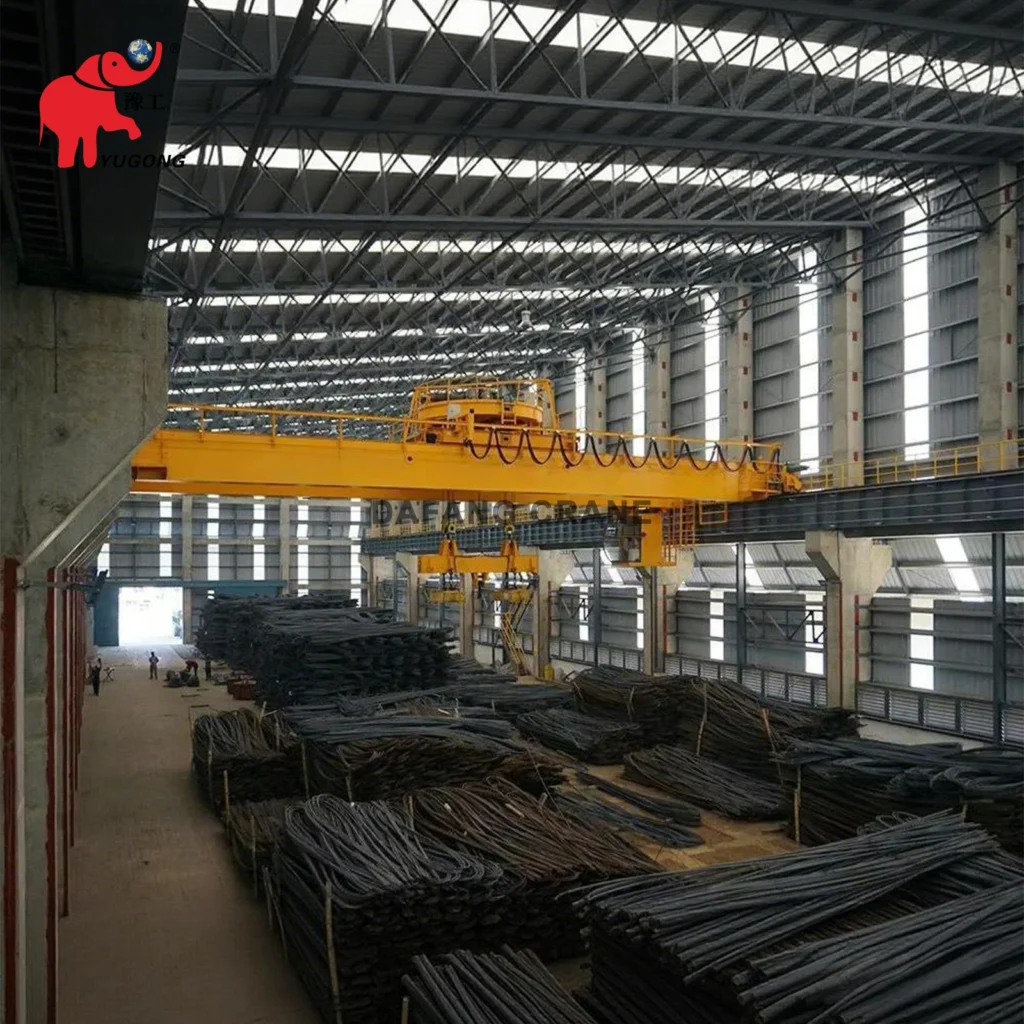
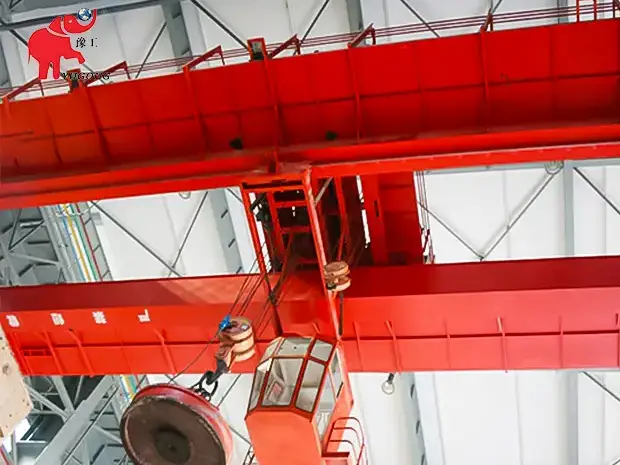
An electromagnetic crane (QC type) replaces hooks with a disc or rectangular electromagnet, making it the right choice wherever ferromagnetic material is handled in irregular shapes: scrap bundles, billets, plate cut-offs, and steel coils. The electromagnet receives power through slip rings on the hoist, and power-loss protection — maintained field on emergency backup power — is a mandatory safety requirement for any above-floor operation.
In a high-throughput scrap yard running continuous charging cycles (40+ lifts per hour), work grade A7–A8 is appropriate. For finished product handling at lower cycle rates, A5–A6 is acceptable. Capacity runs 5–64T; the practical upper limit is set by electromagnet size and lifting area, not structural capacity.
One field consideration often overlooked: in bays with strong electromagnetic interference from induction furnaces, the crane's electrical system requires shielding and filtering to prevent control errors. This is a standard configuration item to specify, not an assumption.
Grab Bucket Crane — Raw Materials and Slag Handling
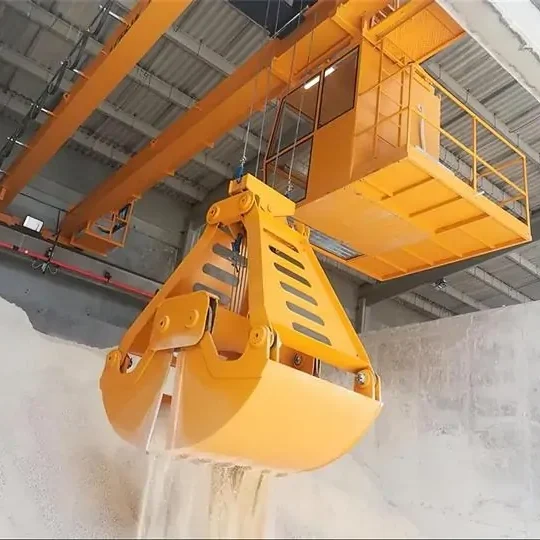
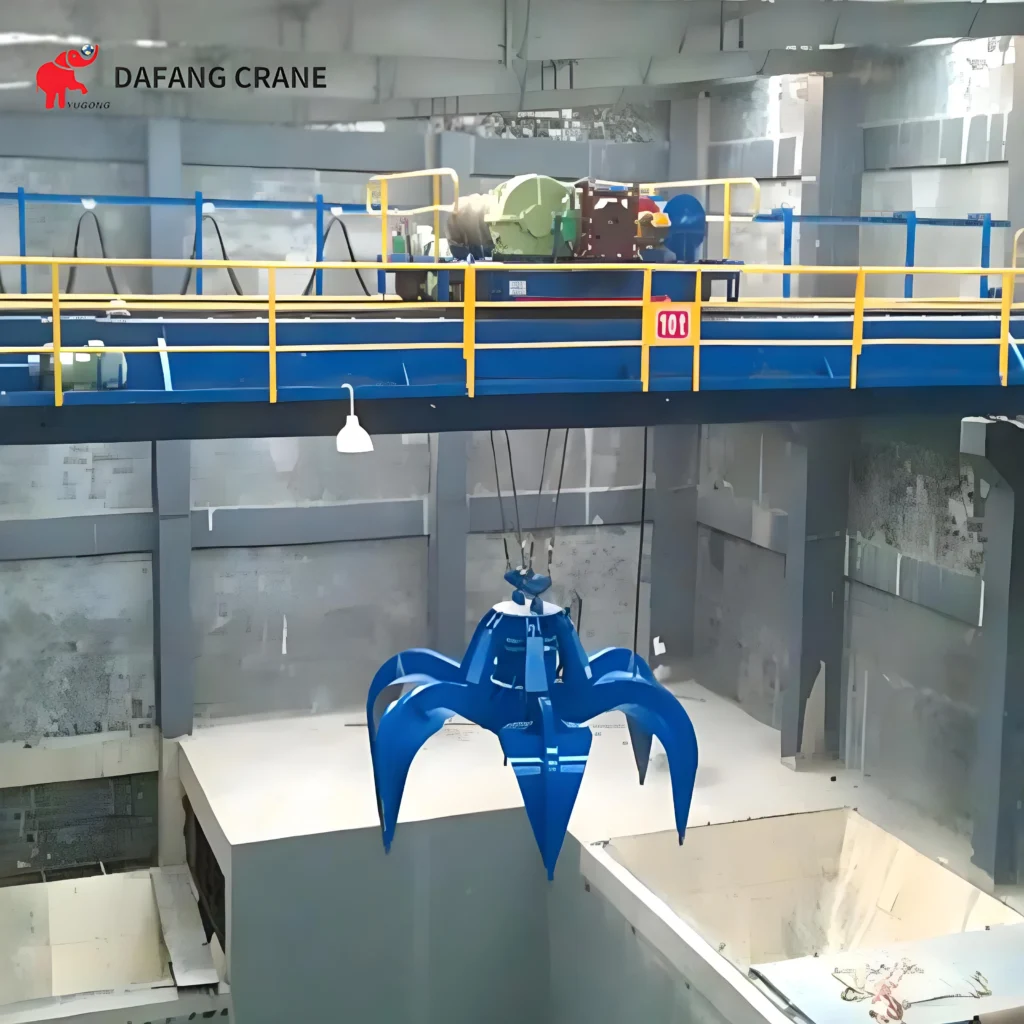
A grab bucket crane (QZ type) handles loose, high-volume material before and after the furnace: iron ore, coke, limestone, and coal in the raw materials yard; slag and furnace dust in waste handling areas. The grab — mechanical, hydraulic, or electro-hydraulic — opens and closes independent of hoist travel, enabling continuous cycling without manual rigging.
Work grade A6 is standard for this application (intermittent bulk cycling). Lifting capacity runs 5–60T; grab volume 1–8 m³ depending on material bulk density. Because the grab operates through constant opening and closing impacts, the bridge and trolley structure must be rated for impact loads under GB/T 14405 Group A6 or equivalent.
Double Girder General Crane — Rolling Mill and Maintenance Bays
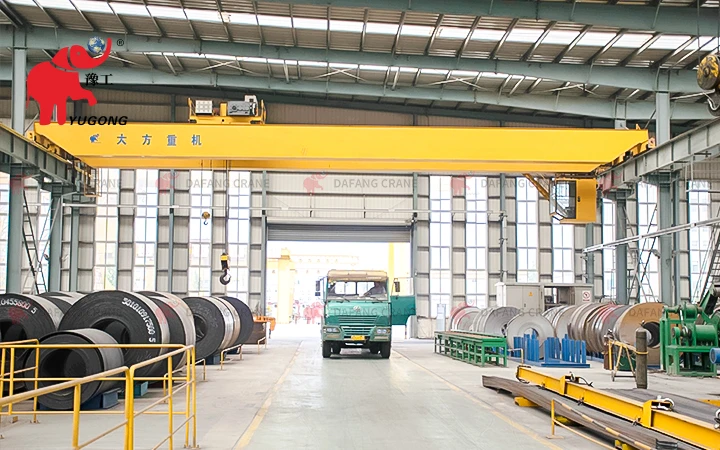
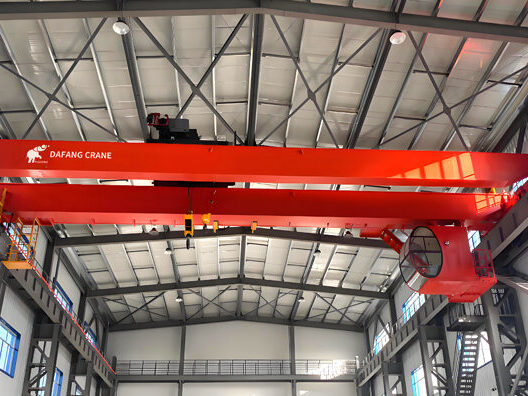
The standard double-girder crane (QD or QDY type) is the workhorse of rolling mills, billet and slab storage areas, and equipment maintenance bays — zones where temperatures are lower, load profiles are predictable, and cycle rates are moderate. Capacity range 5–320T; work grade A3–A6.
In a rolling mill transferring hot billets and slabs, A5–A6 is typical. For infrequent equipment maintenance lifts, A3–A4 is appropriate and considerably less expensive than over-specifying. This is the only crane category in a steel plant where a single-girder configuration is sometimes acceptable — for maintenance areas with loads below 20T and genuinely infrequent use.
Duty Class: The Specification Factor Most Buyers Get Wrong
Duty class (work grade, or service class) classifies a crane by its expected total number of load cycles and average load ratio over its design life, as defined under FEM 1.001, ISO 4301-1, or China's GB/T 3811-2008. It is the single most consequential — and most commonly underspecified — factor in steel mill crane procurement.
The pattern that recurs across procurement reviews: a buyer specifies lifting capacity correctly (100T ladle crane) but selects A6 because it "sounds heavy-duty." In a converter bay running three shifts with 40+ lifts per shift and near-rated loads each cycle, that crane operates under A7–A8 conditions. An A6 crane in this environment reaches its structural fatigue-life limit in 3–5 years rather than the expected 15–20 years — triggering full recertification or replacement at a cost that exceeds the original purchase price.
Bay-by-Bay Duty Class Reference
| Bay / Process Zone | Type de grue | Minimum Duty Class | Notes |
|---|---|---|---|
| Converter / EAF bay | Ladle crane | A7-A8 | Continuous high-cycle, near-rated loads |
| Continuous casting | YZ / YZS metallurgy crane | A7-A8 | Tundish handling = near-rated loads every cast |
| Scrap yard (high throughput) | Electromagnetic / Grab | A7-A8 | 40+ cycles/hr common |
| Raw material yard | Grab bucket crane | A6 | Intermittent bulk cycling |
| Rolling mill | Double girder (QD) | A5-A6 | Predictable load profile |
| Equipment maintenance | Double girder (QD) | A3–A4 | Infrequent lifts, low average load |
| Finished product storage | Electromagnetic / QD | A5-A6 | Regular cycling, moderate loads |
How to Verify Your Duty Class Before You Order
You do not need to specify duty class directly if you can provide your operating profile. Any competent manufacturer will calculate it from three inputs: operating hours per year, average lifts per shift, and average percentage of rated load per lift. If a supplier does not ask for these inputs, that is a signal worth noting.
A rough self-check: if your crane will run more than 4,000 hours per year with loads regularly exceeding 60% of rated capacity, you are in A7–A8 territory regardless of what any catalog says. If a supplier is quoting A6 for a ladle crane in a converter bay without asking about your shift pattern, request a written fatigue-life calculation under FEM 1.001 or GB/T 3811 before signing.

Key Technical Features for Overhead Cranes in Steel Mill Service
Safety Systems Above A6 Duty Class
Every overhead crane operating at A7–A8 in a hot metal bay must meet baseline safety requirements under GB 6067.1 (Safety Rules for Lifting Appliances) and, for CE-marked equipment destined for European markets, the EN 13001 series under Machinery Directive 2006/42/EC:
Dual independent hoisting brakes: Each hoist mechanism must have at minimum two independent braking systems. This addresses the most critical failure mode — a single brake releasing under load. Both mechanical brakes, or one mechanical plus one hydraulic thruster brake, are standard configurations.
Overload protection: Load limiter set at 100–110% of rated SWL, with automatic cut-out. In high-cycle applications, overload events accumulate structural fatigue faster than any other single variable.
Anti-sway control and VFD: Standard on ladle and YZ/YZS-type cranes for positioning accuracy over casting molds (±10 mm target). Variable-frequency drives on all motion axes replace legacy contactor-based control and allow smooth speed ramping that reduces load oscillation without relying entirely on mechanical braking.
Heat shielding and high-temperature wire rope: For ladle and foundry cranes, structural components within the ladle travel zone require thermal insulation. Wire rope must be heat-resistant per GB/T 9944 Class B or equivalent. The underside of Dafang's YZ main girder carries insulation boards along the full span — a feature that is not always standard on lower-cost alternatives and is worth verifying with any supplier.
Electrical and Environmental Requirements
Steel mill cranes operate in Category C3 heavy electromagnetic environments per IEC 61000. All electrical cabinets require minimum IP54 enclosure, F-class motor insulation (155°C rated), and conductor rail or enclosed busbar systems to replace open trailing cable over spans greater than 20 m. For bays with significant electromagnetic interference from induction furnaces, specify EMC shielding on control panels as a line item, not an afterthought.
Certifications and Compliance
Buyers bringing equipment into regulated markets face three practical questions:
Which certifications apply to your market? For export to the EU and associated markets, CE marking under Machinery Directive 2006/42/EC is required, backed by EN 13001 structural and safety calculations. ISO 9001 certification at the manufacturer level covers the quality management system. ISO 4301-1 and FEM 1.001 govern duty class classification and structural design. For CIS and former Soviet markets, EAC certification is required. North American installations typically reference CMAA Specification 70 and ASME B30.2.
Why this matters for procurement beyond compliance: Customs clearance in many markets requires a conformity declaration before the crane can be released. Insurance policies for heavy industrial equipment increasingly require documented certification. And in the event of an incident, an uncertified crane creates liability exposure that extends beyond the equipment itself.
How to verify before shipment: Ask your supplier for the EC Declaration of Conformity (for CE), the overload test report (typically 125% of SWL), and the ISO 9001 certificate including the issuing body's accreditation number. If the sale involves factory acceptance testing, specify that in the contract — not in an email exchange afterward.
How to Match Crane Type to Your Steel Mill Bay
Work from the process outward, not from a capacity number inward. The correct sequence:
Start with the specific bay and operation — which production zone, what material is being lifted, what is the cycle frequency, what is the ambient temperature at hook level. Next, determine the actual lift capacity including the hook block, lifting beam, or empty ladle weight (empty ladle weight is commonly 30–50% of loaded weight and must be included in the duty class calculation). Then establish duty class from your operating profile — lifts per shift, shifts per day, average load ratio. Finally specify span, lifting height, and environmental requirements.
The hidden cost in steel mill crane procurement is almost always duty class underspecification, not initial purchase price. Saving $30,000–$50,000 at the A6 vs. A7 decision point for a converter bay ladle crane leads to structural recertification costs within 4–6 years — typically 15–25% of the original crane cost — before the crane can legally continue operating. Over a 20-year service life, the total cost of an underspecified unit reliably exceeds the correctly specified alternative by a factor of 2–3×.
Contact Dafang for a Steel Mill Crane Specification
Dafang has been manufacturing metallurgy and steel mill cranes across this full range — from 3-ton maintenance cranes to 300-ton ladle systems — with export coverage across Southeast Asia, the Middle East, Africa, and Central Asia. Our engineering team reviews operating parameters and returns a duty-class-validated specification, typically within 48 hours.
To get an accurate quote rather than a range, have the following ready when you reach out:
- Bay type and process zone
- Maximum lift capacity (including any ladle or lifting attachment weight)
- Operating hours per year and lifts per shift
- Span and lifting height
- Target market (for certification requirements)
FAQ
Q1: What duty class does an overhead crane for a steel mill need?
It depends on the bay. Ladle cranes and YZ/YZS metallurgy cranes in converter, EAF, and continuous casting bays require A7–A8 (GB/T 3811 / FEM 1.001). Electromagnetic and grab cranes in high-throughput scrap yards also typically need A7–A8. Rolling mill and maintenance bay cranes are generally well-served by A5–A6. The most common procurement error is selecting A6 for a converter bay ladle crane: in a three-shift operation running 40+ lifts per shift, an A6 structure can exhaust its fatigue life in under five years.
Q2: What is the difference between Dafang's YZ and YZS steel mill crane?
Both are double-girder metallurgy cranes for molten steel handling at work grade A7, but they differ in structural configuration. The YZ type uses double girder and single trolley, covering up to 125T. The YZS type uses four girders and four rails with separate main and auxiliary trolleys, and is standard for capacities above 125T where the auxiliary trolley needs to traverse beneath the main trolley independently for slag handling and dumping operations.
Q3: How much does an overhead crane for a steel mill cost?
Indicative FOB pricing ranges widely by type: standard QD double-girder cranes for rolling or maintenance bays start at around $18,000–$25,000 for lighter capacities, reaching $120,000–$180,000 at 100–200T. Electromagnetic cranes (QC type) generally fall in the $25,000–$95,000 range. Ladle cranes and YZ/YZS metallurgy cranes typically range from $80,000 to $350,000+, depending on capacity, span, control sophistication, and whether an auxiliary trolley is included. Final price depends on span, lifting height, duty class, and control system.
Q4: Can a standard overhead crane be used for molten steel handling?
No. A standard QD crane (A3–A6) is appropriate for rolling mills, billet storage, and maintenance bays where temperatures are controlled and loads are predictable. It must not be used for any bay involving molten metal transport — ladles, tundishes, or converter charging — regardless of its rated capacity. The structural design, braking redundancy, and heat-resistance requirements for hot metal service are categorically different and cannot be met by a standard-grade crane.
Q5: What certifications should I ask a steel mill crane supplier for?
For EU and associated markets: CE marking under Machinery Directive 2006/42/EC, backed by the EC Declaration of Conformity and EN 13001 calculation reports. For CIS markets: EAC certification. Across all markets: ISO 9001 quality management certificate, overload test report (125% SWL), and — for ladle and foundry cranes — documentation of the dual-brake system configuration and heat-shielding specification. Request these before shipment, not after delivery.