
Application
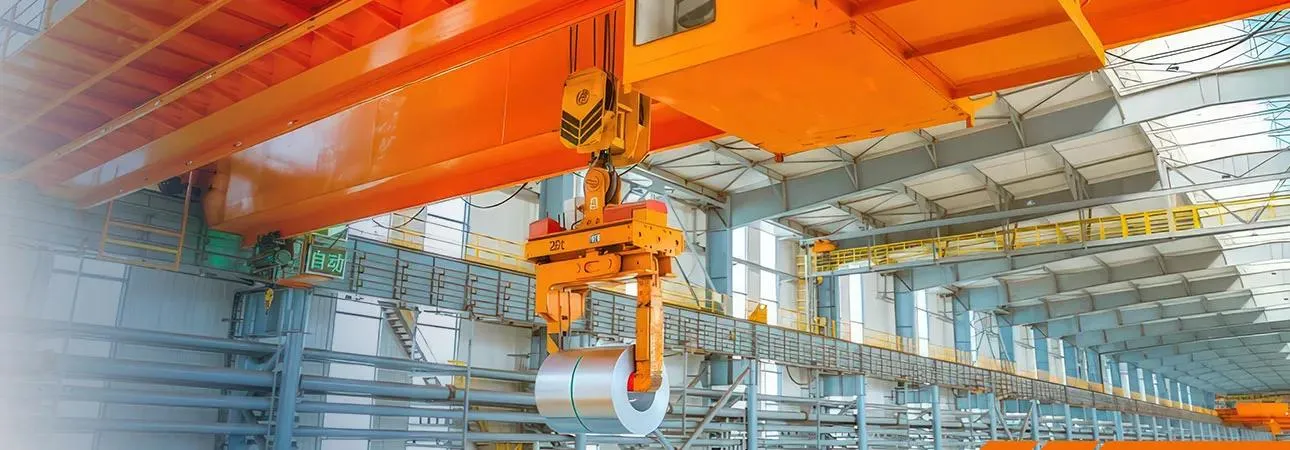
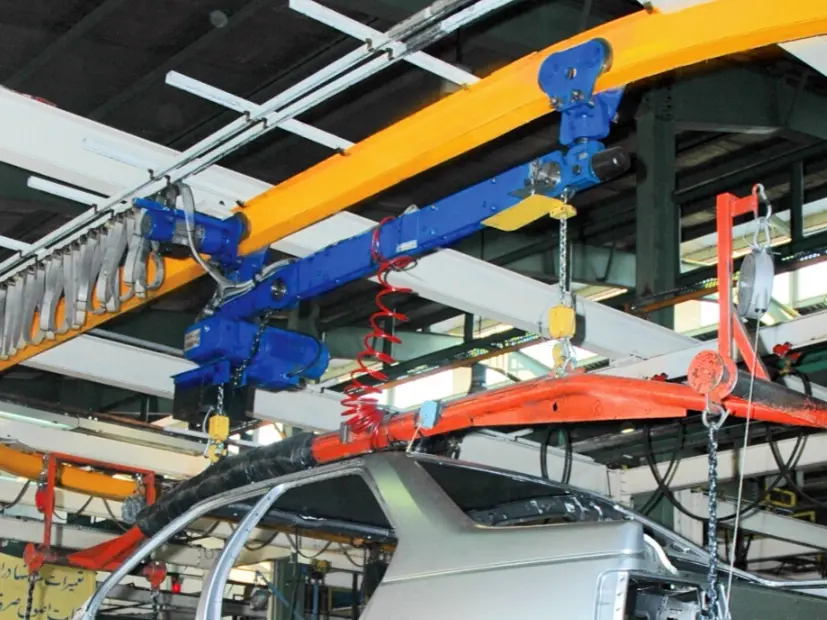
Dafang Crane has spent more than 20 years designing and manufacturing overhead cranes, hoists, jib cranes, and transfer cart systems for heavy industry, and a significant share of that experience is automotive-specific. We work with vehicle OEMs, Tier 1 suppliers, EV and battery manufacturers, and the EPC contractors and system integrators who build out their plants. This page walks through the actual engineering challenges automotive facilities face, the crane systems we recommend for each production area, and the reasoning behind those recommendations — not a generic product catalog, but a working reference for plant engineers and procurement teams evaluating automotive material handling equipment.
Below are the core product lines we recommend across automotive facilities, along with where and why each one fits.
A compact, cost-effective bridge crane using a European-style low-headroom end carriage and a FEM wire rope hoist running on the bottom flange of the girder.
The workhorse of heavier automotive applications — twin girders carrying a trolley-mounted hoist, built for higher capacity and higher duty cycles than single girder designs.
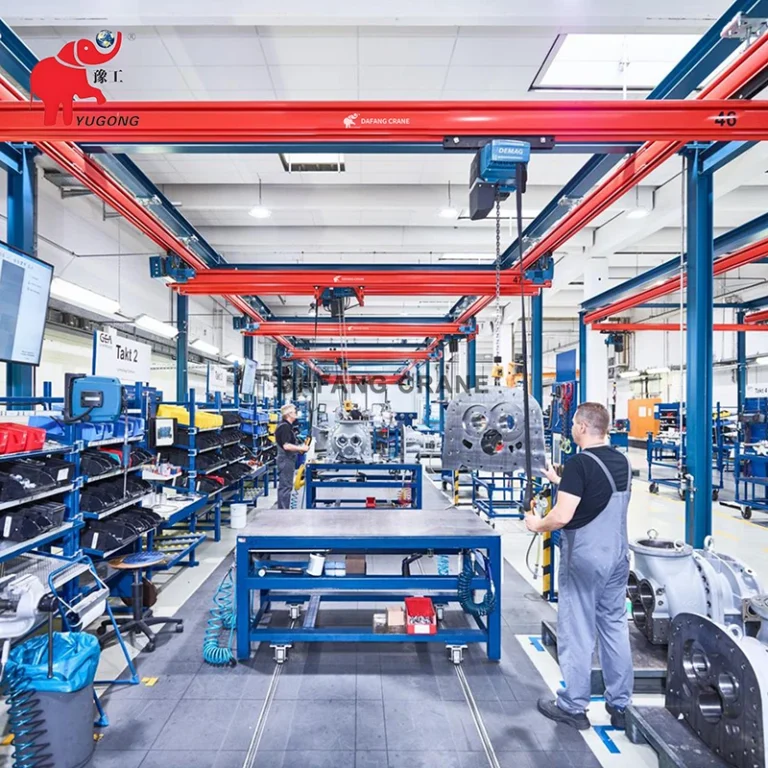
A lightweight aluminum or steel enclosed-track crane system designed for fast, low-effort manual or semi-powered movement within a defined work cell.
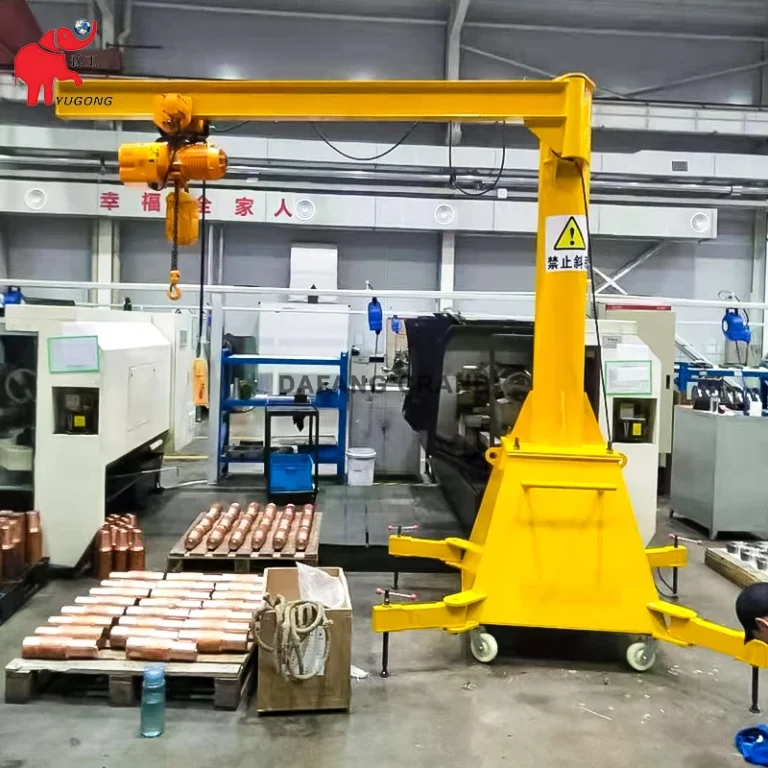
Similar function to the column jib, but bracket-mounted to an existing wall or building column, saving floor space entirely.
A jib with a foldable arm that extends reach into corners and around obstacles that a straight-arm jib cannot serve.
A compact, European-standard wire rope hoist built to FEM duty classifications, used as the lifting unit on double girder and single girder cranes throughout the plant.
A rubber-tired, battery or cable-powered cart offering the same heavy transfer function as a rail cart, without fixed rail infrastructure.
An automated guided vehicle for driverless material transport, following magnetic tape, laser guidance, or vision-based navigation.
Press shops need equipment that can move heavy dies fast, safely, and repeatably. We typically specify European double girder overhead cranes with FEM electric wire rope hoists (often twin-hook configurations for unbalanced die geometry) for the main press bay, paired with rail transfer carts to shuttle dies between press lines and the die storage area. Column jib cranes handle smaller tooling and maintenance tasks at individual press stations without tying up the main crane.
The body shop combines high-frequency, moderate-weight handling (panels, sub-assemblies) with the need to keep the floor clear for robotic welding cells. Workstation bridge cranes serve individual welding cells and sub-assembly stations, while a European single or double girder crane (depending on shell weight) handles body-in-white transfer between major stations. Trackless transfer carts are common here because body shop layouts change more often than other areas as model mix evolves.
Paint shop cranes need corrosion-resistant finishes and, in many cases, explosion-proof or spark-resistant electrical components near paint booths and ovens. Single girder overhead cranes with appropriately rated electrical enclosures handle body transfer into and out of pretreatment, e-coat, and paint booths, typically at lighter to medium capacities than the body shop or press shop.
Engine and transmission manufacturing calls for high positioning accuracy during block handling, sub-assembly, and final engine/transmission mating. workstation bridge cranes dominate the sub-assembly cells, while European double girder cranes with fine-inching VFD hoists handle heavier block and casting movement, and rail transfer carts move completed powertrains to marriage stations on the main assembly line.
Battery cell and module production is a cleaner, more sensitive environment than the rest of the plant. light-capacity workstation cranes with smooth, vibration-minimized VFD hoists handle module and tray movement, while AGV transfer carts are increasingly the standard for moving material between process steps without introducing manual forklift traffic near sensitive electronics.
Battery pack installation into the vehicle chassis is one of the most precision-critical lifts in EV manufacturing. We recommend European single or double girder cranes (sized to pack weight, commonly 0.5–2 tons for modules and up to several tons for full packs) fitted with custom lifting beams or tilt/rotate attachments, controlled by fine-speed VFD hoists for millimeter-level placement accuracy. AGV transfer carts frequently handle the pack's approach to the marriage station, with the crane or a dedicated lift table performing the final placement.
The final assembly line depends on dozens of small, fast, ergonomic lifts rather than a few heavy ones. Workstation bridge cranes are the primary equipment here, supporting electric chain hoists, torque tools, and lift-assist devices at each station to reduce operator strain and keep cycle times consistent.
Raw material, component, and finished parts storage areas need efficient, high-utilization equipment. European single girder overhead cranes covering long warehouse spans, supported by trackless transfer carts or AGVs for horizontal movement to and from the production lines, are the standard configuration.
Maintenance workshops and tool rooms benefit most from column jib cranes, wall mounted jib cranes, and articulating jib cranes positioned at individual workbenches and machine tools, keeping heavy lifting available at the point of use without requiring the main production cranes to be pulled off the line.
| Production Area | Typical Load | Recommended Crane | Advantages |
|---|---|---|---|
| Press Shop (die handling) | 10–40 tons | European Double Girder Crane + Rail Transfer Cart | High capacity, twin-hook capability, fast repeatable die changeover |
| Body Shop | 0.5–8 tons | Workstation Bridge Crane | High-frequency handling, flexible routing around robotic cells |
| Paint Shop | 0.5–5 tons | European Single Girder Crane | Corrosion-resistant build, compatible with paint-booth electrical requirements |
| Powertrain | 1–15 tons | European Double Girder Crane + Workstation bridge cranes | Fine positioning accuracy for block and mating operations |
| Battery Manufacturing | 0.1–2 tons | Workstation bridge cranes + AGV Transfer Cart | Smooth, vibration-controlled handling of sensitive components |
| EV Battery Pack Assembly | 0.5–5 tons | European Single/Double Girder Crane (custom lifting beam) | Millimeter-level placement accuracy for pack installation |
| Final Assembly Line | 0.1–2 tons | Workstation Bridge Crane | Low-effort, ergonomic, high-cycle handling at each station |
| Warehouse | 1–20 tons | European Single Girder Crane + Trackless/AGV Cart | Long-span coverage, efficient horizontal transfer |
| Maintenance Workshop | 0.5–10 tons | Column / Wall Mounted Jib Crane | Point-of-use lifting without occupying main crane runways |
| Tooling & Die Storage | 5–40 tons | Rail Transfer Cart + Double Girder Crane | High-capacity, repeatable fixed-path movement |
Every automotive plant has its own building constraints, production mix, and duty cycle. If you're planning a new line, retrofitting existing equipment, or specifying cranes for a greenfield facility, our engineering team can review your layout and load requirements and recommend a system built around your actual process.
Contact Dafang Crane for:
Reach out with your production area, typical load weights, and building dimensions, and our engineers will put together a recommended crane configuration for your facility.
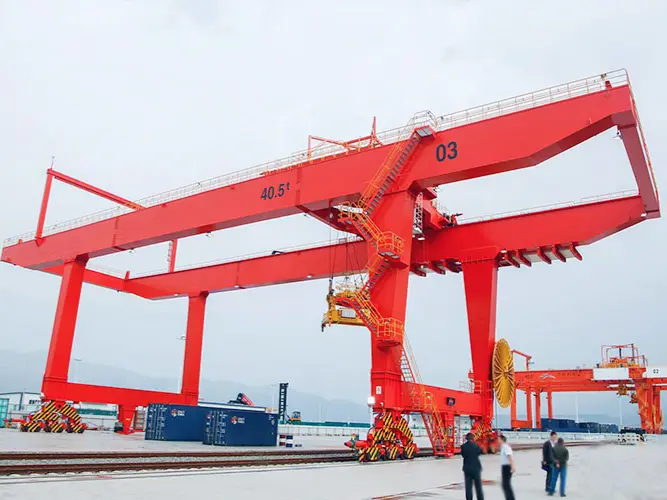
Port cargo handling refers to the processes and equipment used to load, unload, transfer, store, and manage cargo in marine terminals.
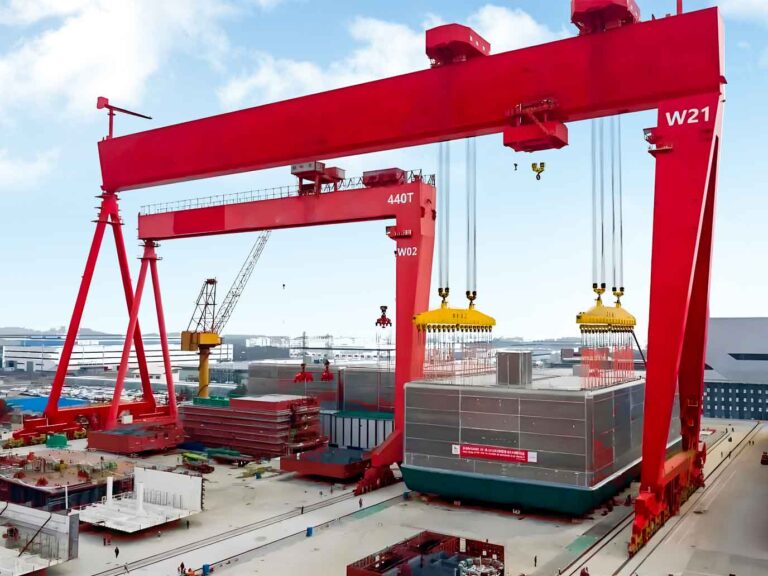
A Shipbuilding Gantry Crane is a heavy-duty lifting system designed for shipyards to transport and assemble large ship blocks.
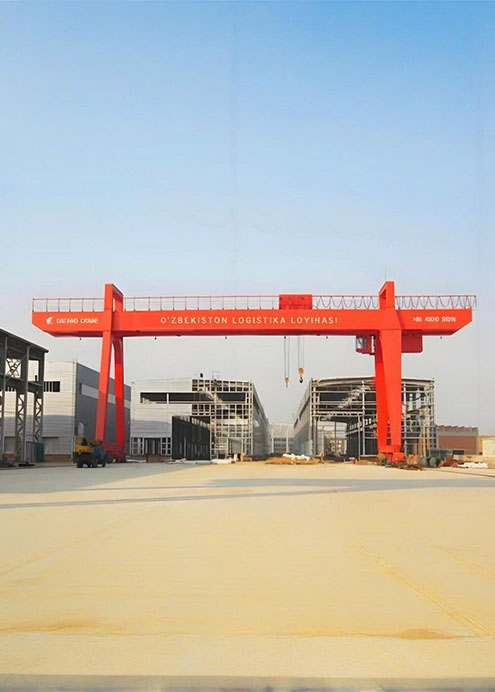
On the construction site of large-scale construction project