






Lifting heavy loads efficiently and safely is a fundamental requirement across manufacturing, construction, ports, and logistics. The choice of lifting equipment shapes how a facility is built, how much floor space is consumed, and how productively materials move through a site. Gantry cranes are among the most widely specified solutions because they solve a problem that overhead cranes cannot: they provide full crane coverage without requiring the building structure to support crane runway beams.
Whether you are planning a new workshop, expanding a container terminal, managing a precast concrete yard, or looking for a mobile lifting solution for a maintenance facility, understanding what a gantry crane is, how its types differ, and what drives selection decisions is the practical starting point. This guide covers all of that in a structured, straightforward way.
What Is a Gantry Crane?
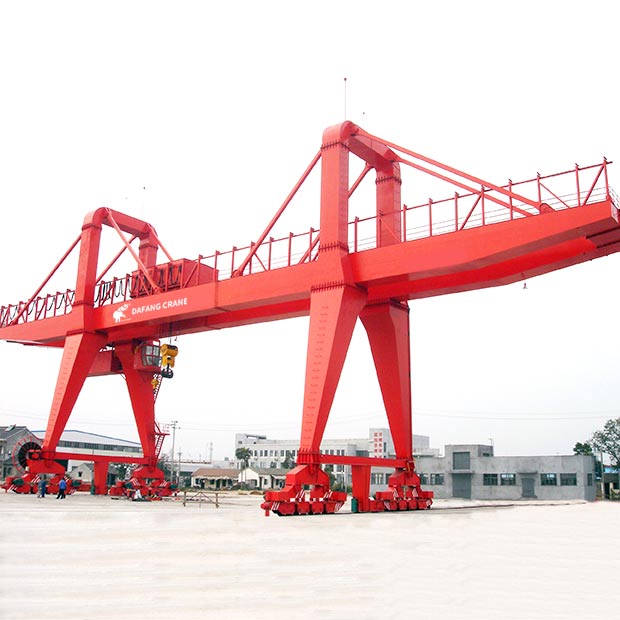
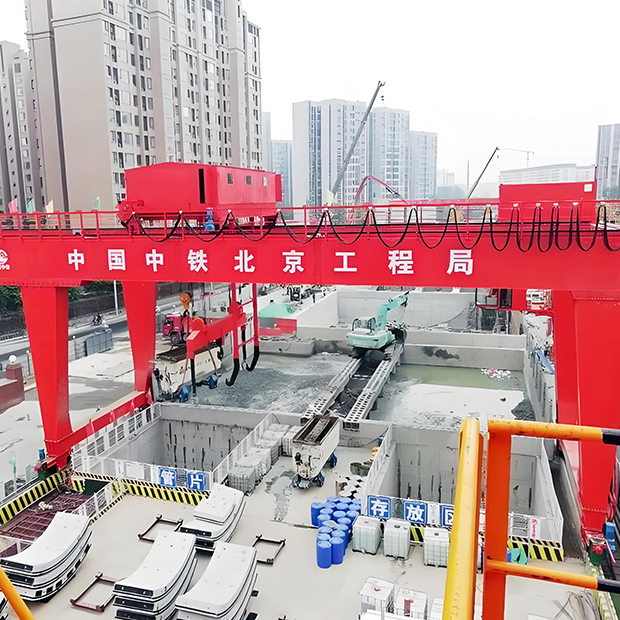
A gantry crane is a type of crane built on a freestanding portal structure — two or more vertical legs connected by a horizontal beam called the girder — that travels along rails or a flat surface at ground level. The hoisting mechanism is mounted on the girder, and the entire crane moves independently of any building structure above it.
This is the fundamental distinction from an overhead crane. An overhead crane is suspended from runway beams that are fixed to the building's roof structure or columns. A gantry crane carries its own supporting legs and is structurally self-contained. It does not depend on the building to bear the crane loads.
The practical implication is significant. An overhead crane requires a building structure designed or reinforced to carry crane loads. A gantry crane can be installed in any yard, facility, or open area where a suitable rail track or surface is available — including locations with no roof structure at all.
The basic lifting process is straightforward: the hoist raises and lowers the load vertically; the trolley carries the load horizontally along the girder; and the crane travels along its rails or surface to position the load anywhere within the crane's working range.
Get Free Quote
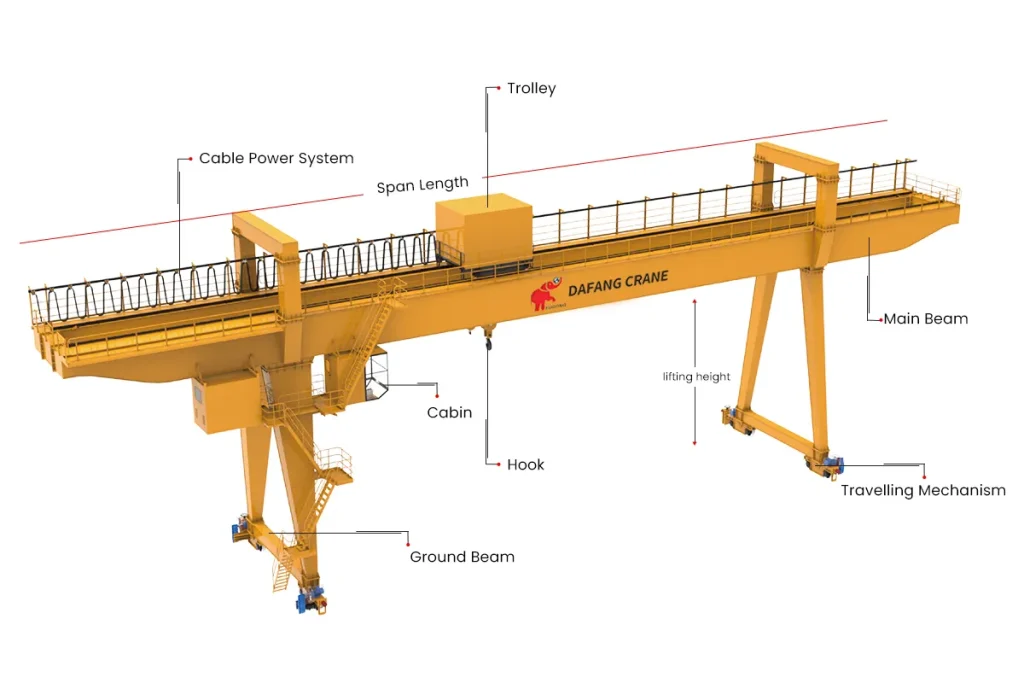
Main Components of a Gantry Crane
Understanding the major structural and mechanical components helps procurement teams ask the right questions and evaluate specifications accurately.
Main Girder
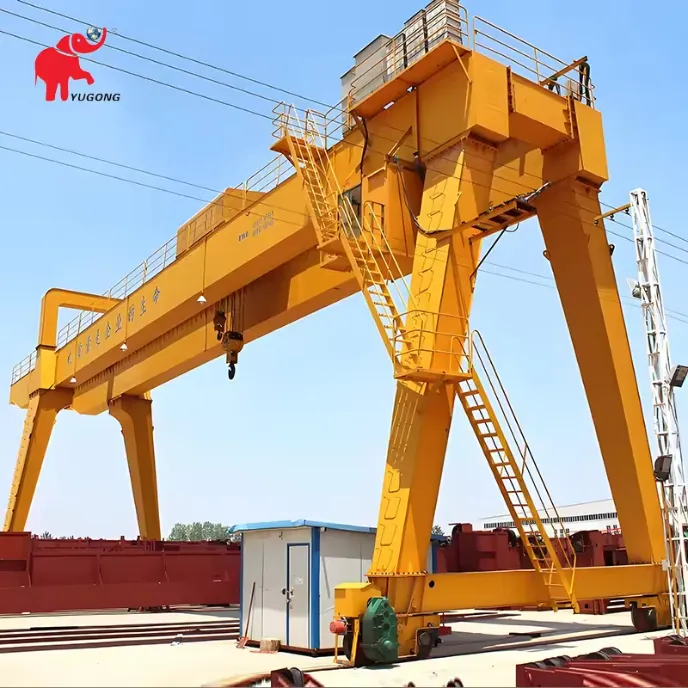
The main girder is the horizontal load-bearing beam that spans between the crane's supporting legs. It carries the trolley and hoist system and transfers all lifted loads to the legs. Girder design is either single girder — one beam — or double girder — two parallel beams — depending on the required lifting capacity, span, and duty cycle. Double girder designs allow the hoist to travel between the two beams, improving hook approach and reducing the headroom required at the top of the lift.
Supporting Legs
The legs are the vertical structural members that support the girder and transfer crane loads to the rail or surface below. Common configurations are A-frame legs — triangulated structures that provide wide base stability — and box-type legs, which are vertical rectangular steel sections used where space is more constrained. In a semi gantry crane, one side uses a leg while the other side runs on a wall-mounted runway beam, eliminating the need for a full leg on one side.
Hoist or Winch System
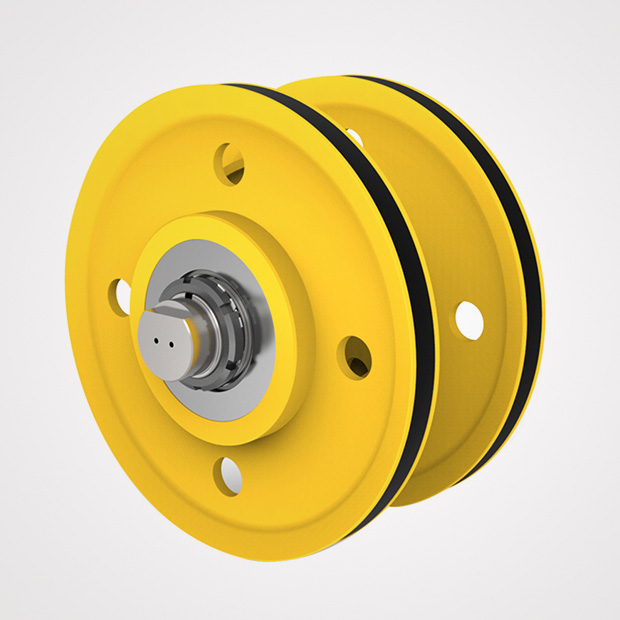
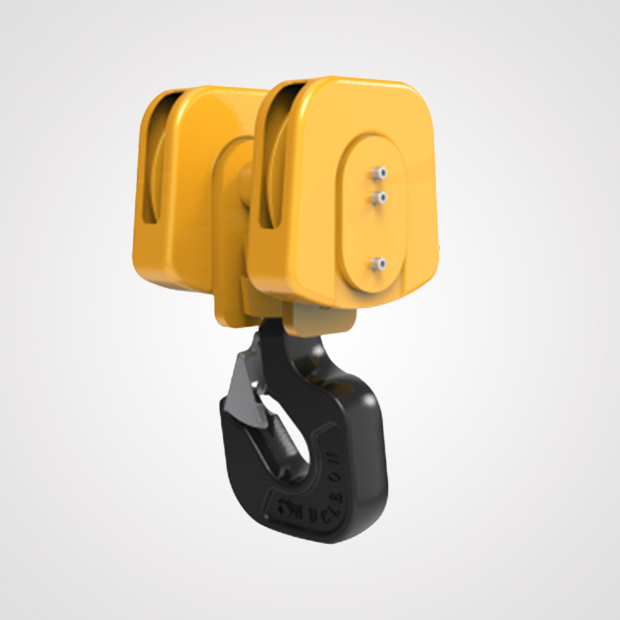
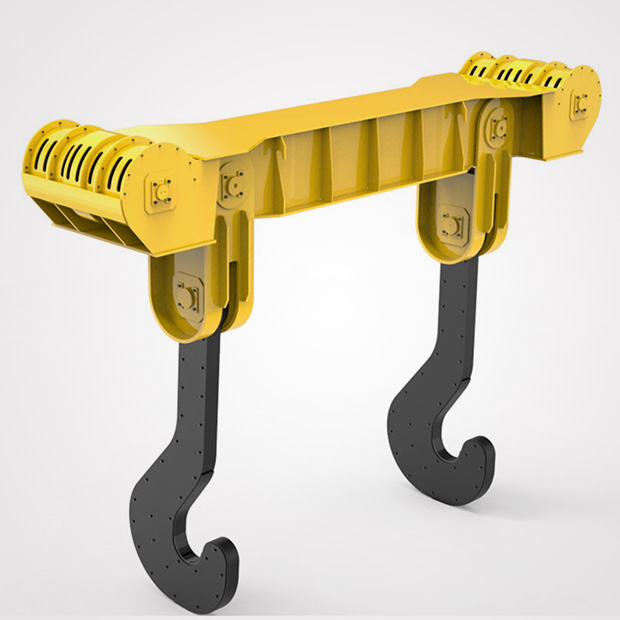
The hoist is the mechanism that raises and lowers the load. Most modern industrial gantry cranes use electric wire rope hoists — motorized units with a steel wire rope wound onto a drum, driven through a gearbox and controlled by a variable frequency drive. Larger or specialized cranes may use open winch systems with separate drum, motor, and gearbox assemblies designed for higher lifting capacities or specific operating profiles.
Trolley Mechanism
The trolley is the running unit that carries the hoist along the underside of the main girder. It moves horizontally on wheels that run on the lower flange of the girder (for single girder cranes) or on rails mounted on top of the girder (for double girder cranes). Trolley travel provides the secondary horizontal movement of the load perpendicular to the crane's travel direction.
Traveling System
The crane travel system moves the entire gantry structure along its operating area. Rail-mounted gantry cranes run on steel rails set into the ground or on elevated runway structures. Rubber-tyred variants travel on concrete or asphalt surfaces without fixed rails, offering greater flexibility in repositioning the crane within a yard. Floor-track systems use embedded rail sections for guided travel in indoor applications.
Electrical Control System
The control system manages all crane movements — hoist, trolley, and crane travel. Pendant control uses a hardwired push-button panel hanging from the crane that the operator carries during operation. Wireless remote control allows the operator to move freely around the load. Larger cranes use operator cabins mounted on the crane structure. Automated systems integrate the crane into production or logistics management platforms for semi-autonomous or fully autonomous operation.
How Does a Gantry Crane Work?
The operating sequence of a gantry crane follows a consistent pattern regardless of the specific type or size:
Positioning: The crane travels along its rails or surface to position the hook above the load. The trolley travels along the girder to align the hook laterally with the lift point.
Lifting: The hoist lowers the hook to the load. Rigging — slings, shackles, or a spreader beam — is attached to the load's lifting points. The hoist raises the load to the required travel height.
Load Travel: With the load suspended at safe travel height, the crane and trolley move in combination to carry the load to its destination. On modern cranes with variable frequency drive control, these movements can be executed simultaneously with smooth acceleration and deceleration.
Positioning and Lowering: The trolley and crane are positioned above the exact set-down point. The hoist lowers the load to its final position. The rigging is released and the crane moves to its next task.
The coordination between hoisting and traveling mechanisms is managed by the control system. On manually operated cranes, the operator coordinates the movements using the pendant or remote. On automated systems, the control platform manages sequencing and positioning based on programmed task data.

Common Types of Gantry Cranes
Gantry cranes are manufactured in a range of configurations, each suited to different capacity requirements, operating environments, and space constraints.
Single Girder Gantry Crane
Single girder gantry cranes use one main beam supported by two end legs. They are cost-effective solutions for light to medium lifting applications — typically up to 20 tons — in workshop yards, outdoor storage areas, and small manufacturing facilities. The simpler structure reduces material cost and manufacturing complexity. The trade-off is that the hoist must hang below the girder, which reduces hook approach compared to a double girder design and limits the maximum practical span and capacity.
Get Free Quote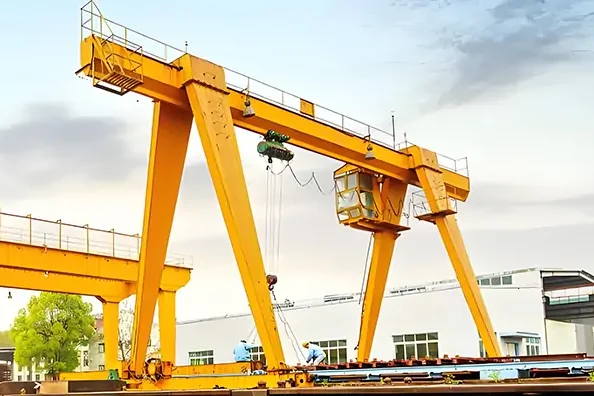
Double Girder Gantry Crane
Double girder gantry cranes use two parallel main beams. The trolley and hoist system travels on top of the girders, allowing the hook to rise between the beams and maximizing the usable lifting height. Double girder designs support much higher lifting capacities — from 20 tons to several hundred tons — and longer spans. They are the standard configuration for heavy industrial applications: steel fabrication facilities, precast concrete manufacturing yards, heavy machinery workshops, and shipbuilding berths.
Get Free Quote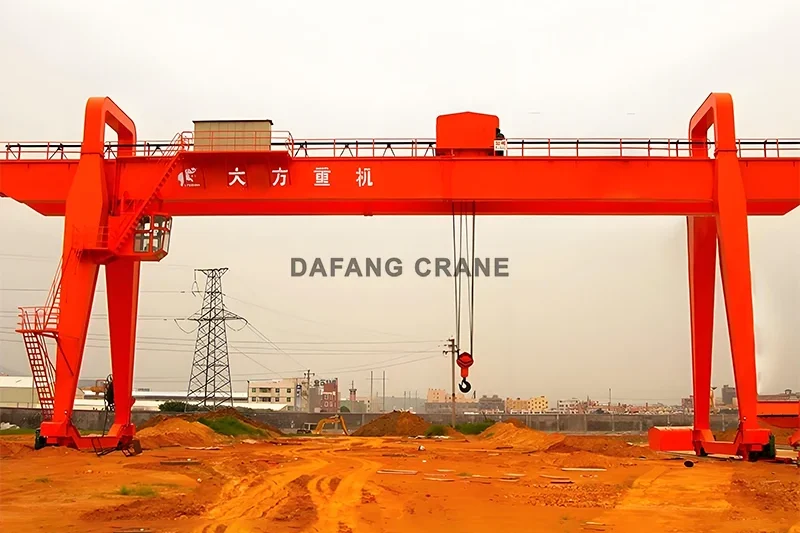
Semi Gantry Crane
A semi gantry crane is a hybrid configuration in which one end of the main girder is supported by a leg running on a floor rail, and the other end runs on a wall-mounted or column-mounted runway beam at height. This design is suited to facilities where one side of the working area is adjacent to a structural wall capable of carrying crane loads, and the other side is open yard. It reduces the crane's footprint compared to a full gantry crane and makes efficient use of existing building structure on one side.
Get Free Quote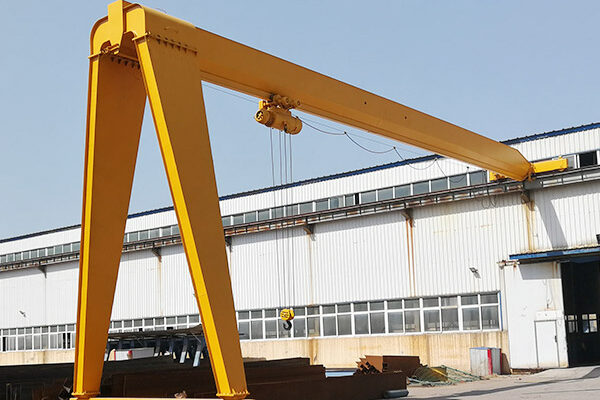
Portable Gantry Crane
Portable gantry cranes are lightweight, manually or electrically adjustable structures that can be set up, moved, and repositioned by hand or with basic equipment. They are used in maintenance workshops, vehicle repair facilities, and field service applications where occasional lifting of moderate loads is required without fixed crane infrastructure. Capacities are typically up to two or three tons, and the design prioritizes mobility over duty cycle.
Get Free Quote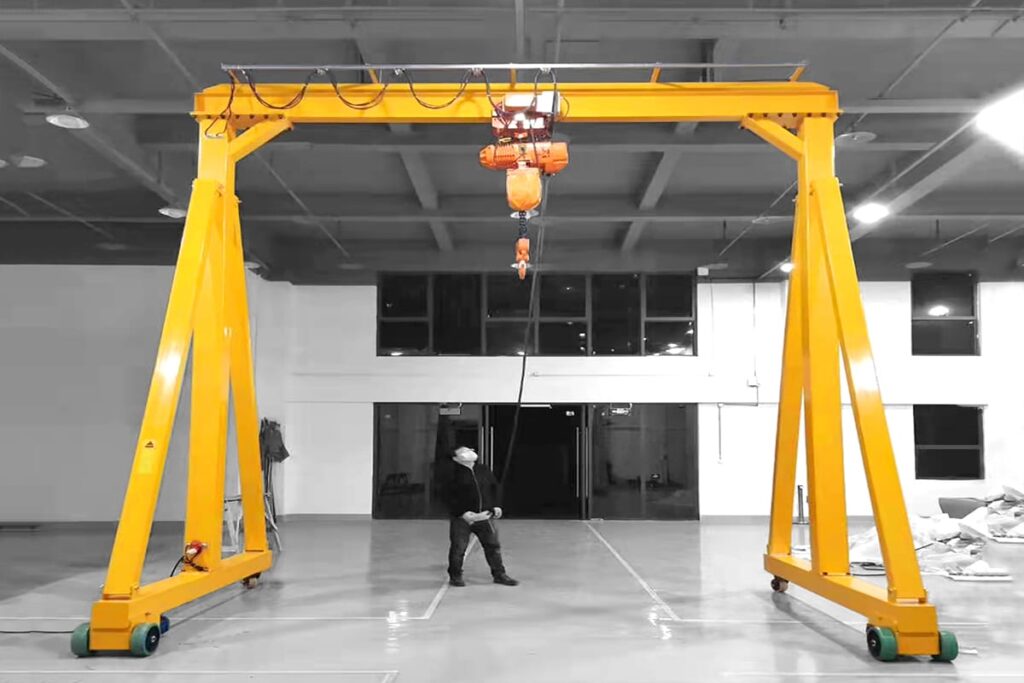
Rail Mounted Gantry Crane (RMG)
Rail mounted gantry cranes are large, fixed-rail gantry structures used primarily in container terminals and rail intermodal yards. They span multiple container rows and travel along heavy steel rails set into the yard surface. RMG cranes lift and stack containers with precision across wide working areas. They are commonly specified in automated container terminal projects because their fixed rail guidance system supports precise positioning for automated operation.
Get Free Quote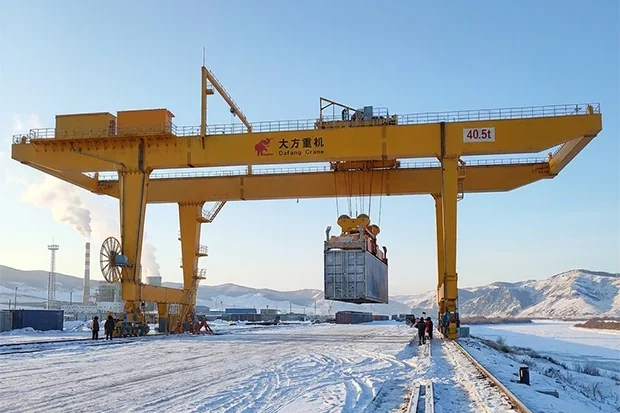
Rubber Tyred Gantry Crane (RTG)
Rubber tyred gantry cranes operate on rubber tyres rather than fixed rails, which allows them to travel freely across a container yard without being constrained to a fixed path. This flexibility makes RTG cranes the dominant crane type in conventional container terminal yard operations, where the ability to reposition the crane between container blocks provides operational flexibility that rail-mounted systems cannot match. RTG cranes are increasingly available with automated and semi-automated control systems.
Get Free Quote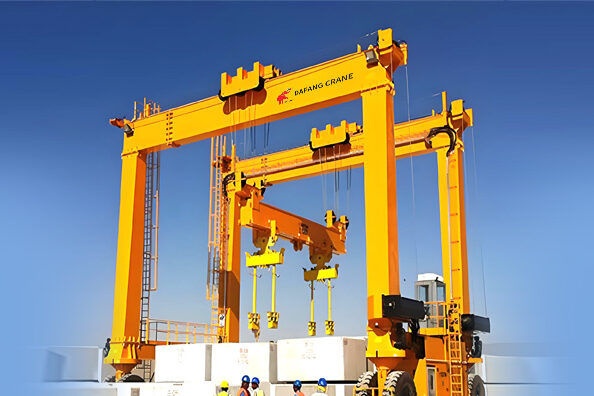
Container Gantry Crane
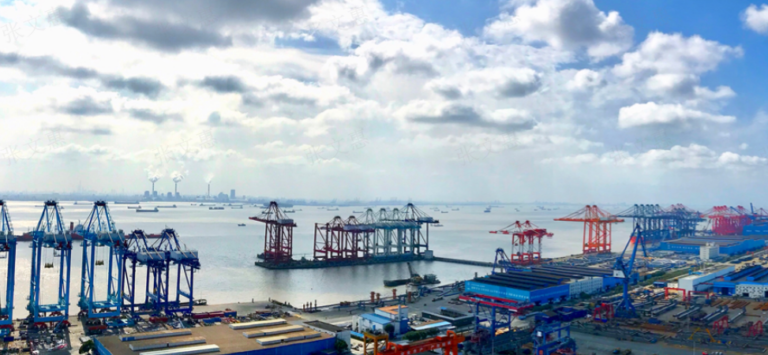
Container gantry cranes — also referred to as ship-to-shore (STS) cranes in port applications — are purpose-built for container handling at port berths or in intermodal transfer facilities. They feature long outreaching booms that extend over the ship's beam, allowing containers to be lifted from vessel holds and deck stacks. Their structural scale, spreader systems, and drive specifications are designed specifically for the demands of high-throughput container terminal operations.
Get Free Quote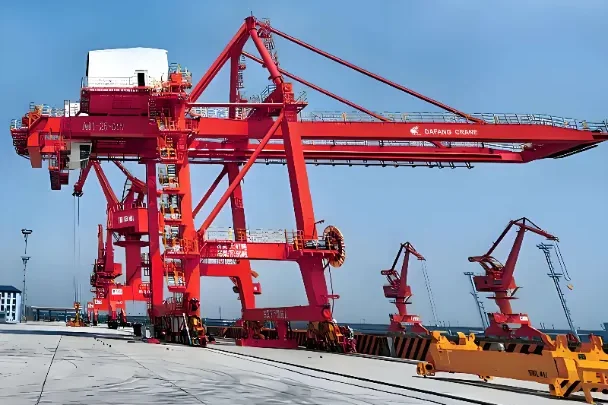
Advantages of Gantry Cranes
Flexible Installation: Gantry cranes do not require a building with a crane-supporting structure. They can be installed in open yards, partially roofed facilities, and locations where building structures are unsuitable or too expensive to reinforce for overhead crane loads.
Lower Building Requirements: Because the crane carries its own structural support to ground level, the building or facility does not need to be engineered for crane runway loads. This significantly reduces construction costs for new facilities and makes crane installation feasible in existing structures that could not support an overhead crane.
Large Outdoor Coverage: Gantry cranes can span and travel across large outdoor areas — precast concrete storage yards, steel fabrication yards, shipbuilding berths, container storage blocks — that would not be practical to cover with a building structure large enough for an overhead crane.
Cost-Effective Material Handling: For medium to large capacity requirements in open or semi-open environments, gantry cranes are typically more cost-effective than the combination of building construction and overhead crane installation that would otherwise be required.
High Lifting Capacity Options: Double girder gantry cranes can be engineered to very high capacities — hundreds of tons — for specialist heavy-lift applications in shipyards, power plant construction, and heavy industrial fabrication.
Adaptability Across Industries: The range of available types — from portable workshop cranes to large container terminal RMG systems — makes gantry crane technology applicable across a wide span of industrial sectors and operational scales.
Limitations of Gantry Cranes
- Outdoor Weather Exposure: Gantry cranes operating in outdoor environments are exposed to wind, rain, temperature extremes, and corrosion. Structural design, coating systems, and electrical protection ratings must account for the operating climate. High-wind conditions require storm bracing or parking systems to prevent crane runaway on unloaded rails.
- Rail Installation Requirements: Rail-mounted gantry cranes require properly designed and constructed rail foundations. Uneven settling, inadequate rail gauge maintenance, or poorly constructed rail embedments cause wheel wear, drive system problems, and alignment issues that increase maintenance costs.
- Larger Footprint: A gantry crane with two full legs requires clearance on both sides of the working area for leg travel. In congested facilities or narrow yards, this footprint requirement can limit where the crane can operate or require facility layout changes.
- Maintenance Considerations: Outdoor gantry cranes accumulate contamination, corrosion, and mechanical wear at higher rates than sheltered overhead cranes. Inspection access to girder structures, drive mechanisms, and rail systems in large outdoor cranes requires access platforms, scaffolding, or specialist equipment.
Common Gantry Crane Applications
Manufacturing Plants
Single and double girder industrial gantry cranes handle raw material feeding, component transfer, and finished goods movement in manufacturing workshops, particularly in facilities without overhead crane-capable building structures.
Steel Fabrication Workshops
Double girder gantry cranes are standard equipment in steel fabrication yards, handling structural sections, plate, and fabricated assemblies between cutting, welding, and assembly stations. The high capacity and long span of double girder designs match the scale of fabricated components.
Construction Projects
Temporary gantry cranes support large construction projects — bridge girder erection, precast concrete installation, heavy module placement — where permanent crane infrastructure is not available and the lifting requirement is project-specific.
Shipyards
Shipyard gantry cranes handle hull sections, major assemblies, ship equipment, and launched vessels in building berths and dry docks. Capacities can reach several hundred tons for the largest vessel construction facilities.
Ports and Container Terminals
Container gantry cranes, RMG cranes, and RTG cranes are the primary container handling equipment in modern port and intermodal terminal operations, covering everything from vessel loading and unloading to container yard stacking and transfer.
Precast Concrete Yards
Gantry cranes are the standard crane type in precast concrete manufacturing and storage yards, handling molds, freshly cast elements, and finished structural components. The outdoor environment and variable storage layout make gantry cranes the practical choice over building-mounted overhead systems.
Warehousing and Logistics Centers
Semi gantry cranes and indoor single girder gantry cranes support material handling in warehousing and distribution facilities where existing building structures cannot accommodate full overhead crane runway systems.
Gantry Crane Capacity and Span Ranges
Specifications vary considerably based on application requirements, and all figures should be confirmed with a manufacturer for specific projects. The following provides a general reference framework.
| Crane Type | Typical Capacity Range | Typical Span Range | Common Application |
|---|---|---|---|
| Portable Gantry | 0.5 – 3 tons | 2 – 6 m | Maintenance, light workshop use |
| Single Girder Gantry | 1 – 20 tons | 6 – 35 m | Workshops, outdoor yards |
| Double Girder Gantry | 10 – 500+ tons | 10 – 60 m | Heavy fabrication, shipyards |
| Semi Gantry Crane | 1 – 50 tons | 6 – 30 m | Facilities with one runway wall |
| Rail Mounted Gantry (RMG) | 30 – 65 tons | 20 – 50 m | Container terminals, rail yards |
| Rubber Tyred Gantry (RTG) | 30 – 65 tons | Variable | Container yard operations |
| Container Gantry (STS) | 40 – 100+ tons | 50 – 80 m | Port berth container handling |
How to Choose the Right Gantry Crane
Load Capacity
The rated capacity must cover the heaviest load the crane will handle, including the weight of any lifting attachments. Specify with a margin above the maximum expected load and confirm the capacity against the full range of loads the crane will handle over its service life, not just the heaviest single lift.
Span Requirements
The span determines how much horizontal working area the crane covers. Wider spans require heavier girder structures and more substantial leg and rail systems. Confirm the span against the actual working area layout, including clearance for leg travel on both sides.
Lifting Height
The required lifting height — from lowest hook position to highest — determines the girder height above ground and the overall crane structure height. Confirm that the required lifting height is compatible with any overhead obstructions, utility lines, or adjacent structures.
Indoor vs Outdoor Operation
Indoor cranes require lower environmental protection ratings and may have different structural requirements than outdoor cranes exposed to wind, rain, and temperature variation. Outdoor cranes require storm anchoring systems, weather-resistant electrical enclosures, and appropriate coating specifications.
Duty Cycle
Duty cycle determines how intensively the crane will operate — lifts per hour, operating hours per shift, average load as a percentage of rated capacity. Duty cycle drives the FEM or ISO classification used for hoist and crane structure design. Under-specifying the duty class is one of the most common causes of premature component failure.
Control Method
Pendant control is standard for most industrial gantry crane applications. Radio remote control is preferred where the operator needs freedom of movement around the load. Cabin control is standard for large outdoor cranes where operating distances make pendant control impractical. Automation interfaces are required for integration into production management or terminal logistics systems.
Future Expansion Needs
If production volumes, container throughput, or facility size are expected to grow within the crane's service life, the crane specification should account for potential future capacity, span, or duty cycle increases. Adding capacity to an existing crane is generally more expensive than specifying it correctly from the outset.
Budget Considerations
Purchase cost, installation cost, civil foundation and rail cost, and long-term maintenance cost should all be included in the total cost evaluation. A lower-cost crane with inadequate duty classification or poor after-sales parts support can cost significantly more over its service life than a correctly specified crane with a higher initial price.
Safety Features of Modern Gantry Cranes
Modern industrial gantry cranes incorporate a defined set of safety systems as standard equipment.
Overload Protection: Load limiters prevent the hoist from lifting loads above the rated capacity. Electronic load cells or mechanical torque limiters cut power to the hoist drive when the load exceeds the set threshold.
Anti-Collision Systems: Proximity sensors or laser-based detection systems prevent the crane or trolley from colliding with end stops, adjacent cranes, or obstacles in the working area.
Limit Switches: Upper and lower travel limits protect the hoist rope from over-travel. Crane and trolley travel limit switches prevent the crane from running off the rail ends.
Emergency Stop Devices: Emergency stop push buttons on pendants, remotes, and cabin control panels shut down all crane motion immediately when activated.
Wind Protection Systems: Large outdoor gantry cranes include rail clamps and storm anchoring systems that automatically engage when wind speed sensors detect conditions above safe operating limits.
Remote Monitoring: Modern cranes increasingly incorporate onboard monitoring systems that track operating cycle counts, load history, motor temperatures, and fault codes, providing maintenance teams with condition data and early fault warning.
Operator training and regular inspection are equally important. The most comprehensive safety system does not substitute for trained operators following correct operating procedures and qualified maintenance personnel conducting inspections at the intervals specified by the manufacturer and applicable standards.
Conclusion
Gantry cranes are versatile, structurally independent lifting solutions that serve a wider range of industrial environments than almost any other crane type. Their ability to operate without building-supported runway beams makes them applicable in outdoor yards, open facilities, temporary construction sites, and large port operations where overhead cranes are impractical or impossible.
The correct choice among single girder, double girder, semi gantry, RTG, RMG, and other configurations depends on the required lifting capacity, operating environment, span, duty cycle, and integration requirements of the specific application. Getting these parameters right at the specification stage determines how reliably the crane performs and how economically it operates across its full service life.
For facilities planning new crane installations, crane replacements, or capacity expansions, working through these selection criteria systematically — rather than specifying by price or by superficial comparison — is the foundation of a sound procurement decision.
Request a customized gantry crane solution for your facility or project. Contact our engineering team for crane selection consultation and technical support. Discuss your material handling requirements with our industrial crane specialists.

Frequently Asked Questions
What is the main difference between a gantry crane and an overhead crane?
An overhead crane is supported by runway beams that are fixed to the building's roof structure or columns — the building carries the crane loads. A gantry crane supports itself on legs that travel at ground level, making it structurally independent of any building above it. This distinction determines where each type can be installed. Overhead cranes require buildings designed or reinforced for crane runway loads. Gantry cranes can operate in open yards, facilities with inadequate roof structures, and locations with no roof at all. Both types use the same fundamental hoist and trolley mechanism for load handling — the difference is entirely in how the crane's working structure is supported.
How much does a gantry crane cost?
Gantry crane cost varies enormously depending on capacity, span, configuration, automation level, and the supplier. A portable gantry crane for light workshop use is a fundamentally different product from a double girder heavy industrial crane or a large container terminal RMG system. The purchase price of the crane itself is also only part of the total cost — civil foundation and rail installation, electrical supply, commissioning, and ongoing maintenance all contribute to the total cost of ownership. Rather than looking for a reference price range, the most useful approach is to develop a detailed specification and request quotations from qualified suppliers who can price against actual requirements.
Can a gantry crane be used both indoors and outdoors?
Yes, and many gantry cranes are installed in partly covered environments — open-sided sheds, partially roofed storage yards, and facilities where the crane travels between indoor and outdoor zones. The key requirement is that the crane specification must account for the most demanding environmental conditions it will encounter. A crane that spends part of its operating time outdoors needs weather-rated electrical enclosures, corrosion-resistant coating systems, and wind protection features, even if it also operates indoors for part of its duty cycle. Specifying a purely indoor crane and then operating it in outdoor conditions is a common cause of accelerated corrosion and electrical system failures.
What span can a gantry crane cover?
Span — the distance between the crane's leg centerlines — ranges from a few meters for portable workshop cranes to over 60 meters for large heavy-duty double girder industrial cranes, and over 70 meters for some container terminal ship-to-shore cranes. The practical limit for any specific application is determined by the girder design, the required lifting capacity, and the deflection limits acceptable for the application. Longer spans require heavier and deeper girder sections to maintain acceptable mid-span deflection under load. For applications requiring very long spans at high capacity, double girder designs with box section girders are the standard structural solution.
What maintenance does a gantry crane require?
Gantry crane maintenance covers several systems at different intervals. Daily visual inspections check the wire rope, hook and safety latch, limit switch function, brake operation, and any visible damage or wear. Periodic formal inspections — typically monthly and quarterly — cover dimensional wear checks on rope, hook, and wheels; brake adjustment; lubrication of gearboxes, trolley wheels, and travel drives; and electrical system condition. Annual load tests verify crane function at rated capacity with documented records. Rail condition and gauge alignment are checked at regular intervals for rail-mounted cranes. Outdoor cranes additionally require periodic assessment of coating condition and corrosion protection, with maintenance coatings applied before corrosion reaches the structural steel.