






Introduction to Dafang Crane
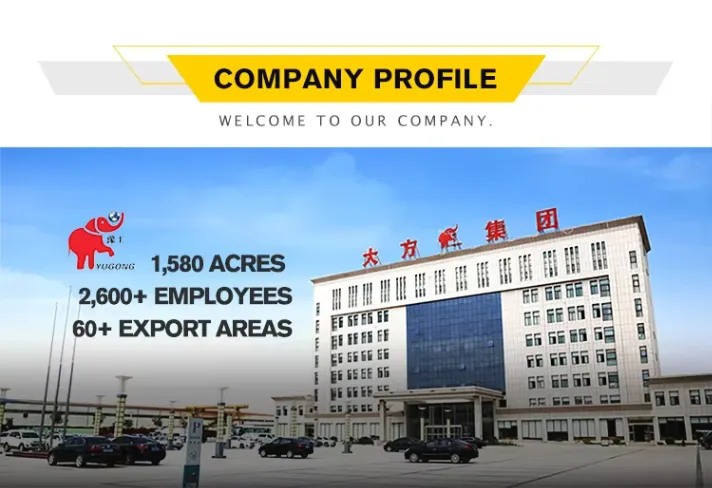
Henan Dafang Heavy Machine Co., Ltd. is a high-tech enterprise specializing in gantry cranes. We hold multiple International tech and safety certifications, like CE, ISO, EAC etc. Our gantry cranes feature intelligent control, remote operation, and reliable quality. Our customers use them widely in warehouses, logistics, production lines, outdoor construction sites, and ports.
Here, you must be very concerned about one question: How much does a gantry crane cost? In this article, with this question, we will introduce Dafang's different gantry crane types, and offer a cost guide to procure suitable gantry cranes.
Understanding Real Procurement Costs Beyond List Prices
When evaluating gantry cranes, procurement teams first focus on equipment cost. A more valuable question is what factors determine if a specific configuration offers acceptable ROI over its 20-30 year service life.
Equipment pricing reflects many engineering decisions like span length, capacity rating, duty cycle classification, etc. Understanding these cost drivers helps teams specify equipment appropriately, avoiding minimum-cost or maximum-specification extremes.
This guide examines technical and commercial factors shaping gantry crane investments, using Henan Dafang Heavy Machine Co., Ltd. 's product range to understand market positioning across capacity classes.
Dafang Gantry Crane Categories
1. Light-duty Gantry Cranes (1-32 Tons)
Designed for small-load lifting, with compact structure and easy operation. Suitable for workshops, warehouses, and construction sites for light material handling.
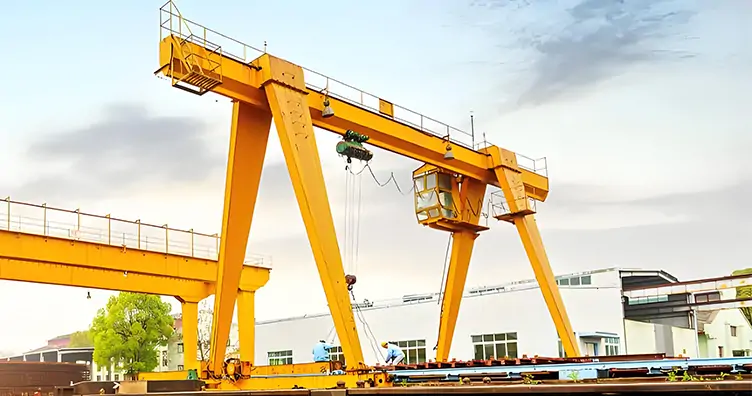
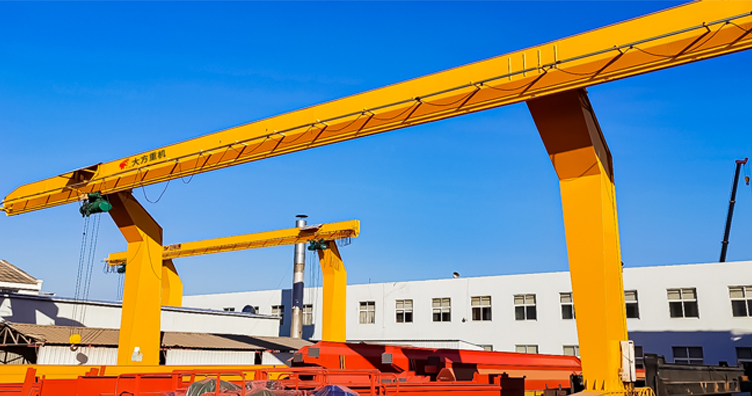
- MH Single Girder Gantry Crane: The workhorse of outdoor storage yards and logistics centers. Single box-girder design minimizes structural weight while providing adequate stiffness for spans from 7.5 to 31.5 meters. Compatible with CD/MD wire rope hoists or European compact hoists depending on headroom requirements.
- Typical applications: Building material yards, prefabrication facilities, small-to-medium warehousing operations handling palletized goods or bundled steel products.
- Cost considerations: Galvanized finish versus painted steel affects initial investment by 8-12% but extends service life in humid or coastal environments. Span above 25 meters typically requires double-girder construction regardless of capacity.
- L Single Girder Gantry Crane: L-shaped leg design allows one side to operate against existing buildings or storage racks, recovering usable yard space. Particularly relevant for stone processing facilities and building material suppliers with limited site area.
- Cost considerations: The offset girder design requires more sophisticated structural calculation than standard MH configuration but reduces civil works cost by eliminating one rail foundation line.
- Portable Gantry Crane: Aluminum or steel construction with caster-mounted legs for applications requiring mobility—maintenance workshops, temporary construction sites, small fabrication shops. Capacities from 0.5 to 10 tons with adjustable spans.
- Cost considerations: Aluminum construction costs 30-40% more than steel but reduces weight by 60%, critical for facilities where equipment must be relocated frequently without mechanized transport.
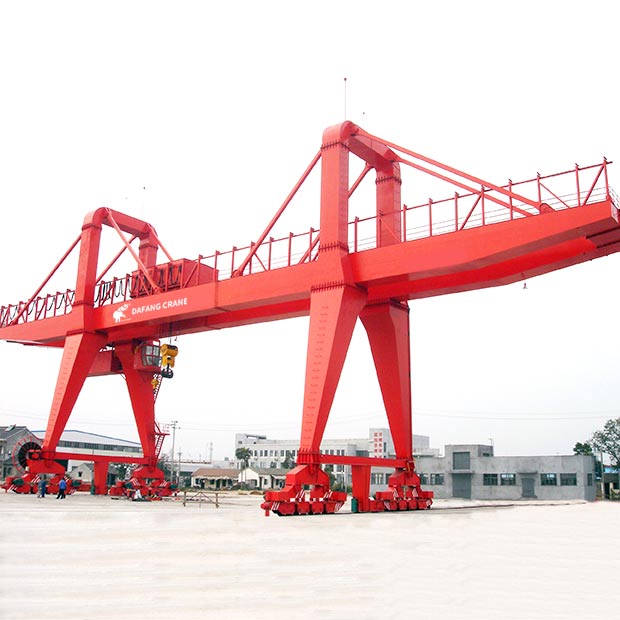
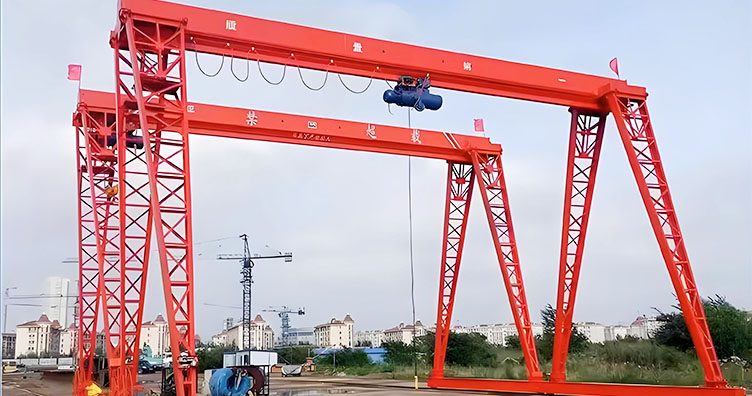
- MH Truss Gantry Crane: Triangulated girder structure provides high strength-to-weight ratio for large spans. Reduces structural material cost by 20-25% compared to solid web girders at spans exceeding 30 meters.
- Typical applications: Railway freight yards, hydroelectric projects, bridge component assembly, outdoor equipment storage where wind loading and span length dominate design.
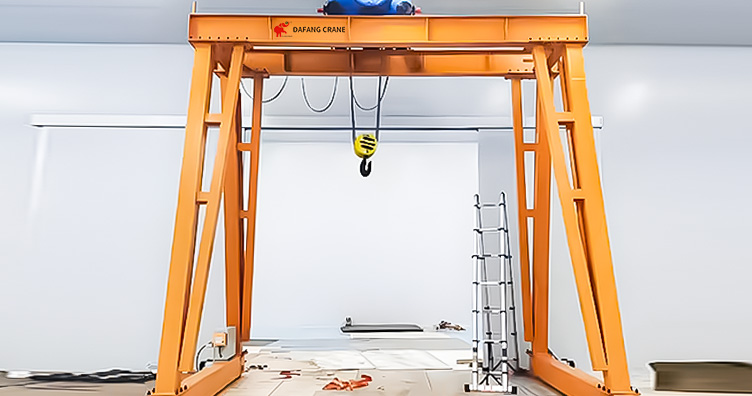
- BMH Semi Gantry Crane: One leg on ground rail, opposite side supported by building structure. Reduces ground coverage and foundation cost by 40-50% versus full gantry configuration.
- Cost considerations: Building structure must be verified adequate to support crane loads—retrofitting existing facilities may require column reinforcement offsetting foundation savings.
2. Heavy-duty Gantry Cranes (50-500+ Tons)
Engineered for heavy-load scenarios, adopting high-strength steel and advanced hydraulic systems. Used in large-scale projects like bridge construction and equipment installation, with excellent stability and load-bearing capacity.
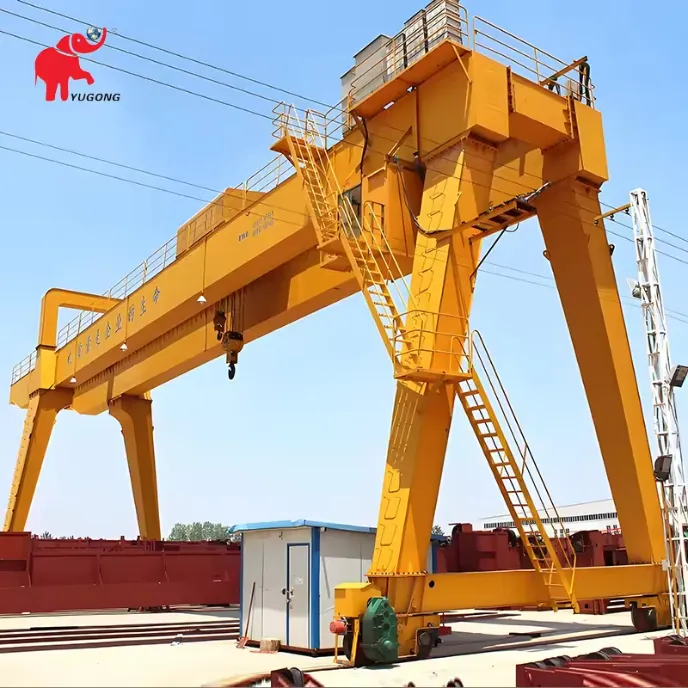
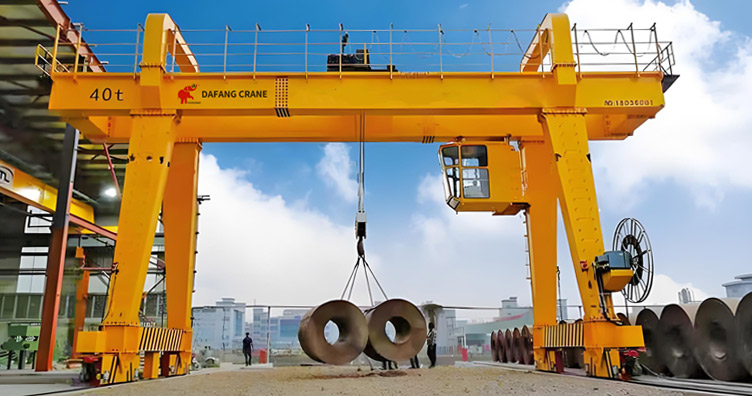
- MG Double Girder Gantry Crane: Standard heavy-capacity configuration with two parallel box girders supporting a trolley traveling between them. Spans from 18 to 50 meters, capacities to 500 tons, duty ratings A5 through A7.
- Typical applications: Shipyards, steel mills, precast concrete plants, heavy fabrication facilities handling reactor vessels, turbine components, or structural steel assemblies.
- Cost considerations: Duty rating directly impacts component selection and structural design factors. A6 rating versus A5 increases investment by approximately 15-20% through heavier structural sections, upgraded bearings, and higher-specification drives.
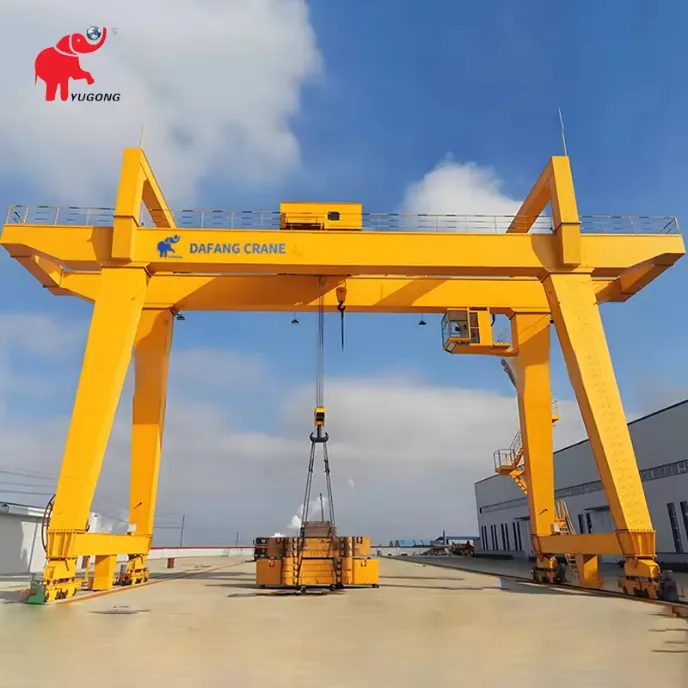
- A Type Double Girder Gantry Crane: A-frame leg geometry provides superior lateral stability for heavy loads with high centers of gravity. Commonly specified for port container handling and metallurgical applications.
- Cost considerations: The geometry requires more structural steel than box-leg designs but eliminates need for separate lateral bracing—net cost impact typically 5-8% premium versus U-type configuration at equivalent capacity.
- U Type Double Gantry Crane: Box-leg design with large portal opening allows vehicle passage beneath crane. Lower overall height versus A-type, relevant for sites with overhead clearance restrictions.
- Typical applications: Open-air freight yards, docks, construction material storage where fork trucks or vehicles must operate beneath the crane during lifting operations.
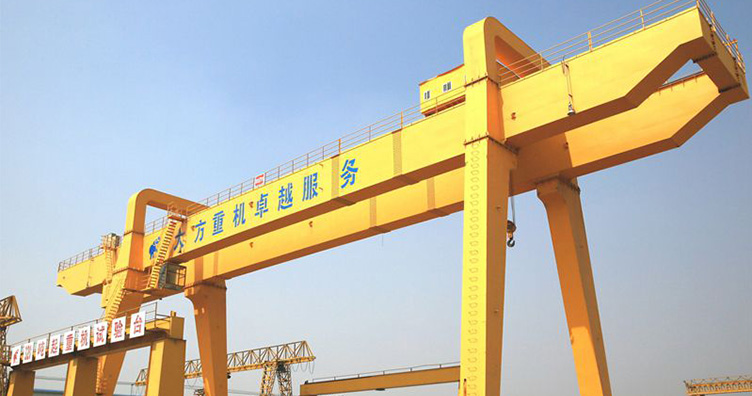
A Type Double Girder Gantry Crane
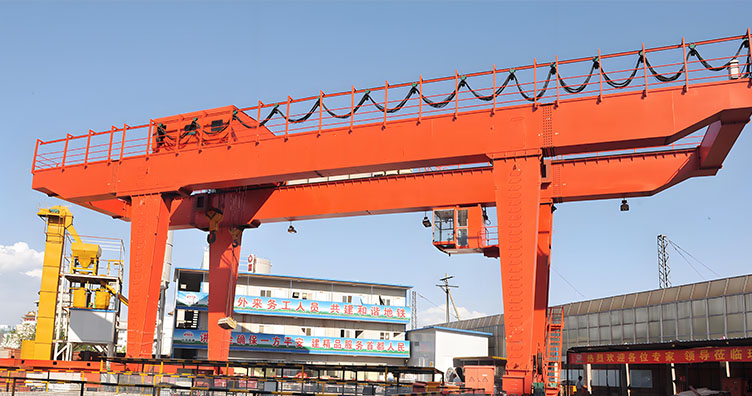
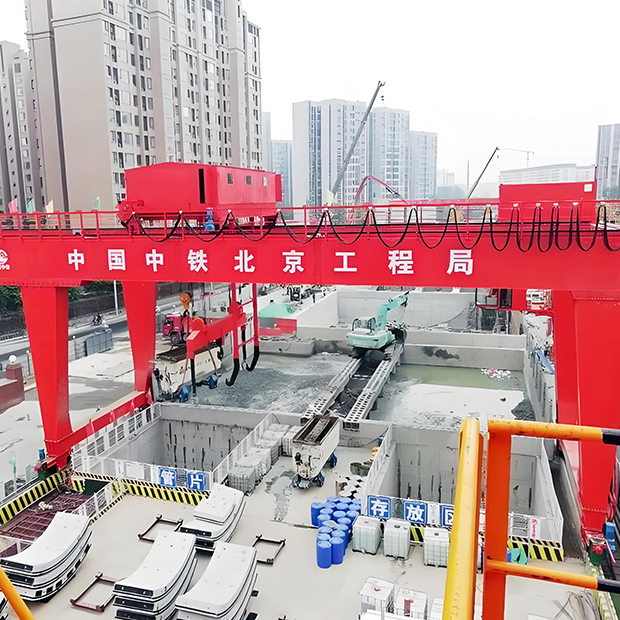
Construction Projects
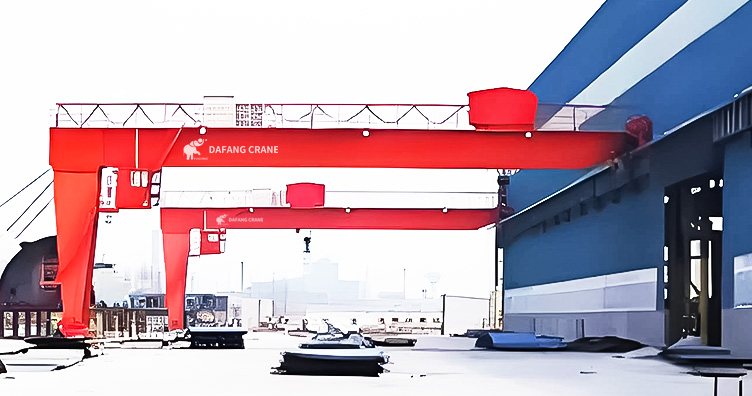
3. Specialized Container Handling Equipment
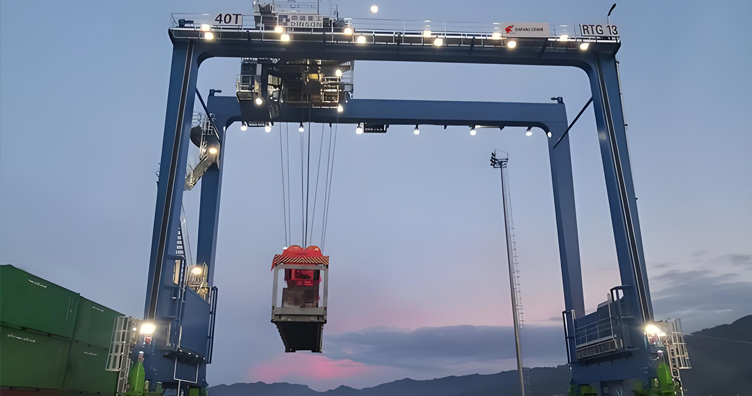
- Electric RTG Crane (Rubber Tyred Stacking Crane): Diesel-electric or full-electric configuration, 40-65 ton capacity, stacking heights to 1-over-5 containers. Operates without fixed rails, enabling flexible yard layout changes.
- Cost considerations: Full-electric RTG costs 25-35% more than diesel-electric but eliminates fuel costs and reduces maintenance intervals. ROI crossover typically occurs at 18-24 months in high-utilization operations.
- Electric RMG Crane (Rail Mounted Stacking Crane): Fixed-rail operation, spans 18-35 meters, automated positioning capability. Lower operating cost per container move than RTG but requires permanent rail infrastructure.
- Cost considerations: Rail foundation and installation adds 20-30% to delivered equipment cost but enables automated operation and integration with terminal operating systems—relevant for facilities processing 150,000+ TEU annually.
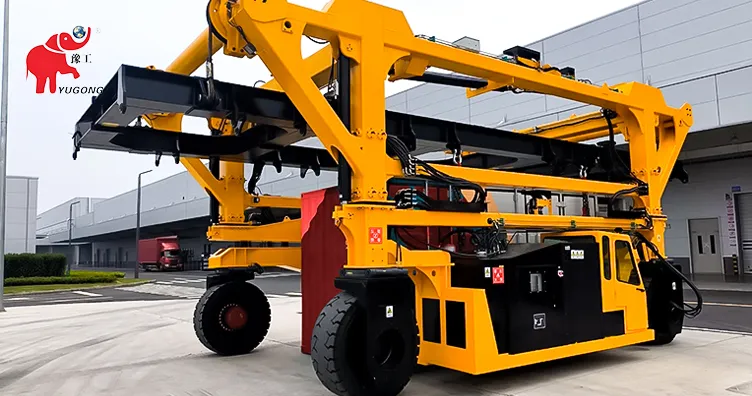
- Container Straddle Carrier: Integrated loading, transport, and stacking capability. Stacks 3-4 high, operates without fixed infrastructure. Higher operating cost per TEU than RTG/RMG but provides maximum layout flexibility.
- Cost considerations: Equipment cost per unit is highest among container handling options, but eliminates separate horizontal transport equipment—total fleet investment depends on terminal layout and operational model.
4. Port Cranes And Marine Equipment
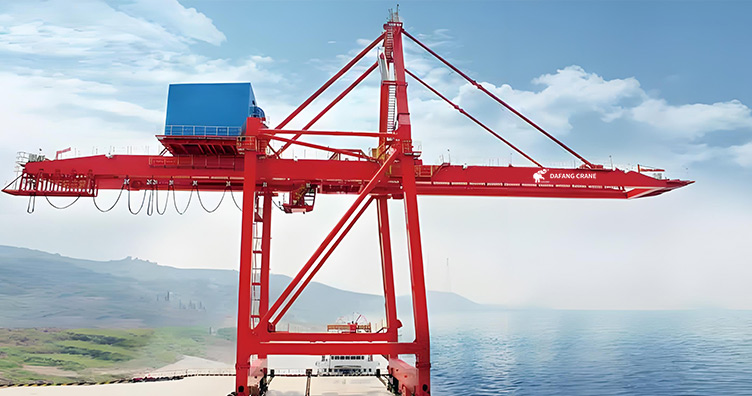
- STS Crane (Ship-to-Shore Crane): Rail-mounted quay cranes, outreach to 65 meters, lift capacities to 75 tons under spreader. Productivity specifications typically expressed in container moves per hour (25-40 moves standard, 50-65 moves for high-performance units).
- Cost considerations: High-performance configurations with tandem/triple lift capability and faster hoisting speeds cost 40-60% more than standard productivity units. Justification depends on vessel size mix and berth productivity targets.
- Marine Travel Lift: U-frame design with soft slings, capacities from 32 to 800 tons for yacht and small vessel handling. Operate on paved surfaces without fixed rails.
- Typical applications: Yacht service facilities, small shipyards, government harbor facilities launching patrol craft or work boats.
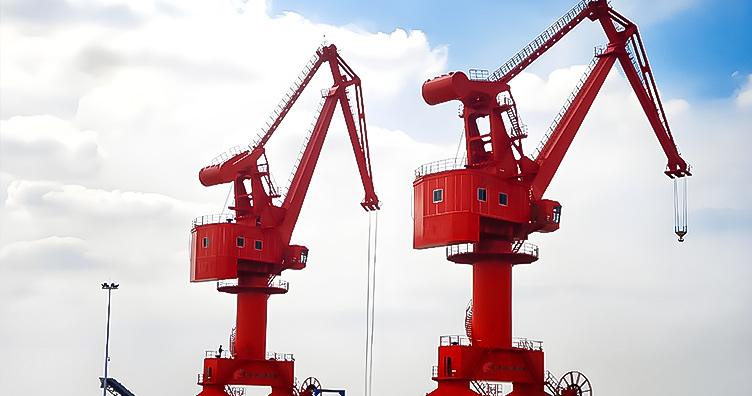
- Dock Portal Crane (Level Luffing): Rotating boom configuration for general cargo and bulk material handling. Reach varies with boom angle; load capacity decreases with radius.
- Cost considerations: Level-luffing mechanism costs 30-40% more than conventional luffing but maintains constant hook height during slewing—critical for container handling or precise placement operations.

What Determines Gantry Crane Prices Level?
Technical Specification Factors of Crane Costs
- Span Length: Structural material requirements rise exponentially over 30-meter spans. A 35-meter span crane is about 40% costlier than a 25-meter one with equivalent capacity due to girder depth, bracing, and deflection control.
- Capacity and Load Distribution: Concentrated loads need heavier structural sections than equivalent uniformly distributed loads. Cranes for single 50-ton loads need different engineering than those for multiple 10-ton loads totaling 50 tons.
- Duty Cycle Classification: FEM duty ratings from A1 to A8 define design factors, component specs, and service life. Each step increases investment by about 12-18% through upgraded components and structural design.
- Operating Environment: Coastal installations need upgraded corrosion protection, adding 10-15% to base cost to prevent premature deterioration. Temperature extremes require component modifications. Environmental specs should match actual site conditions.
Commercial Factors of Gantry Crane Costs
- Customization Level: Standard catalog configurations cost 20-30% less than highly customized designs. Customization is justified when it improves operations or layout, not just for spec maximization.
- Delivery Timeline: Expedited production has a 15-25% premium. Most projects accept 12-16 week lead times. Expedition should address real constraints.
- Certification Requirements: CE marking, ATEX compliance for explosion-proof applications, seismic certification add engineering cost and component specs. Specify only necessary certifications.
- After-Sales Support Structure: Manufacturers offering comprehensive support may quote higher equipment prices but lower total project cost. Evaluate total cost, not just equipment purchase.
Comparative Investment Analysis
Investment Range by Capacity Class
Investment levels vary by specification factors. Representative ranges (actual projects need detailed spec):
- Light-Duty Single Girder (5-20 tons, 20m span): Standard construction, A3-A4 duty, basic controls, painted finish, CD/MD hoist.
- Heavy-Duty Double Girder (80-100 tons, 30m span): A5-A6 duty, VFD controls, radio remote, galvanized/painted hybrid finish, European hoist, PLC integration.
- Container RTG (40 tons under spreader, 1-over-5 stacking): Full-electric drive, anti-sway system, automated positioning, terminal OS interface.
- STS Quay Crane (65 tons under spreader, 50m outreach): Standard productivity (30-35 moves/hour), conventional luffing, operator cabin, basic automation.
Hidden Cost Factors Procurement Teams Miss
- Foundation and Installation: Civil works are 15-25% of total cost for fixed-rail gantry cranes. Site conditions affect foundation design cost.
- Electrical Infrastructure: Power supply, distribution, and control wiring add 8-15% to equipment cost. VFD cranes need harmonic filtering and power factor correction, which may not be in base quotes.
- Commissioning and Training: Budget 3-5% of equipment cost. Underbudgeting delays startup and raises overall costs.
III. How Much Does A Gantry Crane Cost?
After learning about the various types of gantry cranes offered by Dafang, the next step is to look at their gantry crane specifications and gantry crane price lists.
| Crane Type | Lifting Capacity | Span Range (m) | Lifting Height (m) | Reference Price (USD) |
|---|---|---|---|---|
| Light-duty Gantry Crane | 1-32ton | 7.5-31.5 | 6-30 | $5,000 ~ $40,000 |
| Heavy-duty Gantry Crane | 50-500ton | 18-50 | 10-40 | $45,000 ~ $600,000 |
| Container Crane | 10-75ton | 20-40 | 12-20 | $35,000 ~ $150,000 |
| Port Crane | 25-300ton, customization up to 800 ton | 15-35 | 15-30 | $50,000 ~ $450,000, customization up to $1,000,000 |
Note: Prices vary by customization, parameters, market factors, and purchase quantity. For accurate quotes, please contact the sales manager directly.
Making Investment Decisions
Gantry crane procurement needs to balance technical requirements, budget, and long-term operational costs. The optimal investment matches equipment specs to actual demands.
Start by clearly defining requirements such as capacity, duty cycle, span, height, environmental conditions, and regulatory standards. Evaluate total project cost, including civil works and commissioning, and consider total cost of ownership. Work with manufacturers providing complete technical documentation and engineering support.
Henan Dafang Heavy Machinery Co., Ltd. offers engineering support throughout gantry crane procurement. Contact our engineering team with your requirements for application-specific recommendations and transparent cost structure.
After reading this article, you now understand the types and pricing of gantry cranes. Hopefully, this article will provide some insights for your selection of a gantry crane. Please contact us if you have any questions.


Frequently Asked Questions
How does duty cycle classification affect equipment pricing and when should I specify higher duty ratings?
Duty cycle impacts structural design and component specs. Each step from A3 to A4 to A5 raises investment by about 12-18% due to better components. Specify based on actual operating hours and load frequency. A3 is enough for under 4-hour daily light-loading operations. General manufacturing with 8-hour daily operation needs at least A5. Continuous heavy-duty operations need A6-A7.
What does standard gantry crane pricing cover and what costs appear later as surprises?
Standard quotes cover crane structure, hoist, basic controls, and standard finish. Additional costs include foundation design (15-25%), electrical distribution (8-15%), special environmental protection (10-15%), expedited delivery (15-25%), commissioning supervision and training (3-5%), and spare parts (2-4%). Request detailed scope clarification at the quotation stage to avoid budget surprises.
How should I evaluate equipment cost versus total cost of ownership?
Initial equipment cost is 60-70% of 20-year ownership cost for well-specified cranes. Other costs are energy consumption (10-15%), scheduled maintenance (8-12%), unscheduled repairs (5-8%), and component replacement (5-7%). European-style cranes with VFD drives cost 15-25% more initially but save on energy and maintenance. Duty cycle matters; A6-rated cranes in heavy service are worth the premium, while light-duty applications may not get ROI on advanced features.
Can I reduce costs by purchasing used or refurbished gantry cranes?
Used equipment costs 40-60% of new models but needs careful evaluation. Critical factors are remaining structural fatigue life, component obsolescence, certification status, and hidden reconditioning costs. It's suitable for temporary projects. New equipment is better for permanent installation.