






Modern manufacturing and warehouse environments face increasing pressure to move materials faster, reduce worker injuries, and make better use of limited floor space. As production volumes grow and ergonomic standards tighten, the demand for compact, reliable workstation lifting equipment has never been higher.
Manual lifting remains one of the leading causes of musculoskeletal injuries in industrial settings. Beyond the human cost, repetitive lifting slows cycle times, increases fatigue-related errors, and raises long-term operational expenses. Mechanical lifting solutions that integrate directly into workstations address these problems at the source.
Among the available options, the wall mounted jib crane stands out as one of the most cost-effective workstation lifting solutions for factories, warehouses, and maintenance facilities. It provides localized lifting coverage within a defined work zone without consuming valuable floor space or requiring a dedicated support column.
Table of Contents
What Is a Wall Mounted Jib Crane?
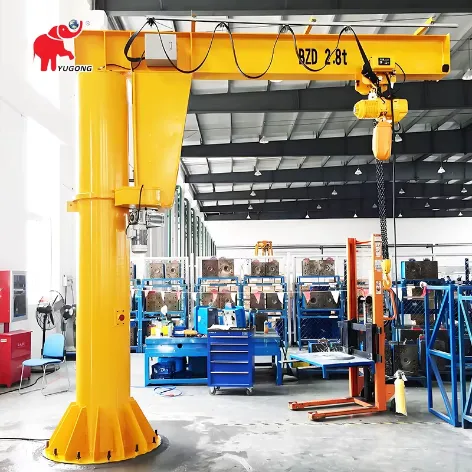
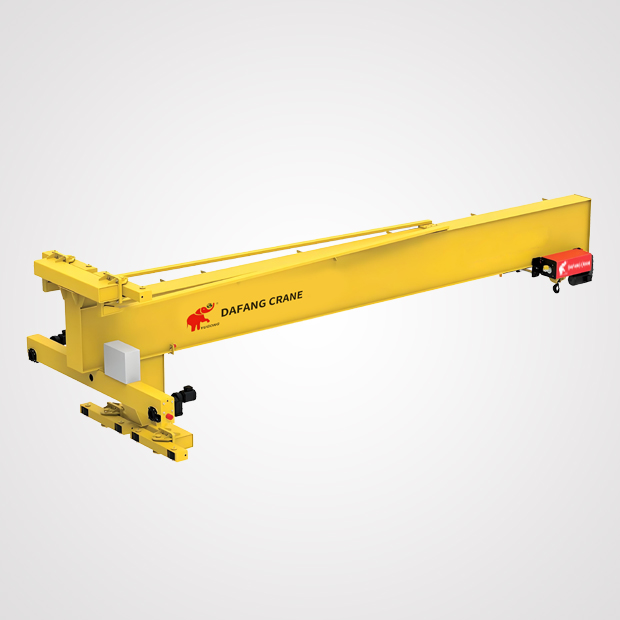
A wall mounted jib crane is a cantilevered lifting device that attaches directly to a building wall, structural column, or steel support framework. It consists of a horizontal boom arm that extends outward from the mounting point and supports a hoist for vertical load movement.
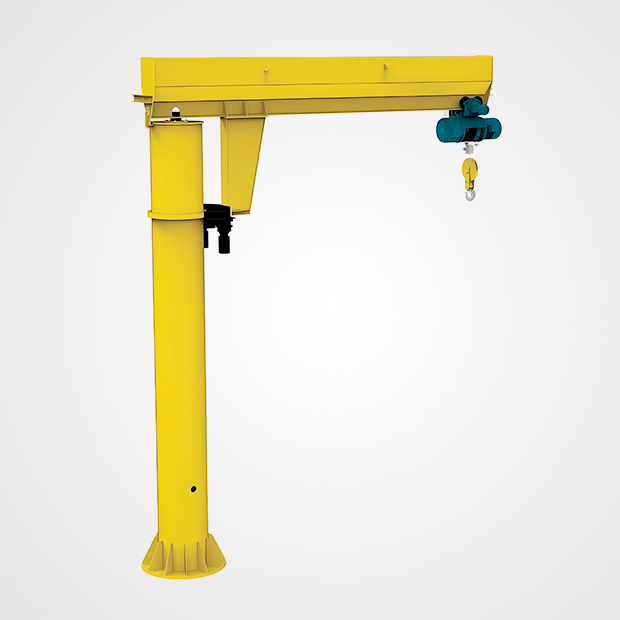
Unlike a pillar mounted jib crane, which requires a freestanding floor-anchored mast, a wall mounted jib crane transfers its load forces directly into the building structure. This eliminates the need for a separate foundation, reduces installation footprint, and makes the system well-suited for spaces where floor clearance is essential.
Wall mounted jib cranes are available in capacities ranging from light-duty assembly applications under 500 kg up to heavy-duty industrial configurations handling 5 tons or more.
Get Free Quote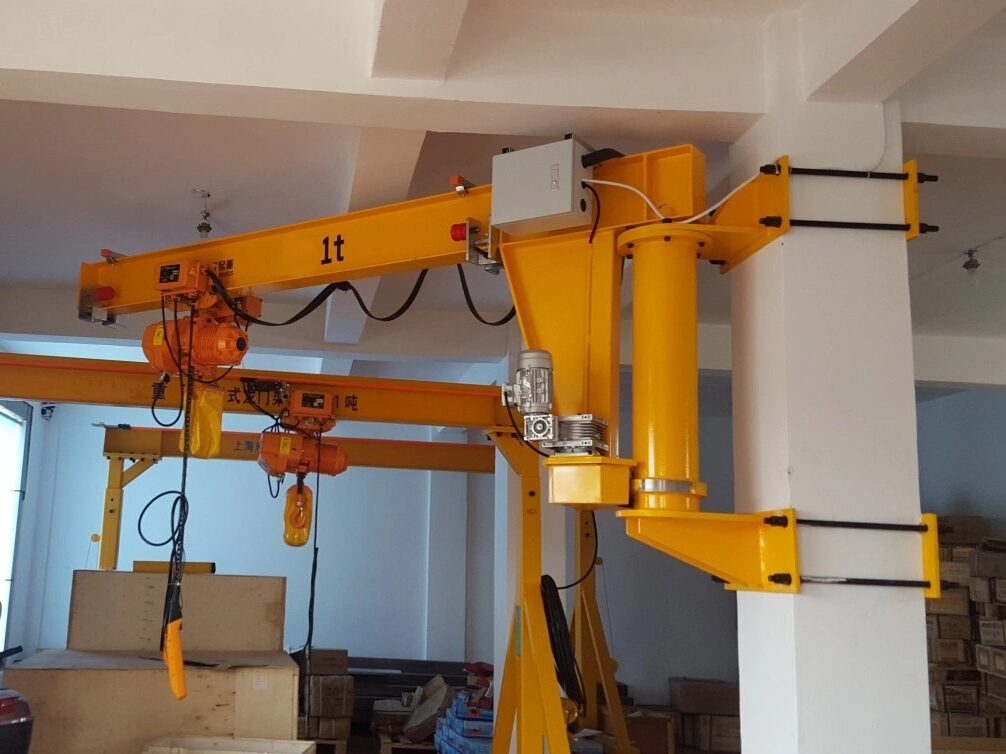
Main Components of a Wall Mounted Jib Crane
Jib Boom
The jib boom is the horizontal arm that extends from the wall bracket. It serves as the primary load-bearing structure and determines the crane's reach. Booms are typically fabricated from structural steel I-beams or box sections, selected based on the required span length and rated capacity. Longer booms or higher capacities require deeper sections to maintain acceptable deflection limits under load.
Wall Bracket Assembly
The wall bracket is the mounting interface between the crane and the building structure. It includes an upper tie-rod or trunnion and a lower pivot bearing, both of which anchor to the wall at separate heights. The vertical spacing between these two attachment points creates a moment couple that distributes the crane's load into the wall. Proper bracket design and anchor specification are critical, as the wall or column must be capable of handling both vertical and horizontal force components.
Hoist System
The hoist provides the vertical lifting motion. Three common configurations are used in industrial applications:
Hoist selection depends on lifting frequency, required speed, load weight, and available power supply.
Trolley Mechanism
The trolley allows the hoist to travel horizontally along the lower flange of the jib boom. This gives the operator the ability to position loads anywhere along the boom length, not just at the tip. Trolleys may be push-type for manual movement or motorized for powered travel. Motorized trolleys improve handling speed and reduce operator effort, particularly for heavier or more frequent lifts.
Rotation Mechanism
The rotation mechanism allows the jib boom to swing through its working arc around the wall attachment point. Manual rotation relies on the operator pushing the boom by hand and is suitable for lighter cranes or low-frequency use. Powered rotation is available for heavier cranes or applications where consistent, controlled positioning is required. Rotation angles of 180 degrees are most common for wall-mounted configurations, though extended arcs up to 270 degrees are available depending on mounting geometry.
How Does a Wall Mounted Jib Crane Work?
The operating sequence of a wall mounted jib crane follows a straightforward pattern that becomes intuitive for operators after minimal training.
- The operator positions the hoist over the load by rotating the boom and traveling the trolley to the correct horizontal location.
- The hook is lowered using the hoist control pendant or remote.
- The rigging is attached to the load.
- The hoist lifts the load to the required height.
- The operator rotates the boom and repositions the trolley to move the load to the target location.
- The hoist lowers the load into position.
- Rigging is detached and the crane is returned to standby position.
This process eliminates the need for manual carry or awkward positioning of heavy components. Load movement becomes faster, more controlled, and significantly safer than manual handling methods. In assembly-line environments, consistent cycle times improve because operators are not fatigued by repeated lifting tasks.
Key Advantages of Wall Mounted Jib Cranes
Space-Saving Design
Because the crane mounts directly to an existing wall or column, no floor space is consumed by a support mast or foundation. In tight workstation layouts where every square meter matters, this is a significant operational advantage. Equipment, pallets, and personnel can move freely through the work area without obstruction from a central crane column.
Improved Workstation Efficiency
A jib crane positioned directly at the point of use removes travel time and intermediate handling steps. Components can be lifted, repositioned, and placed without leaving the work zone. This reduces handling time per cycle and allows operators to focus on value-added tasks rather than material movement.
Enhanced Operator Safety
Replacing manual lifting with mechanical handling directly reduces the risk of strains, sprains, and cumulative musculoskeletal injuries. Wall mounted jib cranes allow a single operator to safely manage loads that would otherwise require multiple personnel or present unacceptable injury risk. This is particularly important in high-frequency assembly environments and maintenance areas where heavy components must be handled repeatedly.
Cost-Effective Installation
Compared to bridge cranes or gantry systems, a wall mounted jib crane requires significantly less structural investment. There is no need for runway beams, end trucks, or dedicated bay structure. Installation typically involves anchor bolt work, bracket mounting, and electrical connection — a scope that is manageable within a moderate capital budget.
Flexible Integration
Wall mounted jib cranes can be installed at virtually any workstation along a production line, at individual machine positions, or within maintenance bays. Multiple cranes can cover adjacent stations independently without interfering with each other. They integrate cleanly with conveyors, assembly fixtures, and automated equipment.
Common Applications of Wall Mounted Jib Cranes
Manufacturing Workshops
In production environments, wall mounted jib cranes support assembly operations by positioning components onto fixtures, loading and unloading CNC machines, and transferring subassemblies between stations. They are particularly effective at reducing bottlenecks at manually intensive workstations.
Warehouses
Warehouse packaging stations and material transfer points benefit from jib cranes when loads exceed practical manual handling limits. Cranes positioned at receiving docks, packing benches, or staging areas improve throughput without requiring a full overhead crane system.
Maintenance Departments
Equipment repair areas frequently require the ability to extract, reposition, and reinstall heavy components such as motors, gearboxes, pump assemblies, and hydraulic units. A wall mounted jib crane provides maintenance technicians with controlled lifting capability directly at the service bench or machine bay.
Automotive Industry
Automotive assembly lines use jib cranes at workstations handling engine components, transmissions, body subassemblies, and tooling. The ability to position loads precisely within a defined zone supports the tight cycle time requirements of automotive production.
Metal Fabrication Shops
Welding stations and fabrication cells benefit from jib cranes for positioning weldments, rotating assemblies, and transferring finished parts to inspection or staging areas. The localized reach of a jib crane suits the cell-based layout common in custom fabrication environments.
Wall Mounted Jib Crane vs Pillar Mounted Jib Crane
| Feature | Wall Mounted Jib Crane | Pillar Mounted Jib Crane |
|---|---|---|
| Floor Space Requirement | None — mounts to existing structure | Requires floor space for base column |
| Installation Method | Anchored to wall or structural column | Floor-anchored mast with foundation |
| Rotation Coverage | Typically 180° – 270° | Up to 360° |
| Cost | Lower — no mast or foundation | Higher — foundation and mast required |
| Structural Requirements | Suitable wall or column must be available | Can be installed anywhere with adequate floor slab |
| Typical Applications | Workstations along walls, machine bays | Open floor areas without suitable wall support |
The wall mounted configuration is the preferred choice when suitable building structure exists and floor space is constrained. When no adequate wall or column is available, or when 360-degree rotation is required, a pillar mounted crane becomes the more practical solution.
How to Choose the Right Jib Crane
Selecting the correct wall mounted jib crane requires a structured evaluation of the workstation requirements before specifying equipment.
Lifting Capacity: Identify the maximum load weight including rigging hardware. Apply an appropriate safety factor — most industrial applications select a crane rated at 125% to 150% of the maximum anticipated load to provide a safe operational margin.
Boom Length: Determine the horizontal reach required to cover all load pickup and placement positions within the work zone. Account for the wall offset dimension, as the effective working radius begins at the pivot point, not the wall face.
Rotation Requirements: Define the angular coverage needed to reach all positions within the work area. In most workstation configurations, 180 degrees is sufficient. Larger arcs require confirmation that no structural interference exists within the swing path.
Available Building Structure: The wall or column to which the crane will be mounted must be structurally capable of supporting the imposed loads. This requires an engineering assessment of the existing structure before crane selection is finalized.
Duty Cycle: Higher operating frequency places greater demand on the hoist, trolley, and mechanical components. Applications with frequent daily lifts require equipment with a higher duty classification rating. Underspecifying duty class is a common and costly mistake.
Hoist Selection: Match the hoist type to the required lifting speed, load capacity, and control precision. Electric chain hoists are the most common choice for standard industrial applications. Wire rope hoists are preferred for heavier loads or where fine positioning control is required.
Future Expansion Needs: Where workstation requirements may increase, specifying a crane with capacity headroom and structural allowance for future upgrades avoids costly replacement later.
Conclusion
Wall mounted jib cranes provide an efficient, space-saving, and cost-effective solution for workstation lifting in manufacturing, warehousing, and maintenance environments. By eliminating the need for a floor-mounted support column, they preserve valuable floor space while delivering the lifting capability needed to protect operators and improve material handling efficiency.
Proper selection requires a careful assessment of lifting capacity, boom reach, rotation coverage, and the structural capability of the mounting location. Matching the crane specification to the actual duty cycle and anticipated growth of the application avoids the common errors that lead to early equipment replacement.
Modern jib cranes, equipped with smart controls and ergonomic features, contribute directly to productivity, operator safety, and workplace quality standards that industrial operations increasingly demand.
Contact our engineering team ,Request a customized wall mounted jib crane solution tailored to your workstation requirements.

Frequently Asked Questions
Q: What is the maximum capacity of a wall mounted jib crane?
Most standard wall mounted jib cranes are available in capacities from 125 kg up to 5,000 kg. Custom configurations for heavier loads are possible but require detailed structural analysis of the mounting location. For loads consistently above 3 tons at extended boom lengths, an overhead bridge crane or pillar mounted solution may be more appropriate from a structural and cost standpoint.
Q: Can a wall mounted jib crane be installed on any wall?
No. The wall or column must be structurally capable of carrying the combined vertical, horizontal, and bending loads imposed by the crane at its rated capacity. Reinforced concrete columns and substantial steel structural members are typically suitable. Unreinforced masonry, lightweight partition walls, and timber-framed structures are generally not adequate without significant reinforcement. A structural engineering assessment is required before specifying or installing any wall mounted jib crane.
Q: How much floor space does a wall mounted jib crane require?
The crane itself requires no floor space for a support column or foundation. The working area beneath the boom arc should remain clear of fixed obstructions to allow full use of the crane's rotation range, but this is operational clearance rather than a structural footprint. This is one of the primary reasons wall mounted jib cranes are preferred in space-constrained workstation layouts.
Q: What is the typical rotation angle of a wall mounted jib crane?
The most common rotation angle is 180 degrees, which covers a full semicircular working zone in front of the wall. Extended arcs up to 270 degrees are available in some configurations, depending on the bracket design and clearance conditions at the mounting location. Full 360-degree rotation is not achievable with a wall mounted design; a pillar mounted crane is required for that capability.
Q: How do I determine the correct boom length for my application?
Measure the maximum horizontal distance from the crane's pivot point on the wall to the farthest load pickup or placement position required within the work zone. Add a margin of 200–300 mm to account for rigging geometry. This gives the minimum effective reach. Confirm that this length is structurally achievable within the crane's rated capacity at the selected wall mounting location, as longer booms increase the bending load on the wall structure.