






Efficient vessel handling is a core operational requirement for marinas, shipyards, fishing facilities, and naval installations worldwide. As global recreational boating participation grows and commercial marine operations expand, the demand for reliable, high-capacity boat lifting equipment continues to increase. Safe vessel handling — from water to land and back — is not simply a matter of convenience. It directly affects vessel condition, maintenance quality, workforce safety, and the overall productivity of a marine facility.
A marine boat hoist is among the most important pieces of capital equipment a marina or shipyard will purchase. The right selection enables faster vessel turnaround, safer maintenance operations, and better use of yard space. The wrong selection creates operational bottlenecks, increases damage risk, and generates higher long-term costs than a correctly specified system would have incurred.
This guide explains what marine boat hoists are, how they work, the major types available, and how to evaluate options when making a procurement decision.
Table of Contents
What Is a Marine Boat Hoist?
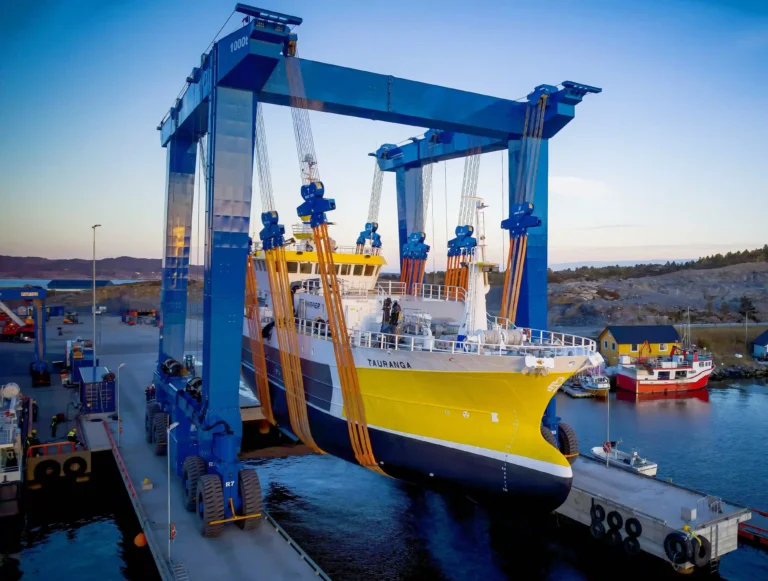
A marine boat hoist is a specialized lifting and transport machine designed to raise vessels from the water, move them across a marine facility on land, and position them for storage, maintenance, or re-launching. Unlike conventional industrial cranes, which are designed for fixed-point lifting of general cargo, marine boat hoists are built specifically for the geometry, load distribution, and environmental conditions associated with vessel handling.
The primary functions of a marine boat hoist are: lifting vessels from the water surface at a dock or slipway; transporting boats across the yard surface to a storage or service position; positioning vessels for bottom cleaning, painting, inspection, and repair; and returning vessels to the water at the end of a service period or storage season.
Get Free Quote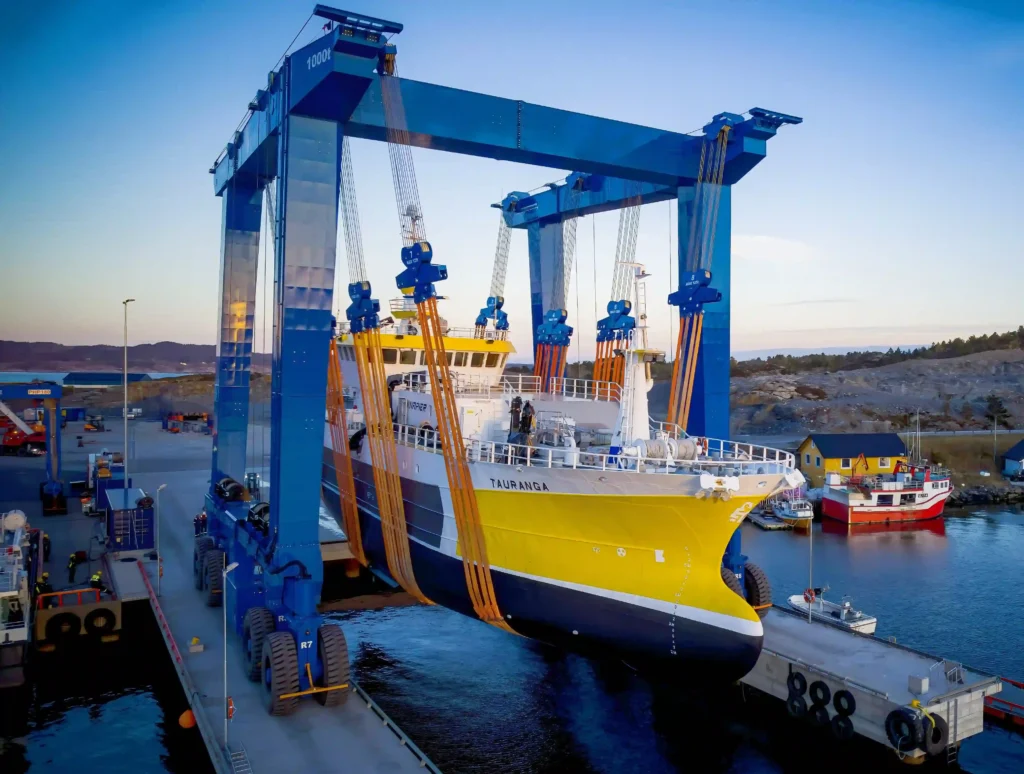
How Does a Marine Boat Hoist Work?
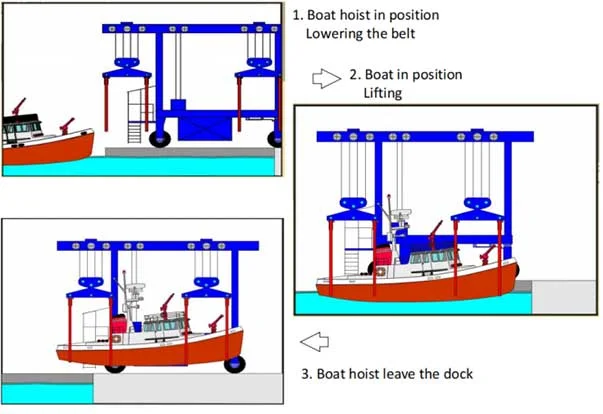
The operating sequence of a marine boat hoist follows a consistent pattern across types and capacities, with variations in the specific mechanisms involved.
- Step 1 — Sling placement: Lifting slings are positioned under the hull at engineered lift points specified for the vessel type. Correct sling placement is critical to distributing the load safely and avoiding hull damage during the lift.
- Step 2 — Hydraulic lifting: The lifting system raises the slings, taking up slack and then lifting the vessel clear of the water. On multi-beam machines, synchronized lifting systems control the rate of rise at each lift point to keep the vessel level and balanced throughout the operation.
- Step 3 — Vessel transportation: Once clear of the water and confirmed stable, the hoist transports the vessel across the yard surface to the designated storage or service location. Travel distance and surface condition affect the speed and smoothness of this operation.
Synchronized lifting systems manage load distribution across multiple lift points, compensating for uneven hull geometry and preventing localized overloading. Steering mechanisms on mobile equipment provide the precise maneuverability required to navigate yard surfaces, dock approaches, and tight storage areas. Load balancing technology continuously monitors sling tension and adjusts hydraulic pressure to maintain safe load distribution throughout the operation.
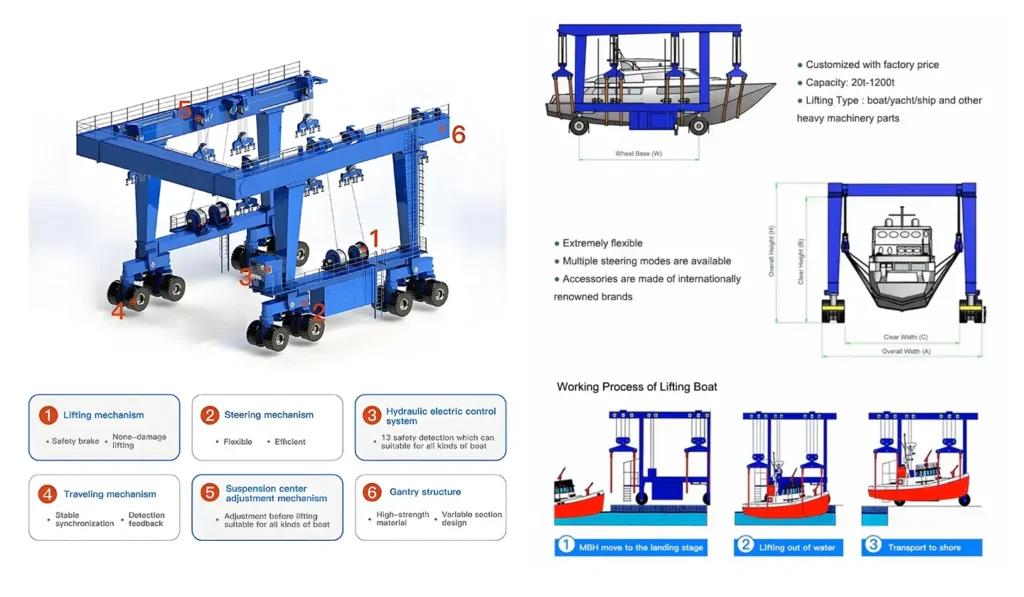
Main Components of a Marine Boat Hoist
Main Frame Structure
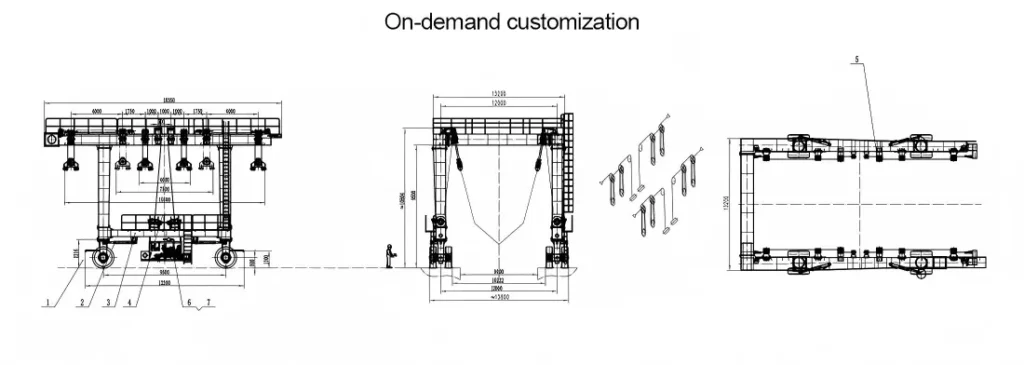
The main frame is the load-bearing structural skeleton of the hoist. It carries all lifting forces, dead loads, and dynamic loads generated during operation. Marine boat hoist frames are fabricated from structural steel and must be designed for corrosion resistance in saltwater and coastal environments. Frame geometry determines the maximum vessel beam and draft that can be accommodated.
Hydraulic Lifting System
The hydraulic system provides the lifting force. Hydraulic cylinders, pumps, control valves, and fluid management components work together to raise and lower the sling beams smoothly and under precise control. Multi-cylinder systems use synchronization controls to equalize lifting rate across all lift points, preventing uneven loading of the hull.
Sling System
Lifting slings are the interface between the hoist and the vessel hull. They are typically fabricated from high-strength woven polyester webbing or wire rope with protective sleeving. Sling width, length, and placement position are determined by the vessel's hull form and the manufacturer's lift point specifications. Sling condition is a critical safety factor — worn, cut, or contaminated slings must be replaced immediately.
Steering Mechanism
Mobile and travel lift configurations use hydraulic or electric steering systems on multiple axles to provide the tight turning radius and precise positioning required at dock approaches and in congested yard areas. All-wheel steering capability allows crab steering — moving the machine laterally — which is essential for maneuvering in confined spaces.
Drive System
The drive system propels the machine across the yard surface. Diesel-hydraulic and diesel-electric drive systems are most common in current production. Electric and hybrid drive systems are increasingly available as the industry moves toward lower-emission operations. Drive system selection affects fuel operating cost, noise levels, and maintenance requirements.
Electrical Control System
The electrical control system governs all machine functions including travel, steering, lifting, and safety interlock systems. Modern boat hoist control systems incorporate programmable logic controllers, operator display panels, and increasingly, remote monitoring and diagnostic interfaces. Safety systems within the electrical control architecture include overload protection, emergency stop, and sling tension monitoring.
Common Applications of Marine Boat Hoists
Marinas
Marina operations represent the largest single market for marine boat hoist equipment. Seasonal storage programs require hoisting hundreds of vessels out of the water in autumn and returning them in spring. Year-round maintenance, antifouling painting, and equipment service require regular haul-out capability. A well-specified marina boat hoist enables efficient throughput, reduces vessel damage, and supports a premium service offering to berth holders.
Shipyards
Commercial and repair shipyards use boat hoists for vessel lift-out prior to hull inspection, bottom painting, thruster replacement, propeller work, and general below-waterline maintenance. Shipyard operations often involve heavier and more structurally complex vessels than marina environments, requiring higher capacity equipment and robust sling systems adapted to commercial hull forms.
Commercial Fishing Facilities
Fishing vessel operators require regular maintenance access for hull inspection, antifouling treatment, and gear maintenance. Boat hoists at fishing harbors and processing facilities enable vessels to be hauled quickly and returned to service with minimal downtime. Operational efficiency directly affects fishing program economics, making reliable and fast vessel handling a high priority.
Naval and Government Facilities
Naval facilities operate patrol boats, rescue craft, survey vessels, and support ships that require regular maintenance and inspection. Government marine facilities often have stringent safety requirements and may need equipment certified to specific standards. Capacity requirements range from small rigid inflatable boat handling up to major naval vessel maintenance operations.
Yacht Service Centers
Premium yacht service centers handle high-value vessels where damage risk and handling quality are paramount. Luxury yacht maintenance requires precise sling placement, careful transit across yard surfaces, and accurate positioning in service cradles. Travel lifts and high-capacity mobile hoists at yacht service centers are often configured with wider sling beam geometry and finer load control capability than standard configurations.
Advantages of Marine Boat Hoists
Operational Flexibility
Mobile and travel lift configurations can serve multiple dock positions, storage areas, and service locations within a facility with a single machine. This flexibility eliminates the need for multiple fixed lifting points and allows the facility layout to adapt over time without major infrastructure changes.
Reduced Infrastructure Costs
Compared to fixed dry dock or synchrolift systems, mobile marine boat hoists require significantly less civil construction. A paved yard surface, a suitable haul-out slip, and utility connections for the machine are typically sufficient. This reduces the capital cost of establishing vessel handling capability at a new facility.
Faster Vessel Handling
Experienced operators with well-maintained equipment can complete a haul-out, yard transit, and storage positioning cycle in under 30 minutes for standard yacht-sized vessels. This throughput rate supports high-volume marina storage programs and commercial maintenance schedules.
Improved Vessel Safety
Purpose-designed sling systems, synchronized lifting, and load monitoring technology reduce the risk of hull damage during handling compared to improvised lifting methods. Consistent, controlled operations with trained operators and maintained equipment produce lower damage incident rates than facilities relying on older or less appropriate equipment.
Efficient Yard Space Utilization
The ability to position vessels precisely in storage allows marina operators to maximize the number of vessels stored in a given yard area. Close-stacking configurations managed by a capable boat hoist increase storage revenue per square meter of yard space.
Lower Long-Term Operating Costs
Modern electric and hybrid drive boat hoists offer significantly lower fuel and maintenance costs than older diesel-hydraulic machines. Preventive maintenance programs that keep equipment in good condition reduce unplanned downtime and extend the productive service life of the investment.
Marine Boat Hoist Capacity Guide
| Capacity Range | Typical Vessel Type |
|---|---|
| 10 – 50 tons | Small recreational boats, RIBs, day cruisers |
| 50 – 150 tons | Sailing yachts, motor yachts, small workboats |
| 150 – 500 tons | Large motor yachts, commercial vessels, fishing boats |
| 500+ tons | Superyachts, naval craft, large commercial vessels |
Capacity selection should be based on the maximum vessel displacement to be handled, not the average. Key factors influencing the required capacity include vessel displacement at full fuel and water load, the weight of onboard equipment and fixed ballast, the range of vessel types the facility expects to handle over the equipment's service life, and planned growth in the size of vessels served.
Specifying capacity with a conservative margin above the current maximum vessel size is sound practice. The incremental cost difference between adjacent capacity classes is typically modest compared to the cost of replacing or supplementing equipment that proves undersized.
How to Choose the Right Marine Boat Hoist
Lifting Capacity
Establish the maximum vessel displacement to be handled, including full load conditions. Apply a margin of at least 20 percent above the current maximum to accommodate future vessel growth and occasional overweight conditions.
Vessel Dimensions
The maximum beam, draft, and length of vessels to be handled determine the required sling beam width, minimum under-keel clearance, and the turning geometry needed to position the machine at the dock. Verify that the selected hoist configuration can accommodate the largest vessels in the current and anticipated fleet.
Marina Layout
The yard surface area, dock approach geometry, storage layout, and access routes constrain which hoist configurations are practical. A machine with excellent capacity and specifications is not useful if it cannot navigate the facility. Site surveys and layout analysis should precede equipment specification.
Frequency of Use
High-frequency operations with multiple lifts per day require equipment with a higher duty rating, more robust hydraulic systems, and a more comprehensive preventive maintenance program. Light-duty applications with seasonal haul-out cycles have different reliability and maintenance requirements.
Travel Distance
Longer travel distances between the dock and storage areas increase cycle time and place greater demands on the drive system and tires. Facilities with extended travel routes should evaluate drive system efficiency and tire wear rates as part of the total cost of ownership analysis.
Environmental Conditions
Saltwater environments accelerate corrosion on structural steel, electrical systems, and hydraulic components. Equipment specified for marine environments should incorporate corrosion protection measures including hot-dip galvanizing or high-build epoxy coating, marine-grade electrical enclosures, and stainless steel fasteners at exposed connections.
Automation Requirements
Facilities with high throughput demands or labor cost pressures may benefit from semi-automated or assisted operation systems that improve cycle consistency and reduce operator skill dependency. Evaluate the automation options available on candidate equipment and their compatibility with the facility's operational model.
Maintenance Considerations
Assess the availability of qualified service technicians, spare parts lead times, and the manufacturer's service infrastructure in the facility's region. Equipment with strong local service support delivers better operational availability than technically superior equipment with poor aftermarket support.
Maintenance and Safety Requirements
Daily Inspections
Before each operating shift, the hoist should be inspected for hydraulic leaks, sling condition, tire pressure and wear, control system function, and structural integrity at visible connection points. Any abnormality should be investigated and resolved before the machine is placed in service.
Hydraulic System Maintenance
Hydraulic fluid condition, filter status, and cylinder seal integrity should be monitored on a scheduled basis. Contaminated hydraulic fluid is a leading cause of component failure in marine equipment operating in dusty or saltwater environments. Fluid sampling and analysis is recommended for high-utilization machines.
Sling Inspection
Slings should be inspected before each lift for cuts, abrasion, chemical contamination, and UV degradation. Slings with visible damage, deformation, or wear beyond manufacturer limits must be removed from service immediately. Sling replacement is a routine maintenance cost that should be budgeted from the outset.
Tire and Steering Checks
Tire condition and inflation pressure should be verified daily. Uneven tire wear can indicate steering geometry issues that affect machine handling and increase tire replacement frequency. Steering system function should be confirmed at the start of each shift.
Load Testing
Periodic proof load testing verifies the integrity of the lifting system and structural components. Testing should be conducted following any structural repair, hydraulic system overhaul, or incident involving overloading or abnormal loading conditions.
Operator Training
Machine operators should be formally trained on the specific equipment type, sling placement procedures, load assessment, emergency procedures, and the facility's vessel handling protocols. Well-trained operators produce fewer incidents and better vessel handling outcomes than untrained personnel regardless of equipment quality.
Conclusion
Marine boat hoists are essential infrastructure for any facility involved in vessel handling, maintenance, storage, or repair. The selection of the correct type, capacity, and configuration directly affects operational throughput, vessel safety, and the long-term economics of the facility.
The right choice depends on a thorough understanding of the vessels to be handled, the facility layout, the required frequency of operations, and the environmental conditions at the site. Modern marine boat hoists — increasingly incorporating electric drives, smart monitoring, and automation technology — deliver better performance, lower emissions, and longer service lives than previous generations of equipment.
Buyers who evaluate total lifecycle cost, confirm compatibility with their facility's operational requirements, and select manufacturers with credible service support will achieve the best outcomes from their investment.
Request a customized marine boat hoist solution for your marina or shipyard project.
Contact our engineering team for vessel handling and equipment selection consultation.

Frequently Asked Questions
Q: What is the difference between a marine travel lift and a boat hoist?
The terms are often used interchangeably, but there is a distinction in common usage. A marine travel lift refers specifically to the self-propelled, rubber-tyred portal crane configuration that is the most widely used type of mobile marine lifting equipment. "Boat hoist" is a broader category that includes travel lifts as well as fixed hoists, rail-mounted systems, and other vessel lifting configurations. When evaluating equipment, it is more useful to specify the type and configuration required rather than relying on generic terminology.
Q: How do I know what lifting capacity I need?
Start with the maximum displacement of the heaviest vessel your facility currently handles or expects to handle within the equipment's service life. Add the weight of fuel, water, and equipment on board at full load. Apply a minimum safety margin of 20 percent above this figure. The result is the minimum rated capacity for your application. Consult the equipment manufacturer with your vessel data for confirmation.
Q: What yard surface is required for a mobile marine boat hoist?
Mobile boat hoists require a firm, level or gently graded paved surface capable of supporting the ground pressure generated by the loaded machine. Reinforced concrete is the preferred surface for main travel routes and storage areas. The civil engineer designing the yard should receive the manufacturer's specified wheel loads and axle configurations to design an adequate pavement section.
Q: Can a boat hoist handle catamarans and multi-hull vessels?
Yes, but multi-hull vessels require a different sling configuration and may require a wider sling beam spacing than standard monohull vessels of the same displacement. When specifying equipment for a facility that handles catamarans or trimarans, provide the manufacturer with the maximum beam dimension between the outer hulls. Most travel lift configurations can accommodate multi-hull vessels with appropriate sling rigging, but this should be confirmed explicitly during the specification process.