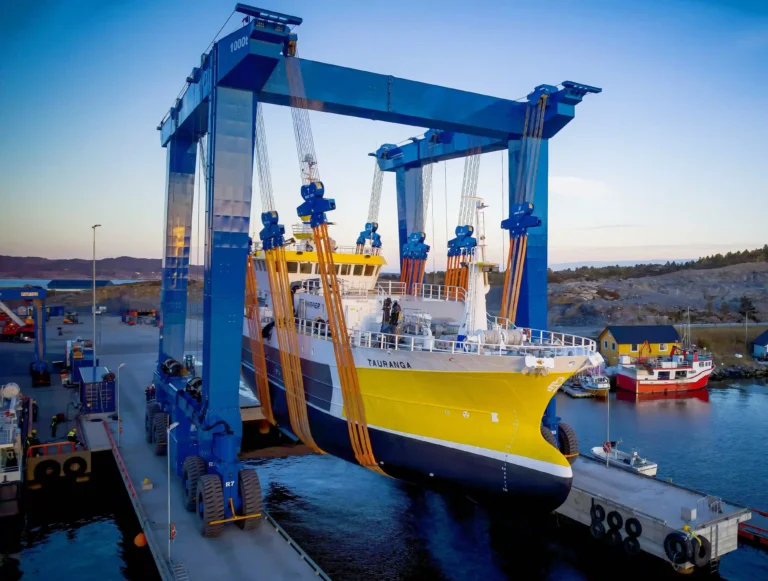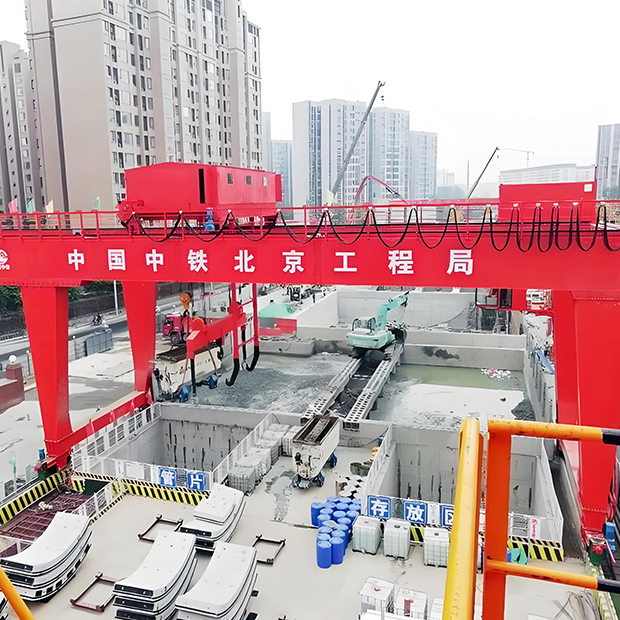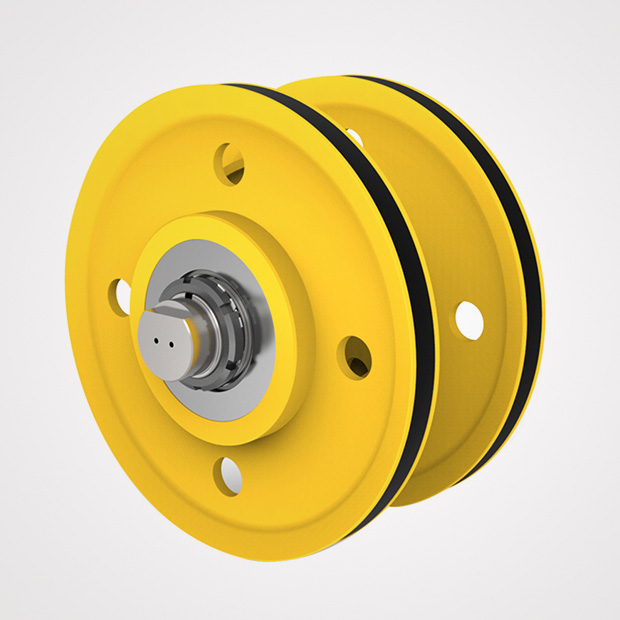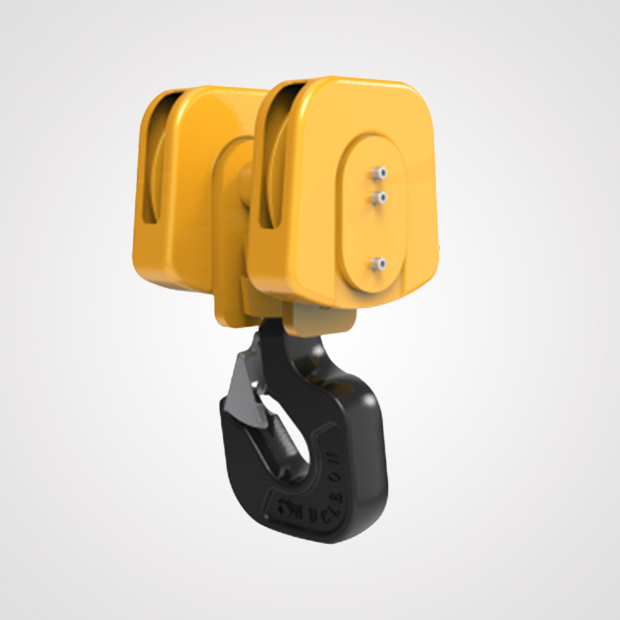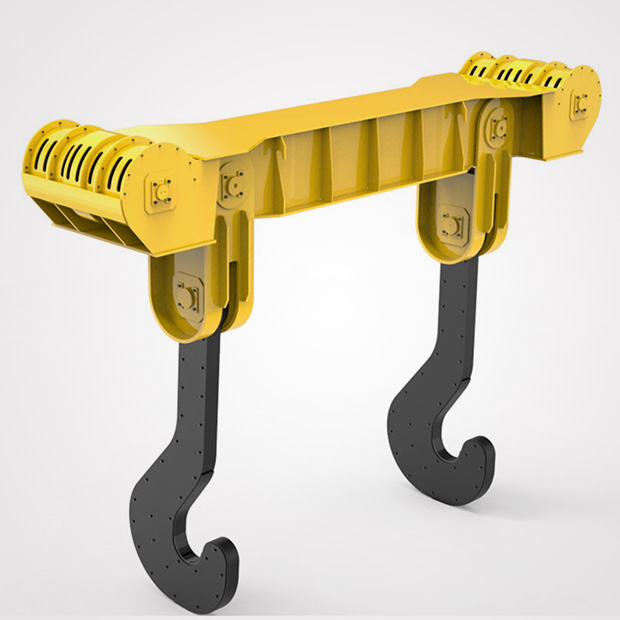







Selecting the correct marine boat hoist for a marina or boat yard is one of the most consequential capital equipment decisions a facility operator will make. The machine will handle vessels worth hundreds of thousands — sometimes millions — of dollars, carry significant safety responsibilities, and define the operational ceiling of the facility for the next two to three decades.
This guide provides a systematic framework for determining what size marine boat hoist a boat yard operation requires, covering vessel data collection, capacity methodology, dimensional requirements, yard layout factors, and the forward-looking planning needed to protect a long-term investment.
Table of Contents
How Marine Boat Hoists Are Rated
Marine boat hoists are rated primarily by lifting capacity — the maximum load the machine is designed to lift, expressed in metric tons. This rating represents the safe working load (SWL), which incorporates a design safety factor applied to the structural and mechanical components of the machine.
Design safety factors for marine lifting equipment are typically in the range of 1.5 to 2.0 applied to the calculated breaking strength of structural components, meaning the machine's physical failure threshold is substantially above its rated SWL. However, the SWL is the operational limit and must not be exceeded in service.
| Capacity Range | Typical Application |
|---|---|
| 10 – 30 tons | Small recreational boats, RIBs, day cruisers |
| 30 – 100 tons | Sailing yachts, motor yachts, fishing vessels |
| 100 – 300 tons | Large motor yachts, commercial workboats |
| 300 – 500 tons | Superyachts, ferries, government vessels |
| 500+ tons | Large commercial vessels, specialized naval applications |
Capacity rating alone does not determine the correct hoist for a facility. A machine rated at 75 tons may be entirely inappropriate for a facility handling 60-ton vessels if its inside clear width cannot accommodate the beam of those vessels. Conversely, a 150-ton rated machine may be correctly specified for a facility whose current vessels average 80 tons if the forward planning justifies the additional capacity. Capacity is the starting point for sizing, not the complete specification.
Key Factors When Sizing a Marine Boat Hoist
Vessel Weight (Displacement)
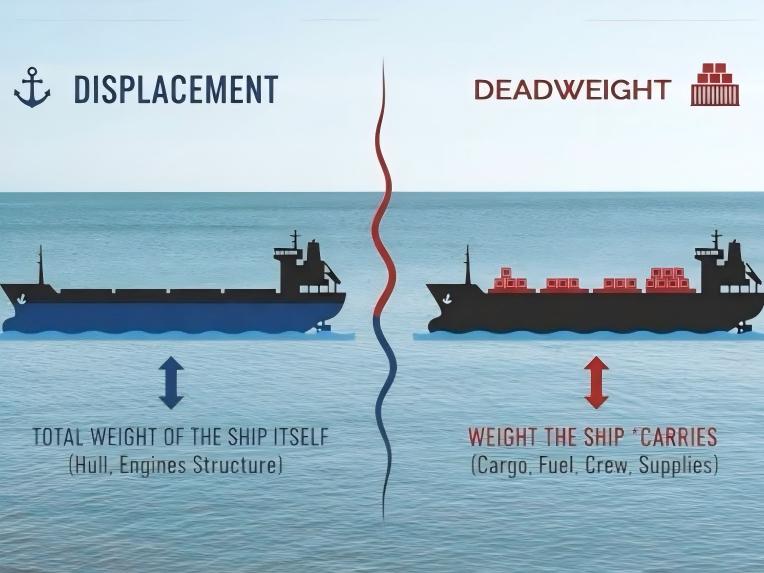
Vessel displacement — the weight of water displaced by the hull, equal to the vessel's actual weight — is the primary driver of hoist capacity selection. The critical error many buyers make is relying on the advertised or brochure displacement of a vessel rather than the actual operational weight.
For sizing purposes, buyers should collect the full load displacement for every vessel type in the current fleet, identify the maximum, and add a minimum 20 percent margin above that figure to establish the minimum required hoist capacity. This margin provides safe operating clearance for variation in vessel condition and occasional vessels heavier than the nominal fleet maximum.
Additional weight considerations include recently installed onboard equipment, structural modifications, and the weight of water retained in bilges or tanks after launching. Vessels with lifting keels or drop-down appendages may have different effective weights in different configurations.
Vessel Length
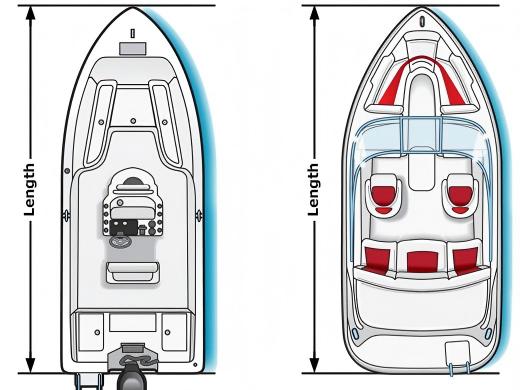
Vessel length affects handling logistics, sling positioning, and yard maneuverability rather than directly determining hoist capacity. Longer vessels require sling attachment points spaced farther apart along the hull, which in turn requires that the hoist's sling adjustment range cover the required spacing.
For travel lift configurations, the frame geometry determines the maximum sling spacing achievable. Buyers should verify that the proposed machine can be configured with sling positions appropriate to the longest vessels to be handled, not just the heaviest.
In the yard, longer vessels require greater travel clearances around storage positions and wider turning corridors for the hoist machine. Site planning must account for the turning envelope of the hoist carrying the longest vessel in the fleet.
Vessel Beam (Width)
The beam of the vessel — its maximum width — determines the minimum inside clear width required between the legs of the hoist frame. The machine must straddle the vessel without contact, with adequate working clearance on each side for sling placement and hull access.
As a general rule, the inside clear width of the hoist should exceed the maximum beam of the widest vessel to be handled by at least 600 to 800 mm on each side. For travel lift configurations, the sling beam width is adjustable within a range defined by the machine model — confirm that the required beam accommodation falls within the machine's adjustment range.
Multi-hull vessels — catamarans and trimarans — present a specific challenge. Their effective beam may be significantly wider than comparably-sized monohulls, requiring either a wider machine or a specialized rigging configuration. Facilities serving a significant proportion of multi-hull vessels should address this requirement explicitly at specification stage.
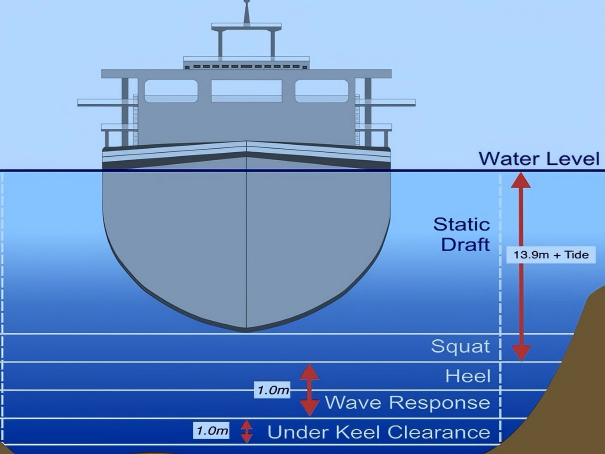
Vessel Draft
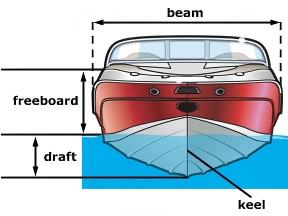
Vessel draft — the depth of the hull below the waterline — determines how far the hoist must extend below the water surface to position slings under the keel. At most haul-out facilities, the slings are positioned while the vessel is afloat, meaning the hoist must be able to deploy slings to a depth sufficient to reach the keel at the deepest point.
Deep-draft sailing yachts with fin keels are the most demanding vessel type in this regard. A vessel with a 2.5-meter draft requires that the sling attachment system can be positioned and managed at that depth from the dock surface. Haul-out slip depth and water level variation due to tidal range must also be factored into the operational assessment.
Future Vessel Growth
Marina and boat yard businesses grow. Vessel sizes in both the recreational and commercial marine markets have trended consistently larger over recent decades. A boat yard that today handles vessels up to 80 tons will very likely be handling vessels in the 100-to-120-ton range within the operational life of the equipment.
Building capacity headroom into the initial specification is the most cost-effective way to accommodate this growth. The incremental capital cost of stepping up to a higher capacity machine at initial procurement is substantially less than the cost of replacing or supplementing equipment that proves inadequate as the vessel mix evolves.
Marine Boat Hoist Capacity Selection Guide
Small Marina Operations
Small recreational marinas typically handle dayboats, small powerboats, sailing dinghies, and entry-level cruising vessels. Maximum vessel displacement in this segment is generally below 15 tons, with the majority of vessels well under 10 tons.
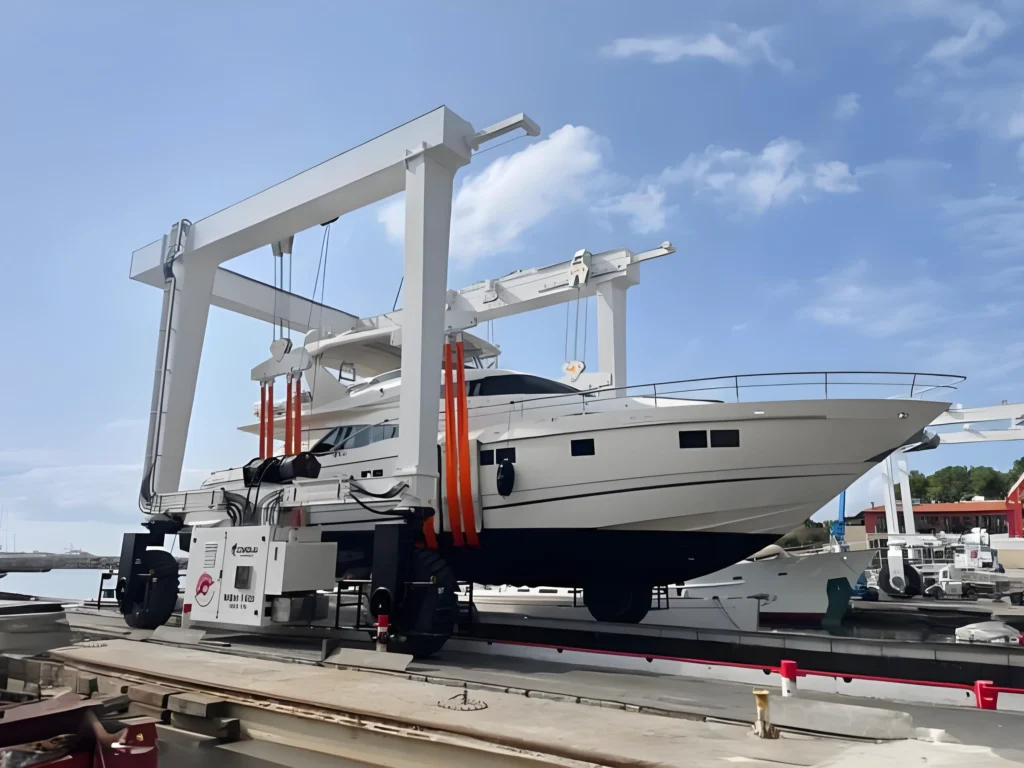
A boat hoist in the 15-to-30-ton capacity range is appropriate for these facilities, providing operational headroom above the current vessel mix while remaining appropriately scaled for the infrastructure and revenue model of a small marina. Mobile configurations in this capacity range offer the flexibility to serve multiple haul-out points without large infrastructure investment.
Yacht Service Centers
Yacht service centers handling sailing yachts and motor yachts in the 12-to-30-meter range typically encounter vessel displacements ranging from 15 tons for smaller sailing yachts to 150 tons or more for large performance motor yachts. The vessel mix is often diverse, requiring the hoist to accommodate both heavy motor yachts and wide-beam catamarans.
A marine travel lift in the 75-to-150-ton range with adjustable sling beam width is the most common configuration for this segment. Facilities with a significant proportion of large motor yachts or superyachts in the fleet should evaluate capacity in the 150-to-300-ton range.
Commercial Fishing Ports
Commercial fishing vessels are typically heavier relative to their length than recreational craft, with substantial machinery, equipment, and fuel loads. Working fishing boats in the 15-to-30-meter range may displace 50 to 150 tons in operational condition.
Fishing port facilities should size equipment based on the heaviest vessel in the active fleet using full operational displacement including fuel, ice, and gear. Capacity in the 100-to-200-ton range covers most coastal fishing fleets, with larger offshore fishing vessels requiring equipment in the 200-to-400-ton range.
Shipyards and Heavy Marine Facilities
Shipyards handling ferries, offshore support vessels, government craft, and commercial workboats encounter the widest range of vessel types and displacements. Vessel displacements in this segment range from 100 tons for small workboats to over 1,000 tons for larger ferries and commercial vessels.
Facilities in this segment typically require custom-engineered heavy-duty travel lifts or specialized marine hoists with capacities from 300 tons upward. Structural design, civil infrastructure, and operational planning for these installations require detailed project-specific engineering rather than off-the-shelf selection.
Marine Travel Lift vs Traditional Boat Hoist Sizing
| Factor | Marine Boat Hoist | Marine Travel Lift |
|---|---|---|
| Capacity Range | 10 tons to 500+ tons | 25 tons to 1,000+ tons |
| Span Options | Fixed or limited adjustment | Adjustable sling beam width |
| Mobility | Variable — fixed to fully mobile | Fully mobile, self-propelled |
| Yard Efficiency | High for single-point operations | High for multi-point, multi-vessel operations |
| Vessel Types | Suited to defined vessel categories | Adaptable to wide vessel mix |
| Infrastructure Need | Lower for fixed types | Paved yard surface and haul-out slip required |
| Sizing Flexibility | Limited post-installation | Adjustment within model range |
The key sizing difference between the two systems is that a marine travel lift offers adjustable sling beam width, allowing a single machine to accommodate vessels with significantly different beam dimensions. A fixed boat hoist is typically configured for a specific vessel beam range at installation and cannot be readily adjusted.
For facilities handling a consistent and predictable vessel type, a fixed hoist may be more cost-effective. For facilities serving diverse or growing vessel mixes, the adjustability and mobility of a travel lift provide better long-term operational value.
Beyond Capacity — Other Dimensions That Matter
Inside Clear Width
The inside clear width between the hoist legs is a hard operational constraint — there is no workaround for a vessel that is wider than the machine can straddle. Confirm inside clear width against the maximum beam of all vessels in the fleet, including any multi-hull vessels, before finalizing the specification.
Lifting Height
Lifting height must be sufficient to raise the vessel clear of the dock edge or slip lip during transit, with adequate keel clearance at maximum draft. Tidal range at the facility may increase the effective lifting height requirement at low water.
Overall Crane Height
The overall height of the hoist structure with the vessel in transit position must clear all overhead obstructions on the travel routes between haul-out slip and storage areas. Power lines, building eaves, bridges, and gate structures must all be verified against the machine's loaded transit height.
Wheel Configuration
The number of axles, wheels per axle, and wheel load distribution determine the pavement specification required to support the loaded machine. The manufacturer's wheel load data must be provided to the civil engineer designing the yard surface.
Turning Radius
The minimum turning radius of the hoist, carrying the longest vessel in the fleet, determines the minimum corridor widths and maneuvering space required in the yard layout. Tight yards may constrain machine selection or require layout modifications.
Yard Traffic Flow
Travel routes should minimize distance between haul-out slip and storage areas, avoid pedestrian zones, and allow efficient sequential vessel movements. The hoist's travel width with maximum-beam vessels suspended defines the minimum clear width required on all transit corridors.
Boat Yard Layout Considerations
Water Access
The haul-out slip must be deep enough for the deepest vessel to be handled, wide enough for the hoist to position over the vessel, and structurally adequate to carry the hoist's wheel loads at the water's edge where bearing capacity may be reduced.
Storage Area Design
Storage row spacing, turning corridors, and stand positions should be designed around the hoist's operational dimensions. Efficient layout minimizes travel distance and maneuvering complexity, directly improving throughput capacity.
Travel Routes
All routes must be paved to an adequate load-bearing standard, free of overhead obstructions, and wide enough for the hoist carrying the widest vessel. Route gradients must not exceed the manufacturer's operating limits.
Maintenance Zones
Service areas should be positioned to minimize travel distance from the haul-out slip, allow hoist access from multiple directions, and provide adequate drainage, power supply, and wash-down capability.
Expansion Space
Preserving land area for future storage rows, a second haul-out slip, or a larger hoist is substantially less expensive at initial planning than acquiring and integrating adjacent land later. Long-term development scenarios should be mapped at the outset.
How to Future-Proof Your Boat Hoist Investment
Capacity Growth Planning
Specify at least 25 to 30 percent capacity headroom above the current maximum vessel displacement. Confirm the specification remains appropriate at the 5-year and 10-year business plan horizon. If the plan shows a clear trajectory toward significantly larger vessels, evaluate the next capacity class at initial procurement.
Modular Design Options
Some manufacturers offer frame designs that allow the inside clear width to be extended after initial installation. Where this option is available, it provides meaningful flexibility for accommodating wider vessels without complete machine replacement.
Automation Upgrades
Specifying control system architecture compatible with future automation upgrades — semi-automated sling tensioning, position guidance, or yard management integration — protects the investment as automation technology becomes more accessible in the marine sector.
Smart Monitoring Systems
Onboard load monitoring, hydraulic pressure tracking, and structural health sensing generate operational data supporting predictive maintenance. Specifying these systems at initial procurement is more cost-effective than retrofitting them later.
Electric and Hybrid Power Systems
Electric and hybrid drive boat hoists are increasingly available across the relevant capacity range. Facilities planning for long-term operation should evaluate lower-emission drive options at initial procurement rather than assuming a transition will be straightforward later.
Conclusion
Selecting the correct size marine boat hoist requires a disciplined assessment of vessel displacement, hull dimensions, yard layout, operational frequency, and long-term business trajectory. Capacity in tons is the most visible specification, but inside clear width, lifting height, turning radius, and yard infrastructure compatibility are equally important and must be evaluated systematically.
The most common and costly sizing mistakes — choosing based on current vessels without growth margin, using light-ship displacement data, and optimizing on purchase price rather than lifecycle cost — are all avoidable with thorough upfront planning and accurate vessel data.
A correctly specified marine boat hoist is a 25-to-30-year investment in the operational capacity of a marina or boat yard. Working with an experienced manufacturer who provides engineering support through the specification process, rather than simply quoting a catalog product, is the most reliable path to a decision that serves the facility well over its full operational life.
Request a customized marine boat hoist sizing consultation for your marina or boat yard project.
Contact our engineering team for marina planning and vessel handling equipment support.

Frequently Asked Questions
Q: How much margin above the maximum vessel weight should I specify?
A minimum of 20 percent above the full operational displacement of the heaviest vessel currently in the fleet is a standard starting point. For facilities with significant growth ambitions or a vessel mix concentrated near the upper end of a capacity class, a 30 percent margin provides more useful headroom. The incremental cost of the additional capacity at procurement is consistently less than the cost of replacing undersized equipment.
Q: Does vessel length affect the capacity I need?
Length affects sling positioning requirements and yard maneuverability but does not directly drive the required lifting capacity. Capacity is determined by displacement. However, very long vessels may require a wider sling beam spacing range than shorter vessels of the same weight, so length must be reviewed alongside displacement when selecting a configuration.
Q: What happens if I lift a vessel that exceeds the hoist's rated capacity?
Operating beyond the safe working load is a serious safety violation and structural risk. It accelerates wear on all lifting components, reduces the effective safety factor, and voids the manufacturer's warranty. In severe cases it can result in structural collapse. All vessels should have their operational displacement confirmed before the first lift, and no lift should proceed if the vessel weight is uncertain or unverified.
Q: Can a travel lift handle catamarans?
Yes, with appropriate configuration. The machine must have sufficient inside clear width to straddle the full beam of the catamaran including both hulls. Sling rigging for multi-hull vessels differs from monohull practice and must be specifically configured. Confirm multi-hull handling capability and sling configuration with the manufacturer before purchasing equipment for a facility with a significant catamaran population.
Q: How do I determine the required lifting height?
The minimum lifting height is determined by the distance between the underside of the keel at maximum draft and the height needed to clear all obstructions during yard transit. Add the full tidal range at the facility if applicable. Provide complete site dimensions to the manufacturer to confirm that the standard lifting height is adequate or to specify an extended option.