






The hoist is the working heart of any crane system. It determines how fast loads move, how precisely they can be positioned, how much maintenance the crane requires, and how long the entire system remains reliable in production. Choosing the wrong hoist — wrong capacity, wrong duty class, wrong design — creates a chain of problems that a well-specified crane structure cannot compensate for.
FEM-standard electric wire rope hoists have become the preferred specification for modern industrial crane systems across Europe and increasingly across global manufacturing and logistics markets. The FEM classification framework provides a structured method for matching hoist design to actual operating conditions, replacing the guesswork of conventional duty descriptions with defined, testable engineering parameters.
This guide explains what FEM standards mean in practice, what makes a FEM electric wire rope hoist different from a conventional alternative, and how to work through the selection criteria that determine which hoist specification fits a given application.
What Is a FEM Standard Electric Wire Rope Hoist?
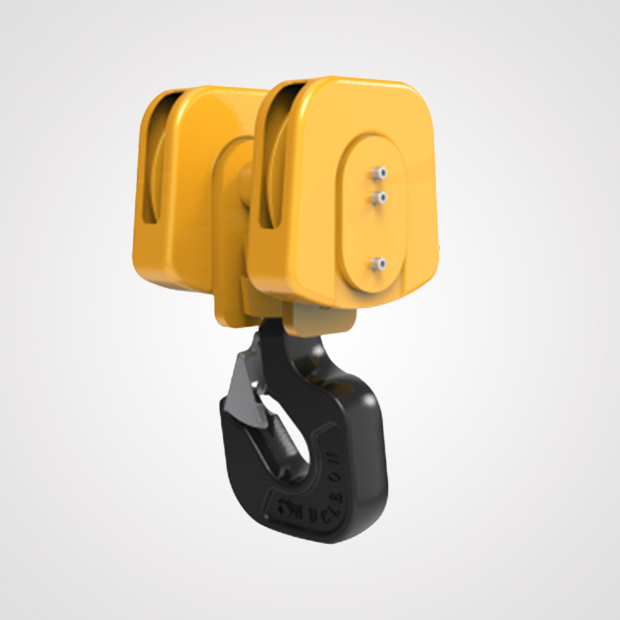
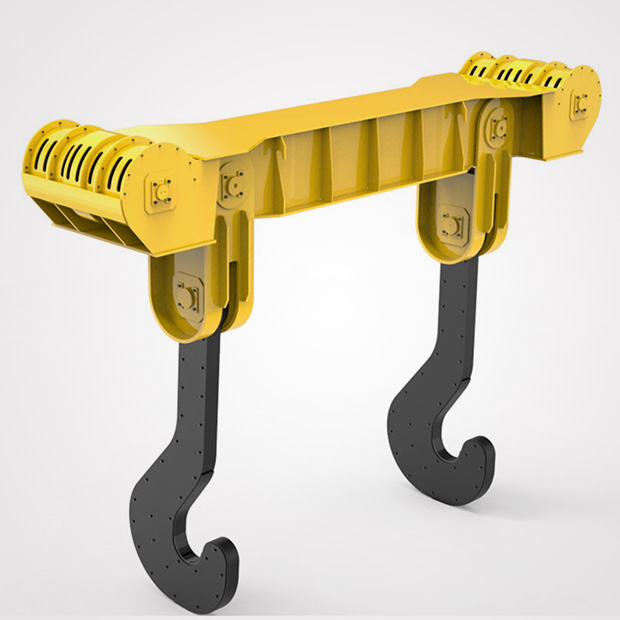
An FEM electric wire rope hoist is a motorized lifting unit that uses a steel wire rope wound onto a drum to raise and lower loads. The drum is driven by an electric motor through a gearbox, and the hoist unit travels horizontally along a crane beam on a trolley system. This combination — vertical lift from the hoist, horizontal travel from the trolley — forms the primary load handling mechanism of overhead and gantry crane systems.
The term "FEM standard" refers to compliance with the technical rules published by the FEM (Fédération Européenne de la Manutention), the European materials handling industry federation. FEM rules for wire rope hoists define duty classifications, design safety factors, component sizing requirements, and fatigue life calculations that establish a common engineering baseline across compliant products.
Get Free Quote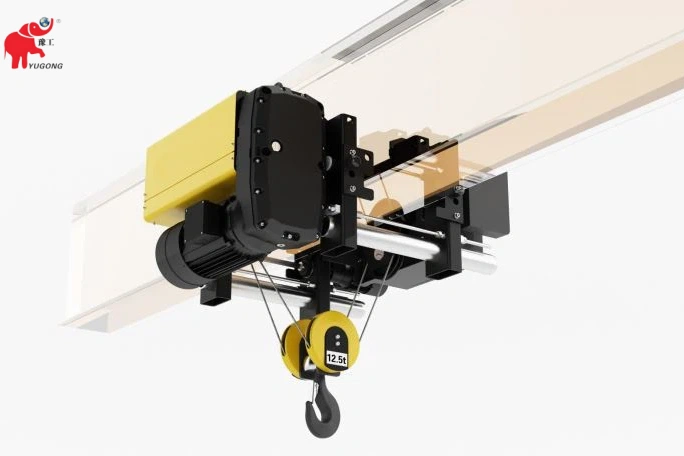
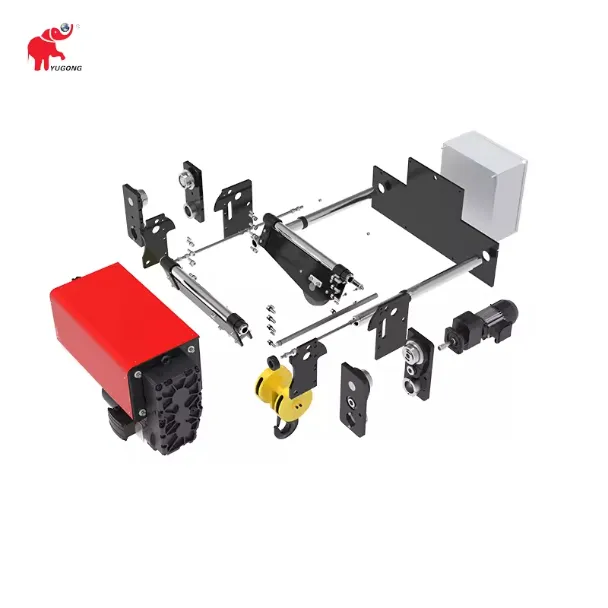
Major Components
- Lifting Motor: An electric motor — typically with dual-speed or variable frequency drive capability — provides the power for hoisting. Motor sizing is determined by the rated capacity, lifting speed, and FEM duty class.
- Gearbox: A multi-stage helical or planetary gearbox transmits motor torque to the drum at the correct speed. Gear quality, lubrication, and thermal rating directly affect gearbox service life under the specified duty cycle.
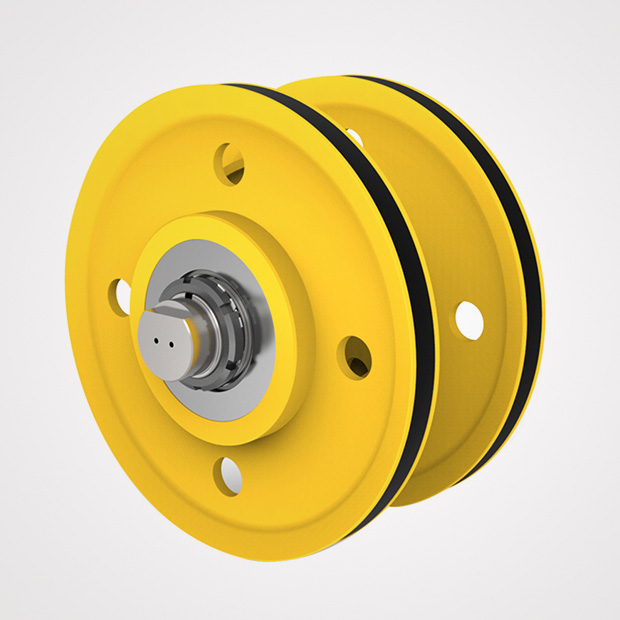
- Wire Rope Drum: The drum stores and pays out the wire rope. Drum groove design, rope fleet angle, and drum length determine rope service life and fleet wear characteristics. FEM rules specify minimum drum diameters relative to rope diameter to limit rope bending fatigue.
- Trolley System: The trolley carries the hoist unit along the crane beam. Low headroom and standard headroom configurations are available depending on the available building height and required lifting height.
- Control System: Pendant control, radio remote, or PLC-based automation systems manage hoist operation. Variable frequency drives (VFDs) are standard on FEM-class hoists for speed control.
- Braking System: An electromechanical disc or drum brake holds the load when the motor is de-energized. Brake adjustment, wear monitoring, and response time are critical safety parameters covered by FEM design rules.
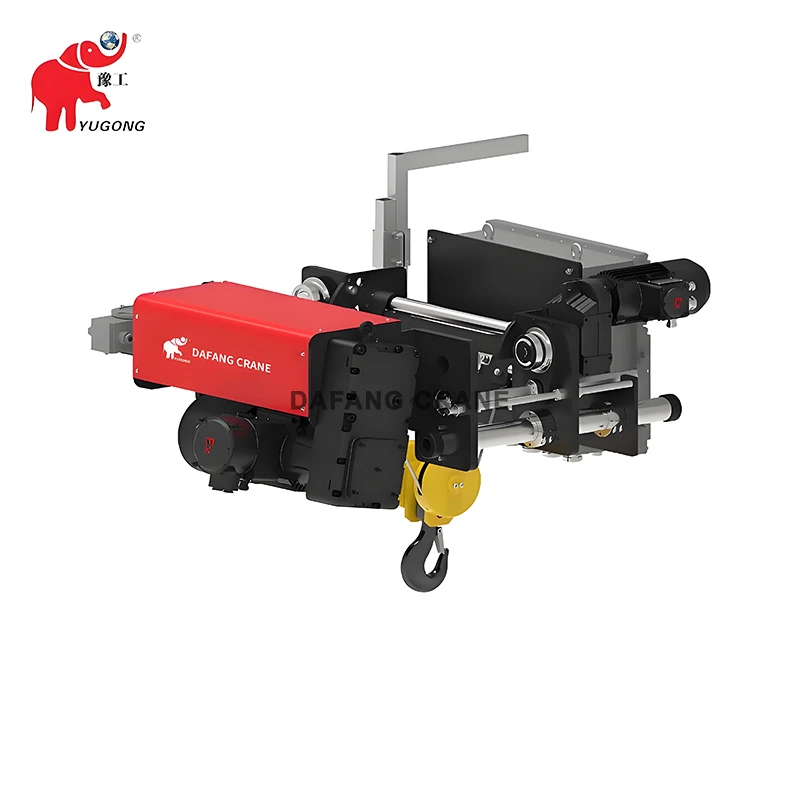
FEM-standard hoists differ from conventional hoists primarily in their engineering rigor. A FEM-classified hoist has been designed, tested, and rated to a defined fatigue life at a specified duty cycle. A conventional hoist may meet basic safety requirements without demonstrating the same level of engineering documentation or duty-cycle-specific sizing.
Understanding FEM Standards for Electric Wire Rope Hoists
FEM standards for lifting equipment are part of the broader FEM 1.001 rules framework, which covers the design and classification of cranes and hoists used in industrial environments. For wire rope hoists specifically, FEM classification is based on two combined parameters: the total number of operating cycles over the hoist's design life, and the average load spectrum — the distribution of actual loads lifted relative to the rated capacity.
These two parameters are combined to produce a duty class designation that defines the design intensity of the hoist. A hoist operating with light loads infrequently requires different engineering than one handling near-rated loads continuously across multiple shifts.
| FEM Class | Duty Description | Typical Application |
|---|---|---|
| 1Am | Light duty, infrequent use | Maintenance workshops, occasional lifts |
| 2m | Light-moderate duty | General industrial assembly, low-frequency production |
| 3m | Moderate duty | Manufacturing plants, medium-frequency operations |
| 4m | Heavy duty | Steel fabrication, continuous production environments |
| 5m | Very heavy duty, high frequency | Steel mills, intensive multi-shift operations |
The duty class is not a suggestion — it is an engineering parameter that determines motor sizing, gearbox ratings, wire rope selection, drum dimensions, brake design, and the calculated fatigue life of all structural components. Selecting a hoist with a duty class below the actual operating intensity is one of the most common causes of premature hoist failure in industrial crane systems.
For procurement purposes, the duty class should be determined by analyzing the actual expected operating pattern — lifts per shift, average load as a percentage of rated capacity, operating hours per year — rather than by guessing or defaulting to the cheapest available class.
Key Features of FEM Electric Wire Rope Hoists
Compact Low Headroom Design
Low headroom wire rope hoists are configured so that the rope reeving and trolley arrangement minimizes the vertical distance between the crane beam underside and the hook. This maximizes the usable lifting height within a given building — a critical factor in facilities with limited ceiling clearance. In a standard headroom building, a low headroom hoist can recover 300–800mm of additional lifting height compared to a conventional design, which translates directly into operational flexibility for tall or bulky loads.
High-Efficiency Drive System
Modern FEM electric wire rope hoists use high-efficiency IE2 or IE3 class motors with optimized gearbox designs that minimize power losses across the drivetrain. This reduces energy consumption per lift cycle compared to older motor-gearbox combinations, which is measurable over the operating life of a high-duty installation. In multi-shift manufacturing environments, drivetrain efficiency has a direct impact on annual energy cost.
Variable Frequency Drive (VFD) Control
VFD-controlled hoists allow the lifting speed to be varied smoothly from near-zero to full speed, rather than switching abruptly between fixed speeds. This produces several practical benefits: loads can be precisely positioned by inching at low speed; load swing on landing is reduced because deceleration is gradual; mechanical stress on gearbox, wire rope, and structural components is reduced because acceleration loads are dampened. For processes requiring precise load placement — machine assembly, die setting, mold handling — VFD control is not a premium option but a basic operational requirement.
Advanced Safety Features
FEM-standard hoists incorporate a defined set of safety systems as part of the standard design specification. Overload protection limits load acceptance to a defined percentage above rated capacity. Upper and lower limit switches prevent the hook from travelling beyond the rope's useful travel range. Emergency braking stops the load within a defined distance if control power is lost. Thermal motor protection monitors winding temperature and initiates protective shutdown before insulation damage occurs. These systems are not optional extras — they are designed-in elements of the FEM engineering framework.
Modular Structure
FEM hoists are typically designed with modular component architecture: motor, gearbox, drum, and rope guide are discrete assemblies that can be individually removed and replaced without disassembling the entire hoist. This significantly reduces planned maintenance time and minimizes production downtime during component replacement. Spare parts procurement is simplified because modules are standardized rather than custom-fitted, and the same gearbox or motor assembly may serve multiple hoist models across a supplier's range.
Technical Specifications of FEM Electric Wire Rope Hoists
The following ranges reflect typical commercial availability across the global FEM hoist market. Specific values depend on the manufacturer, configuration, and application requirements.
| Parameter | Typical Range |
|---|---|
| Lifting Capacity | 1 – 80 tons |
| Lifting Height | Standard or customized to application |
| Hoisting Speed | 0.5 – 16 m/min (single speed or VFD variable) |
| Trolley Travel Speed | 5 – 40 m/min |
| FEM Duty Class | 1Am through 5m |
| Power Supply | 380V / 415V / 440V / 50Hz or 60Hz |
| Control Method | Pendant, radio remote, PLC/automation integration |
| Rope Reeving | 2/1 or 4/1 depending on capacity and speed |
| Environmental Rating | IP55 standard; higher ratings for special environments |
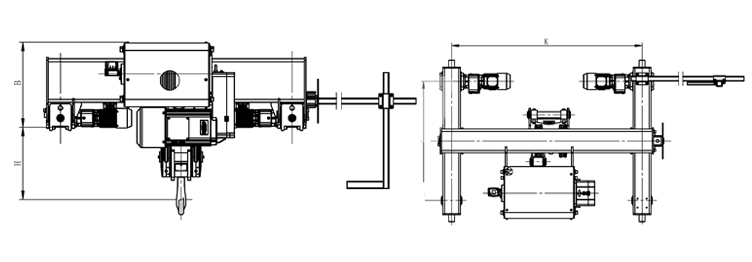
Specifications should be confirmed against the crane system design — particularly the trolley gauge, beam profile compatibility, and control system interface — before finalizing procurement.
Applications in Industrial Crane Systems
Overhead Cranes
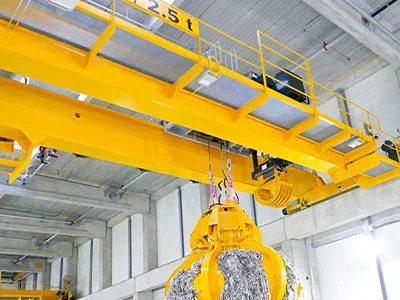
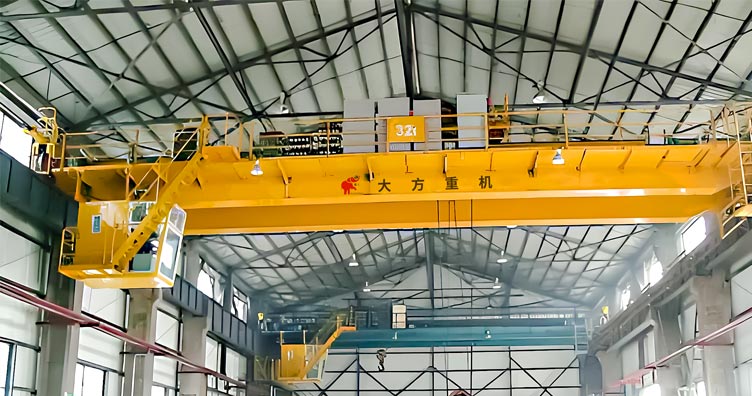
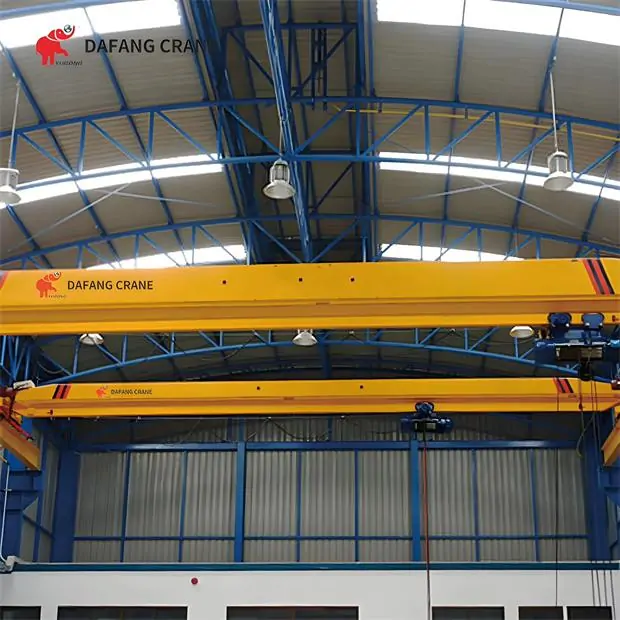
The most common application for FEM electric wire rope hoists is in overhead bridge cranes used in manufacturing workshops, assembly plants, and warehouses. In these environments, the hoist is the primary production tool — handling raw materials, components, finished goods, and tooling across the production floor. FEM duty classification ensures that the hoist is designed for the actual operating intensity of the production cycle rather than an arbitrary "light" or "heavy" label.
Gantry Cranes
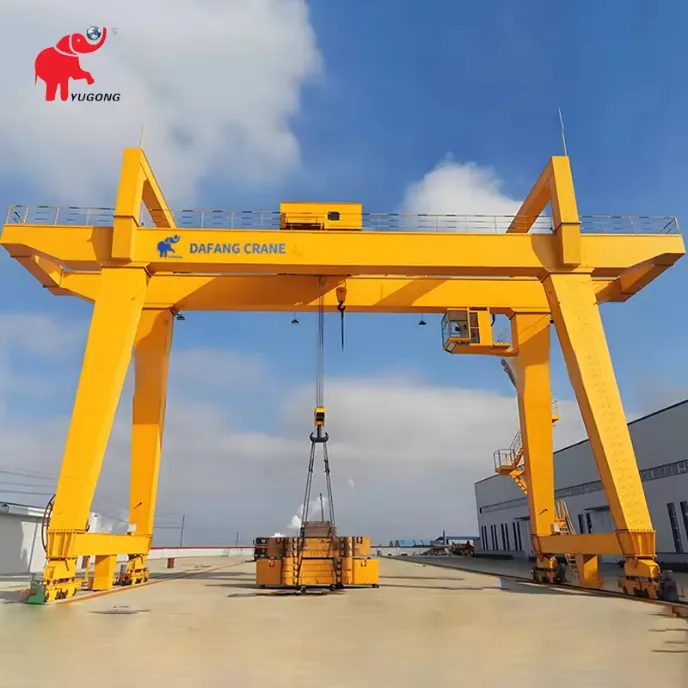
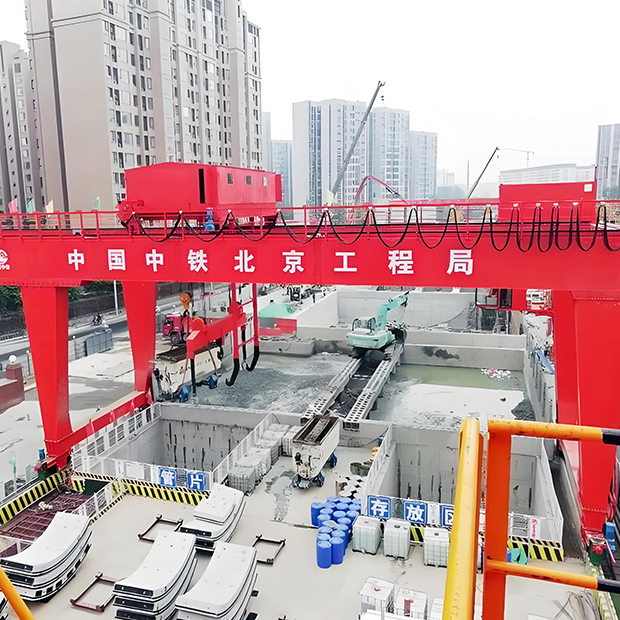
Outdoor and semi-outdoor gantry crane applications — precast concrete yards, steel fabrication facilities, shipbuilding berths, and rail maintenance depots — expose hoists to weather, dust, and temperature variation. FEM hoists in these environments require appropriate IP protection ratings and corrosion-resistant finishes. The modular design of FEM hoists is particularly valuable in outdoor applications where maintenance access is more difficult than in a workshop environment.
Steel Mills
Steel mill environments place extreme demands on lifting equipment. High ambient temperatures, radiant heat from molten metal, heavy loads handled continuously across multiple shifts, and abrasive contamination combine to create conditions that quickly expose weaknesses in hoist designs that are not properly rated for the duty. FEM class 4m or 5m hoists are the standard specification for production cranes in steelmaking and rolling mill environments.
Logistics and Warehousing
Modern logistics facilities handle repetitive lifting cycles across long operating hours, often with tight space constraints. FEM hoists with compact low headroom designs and VFD control support efficient, precise load handling in racking systems and loading dock applications. The duty class for warehousing applications varies widely — a low-cycle receiving dock operation may justify a 2m classification, while a high-throughput distribution center may require 3m or 4m.
Machinery Manufacturing
Precision machinery manufacturing requires precise load positioning during assembly — setting machine bases on foundations, installing large components into tight tolerances, handling delicate equipment that cannot be subjected to shock loading or uncontrolled swing. VFD-controlled FEM hoists with low-speed inching capability and anti-sway features directly support these requirements.
Advantages of FEM Standard Hoists Compared with Conventional Hoists
| Feature | FEM Standard Hoist | Conventional Hoist |
|---|---|---|
| Space Utilization | Compact low headroom design available | Typically larger vertical envelope |
| Operating Efficiency | High-efficiency motor and gearbox standard | Variable, often lower efficiency |
| Energy Consumption | Lower — IE2/IE3 motors, VFD standard | Higher on equivalent loads |
| Duty Rating | Formally classified and documented | Often vaguely described |
| Precision Control | VFD speed control standard | Fixed speed or basic two-speed |
| Safety Systems | Formally specified in FEM framework | Variable, often minimum compliance |
| Maintenance Access | Modular components, standardized parts | Often requires full disassembly |
| Calculated Fatigue Life | Defined by FEM classification | Rarely documented |
| Design Documentation | Engineering calculations retained | Limited traceability |
The practical significance of these differences becomes most apparent in two situations: when a hoist is operating near its duty limits in a demanding production environment, and when the hoist requires maintenance or a component replacement. In both cases, the FEM hoist's defined engineering basis and modular design deliver measurable operational advantages.
How to Choose the Right Electric Wire Rope Hoist
Required Lifting Capacity
The rated capacity must cover the heaviest load the crane will lift, including the weight of any lifting attachment — spreader beam, magnet, grab, or fixture — that is part of the lift. A common error is specifying capacity based on the heaviest production load without adding attachment weight, which results in the hoist operating at or above its rated limit on every lift.
Duty Cycle and FEM Classification
Calculate the expected operating pattern: lifts per hour, operating hours per shift, shifts per day, and the average load as a percentage of rated capacity. Use this data to determine the appropriate FEM duty class rather than selecting by intuition. If the production schedule is expected to increase in the next three to five years, select the duty class for the anticipated future intensity, not the current load.
Available Installation Space
Confirm the hook approach distance — the minimum horizontal distance from the crane end stop to the hook center — and the headroom available between the crane beam underside and the building structure above. These dimensions determine whether a standard or low headroom trolley configuration is required.
Lifting Height Requirements
The required lifting height — the vertical distance from the lowest hook position to the highest — determines drum capacity and rope length. In buildings with limited height, maximizing lifting height requires a low headroom design and may influence rope reeving selection.
Working Environment
Standard FEM hoists are designed for indoor, temperate environments. Applications with high ambient temperature, high humidity, corrosive atmospheres (chemical plants, coastal facilities), heavy dust (foundries, cement plants), or explosion risk require specific environmental specifications. Confirm IP protection rating, motor insulation class, coating systems, and any ATEX requirements before finalizing the specification.
Control System Preferences
Pendant control is the standard choice for straightforward overhead crane applications where the operator travels with the load. Radio remote control is preferred where the operator needs to move independently of the crane, or where the operating area creates safety concerns for a pendant user travelling with the load. PLC-based automation interfaces are required for integration into automated production systems, semi-automated crane operations, or facilities that monitor crane performance through a plant-wide data system.
Maintenance and Inspection Requirements
Preventive maintenance is the primary factor in achieving the FEM design life of a wire rope hoist. Deferred maintenance shortens component life, increases the risk of unplanned failure, and can invalidate insurance coverage for lifting incidents.
Daily Inspections should cover visual checks of the wire rope for broken wires, kinking, and corrosion; brake function check; limit switch operation; hook and safety latch condition; and any abnormal noise or vibration during operation.
Wire Rope Inspection follows ISO 4309, which defines discard criteria based on the number of broken wires per unit length, reduction in rope diameter, and signs of internal corrosion. Wire rope must be replaced when any discard criterion is met, regardless of the rope's apparent external condition.
Brake Testing verifies that the brake holds the rated load without drift and releases cleanly on motor energization. Brake adjustment and lining wear are checked at intervals specified by the manufacturer, typically every three to six months depending on operating intensity.
Gearbox Lubrication requires oil level checks and periodic oil changes. Gearbox oil analysis can identify early-stage gear wear or contamination before damage becomes severe enough to cause failure.
Motor Maintenance covers insulation resistance testing, bearing condition, cooling fan inspection, and thermal protection function check. Motor maintenance intervals depend on duty class and operating environment.
Periodic Load Testing at defined intervals — typically annually or following major maintenance — verifies that the hoist performs correctly at rated capacity and confirms brake function under load.
Conclusion
A FEM standard electric wire rope hoist is not simply a better-built version of a conventional hoist. It is a fundamentally different approach to hoist specification — one that starts with the actual operating conditions and works backward to define the engineering requirements, rather than selecting a standard product and hoping it is adequate.
Selecting the correct FEM duty class, confirming the right capacity with attachment weight included, specifying the appropriate environmental protection, and choosing a supplier with credible after-sales support are the four decisions that determine whether a hoist delivers its design life reliably or becomes a recurring maintenance problem.
For facilities planning capacity expansion, production line upgrades, or crane replacement programs, FEM-standard hoists provide the engineering documentation and duty-cycle transparency that supports long-term asset management — not just the initial purchase decision.
Request a customized FEM electric wire rope hoist solution for your crane system. Contact our engineering team for industrial crane and hoist consultation. Discuss your lifting requirements and production environment with our technical specialists.

Frequently Asked Questions
What is the practical difference between FEM 2m and FEM 3m duty class hoists?
The difference lies in the engineering design intensity — specifically, the combination of total operating cycles over the hoist's design life and the average load spectrum. A FEM 2m hoist is designed for lighter use: fewer lifts per shift and a lower average load as a percentage of rated capacity. A FEM 3m hoist is built to handle more cycles at higher average loads, which means more robust motor sizing, heavier-duty gearbox rating, larger drum diameter relative to rope diameter, and more conservative thermal design. In practice, this means a FEM 3m hoist in a 2m application will have a longer service life between overhauls, while a FEM 2m hoist in a 3m application will experience premature wear, overheating, and failure. The duty class must match the actual operating pattern, not the lightest available class that fits the rated capacity.
Can a FEM electric wire rope hoist be installed on an existing crane that previously had a conventional hoist?
In many cases, yes — but compatibility must be verified before procurement. The key parameters are the trolley gauge (the distance between the crane beam flanges), the crane beam profile (I-beam, box section, or rail), the electrical supply voltage and frequency, and the hook approach distances required for the new hoist's trolley configuration. FEM hoists typically use standardized trolley gauge options, and many manufacturers offer adaptation kits for common crane beam profiles. The control system interface must also be verified — if the existing crane uses a legacy control panel, the new hoist's pendant or remote system may require rewiring. A site survey by the hoist supplier before order placement is the most reliable way to confirm compatibility and avoid installation surprises.
How is the wire rope on a FEM hoist inspected and when does it need to be replaced?
Wire rope inspection follows ISO 4309, which defines specific discard criteria based on visual examination and measurement. The primary criteria are: the number of broken wire ends visible per unit length of rope (typically measured over one lay length and six lay lengths); reduction in the rope's actual diameter below the nominal diameter (typically a 6–10% reduction triggers discard); evidence of corrosion on outer or inner wires; and signs of kinking, crushing, or birdcaging that indicate the rope's internal structure has been damaged. Rope inspection should be performed at every planned maintenance visit and before any lift where the rope has been exposed to abnormal loading or impact. The inspection log must be documented because it forms part of the crane's statutory inspection record in most regulatory jurisdictions.
What does VFD control on an electric wire rope hoist actually improve in day-to-day operation?
Variable frequency drive control changes the hoist from a fixed-speed device to a variable-speed one. In practical terms, the operator can inch the hook slowly to a precise landing position rather than having to anticipate the correct stop point at full speed. Load swing during travel and at landing is reduced because deceleration is gradual rather than abrupt. Mechanical shock to the gearbox, rope, and structure is reduced on every start and stop cycle, which extends component life. For applications where loads must be set into confined spaces, positioned on machine fixtures, or landed precisely on scale platforms, VFD control changes what is operationally possible — not just how smoothly the hoist runs.
What environmental specifications should be considered for hoists installed in outdoor or harsh indoor environments?
Standard FEM hoists are typically supplied to IP55 protection — protected against dust ingress and water jets from any direction. For outdoor applications, sealed motor and gearbox assemblies, corrosion-resistant fasteners, and marine-grade paint systems should be specified. High-humidity environments or coastal locations benefit from tropical insulation on motor windings. Foundry and steel mill environments require high-temperature motor insulation ratings (Class F or H) and protection against radiant heat and scale ingress. Dusty environments — cement plants, grain handling, woodworking — require enhanced sealing on all rotating components and frequent rope inspection intervals because abrasive contamination accelerates rope wear. For environments with explosive atmosphere risk, ATEX-rated hoist designs are mandatory and must be specified from the outset, as retrofitting ATEX protection to a standard hoist is not a recognized compliance pathway.