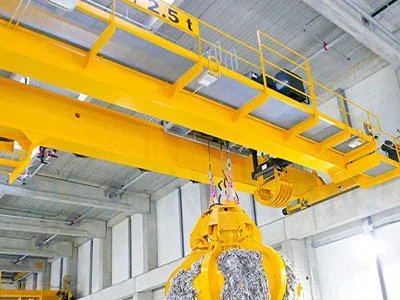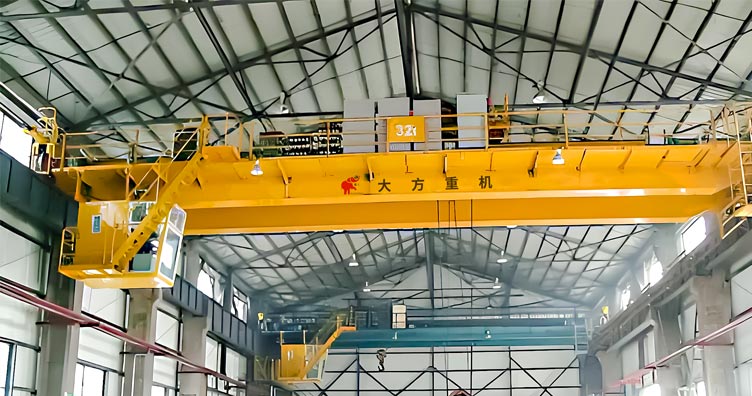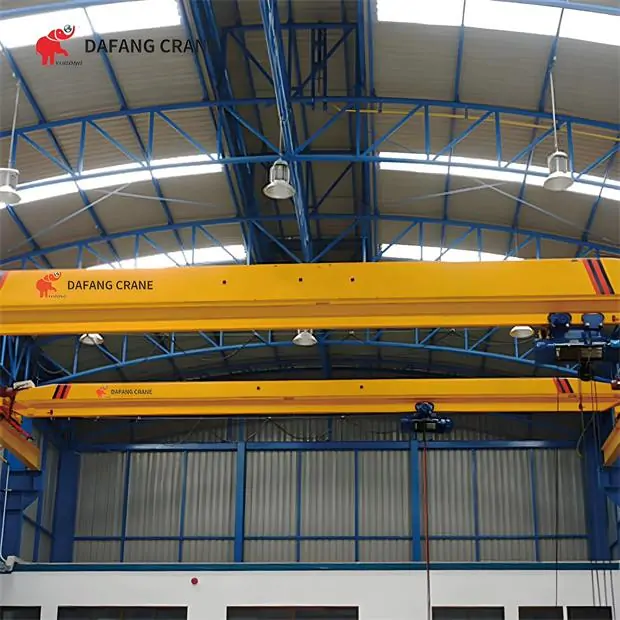

If your building's clear height is under roughly 6–7 meters, a standard overhead crane may simply not fit — and the right low headroom solution can recover 400–700 mm of usable lifting height that a conventional design wastes. For a workshop with a 5-meter clear height, that difference can mean the gap between a crane that works and one that cannot safely clear your load at full travel. Pricing for low headroom overhead cranes varies significantly with capacity, span, duty class, and whether runway beams and installation are included — contact us for a factory-direct quote tailored to your building parameters.
The core problem these cranes solve is straightforward: in a conventional single-girder design, the hoist hangs below the bottom flange of the main beam, and the hook's upper limit position eats into your available lifting height. Low headroom designs — whether a European-style top-running crane with a compact hoist, or a suspension crane that hangs directly from the existing building structure — reduce that wasted vertical space by 30–50% compared to a standard LD-type crane.
This guide covers the three crane configurations best suited to restricted-height facilities, how to choose between them based on your building parameters, and what to confirm with your supplier before placing an order.
Quick Reference: Low Headroom Crane Options at a Glance
| Configuration | Typical Capacity | Plage de portée | Hauteur de levage |
|---|---|---|---|
| HD European Single Beam | 1–20 t | 10.5–25.5 m | 6–12 m |
| NLX European Underhung | 5–32 t | 10.5–31.5 m | 6–12 m |
| LX Suspension Crane | 0.5–10 t | 3–16 m | 6–30 m |
Specifications are standard ranges; customized configurations are available. Contact our engineering team to confirm the right solution for your building.
Obtenir un devis gratuitWhat Makes a Crane "Low Headroom" — and Why It Matters
A low headroom overhead crane is a bridge crane configured to minimize the vertical distance between the crane runway rail and the hook's highest possible position, as defined under EN 15011 (European bridge and gantry crane standard) and applicable FEM design rules. In practical terms, two engineering changes drive this:
The hoist is either integrated into a compact European-style trolley that sits beside or atop the main beam (rather than hanging below an I-beam flange), or the entire crane structure is hung from the building's existing roof framing (underslung / suspension configuration) instead of running on top of runway beams. Both approaches shrink the "hook upper limit size" — the vertical space consumed when the hook is at its highest point — by 250–500 mm versus a standard CD/MD hoist arrangement.
That number sounds small until you're designing for a 5-meter building. In that scenario, a standard LD crane with a CD hoist might achieve 2.9–3.1 meters of usable lifting height; an HD European crane or a well-configured suspension crane in the same building typically reaches 3.4–3.8 meters under the same conditions. For plants that handle palletized loads, machine components, or anything that needs to clear floor-level equipment, that extra 400–700 mm is often the decisive factor.
Three Configurations for Low-Clearance Buildings
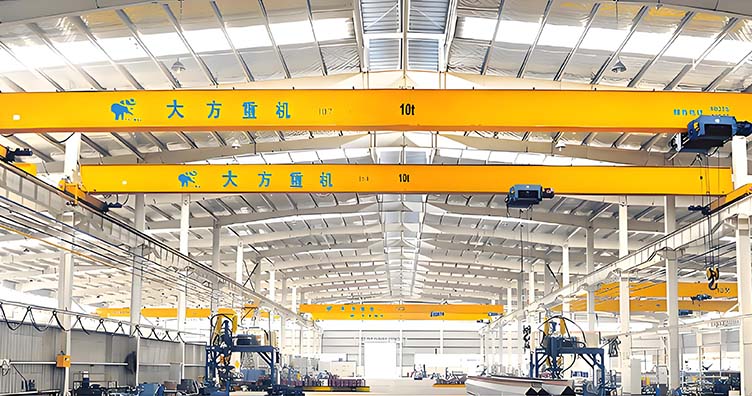
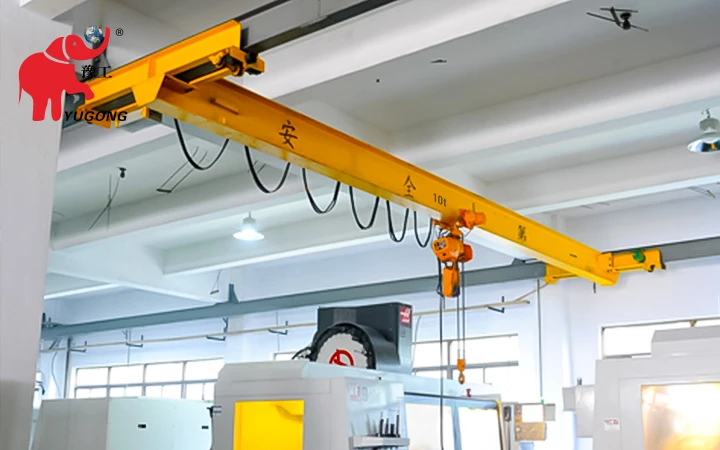
HD European Single Beam Bridge Crane — Best All-Round Low Headroom Option
The HD European single beam crane covers 1–20 tons with spans of 10.5–25.5 m and lifting heights of 6–12 m, operating at work class A5 — making it the workhorse choice for workshops and warehouses where moderate-to-high duty cycles meet restricted headroom. The reason it outperforms a standard LD crane in tight buildings lies in the hoist design: a European wire rope hoist sits partly within the depth of the box-section main beam rather than hanging entirely below it, so the rail-to-hook dimension is typically 500–540 mm versus 580 mm or more for a conventional LD crane. Over a 10-meter span and 5-ton capacity, this translates to roughly 480 mm of additional lifting height.
The structural difference matters beyond just headroom. The HD's square box-section main beam is stiffer than the I-beam used in LD-type cranes, which reduces mid-span deflection under load — important when you're making multiple precision lifts per shift. Variable frequency drives (VFD) on both the travel and hoist mechanisms give soft start/stop, which matters in tight buildings where sudden movement is more likely to cause a swing load to contact walls or columns.
The limitation is that the HD crane requires top-running runway beams, meaning your building columns and structure must support those beams plus the crane load. If your building cannot accept additional runway beam loads, or the columns are already at structural capacity, look at the suspension options below.
NLX European Underhung Bridge Crane — Heavy Capacity Without Runway Beams
The NLX stands out from other underhung designs with its capacity range of 5–32 tons across spans of 10.5–31.5 m — significantly heavier than most suspension-type cranes — at work class A5. It hangs from the lower flange of existing building structure steel (roof trusses or purlins) rather than sitting atop added runway beams, which eliminates the 150–300 mm that runway beam height consumes. This makes it the right choice when you need medium-to-heavy lifting in a building that lacks the headroom or structural capacity for top-running runway beams.
The practical headroom advantage is significant: because the crane hangs from existing framing, the rail-to-crane-top distance disappears as a constraint. What determines your usable lifting height is simply the distance from the lower flange of the supporting structure steel to the floor, minus the crane's construction depth. In buildings where roof trusses run at 4–5 meters, the NLX can often achieve lifting heights of 3–3.5 meters — comparable to or better than a top-running HD crane in a 5.5–6-meter building.
The critical condition: the existing roof structure must be assessed by a structural engineer to confirm it can carry the dynamic crane loads before installation. The NLX's 5–32-ton range means the roof loads it imposes are substantial — do not assume the structure is adequate based on visual inspection alone.
LX Suspension Crane — Lightest Solution for Very Low or Tight Buildings

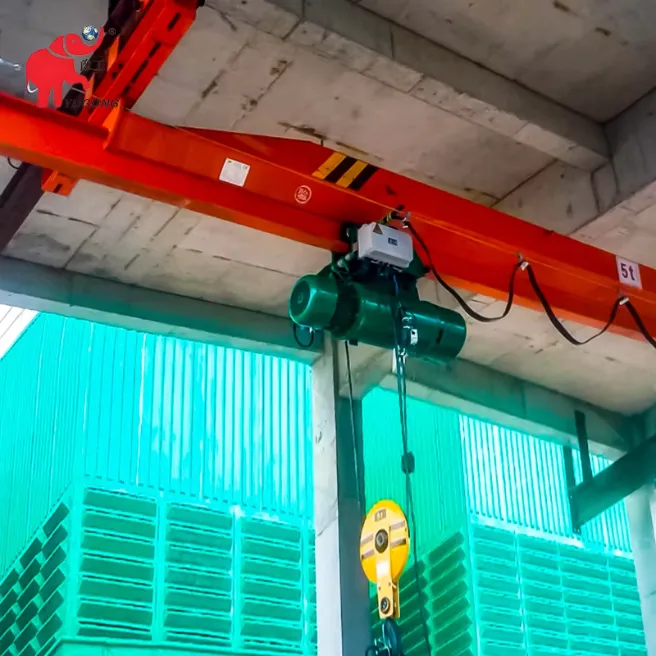
The LX type suspension crane is the most compact and accessible option: working class A3–A4, capacity 0.5–10 tons, span 3–16 m, and lifting height up to 30 m. Like the NLX it hangs from existing building structure, but it uses a simpler I-beam track arrangement and pairs with a CD/MD type electric wire rope hoist. This makes it the lowest-cost entry point and the fastest to install in buildings that already have suitable I-beam roof framing.
It earns its place in two scenarios. First, in buildings with very limited headroom — 3 to 3.5 meters clear height — where even a compact top-running crane cannot physically fit. Second, in maintenance bays, assembly lines, equipment staging areas, and warehousing and logistics operations where lift frequency is low (work class A3–A4), loads are under 10 tons, and the priority is getting a crane in place quickly without structural modifications or ground rail construction.
The limitation: the CD/MD hoist consumes slightly more hook-upper-limit height than a European hoist. In extreme headroom situations, confirm the actual lifting height calculation with the supplier before ordering.
How to Choose: The Decision Framework
Start with your building's clear height and structure, not with crane type.
The single most common mistake in low-headroom crane projects is specifying a crane type before knowing the distance from the finished floor to the lowest obstruction above the intended lift zone (beams, HVAC ducts, light fixtures). Measure this at the tightest point across the full crane travel path, not just at the bay center.
From there, the decision logic runs as follows. If your clear height is 5 meters or above and your building columns can support runway beam loads, and your capacity requirement is within 1–20 tons, the HD European single beam is typically the most cost-effective and lowest-maintenance option. If you need heavier lifts (5–32 tons) or your building structure cannot support additional runway beams, evaluate the NLX underhung — but commission a structural assessment first. If your clear height is under 4 meters, capacity is 10 tons or below, or you need rapid installation for light-to-medium loads with minimal building modification, the LX suspension crane is the right entry point.
One factor that catches buyers late in the project: the hook approach distance to the side wall or end stop. In a low-headroom building, the horizontal clearance at the hook's extreme positions also tends to be tighter. Confirm left and right extreme hoisting positions (in mm) in the supplier's drawing before sign-off, not after the crane arrives on site.
Need help selecting the right configuration? Our engineers can review your building drawings and recommend the best option.
Obtenir un devis gratuitCertifications and Compliance
Certifications are a hard procurement gate, not a nice-to-have — missing documentation can block customs clearance, void insurance coverage, and create personal liability for the plant's safety officer. For import buyers, the three documents to request before finalizing any order are:
CE marking and EC Declaration of Conformity, confirming compliance with the EU Machinery Directive 2006/42/EC. This applies to cranes sold into the European Economic Area and many associated markets that recognize CE. The declaration should reference the crane's design standard — typically EN 15011 for bridge and gantry cranes.
Overload test certificate, demonstrating the crane was tested to 125% of rated capacity before shipment. This is required under standard FEM / ISO 4301 classification procedures and is the document most commonly missing from low-cost suppliers' packages. Ask for the test report, not just a statement that testing was done.
ISO 9001 quality management certificate for the manufacturer's facility. This does not certify the individual crane, but it tells you the factory has a documented production and inspection process — a meaningful baseline for international procurement.
For markets outside the EU: EAC certification for Russia and Eurasian Customs Union countries; OSHA compliance documentation for the United States. Ask Dafang's engineering team which documents are standard for your destination country; requirements differ, and the supplier's export experience across 120+ countries means they will have handled your market before.
One practical note: a supplier who cannot produce a current ISO 9001 certificate and test records within 48 hours of a formal request is a warning sign regardless of price.
Conclusion
The right low headroom overhead crane for a restricted-height facility comes down to three variables: your building's clear height, your structure's load-bearing capacity, and your required lifting capacity. For most standard workshops needing 1–20 tons with spans up to 25.5 m, the HD European single beam crane offers the best balance of lifting height recovery, reliability, and cost. When capacity runs to 32 tons or runway beams are not an option, the NLX underhung delivers heavy-duty performance without adding to your building height. Very tight headrooms or light-to-medium loads with spans under 16 m are where the LX suspension crane earns its place. In all three cases, get the hook-upper-limit dimension and extreme hoisting positions confirmed in writing before finalizing your order.
Ready to size your low headroom overhead crane? Send us your building dimensions — clear height, span, required lifting height, and duty cycle — and our engineering team will confirm the right configuration and provide a tailored quote.

FAQ
Q1:What is the minimum building height needed for a low headroom overhead crane?
As a practical reference, a 5-ton HD European single beam crane with a 10-meter span typically requires around 4.5–5 meters of clear building height to achieve 3.4–3.8 meters of usable lifting height. The LX suspension crane can work in buildings as low as 3–3.5 meters clear height for spans within 16 m and loads up to 10 tons. The exact figure depends on your specific building and crane configuration — always request a lifting height calculation from the supplier based on your actual building drawings.
Q2:What is the difference between a low headroom crane and a standard single girder overhead crane?
A standard LD-type single girder crane uses a CD or MD hoist that hangs below the main beam's bottom flange, consuming more vertical space. A low headroom design — either a compact European hoist (HD type) or a suspension crane (NLX/LX) — reduces the hook's upper-limit dimension by 250–500 mm. In a building with 5 meters of clear height, this typically means 400–700 mm more usable lifting height for the same load.
Q3:Can I add a low headroom crane to an existing building without structural modifications?
If you choose an NLX or LX suspension crane, the crane hangs from existing roof structure and requires no new runway beams — making it the easiest retrofit option. However, the existing roof structure must be assessed by a structural engineer before installation to confirm it can carry the dynamic crane loads, particularly for the NLX which can reach 32 tons. A top-running HD crane requires runway beams supported by the building columns, which may or may not require structural reinforcement depending on your building.
Q4:What certifications should I require from a low headroom crane supplier?
At minimum: CE marking with EC Declaration of Conformity (for EU/EEA markets), an overload test certificate (crane tested to 125% of rated capacity), and the manufacturer's ISO 9001 certificate. For Russia and CIS markets, add EAC certification. Request these documents before placing an order, not at shipment.
Q5:What information should I prepare before requesting a quote?
To get an accurate quote for a low headroom overhead crane, prepare the following: building clear height (floor to lowest obstruction), bay width (crane span), required lifting height, required lifting capacity (tons), duty cycle (lifts per shift, hours per day), power supply (voltage, frequency, phases), and whether runway beams are included or need to be supplied. The more complete your building drawings, the faster the engineering team can confirm the right configuration and turn around a price.