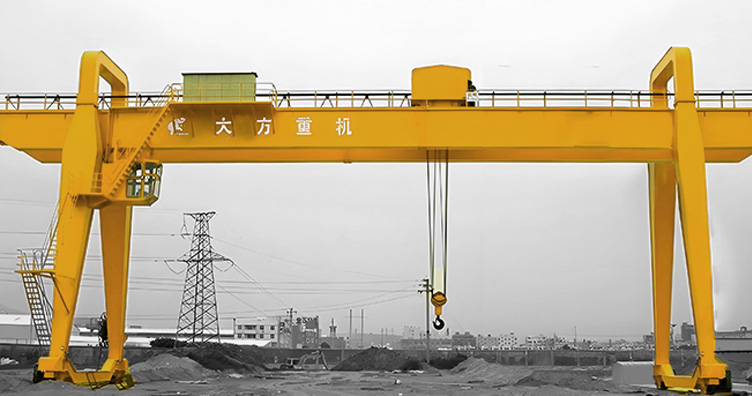
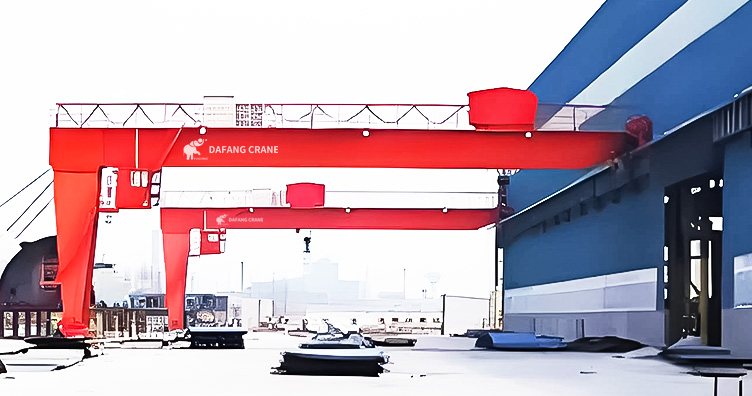
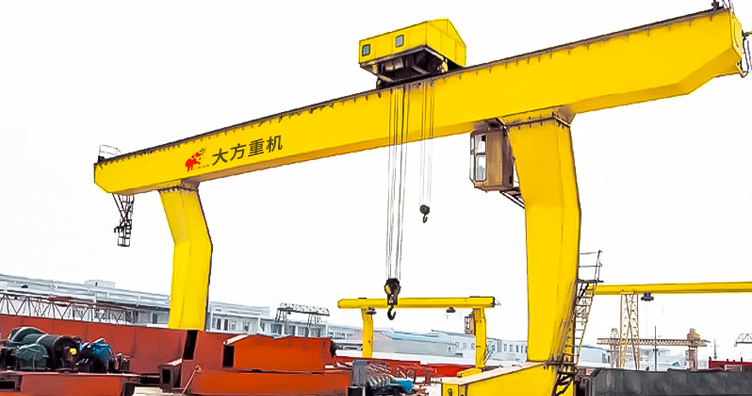
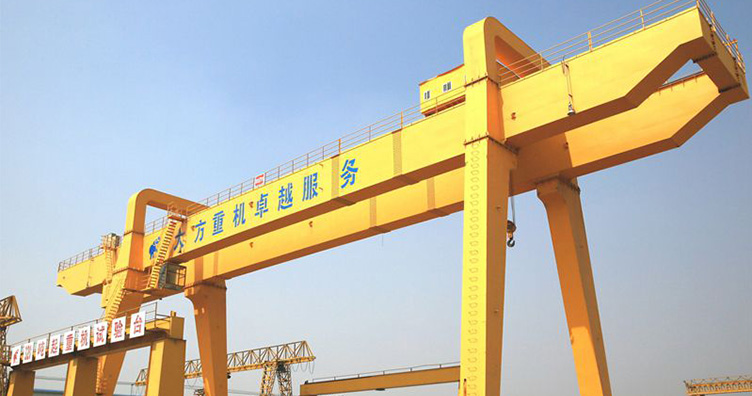
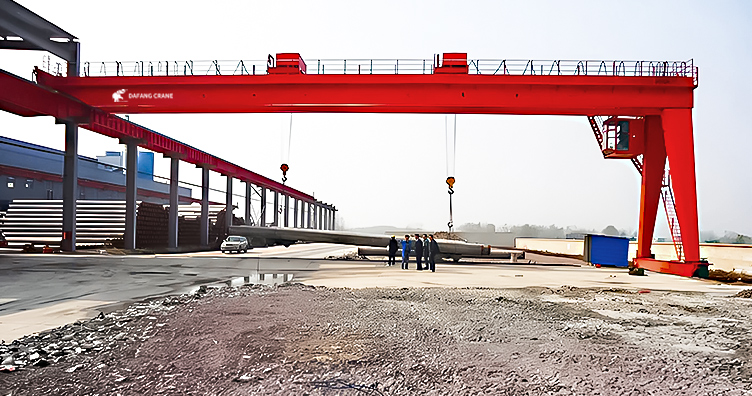
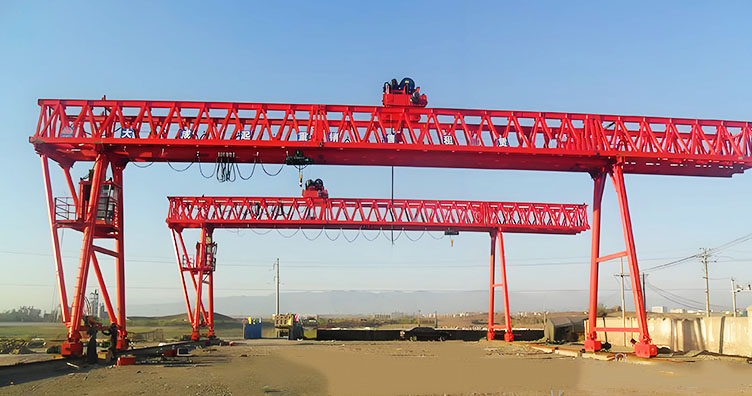
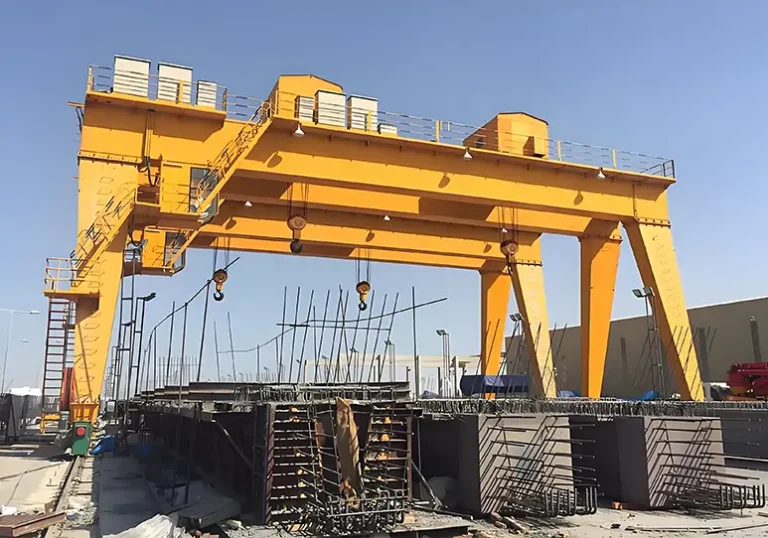
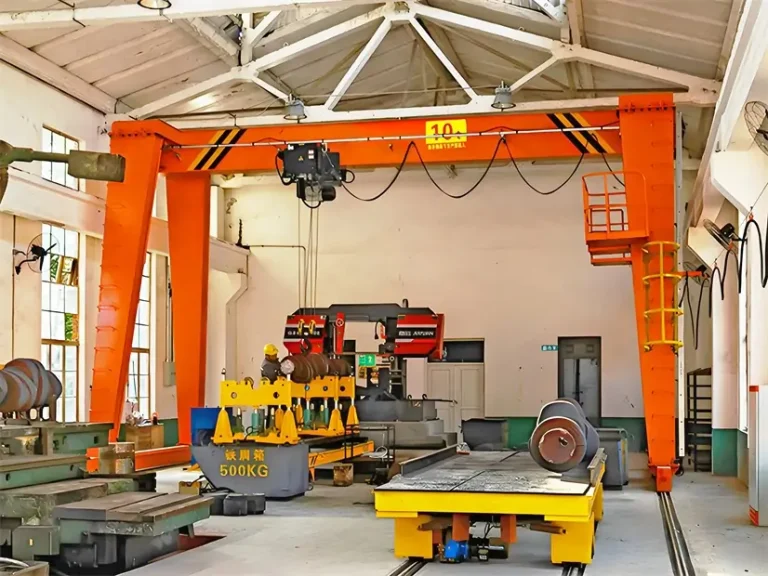
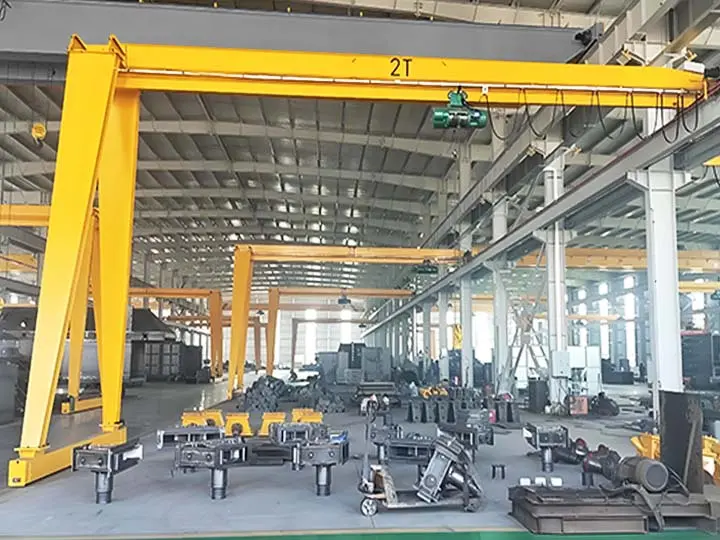
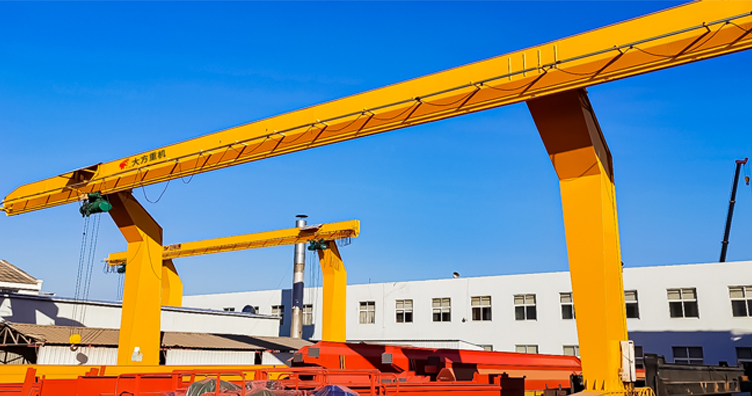
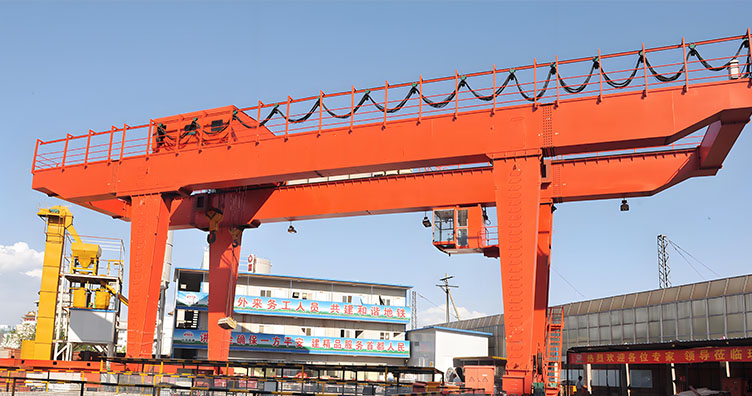
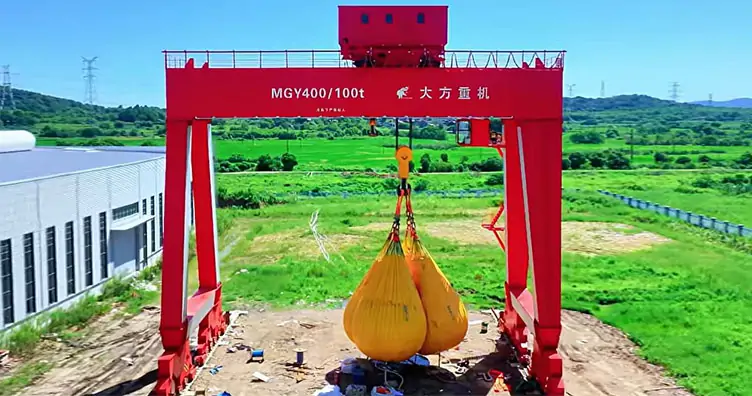
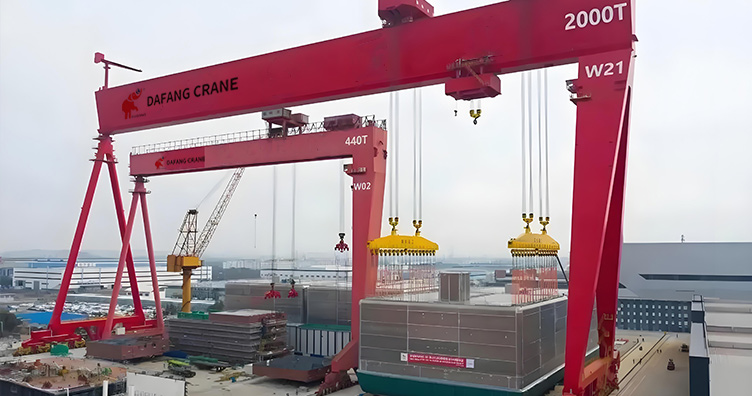
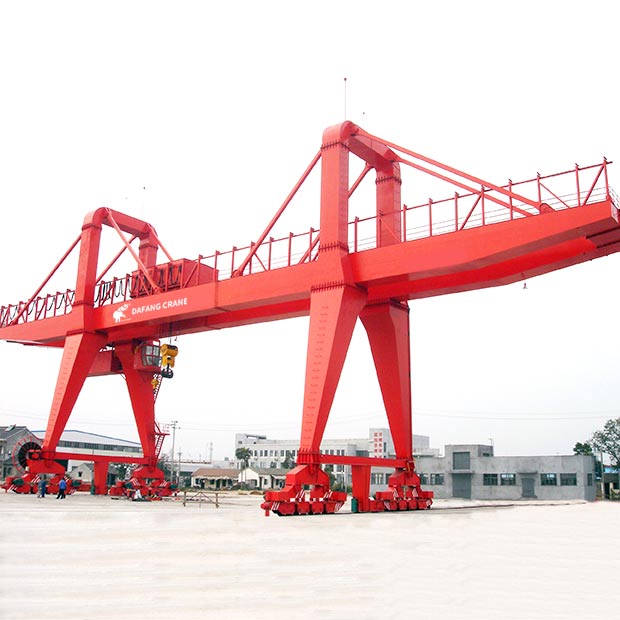
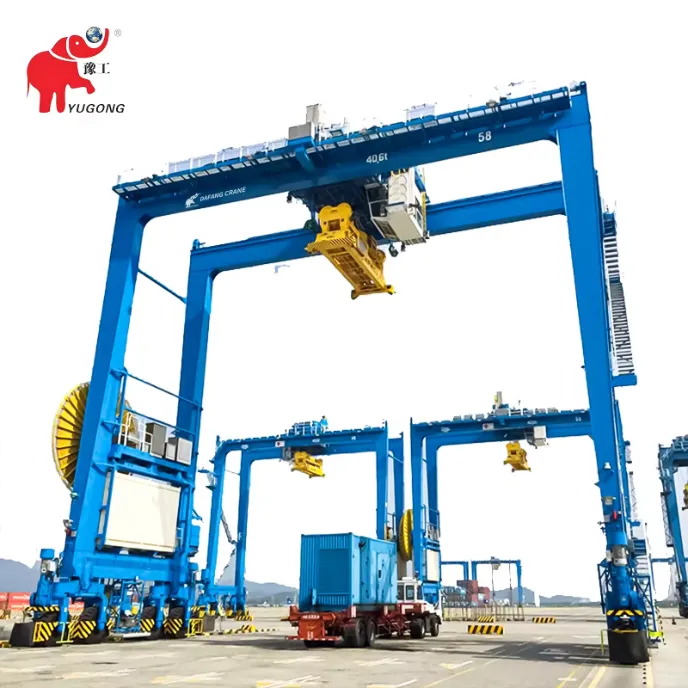
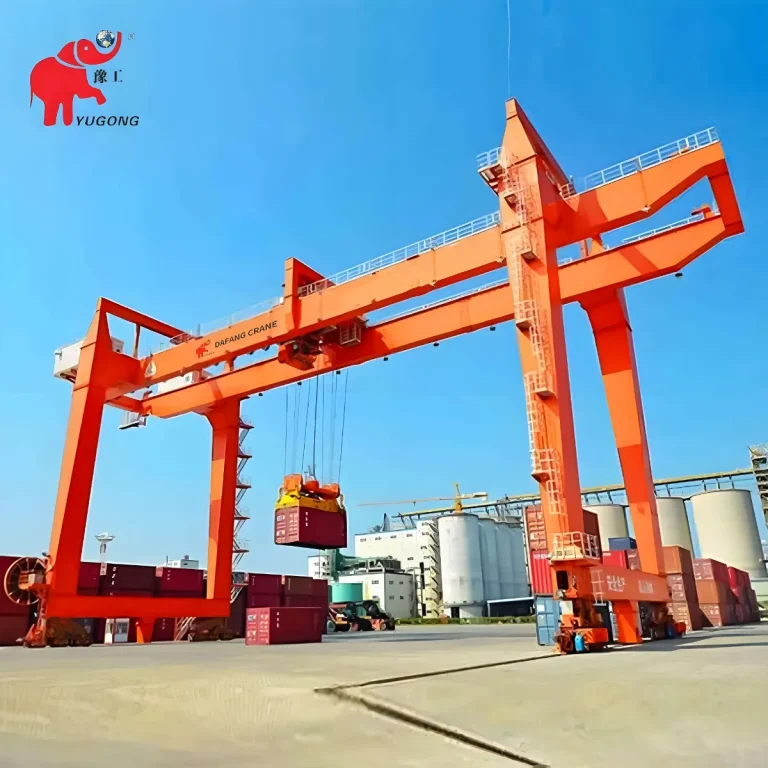
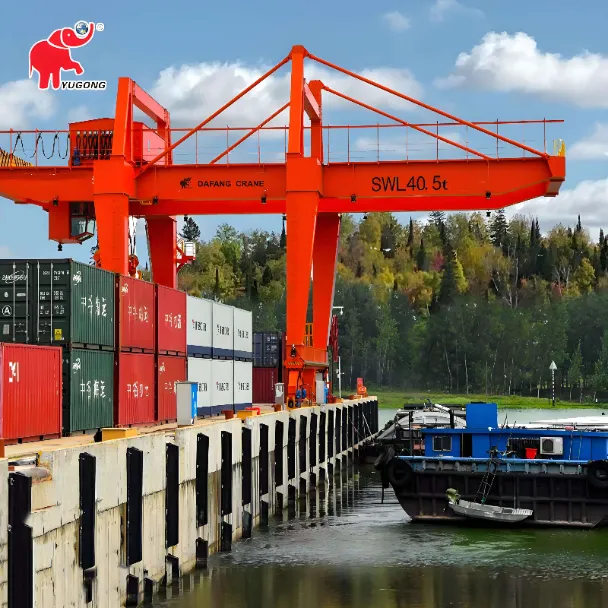
A gantry crane is a heavy-duty lifting device distinguished by ground-supported legs (unlike overhead cranes hung from roofs), with a horizontal main girder spanning between its legs. It handles 5-300 tons, suiting medium-to-heavy tasks. Available in single-girder type (for lighter loads, 1-20 tons) or double-girder type (for heavier tasks, 5-800 tons).

Here, a gantry crane is explained in detail, including its definition, structure and components, working principle, application, specs etc. This article will make you learn more info about a gantry crane for your needs.

What Is A Gantry Crane?

A gantry crane is a large outdoor lifting device with a door-shaped steel frame for heavy-load handling. Complying with international safety standards (CE, ISO, EAC etc.), it eliminates the need for manual handling and reduces workplace injuries while boosting efficiency.

It has key components: main girders (top load-bearing structure), supporting legs (connecting girders to the ground), a traveling trolley (moves along girders), and a hoisting mechanism (lifts goods via hooks/spreaders). Unlike EOT cranes (running on overhead factory rails), its legs ride on ground rails, letting it operate in open areas. It’s widely used in ports, freight yards, and heavy industry to handle containers, steel beams, or large machinery.

Common types include single girder gantry crane, double girder gantry crane (two legs on rails) and semi gantry crane (one leg on rail, one on the ground for narrow spaces). Its different design enables flexible, long-distance lifting, fitting outdoor large-scale material transport needs.
Gantry Crane Structure And Parts

(This is a 3D double girder gantry crane structure narration video.)

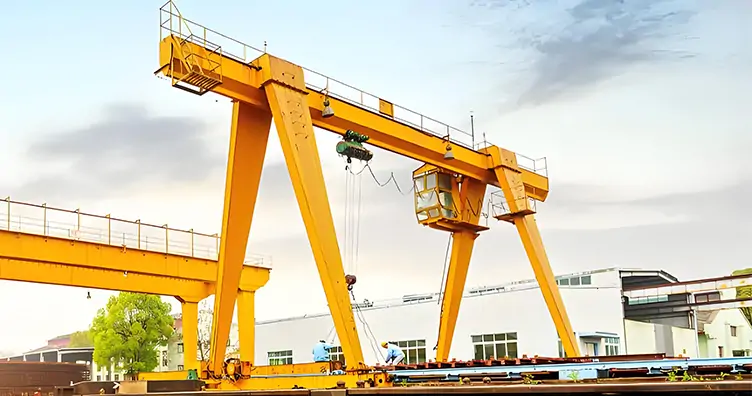
The gantry crane mainly consists of one or two main girders, supporting legs, traveling trolley, hoisting mechanism, crane traveling mechanism, electrical power system, safety devices, (driver's cab) and other crane spare parts.

The functions of each structure or component are as follows:

  • Main Girder: The top load core structure that supports the traveling trolley and the weight of lifted goods.
  • Support Legs: Vertical structures connecting the main girder to the ground, ensuring the crane’s stability; some have wheels for moving on ground rails.
  • Traveling Trolley: Moves along the rails on the main girder, carrying the hoisting mechanism to realize horizontal transport of cargo.
  • Cơ chế nâng hạ: Includes motor, drum, and steel rope; drives the hook up and down to complete the lifting and lowering of heavy objects.
  • Crane Travel Mechanism: Installed at the bottom of support legs, driving the entire crane to move along ground rails for long-distance operation.
  • Electrical System: Comprises control cabinet, buttons, and motors; controls the start, stop, and speed of all mechanisms.
  • Safety Devices: Such as height limiters and overload protectors; prevent equipment damage or accidents caused by improper operation.

Gantry Cranes Working Principle

Gantry cranes rely on their electrical system to coordinate all mechanisms for safe lifting and transport.

  • First, the electrical system activates the hoisting mechanism: its motor drives the drum to wind or unwind the steel rope, lifting or lowering the hook to grab/release heavy goods.
  • Then, the traveling trolley moves transversely along the main girder’s rails, shifting the lifted cargo to the target horizontal position.
  • Meanwhile, the crane travel mechanism at the support leg bottom drives the entire crane to move longitudinally along ground rails, expanding the working range.
  • Throughout the process, safety devices (like overload limiters) monitor parameters in real time—cutting power if anomalies occur.

This synergy of lifting, transverse, and longitudinal movements enables efficient outdoor heavy-load handling.

Different Gantry Crane Types

A gantry crane can move in construction sites, bridge construction sites, shipbuilding sites, hydropower plants and ore zones to move or lift materials. There are different types of gantry cranes. The features and application places of different types also differ according to their unique design. Dafang Crane, a professional TOP 10 gantry crane manufacturer and supplier in China, offers different types of gantry cranes. Such as single girder gantry cranes, double girder gantry cranes, semi gantry cranes, truss gantry cranes etc.

Do you want to choose the most suitable types of gantry cranes to enhance productivity? The following article will help you better grasp different types of gantry cranes and their special application scenarios.
Cẩu trục dầm đơn

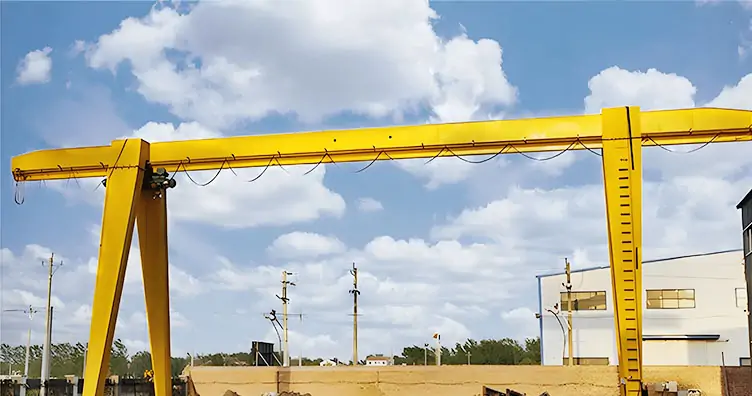
Single Girder Gantry Cranes have two common types:
  • MH Single Girder Gantry Crane: As the most standard and widely used single girder model, it features a single box-type beam, with a trolley that runs along the beam’s top rail. It has a moderate capacity (typically 5–32t), a lightweight structure, and lower costs. Users use it in small freight yards, workshops, warehouses, or construction sites, mainly to lift packages, steel pipes, small mechanical parts, or building materials.

  • L Type Single Girder Gantry Crane: It has an L-shaped supporting leg. One side is short (closely attached to walls, columns, or other fixed structures), and the other side is a standard long leg. This design saves horizontal space and is suitable for narrow working areas. It has a similar load capacity to the MH type (usually 5–20t). It strongly adapts to limited spaces, such as narrow workshops, factory edge areas, and small logistics yards.

Cẩu trục dầm đôi

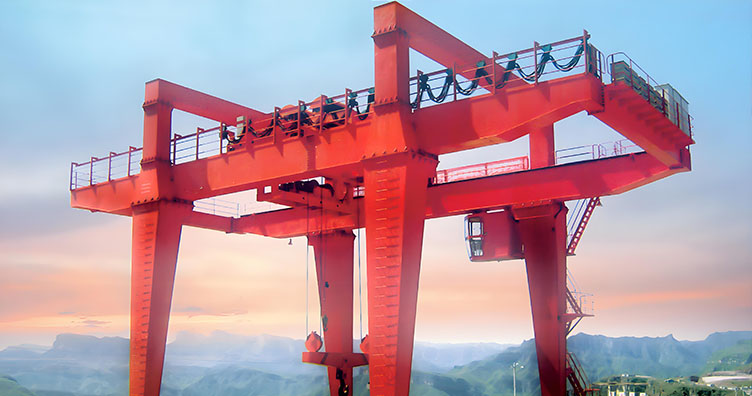
Double Girder Gantry Cranes have two common types:
  • U Type Double Girder Gantry Crane: Features a U-shaped main girder structure (no upper flange on the inner side of the girders), which allows long or bulky goods (e.g., steel beams, large profiles) to pass through the girder gap easily. It has a medium-to-high load capacity and good lateral stability. Users apply it in steel plants, profile processing workshops, or yards.

  • A Type Double Girder Gantry Crane: With A-shaped supporting legs—this design reduces wind resistance, enhances structural rigidity, and saves space at the leg base. It has a high load capacity and a high working class, suitable for open-air heavy-duty scenarios like ports, large freight yards, or heavy machinery factories to lift containers, large castings, or heavy equipment.

Semi Gantry Crane

Semi Gantry Cranes have two types:
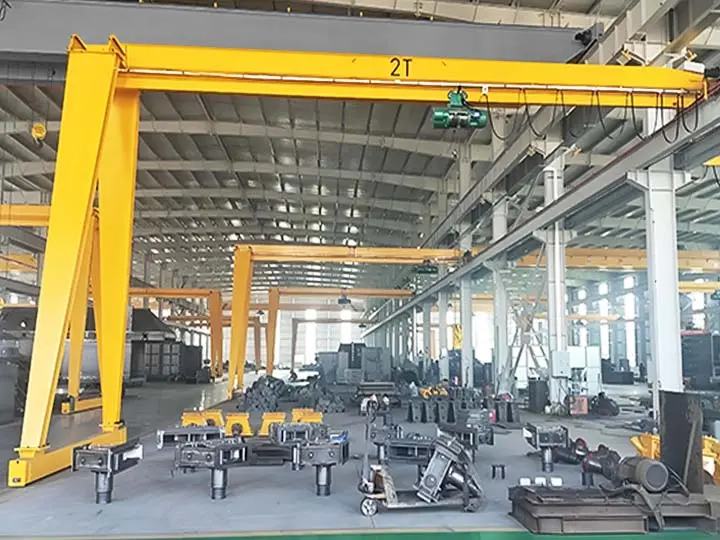
  • BMH Single Girder Semi Gantry Crane: Features a single main girder, with one set of supporting legs and the other side relying on factory walls or concrete columns. It has a medium load (typically 5–32t), compact structure, and saves ground space. It is ideal for narrow workshops, small yards, or scenarios where one side is adjacent to buildings. It’s cost-effective, easy to install, and suitable for handling steel pipes, packages, or small machinery.

  • BMG Double Girder Semi Gantry Crane: Adopts two parallel main girders, with one side having supporting legs and the other side supported by fixed structures. It offers higher load capacity (10–100t) and stronger stability, with a higher working class (able to withstand frequent heavy-duty operations). It’s widely used in heavy industry workshops and large freight yards to lift large steel components, mold equipment, and semi-finished heavy products.

Truss Gantry Crane

Truss Gantry Cranes have two main types:​

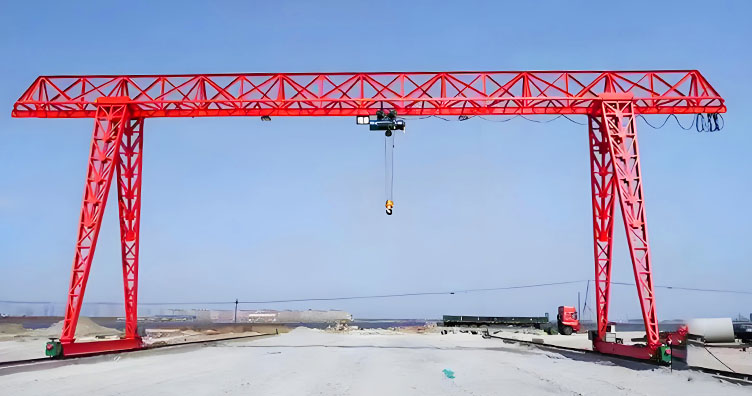
  • Single Girder Truss Gantry Crane: Features a single truss main girder (lightweight, material-saving structure) with an offset trolley running along one side of the girder. It has a medium-low load (usually ≤50t), has lower self-weight and cost, and is easy to install/maintain. Common in small factories, warehouses, or yards for handling steel plates or packages.

  • Double Girder Truss Gantry Crane: Adopts two parallel truss main girders, with the trolley moving between the two girders. It boasts high load capacity (up to hundreds of tons), strong stability, and a high working class. Ideal for heavy-duty operations in ports, large freight yards, or heavy industry plants, used to lift containers, large steel beams, or heavy machinery.

What Is A Gantry Crane Used For?

A gantry crane excels at outdoor and open-area heavy-load lifting and transport, serving core needs across multiple fields:
  • Port & Logistics: Handles container loading or unloading from ships or trucks, or transfers bulk goods (grain, coal) in freight yards.
  • Steel Industry: Lifts steel billets, finished steel plates, or large profiles in steel plants, supporting production line transfers.
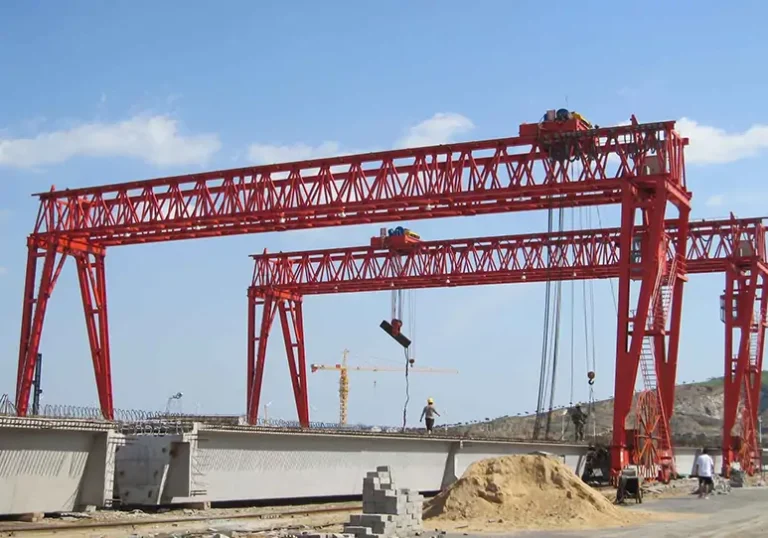
  • Construction Sites: Transports building materials (reinforcement, precast components) at construction sites, especially for high-rise or bridge projects.
  • Heavy Machinery Manufacturing: Assists in lifting large machine parts (engine blocks, frames) during assembly in factories.
  • Warehousing: Moves heavy cargo (large packages, industrial equipment) in outdoor/indoor warehouses with wide spaces.

Gantry Crane Specification

Single Girder Gantry Crane Specification

Main ModeL/MH/BMH
Sức nâng1-32 ton
Khoảng cách3-31.5 m
Chiều cao nâng6-24 m
Lifting Speed8,0.8/8 m/min, 7,0.7/7 m/min
Working temperature-25℃~+40℃
Power Supply3 Phase AC 380V 50HZ
Control modeRemote Control/Pendent control/Cabin Control(customized)
Nhiệm vụ công việcA3-A5

Double Girder Gantry Crane Specification

Main ModeA/U/BMG
Sức nâng5-800 ton
Khoảng cách5-35 m
Chiều cao nâng5-30 m
Lifting Speed2-8 m/min, 1-20 m/min
Working temperature-25℃~+40℃
Power Supply3 Phase AC 380V 50HZ
Control modeRemote Control/Pendent control/Cabin Control(customized)
Nhiệm vụ công việcA3-A7

Notice: The items listed only for reference. Customizable solutions are available.

Conclusion

Now, you must have got a comprehensive understanding of gantry cranes and their working application environments. You must know how to choose the most suitable types of gantry cranes to improve the work efficiency of your factory.

If you want to know more about gantry cranes, jib cranes, port cranes or crane parts, feel free to contact our technicians and our business manager. We will offer you the most professional guidance and support. Looking forward to receiving your inquiry.