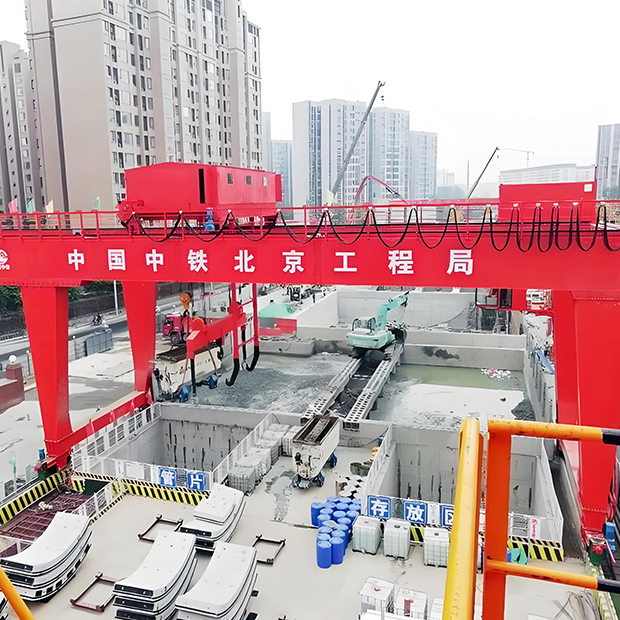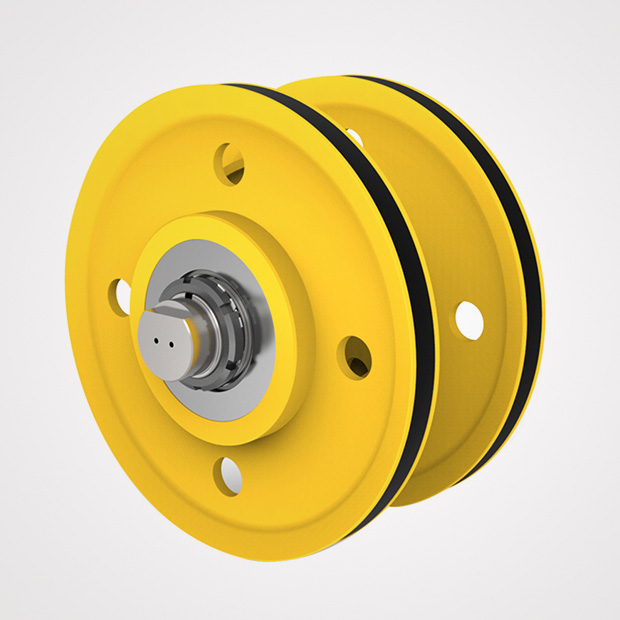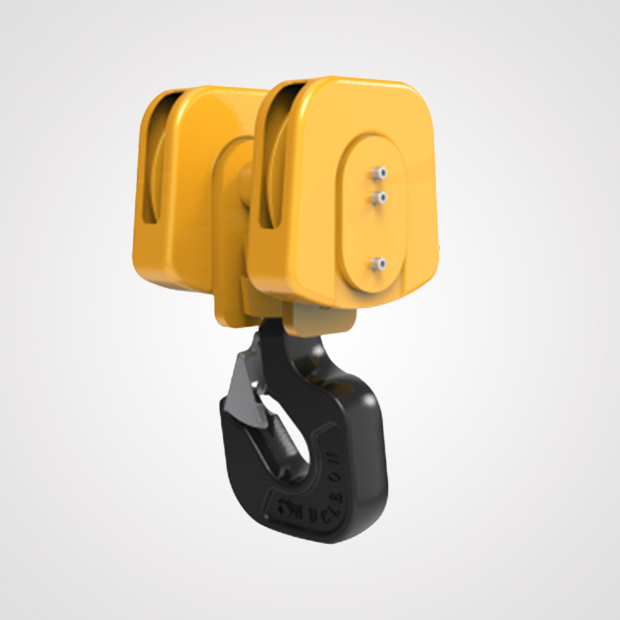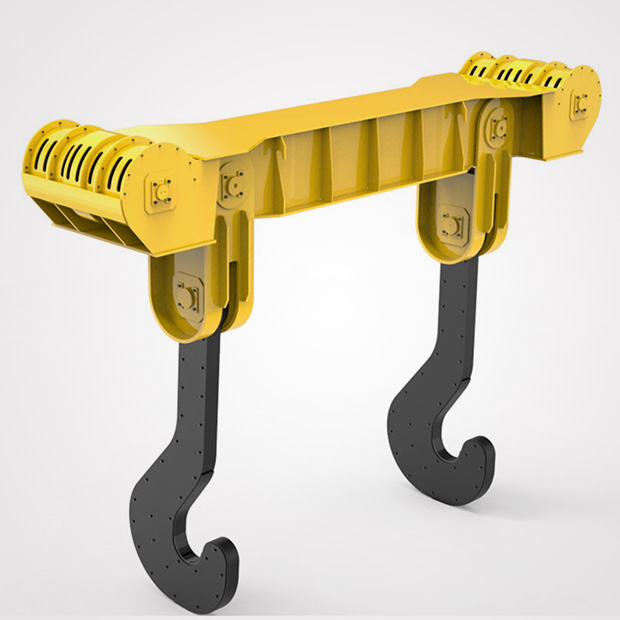







A container straddle carrier is a rubber-tired, self-propelled lifting vehicle that straddles a container from above, locks onto it via a telescoping spreader with automatic twistlocks, and transports it across the yard — combining stacking and horizontal movement in a single machine without fixed rail infrastructure. For a standard export configuration in the 30–50 ton range, budget a reference price of roughly USD 500,000–800,000 for a diesel or diesel-electric hybrid unit; full-electric and semi-automated variants typically run higher, and smaller-capacity models (10–20 ton) generally come in below that band. Always request a configured quote, as price varies significantly with span, stacking height, and power system.
The typical buyer at this point is deciding between a straddle carrier and an RTG or RMG crane — or has already settled on a straddle carrier and is now trying to figure out which configuration to specify before contacting a supplier. Both situations call for the same thing: a clear picture of what the variables actually are, and what questions to bring to the table.
This guide covers exactly that: how to read and compare the core specifications, how diesel, hybrid, and electric drive systems differ in real five-year operating cost, which scenarios genuinely suit a straddle carrier and which ones don't, and what to verify from any supplier before you commit.
Оглавление
Quick Comparison: Container Straddle Carrier vs. RTG vs. RMG
| Контейнерный перегружатель | Козловой кран | Портальный кран | |
|---|---|---|---|
| Moves itself + stacks | ✅ Yes — one machine | ❌ Stacking only | ❌ Stacking only |
| Fixed rail needed | Нет | Нет | Yes |
| Stacking height | 1-over-2 to 1-over-3 | 4–6 high | 5–7 high |
| Yard flexibility | High — relocatable | Средний | Low — fixed lanes |
| Best for TEU/year | Under ~200,000 TEU | 150,000–500,000 TEU | High-volume fixed yards |
| Civil works cost | Low | Средний | High |
| Non-container loads | Yes (with spreader change) | Нет | Нет |
Send an inquiry to Dafang engineers →
Получить бесплатное предложениеWhat a Container Straddle Carrier Actually Does — and When It's the Right Tool
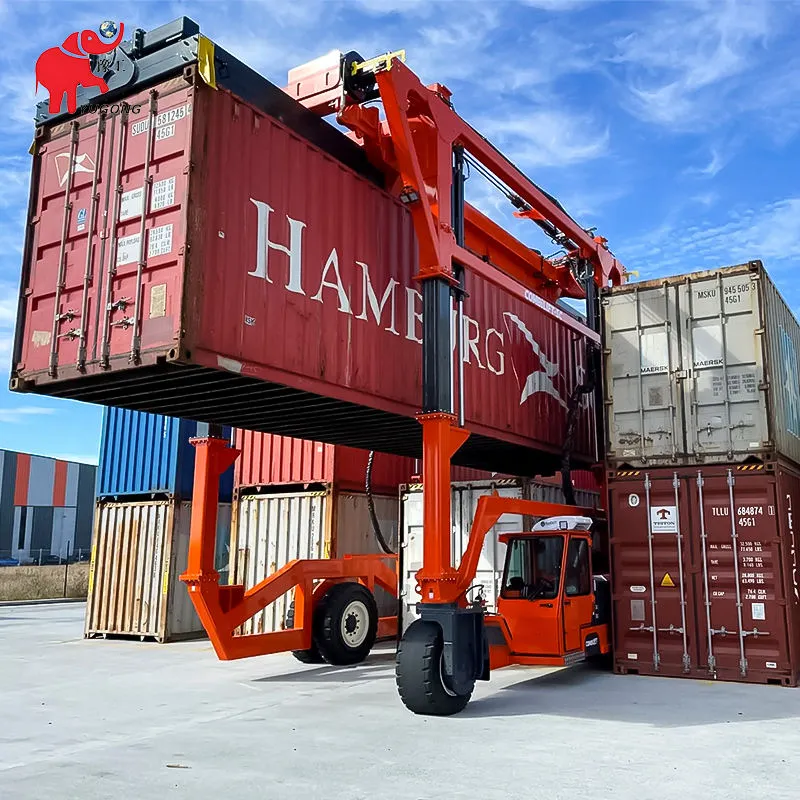
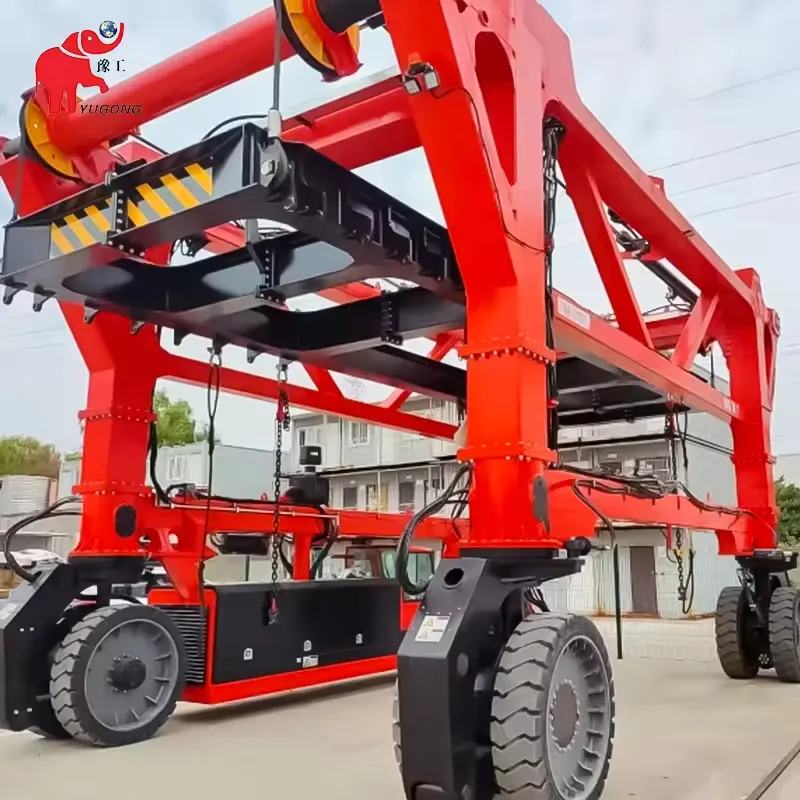
The core advantage: transport and stacking in one pass
A straddle carrier eliminates the separate horizontal-transport leg that RTG and RMG cranes depend on. An RTG, for example, is a highly efficient stacking machine — but it can't move a container from the quayside to the yard on its own. It needs yard trucks or AGVs to feed it. A straddle carrier drives to the container, picks it up, travels to the stack, and places it, all without any support equipment. For terminals and yards where that self-sufficiency matters — irregular traffic patterns, multiple disconnected handling zones, or simply not enough throughput volume to justify separate horizontal-transport fleets — the operational simplicity is the real value.
Dafang's ричстакер handles loads from 10 to 50 tons across spans of 18–35 m, with lifting heights of 10–13 m enabling 1-over-2 to 1-over-3 container stacking. Three travel modes — longitudinal, transverse, and crab (diagonal) — allow tight-space maneuvering that conventional gantry equipment cannot match. The spreader is telescopic, covering 20', 30', and 40' ISO containers via automatic twistlock engagement.
When a straddle carrier is the wrong choice
Stacking density above three high is a hard physical boundary: if your yard's binding constraint is maximum TEU per hectare and not horizontal throughput, an RTG or RMG crane will outperform a straddle carrier on that metric every time. A large container terminal processing 400,000+ TEU annually, with fixed high-density stacking rows and a dedicated horizontal-transport fleet already in place, is a better fit for RTG or RMG infrastructure. Buying a straddle carrier there means paying for self-sufficiency you don't need.
The practical rule: if your dominant operational problem is moving containers efficiently across varying distances without fixed infrastructure, the straddle carrier wins. If your dominant problem is storing the maximum number of containers on the minimum footprint, a rail or rubber-tired gantry wins.
Straddle Carrier Types: Drive System Comparison
The most consequential specification decision — more than tonnage or span — is the power system. It determines both upfront cost and what you actually spend over five years of operation.
Diesel and diesel-hydraulic: lowest upfront cost, highest running cost
Diesel units carry the lowest purchase price and require no charging infrastructure, making them the default for price-sensitive procurements and low-utilization yards. The penalty arrives in operations: fuel consumption is the dominant variable cost, emissions regulations in an increasing number of ports restrict diesel equipment operating hours, and engine service (oil, filters, coolant) every 500–750 operating hours adds to the maintenance burden. For yards running a single shift or in regions without tight emissions rules, diesel can still be the rational choice. For multi-shift, high-utilization operations, the five-year fuel bill usually erases the capital saving.
Diesel-electric hybrid: the current mainstream for multi-shift operations
In a diesel-electric hybrid, electric motors drive the wheels and the lifting mechanism while a diesel engine drives a generator. Critically, energy recovered during container lowering and braking is fed back into an onboard storage system and reused on the next lift or acceleration cycle — this is the regenerative energy recovery that makes hybrid systems work. Manufacturers including Dafang report fuel and emissions reductions of 20–30% versus comparable diesel configurations. Hybrid also means the diesel engine runs at a more consistent, efficient load rather than cycling between idle and peak demand. For terminals processing more than one shift, hybrid is currently the lowest-regret power choice: meaningful running cost reduction with no dependence on charging infrastructure.
Full electric: lowest operating cost, highest upfront investment
Battery-electric straddle carriers deliver zero direct emissions, lower energy cost per move, and significantly reduced drivetrain maintenance (no engine, no engine fluids). The upfront cost is highest in the range, and battery management is a real operational consideration: charging must fit the shift pattern, battery replacement is a planned capital event inside the machine's working life, and high-capacity packs represent a significant share of the machine's total cost. For terminals facing port emissions mandates, operating in enclosed or near-enclosed environments, or running very high utilization cycles where energy cost per move is a material line item, electric is increasingly viable. Dafang offers full-electric configurations alongside diesel and hybrid options as part of the standard specification process.
Straddle Carrier Specs That Actually Drive Performance
Lifting capacity and stacking configuration are separate decisions
Capacity (tons) and stacking height (1-over-2 vs. 1-over-3) are often conflated in supplier brochures, but they're independent variables that need to be decided separately. Lifting capacity should be sized to your heaviest routine load plus a safety margin — not your theoretical maximum. Most loaded 40' ISO containers fall well below the upper capacity bands; over-specifying tonnage inflates capital cost, tire wear, and fuel consumption without adding operational value.
Stacking height drives the structural specification more than tonnage does. A 1-over-3 configuration requires a taller portal frame, larger hydraulic cylinders, and higher structural steel mass than a 1-over-2 machine. If you specify 1-over-2 today to save cost but plan to add stacking density later, you'll face a machine replacement rather than an upgrade. Match the stacking spec to your yard's medium-term density plan.
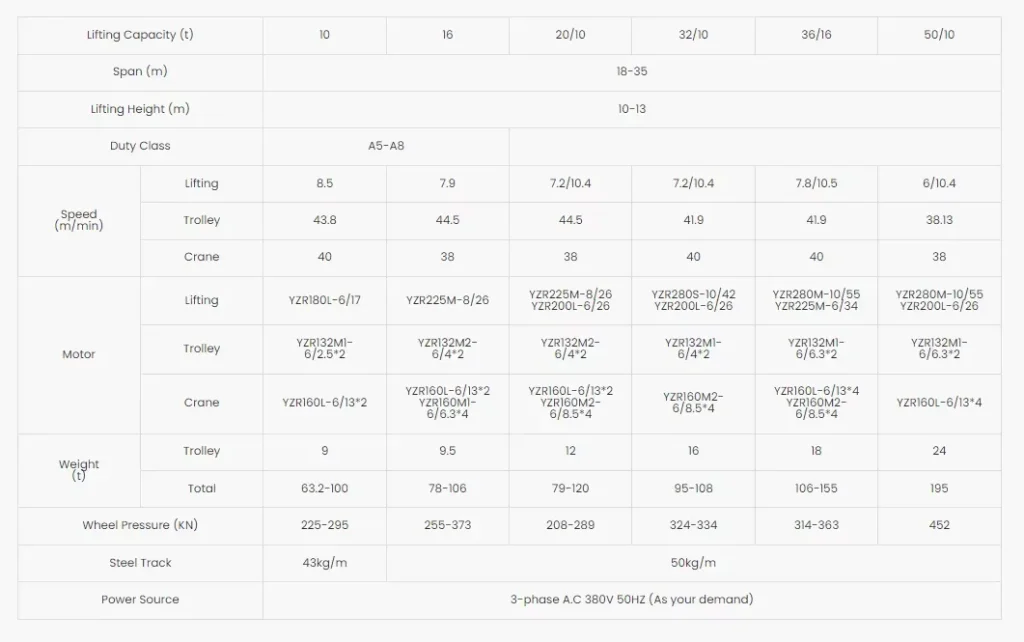
Dafang's standard range covers 10, 16, 20/10, 32/10, 36/16, and 50/10 ton configurations, with the dual-figure models (e.g. 32/10) referring to main hook / auxiliary hook capacity. Lifting speeds range from approximately 6–10.4 m/min depending on configuration; travel speeds reach 38–44 m/min.
Span, clearance, and pavement: the site-specific specs buyers overlook
Overall machine width and under-beam clearance must be overlaid on your actual yard plan before shortlisting — not after signing. A 1-over-3 machine is physically taller and its mast geometry differs; if your yard has height restrictions at gate structures, existing buildings, or covered loading bays, that constraint may rule out certain configurations regardless of their lifting capability.
Pavement matters as well. Straddle carriers require concrete, asphalt, or well-compacted gravel — the surface must support wheel loads without deflection, typically calling for 200 mm concrete or structural equivalent. Wheel pressure on Dafang units ranges from 208–452 kN depending on configuration; heavier models require higher-spec pavement engineering. Soft ground, uneven surfaces, or poorly maintained yard pavements accelerate tire wear and create stability risks.
Scenes Where a Straddle Carrier Outperforms Fixed Equipment
Port and intermodal terminals under ~200,000 TEU
Container terminals with seasonal volume fluctuations, phased expansion plans, or multiple disconnected stacking zones benefit most from the straddle carrier's flexibility. The absence of rail infrastructure means layout changes don't require civil works — a practical advantage when terminal operations evolve over time. For terminals in this throughput band, the capital avoided on rail foundations and groundwork often represents 20–30% of the equivalent RMG system investment.
Bridge construction and precast component yards
This is the scenario most supplier brochures skip. Precast concrete beam yards, bridge component fabrication facilities, and construction staging areas represent a strong fit for straddle carriers precisely because they are temporary or semi-permanent. A straddle carrier handling bridge girders, deck segments, and large structural steel at a project site can be relocated to the next project when work is complete — fixed gantry infrastructure cannot. The telescoping spreader accommodates varying component geometries with appropriate lifting frame modifications, and the three-mode steering system navigates construction site constraints that would block a rail-mounted crane entirely. Dafang supplies straddle carriers into this market alongside its dedicated строительное оборудование для мостов line.
Heavy manufacturing and industrial transfer
Steel mills, refineries, and heavy machinery plants using straddle carriers for short-distance transfer between production cells, inspection stations, and shipping preparation areas gain the same infrastructure advantage: no overhead crane installation required at temporary or reconfigurable production layouts. The key constraint is load geometry — straddle carriers work best with loads having defined pickup points within the span width. For irregular loads needing multiple rigging points or asymmetric lift geometry, overhead gantry or bridge cranes are more appropriate.

Pricing, Lifecycle Cost, and What the Quote Won't Tell You
What to budget: the reference range by configuration
Straddle carrier pricing is not publicly listed and varies with manufacturer, capacity, drive type, and export destination. Based on current market references for standard export configurations in the 30–50 ton range:
| Конфигурация | Estimated Range (per unit, FOB) |
|---|---|
| Diesel / diesel-hydraulic, manual | USD 500,000–700,000 |
| Diesel-electric hybrid, manual | USD 600,000–800,000 |
| Full electric, manual | USD 800,000–1,000,000+ |
| Semi- or fully automated | USD 1,000,000–1,300,000+ |
Smaller-capacity configurations (10–20 ton, suitable for non-container industrial applications) typically come in below these bands. These figures cover the machine itself; budget separately for ocean freight and port delivery (USD 30,000–80,000 per unit depending on route), commissioning and training (USD 20,000–50,000), and spare parts initial stock (typically 3–5% of unit price for the first two years). When comparing quotes from multiple suppliers, confirm whether these items are included or excluded consistently.
Примечание: These are market reference figures for planning purposes, not binding quotations. Contact Dafang directly for a configuration-specific price based on your actual requirements.
The costs that don't appear on the quote
Tires are the most consistently underestimated recurring cost in straddle carrier ownership. Large pneumatic tires on a high-duty-cycle machine wear faster than operators expect, and tire quality differences between suppliers show up on your maintenance ledger, not on the purchase invoice. For electric models, battery replacement is a planned capital event — not a surprise maintenance item — and belongs in the lifecycle budget from day one. Unplanned downtime is the largest hidden cost of all; terminal downtime in busy operations runs well into four figures per hour, making reliability and parts availability a procurement criterion with direct financial consequences.
Certifications and How to Verify Them
For most export markets, the minimum certification baseline for lifting machinery covers CE marking under the EU Machinery Directive (2006/42/EC), ISO 9001 quality management certification for the manufacturing facility, and design classification referencing FEM standards and the ISO 4301 crane classification family. For the Eurasian Customs Union (Russia, Kazakhstan, and related markets), EAC certification under TR CU 010/2011 is required — a requirement that Dafang has met on delivered projects including the 2025 straddle carrier deployment in Yekaterinburg. OSHA operating rules apply in US installations.
Why this matters practically: certifications affect customs clearance, insurance validity, and terminal authority type approvals. A machine that arrives without the correct documentation for your market can be held at port or denied operating approval.
What to actually request from a supplier — not as verbal assurance, but as documents:
- EC Declaration of Conformity (for EU and CE markets)
- Overload test certificate (110% dynamic / 125% static load test results)
- ISO 9001 manufacturing certificate (confirm current validity)
- EAC certificate if shipping to Eurasian Customs Union countries
If a quote is unusually low and the certification file is thin, the gap is often where the cost was removed.
Why Source From a Dedicated Port Equipment Manufacturer
General industrial crane manufacturers and specialized port equipment manufacturers use the same terminology but differ significantly in what they've actually engineered and tested. A straddle carrier is a demanding machine: it operates under dynamic loads, traverses uneven surfaces, works in salt-air and extreme temperature environments, and accumulates high operating hours on tires, hydraulics, and spreader mechanisms. The design requirements are fundamentally different from a fixed overhead crane.
Dafang has manufactured and exported container straddle carriers as part of its port crane product line, with delivered projects spanning standard container terminal applications and extreme-environment specifications including -35°C cold-climate operation. With 850,000 m² of manufacturing space, 2,600+ employees, and a product line covering the full container handling spectrum — from straddle carriers and Кран-рефрижераторные козловые краны through to козловые краны и оборудование для перемещения материалов — Dafang engineering teams work with project-specific requirements from specification through commissioning.
ЧЗВ
Q1:What is a container straddle carrier and how does it differ from an RTG crane?
A container straddle carrier combines horizontal transport and stacking in one self-propelled machine — it drives to the container, picks it up, and delivers it to the stack without support vehicles. An RTG crane stacks far more densely (4–6 high versus 1–3 high for a straddle carrier) but cannot travel long distances and needs separate yard trucks to feed it. Choose a straddle carrier when self-sufficient, flexible movement is the priority; choose an RTG when maximum stacking density on a fixed footprint is the goal.
Q2:How much does a container straddle carrier cost?
For a standard 30–50 ton export configuration, current market references run approximately USD 500,000–700,000 for diesel manual units and USD 600,000–800,000 for diesel-electric hybrid. Full-electric and automated variants run higher. Smaller-capacity models (10–20 ton) typically come in below these bands. These figures are for the machine itself; freight, commissioning, and initial spare parts add to the project total. Contact Dafang for a configuration-specific quotation.
Q3:Diesel, hybrid, or electric: which drive type should I choose?
For low-utilization operations or sites without emissions restrictions, diesel offers the lowest upfront cost. For multi-shift port and industrial operations, diesel-electric hybrid is currently the mainstream choice — it reduces fuel consumption by 20–30% through regenerative energy recovery without requiring charging infrastructure. Full electric makes sense for high-utilization terminals facing emissions mandates, indoor-adjacent environments, or where energy cost per move is a significant line item. Match the drive system to your actual utilization pattern, not just the capital budget line.
Q4:Can a container straddle carrier handle non-containerized loads?
Yes, with appropriate spreader modifications. Standard telescopic container spreaders can be exchanged for custom lifting frames suited to precast concrete beams, steel sections, or other regular-geometry industrial loads with defined pickup points. The constraint is load geometry: irregular loads requiring asymmetric rigging or multiple pickup points are better handled by overhead gantry equipment. Discuss specific load requirements with a Dafang engineer at the specification stage to confirm suitability and identify any required modifications.
Q5:What certifications should I require from a straddle carrier supplier?
For EU and most regulated export markets, CE marking under the Machinery Directive (2006/42/EC) is the baseline. Also request: the ISO 9001 manufacturing certificate (with valid date), FEM-referenced design documentation, and overload test records (110% dynamic / 125% static). For Eurasian Customs Union destinations, EAC certification under TR CU 010/2011 is required. Always request current documentary evidence rather than verbal assurances — confirm certificate validity and applicability to your specific destination and operating jurisdiction.