






Learning about underhung bridge crane helps managers, engineers and procurement teams make informed investments. This Dafang’s suspension overhead crane guide covers design principles, specifications, application scenarios and selection criteria. It could be helpful for clients’ decision-making for new construction or upgrading systems.
Table of contents
Dafang Underhung Bridge Cranes: Maximize Vertical Space
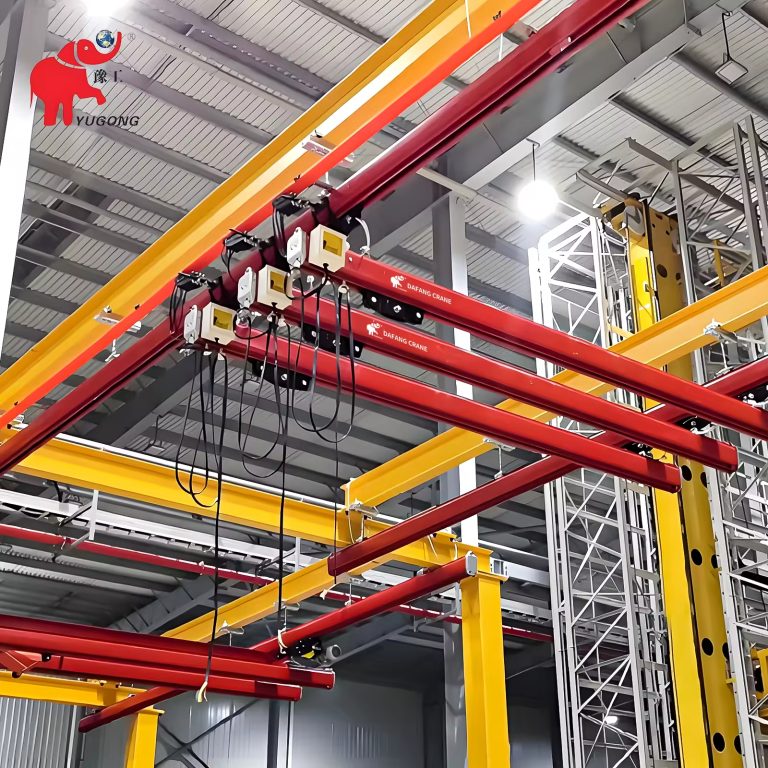
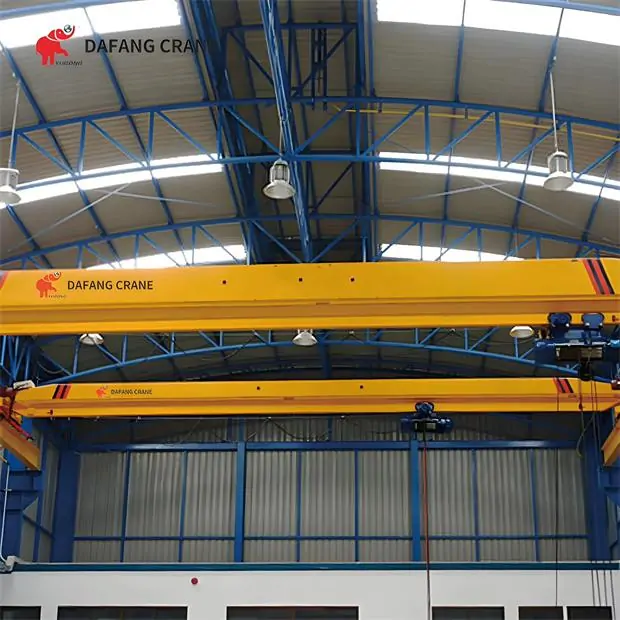
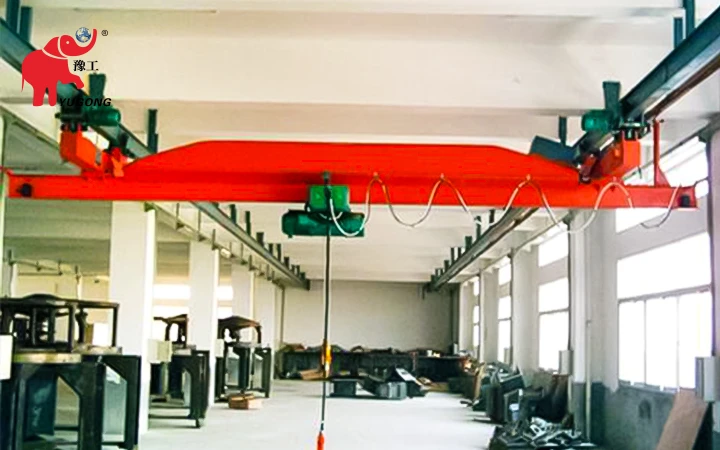
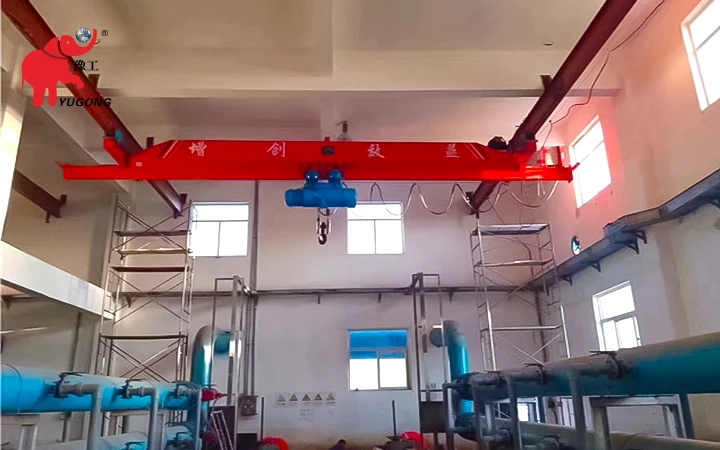
A Dafang underhung bridge crane is an overhead lifting system with bridge girder hanging beneath runway beams. This configuration allows operation closer to ceiling, maximizing floor-to-hook height in limited headroom facilities. In addition, this design offers advantages for industrial manufacturing and warehousing. It ensures additional lifting height without raising building structure, and multiple cranes on same runway improving material handling flexibility.
The suspended bridge beam design has become popular in automotive, aerospace and precision machining industries, with growing adoption over traditional top-running configurations.
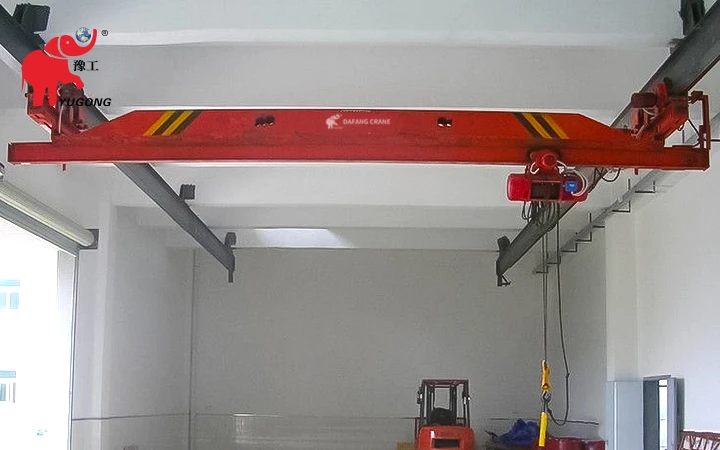
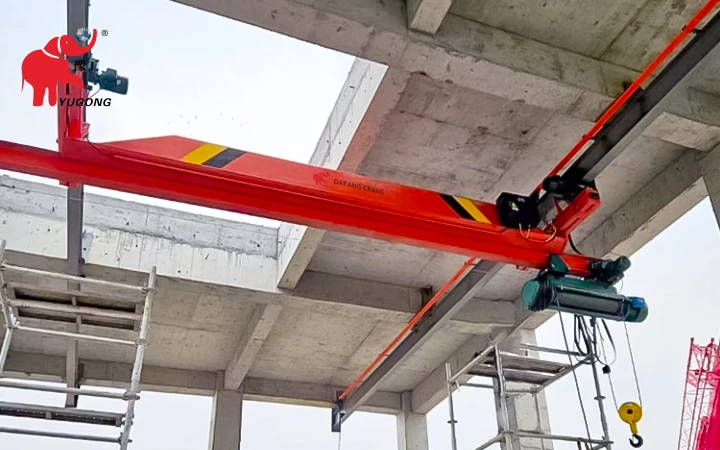

Underhung Bridge Crane Components and Their Functions
| Structural Components | Bridge and Trolley Systems | Lifting and Control Systems |
|---|---|---|
| Understanding Dafang’s underhung bridge crane key components helps evaluate quality and maintain equipment. Runway beams, usually I-beams 150mm-400mm deep, form the foundation, withstanding vertical, lateral and dynamic forces. End trucks are mounted on bridge girder ends, containing wheels, drive systems, precision bearings and motors. And some have adjustable wheel positions. | Bridge girders span end trucks and support the trolley system. Single-beam girder uses I-beams or box beams, while double-beam ones use two parallel girders for heavier loads. The girder resist bending and minimizing deflection. Trolley assemblies carry the hoist, with wheels, bearings and drive components, ensuring accurate positioning. | Most underhung cranes use electric hoists for lifting. Wire rope hoists handle heavy loads at high speeds, while chain hoists are for lighter loads. Dafang Crane‘s FEM standard hoists are compact and efficient. Electrical systems power moving parts via conductor bars or cables. Control panels house starters, drives and safety devices, and modern systems use programmable logic controllers. |
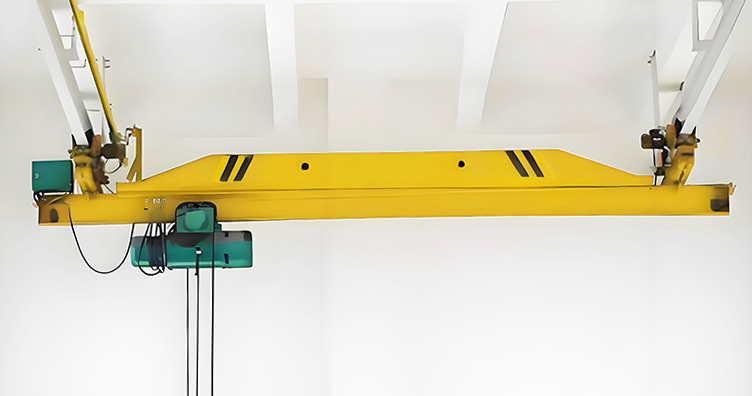
Underhung Bridge Crane
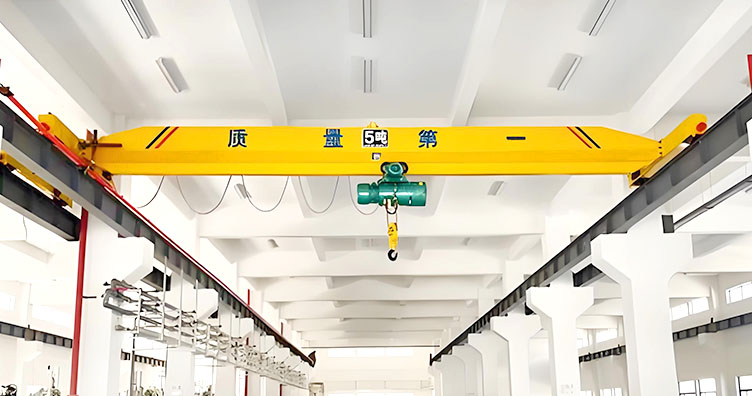
Single Girder
How Underhung Bridge Cranes Differ From Top-Running Cranes
Position and Mounting Differences
The key difference is the relation of the bridge girder to the runway. Top-running cranes have girders on elevated rails with wheels on the rail's upper surface.
In contrast, underhung cranes suspend below runway beams, efficiently using the structure and gaining vertical space, which is beneficial for low-ceiling facilities.
Multiple Crane Capability
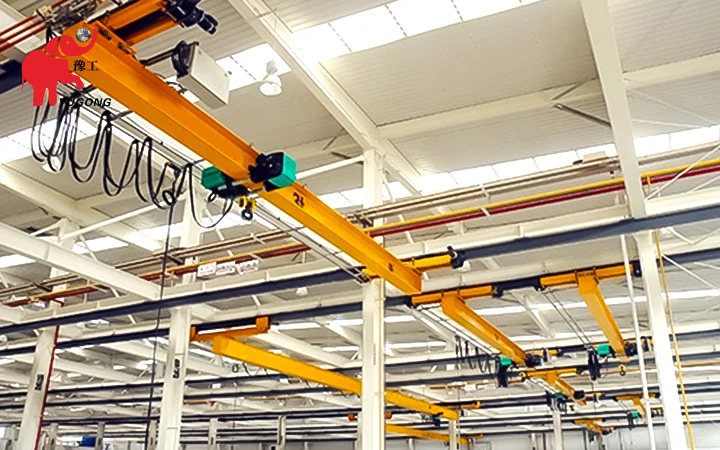
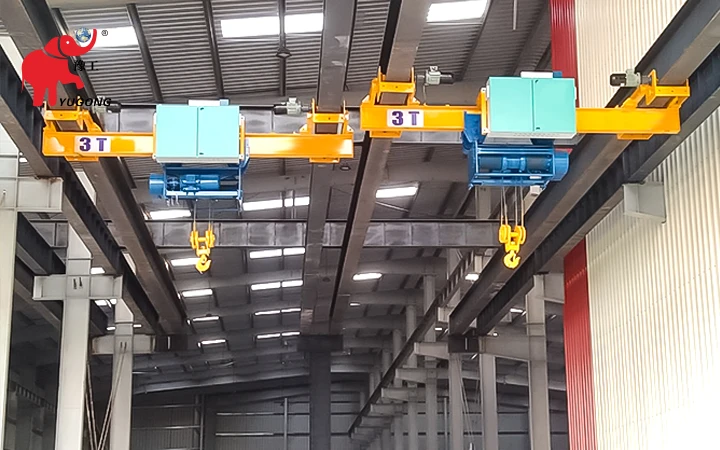
Multiple underhung cranes can share the runway at different elevations. Facilities can install several underhung cranes on one runway for different areas or load sizes.
Top-running cranes need substantial elevated structures with precise rails, while underhung cranes attach directly to existing building parts, reducing costs and time.
Capacity Considerations
The main trade-off is load capacity. FEM standard Underhung bridge cranes could handle under max. 32 tons, while top-running bridge cranes could lift and handle 50-100 tons materials in workshops and warehouses.
Therefore, your capacity requirements guide the design choice.
| Feature | Underhung Bridge Cranes | Top-Running Bridge Cranes |
|---|---|---|
| Types | LX Sstandard, NLX FEM standard | LD Standard, HD FEM Standard (single-girder type) |
| Bridge Position | Suspended below runway | Rides on top of runway |
| Headroom Required | Minimal | Substantial |
| Maximum Capacity | Up to 32 tons (FEM standard NLX type) | 50-100+ tons |
| Multiple Crane Operation | Yes, on same runway | Requires separate runways |
| Installation Complexity | Lower | Higher |
| Building Structure Impact | Uses existing structure | Requires elevated supports |
FEM standard vs Standard Underhung Crane Designs
- 1. Design Philosophy Differences
- The design philosophies of FEM standard and traditional underhung bridge cranes differ. FEM standard underhung cranes focus on compact design and optimized component integration. For example, Henan Dafang engineers its NLX series with reduced headroom and lighter weight. In contrast, standard underhung designs usually assemble separate off-the-shelf components like hoists, end trucks, and controls, offering flexibility but potentially sacrificing efficiency.
- 2. Performance and Efficiency
- FEM standard designs commonly use variable frequency drives as standard equipment in their drive systems, enabling smooth acceleration, precise positioning, and energy regeneration during braking. Standard systems may use contactor controls with limited speed variation. Structurally, FEM standard cranes optimize girder profiles through computer analysis and finite element modeling, resulting in lighter yet equally or more robust structures.
- 3. Cost and Value Comparison
- Energy consumption shows the design optimization levels. FEM standard underhung cranes use 15 to 25 percent less electricity than comparable standard systems, thanks to variable frequency drives, efficient motors, and regenerative braking. The initial cost of FEM standard cranes is typically 15 to 30 percent higher than standard underhung cranes. However, this investment pays off with lower operating costs, less maintenance, and a longer service life.
Advantages of Underhung Bridge Cranes
- 1. Space and Cost Benefits
- Underhung bridge cranes offer operational and economic benefits. Their main advantage is maximum headroom utilization. Suspended below runway beams, they recover 1-2 meters of vertical space compared to top-running systems.
- Lower building costs come from reduced structural requirements. They use existing building columns and roof structures for runway support, avoiding dedicated support columns. This reduces construction costs by 15-25 percent.
- 2. Operational Flexibility
- Underhung systems offer flexibility for future expansion. Adding a crane to an existing runway needs minimal structural modification. Multiple cranes on shared runways at different heights optimize equipment utilization, supporting growing production without major renovation.
- They have easier installation and shorter timelines, beneficial for time-sensitive startups. Runway beam installation is faster than elevated rail structures, with most installations completed in days.
- 3. Maintenance and Environment
- Better maintenance accessibility improves reliability and reduces downtime. Technicians service underhung cranes from the floor; top-running systems need scaffolding or specialized access equipment.
- They create a cleaner operating environment due to enclosed components and protected mechanisms. Modern underhung cranes have sealed drive systems and covered conductors, reducing contamination in cleanroom or food processing applications.

Underhung Overhead Crane Installation Requirements and Process
Site Preparation and Planning
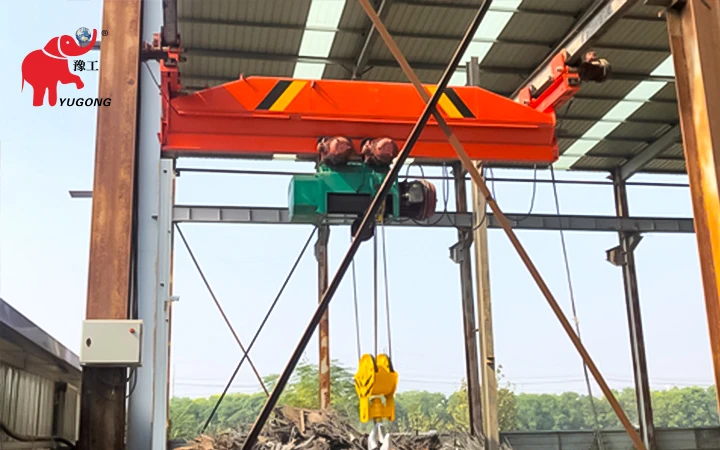
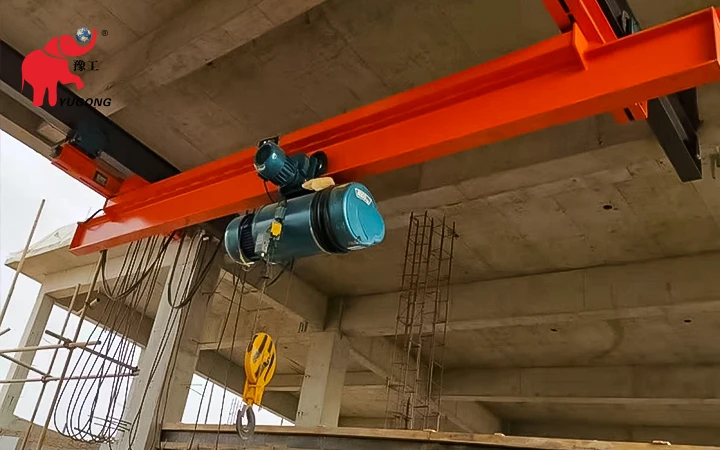
Proper installation ensures safe and reliable operation of underhung bridge crane systems. Site preparation starts with verifying building structure adequacy for crane loads. A structural engineer should review drawings and conduct field verification to confirm the capacity of building columns and roof members supporting runway beams.
Runway beam installation is the most critical phase. Beams must be precisely parallel and level, with alignment tolerances of a max. 3mm deviation over the runway length. They are attached to the building structure with mounting brackets or connection plates.
Assembly and Installation
Underslung Bridge cranes assembly usually happens on the floor before lifting. Attach end trucks to the bridge girder with precise alignment. Next, install the electric trolley and hoist. All electrical connections need verification before energizing systems.
Lifting the assembled bridge into the runway requires careful planning and equipment. Mobile cranes or temporary hoisting systems are used to raise the bridge to operating height, and it must be centered on runway beams during placement.
Testing and Commissioning
Testing and commissioning verify that all systems function correctly before use. Load testing confirms capacity ratings and structural integrity, and function tests check movements and safety devices. Operators receive training on proper operation and safety procedures.
Most underhung bridge crane installations are completed in one to two weeks, depending on complexity. Manufacturers like Henan Dafang provide installation supervision to ensure proper setup and optimal performance, protecting warranties.
Maintenance Best Practices for Dafang Underhung Cranes
Daily and Weekly Maintenance
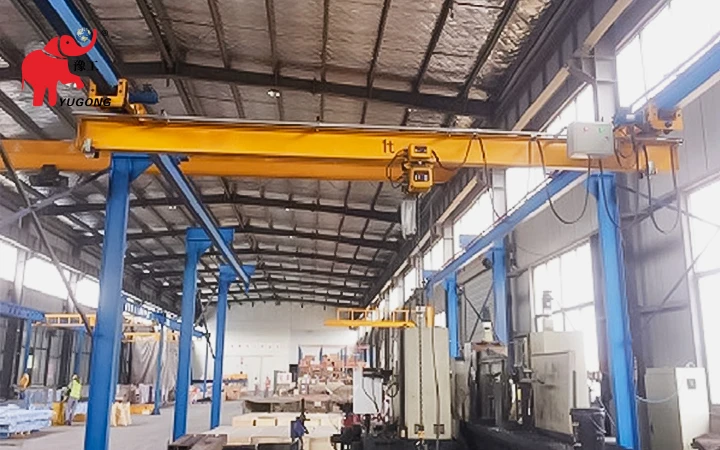
Systematic maintenance extends the service life of underhung bridge cranes and prevents failures. Daily operator inspections identify problems early. Train operators to check for noises, vibrations, or movements, and note any obvious damage or fluid leaks.
Weekly maintenance focuses on lubrication and basic adjustments. Grease fittings on wheels, bearings, and gear reducers need regular attention. Check wire ropes or chains, and inspect hooks.
Monthly and Quarterly Service
Monthly detailed inspections examine critical components. Measure wheel wear, test limit switches and safety devices, and inspect electrical connections.
Quarterly servicing includes more extensive preventive maintenance. Drain and replace gear reducer oil, inspect brake linings, and check structural connections for proper torque.
Choose Dafang, Professional Bridge Crane Supplier
Underhung bridge cranes efficiently handle overhead materials in space-constrained facilities. Their suspended design maximizes headroom and allows multiple cranes on shared runways.This makes them ideal for automotive manufacturing, aerospace assembly and precision machining.
Understanding key specs helps select equipment. Consider load capacity, span, lifting height and duty cycle. FEM standard designs from Henan Dafang offer advanced features like variable-speed controls, compact hoists and energy efficiency.
Proper installation and maintenance ensure long-term reliability. Professional installation protects warranties and performance. Regular inspections, lubrication and preventive servicing can extend service life beyond 20 years, and a quality initial investment reduces operating costs.
Dafang will emerge automation and monitoring technologies to enhance overhead crane capabilities. Smart crane systems offer predictive maintenance alerts and optimize material flow. We are committed to positioning underhung bridge cranes as key components of modern industrial manufacturing.
Frequently Asked Questions
Q: What is the main difference between underhung and top-running bridge cranes?
A: Underhung bridge cranes hang below runway beams, while top-running cranes ride on elevated rails. Underhung crane systems offer better headroom utilization and allow multiple cranes on the same runway. Top-running cranes handle heavier loads but need more vertical space and structural support.
Q: What is the maximum capacity for underhung bridge cranes?
A: Most handle 1-20 tons; FEM-standard designs could reach 32 tons (e.g., Henan Dafang's NLX series: 5-32 tons). For larger loads, top-running cranes are more practical and cost-effective.
Q: How much headroom do underhung bridge cranes require?
A: Underhung systems need 500-800mm less headroom than similar-capacity top-running cranes. Exact requirement depends on hoist type, bridge depth, and runway beam size. FEM standard compact designs further minimize headroom needs, which is crucial in low-ceiling facilities.
Q: Can multiple underhung cranes operate on the same runway?
A: Yes, multiple underhung cranes can operate at different heights on a single runway (not possible with top-running). Installing multiple cranes maximizes equipment use and reduces infrastructure costs.
Q: What industries commonly use underhung bridge cranes?
A: Automotive, aerospace, machine shops, steel fabrication, warehousing, food processing, and pharmaceutical facilities use underhung systems for space-saving design and flexible coverage.
Q: How long do underhung bridge cranes typically last?
A: Well-maintained underhung cranes last 20-30 years; FEM standard designs often exceed 25 years. Service life depends on duty cycle, maintenance, and environment. Proper care extends longevity.
Q: What maintenance do underhung bridge cranes require?
A: They need daily operator inspections, weekly lubrication, monthly checks, quarterly preventive servicing, and annual comprehensive inspections. Wire rope/chain replacement follows manufacturer schedule. FEM standard designs simplify maintenance with accessible service points.
Q: How much does an underhung bridge crane cost?
A: Underhung systems cost 25,000-110,000 USD (capacity, span, features dependent). A typical 10-ton/20-meter span system costs 45,000-70,000 USD (including installation). FEM standard designs cost 15-30% more but offer better efficiency and longevity.
Q: What are the advantages of FEM standard underhung cranes?
A: They feature compact design, variable frequency drives, optimized energy efficiency, and advanced safety systems. Consume 15-25% less electricity than standard systems. Lighter weight and better component integration provide operational advantages despite higher initial costs.
Q: Can underhung bridge cranes be automated?
A: Yes, modern underhung cranes support semi-automated and fully automated operation via sensors, programmable controls, and facility management system integration. Automation improves precision, throughput, and reduces labor costs, especially in high-volume repetitive operations.