




Why Steel Coil Handling Demands Specialized Engineering
Steel service centers, rolling mills, and metal processing facilities handle 5-ton to 40-ton coils daily. Steel coils have unique handling challenges compared to palletized or containerized goods, such as concentrated weight in cylindrical shape, surface damage risk from improper contact, dimensional variability across coil widths (600mm to 2,100mm standard), and safety issues during transport.
Standard overhead cranes with conventional hook blocks cannot grip coils securely. Sling methods cause problems like surface indentations, slippage risks, and slow cycle times as operators thread rigging through coil eyes. Facilities with high-volume coil movements daily need purpose-engineered lifting solutions that combine secure coil engagement, operational speed, and damage prevention.
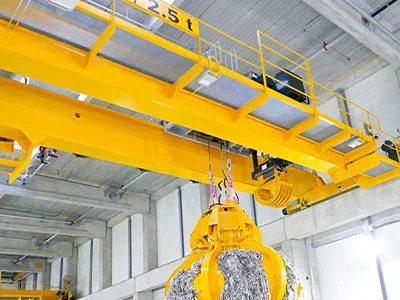
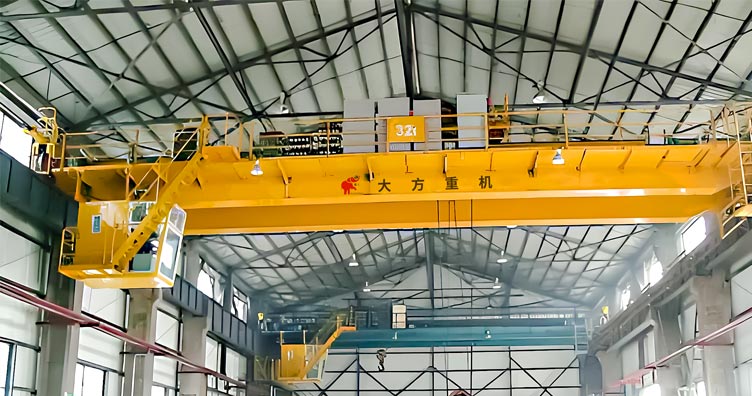
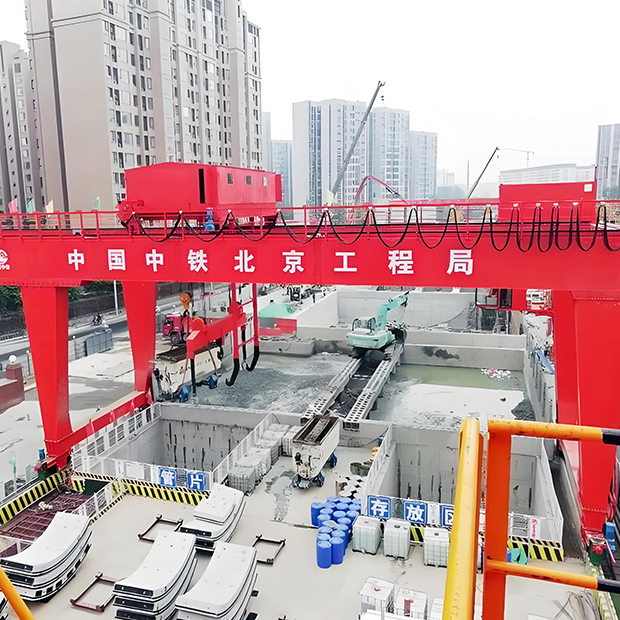
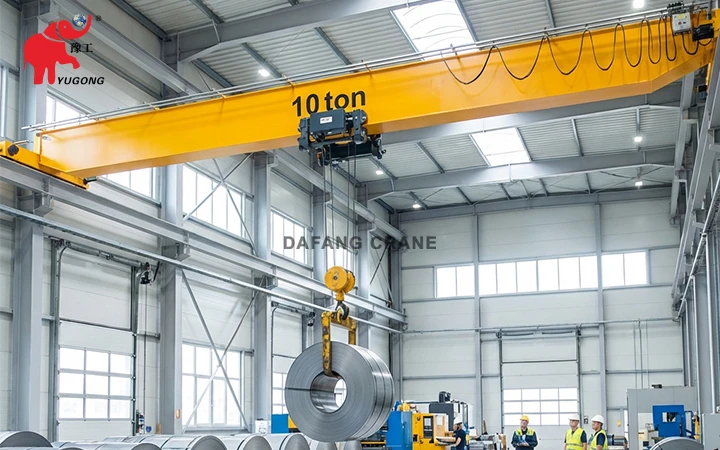
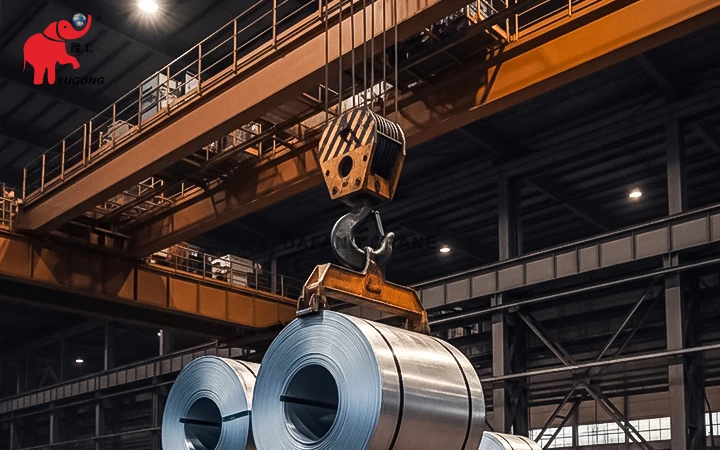
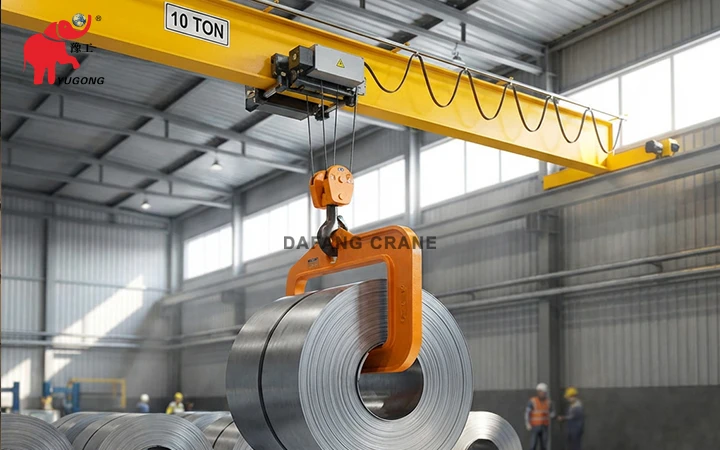
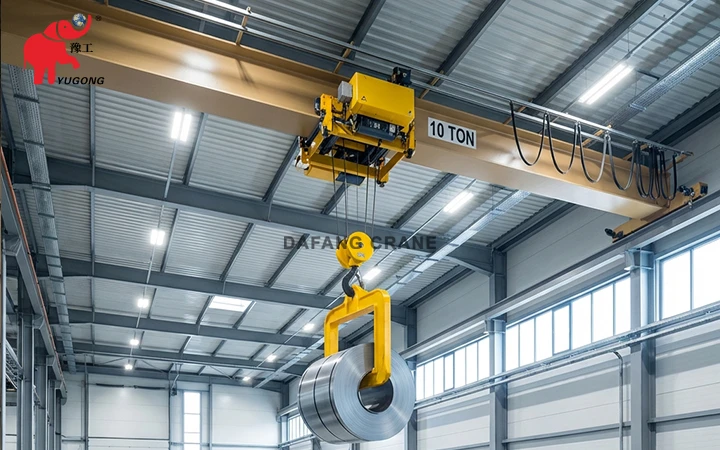
Dafang's overhead cranes with C-type lifting hooks meet these requirements through integrated coil-handling systems applied in cold rolling mills, steel service centers, and metal stamping operations.
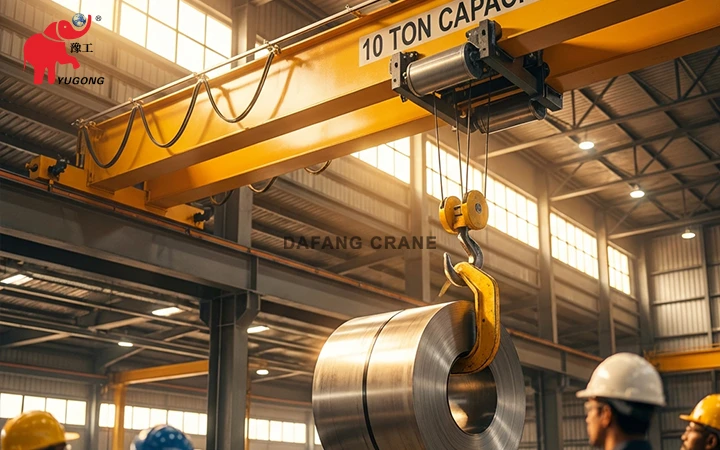
C-Type Hook Engineering for Steel Coils
Hook Design and Load Distribution
Hook Geometry
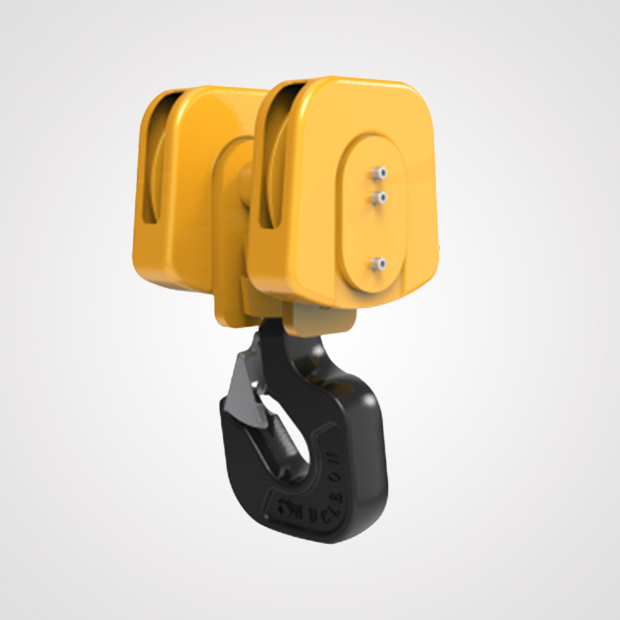
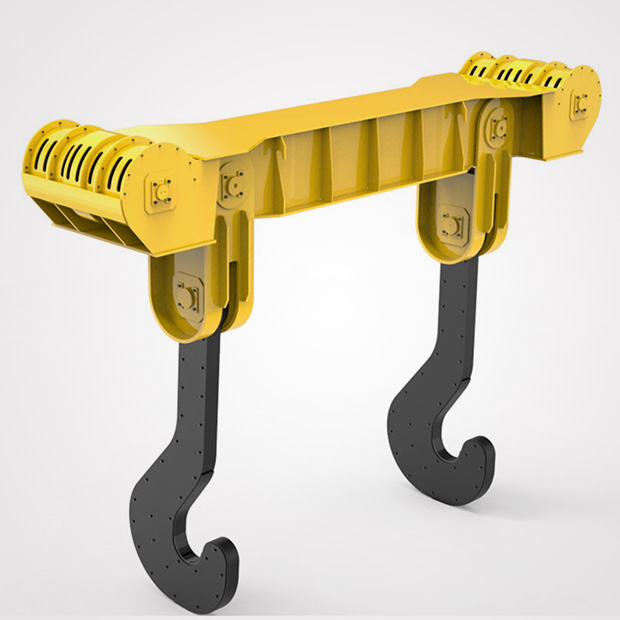
The C-shaped lifting beam cradles the coil's inner diameter, distributing lifting forces across the coil's core instead of stressing outer wraps. Forged alloy steel with heat treatment is used. Strength is sufficient for dynamic loading during acceleration and deceleration. Hook opening dimensions adjust to accommodate coil inner diameters from 508mm (20") to 762mm (30") standard, with custom configurations for non-standard coils.
Surface Protection
Urethane or rubber coating on contact surfaces prevents surface scratching and edge damage. It is important for pre-finished steel destined for automotive or appliance manufacturing where surface quality specifications are stringent. Replaceable wear pads extend hook service life and maintain surface protection standards.
Safety Latching
Spring-loaded safety latches prevent coil disengagement during lifting. The latching mechanism operates automatically during coil pickup—manual engagement is not required, reducing operator workload and eliminating safety latch oversight as a failure mode.
Load Capacity and Safety Factors
C-hooks designed to ASME B30.20 (Below-the-Hook Lifting Devices) and FEM 4.004 standards have a minimum 3:1 design factor on yield strength. Working load limits account for dynamic loading, impact forces during contact, and off-center loading conditions.
Proof load testing at 125% rated capacity and periodic inspection ensure ongoing structural integrity. Each hook carries permanent load rating markings and serial number traceability.
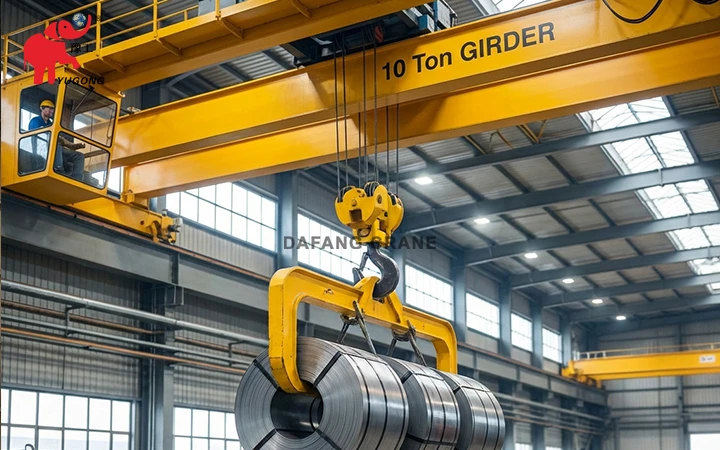
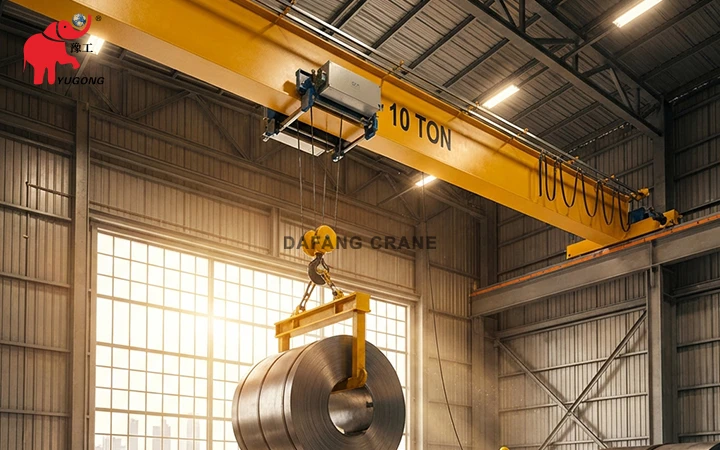
Overhead Crane Specifications for Coil Handling
Bridge Crane Configuration
Box Girder Construction
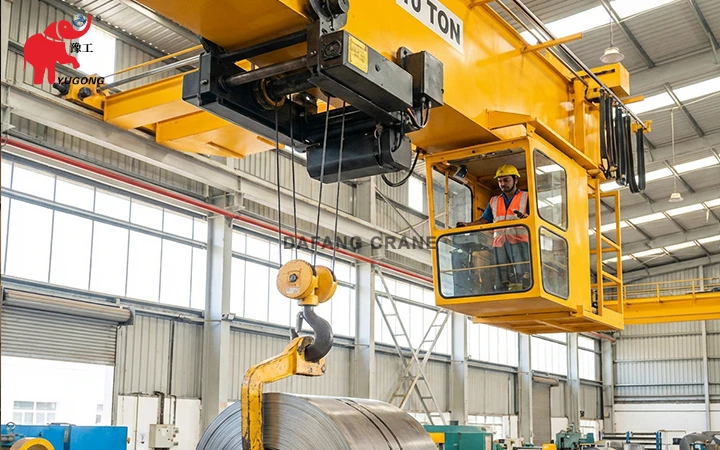
Box girder design offers rigidity for precise coil positioning. Spans of 10-35 m fit standard service-center bay widths. Lifting capacities of 5-40 tons cover various steel coil weights.
Duty Classification
A5-A6 per FEM/ISO standards for moderate to intensive use patterns. Service centers processing 200+ coil movements per 8-hour shift require A6 rating, while lower-volume operations (50-100 daily movements) can use A5 equipment. Underspecifying duty class leads to premature structural fatigue and component failure.
Crane Speed Parameters
Bridge travel is 30-60 m/min (higher speeds for long-bay facilities), trolley cross-travel is 20-40 m/min, and hoisting speed is 5-12 m/min with dual-speed control and slow precision mode is 1-2 m/min for final positioning. Variable frequency drives ensure smooth acceleration and precise positioning over slitting lines, uncoiling equipment, or truck beds.
Electrical and Control Systems
Operator Interface
Radio remote controls with pendant backup help operators get optimal sight lines during coil pickup and placement. Multi-function remotes integrate multiple controls including bridge, trolley, hoist, and auxiliary hoist controls in single handheld unit.
Load Monitoring
Optional load cells provide real-time weight display to prevent overload and enable operators to verify coil weights against shipping documentation. Overload protection systems prevent lifting beyond rated capacity, crucial when coil weight markings may be inaccurate or illegible, and help operators verify coil weights against shipping documentation.
Positioning Precision
Absolute encoder feedback on bridge and trolley drives enables positioning accuracy within ±10mm—relevant for automated coil handling systems or facilities where coils must align precisely with processing equipment mandrels.
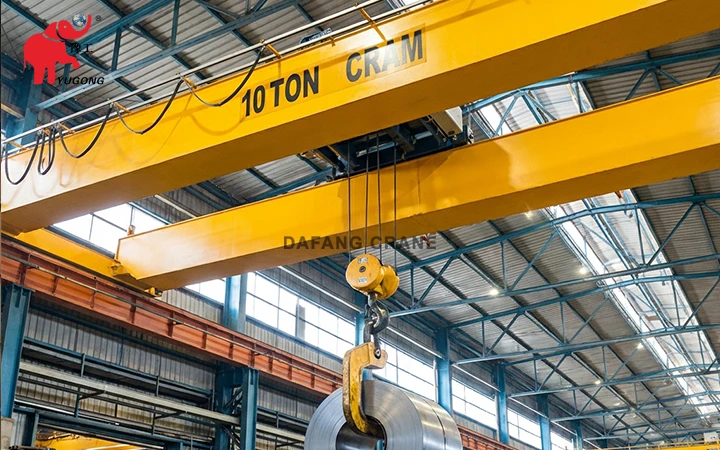
Steel Industry Applications
Cold Rolling Mills
Coil Transfer from Pickling to Rolling
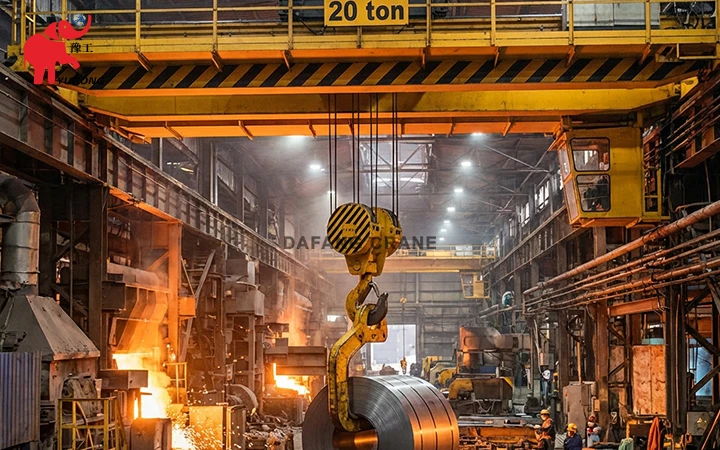
Transfer pickled coils (15-30 tons) from acid treatment to cold reduction mills. C-type lifting hooks prevent surface damage on chemically cleaned steel requiring precise surface finish for subsequent rolling operations. And quick engagement reduces transfer time between process stages, improving overall mill throughput.
Steel Service Centers
Inventory Management and Order Fulfillment
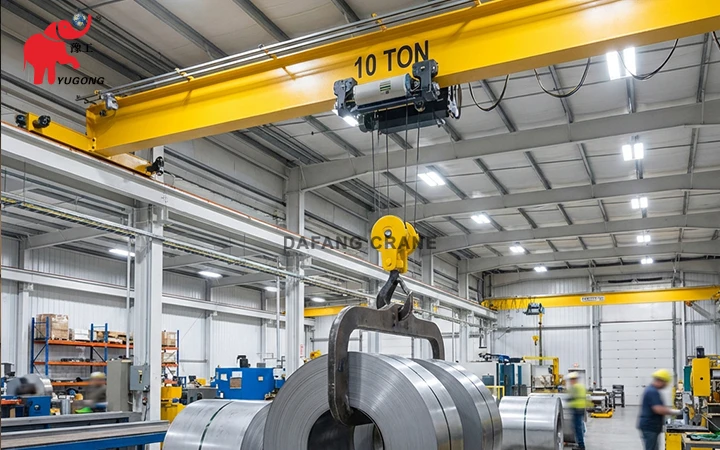
Move coils between storage racks, slitting lines, cut-to-length equipment, and shipping areas. Typical facilities handle 100-300 coil movements daily. C-hook systems handle this range without tooling changes. Adjustable C-hooks or hook sets handle the full coil width ranges for stocking automotive, construction, and appliance-grade steel. Tool change time under 10 minutes allows facilities to switch between narrow-slit product and master coil handling within single shifts.
Metal Stamping and Fabrication
Coil Loading to Press Feed Systems
Position coils on uncoiler mandrels for stamping presses and roll-forming equipment. Precise placement prevents mandrel damage and ensures coil alignment for automated feeding. The C-hook's secure grip allows controlled rotation during coil orientation before mandrel placement.
Galvanizing and Coating Lines
Pre-treatment and Finishing Operations
Handle coils through zinc coating, paint application, and protective film processes. Surface protection on C-hooks prevents coating damage and maintains product quality standard for pre-finished steel applications where surface defects cause product rejection.
Operational Safety Considerations
i. Coil Stability During Lifting
Steel coils have different stability than rigid loads. The cylindrical geometry combined with concentrated weight creates rollover risk if lifted off-center or if the C-hook opening doesn't properly engage the coil bore. Operators need training on:
- Visual verification of hook engagement before lifting
- Coil eye condition assessment (deformation indicating handling damage)
- Off-center loading recognition and correction procedures
- Maximum travel speeds for coil weights and facility conditions
ii. Surface Condition and Handling Damage
Cold-rolled and pre-finished steel for automotive or appliance manufacturing operates under strict surface quality specifications—scratches, dents, or edge damage result in product rejection. Facilities should:
- Inspect C-hook contact surfaces for damage or contamination before each shift
- Replace worn urethane/rubber padding at specified intervals
- Implement coil wrapping or edge protectors for highest-grade material
- Document handling procedures supporting quality management systems (ISO 9001, IATF 16949)
iii. Maintenance and Inspection Protocols
ASME B30.20 and local regulations specify inspection requirements for below-the-hook lifting devices. Typical protocols include:
- Daily: Visual inspection for cracks, deformation, latch function
- Monthly: Detailed examination of welds, wear pad condition, safety latch operation
- Annual: Magnetic particle or dye penetrant testing of load-bearing welds, dimensional verification, proof load testing where required by regulation
Specification Considerations for Procurement Teams
Coil Dimensional Range
Define the full range of coil inner diameters, outer diameters, widths, and weights the facility will handle. C-hooks should accommodate the entire range without requiring multiple specialized tools, improving operational efficiency. Standard hooks cover 508-762mm (20"-30") inner diameter; wider or narrower coils require custom engineering.
Facility Layout and Crane Coverage
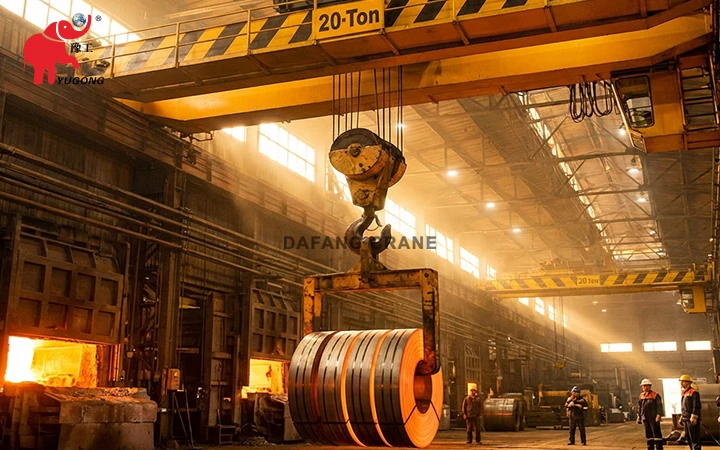
Measure bay width, available height from floor to overhead structure, and required hook height for tallest coil stacking or equipment loading. Bridge span and lifting height determine crane configuration—inadequate height requires coil rolling (time-consuming and potentially damaging) rather than direct vertical lifting.
Integration with Existing Equipment
For facilities retrofitting coil-handling cranes into existing buildings, verify runway beam capacity, building column loads, and electrical service adequacy. Upgrading to heavier cranes may need structural reinforcement. A civil engineering review before equipment procurement can prevent project delays.
Environmental Conditions
Indoor service centers have relatively clean environments. Mills processing hot-rolled coils or operating pickling lines expose cranes to high temperatures, acidic fumes, and scaling debris. These conditions require enhanced corrosion protection, sealed electrical enclosures (IP54-IP65), and more frequent inspections.
Dafang Engineering Cranes for Steel Coil Handling
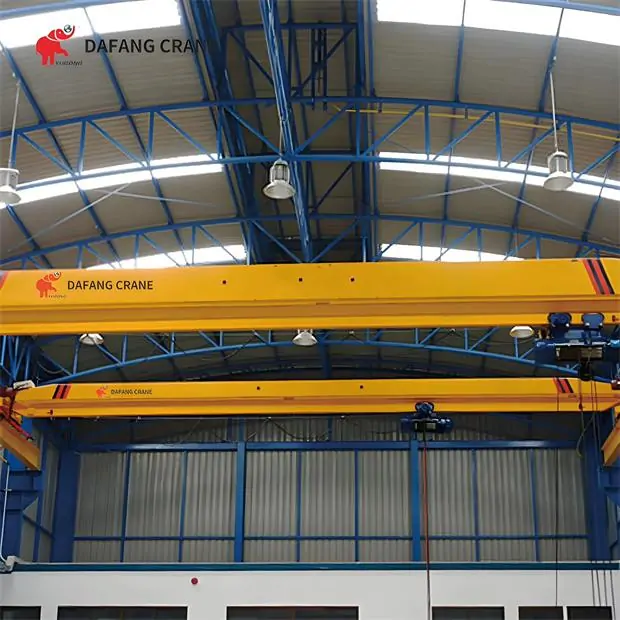
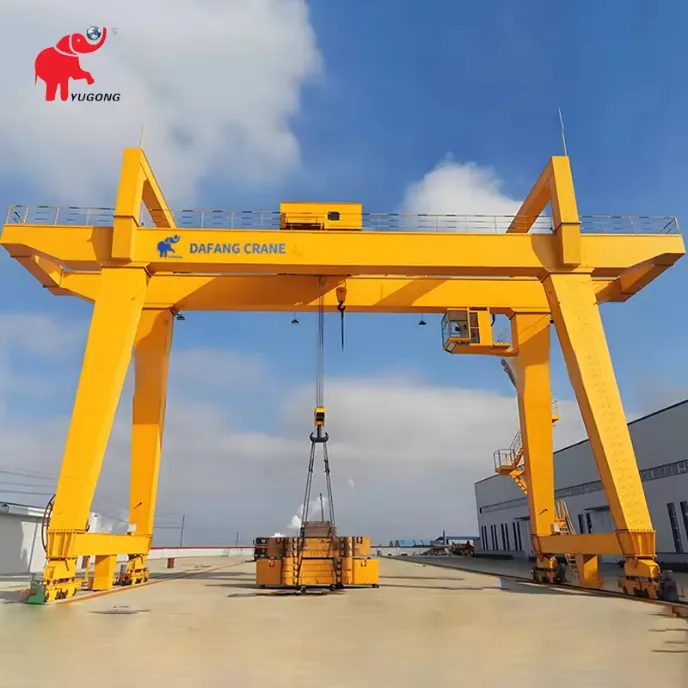
Dafang Heavy Machinery offers overhead crane systems with integrated C-type lifting hooks for steel coil handling in rolling mills, service centers, and metal processing facilities. Our engineering team analyzes coil dimensions, facility layout, duty cycles, and operational requirements to configure equipment for actual production demands.
Standard configurations cover 5-40 ton capacities. Adjustable C-hooks can accommodate 508-762mm inner diameters and 600-2,100mm widths. Custom engineering handles non-standard coil geometries, extreme duty cycles, or facilities needing multiple specialized lifting tools.
Contact our technical team with your coil specifications (weight range, dimensions, daily movement volume) and facility parameters (bay width, height restrictions, environmental conditions). We provide application-specific crane configurations, C-hook engineering drawings, and equipment specifications for your procurement.
Henan Dafang Heavy Machinery Co., Ltd.
Steel Industry Crane Specialist · CE · ISO 9001 · ASME B30.20 Compliant Lifting Devices
20+ Years Steel Coil Handling Experience
Frequently Asked Questions
What C-hook capacity should I specify for coils up to 25 tons?
For coils up to 25 tons, specify 30-32 ton rated C-hooks for safety margin. Don't load hooks to 100% rated capacity in production use—reserve capacity accommodates real-world conditions.
Can one crane handle both narrow-slit and master coils?
Yes, with adjustable C-hooks or quick-change hook sets. Adjustable designs accommodate 600-2,100mm width range in single tool. Facilities with extreme width variation (e.g., 300mm slit coils and 2,100mm master coils) need separate hook sets for optimal handling.
How often do urethane contact pads require replacement?
Urethane contact pad replacement frequency depends on usage intensity and coil surface conditions. High-volume facilities (200+ movements daily) typically replace pads every 6-12 months. Visual inspection for cracking, compression set, or surface damage guides replacement timing. Maintaining spare pad sets prevents downtime.
What maintenance intervals apply to C-hooks and when should they be replaced?
Follow ASME B30.20 inspection protocols for C-hooks: daily visual checks, monthly detailed examination, and annual structural testing. Replace hooks with cracks, permanent deformation exceeding manufacturer specs, or wear beyond serviceable limits. Properly maintained hooks last 15-20 years; abuse or neglect shortens service life significantly.