






Crane hooks are small components that carry enormous responsibility. A poorly selected or worn crane hook can compromise an entire lifting operation — putting loads, equipment, and personnel at serious risk. Yet in many procurement decisions, the hook is treated as an afterthought.
This guide changes that. Whether you are specifying a hook for a new overhead crane system or replacing worn lifting accessories on an existing hoist, this article walks you through everything that matters: hook types, load capacity principles, material standards, safety features, and practical selection criteria. By the end, you will have a clear framework for making the right choice the first time.
Table of Contents
What Is a Crane Hook?
A crane hook is the primary load-bearing interface between a hoist or crane system and the load being lifted. It connects the hook block or hoist to rigging components such as slings, shackles, and spreader bars. Every force in the lifting system ultimately passes through the hook.
In industrial operations, crane hooks appear across a wide range of environments:
- Manufacturing plants handling raw materials and finished goods
- Warehouses and distribution centers managing heavy inventory
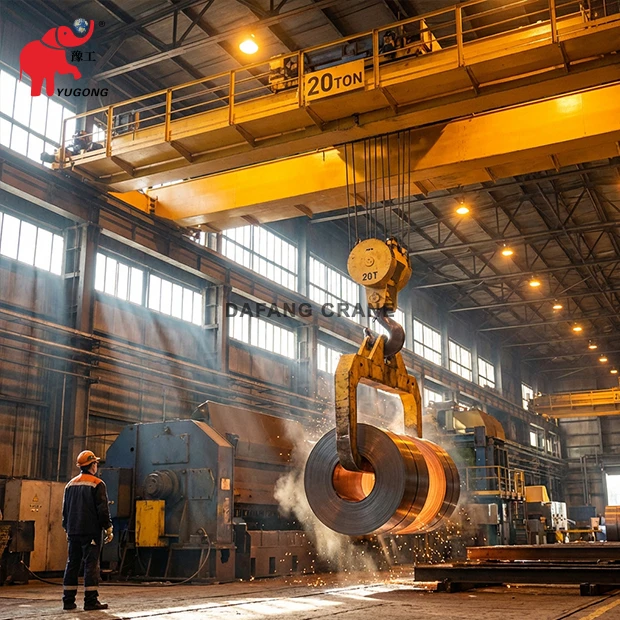
- Steel mills moving billets, coils, and structural sections
- Construction sites positioning structural steel and precast elements
- Ports and shipyards loading and unloading heavy cargo

Main Types of Crane Hooks
Different lifting tasks demand different hook designs. Understanding the differences helps you match the right industrial crane hook to each application.
Single Hook
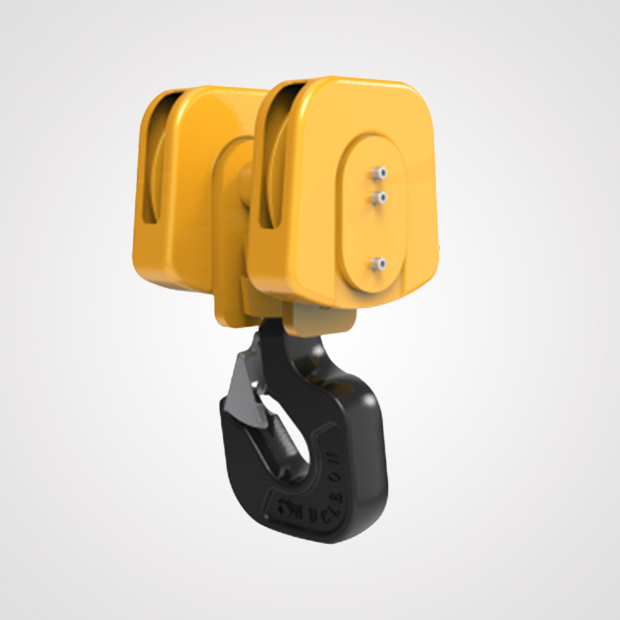
The single hook is the most common hook type in general industrial cranes. It features a single load-bearing throat and a straightforward connection point for rigging. Single hooks are well suited to light and medium duty applications — typically up to 50 tons — where load distribution demands are not complex. Their simple structure makes them cost-effective and easy to inspect and replace.
Double Hook
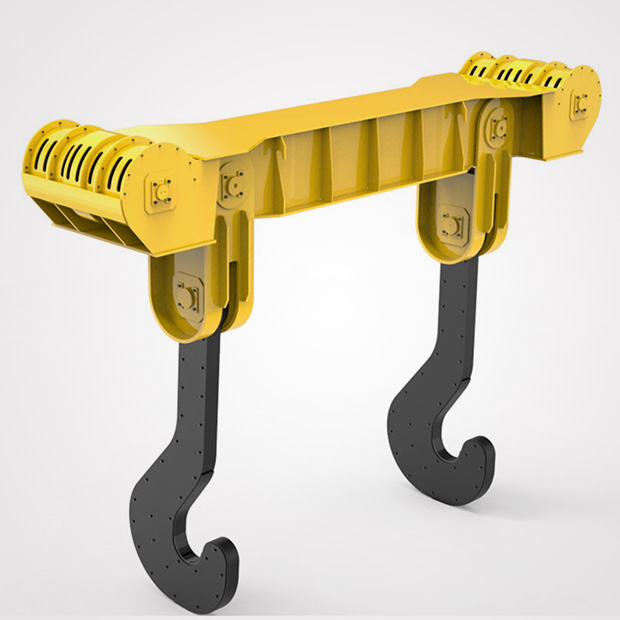
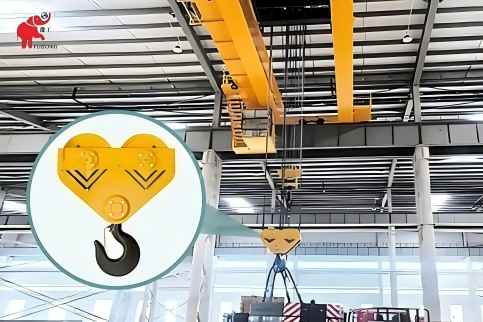
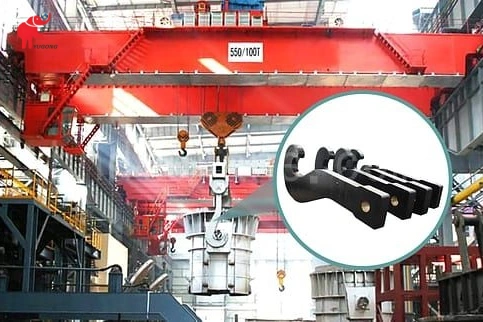
Double hooks, also called twin hooks, have two load-bearing throats on a shared shank. This design distributes the load across two contact points, reducing stress concentration and improving stability for very heavy lifts. Double hooks are commonly found on large overhead crane systems in steel mills and heavy fabrication facilities, typically from 50 tons and above. They are often paired with a hook block assembly designed specifically for dual-point rigging.

Swivel Hook
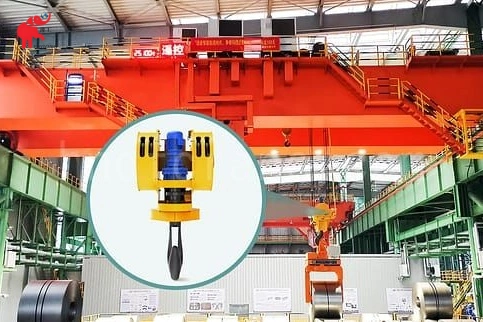
A swivel hook incorporates a rotating bearing that allows the hook body to rotate 360 degrees independently from the rigging above it. This rotation capability prevents wire rope and chain from twisting under load, which is a common source of premature wear in rigging hook systems. Swivel hooks improve operational flexibility in applications where the load must be repositioned during a lift or where the hook naturally rotates during hoisting.
Forged Hook
Forged crane hooks are manufactured from alloy steel through a high-pressure forging process rather than casting. This process aligns the grain structure of the metal, producing a hook with significantly higher tensile strength and fatigue resistance compared to cast alternatives. Forged hooks are the standard for heavy-duty lifting and are required by most crane safety standards for rated capacities above a certain threshold. Their resistance to fatigue cracking makes them the preferred choice for high-cycle applications.
Crane Hook Load Capacity Explained
Load capacity is the most critical specification when selecting a lifting hook.
Working Load Limit (WLL) is the maximum load a hook is designed to handle under normal operating conditions. This is the figure stamped or engraved on the hook body and referenced in its certification documentation.
Rated Load refers to the maximum load as specified by the crane or hoist manufacturer for the complete system. The hook WLL must always equal or exceed the crane's rated load.
Safety Factor is the ratio between the minimum breaking load of the hook and its WLL. Most industrial lifting standards require a safety factor of at least 4:1, meaning a hook rated at 10 tons must have a minimum breaking load of 40 tons. Some applications, such as personnel lifting or nuclear environments, require higher safety factors.
Dynamic loads must also be considered. Acceleration, deceleration, swinging, and shock loads during normal crane operations generate forces that can significantly exceed the static weight of the load. This is accounted for in the design safety factor, but it also means that abrupt movements and side loading must always be avoided.
Typical capacity ranges for reference:
| Hook Category | Typical WLL Range | Common Applications |
|---|---|---|
| Light duty | 1 – 10 tons | Workshop cranes, small hoists |
| Medium duty | 10 – 50 tons | General manufacturing, warehousing |
| Heavy duty | 50 – 500+ tons | Steel mills, ports, heavy fabrication |
Overloading a crane hook — even temporarily — can cause plastic deformation, fatigue cracking, or sudden failure. Hooks that have been overloaded must be taken out of service immediately and inspected before any further use.
Materials and Manufacturing Standards
The material and manufacturing process of a crane hook directly determine its reliability and service life.
Forged Alloy Steel
The industry standard material for industrial crane hooks is forged alloy steel, typically grades such as 34CrNiMo6 or equivalent. This material provides the tensile strength, toughness, and fatigue resistance required for repeated heavy loading cycles. Cast steel or iron hooks should not be used in overhead lifting applications.
Heat Treatment
After forging, hooks undergo heat treatment — typically quenching and tempering — to achieve the correct balance of hardness and ductility. Properly heat-treated hooks resist crack initiation and propagate any cracks slowly enough for inspection to detect them before failure.
Recognized Standards
Crane hooks are governed by several international standards:
- ISO 12209 covers the dimensional and performance requirements for hooks used with wire rope hoists
- DIN 15400 / DIN 15401 specify material properties, proof loads, and dimensions for forged hooks
- FEM 1.001 provides classification and selection criteria within the European Materials Handling Federation framework
Hooks supplied without traceable certification to one of these standards should be treated with caution in any regulated lifting application.
Crane Hook Safety Features
A well-designed crane hook includes multiple safety features beyond its structural capacity.
- Safety Latch: A spring-loaded latch closes the hook throat and prevents the rigging from slipping out accidentally. Safety latches must be present and functional on all hooks used in general industrial lifting.
- Anti-Unhooking Mechanism: In higher-risk applications, a positive locking anti-unhooking device replaces the simple spring latch. This prevents the latch from opening unless deliberately released, even under shock loading.
- Overload Indicators: Some modern hooks incorporate deformation zones or color-change indicators that provide a visible signal when a hook has been overloaded. These features support faster inspection and safer fleet management.
- Crack Inspection Points: Forged hooks are designed with smooth, radiused transitions in high-stress zones to reduce stress concentration. Inspection protocols focus on these areas using magnetic particle testing (MT) or dye penetrant testing (PT) as non-destructive testing (NDT) methods.
Regular inspection is not optional. Even a visually intact hook may have internal fatigue damage that is only detected through proper NDT procedures.
How to Choose the Right Crane Hook
Selecting the correct overhead crane hook requires evaluating several factors together rather than focusing on any single specification.
Load Requirements
Start by confirming the maximum working load for the application. Add a margin above the actual load to account for dynamic forces and rigging weight. Verify that the selected hook's WLL covers this total figure with the applicable safety factor.
Working Environment
Indoor cranes in clean manufacturing environments place different demands on a hook compared to outdoor or marine applications. Corrosive environments require hooks with appropriate surface protection — typically hot-dip galvanizing or specialized coatings. High-temperature environments in foundries or steel mills require material specifications that retain strength at elevated temperatures.
Crane Type Compatibility
The hook must be mechanically compatible with the crane's hook block assembly and hoist system. Confirm shank dimensions, thread specifications, and nut locking requirements match the crane manufacturer's design. A hook that fits the capacity requirement but not the mechanical interface creates installation and alignment problems.
Duty Cycle
A crane running continuous heavy lifts in a 24-hour production environment places far more fatigue cycles on the hook than an intermittently used maintenance crane. Higher duty cycles require hooks from higher-rated material grades and more frequent inspection intervals.
Safety Standards Compliance
Confirm which standards apply to your facility, region, and industry. Some sectors — offshore lifting, nuclear, aerospace — have specific hook certification requirements beyond general industrial standards. Procurement without confirming compliance can create regulatory liability.
Crane Hook Maintenance and Inspection
Maintenance is what keeps a correctly specified hook performing safely over its service life.
Daily Visual Inspection should check for visible deformation, cracks, latch function, corrosion, and signs of wear at the saddle and throat. Any hook showing visible bending, a stretched throat, or a worn saddle should be removed from service.
Periodic NDT Inspection using magnetic particle or dye penetrant testing detects subsurface cracks not visible to the naked eye. Frequency depends on duty cycle and application but is typically quarterly to annually for standard industrial hooks.
Wear Checks: A hook that has worn beyond 10% of its original cross-sectional dimension in any critical area must be replaced. Most manufacturers provide wear gauges or dimensional limits in their documentation.
Lubrication: Swivel hook bearings require regular lubrication to maintain rotation performance and prevent corrosion in the bearing assembly.
Replacement Criteria: Age alone is not the only criterion for replacement. Hooks that have been shock loaded, overloaded, or exposed to high heat must be inspected and may require immediate replacement regardless of apparent condition.
Conclusion
A crane hook is far more than a simple piece of bent steel. It is the final link in a safety chain that protects loads, equipment, and people in some of the most demanding industrial environments. Choosing the right hook means understanding the load requirements, working environment, crane compatibility, duty cycle, and applicable safety standards — then sourcing from a manufacturer with certified, traceable product documentation.
Proper selection eliminates the most common causes of hook-related incidents. Combined with a disciplined inspection and maintenance program, the right crane hook delivers reliable performance across its full design life.
If you are specifying a crane hook for a new installation or reviewing your current lifting accessories, our engineering team is available to assist with technical selection and compliance review.
Request a customized crane hook solution tailored to your lifting requirements. Contact us to discuss your overhead crane hook and lifting accessory needs with our engineering team.

Frequently Asked Questions
What is the difference between a crane hook's WLL and its breaking load?
The Working Load Limit (WLL) is the maximum load a hook is rated to carry in normal service. The breaking load — also called the minimum breaking force — is the load at which the hook will actually fail structurally. Industrial standards require a minimum ratio of 4:1 between breaking load and WLL. This means a hook rated at 10 tons WLL must withstand at least 40 tons before failure. The gap between these two figures is the safety factor, and it exists to account for dynamic forces, wear, material variability, and unexpected loading conditions. Never confuse rated capacity with breaking strength when specifying lifting accessories.
How often should a crane hook be inspected?
At minimum, a visual inspection should be performed before every shift where the crane is in use. Formal documented inspections — covering dimensional wear checks, latch function, and deformation — are typically conducted monthly. Non-destructive testing (NDT) inspections, using magnetic particle or dye penetrant methods, are generally required quarterly to annually depending on duty cycle and regulatory requirements. High-cycle or high-risk applications require more frequent NDT. Always follow the crane manufacturer's maintenance schedule and applicable local regulations, as inspection intervals may be mandated by law in some jurisdictions.
Can a crane hook be repaired after deformation or cracking?
No. Crane hooks that show permanent deformation, visible cracking, or have been overloaded must be removed from service and replaced. Welding, reshaping, or any field repair of a crane hook is not permitted under any recognized lifting standard. The integrity of a forged hook depends on its original grain structure and heat treatment — any repair process destroys these properties. Attempting to repair a damaged hook introduces unpredictable stress concentrations and eliminates all traceability to the original certification. Replacement is always the correct course of action.
What does the forging process add to crane hook performance?
Forging shapes steel under high pressure while it is in a semi-plastic state, which aligns the internal grain structure of the metal along the profile of the hook. This produces a component with significantly higher tensile strength, toughness, and fatigue resistance compared to a cast hook of the same material. Cast hooks have random grain structures and are prone to internal voids and inclusions that become crack initiation sites under cyclic loading. For this reason, virtually all crane safety standards either recommend or mandate forged alloy steel hooks for rated lifting applications above minimal capacities.
How do I know if a crane hook is compatible with my existing crane system?
Compatibility requires checking several factors: the hook shank diameter and thread form must match the hook block nut; the hook's WLL must meet or exceed the crane's rated capacity; the hook body dimensions must fit within the hook block assembly without interference; and the hook's certification standard must align with the crane system's design standard. Most crane and hoist manufacturers publish approved hook specifications in their maintenance manuals. When replacing a hook, always reference the original equipment manufacturer's documentation or consult a qualified lifting equipment engineer before sourcing a replacement part.