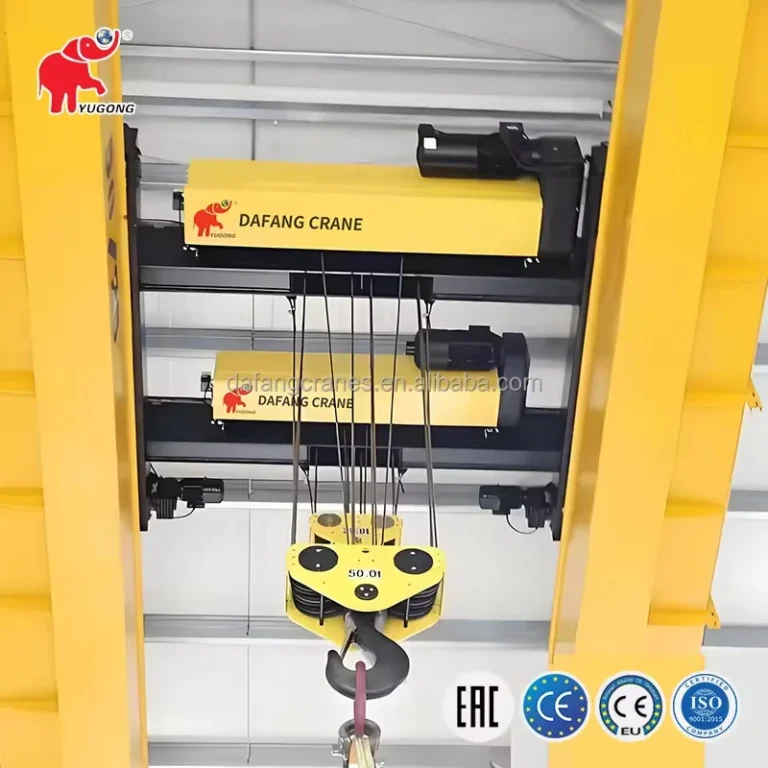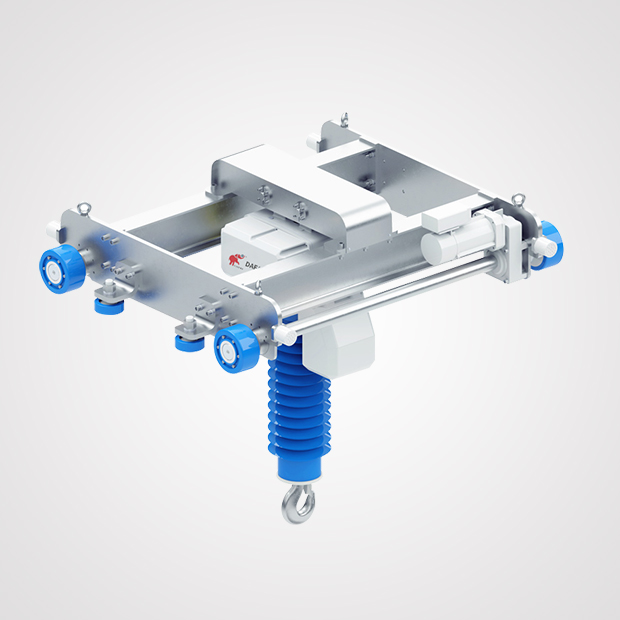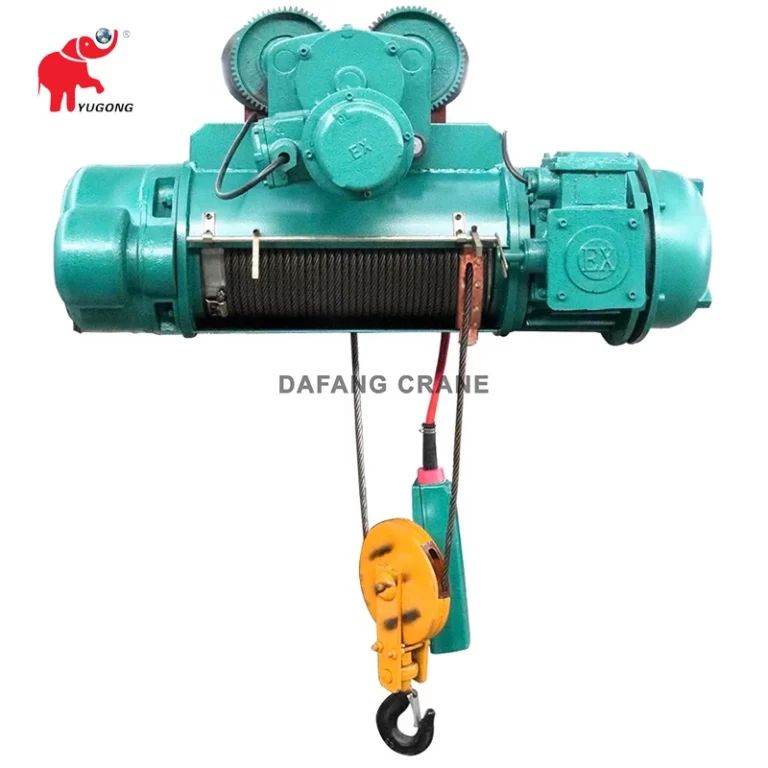







Every factory has a ceiling. For many industrial facilities — older buildings, renovated warehouses, compact production cells — that ceiling creates a real operational constraint. A standard electric hoist consumes 800mm to over 1,200mm of vertical space between the crane beam and the hook at its highest position. In a building with 6 meters of usable height, that dead space is not an abstraction. It is the difference between a crane that serves your production process and one that falls short.
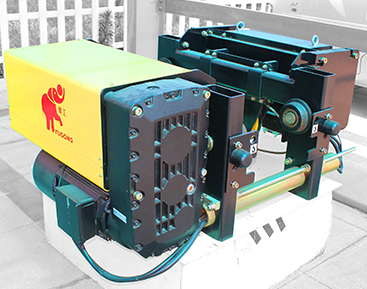
A low headroom electric hoist is a compact lifting device designed to reduce the vertical space between the crane beam and the hook, allowing factories with limited building height to achieve higher lifting positions and more efficient material handling. By redesigning how the motor, drum, gearbox, and trolley are arranged, low headroom hoists recover 300mm to 500mm of usable hook travel — without raising the roof, without major structural modification, and without compromising lifting capacity or duty life.
This article is written for factory owners, production managers, and procurement teams evaluating lifting solutions for space-constrained facilities. It covers the problem clearly, explains the solution practically, and provides the selection guidance needed to specify the right system for your application.
Table of Contents
Why Space-Limited Factories Need Low Headroom Electric Hoist Solutions
The challenge is common across a wide range of industrial facilities. The cause and the operational impact vary, but the outcome is consistent: a standard crane hoist specification does not deliver adequate hook height for the production task.
Limited Building Height in Existing Facilities
Industrial buildings constructed decades ago were not designed around modern crane specifications. Facilities built for light manufacturing, storage, or assembly operations — now repurposed for heavier production — frequently have ceiling heights of 5 to 7 meters. Installing a crane system in these buildings with a standard electric hoist reduces available hook travel to 3.5 to 4.5 meters. That range may be adequate for some operations but inadequate for others: mould lifting, large component assembly, machine tool loading, or any process where the load must reach a specific elevated position.
The structural option — raising the roof or installing a mezzanine crane runway — is available in principle. In practice, it is expensive, disruptive, and frequently impractical in occupied production facilities. A low headroom hoist solves the same problem at a fraction of the cost and without production interruption.
Dense Production Layouts
Compact machinery arrangements, enclosed production cells, and tight workstation configurations create spatial constraints beyond building height alone. A conventional hoist body projecting 400mm to 600mm below the beam centerline may interfere with adjacent equipment, conveyors, or structural elements — limiting crane coverage within the working area even when lifting height is adequate. The compact body profile of a low headroom hoist reduces these interference conflicts, improving crane access across the full working area.
Increasing Production Without Expanding the Building
Production output targets increase. Facility footprints do not always follow. When a production line upgrade requires heavier or higher lifting than the existing crane system delivers, the options are building expansion, crane replacement, or smart specification of compact lifting equipment that extracts more performance from the existing infrastructure. For most facilities, the third option is the most practical and the most cost-effective starting point.
What Is a Low Headroom Electric Hoist
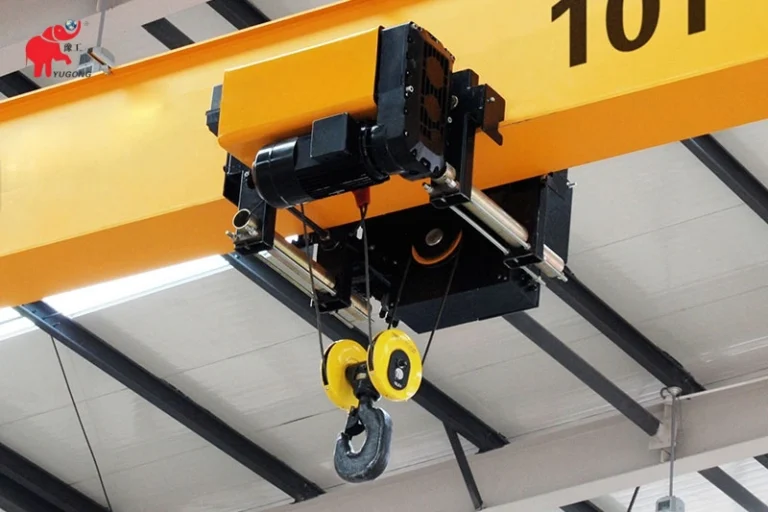
A low headroom electric hoist uses the same fundamental operating principle as a standard electric wire rope hoist — an electric motor drives a gearbox that rotates a wire rope drum, raising or lowering the hook block and its load. The trolley frame carries the hoist assembly and travels horizontally along the crane beam, positioning the hook anywhere within the crane's working envelope.
The difference lies entirely in the mechanical layout. In a standard hoist, the motor, drum, and gearbox are arranged in a configuration that positions the hoist body centrally beneath the crane beam. The hook's maximum height is limited by how far the hoist body extends below the beam before rope travel runs out.
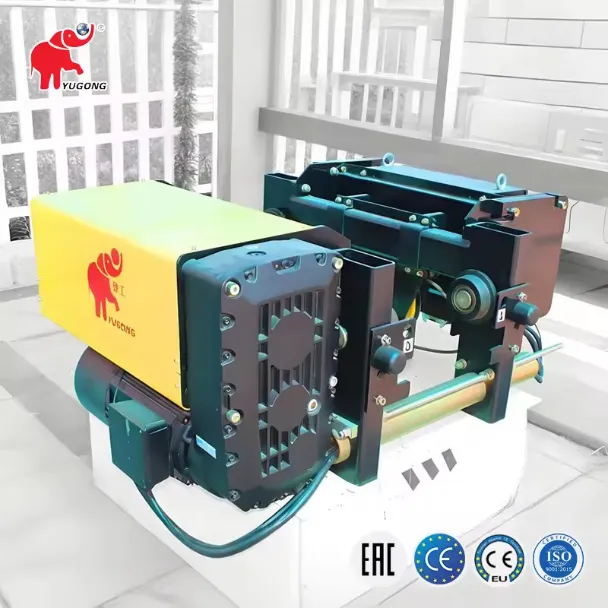
In a low headroom design, the motor is repositioned to run parallel to the drum axis rather than above it. The trolley is side-mounted rather than centrally suspended. The rope reeving may use additional sheaves to redirect the rope path. The combined effect is that the hook rises significantly closer to the underside of the beam before reaching maximum travel — recovering vertical space that a standard hoist configuration cannot access.
Get Free Quote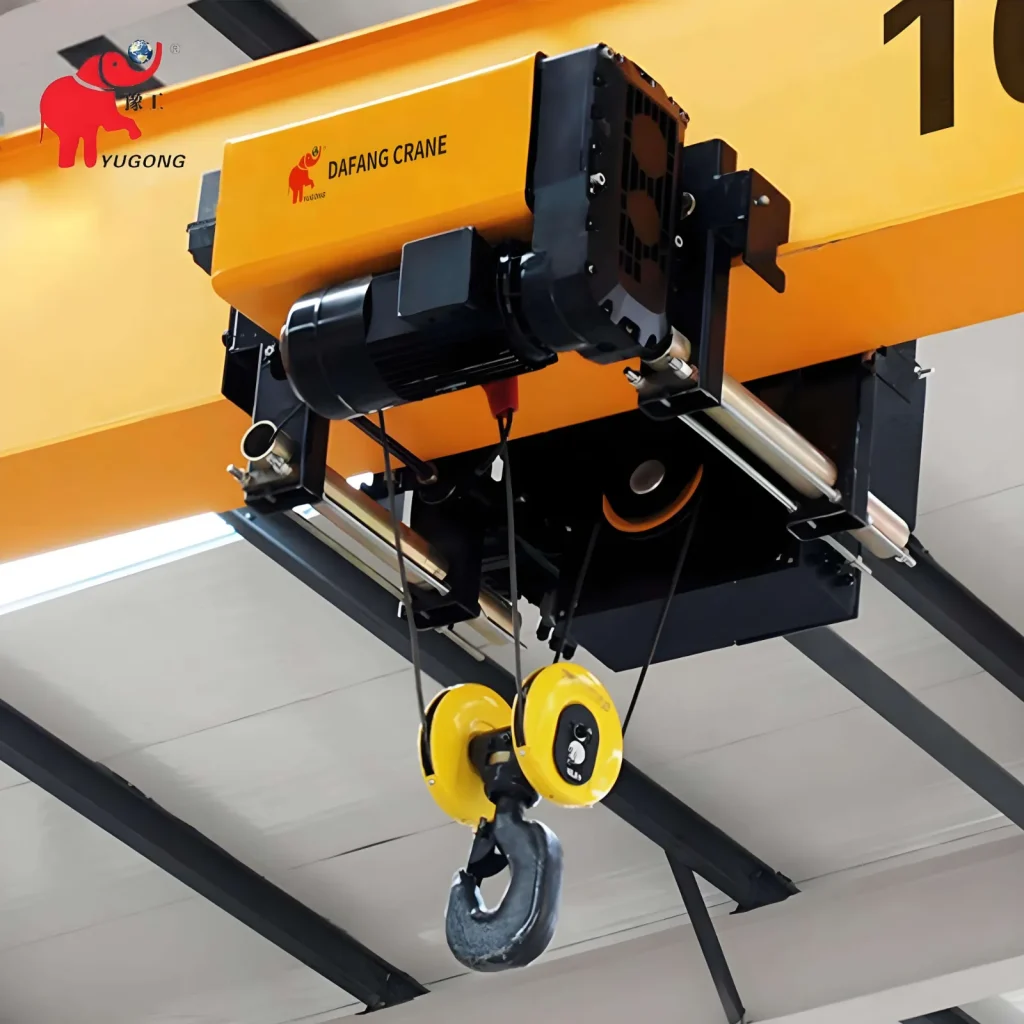
The result: the same building, the same crane beam elevation, and measurably more usable hook height.
How Low Headroom Electric Hoists Maximize Factory Space Utilization
Reduced C-Dimension
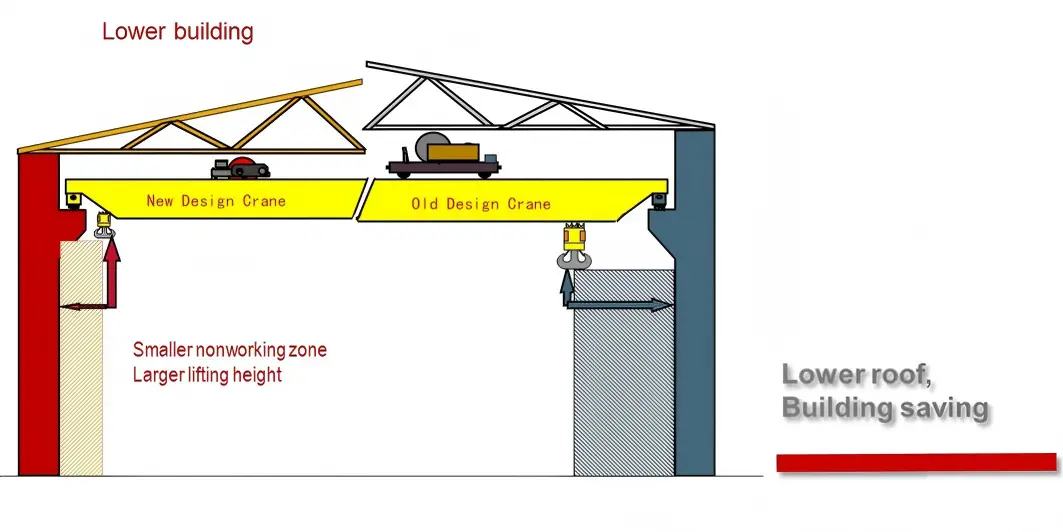
The C-dimension — the vertical distance from the top of the crane beam (or bottom flange for under-hung configurations) to the hook centerline at maximum hook height — is the defining performance metric of a low headroom hoist. Standard hoists: 800mm to 1,200mm. Low headroom designs: 400mm to 700mm. The reduction of 300mm to 500mm translates directly to additional usable hook travel within the same building.
For a facility with 6.5 meters of clear height, a 400mm deep crane bridge, and a 200mm deep runway beam, the available hook travel calculation changes materially:
| Hoist Type | C-Dimension | Available Hook Travel |
|---|---|---|
| Standard electric hoist | 1,000mm | 4,900mm |
| Low headroom electric hoist | 550mm | 5,350mm |
| Difference | — | +450mm |
That 450mm difference may determine whether a production operation is feasible within the building — or requires structural intervention that a low headroom hoist makes unnecessary.
Increased Hook Height Without Building Modification
The economic case for a low headroom hoist is straightforward. The cost premium over a standard hoist is modest. The cost of raising a roof structure, installing a new runway at higher elevation, or relocating production equipment to accommodate a taller crane system is substantially higher. For facilities where the hook height deficit is in the 300mm to 600mm range — the typical gap that low headroom designs address — hoist specification change is almost always the most cost-effective solution.
Flexible Installation in Existing and New Facilities
Low headroom electric hoists are compatible with existing crane runway infrastructure. In most retrofit applications, the existing runway beam, bridge girder, and end truck assemblies remain unchanged. Only the hoist and trolley are replaced. Installation typically requires one to two days of planned downtime rather than the weeks or months associated with structural modification projects.
For new facilities, low headroom hoists allow more compact building design — lower roof heights for the same crane capability — reducing construction cost from the outset.
Low Headroom Electric Hoist Structure and Design Features
Compact Motor and Drum Arrangement
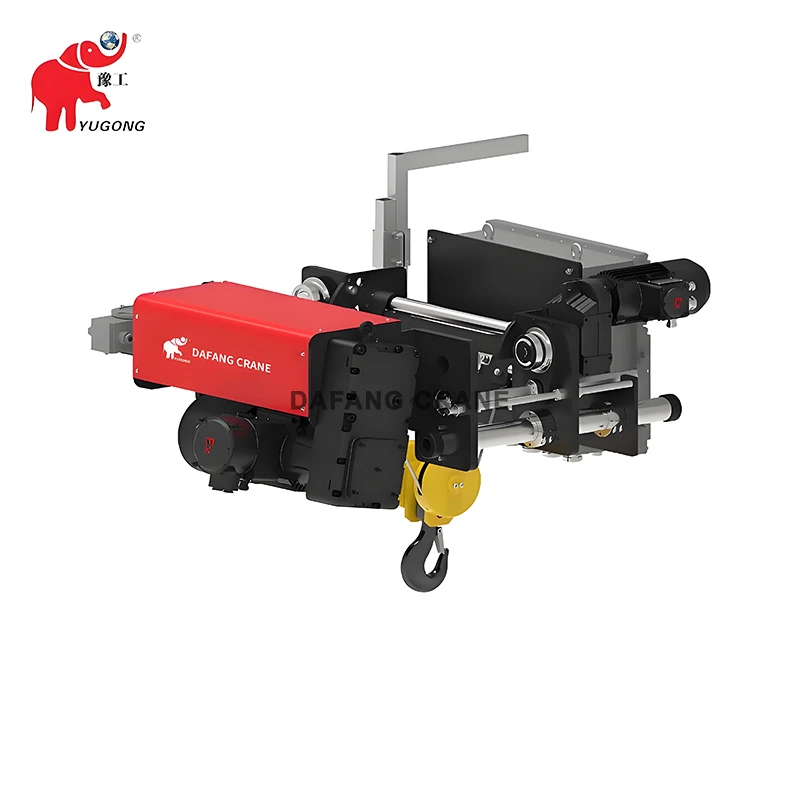
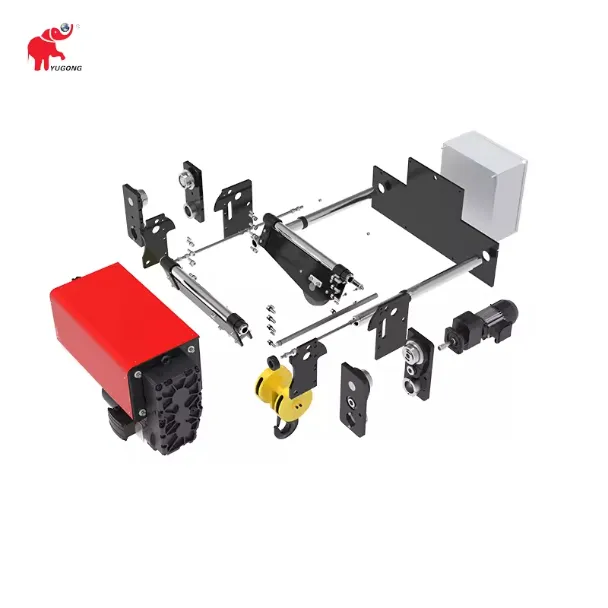
The motor is positioned parallel to the drum axis rather than coaxial with or above it. This side-by-side arrangement reduces the overall height of the hoist assembly beneath the beam — the primary source of C-dimension reduction in most low headroom designs. The gearbox connecting motor and drum is integrated into the compact body profile, adding minimal vertical extent.
Low Profile Trolley System
The trolley frame positions the hoist body to one side of the crane beam rather than centrally beneath it. This side-mounted configuration allows the hook block to approach closer to the beam centerline at maximum hook height — the architectural basis of the C-dimension reduction. Trolley wheel diameter and flange profile are designed for the crane beam flange width, with wheel hardness selected for the total wheel load and duty cycle.
Modular European Design
FEM-classified low headroom hoists follow the modular design philosophy of European crane standards — standardized interfaces between motor, gearbox, drum, and trolley allow component replacement without complete hoist disassembly. This modularity reduces planned maintenance time and spare parts inventory requirements over the hoist's 10 to 15 year service life.
Component Functions
| Component | Function |
|---|---|
| Electric motor | Drives drum via gearbox. IE3 efficiency class standard. VFD-compatible. Class F or H insulation for thermal margin in production environments. |
| Wire rope drum | Grooved drum for controlled rope layering. Diameter and groove profile per FEM duty group requirements. Designed for specified rope layers and total lifting height. |
| Gearbox | Helical gear design for efficiency and quiet operation. Oil-bath lubrication. Service factor matched to FEM duty group. Integrated with motor in compact side-by-side arrangement. |
| Brake system | Disc or conical rotor brake. Holds load when motor is de-energized. Thermal capacity sized for duty group braking frequency. Wear indicator standard on disc designs. |
| Trolley frame | Side-mounted or compact centrally-suspended design depending on crane beam type. Wheel diameter and hardness selected for crane beam flange and total wheel load. |
| Control system | Pendant or radio remote. VFD integration for variable speed. Overload protection, end-of-travel limits, emergency stop. |
| Safety devices | Upper and lower hook travel limit switches. Load limiter. Rope slack detection where specified. Anti-collision for multi-hoist installations. |
Low Headroom Electric Hoist Applications
Manufacturing Factory Material Handling
General manufacturing workshops are the primary application category for low headroom hoists. Machine component handling, production material transfer between workstations, and assembly line support operations all require maximum hook height within the available building envelope. Facilities with 5 to 8 meter clear heights — the most common range in existing industrial buildings — benefit directly from the 300mm to 500mm of additional hook travel that low headroom designs provide.
Typical scenario. A machinery plant in a 6-meter-height building installed a 5-ton single girder overhead crane with a standard electric hoist. Hook height at maximum reached 4.2 meters — insufficient to lift fabricated sub-assemblies into their mounting position at 4.5 meters. Replacing the standard hoist with a low headroom design increased hook height to 4.65 meters, resolving the operational constraint without runway modification. (Typical scenario — not a specific named project.)
Automotive Production Lines
Automotive assembly facilities use low headroom hoists for engine and transmission handling, body component positioning, tooling and fixture management, and press shop material handling. The dense machinery layouts and enclosed production cells typical of automotive plants create both vertical and horizontal clearance constraints. FEM-classified low headroom hoists with VFD control and two-speed operation provide the positioning precision that assembly operations require.
Steel Fabrication Workshops
Steel fabrication shops handle structural sections, plate, and fabricated components in the 2 to 20 ton range. Lifting heights must accommodate the full elevation range from floor level to the highest fixture or positioning jig — often near the building's maximum usable height. Low headroom hoists in robust wire rope configurations with wear-resistant components perform reliably in the dusty, abrasive conditions of steel fabrication without compromising the compact design that building height demands.
Warehouse and Logistics Facilities
Warehouses and distribution centers use overhead cranes for equipment maintenance, heavy stock handling, and loading bay operations. Building heights in warehouse facilities — typically 7 to 12 meters — are often adequate for standard hoists, but facilities at the lower end of this range benefit from the additional hook travel of compact designs. Maintenance bays within warehouses, where the building section is lower than the main storage area, are particularly common low headroom hoist applications.
Equipment Maintenance Areas
Maintenance bays require cranes capable of lifting heavy components — engines, gearboxes, hydraulic assemblies — to specific working heights determined by the equipment being serviced. In existing maintenance facilities with fixed roof heights, a low headroom hoist provides the additional hook travel needed to complete these operations without requiring the technician to work at floor level or in positions that increase injury risk.
Low Headroom Electric Hoist Solution for Overhead Crane Systems
Single Girder Overhead Crane
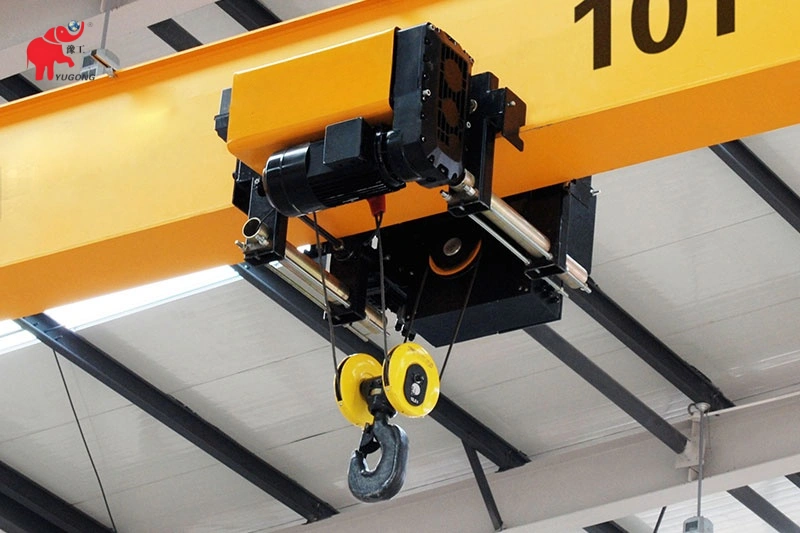
Single girder cranes with under-hung hoists are the most common application for low headroom designs. The hoist body hangs entirely below the bridge girder bottom flange, and the C-dimension directly determines how much of the building height is consumed by the hoist. Low headroom hoists on single girder cranes consistently recover 300mm to 500mm of hook travel compared to standard designs on the same runway — a disproportionately large improvement for facilities with limited building height.
Single girder crane systems with low headroom hoists in the 1 to 10 ton capacity range are the standard solution for manufacturing workshops, assembly plants, and compact production facilities across a wide range of industries.
Double Girder Overhead Crane
Double girder cranes use top-running trolleys, which inherently provide better hook height utilization than under-hung single girder systems. Low headroom hoists on double girder cranes are specified when maximum hook height is critical and every available millimeter matters — or when retrofitting a higher-capacity hoist into an existing crane structure where trolley clearance dimensions are fixed.
For capacities above 10 tons, double girder configurations with low headroom hoists provide the combination of high capacity, adequate hook height, and compact installation that heavy manufacturing applications require.
Workstation Crane Systems
Workstation crane systems — lightweight aluminum or steel runway systems installed within a defined production cell or work area — operate in the most space-constrained environments of any crane application. Ceiling heights of 3.5 to 5 meters are common. Low headroom hoists in the 125kg to 2,000kg capacity range are standard for workstation crane applications, where even small C-dimension reductions have significant proportional impact on usable hook travel.
Workstation cranes with low headroom hoists improve ergonomics, reduce manual handling injury risk, and support production rate improvement in assembly and machining operations where load positioning frequency is high.
Key Benefits of Low Headroom Electric Hoist Solutions
- Maximize existing factory space. Recover 300mm to 500mm of usable hook travel within the same building without structural modification. The most direct benefit — and usually the primary procurement driver.
- Reduce building modification costs. Roof-raising, runway elevation, and structural reinforcement projects cost substantially more than a hoist specification change. For headroom deficits in the range that low headroom hoists address, the hoist solution almost always delivers better value.
- Improve material handling efficiency. Greater hook travel enables operations that were previously impossible or required manual workarounds. Eliminating manual repositioning, makeshift rigging extensions, and restricted-height lifts improves throughput and reduces the operational burden on production teams.
- Increase operator safety. VFD-controlled low headroom hoists with smooth start, precise speed control, and controlled braking reduce load swing and sudden movement — improving safety conditions for operators working near suspended loads in compact production environments.
- Support production expansion. When output targets increase and production processes require higher or heavier lifting, a low headroom hoist upgrade extends the usable production life of an existing facility without requiring structural investment.
- Lower lifecycle cost. FEM-classified low headroom hoists are designed and built for their specified duty group — delivering the expected service life without premature component failure. Modular European design reduces planned maintenance time and spare parts cost over the hoist's operating life.
How to Select the Right Low Headroom Electric Hoist
1. Lifting Capacity
Start with the maximum load — including the weight of any lifting attachments, spreader beams, or below-hook devices. Apply a minimum 25% buffer above this figure. A hoist consistently operating near its rated capacity accumulates fatigue faster than its FEM duty group assumes. Define also the average working load — the typical lift weight across a production shift — as this input determines the load spectrum class for duty group selection.
2. Lifting Height
Measure the building clear height from floor to the underside of roof structure. Subtract crane runway beam depth, crane bridge depth, and trolley structural depth to determine the available dimension for hoist body plus hook travel. Compare this against the hoist's C-dimension to confirm the available hook travel. Define the minimum hook height required for production operations — the highest position the hook must reach with rated load — and confirm that the calculation delivers adequate margin.
3. Working Duty Class
FEM duty group selection requires two inputs: load spectrum (distribution of actual loads as a proportion of rated capacity) and total operating cycles over the design life. Define daily operating hours and cycle frequency from production data. For general manufacturing with two to four daily operating hours, FEM 2m to 3m is typical. For continuous multi-shift production, FEM 4m to 5m is required. Selecting a lighter duty group to reduce initial cost produces a hoist that reaches design life early — an outcome that costs more than the specification upgrade.
4. Crane Compatibility
Confirm trolley configuration: under-hung flange-mounted for single girder cranes (confirm beam flange width), or top-running for double girder cranes (confirm rail gauge and section). Confirm electrical supply compatibility — voltage, frequency, phase, and VFD communication protocol where the crane has an existing radio remote control system. For retrofit applications, provide the existing crane's technical drawings to the hoist manufacturer at the specification stage.
5. Working Environment
Standard FEM low headroom hoists are designed for -20°C to +40°C ambient temperature. Confirm operating temperature range for your facility. Dusty environments require IP55 minimum enclosure rating for electrical components and sealed bearing arrangements. Corrosive environments — chemical processing, food production with wash-down, coastal facilities — require enhanced coating systems and corrosion-resistant hardware specified at the order stage.
Why Choose a Professional Low Headroom Electric Hoist Manufacturer
Engineering Capability
A manufacturer with genuine engineering capability develops the C-dimension reduction from structural analysis and FEM calculation — not from catalogue adjustment. For non-standard applications — unusual C-dimension targets, special crane interfaces, extreme environments — in-house engineering is the difference between a solution that works and one that is adapted from something that does not quite fit.
FEM Standard Experience
Request FEM duty group calculation documentation for the specific hoist model and duty class being procured. CE marking and Declaration of Conformity should be standard deliverables. A manufacturer with documented FEM experience provides technical evidence of compliance — not just a compliance claim.
Customization Ability
Many space-constrained factory applications involve non-standard requirements beyond the catalogue range: specific C-dimension targets, unusual crane beam profiles, high-temperature environments, or integrated control system requirements. Confirm that the manufacturer can develop and certify custom solutions.
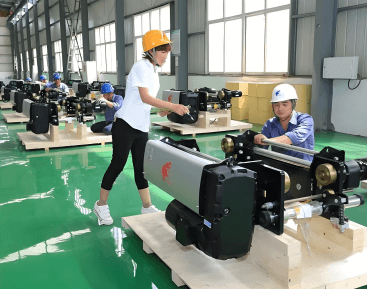
Manufacturing Quality and Testing
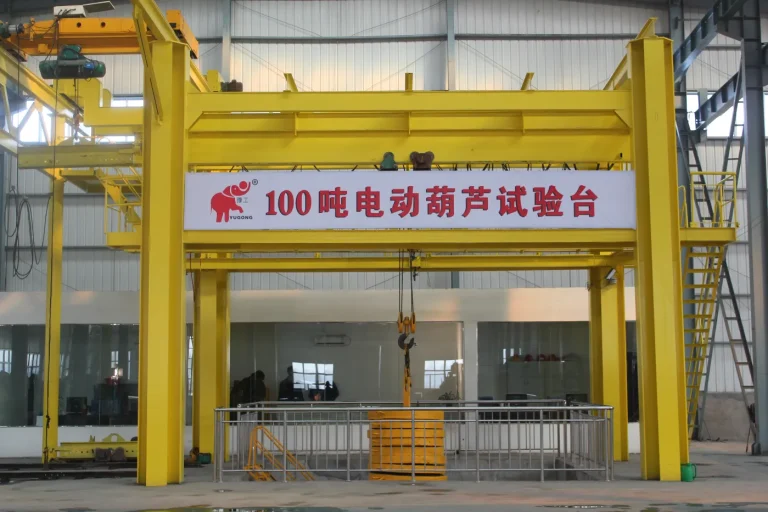
Factory acceptance testing — no-load run, rated load test to 100%, and overload test to 125% — should be standard before shipment. Load test certificates, dimensional inspection records, and material test reports for structural components are contractual deliverables that protect the buyer throughout the hoist's service life.
Global Service Capability
A low headroom electric hoist has a 10 to 15 year service life. Spare parts availability, technical support access, and service engineer availability in your region over that period are procurement factors of equal importance to the initial equipment specification.
Conclusion
Space-limited factories do not need to accept reduced lifting capability as a fixed constraint. The low headroom electric hoist exists precisely to solve this problem — recovering usable hook travel within existing building envelopes, enabling production operations that standard hoists cannot support, and eliminating the need for costly structural modification in most cases where the headroom deficit falls in the 300mm to 600mm range.
The selection process is straightforward when approached in the right order. Define hook height requirement from building dimensions and production operations first. Confirm capacity with a realistic safety buffer. Select FEM duty group from actual operating data. Confirm crane compatibility before procurement. Address environmental requirements explicitly in the specification.
A correctly specified low headroom electric hoist on a well-matched crane system delivers production capability that the building height would otherwise prevent — at a cost that building modification cannot match.
Ready to solve your factory lifting challenge? Contact our crane engineering team with your building dimensions, lifting requirements, and production operating data. We provide customized low headroom electric hoist solutions across the full capacity and duty range — with engineering support from initial specification through commissioning and lifetime service support.

Frequently Asked Questions
Q1: What is the difference between low headroom and standard hoists?
The C-dimension. Standard hoists: 800mm to 1,200mm between beam and hook at maximum height. Low headroom hoists: 400mm to 700mm. The reduction of 300mm to 500mm comes from compact component arrangement rather than reduced capacity or duty life. Low headroom hoists are moderately more expensive than standard designs due to the additional engineering in the compact layout. In buildings where hook height is adequate with a standard hoist, the standard design is the cost-effective choice. Where hook height is constrained, the low headroom design provides operational capability that structural modification would otherwise be required to achieve.
Q2: Which cranes use low headroom electric hoists?
Low headroom electric hoists are used with single girder overhead cranes — where the hoist hangs beneath the bridge girder on an under-hung trolley — double girder overhead cranes — where the hoist travels on top-running rails — and workstation crane systems in compact production cells. Confirm trolley configuration compatibility: under-hung flange width for single girder applications, top-running rail gauge and section for double girder applications. For retrofit installations, provide existing crane technical drawings to the hoist manufacturer before finalizing the specification.
Q3: Are low headroom hoists suitable for small workshops?
Yes — small workshops are often where low headroom hoists deliver the most significant benefit. Smaller facilities typically occupy buildings with lower ceiling heights than purpose-built manufacturing plants. A low headroom hoist in a 5 to 6 meter height workshop can recover 400 to 500mm of hook travel — proportionally a large improvement in a building with limited total height. Workstation crane systems in compact production cells almost always specify low headroom hoists as the standard configuration.
Q4: What capacity can low headroom electric hoists handle?
Low headroom electric wire rope hoists are available in capacities from 500kg to 50 tons in standard product ranges, with custom designs available for higher capacities. The 1 to 20 ton range covers the majority of manufacturing workshop, assembly plant, and steel fabrication applications. For capacities above 32 tons, confirm with the manufacturer that a low headroom configuration is available — the combination of large drum diameter and compact arrangement becomes more challenging at extreme capacities and may require custom engineering.
Q5: What is a FEM low headroom electric hoist?
A FEM low headroom electric hoist is a compact hoist designed to the duty group classification of FEM 9.511 — the European standard for hoisting mechanism classification. FEM duty groups (1Am through 5m) define structural fatigue requirements, mechanism service factors, and component ratings based on total operating cycles and load spectrum. FEM-classified hoists carry CE marking and documented duty group compliance — providing a technically rigorous basis for specifying and accepting hoist equipment. For production-critical applications, FEM classification is the appropriate specification standard.