






Reliable lifting equipment is fundamental infrastructure in modern industrial production. Whether the application is a steel mill moving molten metal, an automotive plant assembling powertrains, a container terminal loading vessels, or a warehouse managing heavy inventory — the crane system determines how efficiently, safely, and consistently material moves through the facility. When the equipment is correctly specified and well manufactured, it operates in the background of production. When it is not, the consequences reach every part of the operation.
Dafang Crane is a professional industrial crane manufacturer providing customized material handling solutions, including overhead cranes, gantry cranes, port cranes, and electric hoists for manufacturing, logistics, ports, energy, and heavy industries worldwide.
Table of Contents
What Does an Industrial Crane Manufacturer Do
The role of a professional crane manufacturer extends well beyond fabricating steel structures to a drawing. At each stage of the project — from initial application analysis through post-commissioning support — the manufacturer's engineering and operational capability directly affects the quality, reliability, and longevity of the equipment delivered.
Engineering Design
A credible industrial crane manufacturer begins every project with application analysis — understanding not just the lifting capacity and span required, but the operational context: how many shifts, what load distribution, what environmental conditions, what building constraints, and what safety and regulatory requirements apply.
Load calculation establishes the structural and mechanical design basis. Structural design translates those loads into beam sections, weld configurations, and connection details sized for the required fatigue life under the duty classification. Crane configuration selection — girder type, hoist model, drive system, control platform — is determined by the application requirements, not by catalogue availability.
For non-standard applications — unusual spans, high-temperature environments, hazardous atmospheres, complex runway layouts, or specialized lifting attachments — in-house engineering capability is what separates manufacturers who can develop a genuine solution from those who can only offer the nearest catalogue alternative.
Manufacturing Process
The manufacturing process covers structural steel fabrication — cutting, forming, and welding of main girders, end trucks, and crane frames — through to component machining, electrical system assembly, and final pre-delivery testing. Quality at the fabrication stage determines structural integrity over the crane's 15 to 25 year service life. Weld quality, dimensional accuracy, and surface preparation all affect long-term performance in ways that post-delivery inspection cannot fully compensate for.
Advanced fabrication facilities with CNC cutting, automated welding systems, and precision machining capabilities produce consistent quality across high-volume production and custom one-off designs alike.
Installation and Support
Equipment delivery is not the end of the manufacturer's role — it is the beginning of the operational relationship. Technical installation guidance, commissioning support, operator training, and ongoing maintenance assistance all affect whether the crane system achieves its designed performance in actual production service. A manufacturer's after-sales capability is a procurement factor of equal importance to the equipment specification itself over a 20-year asset life.
Dafang Crane Product Portfolio
Dafang Crane's product range covers the primary crane types used in industrial manufacturing, heavy production, port operations, and specialized lifting applications.
| Crane Type | Main Applications |
|---|---|
| Single girder overhead crane | Light to medium manufacturing workshops, warehouses, assembly facilities |
| Double girder overhead crane | Heavy manufacturing, steel plants, machinery factories, continuous production |
| European standard overhead crane | Space-constrained workshops, precision manufacturing, energy-efficient applications |
| Single girder gantry crane | Outdoor yards, open workshops, storage areas, maintenance facilities |
| Double girder gantry crane | Heavy outdoor lifting, shipyards, infrastructure projects, construction |
| RTG crane | Container terminal yard stacking, intermodal yards, logistics hubs |
| RMG crane | Automated container terminals, rail intermodal facilities, high-density yards |
| Jib crane | Workstation lifting, machine tool service, localized material handling |
| FEM electric wire rope hoist | Overhead crane hoisting systems, workstation cranes, compact lifting applications |
Overhead Crane Solutions for Industrial Facilities
Overhead bridge cranes are the most widely deployed lifting system in industrial manufacturing — providing full facility coverage, high lifting capacity, and integration with production workflows across a wide range of industries and applications.
Single Girder Overhead Crane
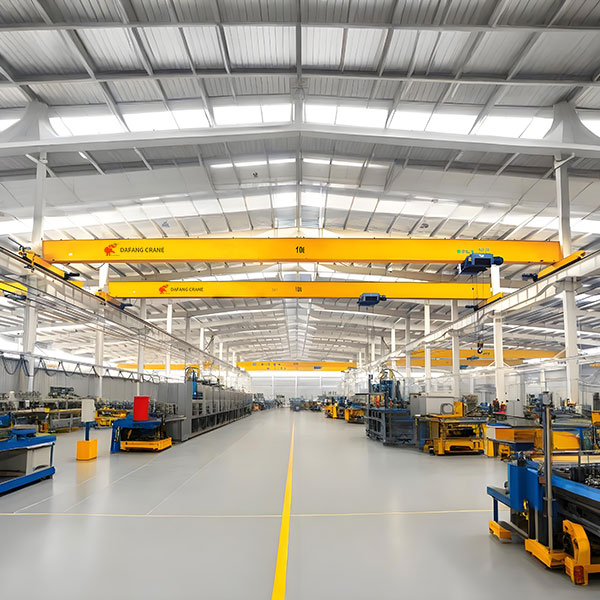
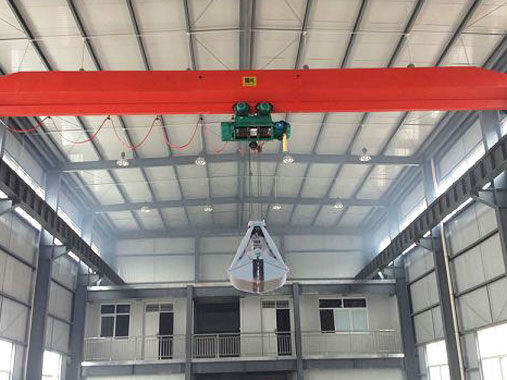
Single girder overhead cranes use one main bridge beam with an under-hung hoist trolley. They are the standard solution for light to medium-duty applications — workshops, warehouses, assembly areas, and maintenance facilities — in the 1 to 20 ton capacity range. The lighter structural weight reduces runway beam and building column loading, making single girder designs practical for installation in existing buildings with limited structural reserve.
Dafang single girder overhead cranes are available in standard configurations covering common spans and capacities, with custom engineering for non-standard applications. Under-hung hoist configurations minimize headroom requirements — important for facilities with limited building height — while top-running variants provide greater hook height utilization where building clearance is adequate.
Double Girder Overhead Crane
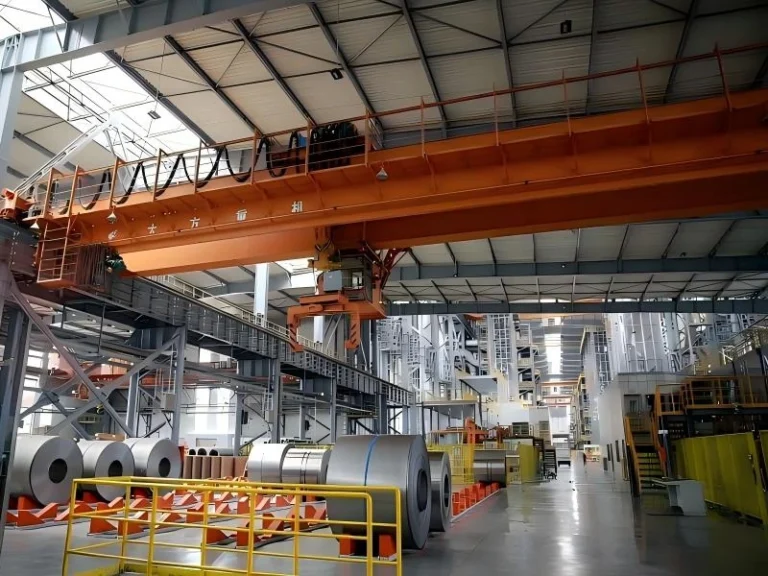
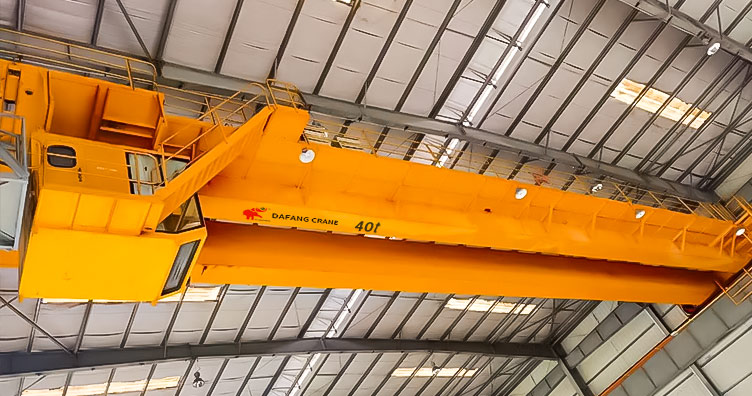
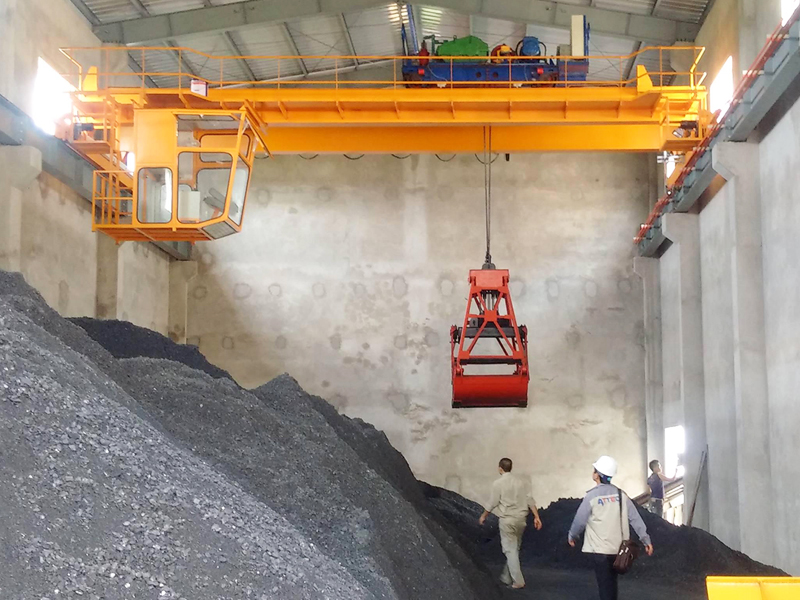
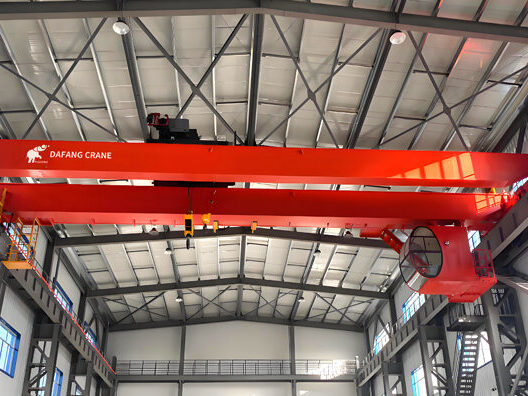
Double girder overhead cranes use two parallel main beams with a top-running hoist trolley, providing greater rigidity, higher capacity range — up to 500 tons and above — wider span capability, and greater hook height compared to single girder designs. They are the standard for steel plant applications, heavy manufacturing, and any production position where load weight, span, or duty cycle exceeds the practical range of single girder equipment.
Dafang double girder cranes cover the full range from standard production workshop configurations to specialized metallurgical designs for steel mill applications — including ladle cranes with dual independent hoisting systems, charging cranes with heat-shielded electrical components, and coil handling cranes with electromagnetic lifting systems.
European Standard Overhead Crane
European standard overhead cranes follow the design philosophy of FEM 1.001 and EN 13001 — optimized structural geometry, higher-strength steel grades, and compact component dimensions that reduce crane dead weight while maintaining duty class adequacy. The result is a crane that is lighter, more energy-efficient, and in many cases lower in installed cost than equivalent-capacity conventional designs.
FEM-classified European standard cranes provide documented duty group compliance — structural fatigue life, mechanism service factors, and component ratings matched to the specified operating intensity. For procurement teams requiring CE certification and FEM documentation, European standard cranes provide a technically rigorous basis for project acceptance.
Gantry Crane Solutions for Outdoor Material Handling
Gantry cranes provide overhead crane functionality in facilities without the building structure to support a runway — or in outdoor environments where a building is not present. They are widely used in storage yards, shipyards, construction sites, and open production areas.
Single Girder Gantry Crane
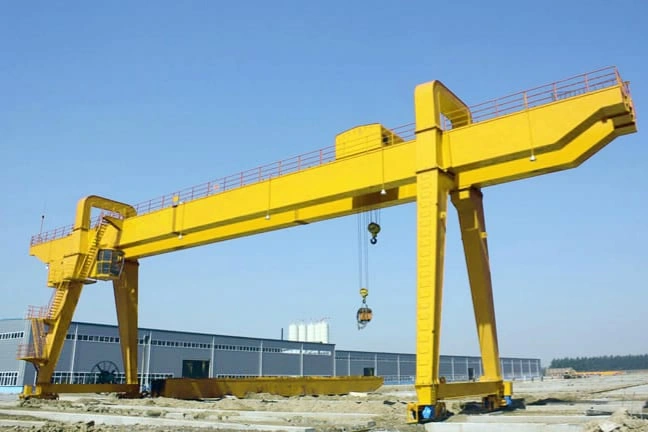
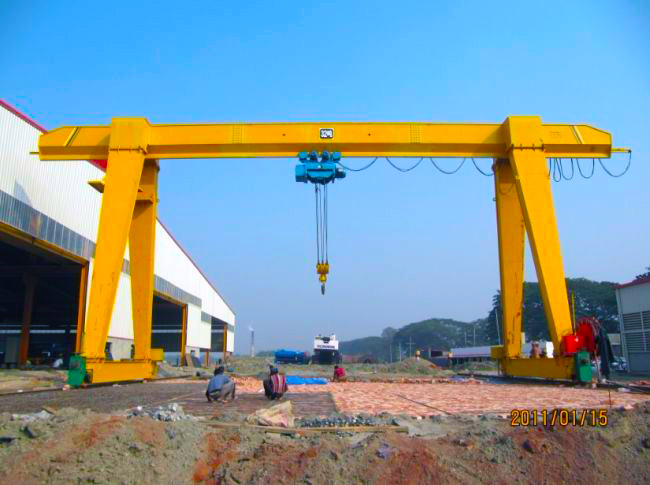
Single girder gantry cranes suit light to medium outdoor lifting in storage yards, open workshops, maintenance areas, and logistics facilities. The single main beam with under-hung hoist keeps structural weight and cost manageable for the 1 to 20 ton capacity range. Cantilevered end beam extensions — half-gantry or full-cantilever configurations — improve hook coverage at the crane's extremes without widening the rail gauge.
Double Girder Gantry Crane
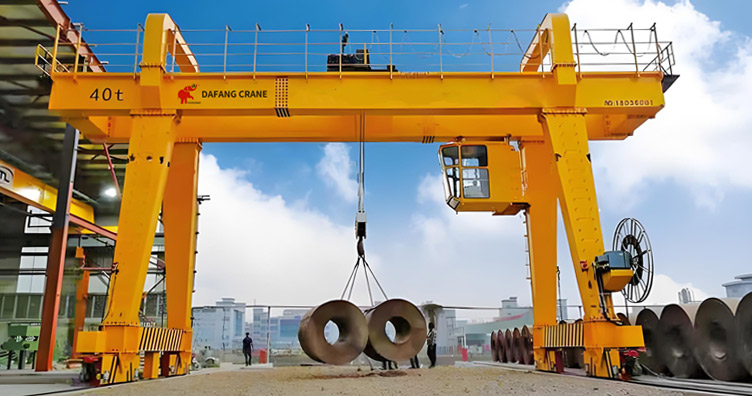
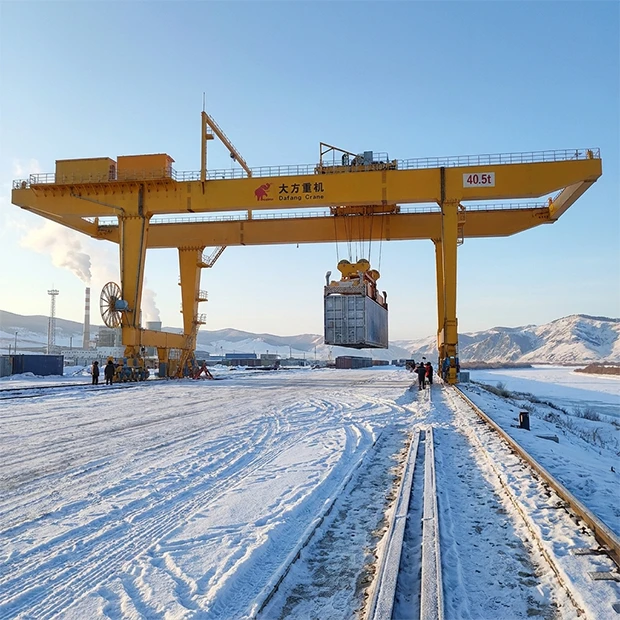
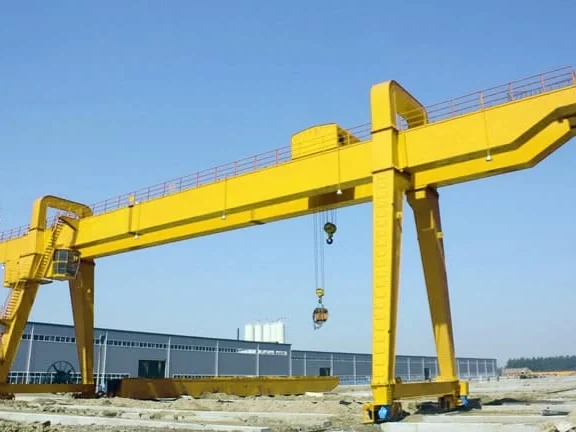
Double girder gantry cranes handle the heavier outdoor lifting applications — shipyard block assembly, prefabricated construction component handling, heavy steel structure fabrication, and large equipment transfer. Spans of 15 to 35 meters or more are standard in shipyard and infrastructure applications. Dafang double girder gantry cranes are designed to the specific environmental and structural requirements of outdoor operation — including wind load analysis for the installation site, corrosion protection for coastal and marine environments, and structural ratings for the soil bearing capacity of the site's rail foundation system.
Container Gantry Crane
Container gantry cranes — including RTG and RMG configurations — are specialized designs for container terminal yard operations. They are addressed in detail in the port crane section below.
Port Crane and Container Handling Solutions
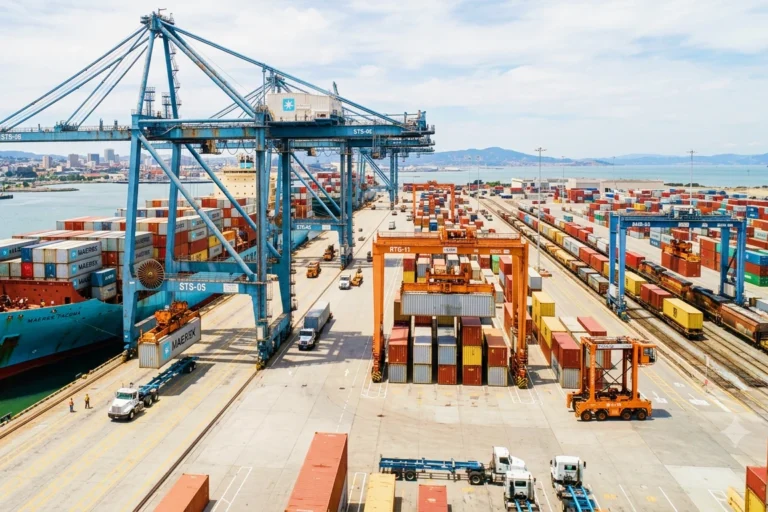
Container terminal operations require purpose-engineered equipment sized for the throughput, automation, and environmental demands of port environments. Dafang Crane provides container handling solutions for terminal operators, logistics hubs, and port modernization projects across international markets.
RTG Crane
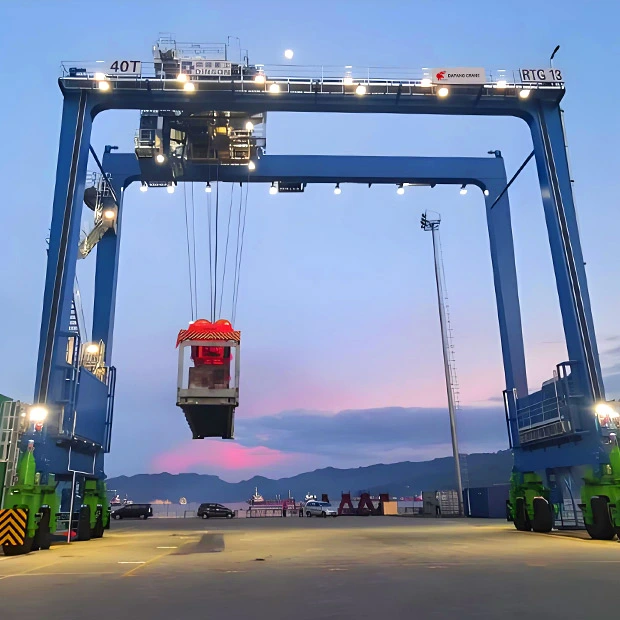
Rubber Tyred Gantry cranes provide flexible container yard stacking with the ability to relocate between container blocks on rubber tires. Dafang RTG cranes are available in diesel-electric and full electric configurations, spanning 6 to 10 container rows with stacking heights of 4 to 6 containers. Electric RTG designs — powered via cable reel connection to shore power — eliminate diesel emissions during yard operation, supporting port sustainability targets and emissions compliance requirements.
Variable frequency drive control on all motions provides smooth container landing, reduces mechanical shock loading on the gantry structure, and extends drive component service life in the high-cycle operating environment of container terminal yards.
RMG Crane
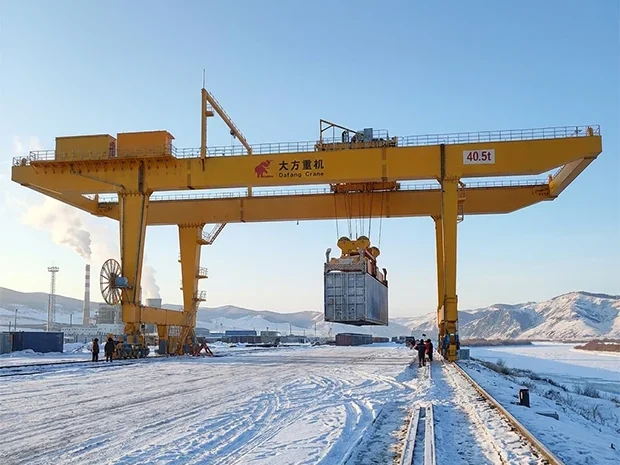
Rail Mounted Gantry cranes provide high-density container stacking on fixed rail infrastructure, with positioning precision that enables full automation. Dafang RMG cranes are compatible with automated terminal management system integration — receiving stack assignments, executing moves autonomously, and reporting completion to the terminal operating system without cab-based operators.
RMG cranes are the preferred yard crane platform for terminals pursuing full automation, offering stacking heights of 6 to 9 containers and yard density advantages that RTG systems cannot match.
Marine Handling Equipment
Dafang's marine lifting equipment covers vessel handling outside the container terminal context:
Marine travel lifts for marina and boatyard vessel haul-out, maintenance, and launch — available in capacities from 15 tons to over 1,000 tons for facilities ranging from yacht clubs to naval maintenance bases.
Boat hoist cranes for smaller vessel handling in inland waterway facilities, fishing ports, and recreational marina environments.
Why Choose Dafang Crane as Your Industrial Crane Manufacturer
Professional Engineering Team
Dafang Crane maintains an in-house engineering team covering structural design, mechanical engineering, electrical system design, and application analysis. Customized solution development — for non-standard capacities, unusual environmental conditions, specialized applications, or complex runway integration requirements — is handled internally rather than through external subcontracting.
Technical consultation at the specification stage helps procurement teams and project engineers define requirements accurately before RFQ issue — reducing specification errors, improving supplier comparison quality, and protecting project timelines from the delays that incomplete specifications create.
Advanced Manufacturing Capability
Dafang Crane's production facilities cover structural steel fabrication, precision component machining, electrical system assembly, and pre-delivery testing. CNC cutting and forming equipment produces consistent dimensional accuracy across structural components. Certified welding procedures and qualified welders ensure weld quality at the structural joints that determine long-term crane integrity.
Pre-delivery load testing — typically to 125% of rated capacity — is standard practice, with load test certificates and dimensional inspection records provided as part of the documentation package delivered with each crane.
International Standards and Quality Management
Dafang Crane's quality management system operates to ISO 9001 standards, providing documented processes covering design, procurement, fabrication, inspection, testing, and delivery. CE marking under the EU Machinery Directive 2006/42/EC is available for European market projects and international projects referencing European standards.
FEM crane classification documentation — structural calculations, mechanism group selection rationale, and duty class confirmation — is provided for projects specifying FEM 1.001 compliance. ISO 4301 classification documentation is available for projects referencing the international standard.
Global Export Experience
Dafang Crane has delivered crane systems to customers across Southeast Asia, the Middle East, Africa, South America, Central Asia, and Europe. International project delivery involves export documentation, marine packing for sea freight, customs clearance coordination, and installation support at sites outside the manufacturing base — experience that reduces the logistical risk for international buyers procuring equipment across borders.
Different markets impose different climatic, seismic, and regulatory requirements. Dafang's international project experience includes designing for tropical high-humidity environments, sub-zero cold climate operation, corrosive coastal atmospheres, and market-specific electrical supply standards.
Complete After-Sales Support
After-sales capability covers installation guidance documentation, on-site commissioning support where project scope includes this service, operator training, spare parts supply, and technical support for in-service issues. Maintaining a spare parts inventory for high-wear components — wire rope, brake linings, electrical contacts, and wear plates — reduces downtime when scheduled replacement or unplanned repair is required.
Dafang Crane Manufacturing Process
The manufacturing workflow from customer inquiry to equipment delivery follows a defined sequence that ensures engineering requirements are translated accurately into the delivered equipment.
- Step 1 — Customer Requirement Analysis. Engineering review of the customer's application: capacity, span, lifting height, duty cycle, operating environment, building constraints, and regulatory requirements. Output: confirmed technical specification and preliminary configuration recommendation.
- Step 2 — Engineering Design. Structural calculation, FEM duty class confirmation, mechanism selection, electrical system design, and production drawing preparation. Customer review and approval of certified drawings before fabrication begins.
- Step 3 — Structural Fabrication. Main girder fabrication, end truck assembly, and crane frame construction from approved structural steel materials. Dimensional inspection at key fabrication stages. Weld inspection per approved welding procedure specifications.
- Step 4 — Component Assembly. Hoist and trolley assembly, drive system installation, runway wheel mounting, and mechanical component integration. Component function testing before integration into the crane assembly.
- Step 5 — Electrical Installation. Control panel assembly, motor wiring, limit switch installation, VFD commissioning, and safety interlock wiring. Electrical testing against design schematics before functional crane testing.
- Step 6 — Testing and Inspection. No-load functional test of all motions. Rated load test at 100% of SWL. Overload test at 125% of SWL. Limit switch and overload protection function verification. Documentation of test results in load test certificate.
- Step 7 — Delivery and Support. Surface treatment inspection and touch-up. Marine packing preparation for international shipment. Export documentation preparation. Installation guidance documentation. Commissioning support coordination.
Conclusion
Dafang Crane combines engineering capability for customized solution development, manufacturing infrastructure for consistent production quality, documented compliance with international crane standards, and after-sales support for the full equipment lifecycle. The combination serves the practical needs of procurement teams and plant engineers who need reliable equipment delivered on schedule, supported through commissioning, and maintained throughout operational service.
Selecting an experienced industrial crane manufacturer ensures reliable equipment performance, optimized material handling efficiency, and long-term operational value — from the first day of production to the crane's final operating cycle.
Ready to discuss your material handling requirements? Contact Dafang Crane's engineering team with your application data — capacity, span, duty cycle, environmental conditions, and project timeline. We provide customized crane solutions across the full product range, with engineering support from initial specification through commissioning and long-term operational service.

Frequently Asked Questions
Q1: How do I choose the right crane manufacturer?
Evaluate four areas: engineering capability (can they develop a solution for your specific application, and can they provide supporting calculations?), product range (do they control the core manufacturing processes for the equipment you need?), quality standards (do they hold ISO 9001 certification, CE marking where required, and provide load test certificates as standard deliverables?), and after-sales support (who provides service in your region, and what is the lead time for major spare parts?). Request project references in your application category and contact those references directly. Ask specifically about post-delivery support experience — not just equipment performance.
Q2: What types of industrial cranes does Dafang Crane manufacture?
Dafang Crane manufactures overhead bridge cranes (single girder, double girder, and European standard configurations), gantry cranes (single girder, double girder, and container gantry types), RTG and RMG container handling cranes, jib cranes for workstation applications, FEM-classified electric wire rope hoists, and marine lifting equipment including marine travel lifts, boat hoist cranes. The product range covers the primary crane types used in manufacturing, steel production, port operations, energy, logistics, and marine industries.
Q3: Does Dafang Crane provide customized crane solutions?
Yes. Customized solution development is a core part of Dafang Crane's engineering service. Standard catalogue configurations address common requirements. Non-standard spans, unusual environmental conditions, specialized lifting attachments, specific duty classification documentation, and complex runway integration requirements are handled through the in-house engineering team. Provide your application data — capacity, span, lifting height, duty cycle, environmental conditions, and regulatory requirements — to Dafang's engineering team at the inquiry stage. The specification is developed from operational requirements rather than constrained to catalogue options.
Q4: Does Dafang Crane supply port cranes?
Yes. Dafang Crane supplies RTG cranes for flexible container yard stacking, RMG cranes for rail-mounted high-density and automated container stacking, marine travel lifts for marina and naval vessel handling, and general port handling crane systems. Port crane projects involve specific engineering requirements — wind load analysis for exposed coastal positions, marine-grade corrosion protection, intensive duty cycle specifications, and in many cases automation system integration. Dafang's port crane engineering experience covers these requirements across international project deliveries.
Q5: Are Dafang cranes manufactured according to international standards?
Yes. Dafang Crane's manufacturing quality management system operates to ISO 9001 standards. CE marking under the EU Machinery Directive 2006/42/EC is available for European market projects and international projects referencing European standards. FEM 1.001 and FEM 9.511 duty classification documentation is provided for FEM-specified projects. ISO 4301 classification documentation is available for projects referencing the international standard. Factory load test certificates to 125% of rated capacity are standard deliverables. Additional market-specific certifications are confirmed at the quotation stage based on the project's regulatory requirements.
Q6: Does Dafang provide installation and after-sales support?
Yes. Installation guidance documentation — including certified drawings, installation procedures, and commissioning checklists — is provided as standard with every crane delivery. On-site installation and commissioning support is available as an optional project service where scope and logistics allow. Operator training covering safe crane operation, pre-shift inspection procedures, and emergency protocols is available in conjunction with commissioning. After-sales support covers spare parts supply, technical consultation for in-service issues, and maintenance guidance. Confirm the specific scope of installation and after-sales services available for your project location at the quotation stage.