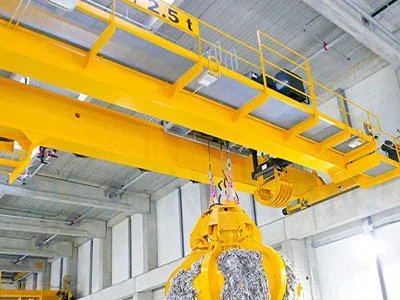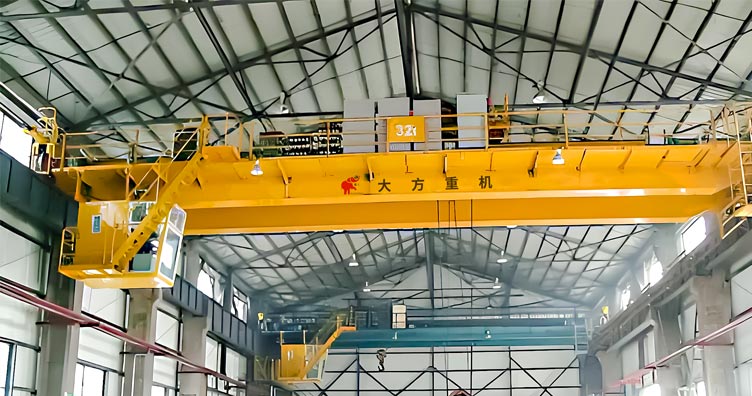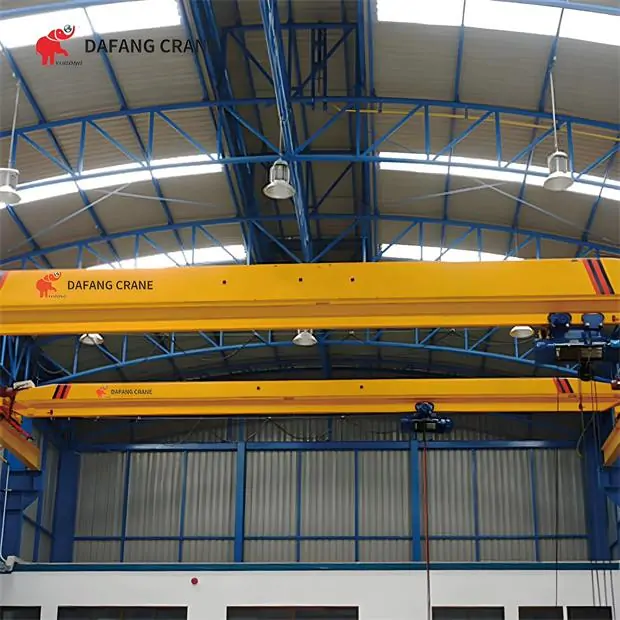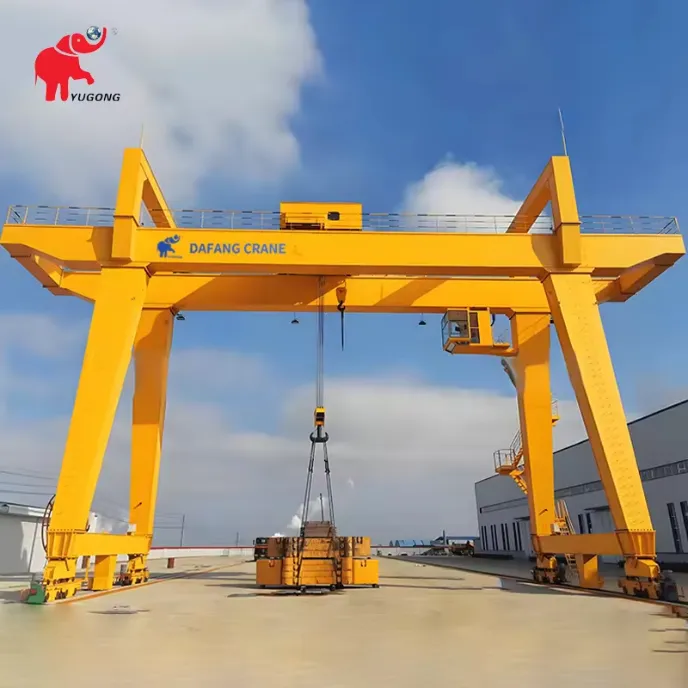





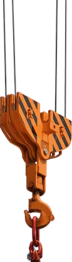

A hydropower crane should be sized from the heaviest single lift in the powerhouse, usually the generator rotor with its shaft, plus the lifting beam and a design margin. Span is not a free choice: it comes from the runway layout of the powerhouse or dam crest. Ratings run from a few tons for auxiliary rooms to several hundred tons for large turbine halls.
The sticking points are usually practical ones. Is one crane with a main and auxiliary hook enough, or must two cranes lift together? Will the hook actually reach every unit once the span is fixed? And what happens when a future plant uprating brings heavier components?
This guide follows the order engineers normally work in: capacity first, then span and lifting height, then duty class and speed control, and finally the documents to request before you buy a hydropower station crane. A quick comparison of the main crane types comes first.
Table des matières
Quick comparison: crane type by hydropower area
| Area | Typical crane type | What sets capacity | What sets span |
|---|---|---|---|
| Main powerhouse / turbine hall | Double girder powerhouse overhead crane | Heaviest rotor, stator or runner lift, plus lifting beam | Rail centres of the powerhouse runway |
| Auxiliary rooms (switchgear, pumps) | Single girder or European-style overhead crane | Heaviest panel, pump or transformer part | Room width; headroom is often the real limit |
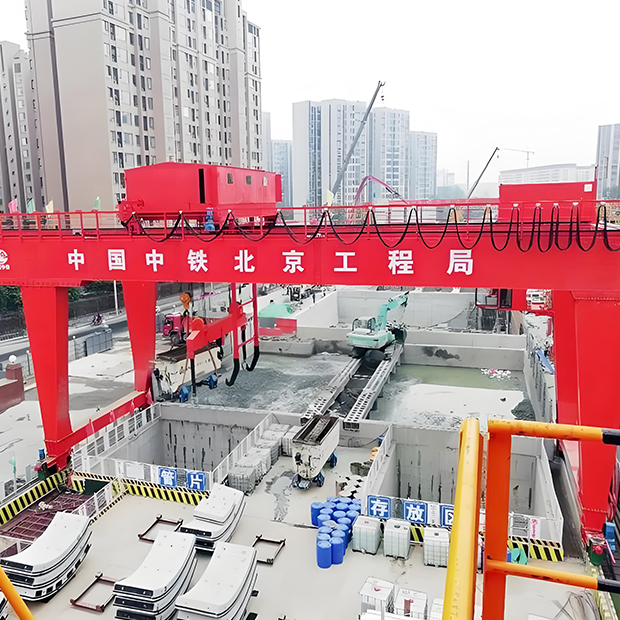
| Dam crest, spillway, intake | Rail-mounted gantry crane | Gate weight plus friction and sediment load | Rail gauge matching gate slots and deck width |
| Shafts and cable galleries | Underhung or shaft-specific crane | Load plus rope and anti-rotation limits | Gallery or shaft geometry |
Have your heaviest lift and powerhouse drawings ready? Request a quote for your hydropower crane.
Obtenir un devis gratuitHow to Set Capacity for a Hydropower Crane
Start from the heaviest single lift, not from a catalogue rating
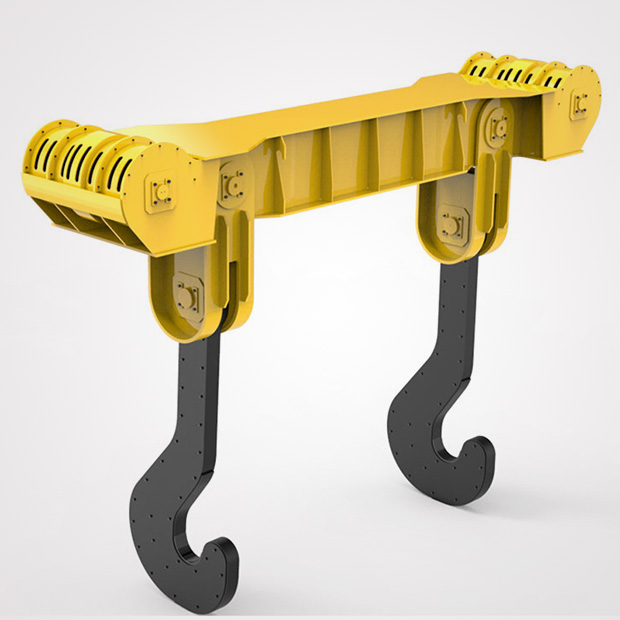
Rated capacity must cover the heaviest piece you will ever lift, and in most powerhouses that is the generator rotor with its shaft. Ask the turbine and generator suppliers for the maximum weight of each assembly at each lifting stage, not nominal figures, because cranes are often ordered before final weights are frozen. The lifting beam and slings normally count against the rated load, so add them. One published feasibility study for a two-unit plant specified a 150-ton main hook and a 10-ton auxiliary hook. Dafang's hydropower crane range spans 5 to 500 tons, with ponts roulants à double poutre listed from 40 to 500+ tons for turbine-hall work.
Decide early between one crane, a two-hook crane and tandem cranes
Tandem operation lets two cranes share one heavy lift, but it adds control complexity, so use it only when a single crane becomes disproportionate. At the Jochenstein plant on the Danube, each rotor weighs about 220 tons. The operator upgraded two cranes to 120 tons each so that 240 tons could be lifted together, removing complete rotors without dismantling the poles. Very large single cranes also leave floor areas the hook cannot reach, while two cranes cost more to maintain but can shorten downtime on multi-unit plants. Tandem lifts need synchronised control and a design review, so raise them at the inquiry stage, not after the order.
Size the auxiliary hook for routine maintenance lifts
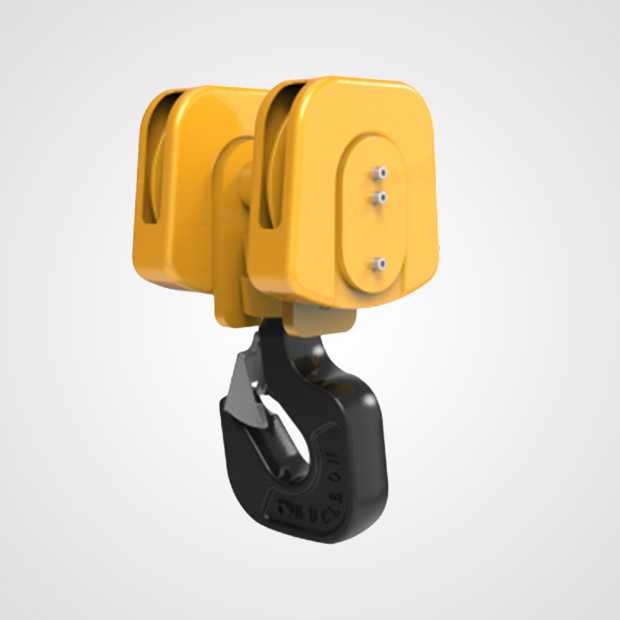
The auxiliary hook should be sized for routine maintenance lifts, not picked as a fixed fraction of the main hook. Supplier specifications write ratings as 80/20 t or 100/20 t, meaning main hook over auxiliary hook. The auxiliary hook runs faster, so it should carry pumps, valve parts and other frequent loads. If it is undersized, routine work lands on the slow main hook, wasting its fine-speed gearing and adding wear.
Leave margin for uprating, because upgrading an existing crane is rarely economical
Runner and rotor replacements during plant uprating can be heavier than the originals. Capacity gains on an existing crane are limited by runway girders, wheel loads and the bridge structure, so a new crane is usually the practical route. Agree an uprating allowance with the plant owner before finalising the specification. Ask the crane supplier for wheel-load data so the civil designer can check the runway.
How to Choose Span and Lifting Height for a Powerhouse Overhead Crane
Span follows the powerhouse bay, so confirm rail centres from the civil drawings
Crane span is the distance between runway rail centres, and in a powerhouse it is fixed by the building, not chosen freely. Published specifications for powerhouse bridge cranes typically fall in roughly the 10–32 m range. In refurbishment work, measure the as-built rail centres on site. Old runways often differ from the drawings, and rail-centre error affects how the end carriages (the wheeled assemblies at each end of the bridge) fit and wear.
Check hook approach and trolley travel before you lock the span
A span that fits the bay can still leave the hook short of the generator centreline, so check hook approach early. Hook approach is the minimum distance from the hook to the runway rail at each end of travel. Together with trolley travel (the trolley is the hoist carriage that runs along the bridge), it decides which floor areas the hook can reach. In one tandem retrofit, the trolley travel was set specifically so a complete rotor could be lifted out. Mark every unit position, the erection bay and any laydown area on the layout, and confirm the hook reaches each one.
Work out lifting height from the tallest assembly
Lifting height has to cover the tallest assembly you will pull out, plus slings, lifting beam and clearance over adjacent equipment. A rotor with shaft is a tall load, and it must travel over other equipment on its way to the erection bay. Main and auxiliary hooks often differ: one 80/20 t supplier specification lists 28 m for the main hook and 30 m for the auxiliary hook. Specify both separately.
For dam-crest gantry cranes, rail gauge follows the gate slots
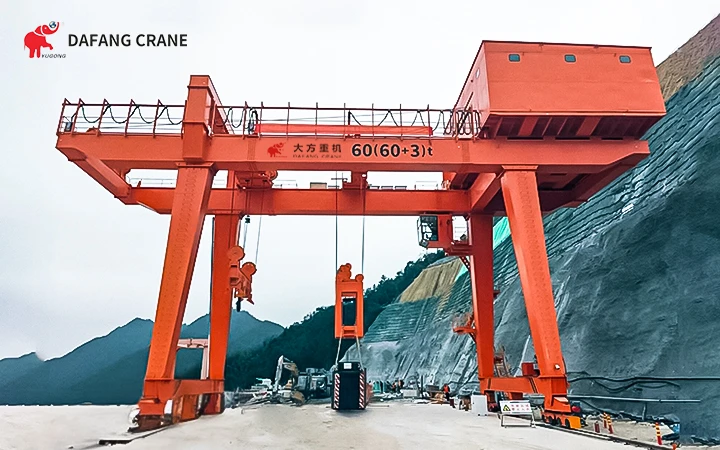
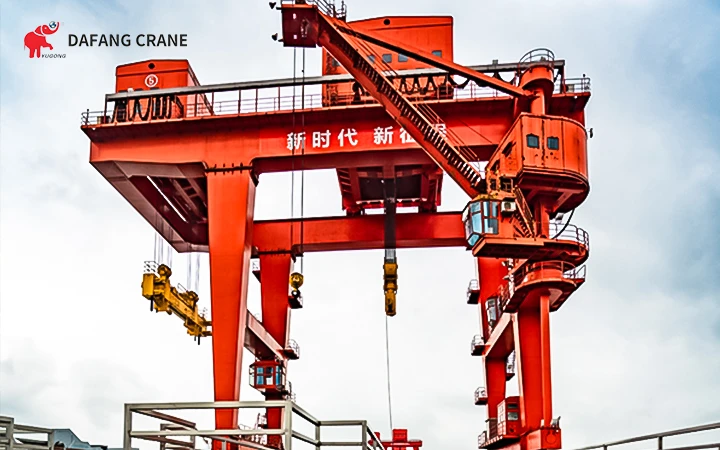
Seal friction, sediment and water load can push the required lifting force above the gate's own weight, and wide gates need two synchronised lifting points to avoid binding. Supplier ranges for gate gantry cranes typically show rail gauges of about 8.5–25 m. Dafang's hydropower page describes dual-hoist configurations for gates of roughly 50–200 tons. Outdoor units also need wind, rail-clamp and seismic provisions, which are covered under Dafang's gantry cranes and its heavy-duty gantry cranes for dams and spillways.
Obtenez un devis personnalisé de nos ingénieurs. Send your heaviest lift, runway span, lifting height and site conditions through our inquiry form or on WhatsApp, and we will review whether one crane or two suits your powerhouse.

Duty Class and Speed Control for Hydropower Station Cranes
Powerhouse cranes lift rarely but carry valuable loads, so duty class is typically A3–A5
Duty class describes how often and how heavily a crane is used over its life, and it is classified under ISO 4301 or FEM rules. Dafang's own hydropower page references A4/A5 for its heavy double girder models. Do not under-specify just because the crane works mainly during outages. Stations run for decades, and major turbine work often falls on multi-year cycles, so the crane must stay reliable after long idle periods.
Fine positioning matters far more than travel speed
Specify variable frequency drives, a micro-speed range on the main hook (supplier specifications often show roughly 0.15–1.5 m/min), load cells and, where loads swing in confined bays, anti-sway control. Dual-speed hoists let the operator approach fast and land slowly, which is what rotor and stator installation actually needs. For crowded switchgear or cable areas, a low-headroom European-style single girder crane or an underhung crane is often a better fit than a heavy top-running unit.
Certification and Compliance Checks Before You Buy a Hydropower Crane
Buyers in most markets check CE marking, ISO 4301, FEM design rules and the supplier's ISO 9001 certificate
CE marking has been issued under the EU Machinery Directive 2006/42/EC, which is being replaced by Regulation (EU) 2023/1230 from January 2027. Projects in the Eurasian Economic Union usually ask for EAC, and US sites refer to OSHA rules. Pick the ones that match your market; you do not need every one.
These documents affect customs clearance, insurance cover and owner acceptance
Missing paperwork can hold up customs clearance, and insurers and the plant owner's consulting engineers commonly ask for it before accepting a crane. Many owners also audit the supplier's factory before award, so a supplier that can show certificates and test records saves weeks.
Ask for the declaration of conformity, load test reports and ISO 9001 certificate, then verify them
Request the EC declaration of conformity, the factory acceptance and load test reports, and the supplier's ISO 9001 certificate before you sign. Overload tests are commonly run statically at about 1.25 times rated load and dynamically at about 1.1 times, depending on the governing standard. Confirm in writing which documents will be issued for your project, and check them with an independent inspector if the contract allows.
Ready to specify your hydropower crane? Send your capacity, span, lifting height and destination country to Stella, Dafang's account manager, on WhatsApp +8613603732637. Dafang manufactures overhead and gantry cranes at a 850,000 m² site with 2,600+ employees, and ships to markets worldwide. For more detail on the hydropower range, see our grues pour centrales hydroélectriques page.
FAQ
Q1:What capacity crane do I need for a hydropower powerhouse?
Rated capacity must exceed the heaviest single lift, usually the generator rotor with shaft, plus lifting beam weight. Ask the turbine and generator suppliers for maximum assembly weights and allow for future uprating. Large plants may use two cranes in tandem instead of one oversized crane.
Q2:Can two cranes lift one generator rotor together?
Yes, two cranes can lift one rotor in tandem if their combined rating covers the load. This needs synchronised control and a design review of the runway and building. Tandem lifting is often chosen when a single crane would be oversized and leave floor areas unreachable. Specify it at the inquiry stage.
Q3:What affects the price of a hydropower crane?
Price depends mainly on capacity, span, duty class, lifting height and control system. Heavier loads and longer spans increase girder and end carriage weight, and extras such as a second trolley, anti-sway control or outdoor protection add cost. A reliable figure from a supplier needs your drawings and heaviest lift.
Q4:Can an existing powerhouse crane be upgraded to a higher capacity?
Usually a new crane is the practical route, though some projects have been upgraded with special engineering. Limits include runway girders, wheel loads and the bridge structure. Request a structural assessment before choosing between upgrade and replacement.