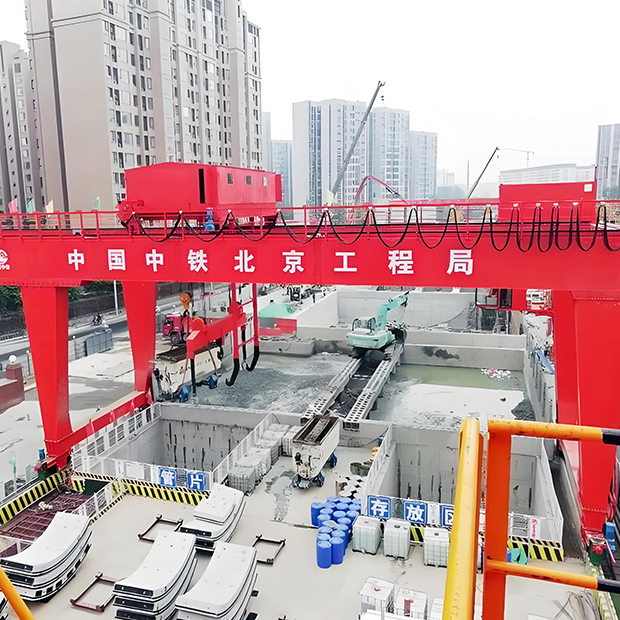







A grue à portique hydraulique is a portal-frame lifting machine that uses hydraulic cylinders, rather than a motor-driven wire rope drum, as its main lifting force. It typically handles loads from 10 to 1,000 tons, which is why it shows up wherever a job is too heavy or too awkward for a standard electric crane.
If you've come across this term while researching heavy-lift equipment, you're probably trying to understand what actually makes it different from the electric wire-rope gantry cranes you already know — and whether that difference matters for the kind of lifting work you do. It's a fair question, because on the outside the two look almost identical: same portal frame, same trolley running along a beam.
This article walks through what's actually happening inside a hydraulic gantry crane, why that hydraulic system creates real advantages in certain conditions, where the equipment gets used in practice, and how it compares to a standard electric gantry crane so you can tell which direction fits your situation.
Table des matières
How a Hydraulic Gantry Crane Works
The Hydraulic Power Circuit, Step by Step
A hydraulic gantry crane lifts loads by converting mechanical energy into pressurized oil, then using that pressure to push hydraulic cylinders. The sequence is straightforward once you break it into stages, even though the components look complex.
An electric motor or diesel engine drives a hydraulic pump, which pressurizes hydraulic oil and pushes it through high-pressure pipes toward a valve group. These control valves regulate flow direction and rate, directing oil into the hydraulic cylinders that extend or retract to raise and lower the load. Relief valves, balance valves, and hydraulic locks sit in this circuit specifically to hold pressure steady and stop the load from creeping down under its own weight — which is the main reason hydraulic lifting feels so controlled compared with a winch-and-rope system.
Gantry Frame, Legs and Travel Mechanism
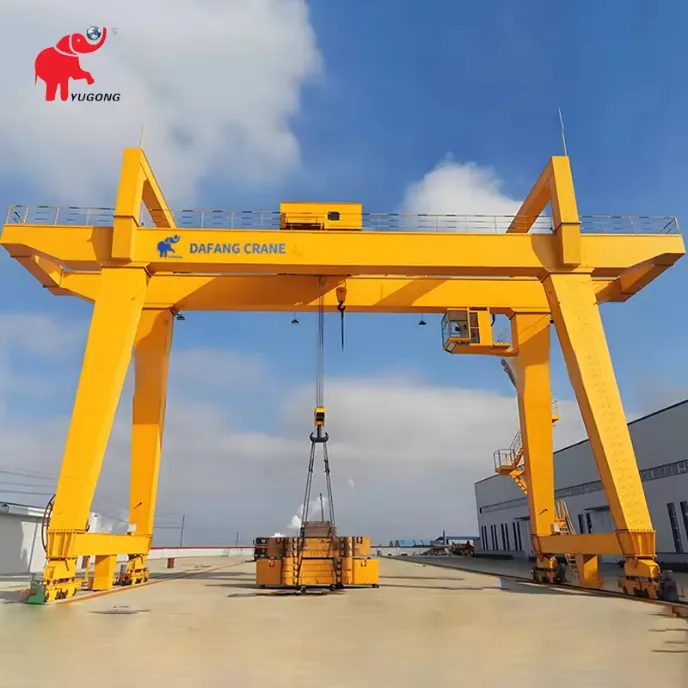
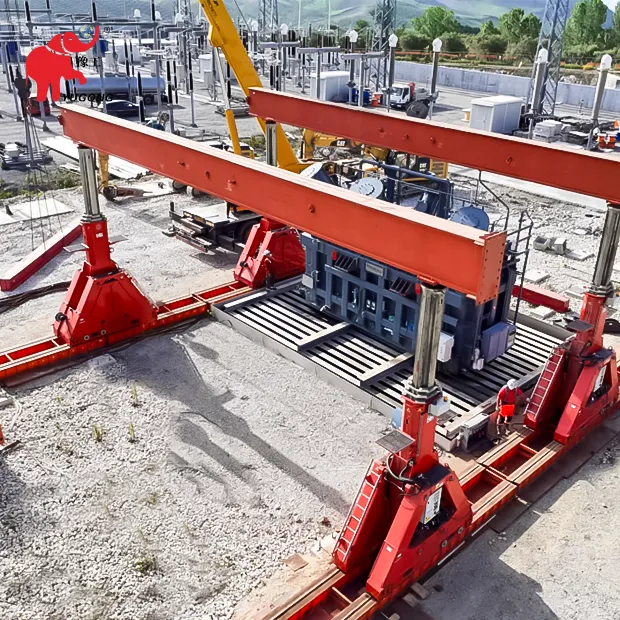
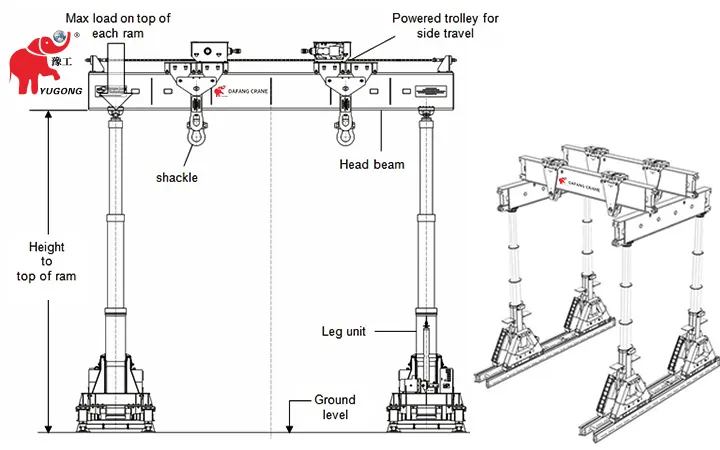
The gantry frame is the structural backbone that carries the load, and its leg design has a direct effect on where the crane can be used. The main beam — usually a box girder or truss structure — spans between two legs and provides the running track for the trolley.
Legs come in a few configurations: A-type, U-type, or truss-type, and on some models the legs can be adjusted laterally to fit different working widths on site. At the bottom of each leg sits the traveling mechanism, generally a hydraulic motor driving wheels or, on specialized jobs, tracks, with a braking device built in to keep the crane stable both while working and while parked.
How Operators Control Lifting and Movement
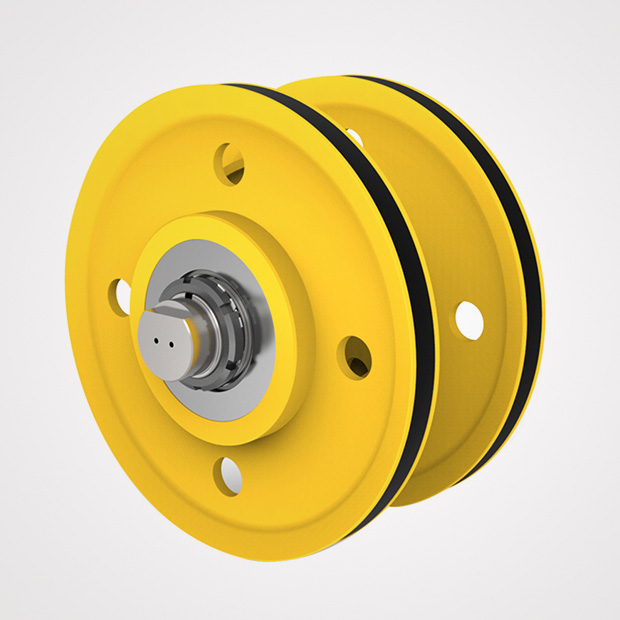
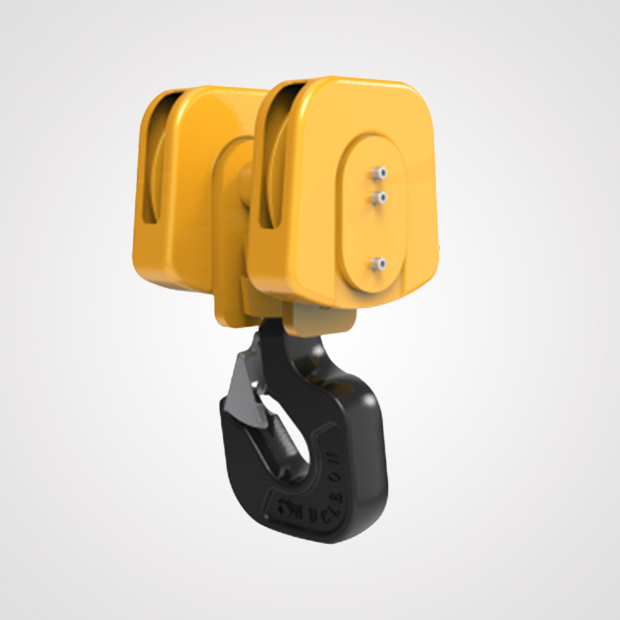
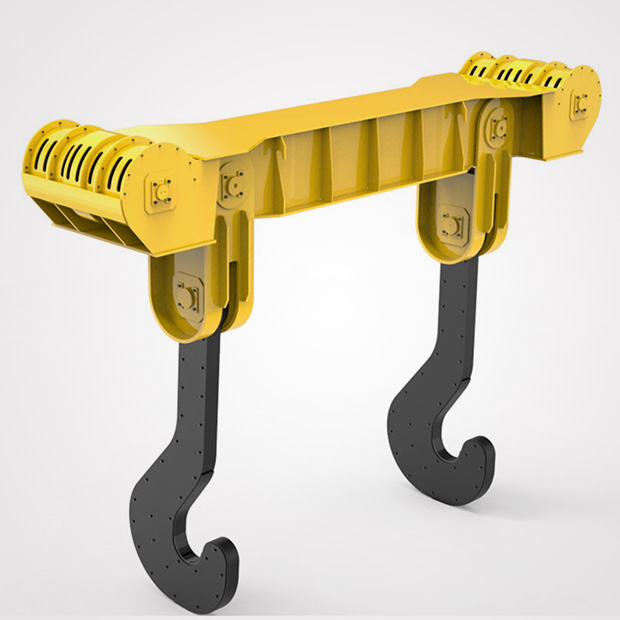
The lifting trolley and the electrical control system are what turn hydraulic power into a controlled, precise motion the operator can actually manage. The trolley sits on the main beam track and houses the hydraulic lifting mechanism; a hydraulic motor drives the drum that winds and unwinds the rope to raise or lower the hook, and on some models the trolley can also shift laterally or luff slightly to extend the working range.
Above that sits the electrical control system, which functions like the crane's central nervous system — a control panel, handle or remote control, sensors, and safety interlocks that let one operator run lifting, travel, and safety devices from a single point, with alarms triggering automatically if something goes outside normal parameters.
Key Advantages of Choosing a Hydraulic Gantry Crane
Higher Lifting Force From a Relatively Compact Structure
Hydraulic transmission produces a large amount of driving force without requiring a large gearbox or motor housing, which is why hydraulic gantry cranes can reach very high tonnages without becoming disproportionately bulky. That matters most in projects where floor space or headroom is already tight — port yards, retrofitted plants, or bridge sites where a conventional crane structure simply wouldn't fit.
Smooth, Stepless Speed Control
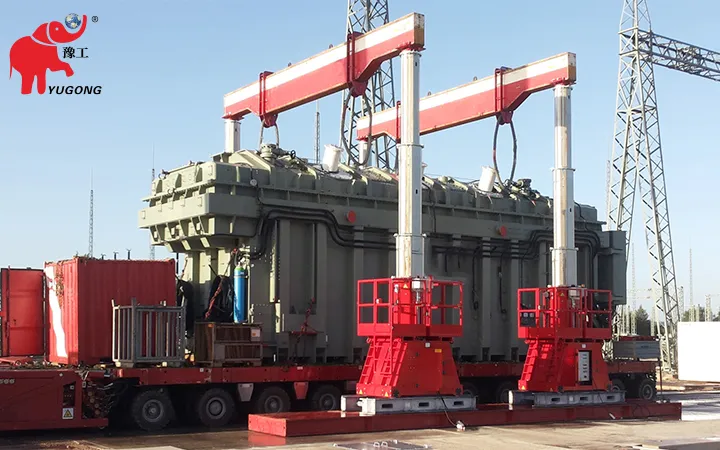
Because hydraulic flow can be adjusted continuously rather than in fixed steps, lifting, lowering, and travel speeds change smoothly instead of jerking between gear stages. In practice this shows up as less load sway during positioning, which protects both the cargo and the structure itself — a detail that matters more than it sounds when the load is a transformer, a ship section, or a precast bridge beam that can't be re-rigged easily if it swings.
Built-in Overload Protection and Safety Locks
The hydraulic circuit itself provides a first layer of overload protection, since relief valves limit system pressure before it can exceed safe working loads. On top of that, electrical safety devices — height limiters, travel limiters, overload sensors, and emergency stops — add a second layer, and duty classifications typically fall in the A5–A8 range depending on configuration, broadly aligned with structures like ISO 4301. Neither layer replaces proper operator training, but together they reduce the number of ways a single component failure can turn into an incident.
Flexible Power Source: Electric Motor or Diesel Engine
Unlike a standard electric gantry crane, which needs a fixed power connection, a hydraulic gantry crane's pump can be driven by either an electric motor or an internal combustion engine. That choice matters on real job sites: electric drive suits a factory or port with stable grid power, while diesel drive keeps the crane fully mobile for remote sites, temporary installations, or locations without reliable power infrastructure — a distinction none of the standard wire-rope alternatives can offer.

Typical Applications and Working Conditions
Ports, Shipyards and Heavy Manufacturing
Ports and terminals use hydraulic gantry cranes for loading, unloading, and handling containers and bulk cargo, while shipyards rely on them for lifting hull sections and installing heavy onboard equipment during construction or repair. Metallurgical plants and heavy machinery manufacturers use the same equipment for a different reason — moving molten steel ladles, steel billets, or oversized machine components where a fixed overhead runway isn't practical.
Bridge Construction and Power Projects
Bridge and civil engineering projects use hydraulic gantry cranes to lift precast beams and large prefabricated components into position, often on sites where the crane needs to travel along a temporary track rather than sit in one fixed spot. Power construction projects lean on the same capability for installing generator sets and transformers, where load weight, tight tolerances, and awkward site access tend to occur together.
Indoor Retrofits With Limited Headroom
Warehouses and older industrial buildings undergoing equipment upgrades are a common but less obvious use case, because a hydraulic gantry crane's relatively compact structure lets it work under lower ceilings than a comparable-capacity overhead crane would require. This is one of the practical reasons plants choose a hydraulic gantry over installing new runway beams: it avoids structural modification while still handling large loads during warehousing and logistics operations.
Hydraulic vs Standard Electric Gantry Crane: Which One Makes Sense?
When Hydraulic Is the Better Fit
A hydraulic gantry crane tends to make more sense when the job involves very heavy loads, restricted space, or a site without stable grid power. The combination of high force in a compact frame, diesel-drive mobility, and smooth speed control is specifically what solves those three problems at once, which is why heavy industrial and infrastructure projects gravitate toward it. For a detailed breakdown of load capacity ranges, span options, and lifting height constraints, see our hydraulic gantry crane selection guide.
When a Standard Electric Gantry Crane Is Enough
For lighter, repetitive lifting inside a fixed workshop with reliable power — think routine material handling well under the tonnage range above — a standard electric wire-rope gantry crane is usually simpler to operate and maintain, since it has fewer hydraulic components to service. If your load and site conditions don't push against space, power, or tonnage limits, it's worth comparing both options through Dafang's gantry crane range before settling on hydraulic.
FAQ
Q1:Is a hydraulic system harder to maintain than an electric one?
Not fundamentally, but it needs different routine checks. The main maintenance points are hydraulic oil condition, filter elements, and pipe joints for leaks — a minor leak is usually fixed by tightening a joint or replacing a seal, and a well-laid-out system makes leak points easy to spot during routine inspection.
Q2:Can a hydraulic gantry crane run without a stable power supply?
Yes, when it's configured with a diesel engine instead of an electric motor driving the hydraulic pump. This is one of the practical reasons the equipment gets specified for remote sites, temporary installations, or locations still waiting on grid connection.
Q3:What load capacity can a hydraulic gantry crane handle?
Capacity typically ranges from around 10 to 1,000 tons, with lifting height generally between 4.5–10.6m and span between 8–35m, though the exact figures depend on the specific model and configuration. These ranges are wide enough to cover everything from workshop equipment installation to large-scale port and shipbuilding lifts.
Q4:Is a hydraulic gantry crane suitable for a low-headroom indoor workshop?
Often yes, because its structure is generally more compact for a given lifting capacity than an equivalent overhead crane setup. That said, actual headroom clearance depends on the specific model and site layout, so it's worth confirming against real site measurements rather than assuming from tonnage alone.
Final equipment selection should be confirmed with a Dafang engineer and must comply with local lifting-equipment regulations.