





Para los procesadores de vidrio, el desafío de la manipulación de materiales es particularmente complejo. Los paneles de vidrio de gran tamaño son productos frágiles y de alto valor que deben ser trasladados repetidamente a través de un proceso de producción que incluye corte, procesamiento de bordes, templado, recubrimiento y ensamblaje antes de llegar a la etapa de producto terminado. Cada traslado representa una oportunidad para que se dañen, y cada paso de manipulación manual conlleva riesgos ergonómicos y de seguridad para los trabajadores involucrados.
Este estudio de caso documenta una mejora en el sistema de manejo de materiales implementada en una planta de procesamiento de vidrio arquitectónico en Manila, Filipinas. El proyecto reemplazó un proceso manual de manejo de materiales que requería varias personas con una grúa de pluma articulada y un sistema de elevación por vacío, lo que generó mejoras significativas en la productividad, la calidad del producto y la seguridad en el lugar de trabajo.
Tabla de Contenidos
Antecedentes del cliente
| Artículo | Detalles |
|---|---|
| País | Filipinas |
| Ubicación | Parque Industrial de Manila |
| Industria | Procesamiento de vidrio arquitectónico |
| Personal | 80 – 100 empleados |
| Productos principales | Vidrio templado, vidrio para muros cortina, unidades de vidrio aislante (UVA) |
| Aplicación | Manipulación y transferencia de vidrio entre estaciones de producción |
La planta presta servicios a promotores inmobiliarios, contratistas de acristalamiento y proyectos de especificación arquitectónica en Filipinas. Su gama de productos incluye vidrio templado y reforzado térmicamente para sistemas de fachadas, vidrio laminado para barandillas y aplicaciones estructurales, y unidades de vidrio aislante de doble acristalamiento para proyectos de muro cortina comerciales.
La planta opera con un modelo de producción basado en proyectos, donde el tamaño de los lotes y las dimensiones del vidrio varían significativamente entre pedidos. Los paneles abarcan desde pequeñas piezas cortadas hasta láminas de gran formato que superan los 2400 × 3600 mm, y el flujo de trabajo de producción requiere que cada panel pase por varias estaciones de procesamiento antes de su finalización.
Desafíos del Proyecto
A medida que aumentaba el volumen de producción para satisfacer la creciente demanda de proyectos, las limitaciones de los métodos manuales de manipulación del vidrio se volvieron insostenibles desde el punto de vista operativo y económico. Cuatro problemas específicos motivaron la decisión de evaluar una solución de manipulación mecánica.
Problema 1: Daños en el vidrio durante la manipulación.
Los grandes paneles de vidrio arquitectónico son inherentemente frágiles, y las consecuencias de un manejo inadecuado son desproporcionadas. Un solo panel dañado durante el transporte puede ocasionar no solo la pérdida del material, sino también la reprogramación de la producción, retrasos en la entrega a la obra y, en casos graves, reclamaciones de clientes y daños a la reputación.
En estas instalaciones, los daños en el vidrio durante su manipulación se manifestaron de diversas formas: astillamiento de los bordes causado por una distribución desigual de la carga cuando varios trabajadores transportaban un panel; arañazos en la superficie por contacto con la ropa de los trabajadores, las herramientas o el vidrio adyacente; y fracturas ocasionales de los paneles por contacto accidental con maquinaria, estanterías o elementos estructurales durante el tránsito por el taller.
Los índices de daños, incluso a unos pocos puntos porcentuales del volumen de producción, representaban un coste significativo en un negocio donde el coste del material de vidrio constituye una proporción importante del coste total de producción por metro cuadrado.
Problema 2: Espacio limitado para talleres
La instalación ocupaba una nave industrial construida específicamente para este fin en Manila, con una planta fija. La distribución del taller incluía mesas de corte, máquinas de procesamiento de bordes, un horno de templado, equipos de recubrimiento y una línea de montaje de unidades de vidrio aislante (IGU), con una disposición física condicionada por la geometría del edificio y la lógica secuencial del proceso de producción.
Los pasillos disponibles entre las estaciones de producción eran estrechos: suficientes para el movimiento individual de los trabajadores, pero insuficientes para el contrapeso y el recorrido necesarios para un sistema de grúa puente convencional. La instalación de una vía para grúa puente habría requerido modificaciones estructurales en el edificio que el propietario no podía aprobar, y el equipo de gestión de producción no aceptaba el coste de capital ni las molestias que dichas modificaciones supondrían.
Punto débil 3: Posicionamiento difícil
El flujo de trabajo de producción de vidrio requería que los paneles se transfirieran entre estaciones que no estaban dispuestas linealmente. Un panel cortado en la mesa de corte podía tener que desplazarse a una máquina de procesamiento de bordes en un eje diferente, luego al bastidor de carga del horno de templado, después a la línea de recubrimiento y, finalmente, al área de ensamblaje o empaquetado de unidades de vidrio aislante (IGU). Cada transferencia requería que el panel se reposicionara tanto en orientación como en ubicación.
Los equipos que manipulaban paneles grandes manualmente a través de esta ruta no lineal se enfrentaban a dificultades significativas para coordinar el movimiento simultáneo, mantener la estabilidad de los paneles y evitar el contacto con los equipos circundantes. El posicionamiento de los paneles en los dispositivos de procesamiento —en particular en las estanterías de carga de los hornos de templado, que requieren tolerancias dimensionales estrictas— resultaba laborioso y propenso a errores cuando lo realizaban equipos manuales sin asistencia mecánica.
Problema 4: Aumento de los costos laborales
Cada transferencia manual de paneles requería un equipo de cuatro a cinco trabajadores para los paneles de mayor tamaño, lo que implicaba que el personal de producción cualificado se dedicara a una tarea de manipulación que no añadía valor, en lugar de a las operaciones de producción. A medida que aumentaban los costes laborales en Filipinas y crecía el volumen de pedidos de la planta, el coste laboral por metro cuadrado de vidrio procesado se convirtió en una preocupación cada vez mayor.
Más allá del coste, las exigencias físicas de la manipulación manual del vidrio —levantamientos incómodos repetidos, fuerzas de agarre sostenidas en los bordes del vidrio y la concentración necesaria para coordinarse con los miembros del equipo durante el movimiento de los paneles— crearon un riesgo de accidentes relacionados con la fatiga y una carga progresiva de lesiones musculoesqueléticas en la plantilla.
Requisitos del cliente
Antes de evaluar las opciones de equipos específicos, el equipo de gestión de las instalaciones estableció un conjunto claro de requisitos para cualquier solución de manipulación mecánica:
- Reducir el equipo de manipulación manual de cuatro o cinco trabajadores a un solo operario por ciclo de transferencia de vidrio.
- Reducir el riesgo de lesiones laborales asociadas con la manipulación manual de vidrio.
- Mejorar la velocidad de transferencia entre estaciones de producción y reducir los retrasos en la producción relacionados con la manipulación.
- Reducir la tasa de daños en el vidrio atribuibles a las operaciones de manipulación.
- Permite un posicionamiento preciso de los paneles en los dispositivos de la estación de procesamiento con la exactitud suficiente para cumplir con las tolerancias de los equipos de procesamiento.
- Evite modificaciones estructurales en el edificio y minimice las interrupciones en la producción en curso durante la instalación.
Estos requisitos descartaron de facto un sistema convencional de grúa puente, que habría requerido la instalación de vigas de rodadura y modificaciones estructurales del edificio. Por ello, orientaron la evaluación hacia soluciones de elevación compactas y ancladas al suelo, con la maniobrabilidad necesaria para adaptarse a la distribución restringida de las instalaciones.
Solución recomendada: Grúa de pluma articulada con columna y elevador por vacío.
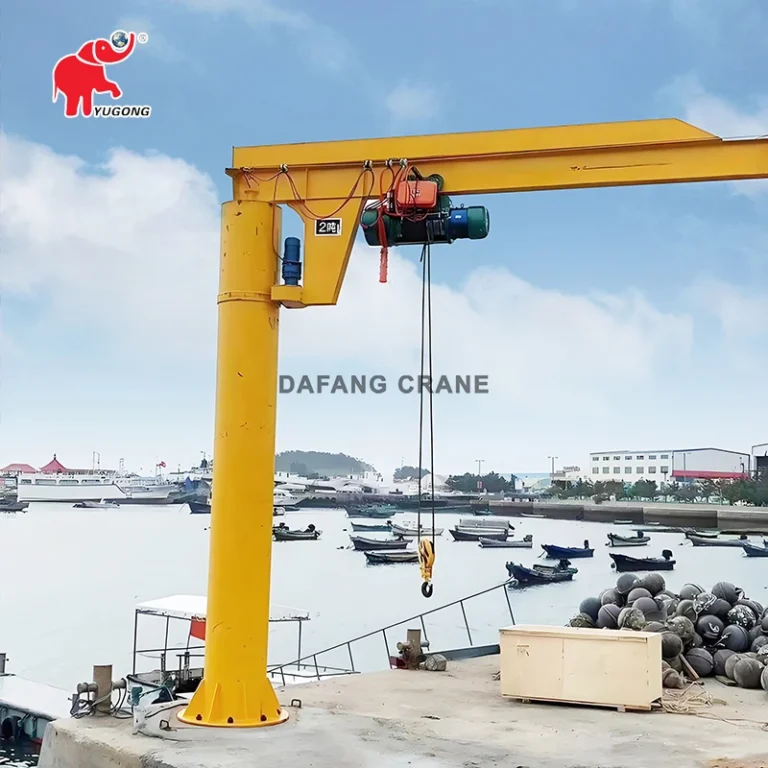
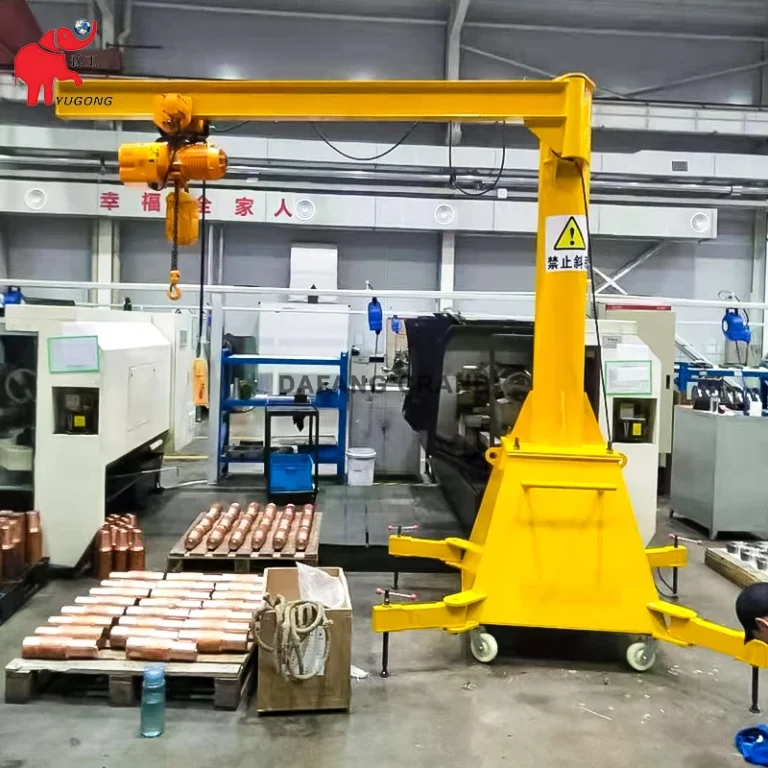
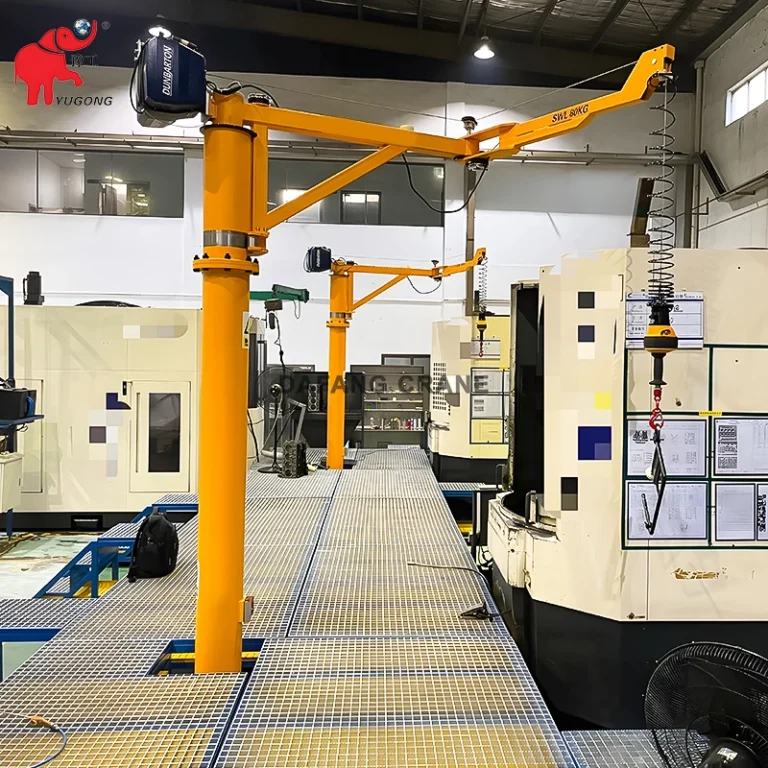
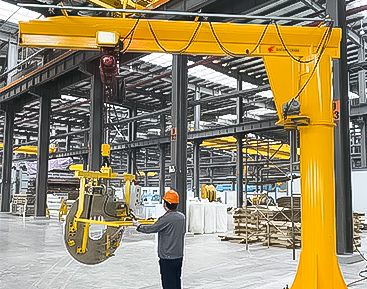
Después de revisar la distribución de las instalaciones, el flujo de producción, el rango de peso de los paneles y los requisitos operativos, la solución recomendada fue una Grúa pluma articulada de columna Equipado con un accesorio elevador de vacío eléctrico.
Especificaciones técnicas
| Artículo | Especificación |
|---|---|
| Tipo de producto | Grúa pluma articulada de columna |
| Capacidad | 300 kg |
| Longitud del brazo interior | 1,5 m |
| Longitud exterior del brazo | 1,0 m (alcance total 2,5 m) |
| Rotación | Articulación completa de 270° |
| Dispositivo de elevación | Elevador de vacío eléctrico |
| Fuente de alimentación | 380 V, 60 Hz, trifásico |
| Control | Control colgante con indicador de estado de vacío |
| Aplicación | Manipulación de paneles de vidrio arquitectónico de gran formato |
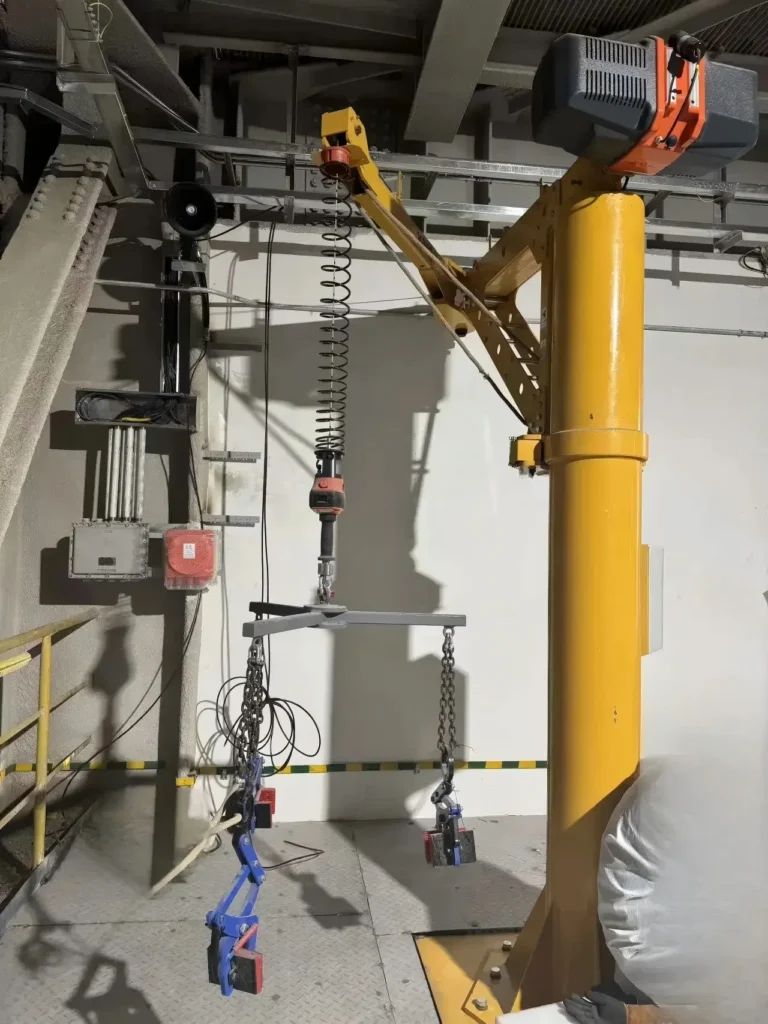
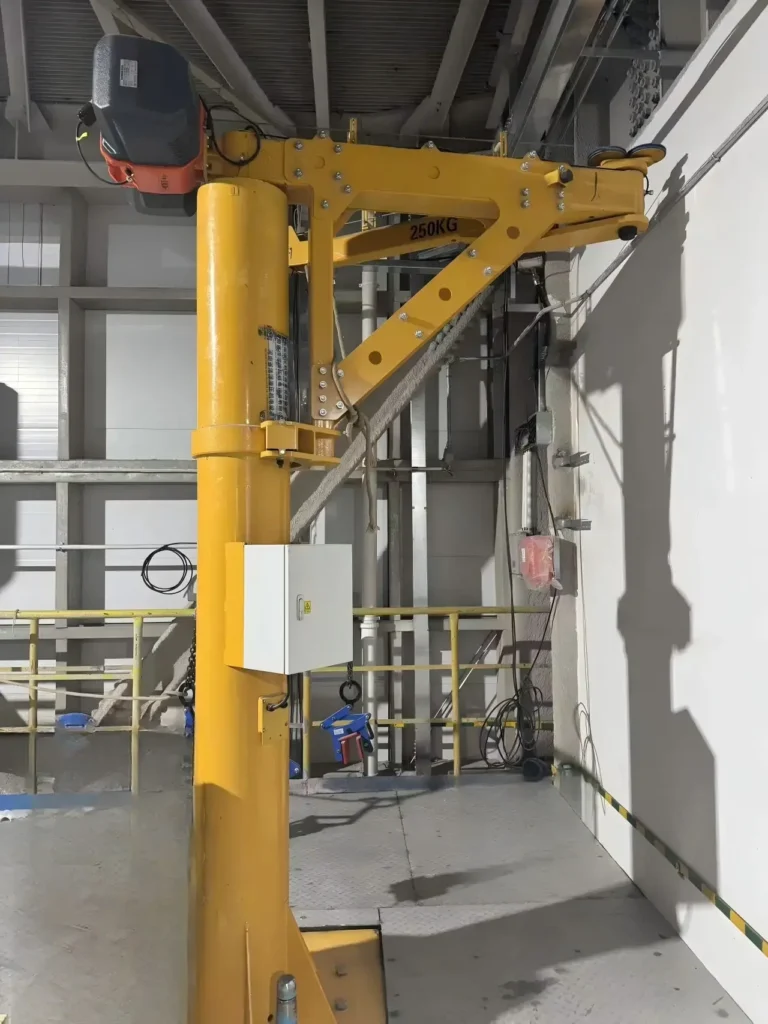
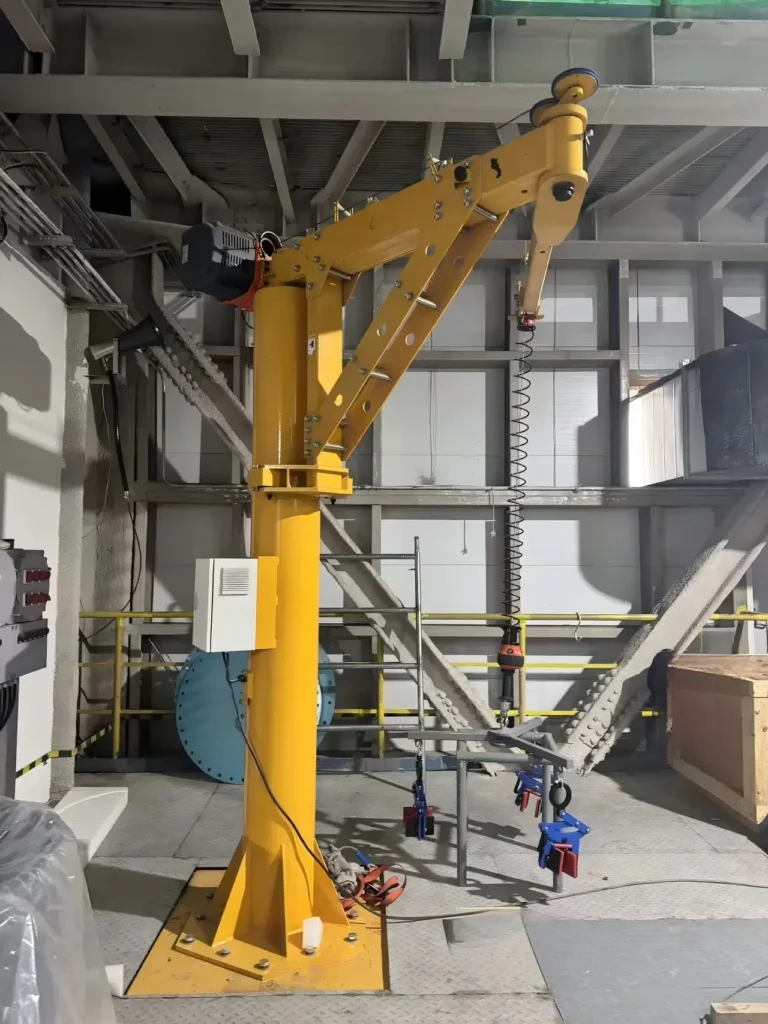
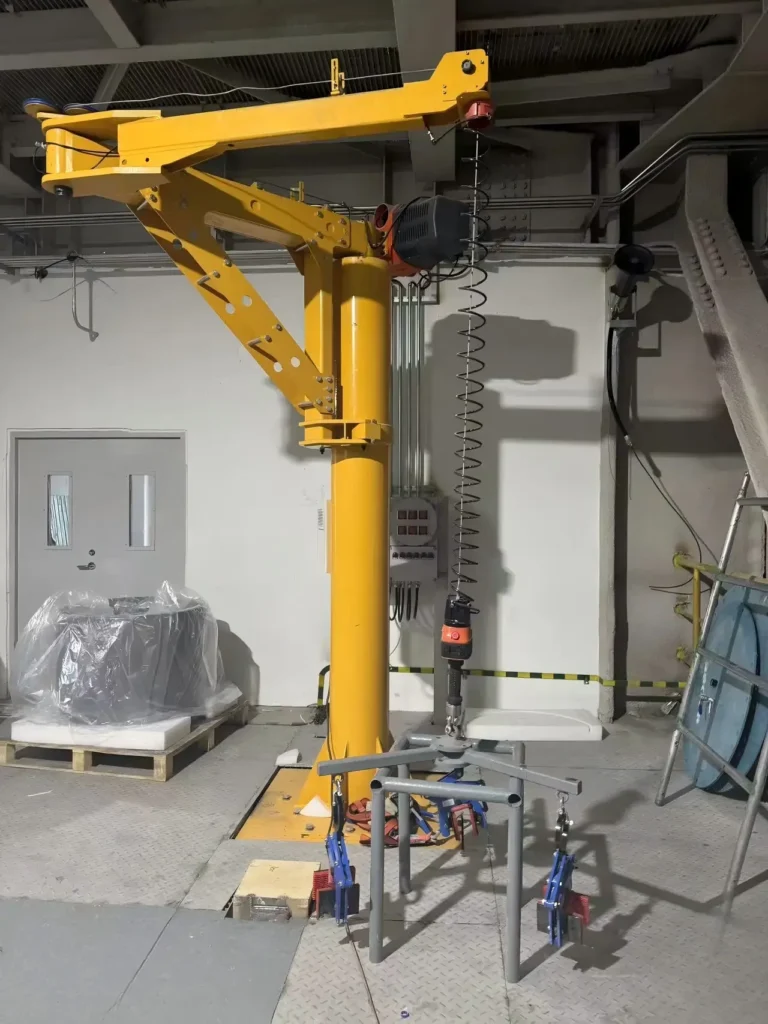
¿Por qué el cliente eligió una grúa de pluma articulada de columna?
Cubre áreas de trabajo complejas.
La distribución de la planta de producción incluía estanterías para el almacenamiento de vidrio, estructuras para las máquinas de procesamiento, mesas de empaquetado y columnas de construcción distribuidas por toda el área de trabajo. Una grúa de pluma estándar de un solo brazo, que gira alrededor de un pivote fijo, solo puede mover su gancho en un arco simple; cualquier obstáculo dentro de ese arco crea una zona muerta donde la grúa no puede entregar la carga.
El diseño del brazo articulado elimina esta limitación. El punto de pivote del brazo exterior le permite plegarse en distintas direcciones con respecto al brazo interior, lo que permite a la grúa sortear estanterías, extenderse a través de espacios entre máquinas o colocar un panel de vidrio en una abertura de carga a la que un brazo recto no podría acceder. La zona de trabajo efectiva de la grúa no es un simple arco, sino una forma compleja determinada por la combinación de las posiciones de ambos segmentos del brazo, lo que resulta mucho más útil en entornos de producción con obstáculos.
Ideal para talleres pequeños y medianos.
La grúa de pluma articulada se ancla a una cimentación de hormigón armado mediante una única columna central. La base que ocupa la columna es compacta —considerablemente menor que la de cualquier otra estructura de grúa fija— y la instalación solo requiere trabajos de anclaje a la cimentación, sin necesidad de modificar la estructura del edificio por encima del nivel del suelo.
Para la planta de Manila, esto significó que la instalación pudo completarse durante una breve parada programada sin necesidad de permisos estructurales, aprobación del propietario del edificio para modificaciones estructurales ni interrupciones en el cronograma de producción más allá del período de instalación. El perfil de instalación compacto representó una ventaja decisiva para una planta que opera dentro de las limitaciones de espacio del edificio.
Posicionamiento preciso del vidrio
Los equipos de procesamiento de vidrio, en particular los hornos de templado y las líneas de ensamblaje de unidades de vidrio aislante (UVA), requieren tolerancias de carga que los equipos de manipulación manual encuentran difíciles de lograr de forma consistente, especialmente con paneles de gran formato. Una desalineación durante la carga aumenta las tasas de rechazo de los hornos y los defectos en el ensamblaje de las UVA.
La combinación de rotación de 270 grados, movimiento de brazo articulado y tecnología de elevación por vacío permite que un solo operario capacitado posicione un panel de vidrio con una precisión y repetibilidad que un equipo manual no puede igualar de forma consistente. El elevador por vacío mantiene el panel plano y estable durante el posicionamiento, sin que este gire ni se desplace bajo la acción de las fuerzas de manipulación. El operario ajusta la posición final mediante el control colgante antes de colocar el panel en el dispositivo de procesamiento.
Mayor productividad
Con el sistema manual anterior, cada traslado de paneles grandes requería la coordinación de entre cuatro y cinco trabajadores, lo que generaba retrasos debido al montaje del equipo, la coordinación de movimientos y la preparación. El sistema mecánico permite que un solo operario realice los traslados de forma independiente, sin tener que esperar a que el equipo esté disponible y a un ritmo más constante durante todo el turno.
La reducción del tiempo de transferencia por panel, combinada con la eliminación del tiempo de espera para la coordinación manual del equipo, produjo una mejora cuantificable en el rendimiento entre estaciones a lo largo del flujo de trabajo de producción.
Cómo el elevador por vacío mejora la seguridad en la manipulación del vidrio
Agarre seguro para el cristal
El elevador eléctrico por vacío utiliza un sistema de succión multicopa que distribuye la carga de elevación por toda la superficie del vidrio, evitando así las tensiones puntuales que pueden provocar fracturas durante su manipulación. El sistema de vacío mantiene la integridad del agarre durante todo el ciclo de elevación y transporte, con una alarma automática si el nivel de vacío desciende por debajo del umbral de funcionamiento seguro.
Reducción de los daños superficiales
A diferencia de la manipulación manual, donde los operarios deben sujetar los bordes del vidrio o aplicar fricción a la superficie del panel, el elevador por vacío solo entra en contacto con áreas específicas de la superficie del vidrio mediante juntas de goma blanda diseñadas para evitar dañar el vidrio acabado. Se elimina el contacto con los bordes durante la transferencia, lo que suprime el principal mecanismo de astillado de los bordes.
Mayor estabilidad de carga
Un panel de vidrio suspendido de un elevador de vacío permanece en una orientación controlada y predecible con respecto a la estructura del elevador. Esta estabilidad durante el transporte reduce el riesgo de contacto entre paneles o entre paneles y equipos, lo que podría causar daños en la superficie durante las operaciones de manipulación manual.
Control del operador más seguro
El operario controla todos los movimientos de elevación, desplazamiento y posicionamiento desde una estación colgante a una distancia segura del panel. El operario no necesita sujetar físicamente el vidrio durante el ciclo de transferencia. Esto cambia radicalmente el perfil ergonómico de la tarea de manipulación, pasando de una elevación en equipo que requiere esfuerzo físico a una operación controlada por un solo operario.
Resultados del proyecto
Tras la puesta en marcha y un breve periodo de formación de los operarios, la planta realizó un seguimiento del rendimiento en comparación con el sistema de manipulación manual de referencia durante un periodo de producción de 90 días. Los resultados obtenidos se resumen a continuación.
| Indicador de rendimiento | Antes | Después | Cambiar |
|---|---|---|---|
| Paneles transferidos por turno | Base | +40% | +40% eficiencia |
| Trabajadores necesarios por transferencia | 4 – 5 | 1 | -60% a -80% |
| Tasa de daños en el vidrio (relacionada con la manipulación) | Base | -70% | Ahorro de costes significativo |
| Incidentes de lesiones relacionados con la manipulación | Grabado | Cero en el período de medición | Mejor historial de seguridad |
40% Mayor eficiencia de manejo
La combinación de transferencias individuales más rápidas y la eliminación de retrasos en el ensamblaje y la coordinación de equipos aumentó el número de transferencias de paneles completadas por turno en aproximadamente un 40 por ciento. Esta mejora se tradujo directamente en una reducción del tiempo de espera de los paneles entre las estaciones de producción y en un mayor rendimiento general de la línea de producción.
60% Menor requerimiento de mano de obra
Cada ciclo de transferencia, que antes requería un equipo de cuatro a cinco trabajadores, ahora solo necesita un operario capacitado. El personal liberado de las tareas de manipulación se reasignó a tareas de procesamiento productivas, lo que mejoró la productividad de la planta por trabajador sin aumentar la plantilla.
70% Reducción de daños en el vidrio
La reducción de los daños en el vidrio atribuibles a las operaciones de manipulación durante el período de medición de 90 días fue de aproximadamente un 70 % en comparación con la situación previa a la instalación. Esta mejora se debió a la eliminación del contacto con los bordes durante la transferencia, la reducción del riesgo de contacto con la superficie y la capacidad de posicionamiento controlado y estable del sistema de elevación por vacío. El ahorro en costos de material derivado de la reducción de daños y retrabajos, calculado durante un año completo de operación, contribuyó significativamente al cálculo del retorno de la inversión de la instalación.
Mejora de la seguridad en el lugar de trabajo
Durante el período de medición de 90 días posterior a la instalación, no se registraron incidentes de lesiones relacionados con la manipulación. La eliminación del levantamiento manual de grandes paneles de vidrio en equipo redujo el principal riesgo de lesiones para los trabajadores que anteriormente realizaban tareas de manipulación. La reasignación de estos trabajadores a tareas de procesamiento con menor exigencia de manipulación manual mejoró aún más el perfil ergonómico general de las actividades diarias de la plantilla.
Aplicaciones de las grúas de pluma articulada de columna en la industria del vidrio.
El proyecto de Manila ilustra un modelo de aplicación que se está replicando en plantas de procesamiento de vidrio en el sudeste asiático y a nivel mundial. Las grúas de pluma articulada son adecuadas para múltiples aplicaciones en la industria del vidrio, más allá de la función de transferencia entre estaciones que se muestra en este caso práctico.
- Plantas de vidrio templado: Carga y descarga de hornos de templado, donde se requiere un posicionamiento preciso de los paneles sobre los rodillos del horno y el acceso está restringido por la estructura del horno.
- Producción de vidrio laminado: Manipulación de las láminas de vidrio durante el ensamblaje entre capas, donde la protección de la superficie es fundamental y los paneles deben colocarse con precisión sobre el vidrio existente sin contacto entre ellos.
- Fabricación de UDITraslado de las unidades de doble acristalamiento terminadas desde la línea de montaje hasta la estación de sellado de bordes y, posteriormente, a la zona de curado y embalaje, donde el peso de las unidades ensambladas supera los límites de manipulación manual.
- Fabricación de vidrio para muros cortina: Traslado de paneles de gran formato entre las distintas etapas de procesamiento en las instalaciones que producen unidades de muro cortina de dimensiones personalizadas para grandes proyectos de construcción.
- Almacenes de vidrio arquitectónicoTrasladar paneles de vidrio terminados desde la producción hasta el almacenamiento de productos terminados, y recuperar paneles específicos para el cumplimiento de pedidos, en almacenes donde las dimensiones de los paneles y las configuraciones de las estanterías de almacenamiento crean dificultades de manipulación.
- Estaciones de envasado de vidrio: Colocación de los paneles en cajas de madera o estanterías de transporte con estructura en forma de A para su entrega en los lugares de los proyectos, donde la operación de embalaje final requiere una colocación precisa dentro de tolerancias dimensionales estrictas.
Conclusión
El proyecto de la fábrica de vidrio de Manila demuestra el valor operativo que puede aportar una grúa de pluma articulada con tecnología de elevación por vacío en un entorno de procesamiento de vidrio donde los métodos de manipulación manual se han convertido en una limitación para la productividad, la calidad del producto y la seguridad en el lugar de trabajo.
Los cuatro principales desafíos a los que se enfrentaba la planta —daños en el vidrio durante la manipulación, espacio limitado en el taller, dificultad para posicionar los paneles y aumento de los costos laborales— son representativos de las condiciones comunes en las operaciones de procesamiento de vidrio que han superado la capacidad de los métodos manuales. La grúa de pluma articulada resolvió cada uno de estos desafíos: su instalación compacta evitó modificaciones en el edificio, la geometría flexible de su brazo permitió navegar por la compleja distribución del taller, su elevador por vacío protegió la calidad del producto y posibilitó un posicionamiento preciso, y la reducción a la manipulación por un solo operario disminuyó significativamente los requisitos laborales y el riesgo de lesiones.
Los resultados medidos —un 40 por ciento más de eficiencia en la manipulación, una reducción del 60 por ciento en la mano de obra por transferencia, una reducción del 70 por ciento en los daños al vidrio relacionados con la manipulación y la eliminación de las lesiones registradas por manipulación durante el período de medición— representan un retorno de la inversión que el equipo directivo de la instalación confirmó que se logró durante el primer año de funcionamiento.
A medida que las plantas de procesamiento de vidrio de Filipinas continúan ampliando sus operaciones para satisfacer la demanda del sector de la construcción, las soluciones compactas de elevación mecánica que se pueden integrar en las instalaciones existentes sin modificaciones estructurales se están convirtiendo cada vez más en la opción práctica y económica para mejorar la manipulación de materiales.
Analice con nuestros especialistas las necesidades de manipulación de materiales de su fábrica de vidrio; le ayudaremos a definir la configuración adecuada para su diseño de producción y gama de productos.

Preguntas frecuentes
P: ¿Qué es una grúa de pluma articulada de columna?
Una grúa de pluma articulada sobre columna es una grúa de pluma anclada al suelo con dos segmentos de brazo conectados en un pivote central, lo que le permite plegarse y extenderse para sortear obstáculos dentro de su zona de trabajo. A diferencia de una grúa de pluma estándar de un solo brazo, que solo puede cubrir un arco simple, el diseño articulado crea una zona de trabajo compleja y flexible, ideal para entornos de producción con obstáculos que impedirían que un brazo recto accediera a todas las posiciones necesarias.
P: ¿Por qué se utiliza un elevador por vacío para manipular vidrio?
Un elevador por vacío sujeta la superficie del panel de vidrio mediante ventosas, evitando el contacto con los bordes y la presión superficial que generan la manipulación manual o los métodos de elevación convencionales. Esto protege los bordes del vidrio de astilladuras, las superficies de arañazos y reduce el riesgo de fractura del panel durante la elevación y el transporte. Los elevadores por vacío también proporcionan una sujeción segura y estable que permite al operario un control total de la orientación del panel durante su posicionamiento.
P: ¿Qué capacidad de grúa pluma es la adecuada para las fábricas de vidrio?
Los requisitos de capacidad dependen del peso máximo del panel a manipular. Para vidrio arquitectónico estándar de hasta aproximadamente 2400 × 3600 mm, una grúa con capacidad de 300 a 500 kg suele ser suficiente cuando se combina con un elevador de vacío. Las instalaciones que manipulan vidrio laminado pesado, elementos de vidrio estructural o unidades de muro cortina de gran formato pueden requerir una mayor capacidad. El peso del elevador de vacío debe restarse de la capacidad nominal de la grúa para determinar el peso neto máximo de vidrio que se puede levantar.
P: ¿Puede una grúa de pluma articulada funcionar en espacios confinados?
Sí. El brazo articulado está diseñado específicamente para trabajar en entornos donde los obstáculos —estructuras de maquinaria, estanterías, columnas y otros equipos— impiden que una grúa de pluma recta estándar acceda a todas las posiciones necesarias. La capacidad del brazo exterior para plegarse en el pivote central permite que la grúa sortee obstáculos y acceda a posiciones que serían inaccesibles con un brazo convencional.
P: ¿Es adecuada una grúa de pluma articulada de columna para la producción de vidrio templado?
Sí. La manipulación de vidrio templado es una de las aplicaciones más comunes de las grúas de pluma articulada en las plantas de procesamiento de vidrio. La capacidad de posicionamiento preciso de la grúa es especialmente valiosa al cargar los hornos de templado, donde la colocación de los paneles sobre los rodillos del horno debe ser exacta para lograr resultados de tratamiento térmico uniformes. El sistema de elevación por vacío protege la superficie del vidrio durante la manipulación, manteniendo la calidad del producto durante todo el proceso de templado.