
Aplicación
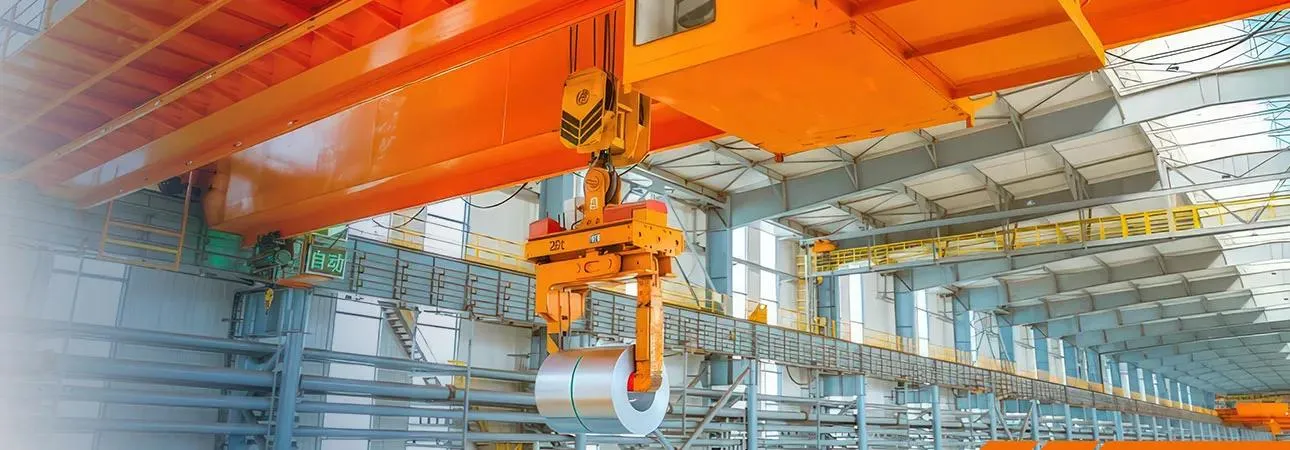
Las operaciones mineras exigen mucho más a los equipos de elevación que casi cualquier otra aplicación industrial. Los continuos programas de producción, los materiales a granel abrasivos, los niveles extremos de polvo, la exposición al aire libre y el enorme peso de la maquinaria minera se combinan para crear un entorno operativo donde las grúas de tamaño insuficiente o con especificaciones incorrectas fallan prematuramente, y las consecuencias afectan a toda la operación de producción.
Esta página abarca los sistemas de grúas utilizados en la industria minera, desde polipastos de mantenimiento subterráneo y grúas puente para la manipulación de mineral y carbón, hasta grúas pórtico exteriores para la gestión de depósitos y sistemas de transferencia inteligentes para el movimiento de módulos pesados. Cada sección explica por qué se utiliza un tipo específico de grúa para una aplicación minera concreta, qué capacidad y clase de servicio son las adecuadas y qué factores de selección son cruciales para un rendimiento fiable a largo plazo.
Antes de examinar los tipos específicos de grúas, conviene aclarar qué diferencia las aplicaciones de las grúas mineras de las de la elevación industrial en general.
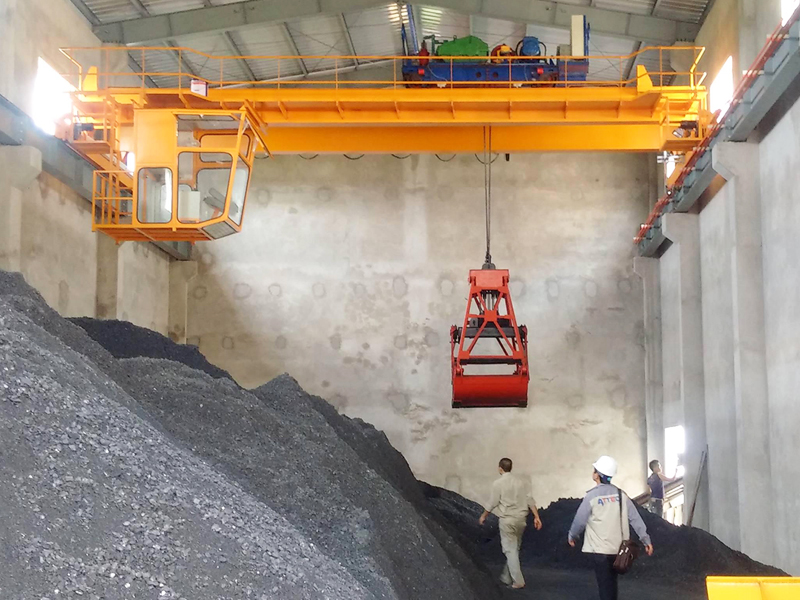
En Grúa puente de agarre QZ Utiliza un sistema de cuchara de agarre de doble tambor y cuatro cables. Dos tambores de cable independientes en el polipasto —uno de soporte y otro de cierre— controlan la apertura y el cierre de la cuchara de forma independiente. El tambor de soporte mantiene la elevación de la cuchara, mientras que el tambor de cierre controla el cierre de la misma. Esta arquitectura de cuatro cables proporciona un funcionamiento estable y controlable de la cuchara, con una fuerza de cierre mayor que la de las alternativas de dos cables.
La cuchara de agarre se abre al descender al montón de material, se cierra alrededor del material a granel cuando el tambor de cierre se tensa y sujeta la cuchara cargada de forma segura durante las fases de elevación y desplazamiento. Las cucharas de agarre tipo concha estándar se utilizan para materiales a granel sueltos. Las cucharas de agarre dentadas se especifican para materiales más duros y compactados que requieren fuerza de penetración para una captura eficaz.
La grúa puente de agarre QZ es la más utilizada en la manipulación de materiales a granel en la minería. Los depósitos de carbón interiores, las bahías de almacenamiento de mineral, los silos de piedra caliza, las instalaciones de manipulación de coque y las áreas de procesamiento de escoria utilizan grúas de agarre QZ como herramienta principal para la gestión de materiales. La grúa apila el material entrante, gestiona el inventario dentro de la bahía de almacenamiento y recupera material para alimentar los equipos de procesamiento posteriores.
Capacidad: De 5 a 32 toneladas, en función del volumen de la cuchara y la densidad aparente del material.
Clase de servicio: De A6 a A7 según la clasificación FEM/ISO: refleja el perfil operativo de alto ciclo y alta frecuencia de la manipulación continua de materiales a granel.
Materiales típicos: Mineral de hierro, carbón, piedra caliza, coque, arena y grava, escoria mineral, polvo mineral, bauxita
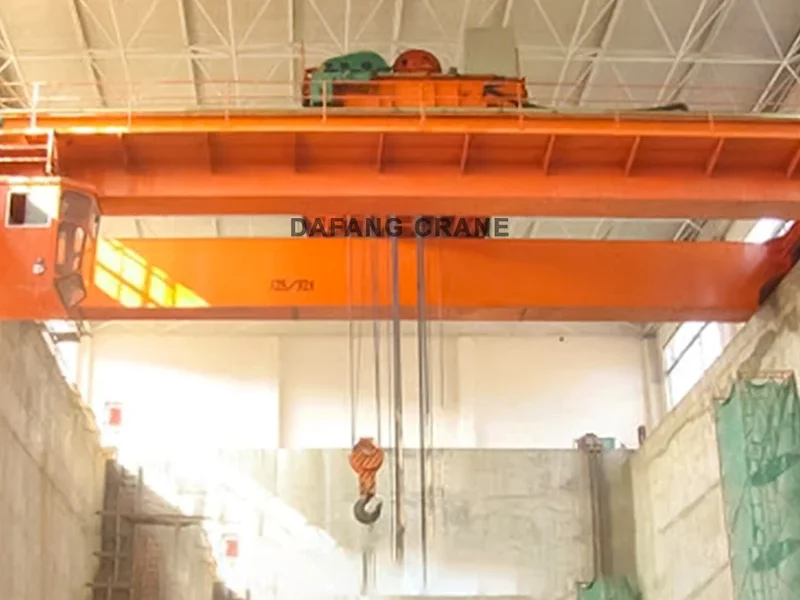
En Grúa puente de doble viga QD Se trata de una grúa puente de servicio pesado de configuración estándar, con dos vigas principales paralelas y un carro de elevación por cable superior. Funciona con gancho, dispositivo de elevación electromagnético, abrazaderas o herramientas personalizadas para la parte inferior del gancho, según la tarea de mantenimiento. La estructura de doble viga proporciona la rigidez, la altura del gancho y la capacidad de carga necesarias para el mantenimiento de equipos pesados de minería.
Las estaciones de trituración requieren grúas capaces de levantar mantos, cóncavos y conjuntos excéntricos; componentes que pueden pesar de 5 a 30 toneladas y requieren un posicionamiento preciso en el bastidor de la trituradora. El mantenimiento de los molinos de bolas requiere grúas de gancho para levantar las carcasas, realizar operaciones de reemplazo de revestimientos y desmontar motores y cajas de engranajes en los talleres de molienda. La instalación de motores, el mantenimiento de bombas y el reemplazo de grandes cajas de engranajes en plantas de procesamiento de minerales son aplicaciones de grúas QD.
Los dispositivos de elevación electromagnética de las grúas QD manipulan chapas de acero, lingotes y material estructural en talleres y zonas de almacenamiento sin necesidad de acoplar aparejos manualmente en cada elevación.
Capacidad: De 5 a 500 toneladas — definido por el componente individual más pesado que se requiere levantar en la posición de la grúa, con un margen operativo de 25 a 301 TP3T
Clase de servicio: A5 para grúas de mantenimiento con frecuencia de ciclo moderada; A6 a A7 para puestos críticos de producción con alta utilización diaria.
Aplicaciones típicas: Mantenimiento de trituradoras, revisión de molinos de bolas, reemplazo de motores y cajas de engranajes, ensamblaje de equipos de minería, reemplazo de poleas de cabezales de transportadores
Puentes grúa monorraíl Utilice una viga principal del puente con un carro de polipasto de cable o cadena suspendido. La configuración suspendida reduce la distancia entre el gancho y la viga en comparación con los diseños de deslizamiento superior, lo que hace que las grúas monorraíl sean prácticas en edificios con altura limitada.
Almacenes de repuestos: El almacenamiento y la recuperación de piezas en las instalaciones de repuestos mineros (motores, bombas, cajas de engranajes, paneles eléctricos) generalmente se encuentran dentro del rango de 1 a 10 toneladas que las grúas monorraíl manejan de manera eficiente.
Mantenimiento subterráneo: En los talleres y zonas de mantenimiento de las minas subterráneas, donde el espacio es limitado y las elevaciones pesadas son poco frecuentes, las grúas monorraíl ofrecen una capacidad adecuada a un menor coste y con una carga sobre la vía más ligera que las alternativas de doble viga.
Talleres complementarios: En las instalaciones mineras, los talleres eléctricos, las áreas de mantenimiento de instrumentos y los talleres de fabricación ligera utilizan grúas monorraíl para el izamiento de mantenimiento poco frecuente, sin necesidad de realizar la inversión estructural que suponen los sistemas de grúas más pesados.
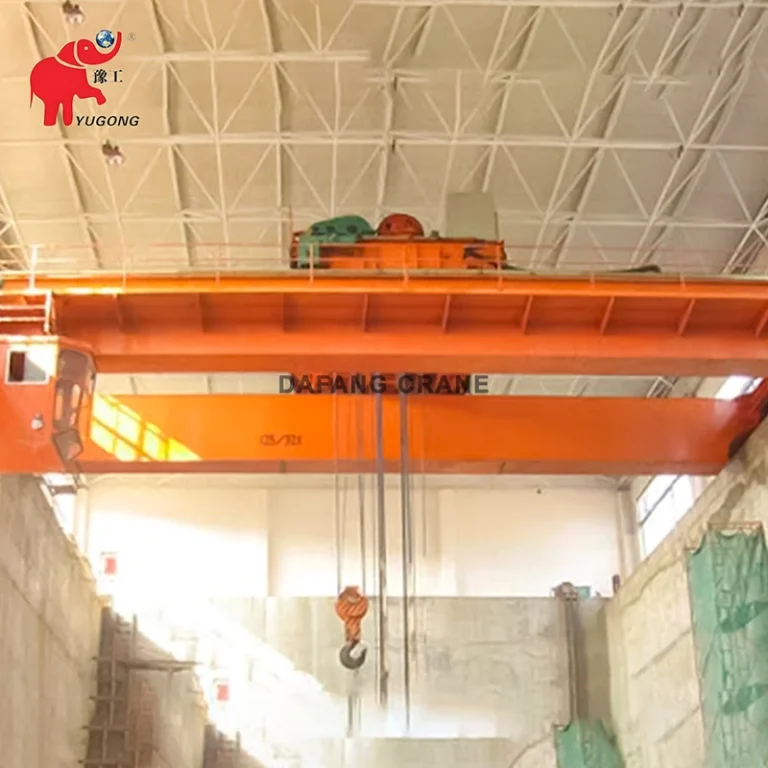
Grúas puente de doble viga Utilizan dos vigas paralelas con un carro de desplazamiento superior, lo que proporciona mayor rigidez estructural, mayor capacidad de carga, mayor alcance y mayor altura de gancho que los diseños de viga única. Son la configuración estándar para puestos mineros donde las cargas superan las 20 toneladas, los tramos superan los 20 metros o la operación continua en varios turnos impone exigencias de ciclo de trabajo que las estructuras de viga única no pueden soportar.
Los talleres de maquinaria pesada para minería, donde se ensamblan y reacondicionan grandes equipos (componentes de dragalinas, carcasas de molinos SAG, sistemas de transmisión de camiones mineros), requieren grúas de doble viga con capacidades de 50 a 500 toneladas y luces de 20 a 35 metros o más. La estructura de doble viga soporta estas cargas con la rigidez adecuada para mantener la precisión de posicionamiento en condiciones de carga dinámicas.
Los puestos de producción continua en las plantas de procesamiento de minerales, donde la grúa manipula material o realiza tareas de mantenimiento durante varios turnos diarios, requieren estructuras de doble viga con clasificación de servicio superior que exige la operación intensiva.
Capacidad recomendada: De 10 a 500 toneladas
Clase de servicio: De A5 a A8 dependiendo de la intensidad de la aplicación
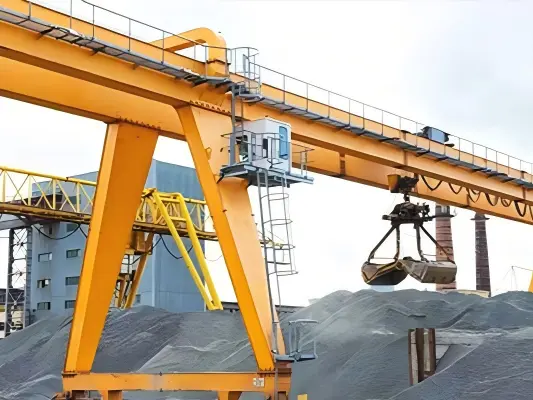
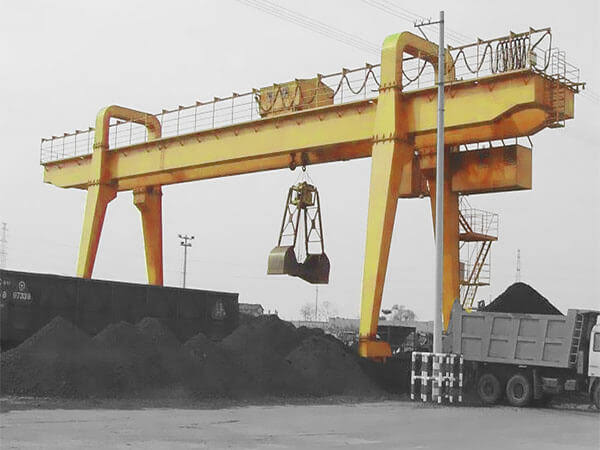
La grúa pórtico de doble viga MZ opera sobre rieles a nivel del suelo que atraviesan un patio de almacenamiento al aire libre. La estructura del pórtico soporta un sistema de elevación con cangilones de cuatro cables, idéntico en principio de funcionamiento a la grúa puente de agarre para interiores QZ. La diferencia radica en la configuración estructural: las patas autoportantes del pórtico eliminan la necesidad de una estructura de edificio que soporte la vía de la grúa, lo que permite su operación en patios de almacenamiento al aire libre de cualquier tamaño.
Las zonas de almacenamiento en superficie de las plantas de preparación de carbón, los depósitos de mineral de hierro en las explotaciones mineras a cielo abierto, el almacenamiento de piedra caliza para las instalaciones de cemento y los depósitos de áridos en las canteras utilizan grúas pórtico con cuchara MZ como sistema principal de gestión de materiales. La grúa apila el material procedente de cintas transportadoras o camiones, gestiona el inventario dentro del depósito y recupera el material para alimentar los sistemas de procesamiento o carga.
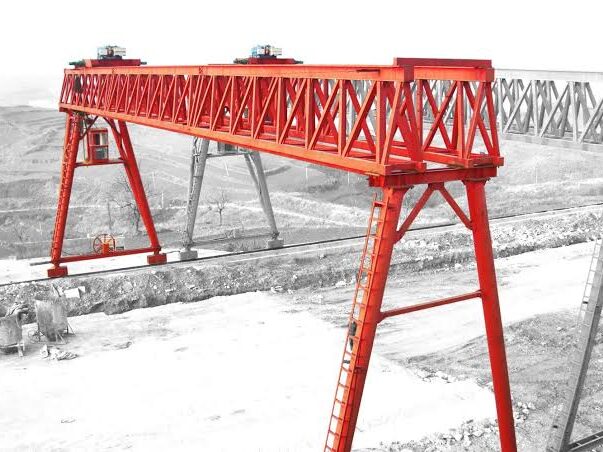
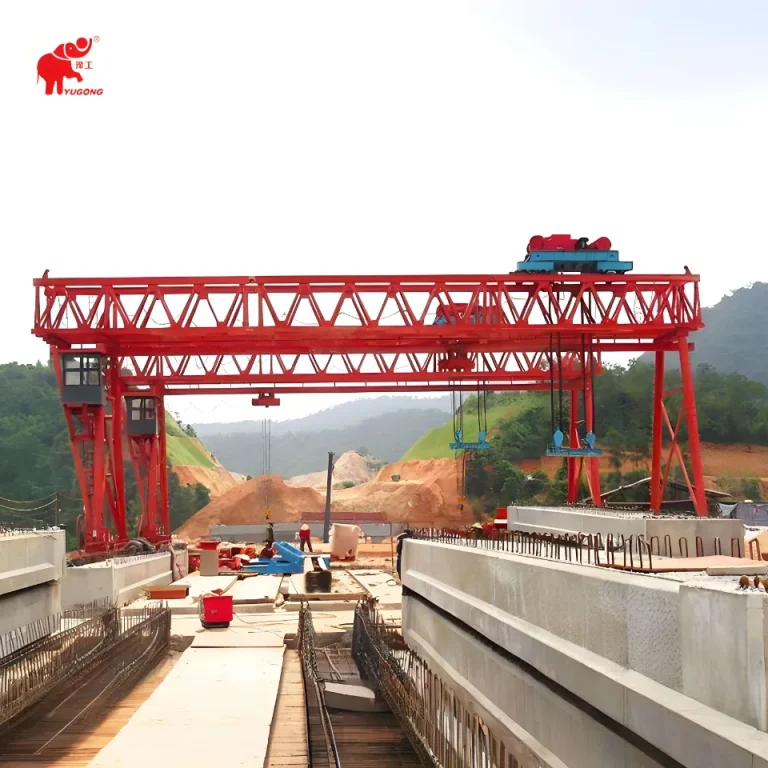
Grúas pórtico de celosía Se utiliza una estructura de celosía abierta para la viga principal del puente y los elementos de apoyo, en lugar de una viga cajón o viga en I maciza. La geometría de celosía abierta reduce las fuerzas del viento sobre la estructura al permitir el paso del aire en lugar de presentar una superficie sólida a la presión del viento. Esta ventaja en la resistencia al viento convierte a las grúas pórtico de celosía en la opción estructural preferida para entornos mineros a cielo abierto y para instalaciones en superficie a gran altura, donde la carga del viento es una limitación de diseño fundamental.
Las operaciones en superficie de las minas a cielo abierto (acumulación de mineral, almacenamiento de estériles, áreas de montaje de equipos mineros) en lugares expuestos a fuertes vientos predominantes o ubicados a gran altitud donde las velocidades de diseño del viento son elevadas, utilizan grúas pórtico de celosía para lograr un rendimiento estructural adecuado con un menor peso de acero que los diseños equivalentes de viga cajón.
Capacidad recomendada: De 5 a 100 toneladas
Entorno adecuado: Ubicaciones exteriores expuestas, regiones con fuertes vientos, emplazamientos mineros elevados.
Clase de servicio: De A5 a A7 dependiendo de la intensidad operativa
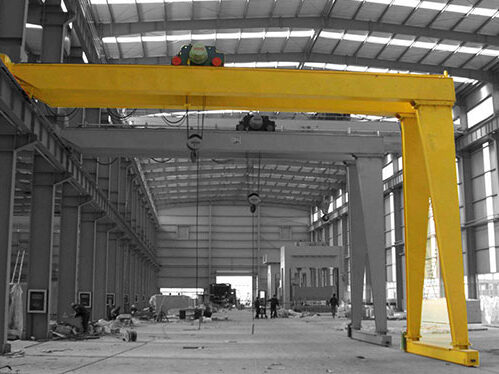
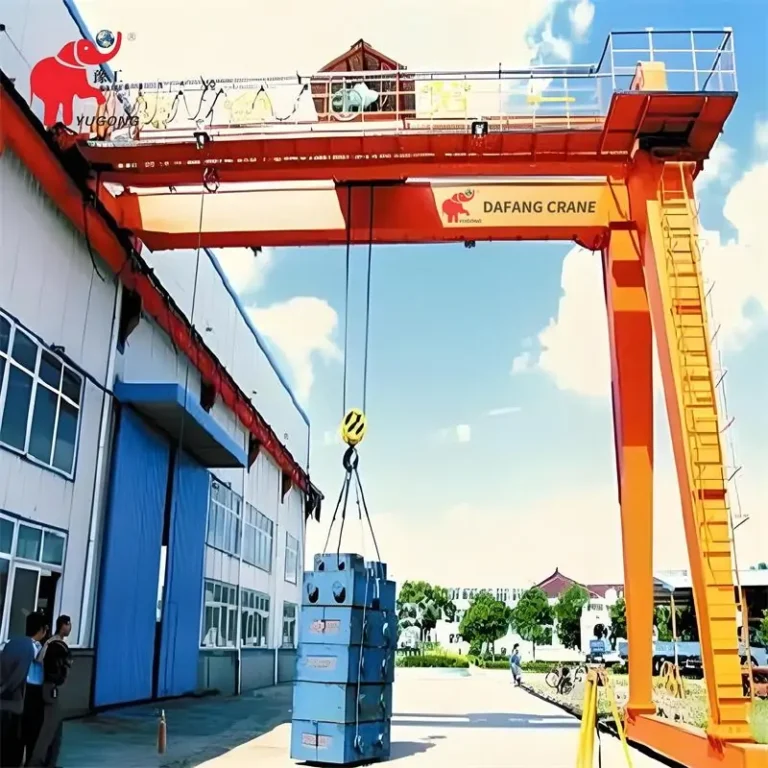
A grúa semipórtico Utiliza una viga de rodadura elevada fijada a la estructura del edificio por un lado y un riel a nivel del suelo por el otro. Esta configuración híbrida es ideal para áreas de mantenimiento que se extienden más allá de la superficie principal del edificio, donde un lado del área de trabajo de la grúa está cubierto y el otro se encuentra en una extensión semiabierta o al aire libre.
En las ampliaciones de talleres mineros donde el edificio principal del taller no puede cubrir toda el área de mantenimiento, en las zonas de mantenimiento de cintas transportadoras adyacentes a edificios cerrados y en las áreas de mantenimiento de equipos de superficie con techo parcial, se utilizan grúas semipórtico para proporcionar cobertura de grúa tanto en las zonas cubiertas como en las descubiertas sin necesidad de dos sistemas de grúa separados.
Los talleres de mantenimiento de minas subterráneas operan en espacios confinados con poca altura libre, alta humedad y requisitos de ventilación continua. Las grúas puente monorraíl con polipastos compactos alcanzan la máxima altura de gancho en aberturas de desarrollo y mantenimiento con poca altura libre. El mantenimiento de equipos —perforadoras jumbo, cargadoras LHD, camiones subterráneos— requiere grúas de entre 5 y 32 toneladas, según el parque de equipos mineros. Los sistemas eléctricos deben cumplir con las especificaciones de recinto subterráneo y, cuando sea necesario, con las especificaciones a prueba de explosiones para la clasificación de atmósfera peligrosa de la mina.
Las operaciones a cielo abierto utilizan grúas pórtico exteriores —de estructura reticular o de viga cajón— para las áreas de mantenimiento de equipos y los depósitos de componentes. Los equipos mineros de gran tamaño —palas, excavadoras, camiones de transporte— requieren grúas con capacidades de 50 a 500 toneladas para la extracción y el reemplazo de componentes principales. La carga de viento es el factor determinante en el diseño estructural de las instalaciones a cielo abierto. Los talleres de mantenimiento de equipos en las operaciones a cielo abierto pueden utilizar grúas puente de doble viga QD para las posiciones de mantenimiento en interiores, junto con grúas pórtico exteriores para el izaje de cargas pesadas en exteriores.
Las instalaciones de manipulación de carbón requieren grúas puente de cuchara QZ o grúas pórtico de cuchara MZ con clasificación A6 a A7 para la gestión de materiales a granel de alto ciclo, tanto en interiores como en exteriores. Los sistemas eléctricos deben especificarse para entornos con polvo de carbón: clasificación mínima de envolvente IP54, con certificación ATEX cuando corresponda. Las combinaciones de apiladoras y recuperadoras en grandes instalaciones de carbón a cielo abierto pueden complementar los sistemas de grúas de cuchara para la gestión de patios de almacenamiento de alto rendimiento. Los talleres de mantenimiento de minas de carbón subterráneas siguen las especificaciones generales para grúas subterráneas, con requisitos eléctricos adicionales a prueba de explosiones.
Las plantas de procesamiento de mineral combinan grúas para manipulación a granel, destinadas a la gestión de la alimentación de mineral, con grúas de mantenimiento para el servicio de los equipos de proceso. Las estaciones de trituración requieren grúas puente de 20 a 50 toneladas para el mantenimiento de las trituradoras primarias y secundarias. Los talleres de molienda necesitan grúas puente de 32 a 200 toneladas para el mantenimiento de los molinos de bolas y los molinos SAG. Las plantas de flotación utilizan grúas de 5 a 20 toneladas para el mantenimiento de las celdas de flotación y la instalación de equipos. La flota completa de grúas de la planta de procesamiento de mineral abarca una amplia gama de capacidades y clases de servicio, desde grúas de mantenimiento A4 en áreas auxiliares hasta grúas de cuchara A6 a A7 en posiciones de almacenamiento y recuperación de mineral.
Los sistemas de transporte, la infraestructura principal para el transporte de materiales a granel en las operaciones mineras, requieren un mantenimiento regular de las poleas de entrada y salida, los bastidores de los rodillos tensores, los sistemas de tensado de la cinta y las unidades de accionamiento. Las grúas semipórtico o las grúas puente estándar, ubicadas sobre los puntos de mantenimiento de los transportadores, se encargan del peso de los componentes y del acceso necesario para las labores de revisión. El alcance de la grúa debe abarcar toda la longitud del tramo del transportador dentro de la zona de mantenimiento, y la altura del gancho debe permitir la extracción del componente más pesado en la posición de mantenimiento más alta.
En las explotaciones mineras a cielo abierto, los depósitos exteriores de mineral y carbón utilizan grúas pórtico de doble viga MZ o grúas pórtico de viga simple MDZ como equipo principal para la gestión de materiales. La selección de la grúa depende de la densidad aparente del material, la tasa de producción requerida, la envergadura del depósito y la intensidad de los turnos operativos. Los depósitos de alto rendimiento que procesan mineral de hierro a plena capacidad requieren grúas pórtico de doble viga con clasificación A7 y un diseño estructural robusto para su funcionamiento continuo al aire libre. Los depósitos de áridos y arena de menor rendimiento pueden ser atendidos adecuadamente por grúas pórtico de viga simple MDZ con clasificación A5 a A6.
Los equipos de compras mineras se enfrentan constantemente a una serie de desafíos específicos al especificar equipos de grúas. Comprender cómo el diseño de las grúas aborda estos desafíos permite tomar mejores decisiones de especificación.
Riesgo de producción continua y tiempo de inactividad. Las grúas mineras en puntos críticos de producción —como la manipulación de materiales a granel y la gestión de la alimentación de mineral— no pueden fallar sin afectar la producción. La correcta especificación de la clase de servicio, la selección de componentes de calidad y la disponibilidad de repuestos determinan la vida útil de una grúa antes de que requiera una intervención no planificada. Una grúa con clasificación A6 para una aplicación que exige A7 alcanzará su vida útil prevista en una fracción del tiempo esperado.
Polvo y corrosión. Los entornos mineros generan polvo mineral que penetra en las carcasas eléctricas y los sistemas de rodamientos estándar. La clasificación IP54 como mínimo para los componentes eléctricos, los rodamientos sellados y la lubricación regular a intervalos definidos son especificaciones básicas para entornos mineros. En entornos agresivos —alta humedad, exposición a productos químicos en plantas de procesamiento— se requieren clasificaciones IP65 o superiores y sistemas de protección contra la corrosión mejorados.
Cargas pesadas y de gran tamaño. La maquinaria minera suele superar la capacidad de las grúas industriales convencionales. Las estructuras principales de las trituradoras, las carcasas de los molinos SAG y los componentes de los camiones mineros de gran tamaño requieren grúas diseñadas específicamente para su peso y dimensiones, no grúas de uso general adaptadas a la tarea. Los equipos de elevación, como las vigas separadoras a medida y los accesorios de elevación especializados, deben diseñarse para la geometría específica de la carga.
Viento en ambientes exteriores. Las operaciones mineras a cielo abierto y en superficie en ubicaciones expuestas requieren un análisis estructural de la resistencia al viento específico para el sitio de instalación. Los cálculos estructurales estándar que utilizan suposiciones genéricas de velocidad del viento pueden resultar insuficientes para ubicaciones mineras elevadas o costeras donde las velocidades del viento de diseño superan las suposiciones estándar.
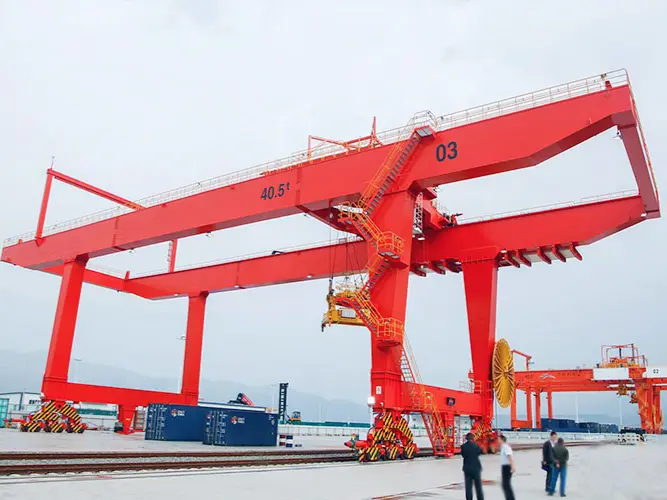
La manipulación de carga portuaria se refiere a los procesos y equipos utilizados para cargar, descargar, transferir, almacenar y gestionar la carga en las terminales marítimas.
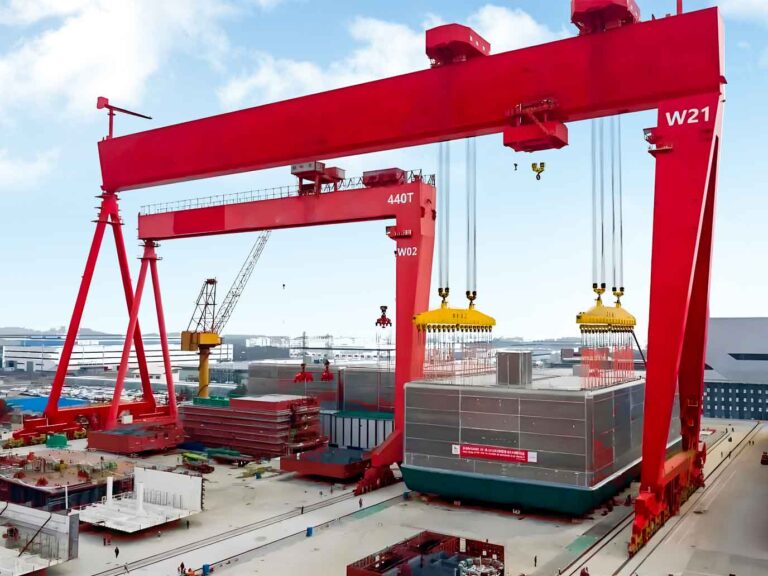
Una grúa pórtico para construcción naval es un sistema de elevación de alta resistencia diseñado para que los astilleros transporten y ensamblen grandes bloques de barcos.
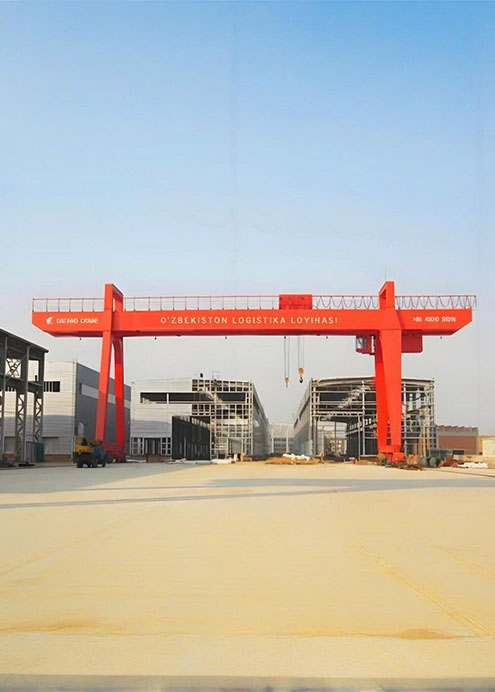
En la obra de un proyecto de construcción a gran escala