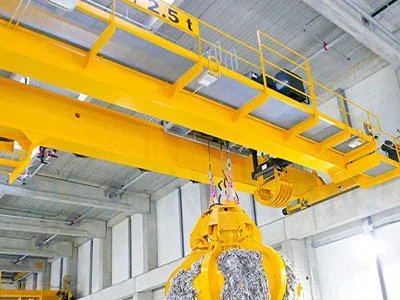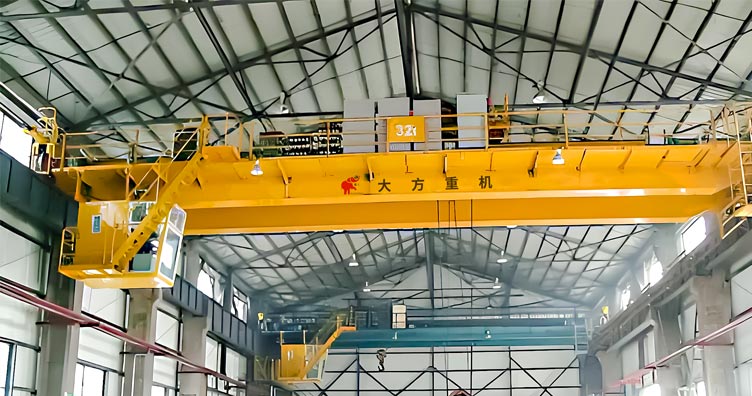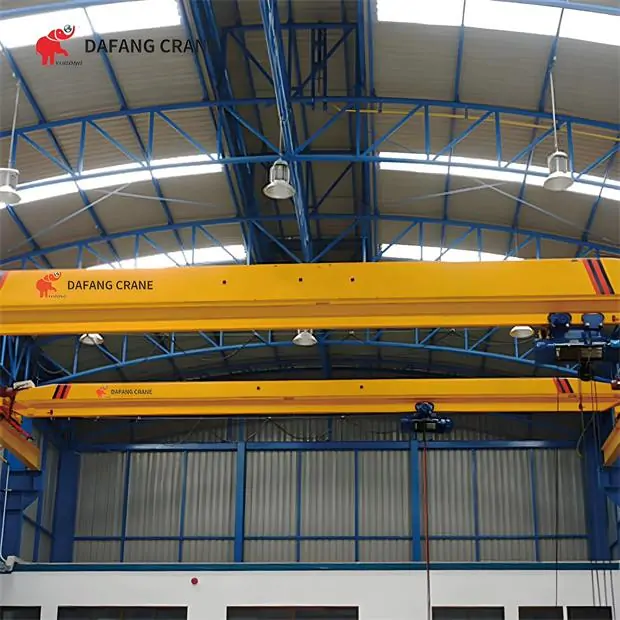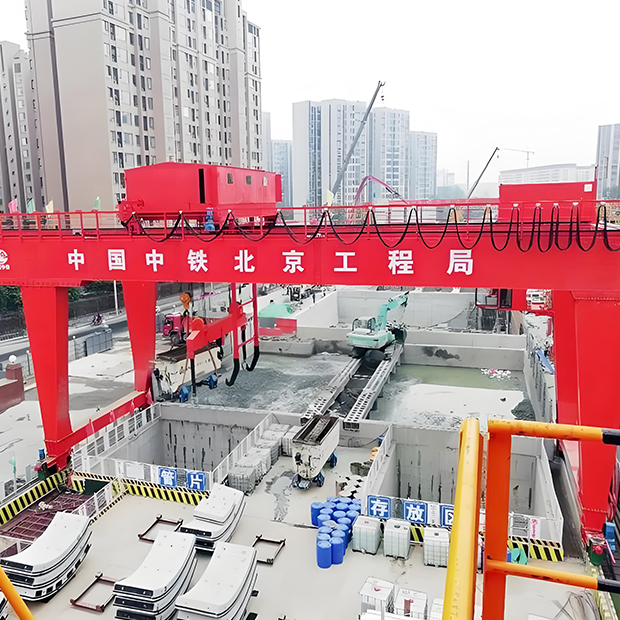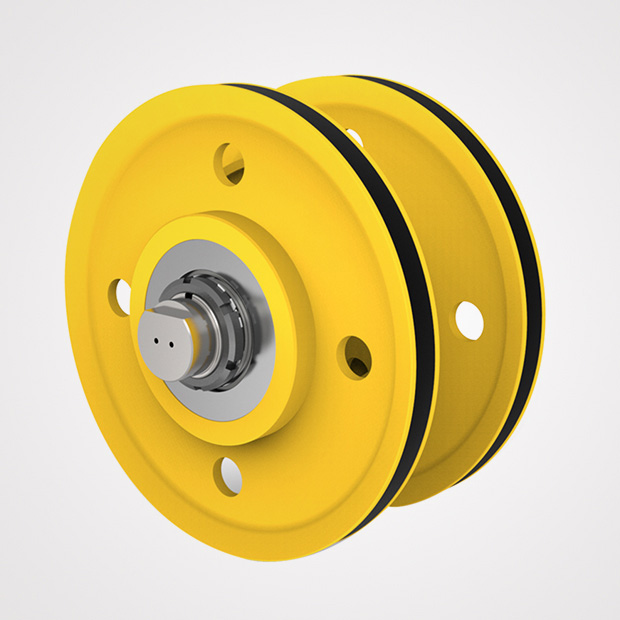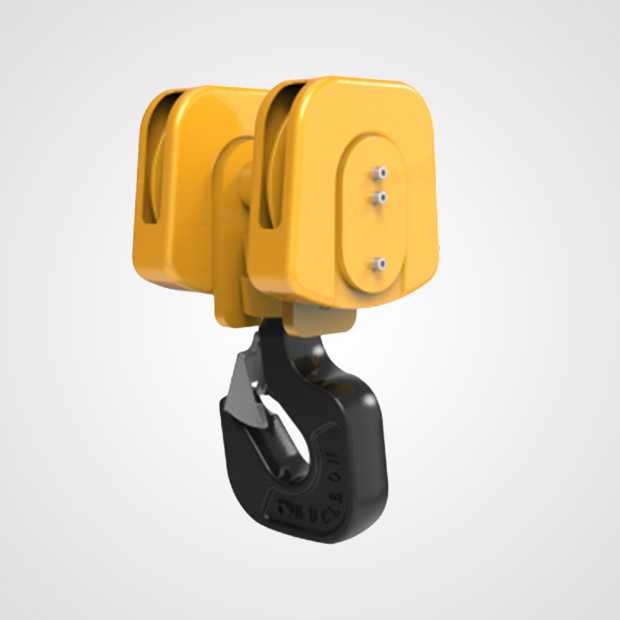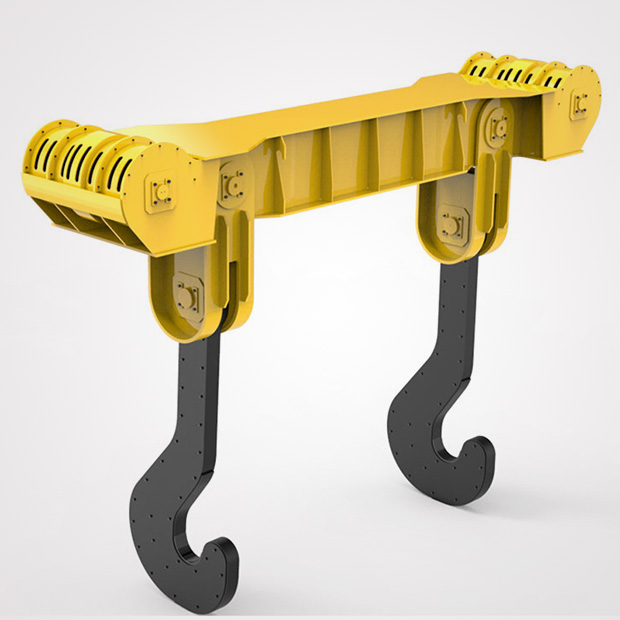

The right warehouse overhead crane is sized to your heaviest lift, your rail-to-rail span and the headroom your building actually has, not to the biggest model in a catalogue. For most warehouses handling pallets, coils, bundled profiles or machinery parts, that means a single girder EOT crane for light-to-medium loads, and a double girder bridge crane once loads, spans or duty cycles climb.
Where buyers get stuck is rarely the crane itself. The real questions are whether the roof structure can carry runway beams, whether racking height leaves room for the hook, and whether a lighter underhung or free-standing system would serve better than a full bridge crane.
This guide walks through seven selection factors in the order an engineer would check them: capacity, span, lifting height and headroom, girder type, building support, duty class, and controls and site conditions. It then covers the certifications to ask for and the specifications to send when you request a quote.
Quick selection table: which crane fits which warehouse
| Your warehouse situation | Typical choice | Dafang option and range |
|---|---|---|
| Light-to-medium loads, runway beams already in place | Top-running single girder | LD Electric Single Girder: 1–32 t, span 3–35 m, A3–A5 |
| Tight headroom, compact hook approach needed | European-style compact design | HD European single girder: 2–20 t, span 10.5–25.5 m; QDXX double girder: 3–100 t, A5–A8 |
| Roof can carry load, no runway beams or columns | Underhung (suspension) | LX: 0.5–10 t, span 3–16 m; NLX: 5–32 t, span 10.5–31.5 m |
| Heavier loads, wide spans, higher duty | عوارض مزدوجة | LH/NLH: 5–32 t, A3–A4; QD: 5–450 t, A5–A6 |
| Flammable or hazardous goods stored | مقاوم للانفجار | LB single girder: 1–20 t; QB double girder: 5–100 t |
Not sure which row is yours? Get an inquiry started and a Dafang engineer will review your layout.
احصل على عرض أسعار مجاني

Sizing a Warehouse Overhead Crane: Capacity, Span and Lifting Height
Factor 1: Capacity must cover the heaviest lift plus every attachment
Choose a rated capacity at or above your heaviest single lift, counting the weight of everything that hangs below the hook. Spreader beams, pallet frames, coil tongs and slings all count against the rating, so a 4-ton load on a 1-ton frame calls for a crane rated for at least 5 tons.
Keep a sensible margin, but avoid oversizing. A heavier crane than necessary raises runway, structural and electrical cost without speeding up daily work. If one oversized load appears only a few times a year, a rented lift may cost less than upsizing the crane permanently. Dafang's LD single girder range covers roughly 1–32 tons and the QD double girder range runs from 5 to 450 tons, so capacity alone rarely rules a model in or out. The other six factors do.
Factor 2: Span is measured between runway rail centres, not wall to wall
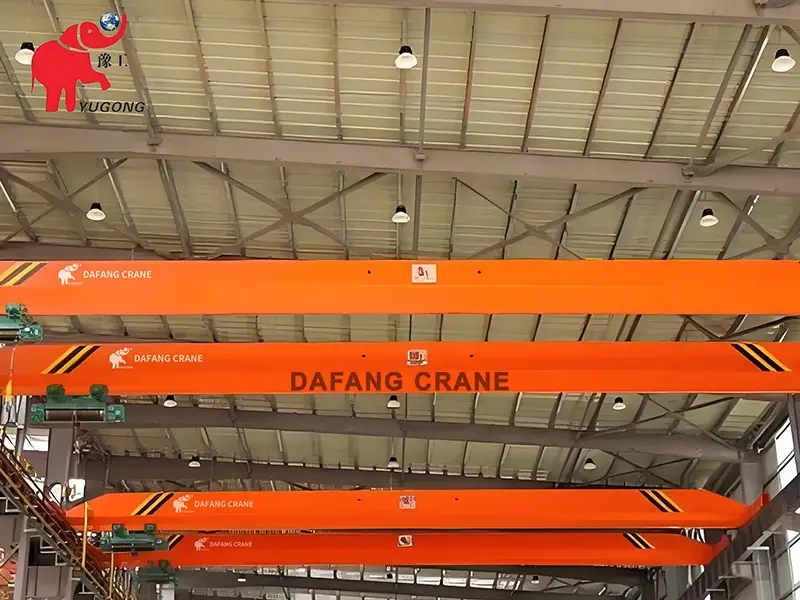
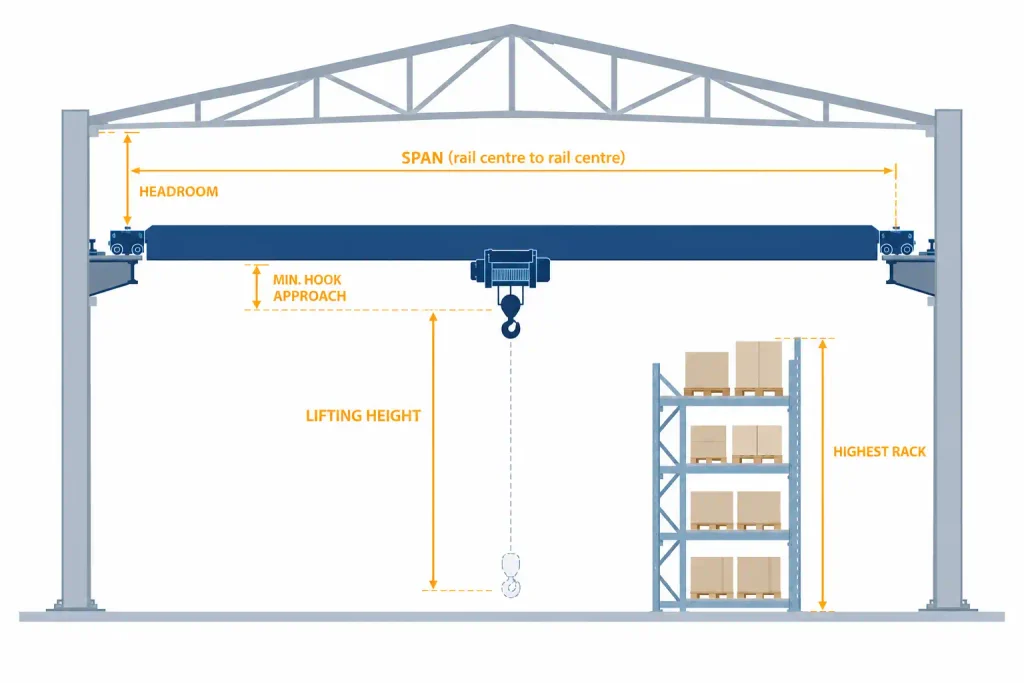
Span is the distance between the centrelines of the two runway rails, so measure to the rails, not to the walls. The rails sit on beams or columns inside the building envelope, which means the usable span is always shorter than the clear width of the warehouse.
Also check how close the hook can reach the side walls, because the end carriages (the wheel assemblies at each end of the bridge) leave a dead zone at the edges. Dafang lists LD spans of 3–35 m and QDXX spans of 4.5–31.5 m. For very wide bays, compare one wide-span crane with two cranes sharing a runway, since the right answer depends on how often both ends of the bay need lifting at once.
Factor 3: Lifting height depends on headroom, not just racking height
Lifting height is limited by the clearance under your roof structure and by your tallest rack, so check both before choosing a crane type. Headroom is the space between the top of the runway rail and the lowest roof member, and the hoist, trolley and hook block all have to fit inside it.
Add up the top rack height, the load height, the rigging and the hoist's minimum hook approach. That total must still clear the runway. A double girder crane, where the trolley rides on top of the girders, usually gives more hook height than a single girder crane with the hoist slung below. For buildings with little roof clearance, compact European-style designs such as HD or QDXX exist for this reason. Put the clear height under the roof truss and the highest rack height into your enquiry.
Choosing the Crane Structure: Girder Type and Building Support
Factor 4: Single girder suits most light-to-medium work; double girder earns its cost on heavier duty
A single girder crane is usually the economical choice for light-to-medium warehouse loads, while a double girder crane pays off once loads, spans or duty cycles increase. Single girder cranes are lighter, put less load on the runway and are simpler to install. Dafang's LD single girder crane works at A3–A5 and its HD European type at A5.
Double girder cranes carry more, span wider and can take a cab, walkway or maintenance platform. Dafang lists QD at A5–A6 and QDXX at A5–A8, and its LH/NLH hoist-type double girder crane at 5–32 tons is described for loading, unloading and stacking in large warehouses. The trade-off is weight: two girders put more load on your runway beams and columns. For model-by-model detail, see our guide to double girder overhead crane types.
Factor 5: The building decides the support system
Your building structure decides whether the crane runs on top of runway beams, hangs from the roof, or stands on its own columns. Each option has a different capacity ceiling and a different effect on your floor.
- Top-running on runway beams: the most common arrangement and the one that supports the widest capacity range, provided beams and columns are already there or can be added.
- Underhung from the roof: saves floor space and suits smaller loads. On Dafang's product page the LX suspension crane covers 0.5–10 tons and NLX covers 5–32 tons, but the roof members must be verified to carry the crane.
- Free-standing columns: an option when neither works, but columns and footings take floor space and can interfere with forklift aisles.
In every case, a structural engineer should verify beams, columns and foundations before you order. Ask your supplier for wheel-load and clearance drawings to support that check.
When another crane type fits better
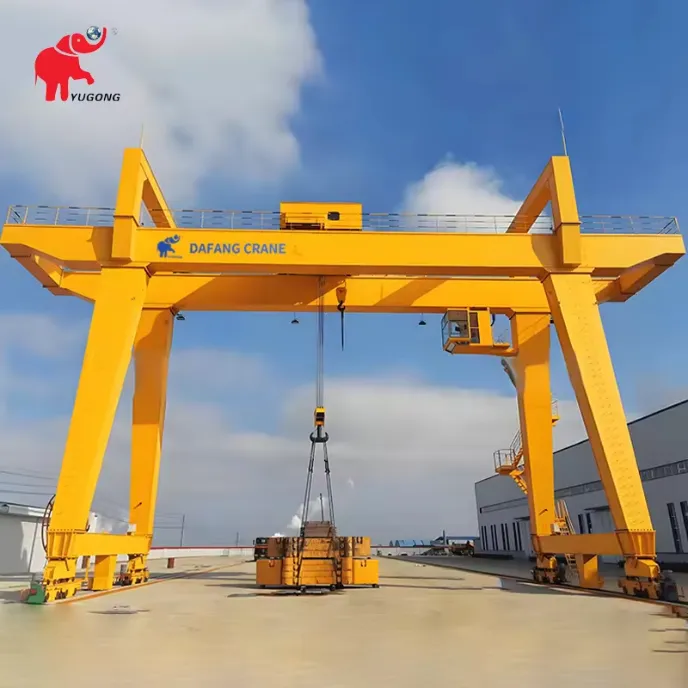
An overhead crane is not always the right answer. Gantry cranes, jib cranes or forklifts can fit better when the building or the task is limited. If the roof cannot carry runway loads and columns are not practical, a gantry crane stands on its own legs. Our guide to semi gantry cranes shows how that decision works.
For lifting at a single station, such as a packing bench or loading bay, a slewing jib crane covers a defined circle without a full runway. If your warehouse only moves palletised goods between racks, forklifts or stackers may be simpler. A warehouse bridge crane earns its place when the same heavy or bulky loads move repeatedly across a defined floor area and you want the floor clear.
Get a tailored quote from our engineers. Send your rail-centre span, roof clearance, heaviest load and shift pattern through the Get inquiry form, or message Dafang on WhatsApp at +8613603732637, and we will suggest a matching configuration.
احصل على عرض أسعار مجانيDuty Class, Controls and Site Conditions for a Warehouse Overhead Crane
Factor 6: Duty class should reflect how often the crane lifts, not just its maximum load
Duty class, also called working class, describes how intensively the crane works, so it must reflect lifts per hour and how close those lifts run to the rated load. Classification systems such as ISO 4301 and FEM express this as groups like A3, A4 or A5, and many warehouse applications fall in the light-to-medium range.
Dafang's LD single girder crane is listed at A3–A5, QD at A5–A6, and its CD/MD wire rope hoist at A3 with a 25% duty cycle. Selecting too low a class accelerates wear on brakes, wheels and wire rope. Selecting too high pays for strength you do not use. Tell your supplier how many lifts per hour you expect, how many shifts per day, and what share of lifts are near the rated load.
Factor 7: Controls, hoist type and site conditions complete the specification
Controls, hoist type, safety devices and site conditions finish the specification, and each one changes the quote. Work through four points:
- Control method: Dafang offers pendant, radio remote and cab control. Pendant control is economical, while a radio remote lets the operator stand where the load is clearly visible and away from forklift traffic.
- Hoist type: wire rope hoists suit heavier and more frequent lifting. The CD/MD wire rope hoist covers 1–16 tons with a 3–30 m hoisting height. Chain hoists are typically used for lighter loads; see electric chain hoist vs wire rope hoist for the full comparison.
- Safety devices: confirm overload protection and travel limit switches are included, and ask what else is standard.
- Site conditions: state your temperature range, dust or humidity, and power supply. For reference, Dafang lists the LD type at −20 to 60 °C and the HD European type at −20 to 40 °C, so confirm the figure for your model. If you store flammable goods, ask about the explosion-proof LB and QB cranes.
Certifications and Specs to Confirm Before You Buy a Warehouse Overhead Crane
Certifications: ask for documents, not promises
Ask any supplier of warehouse overhead cranes for the compliance documents your target market requires, and verify them before you sign. Which standards apply depends on where the crane will be installed:
- CE (Machinery Directive 2006/42/EC) for the EU and EEA.
- ISO 4301 / FEM for crane classification and design practice.
- ISO 9001 for the manufacturer's quality management system.
- EAC for the Eurasian Economic Union.
- OSHA workplace rules for facilities in the United States.
These documents matter because they affect customs clearance, insurance and factory safety inspections. To verify, request the EC Declaration of Conformity, the overload test report and the ISO 9001 certificate. Dafang's product pages list CE, ISO and EAC certification, but the documents that apply to your model and market should be confirmed with an engineer. Our comparison of CE, EN 15011, FEM/ISO, CMAA and EAC explains the differences.
What to send for a quote
Supplier quotes depend on capacity, span, lifting height, duty class and control system, so have those ready before you contact anyone. A complete enquiry should include:
- Heaviest load and any below-the-hook attachment weight
- Rail-centre span and runway length
- Lifting height and clear roof headroom
- Lifts per hour and shifts per day
- Building structure type and drawings, if available
- Control and hoist preferences
- Temperature, dust or hazardous-area conditions
- Power supply voltage and frequency
- Destination country and required certificates
Price, lead time and installation scope all follow from these answers, which is why serious suppliers ask for them instead of quoting from tonnage alone. If you are comparing overhead cranes for sale from several suppliers, give each the same specification sheet so the quotes are comparable.
Ready to specify your warehouse overhead crane? Dafang account manager Stella can review your layout and loads. Message her on WhatsApp +8613603732637 or send your specs through the Get inquiry form.

أسئلة شائعة
Q1:What size overhead crane does a warehouse need?
Choose a capacity above your heaviest lift including attachments, and a span measured between runway rail centres. Then confirm lifting height against roof headroom and your tallest rack. Oversizing raises structural and electrical cost without improving throughput, so match the crane to real loads. Send your dimensions and loads to a supplier for a configuration check.
Q2:Should a warehouse use a single girder or double girder overhead crane?
Single girder cranes suit most light-to-medium warehouse work; double girder cranes suit heavier loads, wider spans or higher duty. Single girder designs are lighter and simpler to install. Double girder designs add capacity and allow cabs or walkways, but they put more load on the runway and building.
Q3:Can an overhead crane be installed in an existing warehouse?
Yes, if the structure can carry the crane or if columns can be added. A structural engineer should verify runway beams, columns and foundations first. Underhung cranes can hang from a capable roof, and free-standing columns suit buildings that cannot carry runway loads. Ask your supplier for wheel-load and clearance drawings.
Q4:How much does a warehouse overhead crane cost?
Cost depends on capacity, span, lifting height, duty class and control system, so quotes need your specifications. Hoist type, site conditions and certification requirements also change the figure. Send your span, loads and shift pattern to Dafang through the inquiry form or WhatsApp, and an engineer will prepare a tailored quote.
Q5:Which certifications should a warehouse crane supplier provide?
Ask for the documents your market requires, typically CE for Europe, EAC for Eurasian markets and ISO 9001 for quality management. Request the EC Declaration of Conformity, an overload test report and the ISO 9001 certificate. Confirm which documents apply to your specific model before ordering.