






A fixed gantry crane runs on rails embedded in the ground and typically costs anywhere from US$10,000 for a light industrial unit to US$500,000+ for a heavy rail-mounted system, depending on capacity and span. A mobile (or portable) gantry crane rolls on wheels or casters, needs no foundation, and typically runs US$800 to US$25,000+ for units in the 0.5–10 ton range.
Most buyers land on this comparison because they already have a load in mind — a transformer, a mold, a container, an engine block — and they're not sure whether they need permanent rail infrastructure or something they can wheel between bays. The wrong call in either direction gets expensive: undersizing a mobile unit for a load it can't roll safely, or pouring rail foundations for a lift that only happens twice a year.
This guide walks through how the two types differ in structure, what drives their cost and installation timeline, which one fits which facility, and what certifications to check before you commit to either.
Quick Comparison
| Fixed Gantry Crane | Mobile / Portable Gantry Crane | |
|---|---|---|
| Travel path | Fixed rails, linear axis only | Wheels/casters, moves anywhere on a prepared floor |
| Typical capacity | 5–500+ tons | 0.5–20 tons (light steel or aluminum units) |
| التركيب | Foundation + rail-laying, weeks to months | Days; often no civil works at all |
| Best for | High-frequency, same-location heavy lifts | Multi-location, intermittent, or leased-site lifts |
| Typical price range | US$10,000–US$500,000+ | US$800–US$25,000+ |
Fixed Gantry Crane vs Mobile Gantry Crane: Structure and How They Move
How a Fixed (Rail-Mounted) Gantry Crane Works
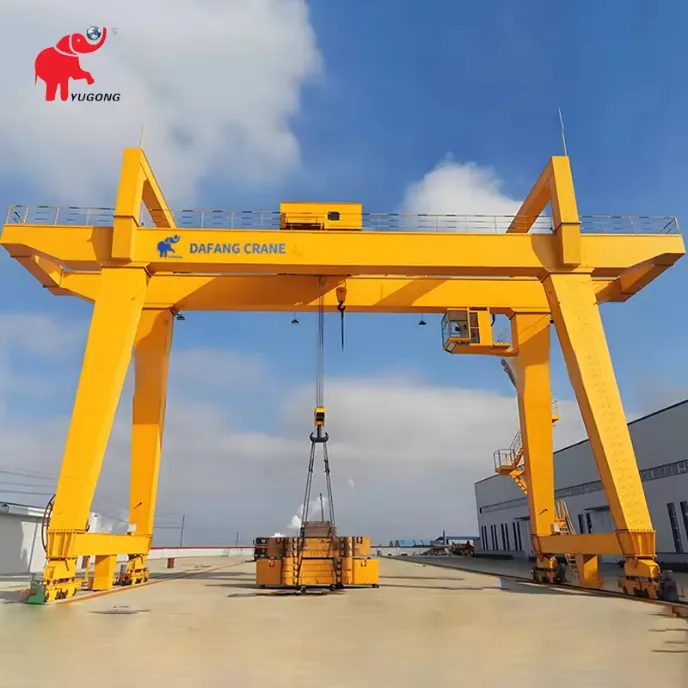
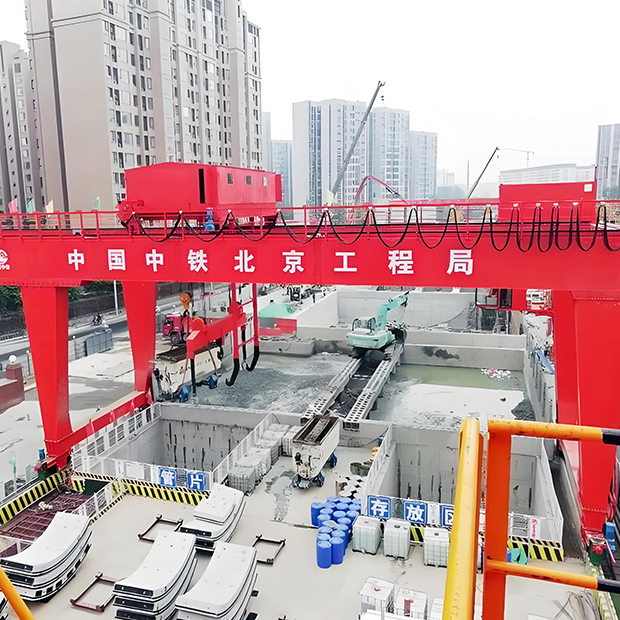
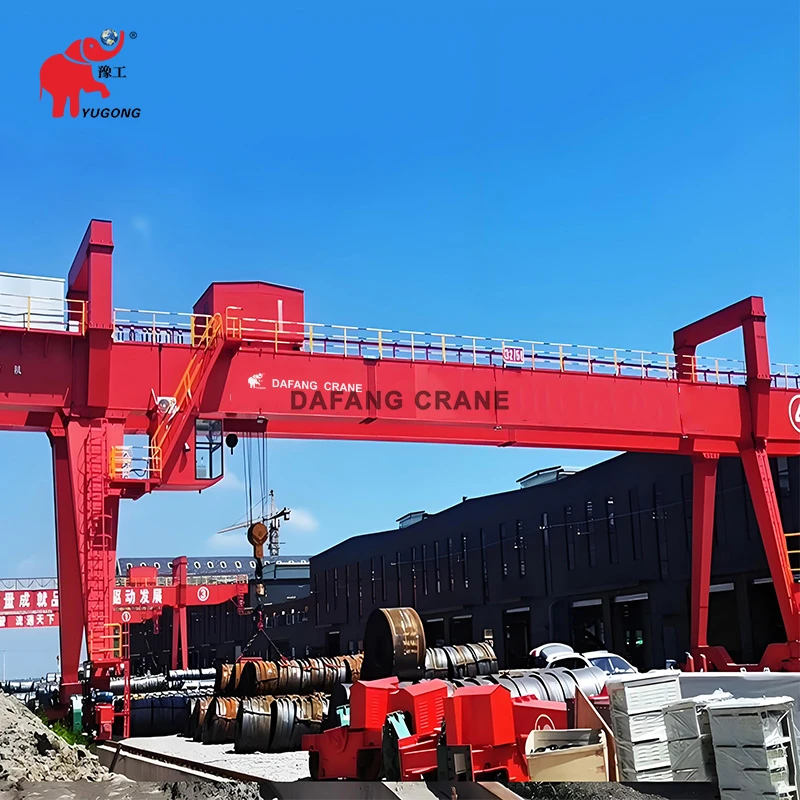
A fixed gantry crane travels on a dedicated pair of steel rails that carry the full weight of the crane and its load down to a concrete or piled foundation. The end carriages ride these rails, the bridge girder (single or double) spans between them, and a trolley or hoist runs along the girder to position the lift point across the covered area. Because the rail defines the travel path, the crane can only work the strip of ground the rails occupy — but within that strip, it delivers very stable, repeatable lifts over long distances, which is why shipyards, container yards, and precast concrete plants build around them rather than around anything wheeled.
How a Mobile (Portable) Gantry Crane Works
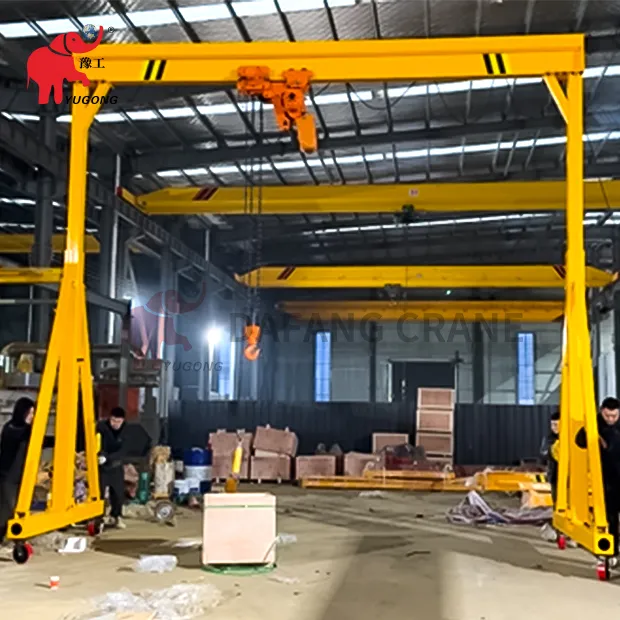
A mobile gantry crane carries the same basic components — legs, a bridge beam, a hoist or trolley — but the legs sit on caster wheels or rubber tires instead of rails, so the whole unit can be pushed, towed, or motor-driven to wherever the next lift happens. No rail bed means no linear restriction: the crane goes through a doorway, up a ramp, or across an aisle to a different workstation. "Portable" and "mobile" are used interchangeably in the industry for this wheeled type, distinguishing it from the much larger rubber-tyred gantry (RTG) cranes used in container terminals, which are a different weight class entirely and covered in our RTG vs RMG comparison.
Capacity, Span, and Duty Class Compared
Fixed gantry cranes generally scale further than mobile ones because a rail bed can absorb far higher wheel loads than a floor-mounted caster can. Industry figures commonly put fixed, rail-mounted gantry cranes in the 5- to 500-ton range with spans up to 40+ meters for the largest shipyard and hydropower applications, while mobile/portable units are typically specified between 0.5 and 20 tons, with most workshop and warehouse orders falling under 10 tons. Duty class — how often and how close to full capacity a crane lifts — also tends to run higher on fixed units, since they're usually built for one job repeated many times a day rather than occasional, varied lifts.
Cost, Installation, and Maintenance Compared
Upfront Price Range and What Drives It
Price follows capacity, span, and how much civil engineering the site needs — not the crane alone. A mobile/portable gantry crane in the 0.5–10 ton class typically falls between US$800 and US$25,000, with material (steel vs. aluminum), hoist type (manual vs. electric), and travel system (fixed-height vs. adjustable) as the main swing factors. A fixed, rail-mounted industrial gantry crane typically runs US$10,000 to US$500,000+, with the low end covering light 5–10 ton single-girder units and the high end covering heavy double-girder or container-handling systems with 100+ ton capacity — figures that exclude freight, duties, and site works. For either type, treat published ranges as a starting point for budgeting, not a quote; span, control system, and duty class move the final number, so a project-specific quote from Dafang's engineers is the only way to get an exact figure.
Installation Timeline: Foundation Work vs Plug-and-Move
A fixed gantry crane's installation clock starts with civil works, not the crane itself — rail foundations, ground compaction or piling, and rail alignment typically take several weeks before the crane arrives, and longer for outdoor yards with poor soil conditions. A mobile gantry crane skips nearly all of that: once the floor is level and load-bearing, setup is typically a matter of days, and for smaller caster-mounted units it can be a same-day job with hand tools. This gap matters most for leased facilities or sites expecting a layout change — sinking foundation costs into a building you don't own long-term is a common regret we see buyers raise late in the process.
Ongoing Maintenance and Total Cost of Ownership
Maintenance cost tracks duty cycle more than crane type, but the two do differ in what typically needs attention. Fixed gantry cranes see wear concentrated in rail alignment, wheel flanges, and end-carriage bearings from constant travel on the same path, so periodic rail inspection and re-lubrication are standard line items. Mobile units put more wear into casters, steering linkages, and — for motorized versions — the drive system, since they're repositioned more often and on less controlled surfaces. Neither type is inherently cheaper to maintain long-term; a fixed crane running near-continuous shifts and a mobile crane doing occasional light lifts both tend to have low relative upkeep, while the reverse pairing (an underspecified mobile crane pushed hard, or a fixed crane left to corrode outdoors without a maintenance contract) drives cost up either way.
احصل على عرض أسعار مجانيWhich One Fits Your Site and Application
When a Fixed Gantry Crane Is the Better Fit
A fixed gantry crane is the better fit when the same lift happens in the same place, often, for years. That covers container and bulk-cargo yards where loads move along one strip day after day, shipbuilding bays assembling hull sections in sequence, and precast concrete or steel fabrication lines where the crane is effectively part of the production line rather than a support tool.
When a Mobile Gantry Crane Is the Better Fit
A mobile gantry crane is the better fit when the lift location changes more than the lift itself does. That covers maintenance workshops moving between machines, warehouses loading and unloading at different dock doors, and leased or shared facilities where pouring rail foundations isn't an option — plus any site still finalizing its layout, where a wheeled crane can move with the plan instead of locking it in early.
Common Site Constraints That Decide It
Beyond load and frequency, the physical building often makes the call before the buyer does. Older workshops being retrofitted with a crane frequently run into headroom or span limits that a rigid rail-mounted structure can't work around without costly steel modification, which is where a lower-profile mobile unit — or an adjustable-height one — becomes the practical answer rather than the flexible-but-optional one. Outdoor yards face the opposite constraint: ground bearing capacity. A mobile crane still needs a compacted, load-bearing surface (reinforced concrete or engineered asphalt), so a yard with soft or uneven ground may end up needing site prep either way, narrowing the cost gap between the two options.
Certifications, Standards, and How to Verify Compliance
Which Standards Apply to Your Target Market
Export buyers typically check for CE marking under Machinery Directive 2006/42/EC for EU-bound shipments, ISO 4301 for crane duty classification, and ISO 9001 as a baseline manufacturing quality standard; buyers shipping to the Eurasian Economic Union region often also require EAC certification, and North American buyers frequently reference OSHA-aligned design practice. Which ones actually apply depends on the destination port and end-use industry, so this isn't a one-size-fits-all checklist.
Why Certification Matters for Customs, Insurance, and Factory Acceptance
Certification isn't paperwork for its own sake — it's what customs uses to clear the shipment, what insurers reference when underwriting the installed equipment, and what your own factory acceptance test gets measured against. A crane arriving without the right documentation can sit at port past its scheduled delivery window, and an uninsured or non-compliant installation can complicate a workplace safety claim later.
How to Verify a Supplier's Compliance Before You Buy
Ask the supplier for the EC Declaration of Conformity, an overload/proof-load test report, and the ISO 9001 certificate before placing an order, not after. Cross-check that the certificate scope actually covers the product category you're buying — a general ISO 9001 certificate covering a factory doesn't confirm the specific crane model has been proof-tested. Dafang Crane can supply these documents as part of the standard quotation package; ask your account manager to include them alongside the technical proposal.
يجب تأكيد اختيار المعدات النهائية مع مهندس من شركة دافانغ، ويجب أن يتوافق مع لوائح معدات الرفع المحلية.

أسئلة شائعة
Q1:What is the main difference between a fixed and a mobile gantry crane?
A fixed gantry crane runs on rails and stays within that fixed path; a mobile gantry crane rolls on wheels or casters and can be repositioned anywhere on a prepared floor. The choice mostly comes down to whether the lift happens in the same spot repeatedly or in different locations over time — fixed units suit the former, mobile units the latter.
Q2:Can a mobile gantry crane lift as much as a fixed gantry crane?
Not at the top end — mobile/portable units are typically specified up to about 20 tons, while fixed, rail-mounted gantry cranes commonly scale from 5 tons into the hundreds of tons. For loads under roughly 10 tons that move between locations, a mobile crane is usually sized adequately; heavier or highly repetitive lifts generally call for a fixed installation.
Q3:How much does a mobile gantry crane cost compared to a fixed one?
Mobile/portable gantry cranes typically run US$800 to US$25,000+ depending on capacity and hoist type, while fixed rail-mounted units typically span US$10,000 to US$500,000+ once foundation and rail work are factored in. The gap widens fast at higher capacities, since fixed units also carry civil engineering costs that mobile units avoid.
Q4:Does a fixed gantry crane always need a concrete foundation?
In almost all cases, yes — the rails need a compacted, reinforced base or piling to carry the crane's wheel loads safely, and this is typically the longest lead-time item in a fixed-crane project. Ground conditions, soil type, and expected duty class all affect how substantial that foundation needs to be.
Q5:What certifications should I check before buying a gantry crane for export?
At minimum, ask for CE marking under Machinery Directive 2006/42/EC (for EU markets), an ISO 4301 duty classification reference, and the manufacturer's ISO 9001 certificate, plus EAC certification if shipping to the Eurasian Economic Union. Request the EC Declaration of Conformity and a proof-load test report alongside the quotation, not after the order is placed.