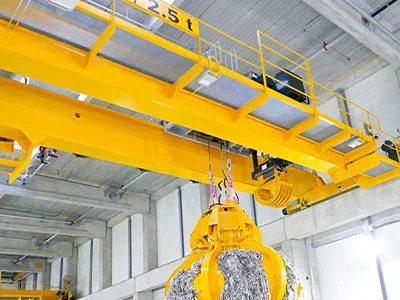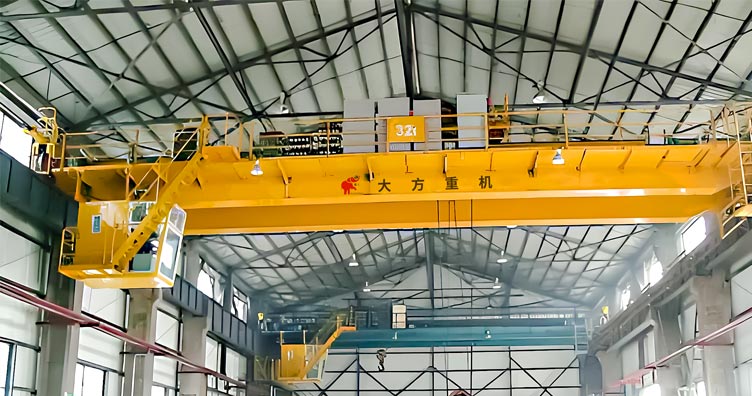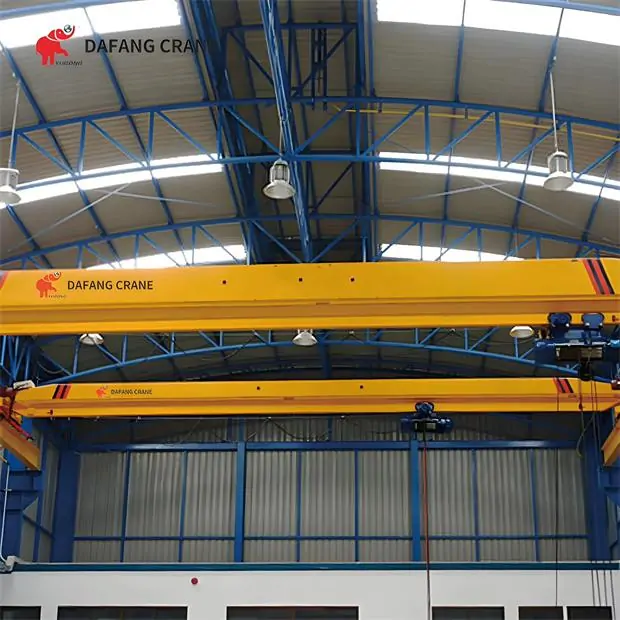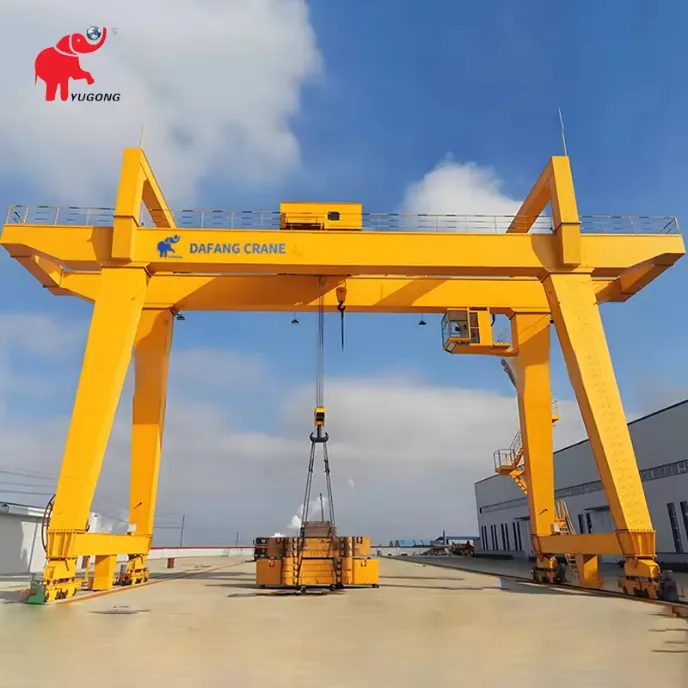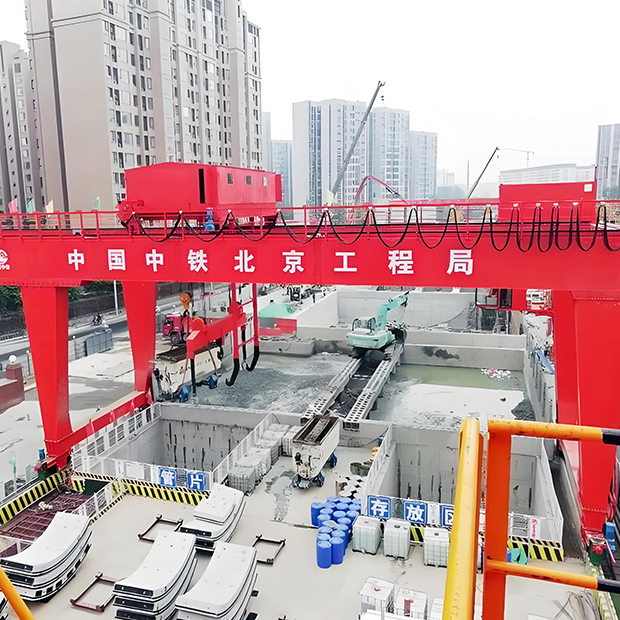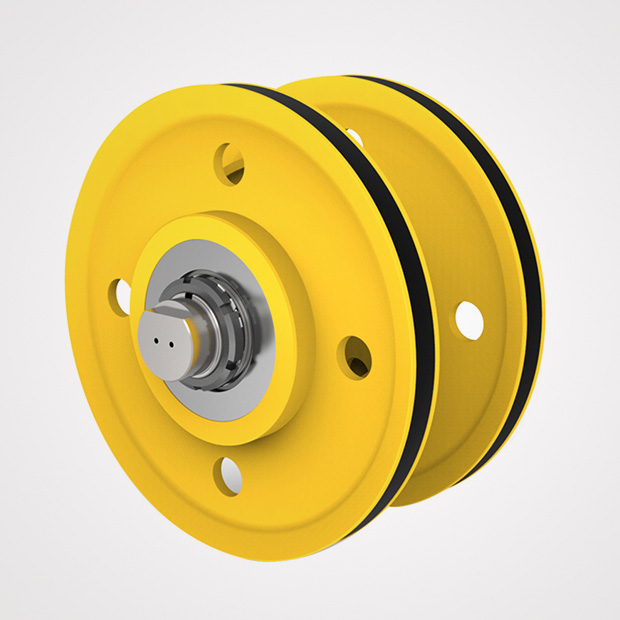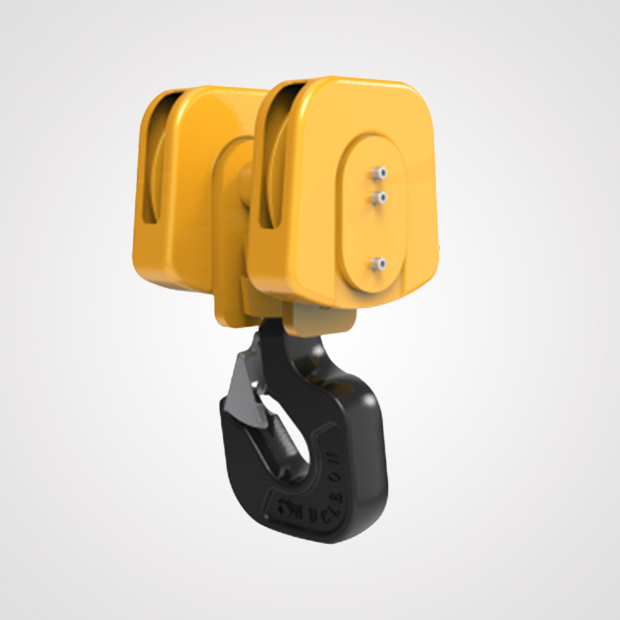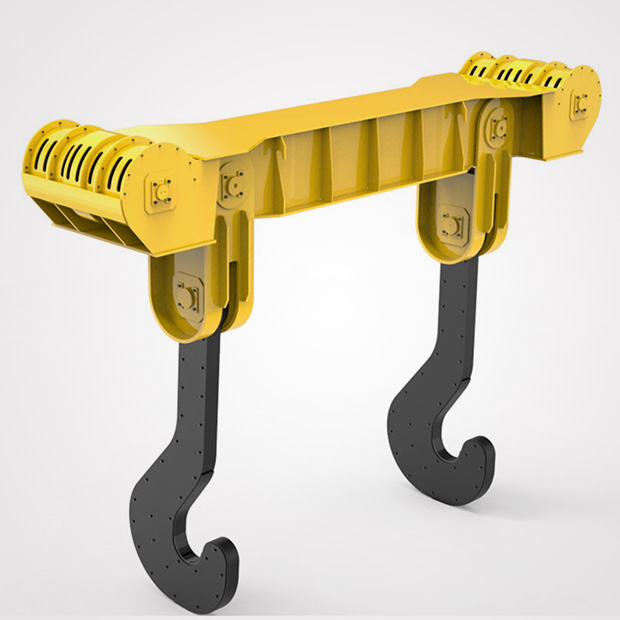







A 5-ton single girder overhead crane (HD or LD type) typically falls in the $2,650–$17,500 range; a 10-ton single girder runs $3,950–$25,500 for comparable configurations. But the right choice has little to do with price alone — it comes down to your actual maximum load, how often you lift it, and what your building structure can carry.
Most buyers in the 5–10 ton range are not choosing between "enough" and "more than enough." They are choosing between a crane optimised for their current operation and one built for loads they may never lift, at a cost that compounds across infrastructure, energy, and maintenance budgets. Oversizing is a real cost. So is under-specifying.
This guide walks through the structural differences, real specification ranges, duty class implications, price factors, and industry-specific fit for each capacity — in the order that most procurement decisions actually unfold.
جدول المحتويات
Quick Comparison: 5 Ton vs 10 Ton Overhead Crane
| المعلمة | 5-Ton Overhead Crane | 10-Ton Overhead Crane |
|---|---|---|
| Typical girder type | Single girder (A3–A5) | Single or double girder (A3–A5) |
| Standard span range | 7.5 m – 31.5 m | 7.5 m – 31.5 m |
| ارتفاع الرفع | 6 m – 28 m (up to 30 m with extended wire rope) | 6 m – 28 m (up to 30 m with extended wire rope) |
| Lifting speed (typical) | 8 m/min (single-speed); 0.8/8 m/min (dual-speed) | 8 m/min (single-speed); 0.8/8 m/min (dual-speed) |
| Hoist type | Wire rope or chain hoist | Wire rope hoist (chain at lower end) |
| Runway beam load | Lighter, existing structures often suitable | Heavier, may require structural review |
| Approx. price (Dafang, single girder) | $2,650 – $17,500 (HD/LD type) | $3,950 – $25,500 (single girder) |
| Common industries | Workshops, warehouses, light fab | Heavy manufacturing, steel, precast |
| Recommended safety buffer | Max regular load ≤ 4.5 t | Max regular load ≤ 9 t |
Prices are Dafang ex-works reference figures. Final cost depends on span, lifting height, duty class, and control system.
احصل على عرض أسعار مجانيStructural and Engineering Differences


Girder Configuration at Each Capacity
A 5-ton overhead crane is almost always supplied as a single girder (one bridge beam), which is adequate for spans up to roughly 22–25 m under standard deflection limits (L/700 per FEM 1.001). Beyond that, or where headroom between the hook and the trolley bottom matters, a double girder becomes necessary. The 10-ton range is where this crossover becomes common: spans above 22 m, higher duty requirements, or operations requiring the hook to approach within 300–400 mm of the end wall almost always push the configuration toward double girder construction.
The practical consequence is weight. A 5-ton single girder crane structure typically weighs 1.5–3 tonnes; a 10-ton double girder can run 4–7 tonnes or more depending on span. That difference flows directly into runway beam sizing, building column loads, and foundation requirements.
Hoist and Trolley Differences
At 5 tons, both wire rope hoists and electric chain hoists are commonly used — wire rope is preferred for regular-duty applications, chain hoist for occasional lifts where lower headroom matters. At 10 tons, wire rope hoists are the standard choice: the drum and reeving arrangement distributes the load more evenly, and the service life under repeated cycling is substantially better than chain at this weight range. European-standard wire rope hoists (FEM/DIN configuration) add cost but typically reduce headroom by 25–30% compared to conventional CD/MD-type hoists, which is a meaningful advantage in constrained facilities.
How Building Structure Constrains Your Choice
This is the question most buyers forget to ask before enquiring on capacity. A 10-ton crane system — crane plus hoist plus maximum load — can impose runway beam reactions two to three times higher than a 5-ton system on the same span. If your facility was designed for 5-ton operation, switching to 10 tons without a structural review of the runway beams, columns, and floor slab is a compliance and safety risk, not just a budgeting question. Before finalising capacity, confirm your building's permissible runway beam load with the original structural drawings or a qualified engineer. Dafang's project teams routinely assist buyers with this review as part of the pre-order process.
Duty Class, Lifting Frequency, and Real Capacity Needs
Matching Duty Class to Your Operation
Lifting capacity and duty class (work classification) are separate decisions that are often confused. ISO 4301 / FEM 1.001 defines duty class by how often the crane lifts and at what fraction of its rated load — A3 (light/infrequent) through A7 or A8 (heavy/continuous). A 5-ton crane at A5 duty — lifting 4–4.5 tonnes multiple times per hour across two full shifts — places more structural demand on its components than a 10-ton crane at A3 that lifts its maximum load twice a day. The capacity number is a ceiling; the duty class determines how hard the machine works to stay under that ceiling.
The 10–20% Safety Buffer Rule
Industry practice under ISO 4301 recommends selecting a crane whose rated capacity is 10–20% above your heaviest regular lift — not your heaviest conceivable lift. If your standard production loads run 3.5–4 tonnes with occasional 4.5-tonne assembly lifts, a 5-ton crane at A5 is the correct specification. If regular loads sit at 8–9 tonnes, a 10-ton crane is the appropriate choice. Selecting a 10-ton crane for a facility where the heaviest regular load is 3 tonnes means running motors, brakes, and wire ropes that are permanently oversized for the actual work — which translates to higher energy consumption, heavier runway wear, and longer inspection intervals at higher cost, with no operational benefit.
When the 10-Ton Is the Right Call
The 10-ton capacity is warranted — not just convenient — in these situations: steel coil or plate handling where individual lifts routinely approach 8–9 tonnes; precast concrete element handling where mould and element combined weight exceeds 5 tonnes; facilities with planned production expansion within 18–24 months that would bring regular loads above 5 tonnes; any application in heavy fabrication, ship part assembly, or large-format die handling where the load envelope includes awkward, dynamically loaded pieces.
Ready to confirm your specification? Dafang's engineers can review your load data and building drawings to recommend the right capacity, duty class, and girder configuration.
احصل على عرض أسعار مجانيPrice, Total Cost of Ownership, and What Drives the Difference
Unit Price and Infrastructure Cost
The crane unit price difference between 5-ton and 10-ton single girder configurations is substantial — roughly 2.5× at equivalent spans — and that gap widens further when moving to double girder. Where total project cost really diverges is infrastructure: runway beams, building columns, and electrical supply rated for 10-ton operation can add more to total project cost than the crane unit itself. For facilities where runway structures are already in place and were designed for 5-ton loads, the upgrade cost to accommodate a 10-ton crane can exceed the incremental cost of the crane unit several times over.
Based on Dafang's current pricing, a standard single girder 5-ton overhead crane (HD or LD type) typically falls in the $2,650–$17,500 range depending on span and configuration; a single girder 10-ton crane runs $3,950–$25,500, with double girder configurations at $5,050–$41,500. These figures are ex-works references — runway beams, electrical supply, and on-site installation are additional. Installation typically adds 10% of equipment cost for single girder cranes (1–2 weeks), and 15–20% for double girder configurations (2–4 weeks).
Maintenance and Operating Cost Over Time
A 10-ton crane running at 70–80% of its rated capacity wears wire rope, braking surfaces, and gearboxes faster than a 5-ton crane running at the same fraction of its rated load — simply because the absolute forces involved are larger. Single girder cranes at either capacity typically require quarterly wire rope inspection and periodic replacement; double girder systems generally extend that interval to every two years under equivalent duty. Over a 15-year service life, these differences compound. Right-sizing is not conservative thinking; it is cost engineering.
Certifications and Compliance
Regardless of capacity, buyers importing overhead cranes should verify compliance with the standards applicable to their market and application:
- CE (2006/42/EC) — required for use in EU/EEA countries; confirms conformity with the Machinery Directive
- ISO 4301 — the international classification standard for crane duty groups, directly relevant to service life claims
- ISO 9001 — quality management system certification at the manufacturer level
- OSHA 1910.179 — the relevant US federal standard for overhead and gantry cranes
- FEM 1.001 — European crane designers' federation structural calculation standard, often specified by EU end users
These certifications matter at customs clearance (CE for EU imports), during factory acceptance testing, and when the crane is subject to local statutory inspection. Request the EC Declaration of Conformity, overload test report, and ISO 9001 certificate at the time of order — not after shipment. Dafang Crane holds CE and ISO 9001 certification and exports to markets across Europe, the Middle East, Southeast Asia, and the Americas; our engineering team can advise on which documentation package applies to your destination.
Contact Dafang
Confirming your capacity is a 15-minute conversation with the right data.
To get an accurate quote, have the following ready: maximum single load (including sling and spreader bar), bay span (centre-to-centre of runway rails), required lifting height, daily operating hours, and your target market / certification requirement.

أسئلة شائعة
Q1: Is a 10-ton overhead crane always better than a 5-ton for future-proofing?
Not necessarily. A 10-ton crane sized for loads you will not regularly lift incurs higher upfront infrastructure cost, higher energy and maintenance budgets, and places greater structural demand on your building. If your load growth within 24 months is unlikely to exceed 5 tonnes regularly, a 5-ton crane at the correct duty class is the more cost-effective choice — with the option to add a second crane later if operations expand.
Q2: What does a 5-ton vs 10-ton overhead crane typically cost?
A standard single girder 5-ton overhead crane from Dafang typically runs $2,650–$17,500 depending on span and model (HD or LD type); a single girder 10-ton crane runs $3,950–$25,500, and double girder configurations add a further premium of roughly 40–50%. These are ex-works crane unit prices — runway, electrical, and installation costs are separate and typically add 10–20% of equipment cost depending on crane type.
Q3: Can I upgrade from a 5-ton to a 10-ton crane later without major structural work?
In most cases, no. A 10-ton crane system imposes runway beam reactions two to three times higher than a 5-ton system. Unless your runway structure was originally designed for 10-ton loads, an upgrade will require a structural review and likely beam and column reinforcement. If expansion is a known possibility, specifying runway infrastructure for 10-ton loads at the outset — even while installing a 5-ton crane initially — is the more economical approach.
Q4: What duty class should I specify for a busy manufacturing workshop?
A workshop running 8–16 hours per day with regular lifts at 60–80% of rated capacity typically warrants A5 duty (ISO 4301 / FEM 1.001). A5 covers moderate-frequency operation suitable for most manufacturing environments. A3 or A4 is appropriate only for occasional lifts — maintenance bays, storage operations, or workshops where the crane cycles infrequently across a standard shift. Dafang's 5-ton and 10-ton single girder cranes are rated A3–A5 to cover this full range.
Q5: What certifications should I require from a 5-ton or 10-ton crane supplier?
At minimum, request the EC Declaration of Conformity (CE, required for EU/EEA), the ISO 9001 quality management certificate, and the overload/static load test report issued at completion. For US-bound projects, confirm OSHA 1910.179 compliance. For projects with stringent structural requirements, ask for the FEM 1.001 structural calculation package. Always request these documents before shipment, not after.