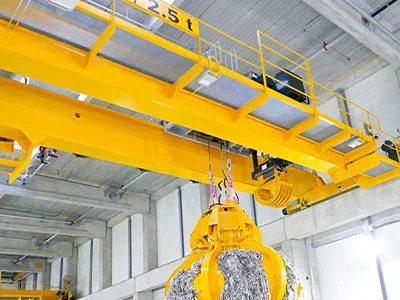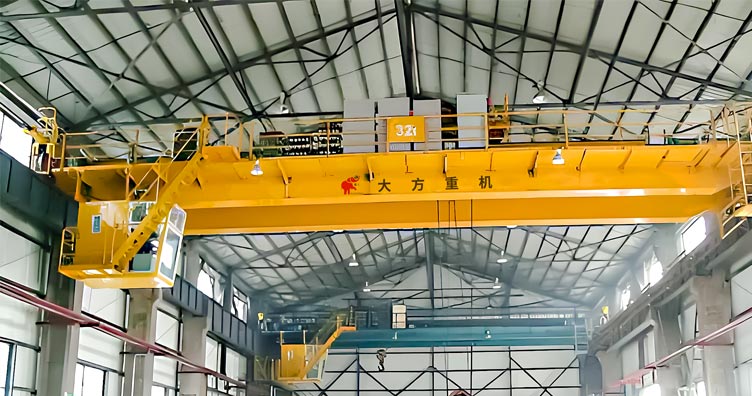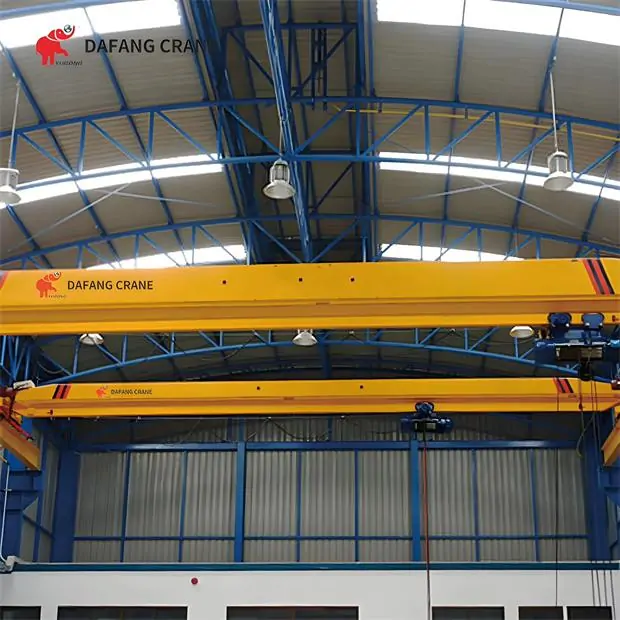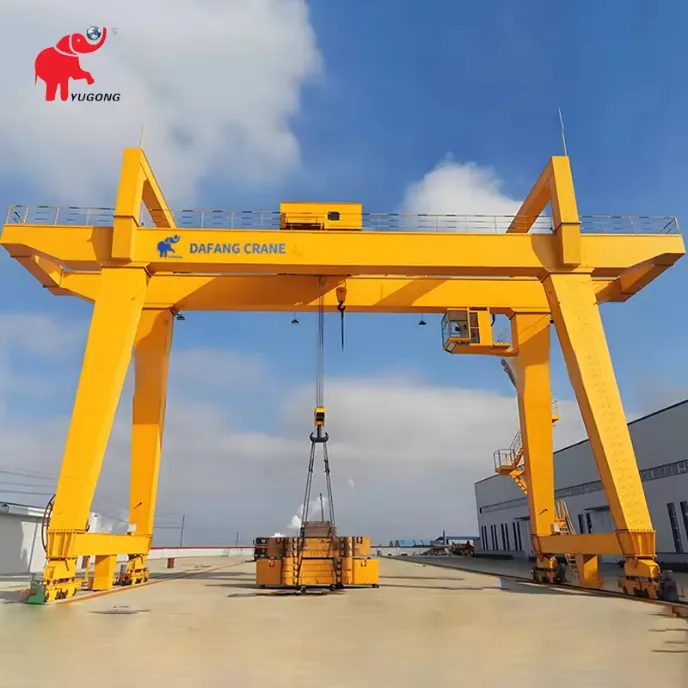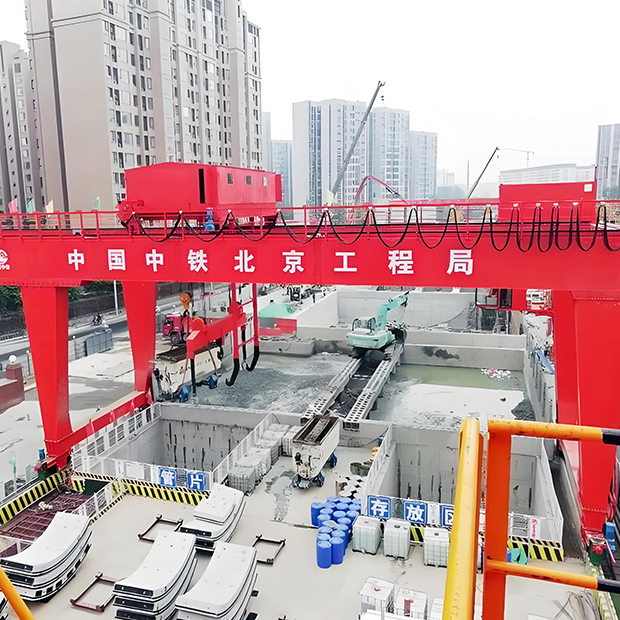







A hydraulic gantry crane handles loads from 10 to 1,000 tons across spans from 8 to 35 meters, with lifting heights typically between 4.5 and 10.6 meters — but the right combination of those three numbers depends entirely on your site and application, not on picking the largest available figure. Getting the sizing wrong by even one step usually means re-engineering the header beam, rethinking the ground support, or discovering on day one that the retracted height clears neither the building columns nor the load sling clearance you need.
Most procurement teams start this decision by asking "what tonnage do I need?" That question matters, but it is the second question. The first is: does a hydraulic system actually fit this job, or would a conventional electric gantry crane — with lower upfront cost and simpler maintenance — serve the same purpose? The answer depends on three site realities: headroom restriction, the need for synchronized multi-point lifting, and whether the project is temporary or a long-term production asset.
This guide walks through four decisions in order — load capacity, span, lifting height, and power source — and closes with a quick reference table, a section on what drives the final price, and the compliance checkpoints that matter to overseas buyers.
Оглавление
Quick-Reference Sizing Table
| Сценарий использования | Типичная нагрузка | Диапазон | Высота подъема | Источник питания |
|---|---|---|---|---|
| Heavy equipment installation (factory retrofit) | 50–200 t | 8–20 м | 4.5–7 m | Electric (AC 380V) |
| Port / shipyard heavy lift | 200–500 t | 15–35 m | 6–10.6 m | Electric (AC 380V) |
| Bridge construction, large prefab | 100–400 t | 12–30 m | 5–10.6 m | Electric or diesel |
| Metallurgical / steel plant | 100–1,000 t | 10–35 m | 4.5–10.6 m | Electric (AC 380V) |
Figures are indicative. Confirm exact parameters with a Dafang engineer based on your load geometry and site constraints.
Получить бесплатное предложениеDetermining the Right Load Capacity


Your rated capacity must include the lifting tackle, not just the load itself
The first sizing rule is one that experienced rigging teams know but procurement teams frequently overlook: rated load capacity must cover the total suspended weight — the load itself plus every piece of lifting tackle attached to it. A 180-ton transformer with a spreader beam assembly and sling set that together weigh 12 tons requires a crane rated for at least 192 tons. In practice, you would select the next standard capacity step up, which on Dafang's hydraulic gantry crane line means moving to a 200-ton or 250-ton configuration to maintain the required safety margin.
Work duty class is the second capacity variable buyers often leave unspecified. Dafang's hydraulic gantry cranes are rated at work duty A5, reflecting intermittent heavy-lift use typical of port operations, heavy equipment installation, and shipyard work. For continuous metallurgical cycles — where the crane lifts and transfers multiple times per hour — discuss with the engineering team whether a higher duty rating or additional hydraulic circuit cooling is appropriate.
Multi-point synchronized lifting changes how you calculate capacity
When the load is too large or geometrically asymmetrical to lift from a single central point, two or more hydraulic lifting units work in tandem under PLC synchronization control. In this configuration, the rated load is shared across the units, but the synchronization accuracy — typically within ±2 mm across lifting points for Dafang's wireless remote-controlled system — is what keeps the load from tilting and overstressing one side of the frame. For buyers: always specify the number of lifting points and the load's center-of-gravity offset when requesting a quotation. A capacity figure without that context is incomplete.
Choosing the Right Span and Lifting Height
Span is determined by load width plus the minimum sling clearance on both sides
Span — the horizontal distance between the centerlines of the two support legs — must exceed the widest dimension of the load plus the clearance required for slings or lifting fixtures on each side. Dafang's hydraulic gantry cranes cover spans from 8 to 35 meters, and the standard offering includes a telescopic main girder option that allows lateral adjustment to fit different working widths on the same project site. This flexibility is particularly useful in shipyard hull section assembly, where component widths vary between lifts.
One structural cost reality buyers should know: increasing span is not a linear cost step. A longer main beam has to resist a substantially higher bending moment under the same load, which means heavier steel section, more demanding weld inspection, and tighter deflection tolerances. A 30-meter-span unit rated for 200 tons carries meaningfully higher fabrication cost than a 15-meter-span unit rated for the same load.
Retracted height is the constraint that kills more projects than rated capacity
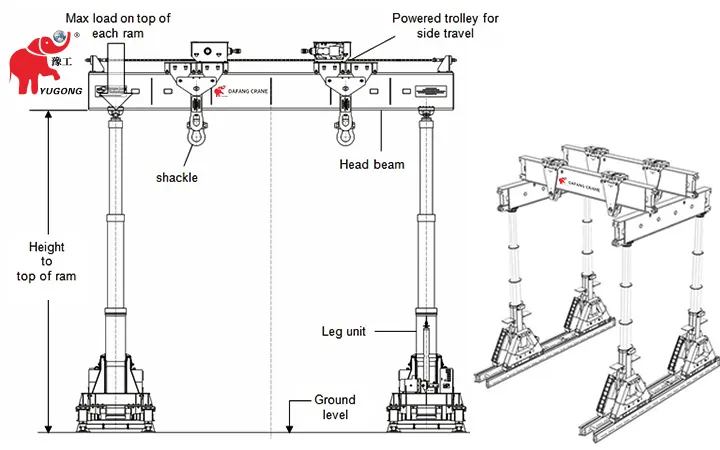
Lifting height on paper — 4.5 to 10.6 meters in Dafang's standard range — tells you how high the hook can travel. But the number that actually governs whether the crane can be set up inside your building is retracted height: the overall standing height of the gantry frame when the hydraulic legs are at their lowest position. In low-headroom environments — old manufacturing halls, underground maintenance bays, or any facility where roof beams sit below 6 meters — retracted height must be confirmed before any other parameter. Ordering a crane that physically cannot clear the building structure is the single most common and most expensive mistake in hydraulic gantry procurement.
For outdoor port and bridge construction sites where headroom is not a constraint, focus instead on the stroke of the hydraulic cylinder and whether multi-stage cylinder configuration is needed to achieve the full required lifting height.
Power Source and Traveling Mechanism
Electric hydraulic systems suit most fixed or rail-mounted applications
Dafang's hydraulic gantry crane uses an electric hydraulic drive — AC 380V / 50Hz — powering the hydraulic pump, which in turn drives the lifting cylinders and the rail traveling mechanism at the base of each leg. This configuration covers the majority of industrial applications: ports, steel plants, heavy machinery factories, and covered shipbuilding bays where grid power is available.
The key components buyers should verify in any quotation include the synchronous hydraulic pump specification, the wireless remote-control system (Dafang's standard configuration supports single-person wireless remote operation), and the hydraulic valve group's pressure-holding capability — the lock-and-hold function that keeps the load stable when the lifting command is paused.
Diesel-driven configuration for remote or grid-limited sites
For bridge construction sites, remote mining locations, or any application where stable three-phase power is unavailable, a diesel-driven hydraulic power unit is the practical alternative. The working temperature range of Dafang's hydraulic gantry system — -20°C to +50°C — accommodates most outdoor environments, though buyers in extreme cold climates should specify hydraulic oil viscosity requirements explicitly.
Hydraulic vs. Conventional Electric Gantry Crane: When to Choose Which
Not every heavy lift requires a hydraulic system. The decision comes down to three factors:
| Фактор решения | Гидравлический козловой кран | Conventional Electric Gantry Crane |
|---|---|---|
| Multi-point synchronized lifting | Strong — PLC sync control standard | Limited — single hoist typical |
| Headroom restriction | Better — low retracted height possible | Moderate — trolley adds to overall height |
| Project type | Best for temporary, project-based, or retrofit lifts | Best for permanent, high-frequency production |
| Smooth speed control | Excellent — stepless hydraulic control | Good — variable-frequency drive option |
| Maintenance complexity | Higher — hydraulic seals, oil quality, filters | Lower — standard electrical maintenance |
| Power supply independence | Diesel option available | Grid power typically required |
A hydraulic gantry crane earns its higher initial cost when the project involves large-tonnage loads with strict positioning accuracy, restricted site access, or a requirement for synchronized multi-point control. For repetitive daily production lifts in a fixed workshop where headroom is adequate, a conventional electric gantry crane is usually the more economical long-term choice. For that option, see Dafang's full gantry crane range.
What Drives the Price of a Hydraulic Gantry Crane
Five factors that move the quote significantly
Hydraulic gantry cranes are configured-to-order rather than catalog items, which means price variation between two units of nominally identical capacity can be substantial. The five parameters that most directly affect the final quote are:
Rated capacity and number of lifting units. A 100-ton system using two 50-ton lifting units has a different cost structure from a 100-ton system using four 25-ton units, because the second configuration adds cylinder assemblies, valve groups, and additional PLC synchronization channels.
Span and main beam design. Longer spans require heavier structural steel and more demanding quality inspection. Telescopic main girder options add flexibility but also add cost.
Lifting height and cylinder stroke. Multi-stage cylinder configurations needed for lifting heights above approximately 6–7 meters carry higher fabrication and sealing costs than single-stroke cylinders.
Control system specification. Single-person wireless remote operation — Dafang's standard — is suitable for most applications. Projects requiring remote monitoring, data logging, or integration with facility control systems will add to the control system cost.
Installation and commissioning scope. On-site assembly by a professional team is required for all hydraulic gantry cranes. Transportation packaging (wooden or frame box), shipping logistics, and site commissioning support should be confirmed and costed before comparing supplier quotes.
Because of these variables, published price ranges for heavy-duty gantry cranes in the general market — which for the 50–200 ton segment can span from roughly $150,000 to well above $500,000 depending on specification — are only a broad reference point. Contact Dafang's engineering team with your load, span, lifting height, and site data to receive a configuration-specific quotation.
Certifications and Compliance
For international buyers, three compliance areas matter before clearing equipment through customs or completing vendor qualification:
Quality management system. ISO 9001 certification confirms the manufacturer operates a documented quality management system covering design, procurement, production, and inspection. Request a current ISO 9001 certificate and verify the issuing body.
Product safety standards. CE marking (Machinery Directive 2006/42/EC) is required for cranes entering EU markets. For markets in Russia and the CIS, EAC certification applies. For North American sites, OSHA 1910.179 general requirements and ASME B30 standards are the relevant framework. Verify which standard governs your destination market before issuing a purchase order.
Load testing documentation. Regardless of market, request the overload test report — typically 125% of rated capacity — and the inspection certificate issued after factory testing. These documents are needed for customs clearance in most markets and for your own site acceptance procedure.
Buyers can ask Dafang's team for the EC Declaration of Conformity, ISO 9001 certificate, and factory test report as part of the quotation package. Confirming these documents are available before order placement avoids delays at the clearance stage.
Ready to Specify Your Hydraulic Gantry Crane?
To prepare a precise quotation, Dafang's engineering team needs the following from you:
- Maximum load weight (including tackle and slings)
- Required lifting height and available headroom / retracted height constraint
- Required span (load width + sling clearance on each side)
- Number of lifting points and load center-of-gravity information if available
- Whether the crane needs to travel after lifting, and over what distance
- Indoor or outdoor environment, and whether diesel power is required
- Destination country (for applicable certifications)

ЧЗВ
Q1: What load capacity range does a hydraulic gantry crane typically cover?
Hydraulic gantry cranes in industrial use generally cover 10 to 1,000 tons. Dafang's standard range runs from 10 to 1,000 tons, with lifting capacity structured across three rated levels for systems that operate across different load configurations. Requirements above 1,000 tons are typically handled as fully bespoke engineering projects with extended design and quotation timelines.
Q2: How is the correct span determined for a hydraulic gantry crane?
The required span equals the widest dimension of the load plus sling or lifting fixture clearance on each side, usually a minimum of 0.5–1 meter per side depending on rigging geometry. Dafang's telescopic main girder option allows the span to be adjusted on site, which is useful when a single crane needs to handle components of varying width. Never set span equal to load width alone — insufficient sling clearance is a frequent cause of unsafe lifts.
Q3: How much does a hydraulic gantry crane cost?
Hydraulic gantry cranes are configured-to-order, and price depends primarily on rated capacity, span, lifting height, cylinder stage design, and control system specification. For reference, heavy-duty gantry cranes in the 50–200 ton segment from Chinese manufacturers are broadly quoted in the $150,000–$600,000+ range, with hydraulic systems typically priced above conventional electric models of comparable capacity due to the hydraulic circuit, PLC synchronization system, and custom engineering involved. Contact Dafang with your specific parameters for a project-based quotation.
Q4: What is the difference between lifting height and retracted height?
Lifting height is the maximum vertical distance the hook can travel from its lowest to its highest position — 4.5 to 10.6 meters in Dafang's standard range. Retracted height is the overall standing height of the crane frame when the legs are at their minimum extension. The second figure determines whether the crane can physically enter and operate inside a building. In constrained sites, retracted height is the more critical specification to confirm first.
Q5: Is a hydraulic gantry crane suitable for outdoor use in variable weather conditions?
Yes. Dafang's hydraulic gantry crane is rated for operating temperatures from -20°C to +50°C and is used in port yards, shipyards, and bridge construction sites as standard applications. Buyers in extreme cold climates should specify low-temperature hydraulic oil, and outdoor projects in high-humidity or marine environments should confirm the electrical protection rating (IP class) of the control system and motor enclosures with the engineering team before placing an order.