An electric winch machine is a motor-driven drum that winds wire rope or chain to pull or lift heavy loads. Dafang's range covers 0.5–100 tons, so the right choice depends less on the headline tonnage and more on the type, speed and duty class behind it.
Most buyers get stuck on the same questions. Wire rope or chain? Fixed speed or variable frequency? Is a standard electric winch machine enough, or does the site need explosion-proof or high-temperature construction? A rating on a datasheet rarely answers these, because rated capacity changes with rope layers, duty class and the way the load is rigged.
This guide goes in the order a buyer usually decides. It compares the six types, shows how to read capacity and size a winch, explains where a winch is the wrong tool, and lists the certificates to ask for before you buy.
Electric Winch Machine Types at a Glance
| Тип | Вместимость | Скорость | Мотор | Best for |
|---|---|---|---|---|
| Канат | 0.5–50 t | 5–30 m/min | 1.5–75 kW | Construction, ports, mines |
| Цепь | 0.5–20 t | 3–15 m/min | 0.75–30 kW | Workshops, warehouses |
| Взрывозащищенный | 1–32 t | 4–25 m/min | 2.2–45 kW | Chemical, refinery, coal mine |
| VFD low speed | 1–30 t | 2–15 m/min | 2.2–55 kW | Precision installation |
| VFD high speed | 1–20 t | 20–40 m/min | 3–45 kW | Logistics, container handling |
| Metallurgical | 1–100 т | 5–30 m/min | 3–75 kW | Steel mills, smelters |
Values from Dafang's electric winch machine product page; customizable on request. Get a tailored quote from our engineers →
Получить бесплатное предложениеElectric Winch Machine Types Compared


Wire Rope vs Chain Electric Winch
Wire rope suits heavy and long-distance work; chain suits compact, lighter, indoor jobs. Dafang's wire rope winch handles up to 50 tons with rope diameters of 6–32 mm, so it covers hoisting steel on construction sites, container handling in yards and ore traction in mines. The chain version stops at 20 tons but is lighter, easier to relocate and positions loads more precisely, which is why it fits workshop maintenance and pallet lifting.
The limit to know: a chain winch cannot match a rope winch on capacity or on long drum travel, so do not specify one for a 30-ton pull just because the chain is neat.
Variable Frequency Winches: Low Speed vs High Speed


Choose low speed to protect the load and high speed to protect the schedule. The low-speed variable frequency model runs at 2–15 m/min, which suits assembling precision equipment or butt-jointing bridge steel beams, where a smooth start and stop matter more than cycle time. The high-speed version runs at 20–40 m/min for ports, logistics centres and large warehouses. Stepless speed control in both cases avoids the shock of a fixed-speed contactor start, which is what loosens bolts and swings loads on delicate jobs.
Explosion-Proof and Metallurgical Winches


Hazardous or hot environments need purpose-built machines, not a standard winch with a cover. The explosion-proof winch carries an ExdIIBT4 rating for chemical plants, refineries and coal mines with gas or dust. The metallurgical model reaches 100 tons, with a stated ambient range of –20 to 60 °C, for steel mills, smelting plants and casting lines. Explosion-proof construction is optional on it, so say so in your enquiry if the zone requires it.
Electric Winch vs Electric Hoist: Which Do You Need?
Use a winch to pull or haul; use an electric hoist for repeated vertical lifting under a beam. A winch drum is typically fixed to a foundation or frame and drags loads along a path. A hoist runs on an overhead beam or crane and lifts straight up. If the real job is lifting on an overhead crane или козловой кран, look at a канатный подъёмник или электрическая цепная таль instead. Winches also should not be used to lift people unless the machine is specifically designed and certified for that.
How to Choose Electric Winch Machine Capacity and Specs
Rated Capacity Is a First-Layer Number
Read the rated pull as the figure on the first rope layer, then check the top-layer value. As rope builds up on the drum, the winding diameter grows and the available pull drops. A common rule of thumb is a loss of roughly 10–15% per layer, so a winch rated at 5 tons on layer one can deliver clearly less on the last. Add friction losses if the rope runs over redirect sheaves, because every extra sheave takes a share of the line pull. Specify the load at the layer where it will actually work.
Match Speed to the Job
Pick the speed the load can tolerate, not the highest number in the catalogue. Slow speeds of 2–15 m/min give better control for assembly and installation; 20–40 m/min only pays off when cycle time is the bottleneck. Faster drums also mean heavier braking loads, so a high-speed electric winch machine on a delicate load is usually the wrong trade.
Check Duty Class, Rope and Power Supply
Confirm the working class, rope diameter, drum capacity and local power before you compare quotes. Dafang's range covers working classes A4–A7 (ISO 4301 style classification), so a winch that runs a few short pulls a day and one in a continuous production line should not be specified the same way. Drum capacity must hold the full rope length plus a few dead wraps. Keep the fleet angle (the angle between the rope and the drum's centre line) small, a degree or two, so the rope spools evenly. Power supply on this range runs 220–690 V, 50/60 Hz, three-phase, so match it to your site. Safety features to expect include a dual brake of electromagnetic and mechanical types that locks when power is lost, plus on-site or remote control.
What Moves the Price of an Electric Winch Machine
Price follows capacity, type, speed control, special construction and rope length, not tonnage alone. A variable frequency drive, explosion-proof certification or a metallurgical duty rating each add cost over a basic fixed-speed machine, as do a long rope and extra rope guide options. Prices for similar-looking units vary widely online, so compare like for like: same layer capacity, same duty class, same certification. Ask each supplier what is included in the electric winch machine price before comparing totals.
Matching an Electric Winch Machine to Your Site
Common Applications by Environment
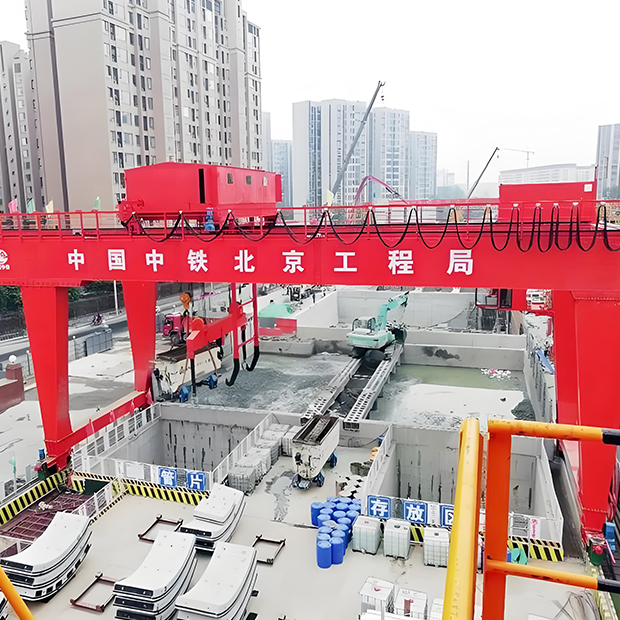
A winch machine fits where loads need to be dragged, hauled or lifted from a fixed point. Typical uses include hydro power station gate and turbine maintenance, mining ore and rock haulage, underground cable laying, vertical transport of building materials, and shipyard block positioning. Slipway winches launch vessels and are anchored on the ramp with steel cables. Ports use them in container gantry cranes.
Foundation and Anchoring
Anchor the winch for the full line pull, not the weight of the load. A fixed winch transfers its pull into the base and the structure beneath, and a thin floor slab or a poorly cast foundation is a frequent cause of site problems. Dafang's base is welded from thickened steel plate for rigidity, but the civil side still has to be designed by the site engineer.
Certifications to Check Before You Buy
Dafang's electric winch machine page lists CE, ISO and EAC. For your market, ask which of these apply:
- EU and many export markets: CE marking under the Machinery Directive 2006/42/EC. Some buyers also reference EN 14492 for power-driven winches. Explosion-proof units are usually also checked against ATEX rules.
- Customs Union (EAC): needed for Russia and neighbouring markets.
- Quality system: ISO 9001; working class is described under ISO 4301.
These documents matter because customs clearance, insurance and site inspections often depend on them. You can verify by requesting an EC declaration of conformity, the overload test report for the actual unit, and a copy of the supplier's ISO 9001 certificate. Dafang provides a winch machine inspection booklet so clients can check performance, and a supplier that cannot show these documents is a risk regardless of price.
Get a tailored quote from our engineers. Send us the load, rope pull, speed, rope length, environment and power supply, and we will recommend an electric winch machine configuration. Since 2006 Dafang has built lifting equipment for customers in many countries, and we can also supply электрические тали и запасные части крана for the same project.

ЧЗВ
Q1:What capacity of electric winch machine do I need?
Choose by the maximum line pull at the rope layer where the load works. Rated pull falls as rope layers build up, so size for the top layer, not the first. Add allowance for sheave friction, the working class and the duty cycle. If you share the load weight and rigging, a Dafang engineer can confirm the capacity.
Q2:What is the difference between an electric winch and an electric hoist?
A winch pulls or hauls from a fixed point, while a hoist lifts vertically on a beam or crane. A winch drum drags loads along a path; a hoist is built into overhead lifting systems. Pick the hoist for repeated overhead lifting and the winch for traction, hauling and fixed-point lifting.
Q3:How much does an electric winch machine cost?
It depends on capacity, type, speed control, certification and rope length. A fixed-speed rope winch costs less than a variable frequency or explosion-proof model of the same tonnage. We do not publish a fixed list price, so send your load, rope length and environment to get a quote.
Q4:Which electric winch is suitable for hazardous areas?
Use an explosion-proof electric winch where flammable gas or dust is present. Dafang's explosion-proof model carries an ExdIIBT4 rating and covers 1–32 tons for chemical plants, refineries and coal mines. Confirm the zone classification and local requirements with an engineer before ordering.