Produtos
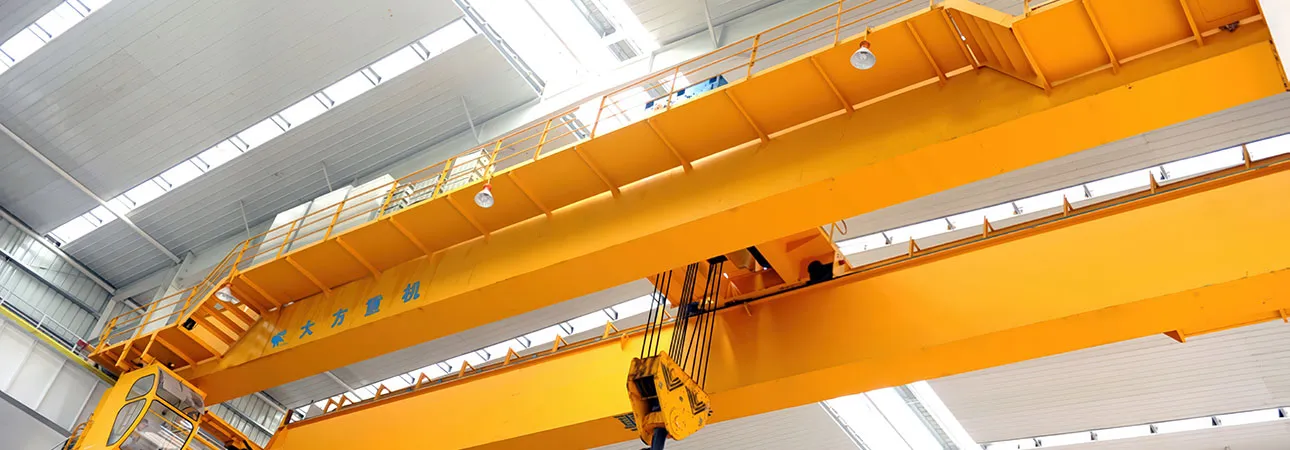
A C-type crane hook is a specialized lifting hook with an open C-shaped profile designed to engage steel coils, billets, slabs, and cylindrical loads from the side — without requiring the load to be rigged with slings or chains. The hook slides horizontally into the coil eye or under the billet and lifts from below, eliminating the rigging time and manual handling risk associated with conventional hook-and-sling lifting methods.
Dafang Crane manufactures C-type crane hooks for overhead cranes, gantry cranes, and coil handling systems in steel mills, metal service centers, and heavy manufacturing facilities. Each hook is engineered to the rated capacity, load geometry, and crane interface of the specific application — not adapted from a catalogue standard that may not match your operational requirements.
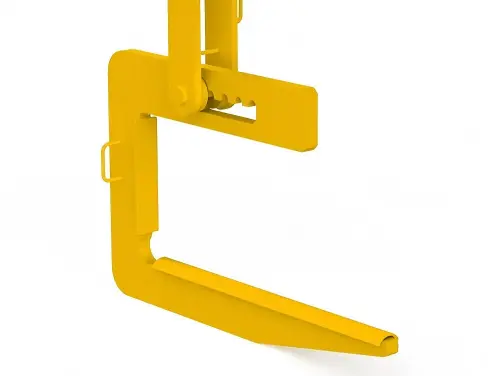
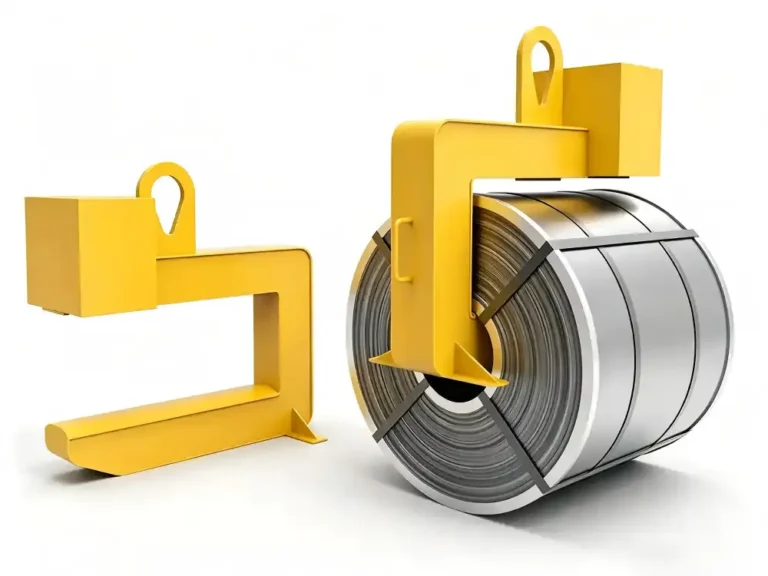
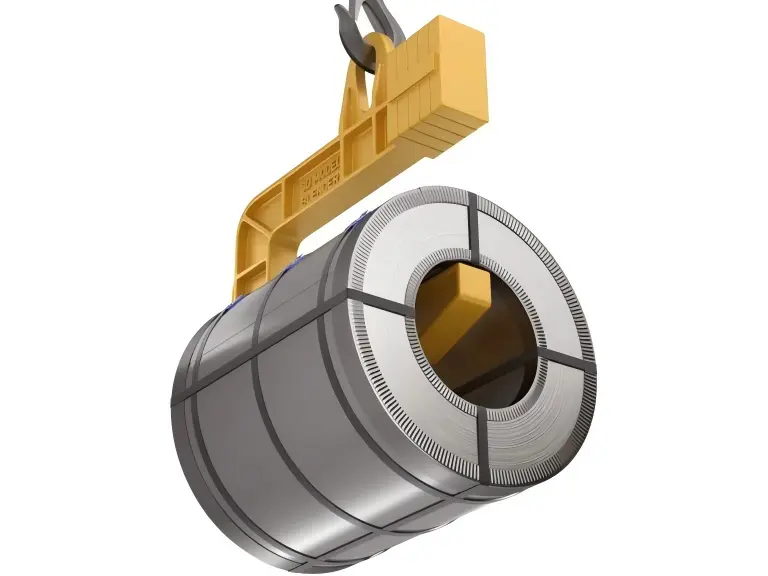
The C-type crane hook takes its name from its cross-sectional profile — an open C-shape that creates a bottom-supported cradle for cylindrical or rectangular loads. Unlike conventional crane hooks that lift from a top attachment point through rigging, the C-type hook engages the load laterally. The crane positions the hook opening over the load, lowers until the load seats in the hook throat, and hoists vertically. No slings, chains, or manual rigging attachment is required.
This engagement method is the fundamental operational advantage of the C-type crane hook. In steel coil handling, where coils may weigh 5 to 40 tons and are handled repeatedly across multiple crane cycles per shift, eliminating the sling attachment step reduces cycle time per lift, reduces worker exposure to heavy rigging hardware, and improves throughput in coil storage and processing operations.
The hook's internal profile — the throat width, throat depth, and bearing surface geometry — is dimensioned to match the load being handled:
| Capacidade nominal | Aplicação típica | Hook Weight (approx.) |
|---|---|---|
| 3 toneladas | Light coil and small billet handling | 80–120 kg |
| 5 toneladas | Medium coil handling, bar bundle lifting | 120–200 kg |
| 10 toneladas | Standard coil handling, service center operations | 200–380 kg |
| 16 toneladas | Heavy coil handling, steel mill operations | 380–600 kg |
| 20 tons | Large coil and slab handling | 600–900 kg |
| 32 tons | Heavy slab and ingot handling | 900–1,400 kg |
| 50 toneladas | Steel mill primary handling | 1,400–2,200 kg |
| Custom | Per application specification | Confirmed at engineering stage |
All capacities subject to engineering confirmation for specific load geometry and crane interface. Hook weight is indicative — confirm with Dafang Crane engineering at specification stage.
| Componente | Standard Material | Optional / Upgraded Material |
|---|---|---|
| Hook body | Q345B / S355JR structural steel | 40Cr / 42CrMo4 alloy steel for higher-stress applications |
| Bearing surface | Hardened alloy steel insert or integral hardening | Overlay welded wear-resistant surface (Hardox 400 equivalent) |
| Suspension shank / trunnion | 42CrMo4 alloy steel, heat treated | Per application stress calculation |
| Fasteners | Grade 8.8 high-tensile | Grade 10.9 where specified |
| Tratamento de superfície | Shot blast + industrial primer + topcoat | Hot-dip galvanized for corrosive environments |
Key dimensions confirmed at the specification stage based on load geometry:
| Standard | Scope |
|---|---|
| EN 13001-1 | Crane design — general principles |
| EN 1677 series | Components for lifting slings — hooks and hook assemblies |
| FEM 1.001 | Rules for the design of hoisting appliances |
| ISO 4301-1 | Crane classification and duty cycles |
| CE Machinery Directive 2006/42/EC | For European market supply |
| GB/T 10051 | Chinese national standard for crane hooks (applicable where specified) |
The most common configuration. A single-piece or fabricated steel body with fixed throat geometry matched to a defined load type. No moving parts beyond the swivel connection at the crane interface. Suitable for operations handling consistent load geometry — one coil size range, one billet dimension.
An adjustable width or depth mechanism — typically a sliding jaw or removable throat insert — allows the hook to accommodate a range of coil inner diameters or load widths without changing the hook. Used in service centers and facilities handling mixed coil or billet inventory across a range of sizes. Adjustment is manual; the operator sets the throat dimension before each lift series.
A swivel bearing at the crane connection — above the hook body — allows the hook and suspended load to rotate freely under the crane. The load aligns itself to the natural hanging position without imposing torsional force on the crane rope or hoist. Rotating hooks are standard where coils or billets must be oriented during handling or where load rotation during travel would otherwise create instability.
An electric or hydraulic drive rotates the hook body under powered control, allowing the operator to orient the load to a specific angular position during the lift. Used in processing lines where coil or billet orientation at the discharge position affects downstream handling efficiency.
A mechanical or hydraulic latch retains the load within the hook throat during crane travel, preventing accidental disengagement over sloped or uneven floor surfaces or during rapid crane travel. Required by some regulatory authorities for operations above personnel areas or where load drop risk must be positively controlled.
Steel service centers receive coils from steel mills, store them in coil yards, and feed them to slitting, cut-to-length, and forming lines. C-type crane hooks handle every coil movement in this chain — from truck or rail car unloading at the receiving dock, through coil yard inventory management, to line feeding and finished coil dispatch.
In a typical service center coil yard, a crane equipped with a C-type hook performs 30 to 80 coil lifts per shift. Eliminating sling attachment for each lift — which would add 3 to 5 minutes per cycle — saves 1.5 to 6 hours of cycle time per shift compared to conventional hook-and-sling methods. For high-throughput facilities, this time saving directly affects processing capacity and labor cost.
Hook specification for service center coil handling: confirm the coil inner diameter range (typically 508mm to 762mm for standard steel coils), maximum coil weight, and coil width range. The hook throat geometry is dimensioned for the minimum inner diameter in the range with adequate clearance for engagement, and the bearing surface length matches the minimum coil width.
Steel mill finishing areas — hot strip mills, cold rolling mills, and temper mills — use C-type crane hooks on overhead cranes for coil handling between processing stages and at coil storage positions. Mill crane applications impose higher duty cycle requirements than service center operations — multiple lifts per hour continuously across three-shift mill schedules.
Hook specifications for steel mill applications require:
Billet handling cranes at rolling mills and long product warehouses use C-type hooks dimensioned for billet bundle cross-sections. The hook throat accommodates the bundle width and the bearing surface supports the bundle weight distributed across the contact area.
For bundled bar and rod products, the hook throat geometry must accommodate the bundle's irregular outer profile — bundles are not perfectly rectangular, and the hook bearing surface must contact a sufficient proportion of the bundle bottom to prevent localized overload. Confirm bundle geometry and maximum bundle weight at the specification stage.
Service centers handling multiple product forms — coils, sheet, plate, and bar — may specify C-type hooks in multiple configurations for different crane positions, or adjustable throat hooks that accommodate the facility's product mix on a single crane. Confirm the full product range and dimensional envelope at the specification stage to determine whether fixed or adjustable configurations are more appropriate for the specific facility.
C-type hooks connect to the crane hoist through one of three standard interface methods:
C-type crane hooks are compatible with:
A Dafang fornece pontes rolantes, pórticos, gruas, guindastes eléctricos e peças sobressalentes para gruas de alta qualidade, etc. Pode preencher o formulário abaixo, e nós entraremos em contacto consigo o mais rapidamente possível
Stella