
A magnetic crane is an overhead or gantry crane that carries a lifting electromagnet or magnetic lifting beam, so it can pick up and move steel without slings, hooks or grabs. In practice it is a configuration of a standard bridge or gantry crane rather than a separate class of machine. Switch the current on and the load is gripped; switch it off and the load is released.
Most buyers get stuck on practical questions rather than the definition. Is a magnetic crane a separate machine or an attachment on a standard crane? Which magnet shape suits plate, coil, billet or scrap? And how much can the magnet really lift once air gaps, steel grade and temperature are taken into account?
This guide explains the working principle first, then the main types of magnetic cranes by structure, spreader and magnet technology, and finally what to check before choosing one, including limits that rarely appear in a brochure.
Índice
How a Magnetic Crane Works

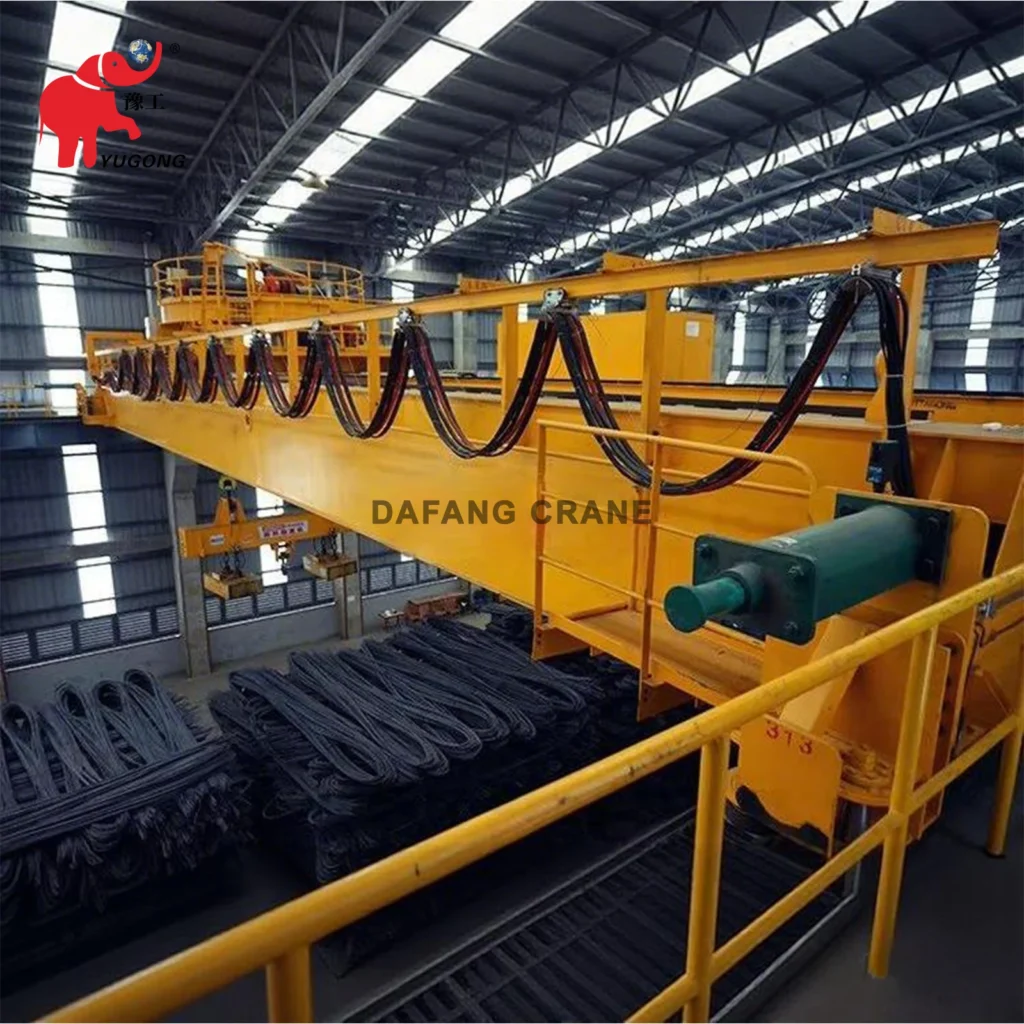
A crane with a lifting magnet
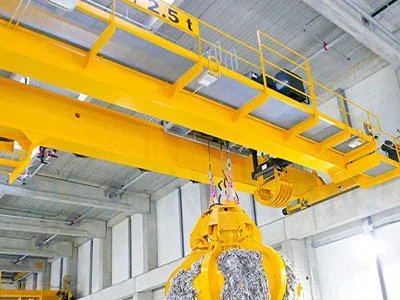
A magnetic crane is a standard bridge or gantry crane that carries a lifting electromagnet below its hook instead of slings. The bridge, trolley, wire rope hoist and end carriages (the wheeled units at each end of the girder) do the same job as on any hook crane. The difference sits below the hook: a DC electromagnet, a cable reel that feeds it, and a control cabinet that rectifies and regulates the current. Because the magnet is detachable, one crane can often swap between a round magnet for scrap and a plain hook for general lifting.
Magnetize, lift, release
The operator energizes the magnet above the load, travels to the drop point, then cuts the current to release it. Inside the magnet, current in a coil magnetizes an iron core, and the steel load closes the magnetic circuit. Strength can be adjusted by changing the current, which helps when picking one sheet from a stack. Nobody has to hook or unhook by hand, so ground crew stay out from under the load. In scrap yards and steel warehouses the magnet switches on and off constantly, which is why these cranes are specified for heavier duty than a general workshop crane.
Holding the load in a power failure
A well-specified magnetic crane keeps its hold for a set time after power loss, typically around 10–30 minutes. A backup battery or storage unit keeps the magnet energized so the load does not fall when mains power drops, giving time to restore power or clear the area below. Retention time is a design parameter you request, and longer hold times need larger backup capacity. It is a safety margin, not a reason to leave people under a suspended load.
Obter um orçamento gratuitoTypes of Magnetic Cranes
By crane structure
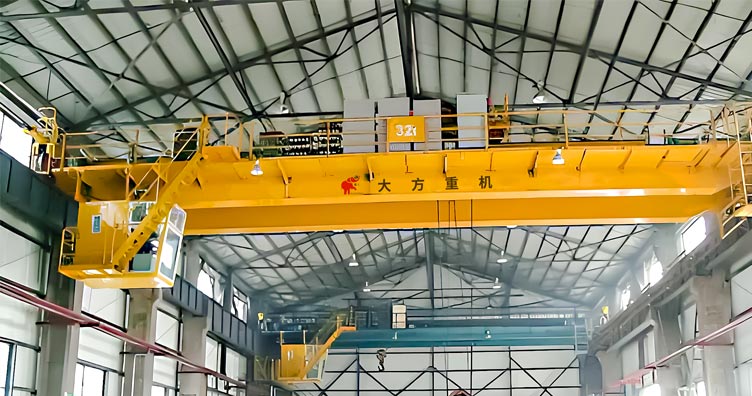
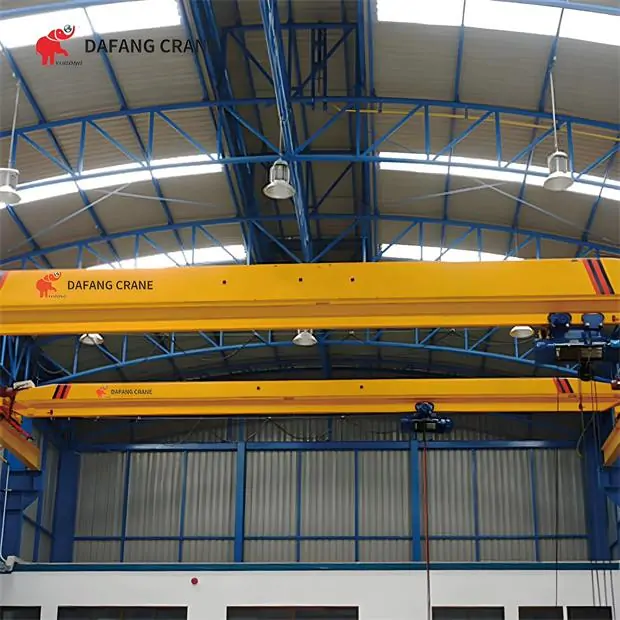
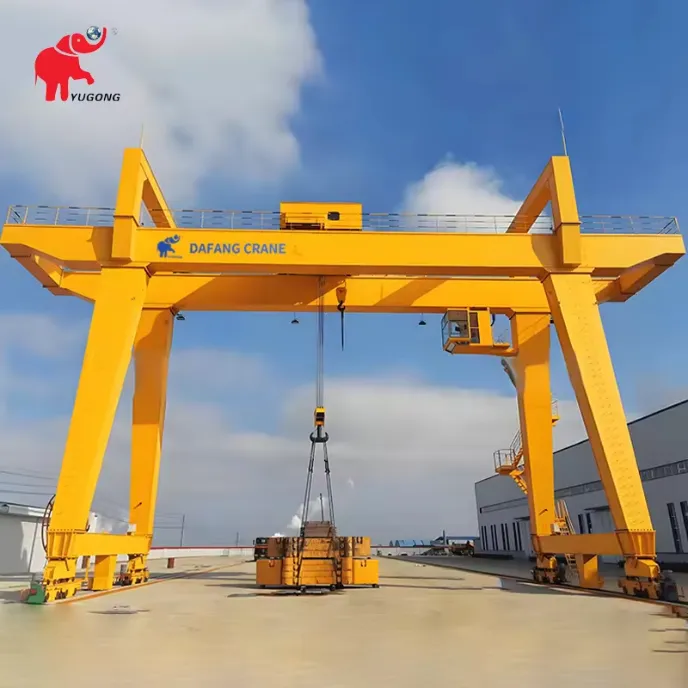
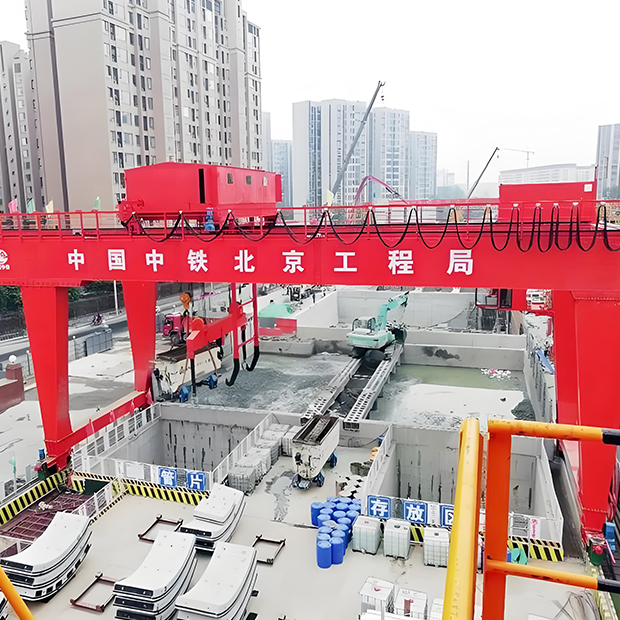
Magnetic cranes are built on single girder, double girder or gantry structures, and the structure decides where they can work. Double girder pontes rolantes carry the heavier, continuous-duty magnet work inside steel bays, while single girder versions usually suit lighter loads. Gantry cranes run on ground rails and fit open scrap yards and plate storage areas. Dafang's electromagnetic range sits on its double girder overhead crane platform: the QC type with a removable magnet (roughly 5–50 t) and the QCL type with a magnetic lifting beam (roughly 15–40 t).
By spreader design
Round magnets suit scrap and small pieces, while magnetic lifting beams suit long steel such as plates, profiles and pipes. Round, oval and rectangular lifting electromagnets hang directly from the hook and work best on loose or compact loads. A lifting beam spaces several magnets along its length to keep long loads level. Dafang's QCL crane comes in four beam layouts:
- parallel to the main girder, for large tonnage and spans of 16 m and above;
- perpendicular to the main girder, for compact bays with spans up to 12 m;
- upper-rotation beams, which turn the load horizontally;
- lower-rotation beams, which also turn the load and suit low headroom.
By magnet technology
Electromagnets are the default, while electro-permanent and permanent magnets suit loads where power loss is unacceptable or duty is light. An electromagnet needs continuous current but offers adjustable strength and instant release. An electro-permanent magnet is switched with a short current pulse and then holds without continuous power. A permanent magnet needs no power at all, switches with a mechanical handle, and is typically chosen for lighter loads at a fixed strength. Battery-powered magnets serve sites without a mains supply.
Choosing the Right Magnetic Crane
Load shape and material
Start with what you lift, because plate, coil, billet, pipe and loose scrap each call for a different magnet. Loose scrap suits a round magnet, and long plate or profile suits a lifting beam with several magnets. Hot billets may need a high-temperature magnet, since standard magnets are generally rated for loads up to roughly 150 °C. When you ask a supplier for a proposal, have the material type, dimensions, thickness, pieces per lift and load temperature ready.
Real lifting capacity
A magnet's rated lift is a best-case figure, so size the crane and magnet with a safety margin. Air gaps between magnet and load, rough or painted surfaces, thin sections, high carbon or alloy content, and heat all reduce holding force. A pile of loose scrap holds far less than a solid plate. Include the magnet's own weight in the crane's rated load, and ask for lift-force test data on your actual material rather than relying on the catalogue number.
Duty class and environment
Magnetic cranes work hard, so specify duty class honestly; A6 or A7 under ISO 4301 is common for steel and scrap handling. ISO 4301 grades cranes from A1 to A8 by how heavily and how often they lift. Dafang lists its QC and QCL types in the A5–A7 range depending on model. Outdoors, the magnet cable, reel and control cabinet need weather protection, and the power supply should be stable, because a voltage drop weakens the magnet.
Magnet versus grab or slings
Choose a magnet for frequently handled ferrous loads, a grab for bulk material, and clamps or slings for everything else. A magnet saves hooking time, keeps ground crew away from the load and removes sling wear. A grab is the better tool for coal, ore or non-magnetic bulk waste, where a magnet would pick up nothing. Clamps, slings or vacuum lifters cover non-ferrous plate and loads the magnet cannot hold safely.
Limits and Safe Operation
Materials it cannot lift
A magnetic crane lifts only ferromagnetic material, so aluminum, copper, brass and most austenitic stainless steels stay on the ground. Even among magnetic materials, cast iron and high-alloy steels typically hold less than low-carbon steel, and rust, scale, paint or oil weaken the grip further. Mixed scrap with non-magnetic pieces only yields what sticks, which matters when you plan throughput.
Safe operating habits
Safe magnetic lifting depends on clean contact surfaces, centered loads and keeping everyone clear of the load path. Keep the magnet face and the load surface free of dust, burrs and scale. Start and stop travel smoothly, and never carry a load over people. Inspect the magnet cable, coil insulation resistance and magnet face on a schedule, and test the backup battery. Only trained, certified operators should run the crane.
Further reading
To see where a magnetic crane fits in the wider overhead crane range, start with these two Dafang guides:
Final equipment selection should be confirmed with a Dafang engineer and must comply with local lifting-equipment regulations.

FAQ
Q1:How does a magnetic crane work?
A magnetic crane energizes a lifting electromagnet to grip steel and cuts the current to release it. Current flows through a coil around an iron core, magnetizing the core, and the steel load completes the magnetic circuit. The bridge, trolley and hoist move the load as on any hook crane, while the operator controls the magnet from a pendant, remote or cabin.
Q2:What can a magnetic crane lift?
It lifts ferromagnetic materials such as steel plate, coil, billet, pipe, rebar and scrap. Aluminum, copper, brass and most austenitic stainless steels cannot be lifted. Real lifting force also depends on thickness, surface condition, air gaps and temperature, so confirm the magnet's capacity on your actual material before specifying the crane.
Q3:What happens to a magnetic crane in a power failure?
A backup power unit keeps the magnet energized for a set time, typically 10–30 minutes. This retention time is specified at order stage, and longer hold times need more backup capacity. It gives time to restore power or clear the area, but nobody should stay under a suspended load.
Q4:What is the difference between an electromagnetic and a permanent magnet crane?
Electromagnetic units need continuous current but offer adjustable strength, while permanent units hold without power at a fixed strength. Electro-permanent magnets sit between the two: a short pulse switches them on or off, and they then hold without continuous current. Choose by load weight, duty and how critical power loss is.