






Table of contents
What Is an Underhung Bridge Crane?
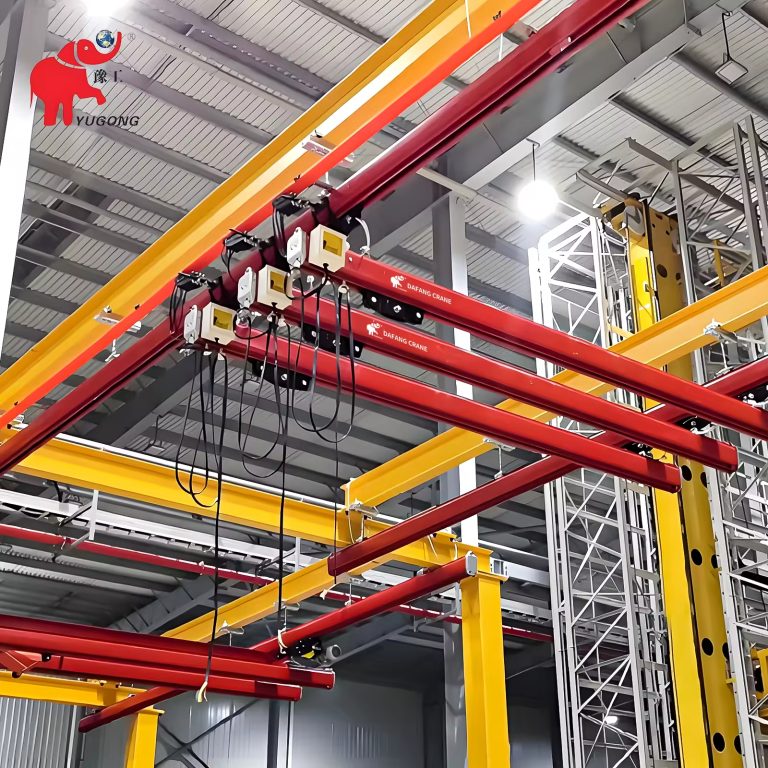
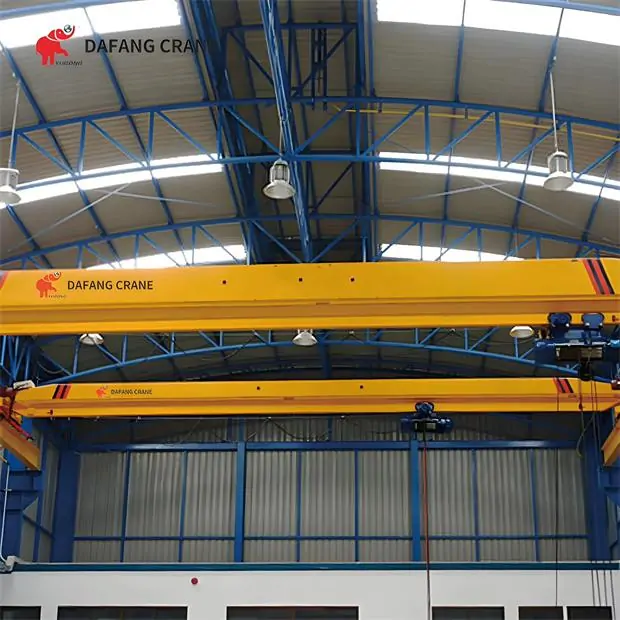
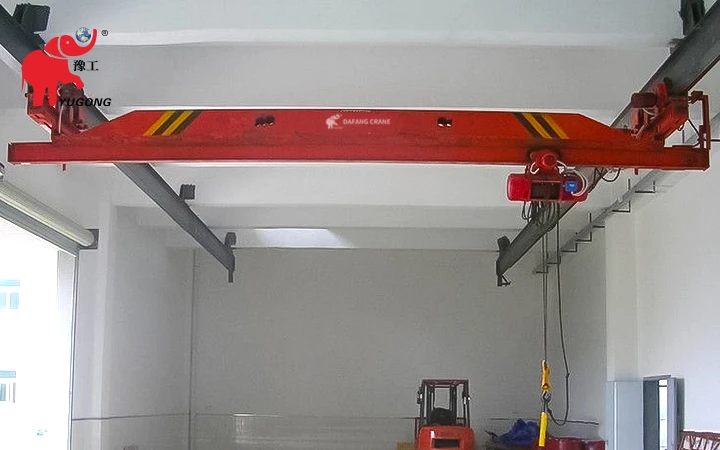
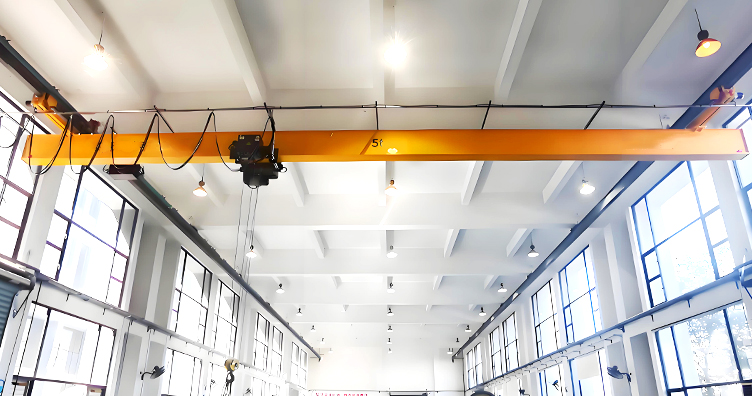
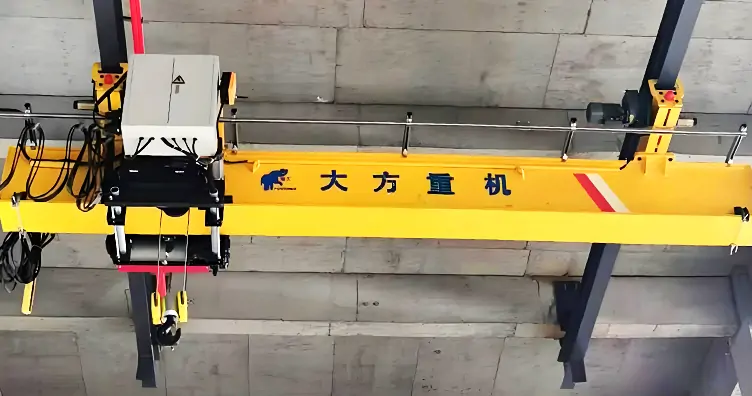
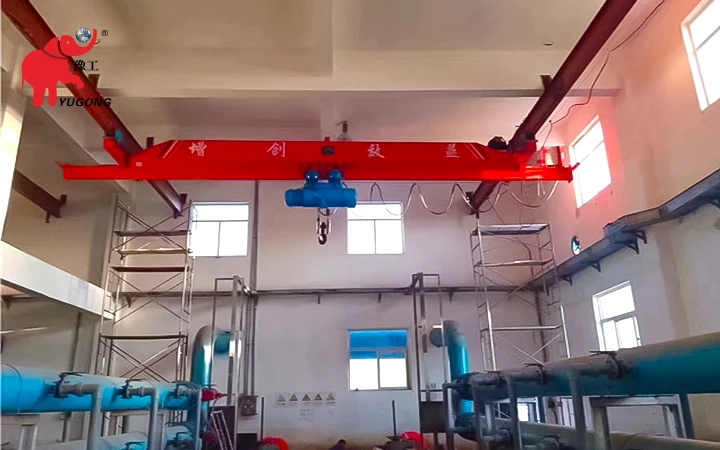
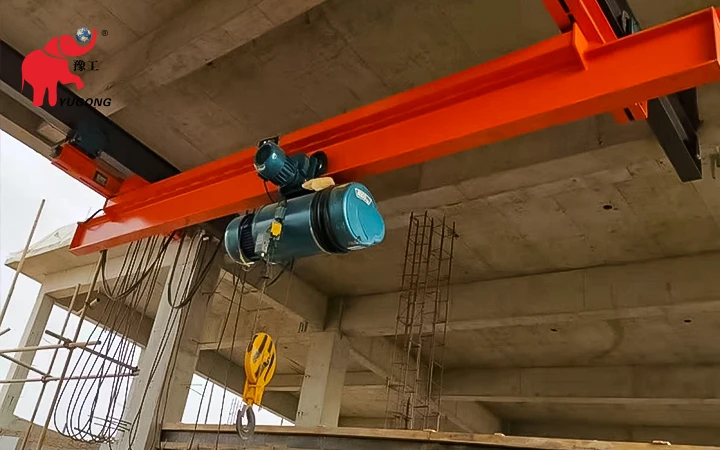
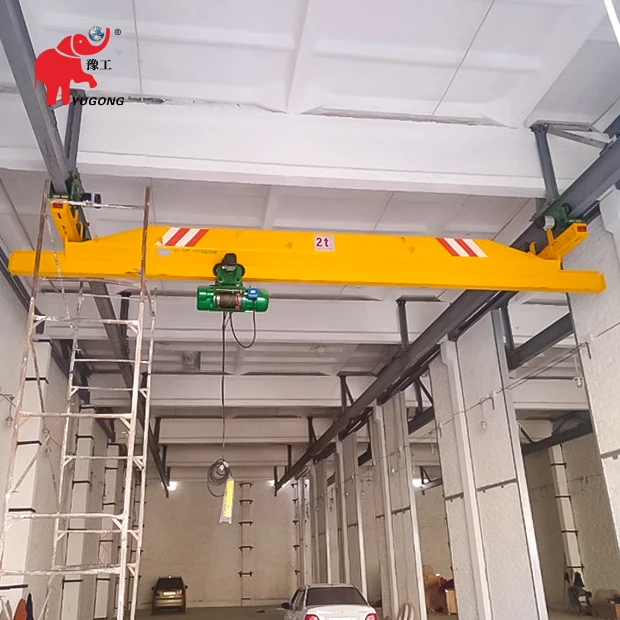
An underhung bridge crane (also called underslung crane or suspended crane) hangs below runway beams instead of riding on top of them. This suspended configuration solves problems for facilities with headroom, multiple crane requirements, or structural constraints. Its installation costs are often at 15-25% lower than top-running overhead cranes.
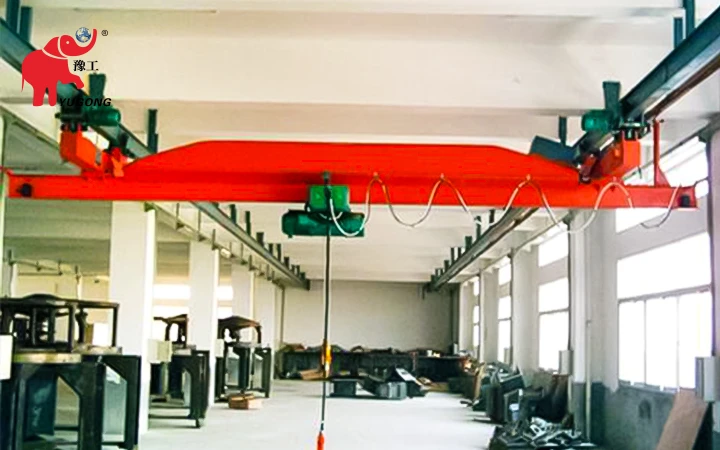
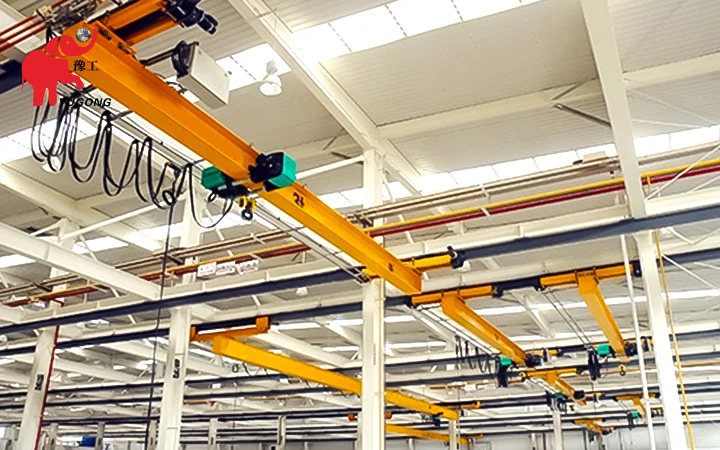
If you have headroom limitations, need multiple cranes in one factory, or want to avoid costly structural modifications, Dafang underhung bridge crane is the best choice.
Next, this buyer's guide from Henan Dafang Crane covers technical specs, capacity selection, cost analysis, and supplier evaluation. We arrange this Blog for procurement teams and facility managers, who evaluate and purchase underslung bridge crane systems.
Why Choose Dafang Underhung Bridge Cranes?
- Maximum Headroom Utilization: Underhung cranes recover 500-800mm of vertical space compared to top-running designs. In 9-meter-ceiling facilities, this means handling taller assemblies without $50,000-$150,000 facility modifications.
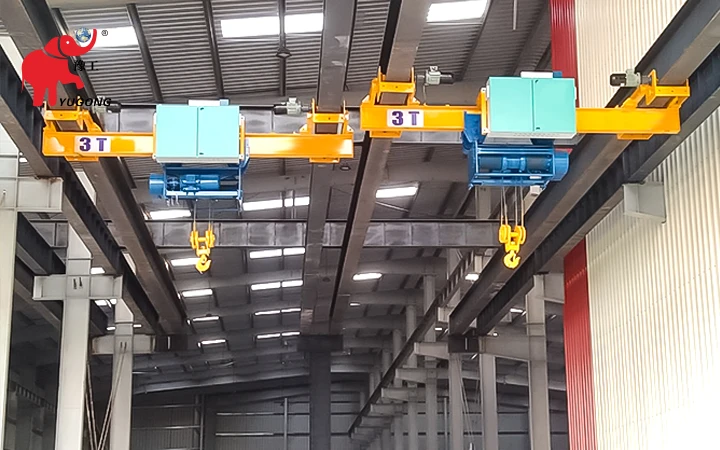
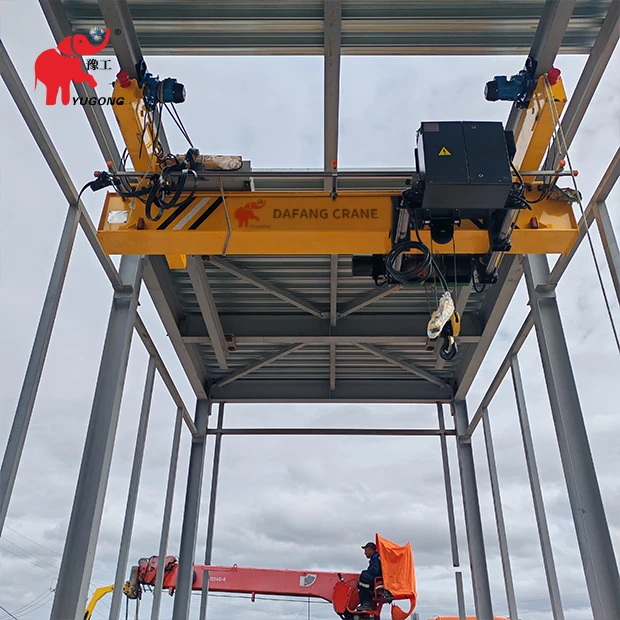
- Multiple Crane Capability: Two or three underhung cranes can operate on the same runway at different heights, which is impossible for top-running systems. This allows zone coverage, load segregation, and infrastructure savings as one runway supports multiple cranes.
- Simplified Installation Structure: Runway beams attach directly to existing building columns and roof members. You avoid building dedicated elevated support structures, reducing installation costs by 15-25% and shortening project timelines from weeks to days.
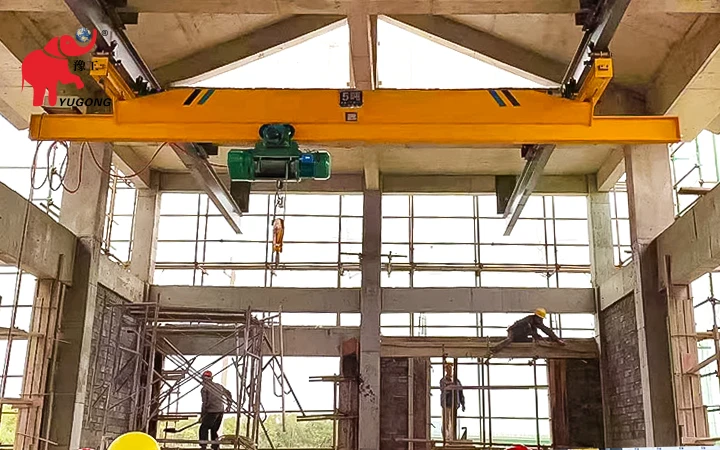
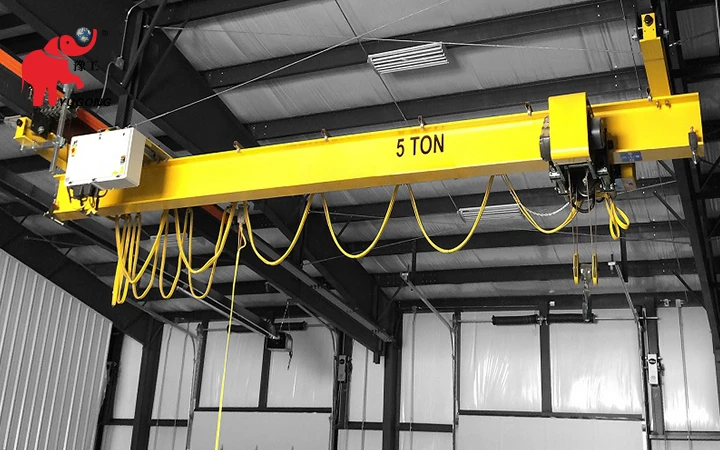
Underhung vs. Top-Running Overhead Crane
| Factor | Underhung Bridge Crane | Top-Running Overhead Crane |
|---|---|---|
| Capacity Range | 1-32 tons | 50-100+ tons |
| Headroom Required | Minimal (500-800mm less) | Substantial |
| Multiple Cranes/Runway | Yes, at different heights | No |
| Installation Cost | 15-25% lower | Higher (elevated structure) |
| Installation Time | 1-2 weeks | 3-6 weeks |
| Common Applications | Space-constrained facilities, moderate loads | Heavy loads, ample ceiling height |
When to Choose Underhung Crane: Loads under 20 tons, headroom constraints, multiple crane operations, new construction minimizing structural costs, operations requiring overhead clearance for conveyors.
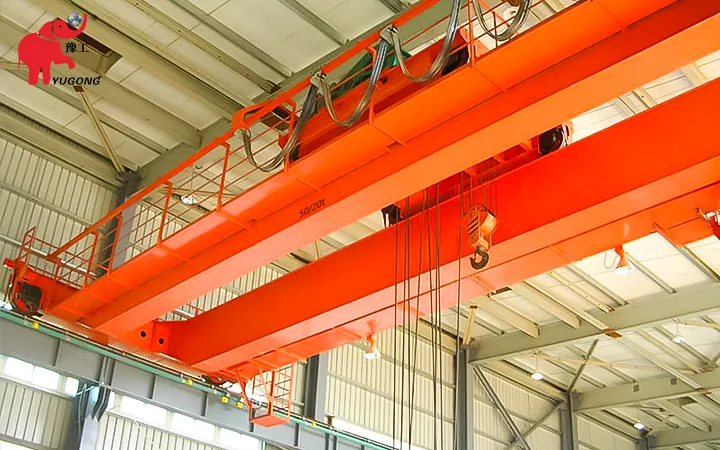
When to Choose Top-Running Crane: Loads regularly exceeding 20 tons, ample ceiling height, single crane sufficient, heavy-duty continuous operation (Class A6, A7).
Critical Specs for Underhung Crane Selection
Lifting Capacity Requirements
Specify 20-30% above max load for rigging and margin. E.g., 8-ton component facilities need 10-ton systems. Avoid over-specifying. Analyze if two smaller cranes optimize cost and efficiency if most lifts are 3 tons with occasional 10-ton moves. Dafang NLX Series capacity: 5-32 tons.
Span Distance
Measure between runway beam centerlines. Common range: 10-35 meters. Dafang NLX European Standard Systems: 10.5-31.5 meters. Wider spans increase cost and structural load.
Lifting Height
Calculate from lowest pickup to highest discharge. Typical: 6-12 meters. Consider hook, load height, and clearance.
Speed Performance
Bridge Travel Speed: 20-45 m/min (faster for longer facilities)
Hoist Speed: 2-8 m/min (Dafang NLX: 2.7-5 m/min)
Dual-Speed Hoists have precision and production modes. Higher speeds improve cycle times but raise cost and structural requirements. Balance speed with productivity.
Duty Cycle Classification (Critical for Longevity)
FEM standards define operational intensity:
- Class A3/A4: Light intermittent use (occasional maintenance lifts)
- Class A5: Moderate duty—typical manufacturing (4-6 hours daily operation)
- Class A6/A7: Heavy continuous—automotive assembly, high-volume production
Under-specifying causes premature failure, over-specifying wastes capital. If the crane operates 4+ hours daily, specify A5 minimum. Dafang NLX underslung overhead cranes offer A5 for general manufacturing.
Environmental Protection
Dusty Environments: Sealed bearings, protected motors
Corrosive Atmospheres: Special coatings or stainless steel construction
Temperature Extremes: Component upgrades (heating systems, special lubricants)
Cleanroom Requirements: Stainless steel, sealed mechanisms
Environmental protection adds cost. Specify actual requirements, not theoretical worst-case scenarios.
Standard vs. FEM Standard Underslung Cranes
I. Design Comparison
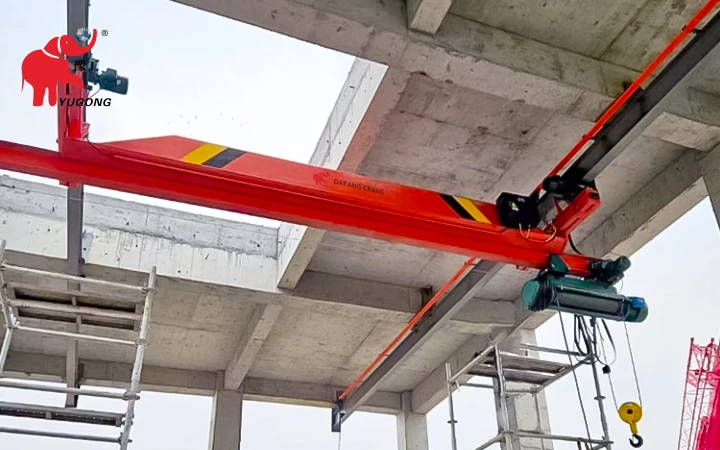
Standard Designs (Dafang LX Series):
- Modular off-the-shelf components
- Contactor controls (VFDs optional)
- Flexible component selection
- Proven technology, widely serviceable
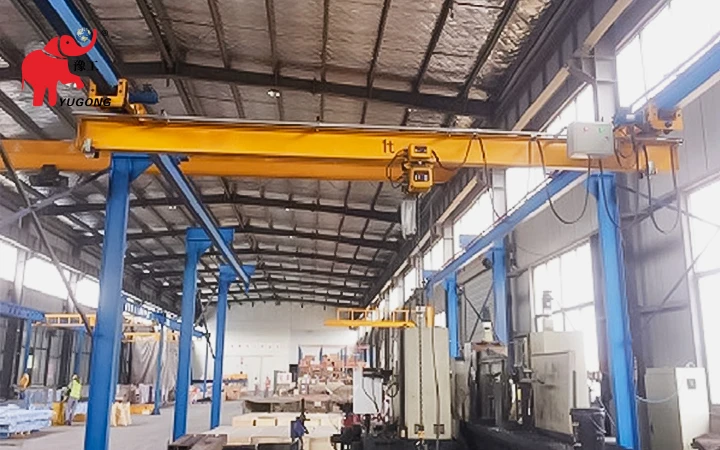
FEM European Standard (Dafang NLX Series):
- Optimized component integration
- Compact design, reduced headroom
- VFDs standard for smooth control
- Energy-efficient motors with regenerative braking
- Computer-modeled structures (maximum strength-to-weight ratios)
II. Cost-Benefit Analysis
Energy Consumption: FEM designs consume 15-25% less electricity. For 10-ton cranes operating 2,000 hours annually, it saves 1,500-3,000 kWh yearly. It is equivalent to $3,600-$7,200 over 20 years at $0.12/kWh.
Maintenance: FEM designs require 2-3% of equipment cost annually, while standard systems need 3-4% due to better load distribution and component quality in FEM.
Service Life: With proper maintenance, FEM standard cranes often last over 25 years, compared to 20 years for standard crane systems.
III. Investment Comparison (10-Ton Underslung Bridge Crane Example)
| Cost Aspect | Standard Underhung Bridge Crane | FEM Underhung Bridge Crane |
|---|---|---|
| Equipment Cost | $45,000 | $58,000 |
| Installation | $15,000 | $15,000 |
| Initial Investment | $60,000 | $73,000 |
| 20-Year Operating Costs | $30,000 | $22,000 |
| Total Cost of Ownership | $90,000 | $95,000 |
Analysis: Initially, the FEM underslung crane premium is 15-20%, but only 5-6% over the equipment life. For facilities focusing on lifecycle economics, FEM designs justify the premium through lower operating costs and longer service life.
Installation Process & Timeline
Week 1-2 Before Delivery
Structural engineer verifies building supports can handle crane loads. And order reinforcement materials if needed.
Week 1: Runway Installation
Install runway beams precisely with a 3mm tolerance over the full length. It is crucial for smooth operation and component longevity.
Week 2: Crane Assembly & Commissioning
Assemble the bridge (usually on the floor before lifting), then lift it to the operating height. Make electrical connections, conduct load testing at 125% rated capacity, perform function testing on all movements and safety devices, and provide operator training.
Typical Timeline: 1-2 weeks with manufacturer supervision. Dafang offers installation guidance to ensure proper setup and warranty protection.

Maintenance Schedule for Maximum Service Life
Daily: Operator visual inspection (noises, vibrations, damage)
Weekly: Grease fittings lubrication, wire rope/chain inspection, hook examination
Monthly: Wheel wear measurement, limit switch testing, electrical connections checking
Quarterly: Gear reducer oil change, brake lining inspection/adjustment
Annual: Third-party inspection (if required), structural examination, load testing
Critical: Systematic maintenance can extend service life beyond 20 years, while neglected cranes fail prematurely at 8-12 years. The key lies in disciplined preventive maintenance, not equipment quality.
Smart Procurement: 11 Critical Questions to Ask Suppliers
Technical Specifications
- 1. What duty cycle classification for our application and how determined?
- 2. What actual headroom from runway beam bottom to hook saddle?
- 3. What runway alignment tolerance during installation?
Cost Transparency
- 4. What's in installation pricing vs. billable field expenses?
- 5. What's estimated annual maintenance cost based on duty cycle?
- 6. What's expected service life and factors to shorten it?
Support & Warranty
- 7. What warranty coverage and exclusions?
- 8. What's spare parts availability and delivery time?
- 9. Do you provide installation supervision and is it in pricing?
Performance Validation
- 10. Can you provide references from similar industry applications?
- 11. What testing and certification documentation?

Making Your Procurement Decision
Single Girder Underslung cranes solve industrial challenges like limited headroom, multiple crane needs, structural and budget constraints. The suspended design maximizes vertical workspace and offers operational flexibility. 5-Step Selection Process:
- 1. Define Requirements: Maximum load, span, lifting height, duty cycle
- 2. Evaluate Options: Standard vs. FEM Standard based on lifecycle economics, not just initial cost
- 3. Factor Environment: Specify protection for actual conditions, not theoretical worst-case
- 4. Compare Total Cost: Include energy, maintenance, expected service life (20-25 years)
- 5. Verify Support: Installation supervision, spare parts, technical assistance
For under-20-ton loads in space-constrained facilities, underhung crane systems are better than top-running ones. FEM European designs from manufacturers like Henan Dafang justify premium pricing over 20-25-year ownership.
The right lightweight bridge crane selection balances initial investment, operational costs, and productivity. Match specs to actual needs. Honest needs assessment and lifecycle cost analysis lead to valuable procurement decisions.
Dafang Lightweight Underhung Bridge Cranes Supplier In China
Henan Dafang Heavy Machinery Co., Ltd., a top 10 underslung crane manufacturer in China with 20-year specialization, offers the NLX FEM standard underslung crane catalogue and customization service:
- Capacity Range: 5-32 tons
- Span Options: 10.5-31.5 meters
- Duty Rating: A5 (moderate-duty manufacturing)
- International Certifications: CE, ISO, FEM standards
- Global Experience: 130+ countries, 80,000+ units delivered
- Engineering Support: Application analysis, custom configurations, installation supervision, operator training, long-term spare parts availability.
Contact our technical team for application-specific recommendations, detailed specs, and competitive quotes for your underhung bridge crane needs.