






La inversión global en infraestructura portuaria sigue creciendo. Los nuevos proyectos de puertos deportivos, las ampliaciones de astilleros y las mejoras en los centros de servicio de yates impulsan la demanda de equipos de manipulación de embarcaciones capaces y fiables para todas las clases de capacidad. A medida que los proyectos pasan de la planificación a la adquisición, surge una pregunta recurrente al inicio del proceso: ¿cuánto costará una grúa pórtico marítima en 2026 y qué debería incluirse en la evaluación de la inversión total?
La respuesta es más compleja que un simple precio. El precio de las plataformas elevadoras marinas en 2026 varía considerablemente según la capacidad, la configuración, el sistema de alimentación, el nivel de automatización, el país de origen y la capacidad del proveedor. Más importante aún, el precio de compra de la máquina es solo una parte de la inversión total. El transporte, la instalación, la puesta en marcha, la capacitación del operador, la preparación de las instalaciones, los repuestos y el mantenimiento anual contribuyen al costo total de propiedad durante los 20 a 30 años de vida útil del equipo.
Esta guía proporciona un marco estructurado para comprender los precios de las grúas pórtico marinas en 2026, evaluar los factores que influyen en las diferencias de costes y calcular el coste total de propiedad (CTP) antes de tomar una decisión de compra.
Tabla de Contenidos
¿Qué es una grúa pórtico marina?
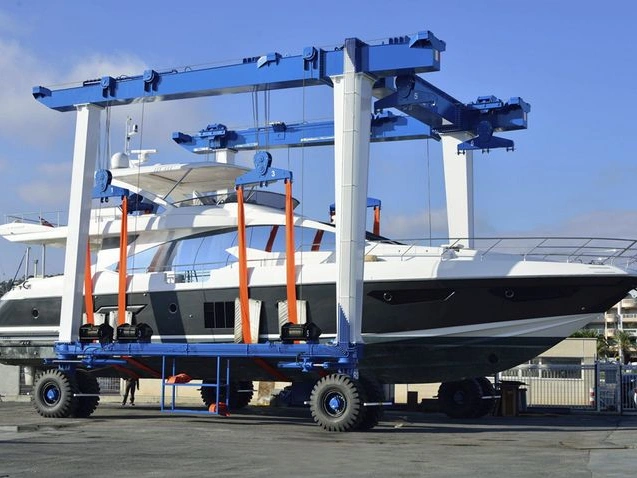
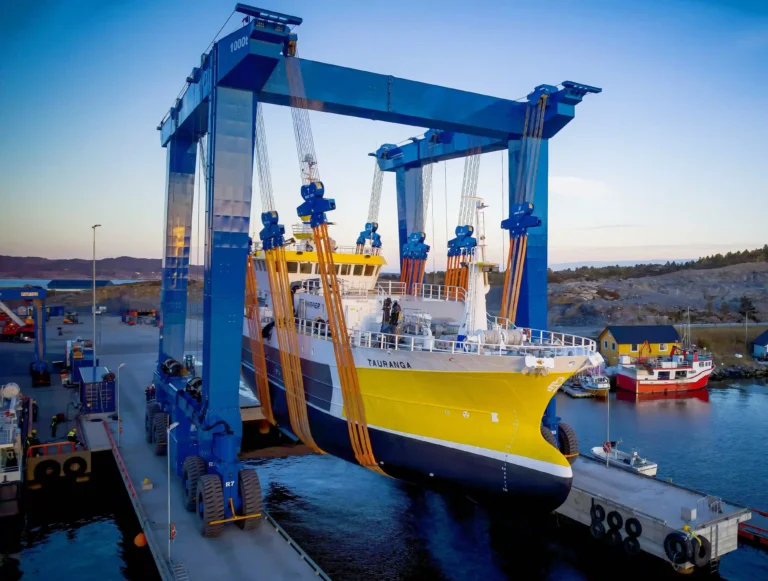
A Elevador de viaje marino Es una grúa pórtico autopropulsada con neumáticos de caucho, diseñada específicamente para el izamiento, transporte y posicionamiento de embarcaciones. La máquina se coloca a horcajadas sobre la embarcación en el agua, en un muelle de varada, la eleva mediante eslingas ajustables y la transporta por la superficie del astillero hasta una posición de almacenamiento o mantenimiento.
A diferencia de los sistemas de grúas fijas o los rieles de varadero, una grúa pórtico marina es totalmente móvil y puede dar servicio a múltiples puntos de varada, zonas de almacenamiento y áreas de servicio dentro de una instalación con una sola máquina. Esta flexibilidad operativa la convierte en el tipo de equipo de manipulación de embarcaciones predominante en puertos deportivos profesionales, centros de servicio de yates y astilleros comerciales de todo el mundo.
Obtener presupuesto gratuito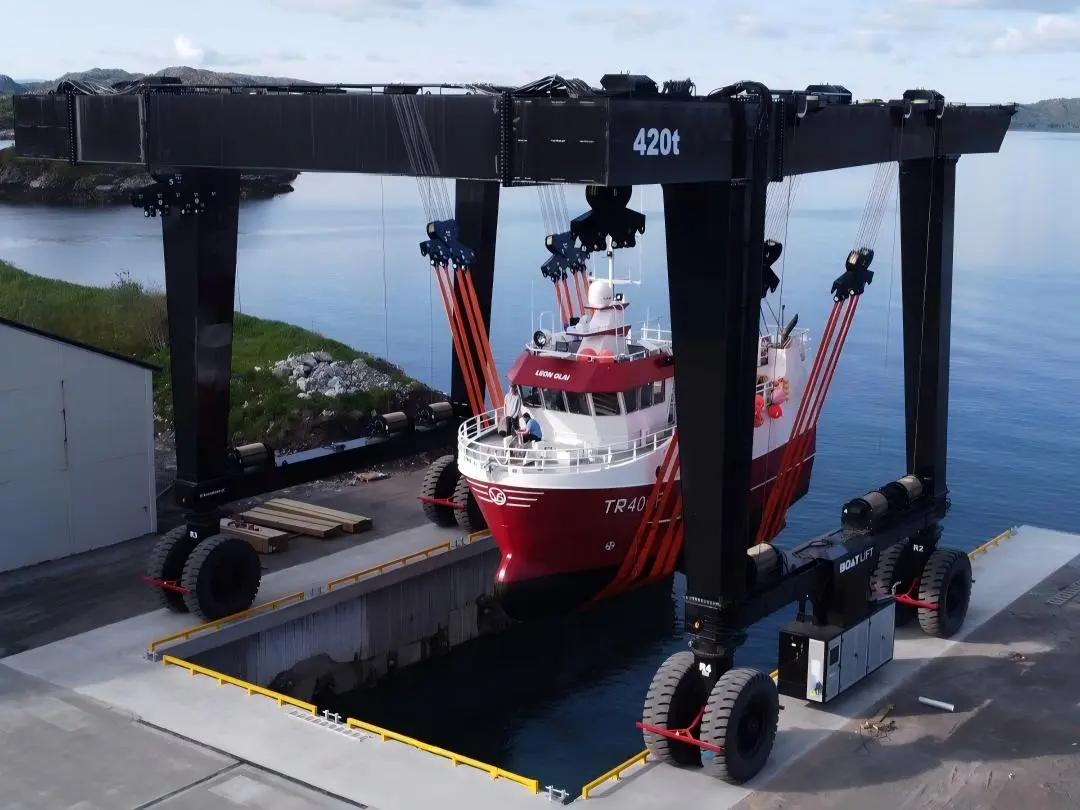
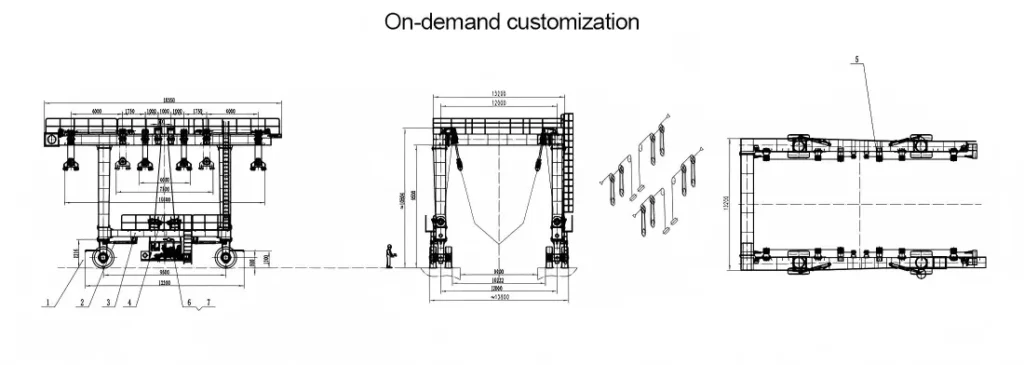
Componentes principales
- Estructura de pórtico de acero: La estructura portante principal, fabricada con acero estructural y diseñada para soportar todas las cargas de elevación a lo largo de la máquina, manteniendo la alineación durante el desplazamiento.
- Sistema de elevación hidráulicoCilindros hidráulicos, bombas y válvulas de control sincronizadas que elevan y descienden las vigas de la eslinga de forma suave y con un control de carga preciso. Los sistemas de sincronización igualan la velocidad de elevación en todos los cilindros para mantener la embarcación nivelada durante la operación.
- Mecanismo de elevación mediante eslingaVigas de eslinga ajustables que soportan eslingas de cincha de grado marino que se fijan al casco en puntos de elevación predefinidos. El ancho de la viga de eslinga es ajustable para adaptarse a diferentes vigas de embarcaciones dentro del rango estructural de la máquina.
- Sistema de direcciónDirección hidráulica o electrohidráulica en múltiples ejes que permite un radio de giro reducido, dirección tipo cangrejo y posicionamiento preciso en las aproximaciones a los muelles y en áreas de patio confinadas.
- Sistema eléctricoSistemas de propulsión diésel-hidráulicos, electrohidráulicos o híbridos que impulsan las funciones de desplazamiento, dirección y elevación. La selección del sistema de propulsión influye significativamente en el costo operativo y el rendimiento en términos de emisiones.
- Sistema de controlControladores lógicos programables, controles en el panel de control o en la cabina del operador, enclavamientos de seguridad, monitorización de la carga y, cada vez más, interfaces de diagnóstico y monitorización remotas.
Rango de precios típicos de las plataformas elevadoras marinas en 2026
Elevador de viaje marino Los precios en 2026 abarcan un amplio espectro. La siguiente tabla ofrece una orientación general del mercado por clase de capacidad. Todas las cifras representan rangos indicativos para grúas pórtico marinas fabricadas a medida por fabricantes reconocidos y no deben considerarse como cotizaciones vinculantes. El precio final depende de las especificaciones, el origen, las certificaciones, la personalización y las condiciones actuales del mercado.
| Clase de capacidad | Rango de precios indicativo (USD) | Aplicaciones típicas |
|---|---|---|
| 10 – 30 toneladas | $250.000 – $450.000 | Pequeños puertos deportivos recreativos, clubes náuticos |
| 30 – 100 toneladas | $450.000 – $550.000 | Centros de servicio para yates, puertos deportivos de tamaño mediano |
| 100 – 300 toneladas | $850.000 – $1.500.000 | Puertos deportivos comerciales, instalaciones para grandes yates |
| 300 – 600 toneladas o más | $1,500,000+ | Astilleros, centros de servicio para superyates |
Varios factores provocan que los precios varíen significativamente dentro de cada rango de capacidad. El país de fabricación es uno de los principales determinantes: los fabricantes europeos y norteamericanos suelen fijar precios más altos debido a los mayores costes laborales, los gastos generales de ingeniería y los requisitos de contenido local. fabricantes asiáticos —en particular aquellas con una trayectoria de exportación consolidada— suelen ofrecer precios competitivos con especificaciones comparables, aunque el alcance de la certificación, los plazos de entrega y las estructuras de soporte posventa difieren y deben evaluarse cuidadosamente.
La profundidad de las especificaciones también genera una variación sustancial en el precio dentro de una misma categoría de capacidad. Una plataforma elevadora de 75 toneladas con control manual mediante colgante, accionamiento diésel-hidráulico y protección anticorrosión estándar tendrá un precio significativamente diferente al de una máquina de 75 toneladas con operación remota completa, accionamiento eléctrico, monitoreo por IoT y certificación de la sociedad de clasificación.
7 factores que influyen en el precio de las grúas pórtico marinas
Capacidad de elevación
La capacidad de elevación es el principal factor determinante del precio de las plataformas elevadoras. El tonelaje de acero estructural, el tamaño de los cilindros hidráulicos, los requisitos de potencia del sistema de accionamiento y la complejidad del sistema de gestión de carga aumentan proporcionalmente con la capacidad nominal. La relación entre capacidad y precio no es estrictamente lineal: el paso de 50 a 100 toneladas implica un incremento proporcionalmente mayor de lo que sugiere la relación de capacidad por sí sola, ya que las dimensiones de la sección estructural, la geometría del bastidor y la complejidad del sistema hidráulico aumentan de forma no lineal con los requisitos de carga.
Una plataforma elevadora de 50 toneladas es una máquina sustancialmente diferente a una de 200 toneladas en cuanto a masa estructural, tamaño de los componentes y complejidad de fabricación. Los compradores que comparan precios entre distintas capacidades sin tener en cuenta estas diferencias estructurales no realizan evaluaciones comparables.
Ancho de tramo
El ancho libre interior —la distancia entre las caras internas de las patas del pórtico— determina qué embarcaciones puede rodear físicamente la máquina. Los tramos más amplios requieren secciones de vigas transversales más largas, estructuras de patas más robustas y, en algunas configuraciones, soporte intermedio adicional. Las máquinas de mayor envergadura son más caras de fabricar e imponen mayores requisitos de infraestructura civil en la instalación de izado.
Para instalaciones que dan servicio principalmente a yates de vela monocasco, una envergadura estándar puede ser suficiente. Las instalaciones que manejan yates a motor de manga ancha, catamaranes o embarcaciones de trabajo comerciales pueden requerir configuraciones de envergadura extendida, que conllevan un sobreprecio de entre el 10 y el 25 por ciento o más con respecto a la configuración estándar de la misma clase de capacidad.
Altura de elevación
Las configuraciones de altura de elevación estándar están diseñadas para proporcionar suficiente espacio libre para la embarcación sobre el nivel del muelle en la mayoría de las aplicaciones portuarias. La altura de elevación extendida, necesaria para embarcaciones con quillas profundas, instalaciones con grandes variaciones de marea u operaciones que impliquen una elevación inusualmente alta del muelle, aumenta la altura estructural del pórtico, incrementa la capacidad requerida del sistema de elevación y eleva el centro de gravedad de la máquina, lo que requiere un análisis de estabilidad adicional.
Las configuraciones de altura extendida suelen añadir entre un 5 y un 15 por ciento al precio base de la máquina, con incrementos mayores para extensiones de altura significativas.
Sistema de energía
La elección del sistema de alimentación eléctrica afecta tanto al coste de capital como al coste operativo durante la vida útil de la máquina.
Sistemas diésel-hidráulicos Históricamente, han sido la configuración estándar y siguen siendo la más común en mercados sin una infraestructura de red eléctrica fiable. Ofrecen independencia operativa del suministro eléctrico, pero conllevan costes continuos de combustible, requisitos de mantenimiento del motor y emisiones que están cada vez más sujetas a regulación en entornos portuarios y de marinas.
sistemas electrohidráulicos Se conectan a la red eléctrica mediante cables de arrastre o sistemas de barras colectoras. Eliminan los costos de combustible y el mantenimiento del motor, no generan emisiones directas durante su funcionamiento y, en mercados con precios de electricidad competitivos, ofrecen importantes ahorros en los costos operativos a lo largo de la vida útil de la máquina. El costo de capital adicional con respecto a los sistemas diésel-hidráulicos de capacidad comparable suele estar entre el 10 y el 20 por ciento, que con frecuencia se recupera en los primeros cinco a ocho años de funcionamiento gracias al ahorro de combustible.
Sistemas híbridos Combinan un generador diésel con almacenamiento de energía en baterías y propulsión eléctrica, lo que proporciona flexibilidad operativa en zonas sin acceso a la red eléctrica, a la vez que aprovechan algunas de las ventajas de eficiencia de la operación eléctrica. Las configuraciones híbridas conllevan el mayor coste de inversión de las tres opciones, pero ofrecen la mejor flexibilidad operativa para instalaciones ubicadas en zonas remotas o insulares.
Configuración de la dirección
Las configuraciones básicas de elevadores de viaje utilizan dirección en las ruedas delanteras o en las cuatro ruedas, lo que proporciona una maniobrabilidad adecuada para la mayoría de los diseños estándar de puertos deportivos. La dirección independiente en las cuatro ruedas, donde cada eje se puede controlar de forma independiente, permite el giro lateral (movimiento de toda la máquina) y radios de giro más cerrados en espacios reducidos.
La dirección en las cuatro ruedas es esencial para operar en áreas de almacenamiento de yates con espacio reducido, pasillos estrechos en el astillero e instalaciones donde el acceso al muelle de varada requiere un posicionamiento lateral preciso. La complejidad adicional de los sistemas hidráulicos y de control de la dirección independiente de cada eje incrementa el precio de la máquina entre un 8 y un 18 por ciento en comparación con las configuraciones de dirección convencionales.
Protección contra la corrosión
Los entornos marinos son de los más exigentes para el acero estructural y los equipos eléctricos. El aire salino, las salpicaduras de agua y la alta humedad aceleran la corrosión en equipos con protección insuficiente. Los sistemas de recubrimiento estándar ofrecen una protección básica adecuada para ambientes de agua dulce protegidos o costeros con condiciones suaves.
Las instalaciones ubicadas en zonas costeras expuestas, climas tropicales o entornos de alta salinidad requieren paquetes de protección anticorrosión mejorados, que incluyen galvanizado en caliente de componentes estructurales, sistemas de recubrimiento epoxi de grado marino, sujetadores de acero inoxidable o dúplex, gabinetes eléctricos con clasificación marina y protección catódica cuando corresponda. Los paquetes de protección anticorrosión premium generalmente incrementan el precio base de la máquina entre un 5 y un 12 por ciento y ofrecen reducciones significativas en los costos de mantenimiento a largo plazo en entornos adversos.
Automatización y funciones inteligentes
El nivel de automatización de una grúa pórtico marina abarca desde el control manual básico mediante un mando colgante hasta sofisticados sistemas semiautomatizados con funcionamiento remoto, monitorización de la carga, tecnología antivibración y conectividad IoT.
Mando a distancia inalámbricoPermite al operador posicionarse de forma óptima para la colocación de la eslinga y la observación de la embarcación, en lugar de estar fijo en una estación colgante. Supone un coste moderado con importantes beneficios operativos.
Monitorización y visualización de la cargaVisualización en tiempo real de la tensión de las eslingas y la carga total, lo que proporciona a los operadores información inmediata sobre la distribución de la carga y una alerta temprana en caso de sobrecarga.
Tecnología antivibración: Control activo de la carga que reduce el movimiento del buque durante el tránsito, mejorando la precisión del posicionamiento y la seguridad.
Diagnóstico y mantenimiento predictivo de IoTSensores integrados que transmiten datos del sistema hidráulico, información sobre la carga estructural y métricas del estado de los componentes a las plataformas de monitorización. Permite la programación del mantenimiento predictivo y el diagnóstico remoto de fallos.
Los paquetes de automatización completa para máquinas de gran capacidad pueden incrementar el precio base de la máquina entre un 15 y un 30 por ciento. El retorno de esta inversión depende de los costos laborales, los requisitos de producción y la importancia que la planta le otorga a la reducción de la dependencia del operador y a una mejor visibilidad de los datos.
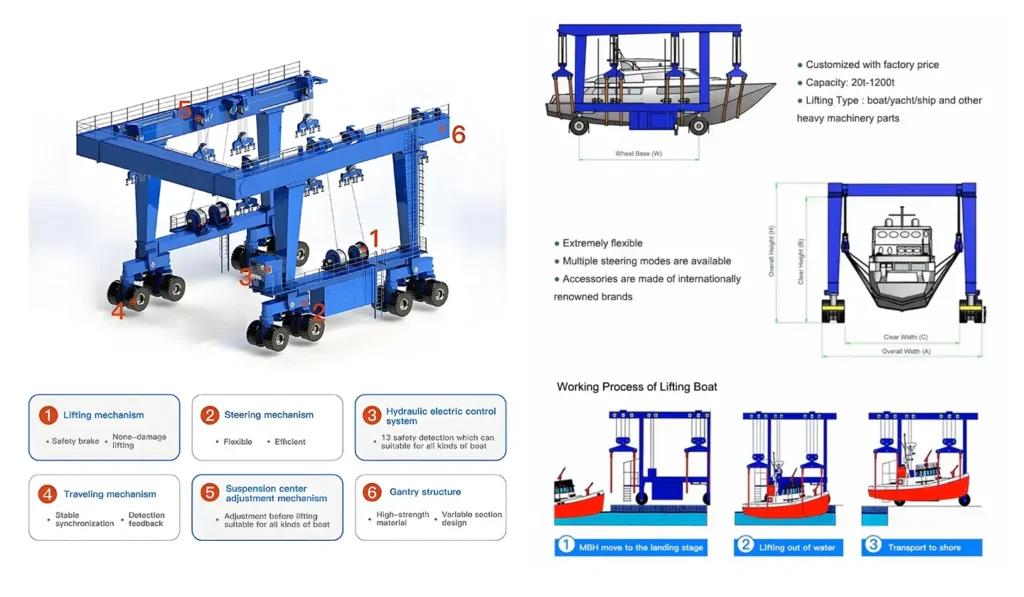
Precio de elevador de viaje marino por capacidad
| Clase de capacidad | Usuarios típicos | Nivel de inversión |
|---|---|---|
| Elevador de viaje de 30 toneladas | Pequeños puertos deportivos, clubes náuticos, vías navegables interiores | Inversión de nivel básico; adecuada para embarcaciones de recreo de hasta aproximadamente 10 metros. |
| Elevador de viaje de 50 toneladas | Puertos deportivos de tamaño mediano, clubes náuticos, operadores de alquiler de embarcaciones. | Inversión moderada; apto para la mayoría de veleros y yates a motor de menor tamaño. |
| Elevador de viaje de 100 toneladas | centros de servicio para yates, puertos deportivos comerciales | Inversión significativa; tiene capacidad para la mayor parte de la flota mundial de yates de alquiler y crucero. |
| Elevador viajero de 200 toneladas | Instalaciones para superyates, grandes puertos deportivos comerciales. | Inversión importante; necesaria para embarcaciones de más de aproximadamente 25 metros y grandes barcos de trabajo comerciales. |
| Elevador viajero de 500 toneladas | Astilleros, instalaciones navales, centros de servicio para megayates | Proyecto de capital sustancial; requiere infraestructura civil dedicada e ingeniería especializada. |
Cada nivel superior de capacidad de la maquinaria implica no solo un mayor costo, sino también mayores requisitos de infraestructura civil: tramos de pavimento más pesados, muelles de izado más amplios, sistemas de suministro eléctrico de mayor capacidad y, en algunos casos, soporte estructural adicional en la orilla del agua. Estos costos de infraestructura deben incluirse en el presupuesto total del proyecto junto con el precio del equipo.
Costos ocultos que los compradores suelen pasar por alto
El precio de compra de una grúa pórtico marina rara vez representa la cifra más elevada del presupuesto total del proyecto una vez que se han tenido en cuenta todos los costes asociados.
Transporte y mercancías
Las plataformas elevadoras marinas son equipos grandes y pesados que requieren transporte especializado. Según el tamaño y el origen de la máquina, el transporte puede incluir flete terrestre de gran tamaño hasta el puerto, flete marítimo en plataformas o contenedores abiertos, y entrega final en obra mediante transporte pesado. Los costos de flete para máquinas grandes pueden representar entre el 5 y el 15 por ciento del precio de la máquina y deben confirmarse con el fabricante al momento de solicitar un presupuesto, en lugar de estimarse.
Aranceles e impuestos de importación
Los aranceles sobre los equipos de elevación importados varían considerablemente según el país. Algunos mercados imponen aranceles del 5 al 20 por ciento o más a la maquinaria industrial importada. Los compradores deben confirmar la clasificación arancelaria y el tipo impositivo aplicable en su mercado de importación antes de comparar las cotizaciones de proveedores nacionales e internacionales.
Instalación y Puesta en Marcha
El montaje y la puesta en marcha de una plataforma elevadora marina requieren ingeniería de campo cualificada, generalmente proporcionada por el fabricante o un socio de servicio autorizado. Los costes varían según el tamaño de la máquina, la accesibilidad del emplazamiento y la duración de la puesta en marcha y las pruebas del sistema. En el caso de máquinas grandes, la puesta en marcha puede prolongarse durante varias semanas y suponer un incremento significativo en el presupuesto del proyecto.
Formación de operadores
El funcionamiento eficaz y seguro de una grúa pórtico marina requiere formación específica. La mayoría de los fabricantes ofrecen formación inicial para los operadores como parte del programa de puesta en marcha, pero la formación continua para el personal nuevo, los cursos de actualización y la formación avanzada para sistemas semiautomatizados suponen un aumento del presupuesto de personal a largo plazo de la instalación.
Inventario de repuestos
Mantener un inventario in situ de repuestos críticos (sellos hidráulicos, componentes del sistema de control, herrajes para eslingas y consumibles del sistema de transmisión) reduce el tiempo de inactividad cuando es necesario reemplazar algún componente. El paquete inicial de repuestos recomendado para una nueva plataforma elevadora suele costar entre el 2 % y el 5 % del precio de la máquina y debe incluirse en el presupuesto al momento de la compra.
Mantenimiento anual
El mantenimiento preventivo rutinario, que incluye el cambio de fluido hidráulico y filtros, la inspección y el reemplazo de eslingas, la inspección de neumáticos, las inspecciones estructurales y las revisiones del sistema eléctrico, representa un costo operativo anual continuo. Los presupuestos anuales de mantenimiento para grúas pórtico marinas suelen oscilar entre el 1 y el 3 por ciento del valor de reemplazo de la máquina, dependiendo de la intensidad de uso y del costo local de mano de obra y materiales.
Preparación de las instalaciones
La superficie del patio, el muelle de descarga, la infraestructura de suministro eléctrico y el sistema de drenaje deben cumplir con los requisitos técnicos de la máquina antes de que pueda procederse con la instalación. Los costos de preparación de las instalaciones (mejoras del pavimento, dragado o reconstrucción del muelle, instalación del panel eléctrico) pueden, en algunos casos, igualar o incluso superar el costo de la máquina en instalaciones que requieren obras civiles importantes.
Análisis de costos operativos
Comprender el coste operativo anual de una grúa pórtico marina es fundamental para comparar el coste del ciclo de vida entre las diferentes opciones disponibles.
Consumo de combustible o electricidad
Las plataformas elevadoras diésel-hidráulicas consumen combustible durante todas sus funciones operativas: desplazamiento, elevación y dirección. El consumo anual de combustible depende de la frecuencia de elevación, el tamaño de la máquina y la distribución del patio. Las máquinas electrohidráulicas se abastecen de la red eléctrica, con costes energéticos que suelen ser entre un 40 y un 60 por ciento inferiores por ciclo de elevación que los de las equivalentes diésel en mercados con precios estándar de electricidad comercial.
Sustitución del aceite hidráulico
El fluido hidráulico debe reemplazarse según un calendario establecido y analizarse periódicamente para detectar contaminación y degradación. El costo anual del aceite hidráulico para una plataforma elevadora de tamaño mediano es moderado, pero representa un gasto de mantenimiento recurrente que debe presupuestarse y gestionarse sistemáticamente.
Mantenimiento de neumáticos
Los neumáticos de las grúas pórtico se desgastan debido a la carga, los giros y la abrasión de la superficie del astillero. El reemplazo de neumáticos es uno de los mayores costos de mantenimiento programado para los equipos marinos móviles. La vida útil de los neumáticos depende de la intensidad de operación, la calidad de la superficie del astillero y la frecuencia de giro. Las instalaciones con grandes amplitudes de marea o cambios de pendiente significativos aceleran el desgaste de los neumáticos en comparación con los astilleros planos y de superficie lisa.
Reemplazo de la correa
Las eslingas de elevación marina son consumibles con una vida útil definida, limitada por la degradación por rayos UV, la abrasión y la fatiga por ciclos de carga. La frecuencia de reemplazo de las eslingas depende de la intensidad de operación y la severidad del entorno marino. Las instalaciones con altos volúmenes de elevación deben presupuestar el reemplazo de las eslingas como un costo anual regular.
Inspección de rutina y servicio anual
Las inspecciones programadas, la lubricación, el reemplazo de filtros y las revisiones de componentes deben realizarse según el programa de mantenimiento del fabricante. Muchos fabricantes ofrecen contratos de servicio anuales que brindan un costo de mantenimiento predecible y acceso prioritario a técnicos capacitados por la fábrica.
Comparación de costos entre elevadores de viaje marinos y polipastos para embarcaciones marinas
| Factor | Elevador marino de viaje | Elevador de embarcaciones marinas |
|---|---|---|
| Movilidad | Totalmente móvil y autopropulsado. | Variable: fijo al móvil según el tipo |
| Rango de capacidad | De 25 toneladas a más de 1.000 toneladas | De 10 toneladas a más de 500 toneladas |
| Requisitos de infraestructura | Patio pavimentado, muelle de varada, suministro eléctrico. | Menor para tipos fijos; similar para móviles. |
| Costo inicial | Más alto: sistema autopropulsado completo | De bajo a moderado dependiendo del tipo |
| Costo operativo | Moderado: combustible/electricidad más mantenimiento | Menor para tipos fijos con menor complejidad mecánica. |
| Flexibilidad | Alto: desempeña múltiples funciones | Menor para fijo; comparable para móvil |
| Rango del haz del buque | Barra de eslinga ancha y ajustable | Dependiente del tipo |
| Más adecuado para | Diversa gama de recipientes, alto rendimiento, necesidades de gran capacidad. | Tipo de recipiente definido, punto de elevación único, menor rendimiento. |
Para instalaciones que gestionan una variedad diversa de embarcaciones en múltiples puntos de varada con un alto volumen de operaciones anuales, la grúa pórtico marina ofrece un valor operativo superior a pesar de su mayor coste inicial. Para instalaciones con un tipo de embarcación definido, un único punto de varada y un menor volumen de operaciones, una grúa fija para embarcaciones puede ofrecer una capacidad adecuada a un menor coste de inversión.
La comparación correcta no se basa en el precio de la máquina, sino en el coste total por ascensor durante el horizonte de planificación de la instalación.
Cómo evaluar a un fabricante de plataformas elevadoras
El precio es solo una dimensión en la evaluación de proveedores. La capacidad, la fiabilidad y la infraestructura de soporte del fabricante influyen directamente en el valor a largo plazo de la inversión.
Experiencia en fabricación
Los fabricantes con décadas de experiencia en la producción de plataformas elevadoras marinas han perfeccionado sus diseños, desarrollado relaciones con proveedores y acumulado datos de rendimiento en campo que los nuevos competidores no pueden replicar. Pregunte cuánto tiempo lleva el fabricante produciendo plataformas elevadoras y cuál es el tamaño total de su flota instalada.
Capacidad de ingeniería
La capacidad interna de ingeniería estructural, diseño de sistemas hidráulicos y desarrollo de automatización permite al fabricante personalizar los equipos según los requisitos específicos de cada proyecto y brindar un soporte técnicamente fiable durante el proceso de especificación.
Referencias del proyecto
Solicite referencias de proyectos ya finalizados de capacidad y tipo de aplicación similares. Póngase en contacto directamente con las instalaciones de referencia para hablar sobre el rendimiento y la fiabilidad de los equipos, así como sobre su experiencia con el servicio de asistencia técnica del fabricante.
Certificaciones
Confirme que el fabricante posee las certificaciones pertinentes para el mercado objetivo. ISO 9001, Marcado CE Para proyectos europeos, se requiere el cumplimiento de la norma ASME B30 para proyectos norteamericanos, y la aprobación de la sociedad de clasificación cuando así lo exijan las especificaciones de contratación o los requisitos del seguro.
Soporte de repuestos
Antes de comprar, confirme la disponibilidad, el precio y los plazos de entrega de los repuestos para componentes críticos. Un fabricante sin una red de distribución de repuestos establecida genera un riesgo operativo que no se refleja en la cotización inicial.
Servicio posventa
Evalúe la capacidad de servicio técnico del fabricante: plazos de respuesta, cobertura regional del servicio, disponibilidad de técnicos capacitados en fábrica y capacidad de diagnóstico remoto.
Tiempo de entrega
Confirme plazos de fabricación y entrega realistas según la programación de producción actual. Para programas de apertura de puertos deportivos o astilleros con plazos de entrega ajustados, el tiempo de entrega puede ser tan importante como el precio.
Capacidad de personalización
Evalúe la capacidad y la disposición del fabricante para adaptarse a los requisitos específicos del proyecto (alcance no estándar, altura de elevación extendida, protección especializada contra la corrosión o integración de automatización personalizada) sin comprometer el rendimiento ni la garantía de la máquina.
Errores comunes de los compradores
Elegir únicamente la cotización más bajaLa grúa pórtico de menor precio suele tener el mayor coste total de propiedad. La calidad estructural, la fiabilidad del sistema hidráulico, la disponibilidad de repuestos y el servicio de asistencia técnica influyen en el coste operativo, a lo largo de varias décadas, de una flota de grúas pórtico marinas.
Subestimar el tamaño futuro de los buquesEl tamaño de las embarcaciones en los mercados marítimos recreativos y comerciales ha tendido a ser cada vez mayor. Especificar el tamaño máximo actual sin margen de crecimiento conlleva limitaciones de capacidad prematuras.
Ignorar los costos operativosUna máquina que ahorra $100,000 en el precio de compra pero consume significativamente más combustible por ciclo de elevación, requiere un mantenimiento más frecuente o tiene mayores costos de reemplazo de neumáticos puede resultar más cara a lo largo de diez años de funcionamiento que la alternativa más costosa.
Seleccionar un ancho de tramo insuficienteEl ancho de la manga es una limitación operativa fundamental. Una máquina que no pueda acomodar físicamente la manga de los buques de la flota no podrá funcionar, independientemente de sus otras capacidades. Confirme la manga máxima del buque —incluidos los catamaranes, si corresponde— antes de finalizar la especificación de la manga.
Supervisar el soporte técnicoLos equipos que no pueden recibir mantenimiento con prontitud cuando fallan representan un riesgo, independientemente de sus especificaciones. La infraestructura de soporte técnico en la región donde se ubica la instalación es tan importante como las especificaciones técnicas de la máquina.
No comparar los costos del ciclo de vidaUna comparación de los costes del ciclo de vida de 25 años, que incluye energía, mantenimiento, repuestos y costes de revisiones importantes, revela sistemáticamente diferencias de costes entre las opciones de la competencia que no son visibles en la comparación del precio de compra.
Cómo solicitar un presupuesto preciso para una plataforma elevadora.
Proporcionar información completa y precisa del proyecto al solicitar presupuestos da como resultado propuestas más pertinentes y evita costosos cambios en las especificaciones después de realizar el pedido. La siguiente lista de verificación abarca la información mínima que un fabricante necesita para proporcionar un presupuesto útil para una plataforma elevadora.
- Desplazamiento máximo del buque (carga operativa completa, no buque en vacío) y el margen requerido por encima de esta cifra.
- Longitud máxima del buque y rango de separación requerido de la viga de eslinga
- Manga máxima del buque, incluyendo cualquier buque multicasco que deba ser manipulado.
- Frecuencia anual prevista de los remontes y ciclo medio de remontes por día durante los períodos de mayor demanda.
- Dimensiones del diseño del puerto deportivo o astillero, incluyendo las dimensiones de los muelles de varada, el ancho de las rutas de navegación y las zonas de giro.
- Suministro de energía disponible: tensión de la red, fase y capacidad disponible, o requerimiento de energía autónoma.
- Condiciones ambientales: exposición costera, amplitud de las mareas, clima y cualquier requisito especial de corrosión.
- Requisitos de certificación: CE, ASME, sociedad de clasificación u otras normas específicas del mercado.
- Fecha de puesta en marcha prevista y cualquier restricción en el cronograma del proyecto.
- Rango de presupuesto, si está definido, para permitir al fabricante optimizar la configuración.
Conclusión
Los precios de las plataformas elevadoras marinas en 2026 reflejan una amplia gama de configuraciones, capacidades, niveles tecnológicos y capacidades de los proveedores. El precio de compra es un factor importante en la decisión de adquisición, pero nunca debe evaluarse de forma aislada. El transporte, la instalación, la preparación de las instalaciones, la capacitación del operador, los repuestos, la energía y los costos de mantenimiento definen en conjunto la inversión total durante la vida útil del equipo.
Los compradores que evalúan el coste total de propiedad, confirman la coherencia entre las especificaciones de la máquina y la combinación real de recipientes y la trayectoria de crecimiento de la instalación, y seleccionan fabricantes con una sólida experiencia en ingeniería y un buen servicio de asistencia, consiguen sistemáticamente mejores resultados a largo plazo que aquellos que se centran únicamente en optimizar el precio de compra.
En un sector donde la vida útil de los equipos supera habitualmente los 25 años, la calidad de la decisión de compra que se tome hoy determina la capacidad operativa y la estructura de costes de la instalación durante una generación.
Póngase en contacto con nuestro equipo de ingeniería para obtener información sobre las especificaciones y los costes del equipamiento de la marina.
Comente con nosotros los requisitos de su proyecto de manipulación de buques; le ayudaremos a definir la configuración adecuada del elevador de traslación y a evaluar el coste total de propiedad para su aplicación.
Preguntas frecuentes
P: ¿Por qué varían tanto los precios de los elevadores de viaje marinos entre los distintos fabricantes?
La variación de precios entre fabricantes refleja diferencias en el país de fabricación, la experiencia en ingeniería, la calidad de los componentes, el alcance de las certificaciones y la infraestructura de soporte posventa. Una máquina más económica de un fabricante con poca experiencia en exportación, sin red de servicio local y con documentación de certificación mínima conlleva riesgos que no se reflejan en la comparación de precios. Evalúe la propuesta integral del proveedor, no solo el precio.
P: ¿Cuánto tiempo dura una grúa pórtico marina?
Las grúas pórtico marinas bien diseñadas y con el mantenimiento adecuado tienen una vida útil de 25 a 30 años o más. Los componentes estructurales suelen durar más que los sistemas hidráulicos y eléctricos, que requieren reemplazo programado durante la vida útil de la máquina. La calidad de las especificaciones iniciales, la fabricación y la protección contra la corrosión influyen significativamente en el envejecimiento de la máquina en servicio marítimo.
P: ¿Merece la pena el mayor coste inicial de una plataforma elevadora eléctrica?
Para la mayoría de las instalaciones con suministro eléctrico fiable, sí, en un periodo de 10 a 15 años. El ahorro en costes energéticos por ciclo de elevación, sumado a la eliminación del mantenimiento del motor, suele recuperar la inversión inicial en un plazo de cinco a ocho años, dependiendo de los precios locales del combustible y la electricidad, así como de la frecuencia anual de las elevaciones. Las grúas pórtico eléctricas también contribuyen a los programas de sostenibilidad de los puertos deportivos y podrían llegar a ser prácticamente obligatorias en algunos mercados a medida que se endurezcan las normativas sobre emisiones.
P: ¿Qué plazo de entrega debo prever para una nueva grúa pórtico marina?
Los plazos de entrega varían según la capacidad del fabricante y su cartera de pedidos actual, pero, por lo general, los compradores deben prever entre 6 y 18 meses desde la realización del pedido hasta la entrega para configuraciones estándar. Las especificaciones personalizadas, las clases de capacidad ampliadas o los pedidos realizados durante períodos de alta demanda en el sector pueden prolongar aún más los plazos de entrega. Confirme los plazos de entrega actuales de los fabricantes preseleccionados al inicio del proceso de compra.
P: ¿Cómo puedo comparar presupuestos de fabricantes en diferentes países?
Antes de comparar precios, convierta todas las cotizaciones a un costo común con entrega en obra (incluidos flete, seguro, aranceles de importación y transporte local). Luego, evalúe el costo total de propiedad, incluyendo energía, mantenimiento y repuestos, durante un período definido (generalmente 10 o 20 años). Finalmente, analice factores cualitativos como el soporte de ingeniería, las referencias de proyectos, el alcance de la certificación y la infraestructura de servicio. Una evaluación completa basada en estos criterios suele arrojar una clasificación diferente a la de una simple comparación de precios.