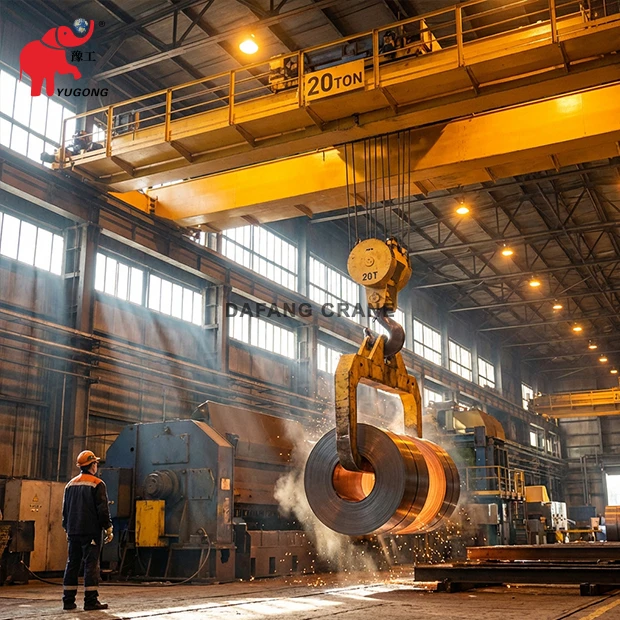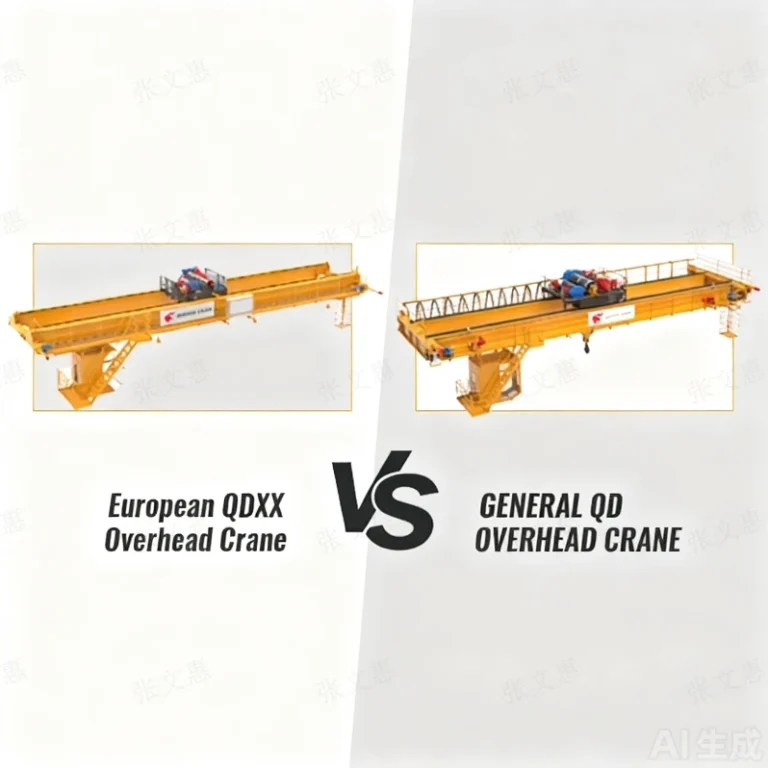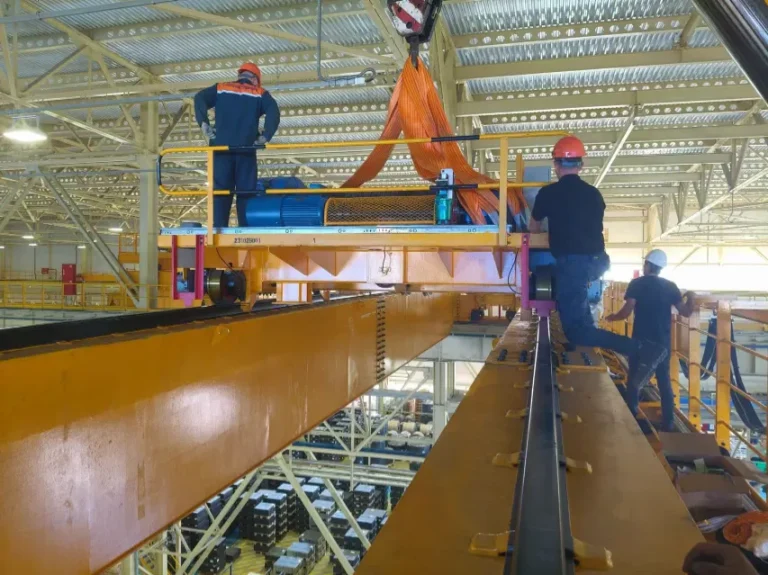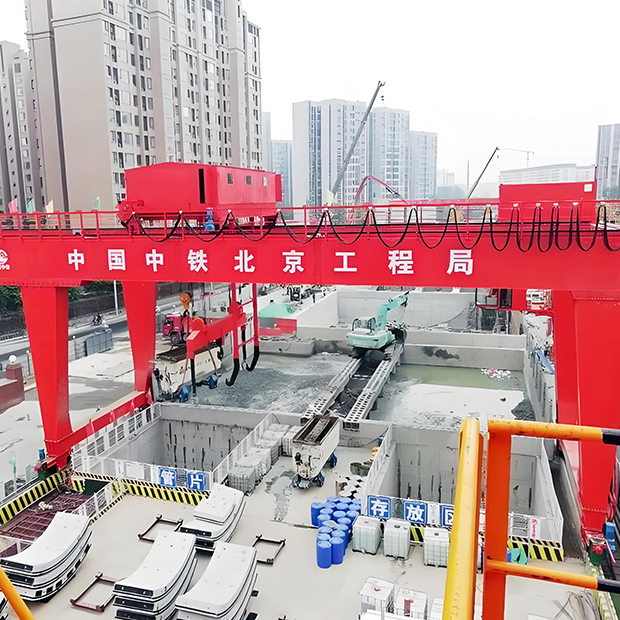







A waste to energy and biomass industry crane is the operational backbone of every modern incineration and biomass power plant. From garbage grab cranes running at A8 duty class to fully automated straw bale systems, the right crane selection directly determines plant uptime, safety, and throughput efficiency.
Оглавление
Waste to Energy and Biomass Cranes - the Core of Waste Handling Plants
Waste-to-energy (WtE) and biomass power generation are among the most demanding industrial environments for lifting equipment. Unlike a warehouse crane that handles predictable loads in a controlled atmosphere, a waste to energy and biomass industry crane must perform continuous duty cycles inside pits filled with corrosive gases, humidity, and fluctuating temperatures — sometimes around the clock, seven days a week.
The stakes are uniquely high: if the crane stops, the entire incineration line stops. Feed interruption can force a full plant shutdown, resulting in significant energy losses and costly restart procedures. This makes crane reliability, duty classification, and redundancy configuration non-negotiable design requirements — not optional upgrades.
Unlike process equipment that can be bypassed or isolated for maintenance, the waste crane has no equivalent redundancy unless specifically designed in. A single point of failure at the crane level propagates immediately to combustion stability — which is why Dafang Crane designs every WtE crane system with availability as the primary engineering criterion, not just rated capacity.
Core Crane Types Used in Waste to Energy and Biomass Facilities
Four distinct crane types are deployed across a typical waste-to-energy or biomass power facility. Each serves a fundamentally different operational role, operates in a different environment, and requires a different technical specification. The table below provides a comparison across all four types.
| Тип крана | Location in Plant | Основная функция | Класс службы |
| Garbage Grab Crane | Above waste storage pit | Feeding, mixing, weighing, transporting MSW to incinerator hopper — must synchronize with incinerator at all times | A8 (Highest) |
| Ash / Slag Grab Crane | Above slag discharge pit | Moves bottom ash and slag from incinerator to transport vehicles; one active unit typically sufficient | A6 |
Garbage Grab Crane — The Most Critical Unit in Any WtE Plant
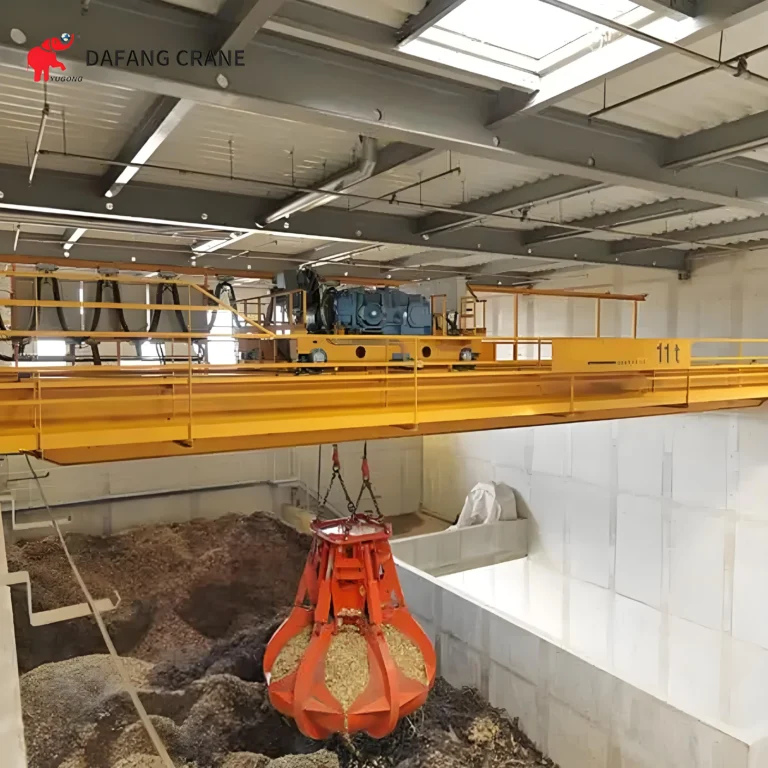
The garbage grab crane is installed above the waste storage pit and operates in the harshest environment of any lifting application: continuous exposure to corrosive waste gases including H₂S and CH₄, high humidity, variable load density, and the unrelenting demand to keep the incinerator hopper charged at all times.
Dafang Crane recommends a two-crane configuration for every waste pit — one active unit and one hot standby — so that maintenance on the primary crane never requires an incinerator shutdown. The operating crane handles feeding, mixing, weighing, and transporting; the standby crane is powered and ready to take over within minutes.
Control modes available from Dafang include manual (ground pendant), semi-automatic, and fully automatic (unmanned). In fully automatic mode, the control system manages load weighing, hopper sequencing, and material mixing without operator intervention — and can feed two charging hoppers simultaneously from a single bridge crane.

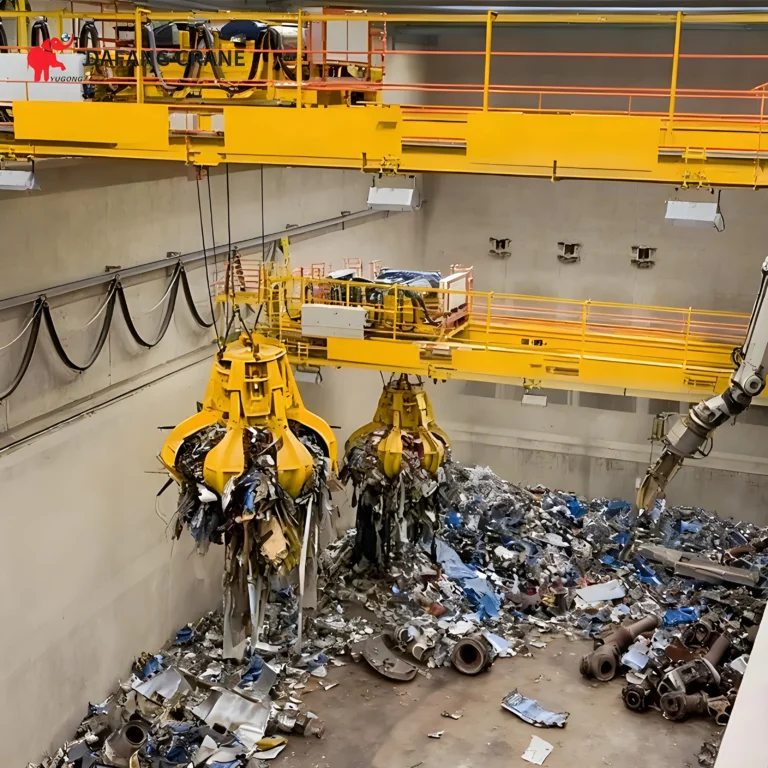
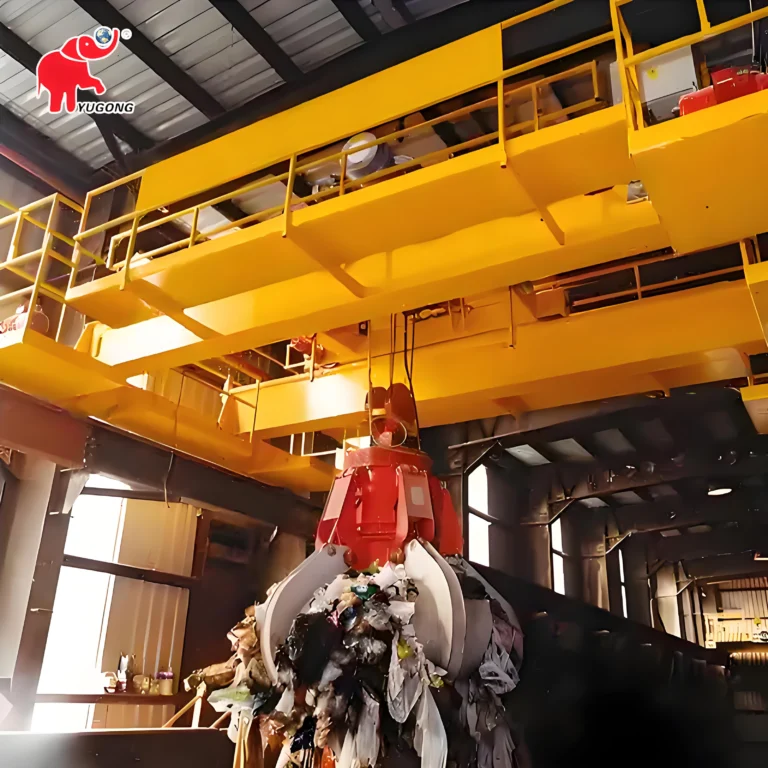
⚠️ Duty class must be A8 — the highest industrial classification under ISO 4301. Specifying A7 or below for a WtE garbage crane is non-compliant with the operational profile and will result in accelerated structural fatigue and potential safety incidents.
Ash / Slag Grab Crane — Duty Class A6
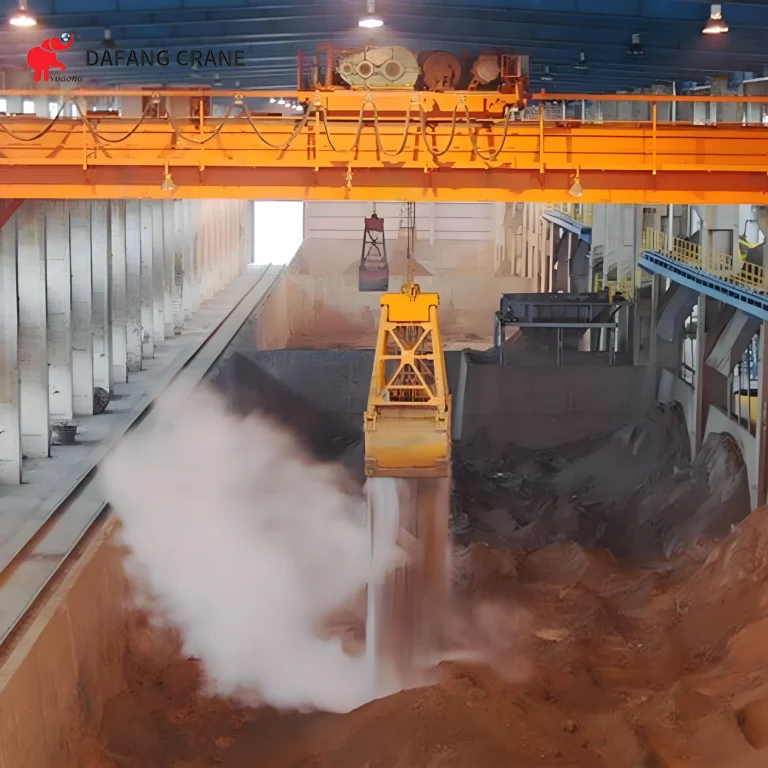
The ash grab crane operates above the slag discharge pit, collecting bottom ash and slag from the incinerator and loading it into transport vehicles for disposal or recovery. While the operating environment — high dust concentration and persistent moisture — is demanding, the duty cycle is lower than the garbage grab crane because slag discharge is intermittent rather than continuous.
A single active unit is standard for most plant sizes. For large-capacity plants exceeding 500 tonnes per day of incineration, a second crane is advisable to ensure slag removal keeps pace with ash production. Drive components, sealed bearings, and IP-rated control panels are essential given the abrasive dust environment of the slag pit.
Промышленный кран
Промышленный кран
Промышленный кран
Key Selection Criteria for WtE and Biomass Cranes
Selecting the correct crane system for a waste-to-energy or biomass facility requires the plant engineer and procurement manager to define five parameters with precision before approaching any supplier. Each parameter directly determines the crane's structural design, component ratings, and therefore its quoted price.
| Number | Selection Parameter | What It Determines | Buyer Action |
| 1 | Total incineration capacity (t/d) | Required crane speed, grab bucket volume, number of crane units per pit | State daily tonnage in RFQ; supplier sizes grab capacity and travel speed accordingly |
| 2 | Layout of handling area | Span, lifting height, travel distance, number of charging hoppers served | Provide dimensioned pit drawing with hopper positions and rail top elevation |
| 3 | Waste or fuel type | Grab bucket design, capacity rating, corrosion protection level (MSW vs RDF vs biomass) | Specify MSW / RDF / sludge / gray straw / yellow straw — each has different bulk density |
| 4 | Operating cycle & duty class | Structural steel grade, motor ratings, brake size, bearing selection, design service life | Conduct actual cycle count before specifying; WtE garbage cranes = A8; ash = A6 |
| 5 | Control & automation level | Staffing requirements, safety compliance, throughput consistency, integration with plant DCS | Confirm whether manual, semi-auto, or fully unmanned operation is required from day one |
Tip: The most common and costly specification error in WtE crane procurement is providing incineration capacity in tonnes per day without specifying the number of charging hoppers and their positions relative to the waste pit. Hopper layout determines span, travel distance, and whether one or two cranes are needed — all of which have major cost implications.
Duty Class and Redundancy Configuration
The duty class specification for WtE and biomass cranes is not a matter of preference — it is determined by the operational profile of the plant and the consequences of crane downtime. The table below maps each crane type to its correct duty class and redundancy requirement.
| Тип крана | Класс службы | Operational Pattern | Redundancy Requirement |
| Garbage Grab Crane | A8 | Continuous — synchronized with incinerator 24/7 during operational periods | MANDATORY: 2 cranes per pit (1 active + 1 hot standby); downtime = incinerator shutdown |
| Ash / Slag Grab Crane | A6 | Frequent — several times per shift whenever slag is discharged | 1 active crane; 2 recommended for large-capacity plants (>500 t/d incineration) |
The distinction between A7 and A8 duty class is significant in the WtE context. A7 allows for some planned downtime tolerance; A8 is specified for cranes where any unplanned outage directly halts a continuous industrial process. The garbage grab crane in a WtE plant unambiguously meets the A8 threshold — it runs continuously in direct synchrony with the combustion line, and its failure immediately triggers an emergency incinerator shutdown procedure.
Environmental Protection and Component Specifications
The operating environment of a waste-to-energy or biomass crane is hostile to standard industrial equipment. Every major component selection decision — from motor insulation class to paint system — must account for the specific chemical and physical hazards present in each area of the plant.
| Environmental Challenge | Affected Zone | Dafang Design Response |
| Corrosive gases (H₂S, CH₄, HCl) | Waste pit, flue gas zones | Sealed IP-rated enclosures on all electrical panels; corrosion-resistant paint system (min. 200 μm DFT); stainless cable trays in pit zone |
| High humidity (>95% RH) | Waste pit, biomass storage | Anti-condensation heaters in control panels; sealed bearing housings; tropical-grade electrical insulation on motor windings |
| High dust concentration | Slag pit, biomass yard | IP65 motors; positive-pressure purge option for control cabinets; sealed drive units with extended re-lubrication intervals |
| Flammable / explosive gas (limited) | Waste pit crane working zone | Standard (non-Ex) configuration appropriate in most WtE plants — gas concentrations typically below threshold; confirm with site EH&S assessment |
| Temperature cycling | All outdoor biomass cranes | Thermal expansion joints in runway; motor insulation Class F minimum; brake linings rated for temperature range −20°C to +60°C |
A Note on Explosion-Proof Requirements
A frequently asked question in WtE crane specifications is whether ATEX / IECEx explosion-proof electrical equipment is required in the waste pit zone. Based on extensive operational data from Dafang Crane projects, the concentration of flammable and explosive gases (primarily methane from waste decomposition) in the active working zone of garbage grab cranes is generally below the lower explosive limit (LEL) under normal ventilated operating conditions.
Explosion-proof configurations are therefore not required as standard in most waste-to-energy plants. However, this should always be confirmed through a formal hazardous area classification study (HAC) conducted by the plant's EH&S team before finalising the electrical specification. Corrosion-resistant and sealed (IP65 minimum) enclosures remain mandatory in all waste pit crane applications regardless of the explosive atmosphere assessment outcome.
Biomass Cranes: Automation, Fuel Diversity, and Availability Design
Biomass fuel handling presents a unique set of crane design challenges that differ significantly from both conventional overhead crane applications and the waste-to-energy context. The key variables are fuel diversity, outdoor exposure (most biomass storage yards are uncovered or semi-covered), and the absence of a standby crane — which makes every hour of crane downtime a direct hit on plant fuel supply.
Grab Design for Mixed Fuel Types
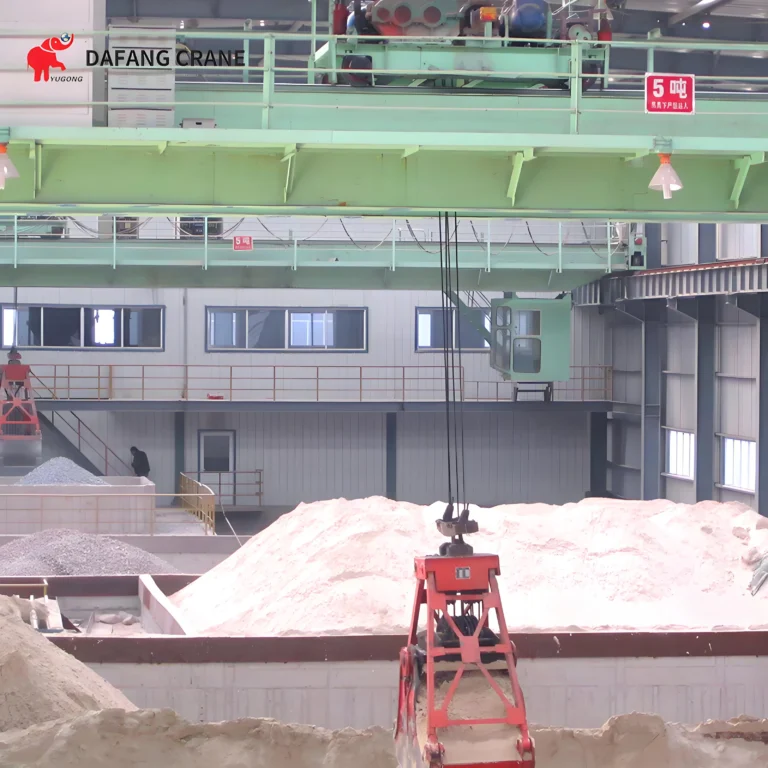
The diversity of biomass feedstocks — from dense, uniform wheat straw bales to loose, irregular cotton stalks mixed with occasional debris — requires grab bucket designs that can accommodate a wide range of bulk densities (typically 80–350 kg/m³ depending on fuel type and moisture content). Dafang's biomass grab buckets use hydraulic jaw actuation with variable opening width and adjustable closing force to handle this range without need for manual grab changes between fuel deliveries.
Outdoor Operation and Weatherproofing
Biomass storage yard cranes typically operate outdoors or in semi-open structures, exposing all structural and electrical components to rain, wind, UV radiation, and temperature cycling. Dafang specifies galvanised structural components or two-component epoxy paint systems (minimum 200 μm DFT) for all outdoor biomass cranes. Electrical panels use IP65 or IP66 enclosures with anti-condensation heaters on thermostat control to prevent moisture ingress during cold overnight periods.
Automation and Unmanned Operation
Fully automated biomass crane systems from Dafang integrate with the plant's fuel management DCS via Profinet or Modbus TCP, enabling the crane to operate without a dedicated operator through the full fuel cycle: bale unloading from truck, stacking in storage zones, fuel quantity monitoring, and combustion line feeding on demand. Automated anti-collision systems allow two cranes to work in the same bay without risk of structural contact.
Conclusion: Why Crane Specification Precision Matters in Energy-from-Waste Projects?
The waste to energy and biomass industry crane is not a utility purchase — it is a mission-critical process component with a direct relationship to plant availability, throughput, safety, and regulatory compliance. Getting the specification right at the outset — duty class, redundancy configuration, environmental protection, automation level, and grab design — determines whether the crane delivers its 20-year design life with planned maintenance costs or consumes budget in reactive repairs and downtime penalties.
Кран Дафанг brings dedicated WtE and biomass crane engineering experience to projects worldwide. Our engineering team works from plant layout drawings and incineration capacity data to produce a complete crane configuration recommendation — including structural sizing, electrical specification, and crane quantity — before the first purchase order is placed.

Часто задаваемые вопросы
Q1: What duty class is required for a waste-to-energy garbage grab crane?
Garbage grab cranes must meet A8 duty class — the highest industrial level under ISO 4301 — because they operate continuously and directly synchronised with the incinerator. A standby unit is always required; any unplanned downtime on the active crane immediately triggers an incinerator shutdown sequence.
Q2: How many cranes are typically installed above a waste pit?
Two cranes are standard: one primary unit handles daily feeding, mixing, weighing, and material distribution; the second serves as a hot standby, maintained in powered and operational condition so it can take over within minutes when the primary crane requires maintenance. For plants exceeding 1,000 t/d incineration capacity, three cranes are sometimes specified.
Q3: What is the difference between a garbage grab crane and an ash grab crane?
The garbage grab crane operates at A8 duty class in direct synchrony with the incinerator and requires two-crane redundancy. The ash grab crane handles slag at A6 duty class with intermittent operation — a lower duty profile that reflects the periodic rather than continuous nature of ash discharge. Component ratings, motor sizing, and structural steel grade all differ accordingly.
Q4: What types of cranes are used in biomass power plants?
Biomass plants commonly use straw bale handling cranes (for uniform bale logistics), loose straw grab overhead cranes (for mixed bulk biomass), and turbine hall cranes for generator maintenance. Fully automated unmanned systems are standard for the fuel feeding application, integrating with the plant DCS for demand-based fuel delivery.
Q5: Are explosion-proof crane specifications required in waste-to-energy plants?
Based on operational experience and gas monitoring data from multiple WtE plants, flammable gas concentrations in the active working zone of garbage grab cranes are generally below the lower explosive limit under normal ventilated conditions. Explosion-proof configurations are not required in most cases — but a formal hazardous area classification study by the plant's EH&S team is required before finalising the electrical specification.