






A structured guide for port planners, procurement directors, and terminal operators
evaluating crane manufacturers in 2026
The global container gantry crane market is dominated by a handful of manufacturers — ZPMC, Konecranes, Liebherr, and Manitowoc at the top tier — alongside specialist mid-market producers including Henan Dafang Crane. Key innovations in 2024–2026 centre on hydrogen-electric power, AI-based anti-sway, and full-stack TOS integration. Choosing a manufacturer requires matching crane type, duty class, certification standard, and innovation roadmap to your terminal's five-year plan.
Why Manufacturer Selection Is a Strategic Decision
A container gantry crane has an operating life of 25–30 years. The manufacturer you choose determines not just the crane's initial capability, but its serviceability, spare parts availability, software upgrade path, and compatibility with future terminal automation systems. Selecting on price alone — without evaluating innovation trajectory and certification depth — is a common and costly mistake.
The market divides into three tiers: global volume leaders with full port automation platforms, premium European specialists with deep service infrastructure, and agile mid-market manufacturers offering CE-certified custom engineering at competitive total cost. Each tier serves a different buyer profile.
Top Container Gantry Crane Manufacturers: Overview
The table below covers ten manufacturers with significant global market presence or specialised capability in container gantry crane production:
| Производитель | Штаб-квартира | Типы кранов | Key Innovation (2025–26) | Market Position |
|---|---|---|---|---|
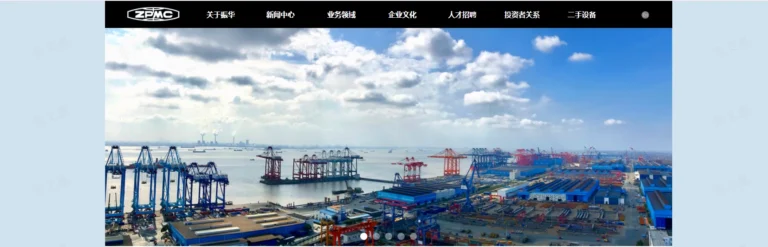
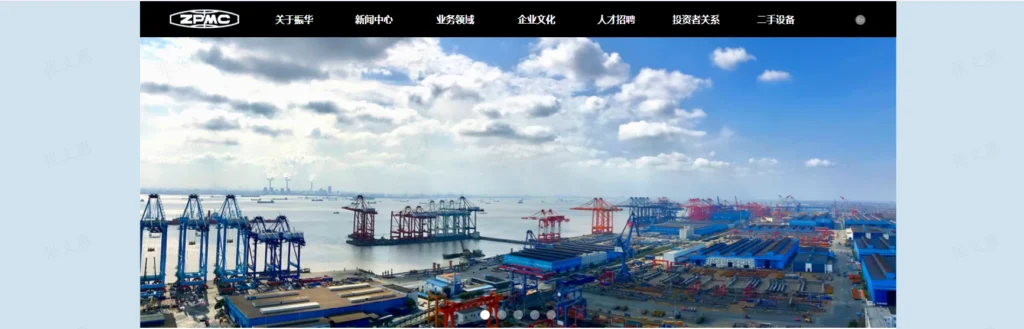
| ZPMC | China (Shanghai) | STS, RTG, RMG, gantry | Hydrogen fuel-cell STS prototype; full-stack TOS-ready automation | Global volume leader; 70%+ STS world market share |
| Konecranes | Финляндия | RTG, RMG, overhead, process | Automated RTG (ARTG) with DGPS; remote monitoring via TRUCONNECT | Premium service-led model; MaaS contracts |
| Liebherr | Germany / Ireland | Mobile harbour crane, STS | LHM 800 – 308 t capacity mobile harbour crane; hybrid diesel-electric drive | Premium build quality; mobile and offshore focus |
| Manitowoc / Grove | USA | Mobile, crawler, tower | Grove GMK7550 – 550 t all-terrain; Potain self-erecting tower crane | Construction and heavy-lift focus |
| Noell / Konecranes (merged) | Germany | RTG, RMG, straddle carrier | Fully automated straddle carrier integrated with TOS | Automation-first; large European port installations |
| SANY Heavy Industry | China | RTG, RMG, harbour crane | Shore-power-ready RTG; IoT telematics platform SANY Cloud | Growing export footprint; competitive pricing |
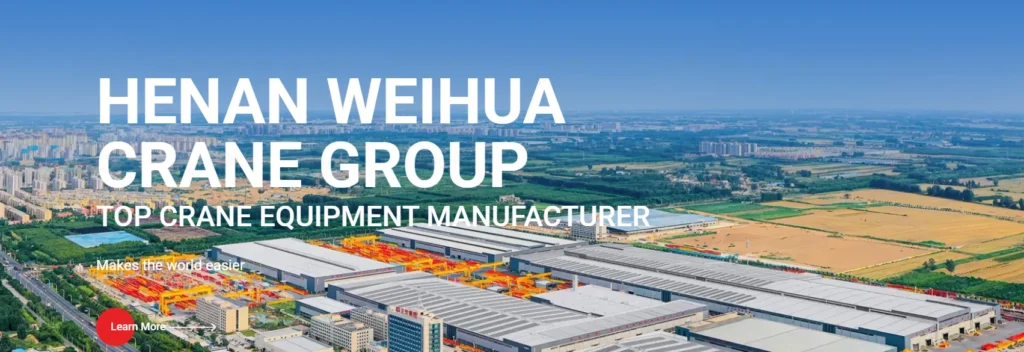
| Вэйхуа Груп | China | Overhead, gantry, RTG | New 100-ton double-girder RTG; electric energy-storage hoisting | Large domestic market share; expanding export |
| Cargotec / Kalmar | Финляндия | RTG, shuttle carrier, RMG | Kalmar FastCharge RTG; zero-emission electric shuttle carrier | Sustainability-led; Tier 1 European and Asian ports |
| DHHI (Dalian) | China | STS, gantry, shipbuilding | Ultra-large STS for 24,000 TEU vessels; 65 m outreach standard | Shipbuilding-adjacent; large port crane contracts |
| Хэнаньский кран Дафан | China | RTG, RMG, gantry, overhead, semi-gantry | Cold-climate Q355D/E spec; ATEX ExdII; CE+ISO full doc package | Mid-market custom specialist; 30+ countries; 19 yrs |
Market position data reflects publicly available industry information as of 2025–2026. ZPMC STS market share estimate sourced from Drewry Port Equipment Report. Dafang entry reflects direct manufacturing capability and export record.

Understanding the Three Manufacturer Tiers
Tier 1 — Global Automation Platforms
ZPMC dominates ship-to-shore crane production, holding an estimated 70%+ share of new STS orders globally (Drewry, 2024). Konecranes and Cargotec/Kalmar lead on RTG and RMG automation, with proprietary TOS integration and remote monitoring as core product features. These manufacturers suit large greenfield terminals requiring full automation from day one — and budgets to match.
Tier 2 — Premium European Specialists
Liebherr and Manitowoc focus on mobile harbour cranes and heavy-lift applications where build quality and global service networks justify premium pricing. Their innovation centres on capacity expansion — the LHM 800 reaching 308 ton — and hybrid drive systems. For terminals needing flexible, high-capacity quayside cranes rather than yard automation, Tier 2 is often the right fit.

Tier 3 — CE-Certified Custom Manufacturers
Mid-market specialists such as Henan Dafang Crane, Weihua, and SANY serve terminals that need CE-certified, fully documented lifting equipment with engineering customisation — but without the overhead of a Tier 1 automation platform. This tier has expanded significantly since 2020, driven by mid-size port growth in Southeast Asia, Africa, and Central Asia where full automation is not yet justified by throughput volumes.
Industry Innovations Reshaping Container Crane Design in 2026
Six innovation areas are actively changing what procurement teams should specify when sourcing container gantry cranes:
| Innovation Area | What It Solves | Leading Adopters | Dafang Status |
|---|---|---|---|
| Hydrogen-electric drive | Eliminates diesel emissions; zero CO₂ per lift | ZPMC (STS prototype), Konecranes (RTG pilot) | Shore-power & battery-hybrid RTG available |
| AI anti-sway control | Reduces load settling time from 30s to <5s | Konecranes, Kalmar, SANY | VFD-based anti-sway standard; AI upgrade path |
| Full TOS / SCADA integration | Enables unmanned yard operation | Konecranes ARTG, Noell RMG, Kalmar AutoStrad | Modbus/TCP + OPC-UA interface standard |
| Digital twin & predictive maintenance | Cuts unplanned downtime by up to 30% | Konecranes TRUCONNECT, Liebherr LiDAT | Remote monitoring kit available on request |
| Energy regeneration (braking) | Returns 15–25% of hoisting energy to bus | Kalmar, Konecranes, ZPMC (RMG) | VFD regenerative braking standard on all units |
| Cold-climate spec (-40°C) | Prevents brittle fracture in Arctic/sub-Arctic | Konecranes (custom), Dafang (standard) | Q355D/E steel + cold-rated wire rope standard |
'Dafang Status' reflects current production capability. Hydrogen-electric and full AI anti-sway are roadmap items; all other capabilities are available on current orders.
The most consequential shift is the move from diesel-electric to grid-connected or hydrogen-electric drive. For RTG cranes — historically the main source of diesel emissions in a container yard — shore-power plug-in capability is now a procurement requirement at many major European and East Asian terminals under IMO 2030 decarbonisation frameworks.
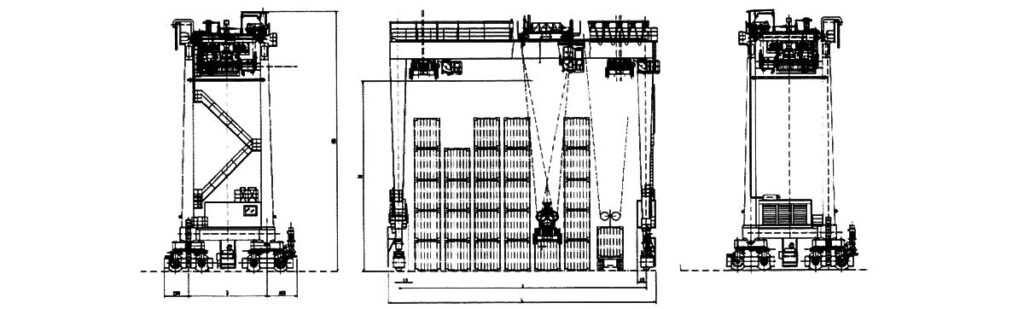
What to Evaluate When Choosing a Crane Manufacturer?
Beyond brand recognition, a rigorous manufacturer evaluation should cover five areas:
- Certification depth — CE Declaration of Conformity (2006/42/EC), ISO 9001:2015, ISO 4301 duty class documentation, and ISO 3874 spreader compliance should be standard deliverables, not optional extras. Ask for sample documentation before contract signature.
- Innovation roadmap alignment — if your terminal plans to automate in 5–7 years, confirm that the crane's PLC architecture and communication protocols (OPC-UA, Modbus/TCP, PROFINET) support future TOS integration without a full electrical retrofit.
- Spare parts lead time commitment — request guaranteed lead times for critical wear parts: wire ropes, brake linings, wheel sets, spreader twist-locks. A 6-week lead time for a critical part is operationally unacceptable at an active terminal.
- Reference installations at comparable terminals — ask for load test certificates and commissioning records from ports with similar throughput, climate, and operating profile to yours.
- Total installed cost, not unit price — include civil foundation works, rail installation (for RMG), electrical infrastructure, commissioning, operator training, and first-year maintenance in the comparison baseline.

Where Dafang Fits in the Manufacturer Landscape?
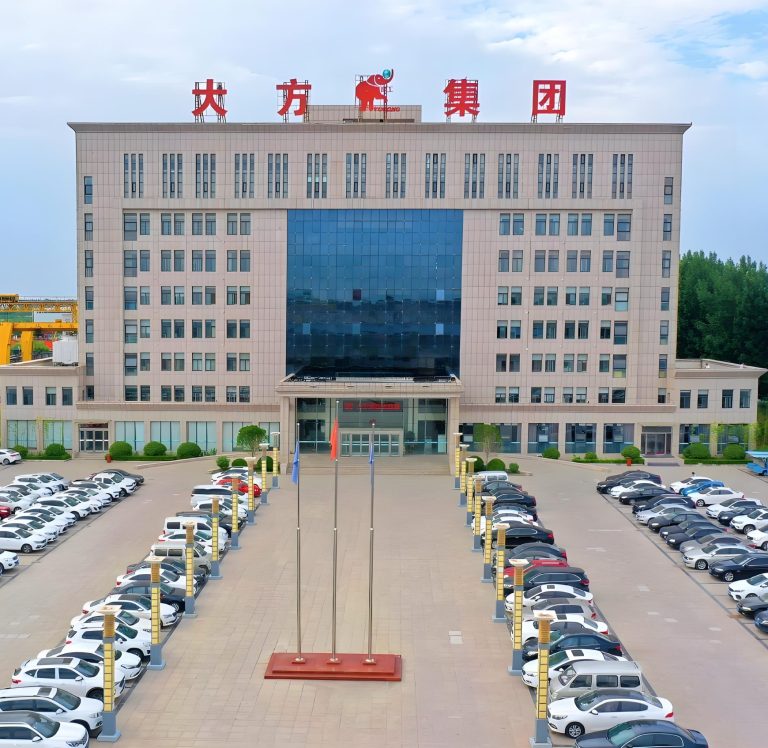
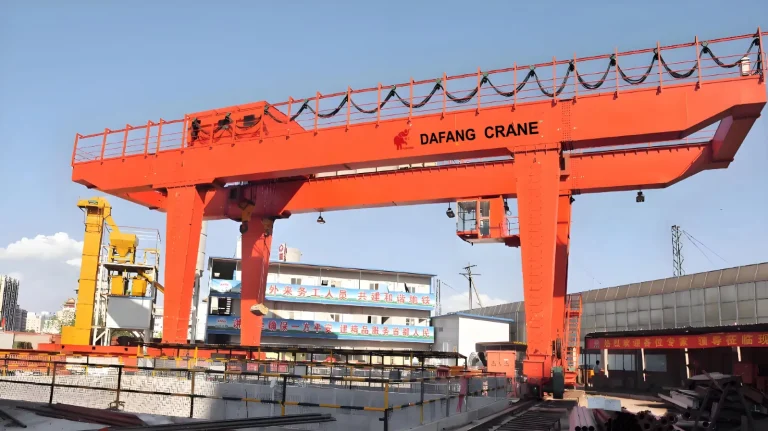
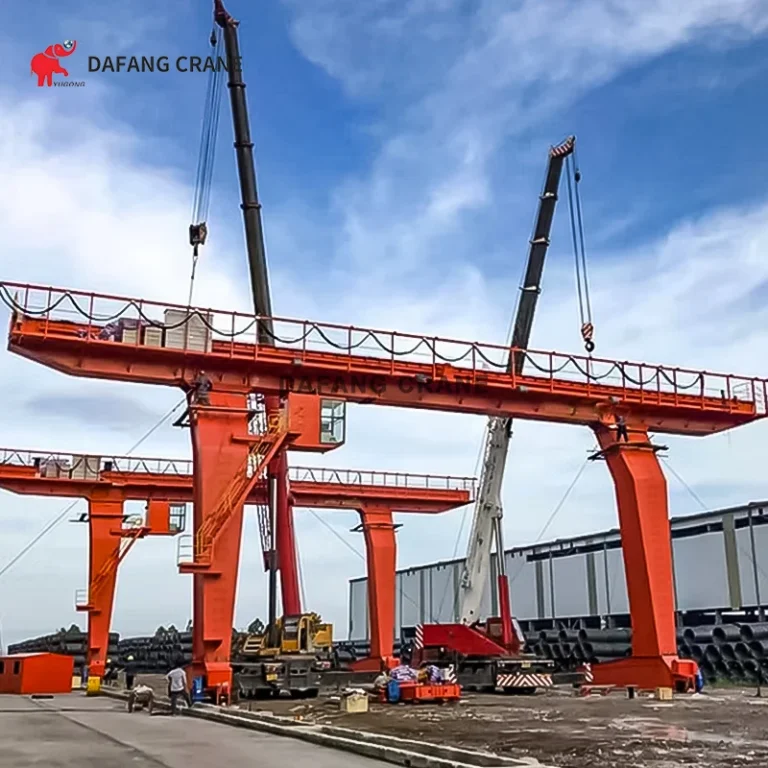
Dafang is not a Tier 1 automation platform vendor — and does not position itself as one. Instead, Dafang occupies a specific and well-defined space: CE-certified, fully custom-engineered gantry cranes for terminals and industrial facilities that need engineering flexibility, complete documentation, and cost efficiency without the overheads of a global automation provider.
Specific Dafang differentiators in the manufacturer landscape:
- Cold-climate structural specification — Q355D/E steel (GB/T 1591) rated to -40°C Charpy impact as standard for northern sites; a capability that most Tier 3 manufacturers cannot match without custom engineering.
- ATEX explosion-proof configuration — ExdII classification per ATEX Directive 2014/34/EU for coal, chemical, and petrochemical terminal applications.
- 19 years of focused production — since 2006, delivering overhead cranes, gantry cranes, RTG and RMG units to 30+ countries with no reported structural failures on CE-certified units (based on Dafang factory records).
- Full documentation standard — every unit ships with CE declaration, structural calculation per FEM 1.001, weld records per ISO 3834-2, factory load test certificate, electrical schematics, and bilingual O&M manual.
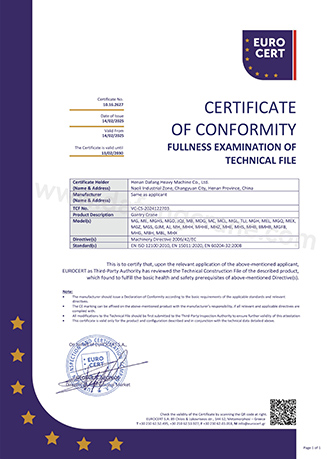
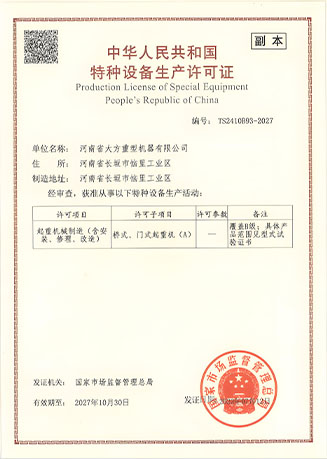
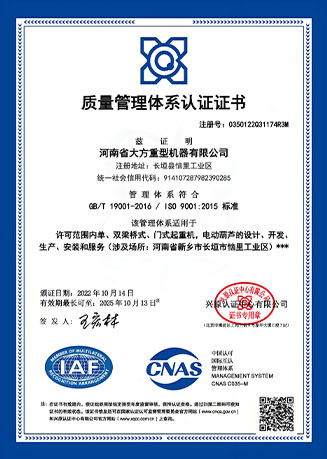
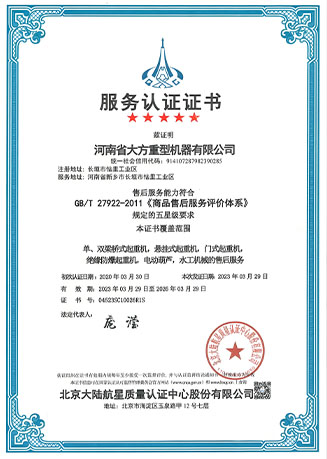
Crane Manufacturers - Henan Dafang
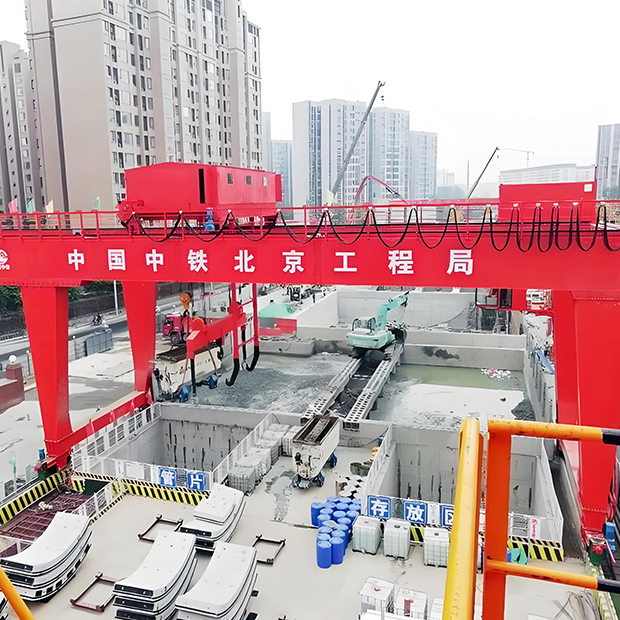
Хэнаньский кран Дафан designs and manufactures RTG cranes, RMG cranes, ship-to-shore accessories, gantry cranes, and industrial overhead cranes from its Henan production base. The company delivers CE-certified, FEA-verified lifting equipment to port operators, mining facilities, and industrial clients in more than 30 countries. Contact the Dafang engineering team for manufacturer comparison support, crane type selection, or a full technical proposal matched to your terminal's specification.

Часто задаваемые вопросы
Which container gantry crane manufacturer has the largest global market share?
ZPMC (Shanghai Zhenhua Heavy Industries) holds the largest share of new ship-to-shore crane orders globally — estimated above 70% of STS units delivered annually per Drewry port equipment market reports. In RTG and RMG automation, Konecranes and Cargotec/Kalmar lead.
What certifications should a container gantry crane carry as standard?
Minimum: CE Declaration (2006/42/EC), ISO 9001:2015, ISO 4301 duty class report, ISO 3874 spreader compliance, and factory load test certificate. For automated cranes, also require ISO 13849 PL-d on the safety control system.
How do Chinese crane manufacturers compare to European brands on quality?
CE-certified Chinese manufacturers design to the same FEM 1.001 and ISO 4301 structural standards as European brands. Quality gap, where it exists, typically relates to after-sales service speed and documentation depth — not structural engineering. Verify by requesting sample CE documentation and weld inspection records before ordering.
What is the typical lead time for a container gantry crane from order to delivery?
Mid-market manufacturers: 35–60 days production plus 20–35 days sea freight. Tier 1 brands with custom automation: 16–26 weeks production. Site installation, commissioning, and load testing add 2–4 weeks regardless of manufacturer.
Which innovations should a terminal specify now to be automation-ready in 5 years?
Specify OPC-UA or PROFINET communication interfaces on the PLC, VFD regenerative braking, shore-power capability on RTG units, and an equipment data API for future TOS integration. These cost little to add at order stage and are expensive to retrofit later.