






For most workshop and overhead crane applications with moderate lift heights and loads up to 30 tons, Dafang's electric chain hoist covers a wider capacity range than many buyers expect — from 0.5 t all the way to 20 t. The CD/MD wire rope hoist, rated 1–32 t at A3 duty class, is the better fit when you need dual-speed precision at greater lifting heights, faster trolley travel, or direct integration with heavier bridge and gantry crane systems. Getting this wrong doesn't just affect the hoist — it affects your crane's net headroom, trolley selection, and long-term maintenance schedule.
The confusion usually comes from comparing the two on capacity alone. Buyers often discover too late that the hoist they ordered doesn't fit the structural headroom of their building, or that its cycle rate doesn't suit the workstation it was meant to serve. Both are valid lifting solutions; the decision comes down to five variables: load, lift height, duty class, available headroom, and the crane system the hoist will be mounted on.
This guide walks through each variable in order, includes a quick-reference comparison table, and ends with the question most buyers forget to ask their supplier: how does the hoist choice affect the rest of the crane system?
Índice
Quick Comparison: Dafang Electric Chain Hoist vs CD/MD Wire Rope Hoist
| Parâmetro | Guincho elétrico de corrente | CD/MD Wire Rope Hoist |
|---|---|---|
| Capacidade de elevação | 0.5–20 t | 1–32 t |
| Altura de elevação | 3–30 m (standard 3–6 m) | 3–30 m |
| Velocidade de elevação | 1.3–8 m/min (dual-speed) | 0.35–8 m/min (dual-speed) |
| Velocidade de deslocação | 13–20 m/min | 20–30 m/min |
| Classe de trabalho | A3 (light-to-medium duty) | A3 (FC=25%, intermediate) |
| Alimentação eléctrica | 380V/220V, 3-phase or single-phase | CA 380V 50Hz |
| Headroom requirement | Compact — chain bucket below motor | Larger — drum and sheave assembly |
| Best fit | Workshops, jib/cantilever cranes, assembly lines, flexible crane systems | Bridge cranes, gantry cranes, precision dual-speed positioning |
Obter um orçamento gratuito

Key Selection Factors Explained
Load Capacity and Lift Height: Less Separation Than You'd Expect
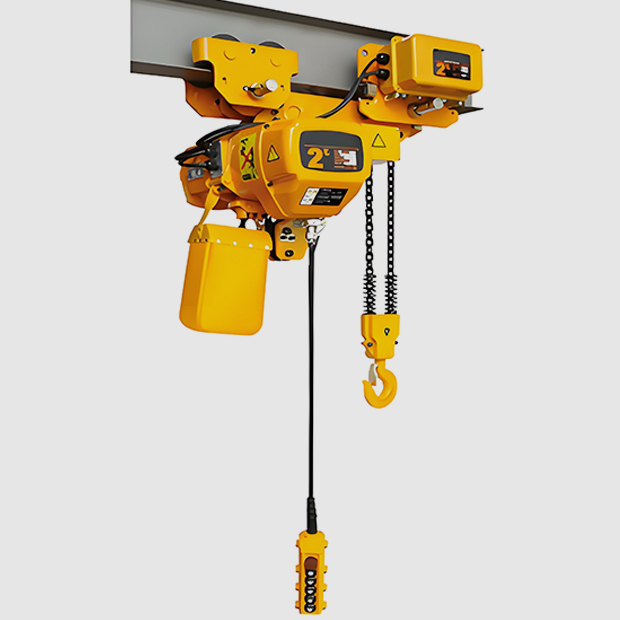
One of the most common misconceptions is that electric chain hoists are only for light loads. Dafang's electric chain hoist covers 0.5 t to 20 t — a range that overlaps substantially with the CD/MD wire rope hoist (1–32 t). Both products share the same 3–30 m hoisting height envelope. This means the selection decision for many applications is not about which type reaches far enough, but about which better suits the duty cycle, speed profile, and crane system integration.
The real difference in speed is also not what most comparison articles suggest. The CD/MD wire rope hoist's dual-speed range of 0.35–8 m/min gives it a slower creep speed than the chain hoist's 1.3–8 m/min — which is an advantage when precision final positioning is required, such as landing heavy tooling, setting precast concrete elements, or aligning machinery during installation. The chain hoist's slightly faster lower-end speed suits general workshop lifting where creep positioning is less critical.
Headroom and Building Constraints Often Override Capacity
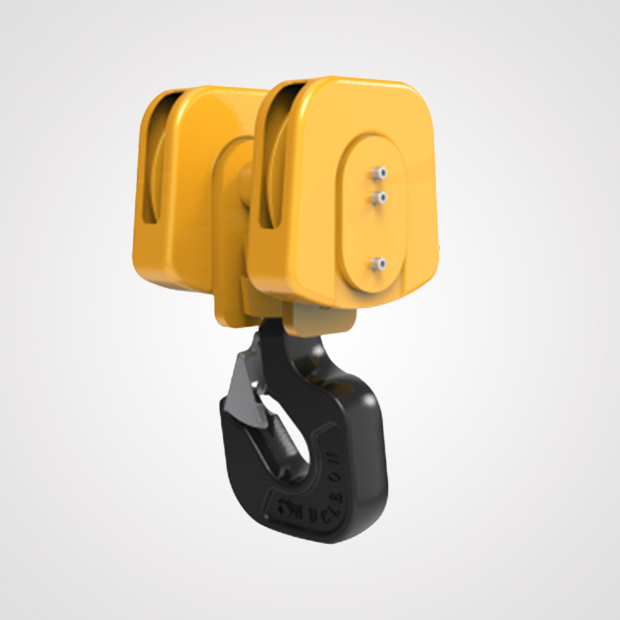
Net headroom — the usable vertical distance between the crane hook at its highest point and the floor — is frequently the constraint that procurement teams underestimate. An electric chain hoist's compact sprocket-and-chain-bucket design typically requires less vertical clearance than the CD/MD wire rope hoist, which carries a drum and sheave assembly that adds to the overall hoist body height. In older industrial buildings, retrofitted warehouses, or facilities operating near structural beams, that difference can mean 0.3–0.8 m of additional working height for the same rated lift height.
Dafang's electric chain hoist product page specifically notes that its optimized headroom design is well suited to places with limited space — a design priority that makes it a frequent choice for single-girder bridge cranes, jib cranes, and workstation systems where the hoist body must fit within tight overhead clearances.
Duty Class: Both Products Are Rated A3 — Application Intensity Is the Differentiator
A point that surprises many buyers: both the Dafang electric chain hoist and the CD/MD wire rope hoist are rated at A3 work class (intermediate duty, FC=25%). This means neither is designed for continuous heavy-duty operations running multiple shifts at full load — that application would call for Dafang's FEM-standard European hoist or YH metallurgical hoist, both of which carry higher duty classifications.
For A3-rated equipment, the practical differentiator is how the hoist is used within that duty envelope. The chain hoist's modular, sealed design and electromagnetic DC fail-safe brake make it well suited to environments where the hoist is used frequently but not continuously — assembly lines, maintenance bays, warehouse logistics. The CD/MD wire rope hoist's dual-speed motor (fast and slow coils) and faster trolley travel speed (20–30 m/min vs the chain hoist's 13–20 m/min) make it the better fit for crane spans where the trolley needs to cover longer distances efficiently between lifts.
If your operation genuinely requires continuous or severe-duty cycling beyond A3, discuss your shift pattern and lifts-per-hour with Dafang's engineering team before specifying either product — a higher-spec hoist will be more cost-effective than early replacement.
How the Choice Affects Your Crane System
This is the question most comparison guides skip, and it matters if you're specifying a complete lifting system rather than replacing a standalone hoist.
Pairing with Overhead Cranes and Gantry Cranes
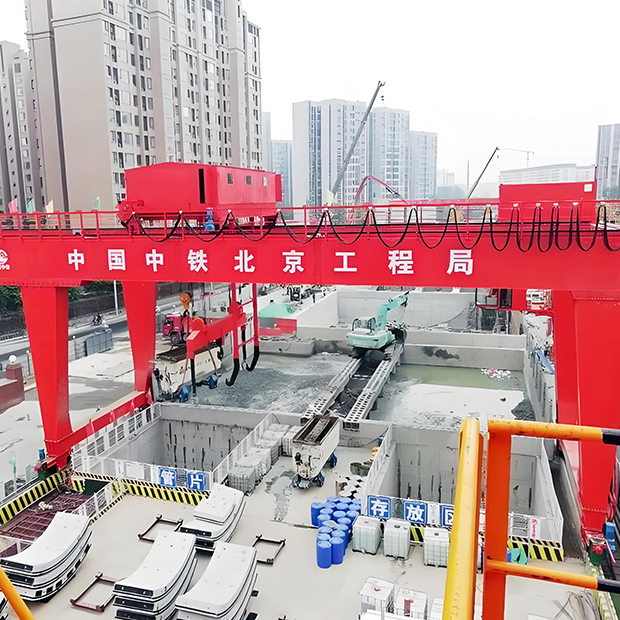
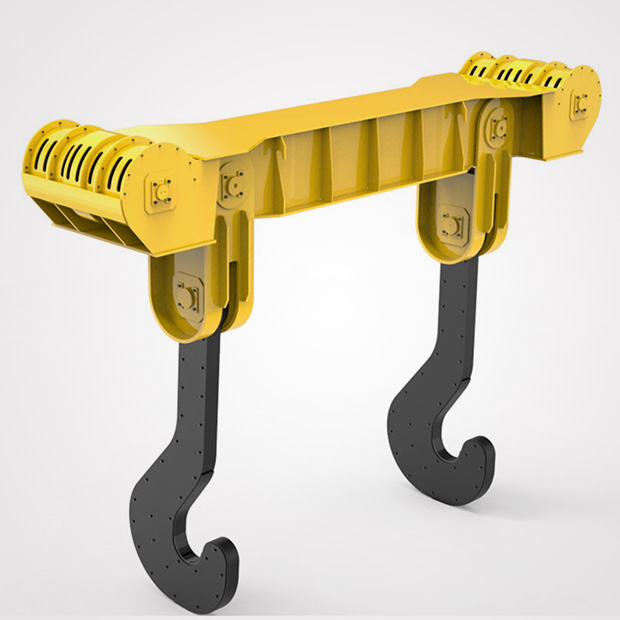
On a double-girder overhead crane, the hoist sits on a trolley between the two girders. The CD/MD wire rope hoist is the standard pairing here: its faster trolley travel speed (20–30 m/min) suits longer-span cranes where covering the full bay width efficiently matters, and the dual-speed hoisting motor supports precision load placement at height. The drum-and-sheave assembly fits within the girder spacing typical of cranes designed for this hoist type.
On a single-girder overhead crane or light-duty gantry crane, the electric chain hoist mounted on an underhung trolley is frequently the more appropriate choice. The compact body fits below the single beam without consuming significant hook height, and the lighter hoist weight puts less load on the end carriages — an important consideration when the crane is designed for lower-capacity use. Mismatching a wire rope hoist onto a single-girder crane not structurally rated for it is a safety error; the crane manufacturer's specifications must govern the hoist selection.
For Dafang's MH single-beam gantry cranes specifically, the CD/MD electric hoist is the standard lifting mechanism specified in the product documentation — confirm the pairing at order stage rather than after installation.
Pairing with Cantilever Cranes and Jib Cranes
On cantilever cranes and jib cranes configured for workstation use, the electric chain hoist is almost always the correct choice. These crane types are typically set up for hand-push trolley operation, where the operator physically positions the trolley by pushing on the load or hook. Wire rope hoists are not recommended in this application: the rope can unseat from the grooved drum or damage the rope guide when the hoist is pulled laterally, creating a safety hazard. The chain hoist handles incidental side pulls more forgivingly, which is why Dafang's own product documentation for wall-mounted jib cranes identifies the electric chain hoist as the standard configuration for capacities up to approximately 5 t.
Maintenance, Inspection, and Compliance
What Routine Maintenance Looks Like for Each Type
Dafang guincho elétrico de corrente requires regular inspection of chain lubrication, chain wear, and brake function — monthly inspection is recommended, with annual servicing by a qualified technician. The Grade 80 or Grade 100 alloy steel chain is the primary wear item; the standard discard criterion is elongation beyond the manufacturer's specified pitch measurement. The electromagnetic DC brake requires adjustment only if slippage is detected.
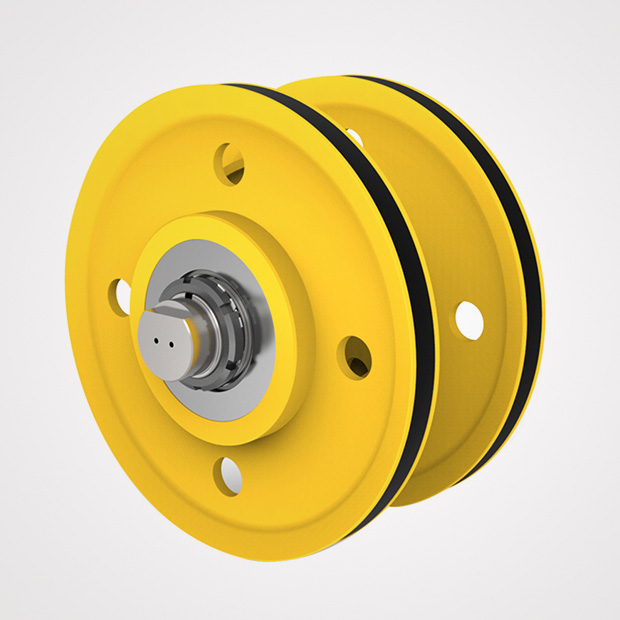
O CD/MD wire rope hoist requires periodic inspection of the wire rope for broken strands, kinking, birdcage formations (where the rope's outer strands separate and splay outward), and measurable rope diameter reduction. Under ISO 4309 — the international standard governing wire rope inspection and discard criteria — wire ropes in regular industrial service should be inspected against the broken wire count thresholds specified for the rope's construction type. Both hoist types carry overload protection and limit switches as standard; these should be function-tested at each periodic inspection, not assumed to be operational.
Certifications Procurement Teams Should Verify
Both Dafang hoist products carry CE and ISO certification as standard. For European market entry, confirm CE marking under the Machinery Directive (2006/42/EC) and request the EC Declaration of Conformity. ISO 9001 quality management certification from the manufacturer is a baseline for international procurement broadly. OSHA 1910.179 is the applicable US standard for overhead hoisting equipment.
When purchasing, request: the EC Declaration of Conformity (for CE-marked equipment), the overload test report (typically 125% of rated load for static testing), and the ISO 9001 certificate. These documents serve a practical purpose beyond compliance — insurers, port authorities, and major industrial clients increasingly require them before equipment enters service.
Why Getting This Decision Right Matters Before You Order
The cost difference between the two hoist types is real, but the more significant cost risk is specifying the wrong hoist for the application. A chain hoist used in an application genuinely requiring wire rope precision — or a wire rope hoist forced into a jib crane workstation where it generates rope-unseating damage — will generate replacement costs and downtime that dwarf the initial price difference.
The decision also has downstream effects on what trolley, crane runway, and end carriage you can specify — which is why Dafang engineers typically review the full lifting system requirements rather than treating the hoist as an isolated line item. Travelling speed, hoist body dimensions, trolley wheel gauge, and crane span all interact, and getting that review done before the purchase order is placed is the most cost-effective engineering intervention available.
Ready to specify the right hoist for your system?
Dafang supplies electric chain hoists and CD/MD wire rope hoists as standard products, alongside FEM-standard European hoists and YH metallurgical hoists for heavier-duty applications. Our engineering team can confirm hoist selection, trolley compatibility, and crane specifications based on your actual duty cycle and building dimensions — across a manufacturing facility covering 850,000 m², serving customers in 130+ countries.

FAQ
Q1:Which Dafang hoist covers the widest capacity range?
The electric chain hoist covers 0.5 t to 20 t, making it the broader-range product. The CD/MD wire rope hoist covers 1–32 t.
Q2:Both hoists show A3 work class — does that mean they're interchangeable?
Not necessarily. Both carry A3 (FC=25%) ratings, but they differ in hoisting speed profiles, trolley travel speed, rope/chain characteristics, and physical dimensions. The wire rope hoist's slower creep speed (0.35 m/min) is valuable for precision placement; the chain hoist's faster trolley speed relative to its footprint suits compact workstation cranes. Application, crane pairing, and headroom constraints determine which A3-rated product is the right fit.
Q3:What is the typical price difference between an electric chain hoist and a wire rope hoist?
At equivalent capacity, wire rope hoists generally carry a higher price than electric chain hoists. As a general market reference, standard industrial chain hoists in the 1–5 t range run approximately $300–$3,000 ex-works; wire rope units in a similar capacity range typically start higher, from approximately $700–$5,000+. Both figures vary with duty class, control system, and market-specific certifications. Request a formal quotation for your specific requirements.
Q4:Can I use a Dafang electric chain hoist on a jib crane or cantilever crane?
Yes — for workstation jib cranes and cantilever cranes with hand-push trolley systems, the electric chain hoist is the recommended configuration. Wire rope hoists are not well-suited to these applications because lateral pulls can cause the wire rope to unseat from the grooved drum. Chain hoists are more tolerant of the incidental side loads that occur in workstation use.
Q5:What certifications should I request when purchasing a hoist for export?
Both Dafang hoist products carry CE and ISO certification as standard. For European market entry, request CE marking documentation and the EC Declaration of Conformity under the Machinery Directive (2006/42/EC). For broader international procurement, the ISO 9001 certificate and an overload test report are the standard baseline. Projects in Russia and the CIS may require EAC certification in addition.