






Table of contents
Dafang Professional Crane Manufacturer In China
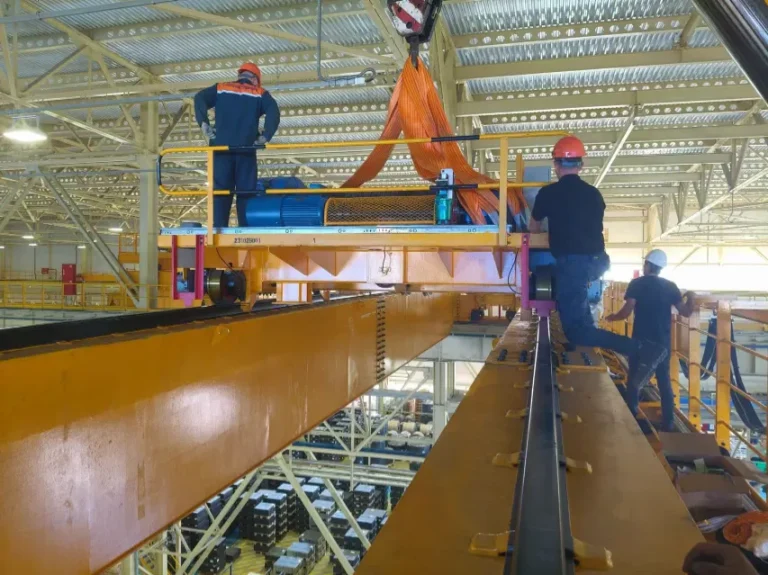
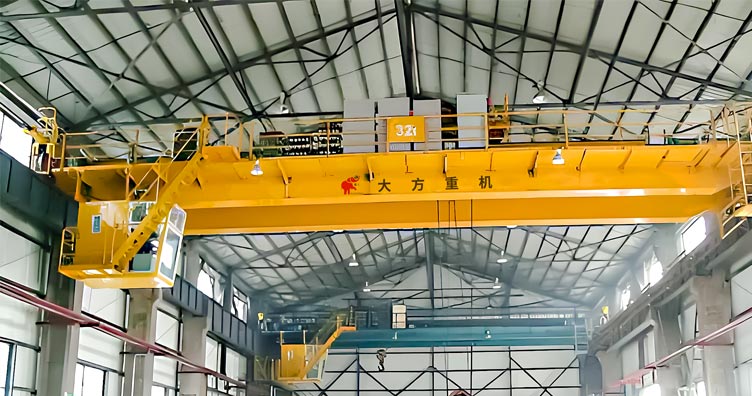
Henan Dafang Heavy Machine Co.,Ltd was founded in 2006. The company has more than 2,600 employees and 80 people of them are expert engineers with 20+ years of work experience. Dafang crane covers the manufacturing, transportation and installation of overhead cranes, gantry cranes, and port cranes.
We also offer related consultation and customization services, so as to fully satisfy the diversified needs of customers. Dafang Crane has manufactured overhead cranes and gantry cranes home and abroad for 2 decades. We all technician team always focus on meticulous calculation and display of crane specification and parameters data. Dafang crane load capacity calculations adopt scientific and rational methods and fomula.

Why Accurate Load Capacity Calculations Matter?
Miscalculated load capacities lead to crane failures and workplace incidents annually. Load capacity determines lifting safety or equipment failure, yet many professionals wrongly rely on a crane's rated capacity, creating safety gaps. Overloading can cause costly damage and endanger workers.
Industry data shows capacity-related incidents often result from preventable calculation errors. Three factors make capacity calculation complex: rated capacity is for ideal conditions, load weight is just one variable, and geometric factors like boom angle and reach affect safe lifting. Understanding load dynamics helps avoid mistakes. OSHA regulation 1926.1417 requires operators to know load weight before each lift, as operating safely requires knowledge of current capacity limits.


The key is not just knowing rated capacity but considering many factors such as dynamic loads, load distribution, wind speed, ground conditions, and temperature variations, which can affect safe lifting. Only by accounting for these aspects can crane usage risks be reduced and a safer work environment ensured.
Let's break down the calculation process into steps. Dafang Cranes’s expert guide offers practical formulas and decision frameworks for Dafang overhead and gantry crane engineers. You'll learn to determine working load limits, interpret capacity charts, and apply safety factors correctly. Accurate calculation safeguards your investment and team. The following articles provide effective measures for accurate calculations.
Understanding Basic Load Capacity Terminology
Clear definitions prevent confusion in calculating safe lifting limits. The industry uses specific terms with precise engineering meanings. Mixing up these terms leads to serious errors.
- Rated capacity is the maximum load a crane can lift under ideal conditions. Manufacturers determine it through engineering analysis and testing. This number is on the equipment nameplate and in technical documentation.
- Safe working load (SWL) is the maximum weight to lift during normal operations. This value includes built-in safety factors. Engineers calculate SWL by dividing rated capacity by a safety factor (typically 3-5).
- Working load limit (WLL) is another term for safe working load, used by OSHA and ASME standards, denoting the practical limit for daily operations.
The distinction is important because using rated capacity instead of SWL is dangerous. A 10-ton rated Henan Dafang crane can not safely lift 10 tons in real-world conditions. It is environmental factor, load dynamics, and equipment wear that reduce practical capacity below the rated maximum.
Essential Components of Dafang Load Capacity Calculations
All capacity calculations start with identifying all weight components. Missing even one element can ruin the calculation, so experienced operators use systematic approaches.
- The total load includes the primary weight to be lifted, which needs careful measurement as estimation is a common source of error. Use certified scales or engineering drawings for accurate figures.
- Rigging equipment adds significant weight. Slings, shackles, hooks, and spreader bars all count against capacity, with a complex setup adding 500-2000pounds (approx. 0.25-1 ton). Always include this weight in your calculations.
- Below-the-hook devices add additional load. Lifting beams, magnets, and specialized attachments have their own weight and can affect load distribution and center of gravity. Document every component's weight.
- Dynamic loads occur during lifting. Acceleration and side-loading increase the effective load by 15 to 25 percent beyond static weight.

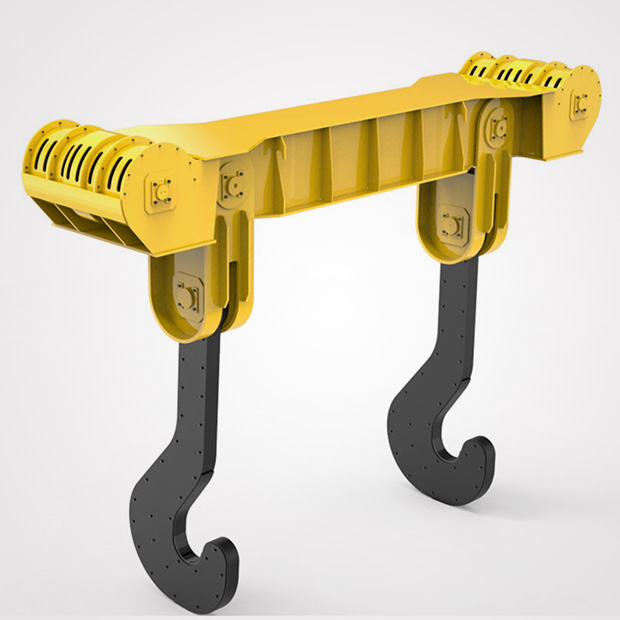
Stell Mill Ladle Hook
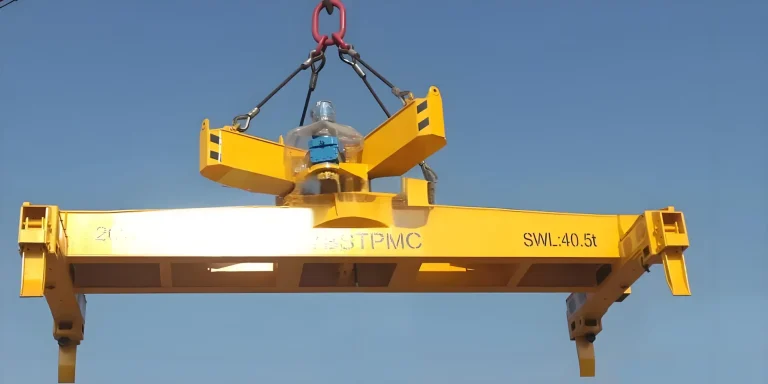
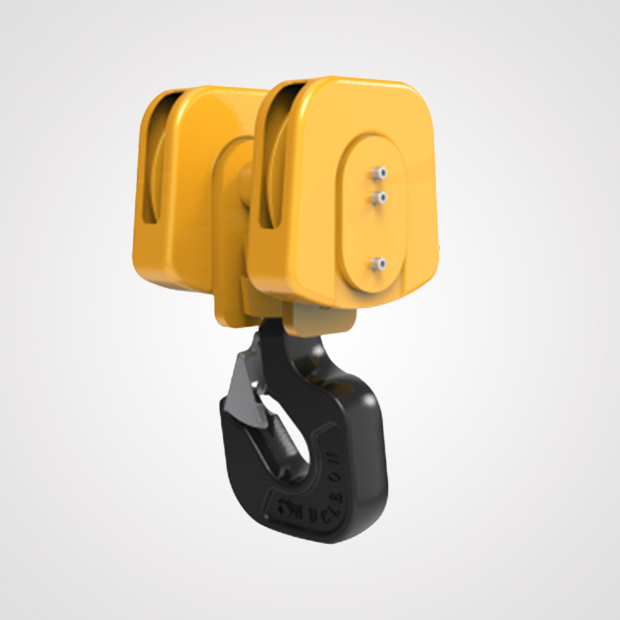
Hook type (20'/40') rotating container spreader
Here is a basic formula for total load calculation:
Total Load = Static Load Weight + Rigging Weight + Below-Hook Devices + Dynamic Factor
Apply it before each lift, with the dynamic factor usually 1.15-1.25 times the combined static weights. Consult the equipment manual for specific guidance.
How to Read and Apply Dafang Crane Load Capacity Charts
Capacity charts are crucial for safe load calculations. They show how lifting capacity changes with boom configuration. Understanding the layout helps find the right value quickly.
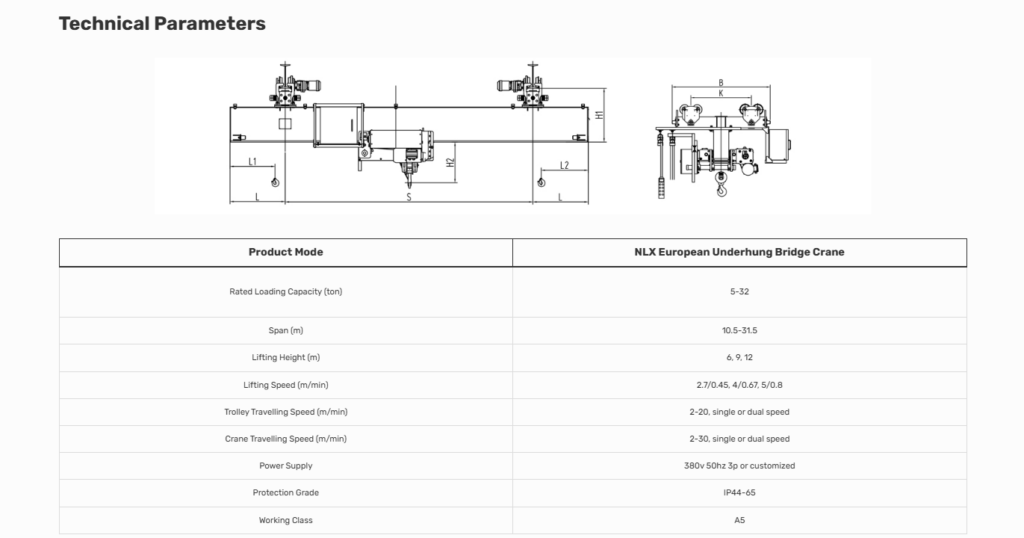
- Most charts organize data by boom length and operating radius. As the radius (horizontal distance from the crane's center of rotation to the load) increases, capacity drops significantly due to the change in mechanical advantage.
- Charts show multiple boom lengths. Longer booms reduce capacity even at the same radius because of added weight and changed geometry. Always check the correct boom length column.
- Load capacity charts have important footnotes and conditions. They specify if values include hook block weight and if capacities meet standards or include safety factors. Missing these details leads to wrong assumptions.
- Some charts provide capacities for different setups. A crane with outriggers fully extended has higher capacity than on rubber. Boom angle variations are also shown. Match your actual setup to the chart conditions exactly.
| Boom Length | 30 ft Radius | 40 ft Radius | 50 ft Radius | 60 ft Radius |
|---|---|---|---|---|
| 80 ft | 32,000 lbs | 24,500 lbs | 18,200 lbs | 13,800 lbs |
| 100 ft | 28,400 lbs | 20,800 lbs | 15,400 lbs | 11,200 lbs |
| 120 ft | 24,200 lbs | 17,600 lbs | 12,800 lbs | 9,200 lbs |
A sample chart shows capacity reduction patterns. For example, capacity drops about 30 percent when the radius increases from 30 to 40 feet. Since the relationship is non-linear, charts are essential instead of estimating capacity.
Calculating Load Capacity for Dafang Cranes
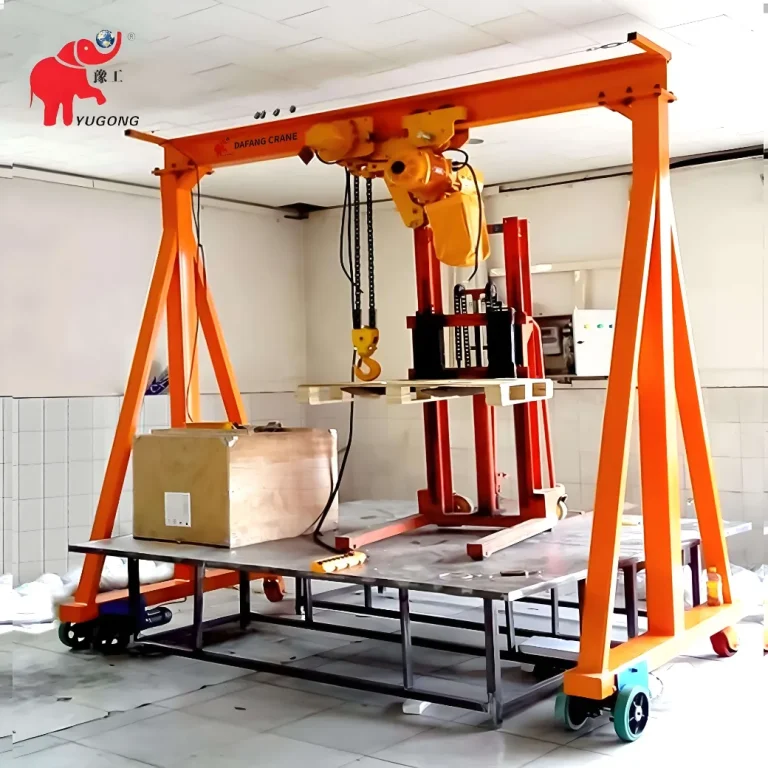
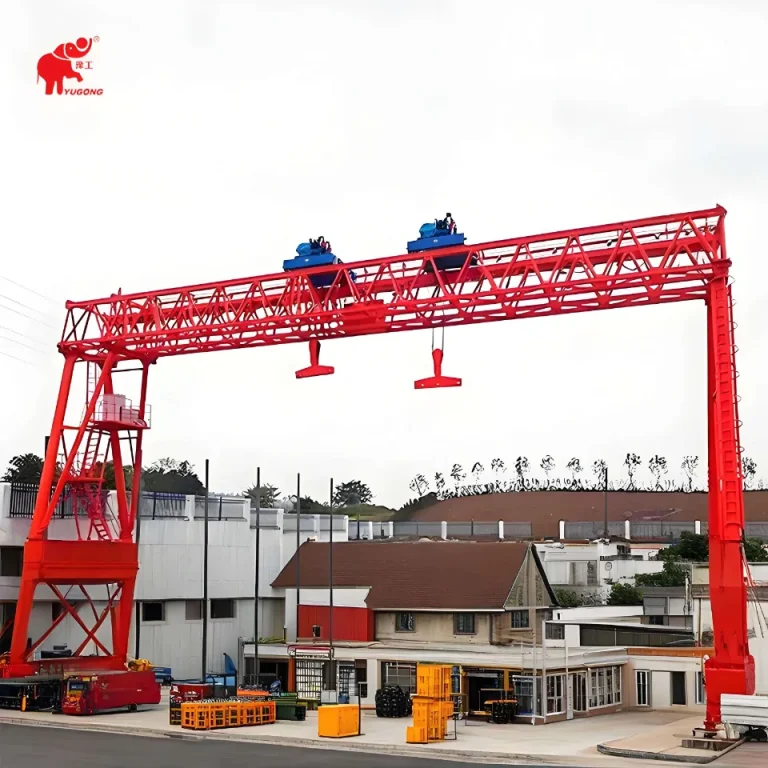
Overhead crane load capacity calculations differ from gantry cranes due to the fixed runway system, which creates specific load-distribution patterns. Understanding these patterns helps prevent structural overload and premature failure.
Bridge cranes distribute load across runway beams and the building structure. The trolley's position affects load transfer to each beam. A centered load divides evenly, while a trolley near one end loads that beam more.
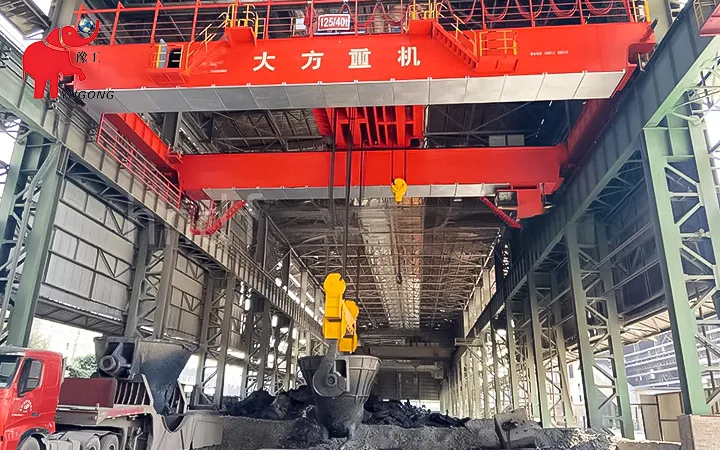
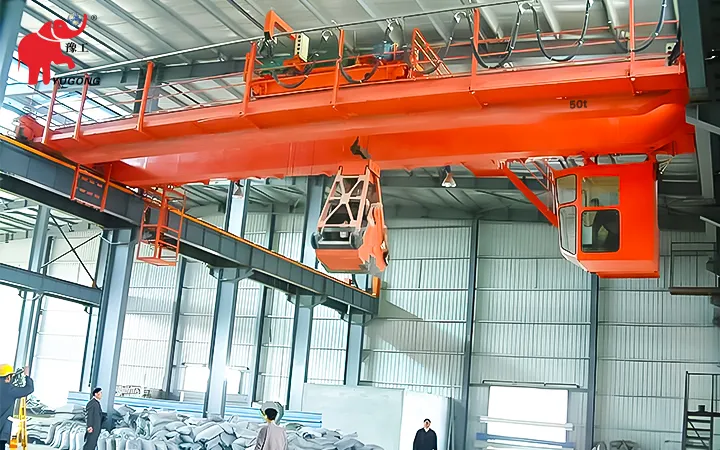
To calculate individual runway beam loading: first, determine the total suspended load (including trolley and hook); second, measure the trolley's distance from each beam; third, use moment calculations for load distribution. The formula for load distribution is:
Load on Beam A = Total Load × (Distance to Beam B / Span Between Beams)
Then, subtract this from the total load to find the other beam's load. Verify both values against beam capacity ratings. The hoist's position on the bridge also impacts loading. End approaches create maximum loading on the bridge girder. The combination of trolley and hoist positions determines the actual loading pattern.
Calculating Dafang overhead cranes and gantry cranes have impact factors. Starting and stopping the trolley and bridge travel acceleration create dynamic loads. CMAA Specification 70 recommends 15-25 percent impact factors for different crane classes. The service class affects safety factors. Infrequent use allows higher load percentages, while continuous severe duty requires more conservative limits. Match safety factors to actual operating conditions.
Accounting for Environmental and Operational Factors
Environmental conditions impact safe lifting capacity. Wind is a common challenge; even moderate wind reduces effective capacity. OSHA mandates ceasing crane operations when wind speeds exceed manufacturer limits (usually 20-30 mph). Calculate wind loading on the suspended load using the formula and add this force to Dafang crane load capacity calculations:
Wind Force = 0.004 × Wind Speed² × Load Area
Temperature extremes affect material and equipment performance. Cold weather makes wire rope and structural steel more brittle. High temperatures can reduce hydraulic system performance. Check manufacturer specs for temperature operating limits.
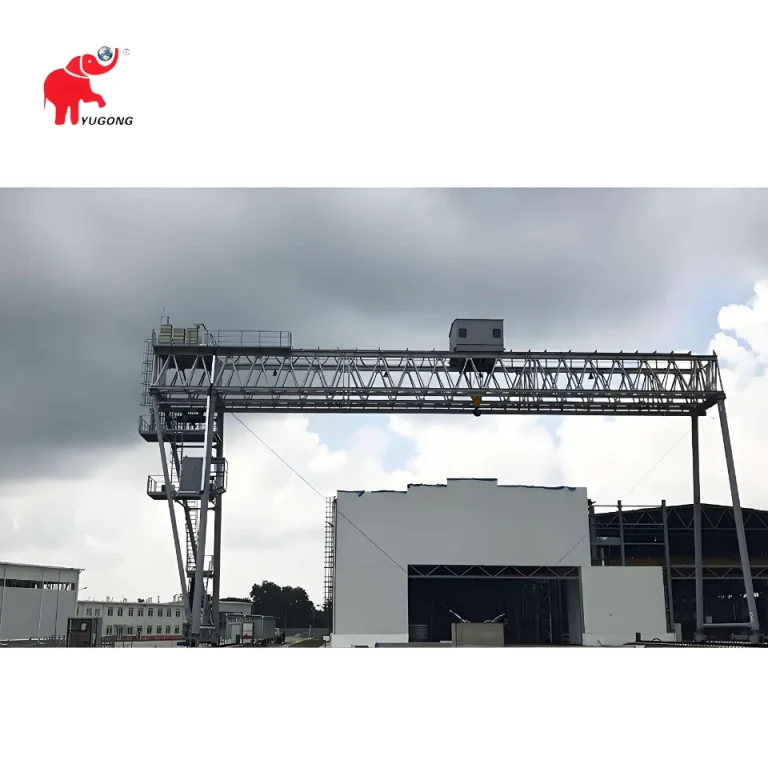
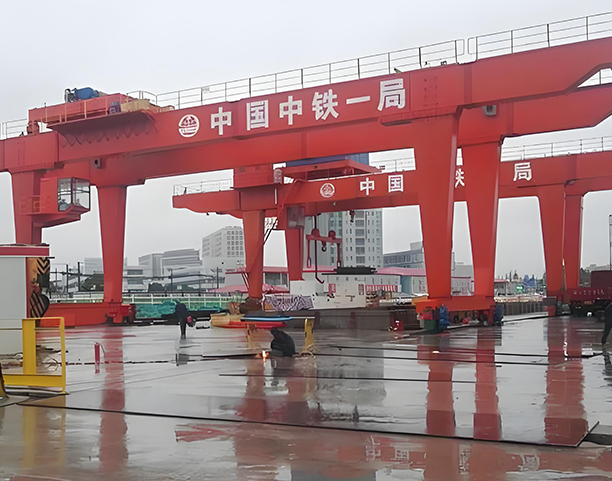
Ground conditions directly impact gantry crane capacity. Soft soil reduces stability and capacity, so verify ground bearing capacity before setup. Slope affects crane stability. Even a 2-degree slope can reduce capacity by 10% or more. Use a level indicator for setup.
Safety Factors and Regulatory Requirements
Safety factors provide a margin between theoretical and safe working limits, accounting for uncertainties. ASME B30.2 sets minimum safety factors for crane components (e.g., 5 for wire rope based on breaking strength).
The overall crane system uses a different safety factor approach. Incorporate safety factors correctly and use the manufacturer's rated capacity. Regulatory bodies, like OSHA, mandate specific capacity calculation practices. API and other standards offer additional guidance.
Calculation Mistakes and The Ways to Avoid
- Recognize common capacity calculation errors and use prevention strategies.
- Underestimating rigging weight is frequent. Create a reference sheet for rigging weights.
- Failing to account for load swing dynamics causes overloads. Minimize swing through careful operation.
- Using the wrong capacity chart section is common. Always verify the correct section.
- Ignoring boom deflection affects capacity calculations on longer booms.
- Not accounting for personnel weight is a problem in man baskets and aerial work. OSHA requires specific calculations with additional safety factors.
| Common Error | Typical Impact | Prevention Strategy |
|---|---|---|
| Rigging weight omitted | 500-2000 lbs underestimation | Maintain rigging weight reference |
| Wrong chart section | 20-40% capacity error | Double-check configuration |
| No dynamic factor | 15-25% underestimation | Always apply dynamic multiplier |
| Wind loading ignored | Variable, potentially critical | Monitor weather, calculate wind force |
Practical Dafang Crane Load Capacity Calculation Examples
Working through realistic examples helps solidify capacity calculation principles. These scenarios represent common situations you will encounter. Follow the calculation process to see how different factors combine.
Example 1: Overhead Crane with Off-Center Load
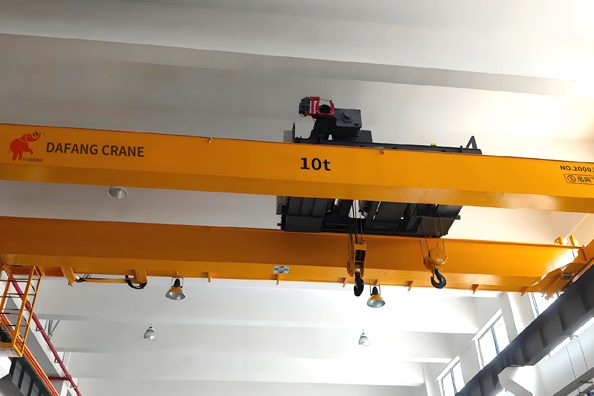
A 10-ton overhead crane with a 40-foot span needs to lift 8,000 pounds. The trolley is positioned 15 feet from the north runway beam. Calculate the load on each beam.
North beam load: 8,000 × (25/40) = 5,000 pounds. South beam load: 8,000 × (15/40) = 3,000 pounds. Verify both values are below beam capacity ratings. This example shows uneven load distribution from trolley position.
Example 2: Gantry Crane Calculation
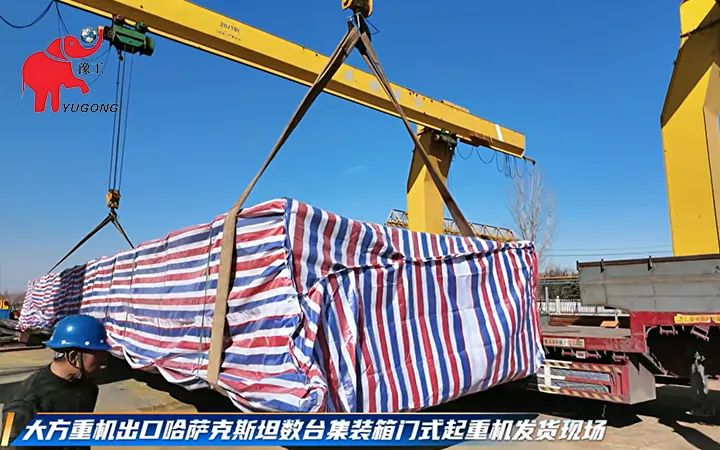
A 20-ton Dafang gantry crane with a 50-foot span and 20-foot leg height lifts a 16,000-pound load. The trolley is 20 feet from the left leg, and the gantry legs are on concrete pads with a 3,000 psf soil bearing capacity.
First, find the total load: 16,000 pounds (main load) +1,200 pounds (trolley weight) =17,200 pounds. Then, using the moment equilibrium method with the left leg as the pivot, the moment from the total load is 344,000 foot-pounds. So, the right-leg load is 6,880 pounds, and the left-leg load is 10,320 pounds. Each leg has a 4-square-foot base plate. The bearing pressure on the left pad is 2,580 psf, and on the right pad is 1,720 psf. Since both are below 3,000 psf, the pads can support the load.
However, if the trolley moves to the extreme right (45 feet from the left leg), recalculation shows the left-leg load is 1,720 pounds, the right-leg load is 15,480 pounds, and the right pad's bearing pressure is 3,870 psf, which exceeds the soil capacity. This example shows the importance of trolley position in gantry crane leg loading and the need to consider worst-case scenarios during planning.
Digital Tools and Load Moment Indicators
Modern technology aids capacity calculations. Load moment indicators (LMI) monitor crane loading and alert operators before capacity limits. They measure boom angle, length, and radius, calculate capacity in real-time, and give visual and audible warnings near preset limits to prevent overloading.
LMI uses sensors in the crane structure, like pressure transducers for hydraulics, angle sensors for boom position, and length sensors for boom extension. All data goes to a central processor. Rated capacity limiters (RCL) enhance LMI by automatically preventing movements exceeding capacity.
However, operators should know manual calculation methods as LMI can malfunction. Software applications assist in lift planning and capacity verification by modeling complex lifts in advance.
When to Consult a Professional Engineer
Some capacity calculations need professional engineering. Complex lifts, those near or at rated capacity, with unusual load configurations, multi - crane lifts, critical lifts over occupied areas or valuable equipment, and when regulations require it, all warrant engineering review. An expert Dafang engineer can verify calculations and identify overlooked factors.
Implementing a Load Capacity Management Program
A systematic Dafang crane load capacity management program improves safety and compliance. Develop standard calculation procedures with templates and checklists. Training programs should thoroughly cover capacity calculation, and regular refresher training is needed. Pre-lift meetings involve the whole crew to review calculations. Documentation for complex operations should include lift plans, capacity details, and rigging photos. Periodically audit calculation practices and update capacity information based on equipment inspection.
Frequently Asked Questions (FAQ)
- Q: What is the difference between rated capacity and safe working load (SWL)?
- A: Rated capacity is the max load equipment can lift under ideal conditions set by the manufacturer. Safe working load (SWL) is the max weight for normal operations, calculated by dividing rated capacity by a safety factor of 3 to 5. Use SWL for operational planning, not rated capacity.
- Q: How do I account for wind when calculating Dafang crane capacity?
- A: Calculate wind force with the formula: Wind Force = 0.004 × Wind Speed² × Load Area (in square feet). Add this horizontal force to total load calculation. Most manufacturers set operational wind limits at 20-30 mph. Stop operations when winds exceed these limits.
- Q: Why does Dafang crane capacity decrease as boom length increases?
- A: Longer booms add weight and change the boom's mechanical advantage. They shift the center of gravity and create greater moment forces, reducing the max safe lifting capacity.
- Q: Should rigging equipment weight be included in load calculations?
- A: Yes, include the weight of all rigging components: slings, shackles, hooks, spreader bars, and below-the-hook devices. Complex rigging can add 500-2000pounds (approx. 0.25-1 ton). Not accounting for rigging weight is a common calculation error.
- Q: How often should load capacity calculations be performed?
- A: Perform calculations before every lift. Even for repeated lifts, verify crane configuration, environment, and equipment status. OSHA regulation 1926.1417 requires operators to know load weight before each lift.
- Q: What safety factor should I use for Dafang overhead crane calculations?
- A: ASME B30.2 sets a 5:1 safety factor for wire rope and similar components, and overall crane design uses a 3:1 factor. Use the manufacturer's rated capacity.
- Q: Can I exceed rated capacity briefly during dynamic loading?
- A: No. Include dynamic loads in capacity calculation before the lift. Apply a dynamic factor of 1.15 - 1.25 times the static load. The total must stay within SWL limits.
- Q: How does temperature affect Dafang crane load capacity?
- A: Extreme temperatures can reduce material strength and equipment performance. Cold makes wire rope and steel brittle, and high temperatures affect hydraulics. Check manufacturer specs for temperature limits.
- Q: What information must be on a crane capacity chart?
- A: Charts must show load limits for different boom lengths and radii, state if values include hook block weight, indicate crane configuration, note safety factors, and have manufacturer certification.
- Q: When is an engineered lift plan required?
- A: Engineering review is needed for lifts near or at rated capacity, unusual loads, multi - crane operations, critical lifts, and when regulations or facility requirements demand it. The cost of analysis is low compared to incident costs.

Summary
Accurate Dafang crane load capacity calculations protect equipment, operators, and those near lifting operations. It involves understanding rated capacity and safe working loads, accounting for all weights including rigging, and applying safety and dynamic factors.
Read capacity charts carefully to match your configuration. Consider environmental factors like wind and temperature. Recognize when engineering expertise is needed for non-standard situations.
Implement systematic calculation procedures and documentation. Thoroughly train your team on capacity fundamentals. When unsure, be conservative and consult professionals.
Your commitment to accurate calculation shows professional responsibility. Time spent on proper calculations prevents incidents that harm people and damage costly equipment.