
Produits
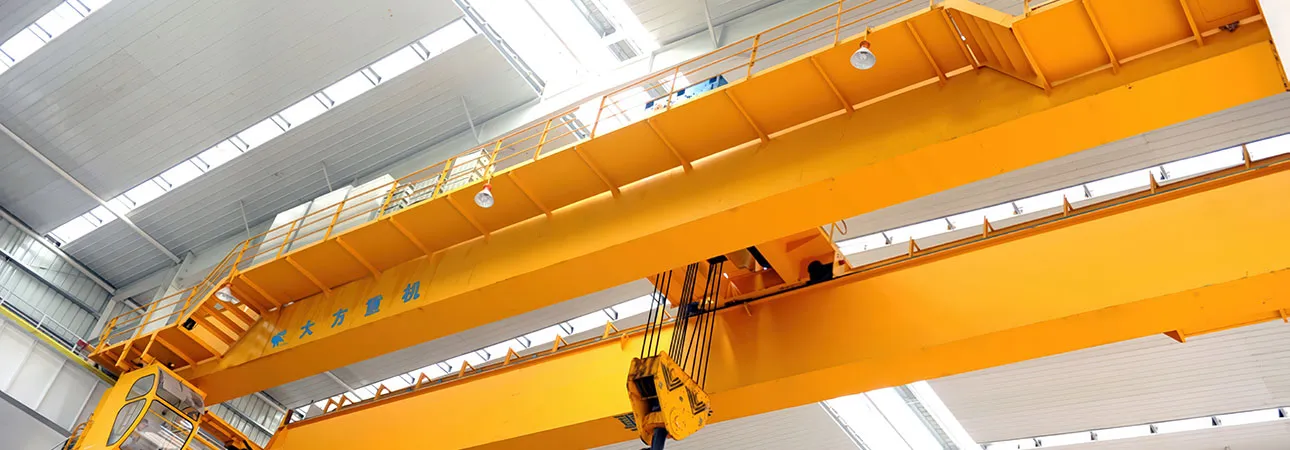
A rope grab bucket is a mechanical crane attachment that grabs, lifts, transports, and discharges bulk materials using the crane’s own wire rope system — without requiring an independent hydraulic power source. It is one of the most widely used crane attachments in ports, bulk terminals, steel mills, mining operations, and power plants worldwide.
The operating principle is straightforward. Wire ropes control the opening and closing of the grab shells through a pulley block system. When the closing rope is tensioned by the crane hoist, the shells close around the material. When the rope slackens, the shells open under gravity. This mechanical simplicity is the defining characteristic of the rope grab bucket — and the primary reason it remains the preferred solution for high-cycle bulk cargo handling where reliability and low maintenance cost are operational priorities.
Rope grab buckets handle coal, iron ore, grain, sand, fertilizer, aggregates, and similar free-flowing bulk materials efficiently across a wide range of crane types and facility configurations.
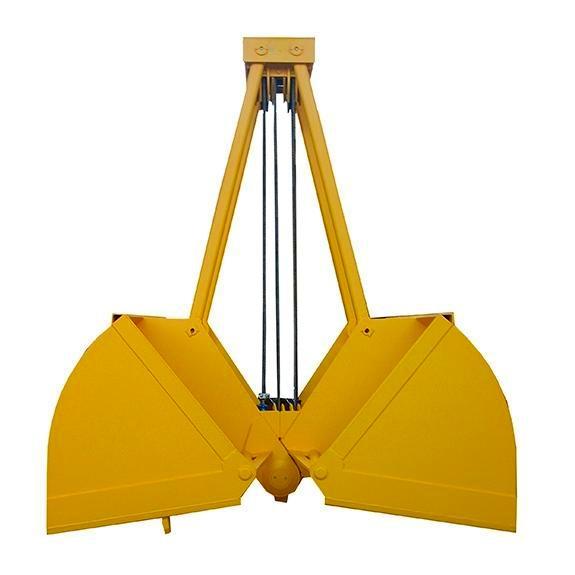
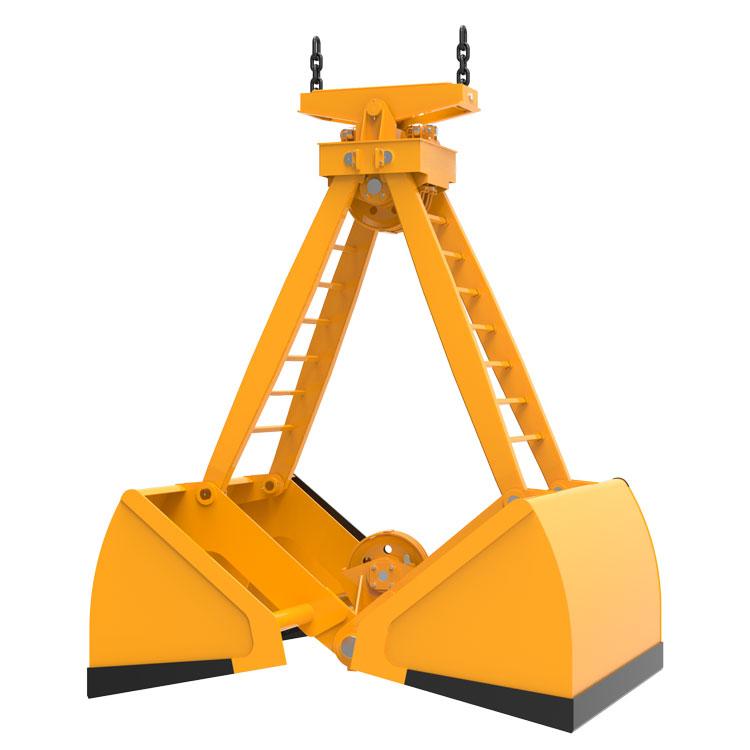
A rope grab bucket — also called a rope-operated grab bucket or mechanical grab bucket — is a two-shell crane attachment that uses wire rope tension and a mechanical pulley system to open and close its shells around bulk material. It connects to the crane hoist through a suspension frame and operates using the crane's existing rope arrangement without additional power equipment on the grab itself.
The grab operates through two rope functions: a supporting (holding) rope that bears the grab's weight and lifted load, and a closing rope that controls shell movement. These functions may be combined in a single rope on simple designs or separated in two-rope and four-rope configurations for greater control and capacity. The pulley block multiplies the closing rope force to generate the shell closing load required for the material being handled.
Rope grab buckets offer several structural and operational advantages that make them the preferred choice for many bulk material handling applications:
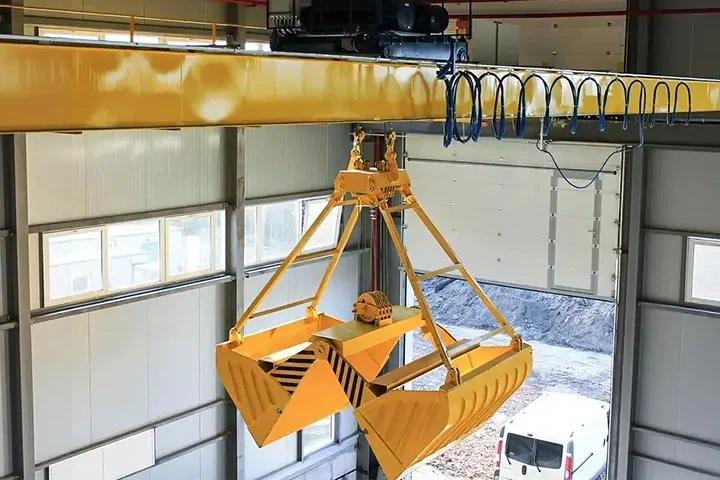
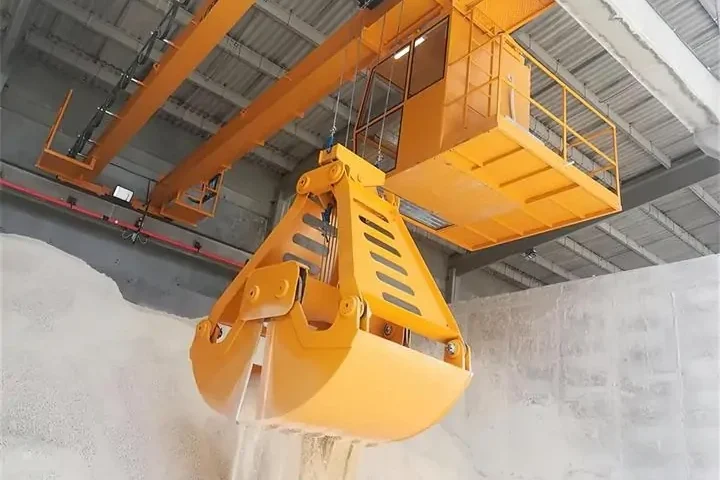
Rope grab buckets are fabricated from high-strength structural steel with wear-resistant plate liners and hardened cutting edges at material contact surfaces. The mechanical structure — shells, frame, pins, and linkages — is designed for continuous heavy-duty operation across the duty classification required by the application. Service life in well-maintained port applications commonly exceeds 10 years. Cutting edges and wear plates are designed as replaceable components to extend structural service life without shell replacement.
The absence of a hydraulic system is the single most significant maintenance advantage of rope grab buckets. There are no hydraulic cylinders to seal, no hoses to inspect and replace, no fluid to sample and change, and no pump or valve components to service. Maintenance activities are limited to wire rope inspection and replacement, pin and bearing lubrication, wear component measurement and replacement, and structural inspection. These tasks require standard mechanical skills and tools without specialized hydraulic knowledge or equipment.
Ports, bulk terminals, and mining operations subject crane attachments to dust, moisture, impact loading, and corrosive atmospheres. The mechanical simplicity of rope grab buckets — with no sensitive hydraulic components exposed to these conditions — produces high operational reliability. Failures in rope grab systems are typically visible and progressive, giving maintenance teams advance notice before a complete failure occurs.
Lower initial cost and reduced maintenance burden over the equipment's service life produce total cost of ownership advantages compared to hydraulic grab designs for applications where rope operation delivers adequate performance. For bulk cargo handling operations where material characteristics suit rope-operated grabs, the economic case for mechanical designs is well established.
Rope grab buckets are compatible with overhead bridge cranes, gantry cranes, harbor cranes, ship cranes, and floating cranes. Two-rope designs require dual-drum hoist arrangements standard on most industrial and port cranes. Four-rope designs require four-rope hoist systems available on large harbor cranes and specialized industrial cranes. Single-rope designs connect to any standard single-drum hoist. Confirm rope arrangement compatibility between the grab and the crane hoist before procurement.
Ports and bulk terminals are the highest-volume application for rope grab buckets globally. Coal, iron ore, bauxite, grain, fertilizer, and sand unloading from vessels onto conveyors, hoppers, or stockpiles uses two-rope and four-rope clamshell grab configurations as the standard attachment. High cycle rates, large grab capacities, and continuous multi-shift operation define the performance requirements in these environments. Four-rope designs on ship unloaders achieve throughput rates of several hundred tonnes per hour in major bulk terminal operations.
Steel plant raw material handling — iron ore and coal storage yard management, raw material transfer to processing areas — uses rope grab buckets as the standard crane attachment. Overhead cranes and gantry cranes in ore yards operate continuously across production shifts, making the mechanical reliability and low maintenance of rope grab designs particularly valuable. For scrap metal handling within steel plants, orange peel or hydraulic grab designs are more appropriate due to the irregular material character.
Surface mining and aggregate quarrying operations use rope grab buckets for ore and aggregate handling in storage yards, transfer stations, and processing plant feed systems. Large-capacity four-rope designs handle the high material densities and large grab volumes that mining throughput requirements demand. Rock handling applications require reinforced cutting edges and wear-resistant shell liners specified for the abrasiveness of the mineral material.
Coal-fired power plants use rope grab buckets on overhead cranes and gantry cranes in coal yards for stockpile management and boiler feed system supply. The consistent, granular character of coal suits the two-rope mechanical design. Continuous operation across plant operating cycles requires duty classifications matched to actual daily operating hours and cycle frequency.
Grain terminals and storage facilities use rope grab buckets for ship unloading and inter-silo transfer. Grain handling grab designs incorporate smooth, sealed interior surfaces to minimize product retention and contamination between cycles. Gentle closing action — avoiding excessive impact that damages grain kernels — is a design consideration for high-value grain cargoes that mechanical grab bucket designs address through controlled pulley ratios and shell closing geometry.
| Paramètres | Spécifications |
|---|---|
| Grab type | Rope-operated mechanical grab bucket |
| Configuration | Single rope / two rope / four rope |
| Capacity range | Customized per application — confirm with engineering team |
| Shell material | High-strength structural steel with wear-resistant liner plates |
| Cutting edge material | Hardened alloy steel, replaceable |
| Operation method | Wire rope through pulley block system |
| Compatible cranes | Overhead bridge crane, gantry crane, harbor crane, ship crane |
| Material density range | Customized — confirm bulk density with specification |
| Working environment | Indoor / outdoor, standard to corrosive environments |
| Duty classification | M4–M7 per ISO 4301 depending on application |
| Traitement de surface | Shot blasting plus industrial coating system; marine-grade available |
| Certification | CE Machinery Directive 2006/42/EC; other standards on request |
Our rope grab buckets are engineered and manufactured by a specialist crane attachment team with extensive project experience in port bulk handling, steel mill raw material systems, and mining applications across international markets.
Ready to specify your rope grab bucket? Contact our engineering team with your material type, crane specifications, and throughput requirements. We provide customized rope grab bucket solutions across the full capacity range — with full technical support from initial specification through factory testing, shipping, and operational commissioning.
Dafang fournit des ponts roulants, des portiques, des potences, des palans électriques et des pièces de rechange pour grues de haute qualité, etc. Vous pouvez remplir le formulaire ci-dessous et nous vous contacterons dès que possible.
Stella