Anmeldung

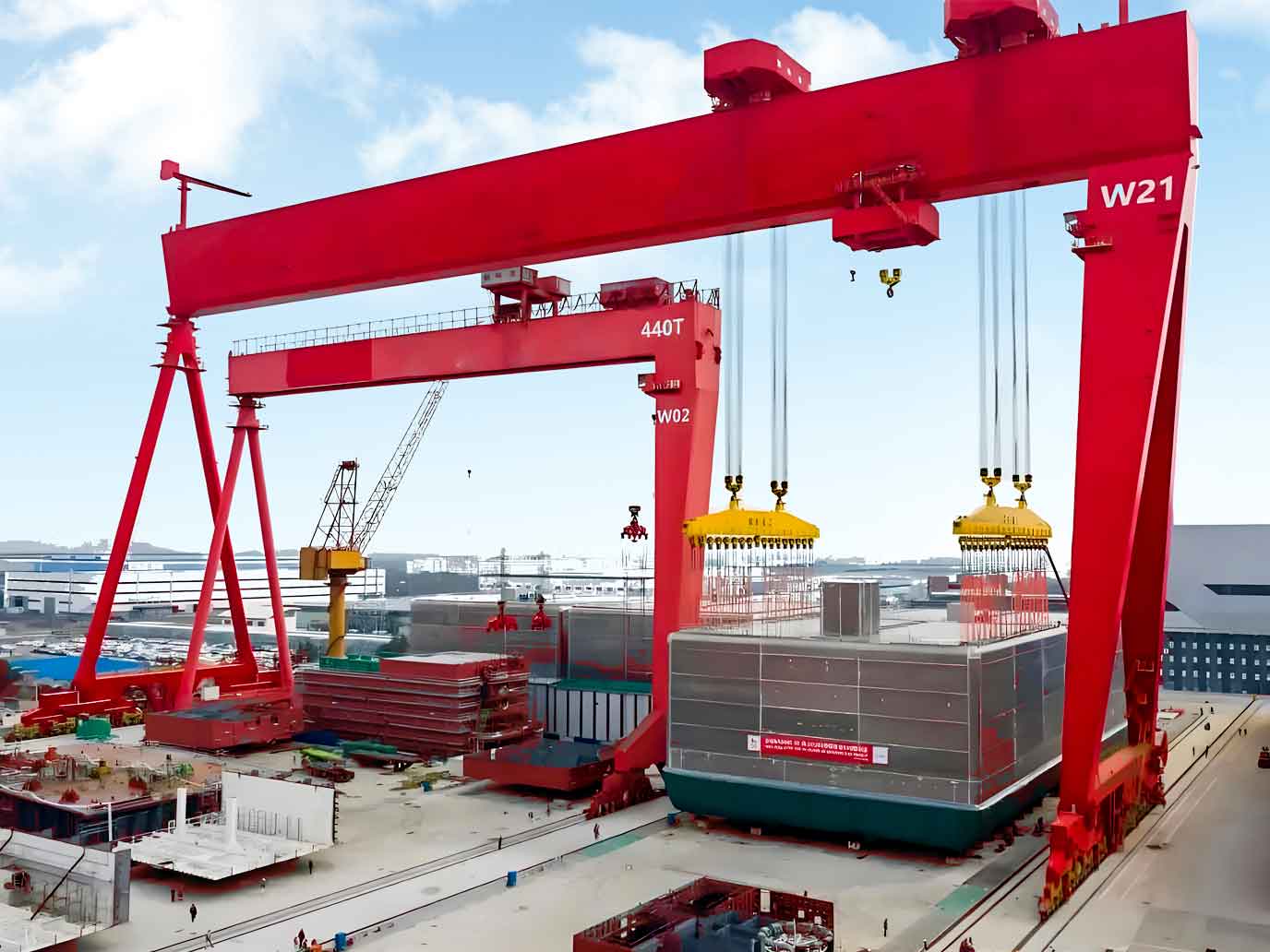
A Schiffbau-Portalkran is a heavy-duty lifting system designed for shipyards to transport and assemble large ship blocks, steel structures, and marine components during vessel construction and repair operations. These cranes form the backbone of modern ship assembly, enabling the block-building method that defines how today’s vessels are constructed — from the initial fabrication of prefabricated hull sections through final outfitting and launch.
Effective shipyard crane systems deliver four core capabilities: high lifting capacity matched to the heaviest blocks in a yard’s construction program, large-span coverage that eliminates repositioning delays, precise load positioning for accurate structural alignment, and reliable operation under demanding marine working cycles.
Hull construction is the primary application driving shipbuilding crane specifications. Large hull block lifting — with individual block weights ranging from 100 tons in smaller commercial yards to over 600 tons in large tanker and container ship facilities — defines the capacity requirements for the crane system. Precise positioning during block joining reduces rework, shortens assembly time, and contributes directly to on-schedule delivery. Cranes designed for hull construction must handle rated loads at the extremes of their working envelope, not just at center span.
Offshore oil and gas platforms, floating production units, and offshore wind energy foundations are fabricated using processes similar to shipbuilding. Large structural modules must be assembled from prefabricated sections, requiring heavy-duty gantry crane systems with lifting capacities and spans comparable to those found in shipyards. Offshore fabrication yards often require cranes rated at 300 to 1,000 tons to handle the modules involved in major offshore construction projects. Marine wind energy growth has increased demand for gantry crane systems at fabrication facilities producing monopile foundations, transition pieces, and jacket structures.
Drydocks and floating docks used for vessel repair require dedicated crane coverage. Engine overhauls, propeller replacement, hull section renewal, and superstructure modifications all involve heavy lifting in constrained environments. Ship repair cranes must be designed for the specific geometry of the repair facility, including drydock width, vessel positioning, and access requirements. Reliable availability is critical in repair facility operation, where crane downtime directly affects docking schedules and customer commitments.
Manufacturers producing large marine components — propulsion systems, deck machinery, winches, anchoring equipment, and structural steel assemblies — require heavy lifting equipment scaled to their product sizes. Gantry cranes serving manufacturing facilities handle both work-in-process positioning during fabrication and final product movement for outbound delivery. Manufacturing facility cranes typically operate at higher duty cycles than assembly cranes, increasing the importance of robust mechanical and electrical design.
Different yard configurations, production programs, and lifting requirements lead to different crane type selections. The main crane types used in shipbuilding are compared below.
Die Double girder gantry cranes uses two parallel main beams to carry the hoisting trolley. This design provides higher rigidity than single-girder alternatives at equivalent spans, better accommodates heavy loads without excessive deflection, and allows the hoisting mechanism to be positioned between the girders — increasing hook height relative to overall crane height. Double girder gantry cranes are the standard configuration for high-capacity shipbuilding applications, with designs available from approximately 50 tons to over 600 tons rated capacity.
Suitable for large shipyards requiring sustained heavy-duty lifting, double girder cranes offer the structural rigidity needed for long spans across wide ship assembly areas. Custom span configurations, lifting heights, and traveling lengths allow the design to be adapted to the specific geometry of individual yards.
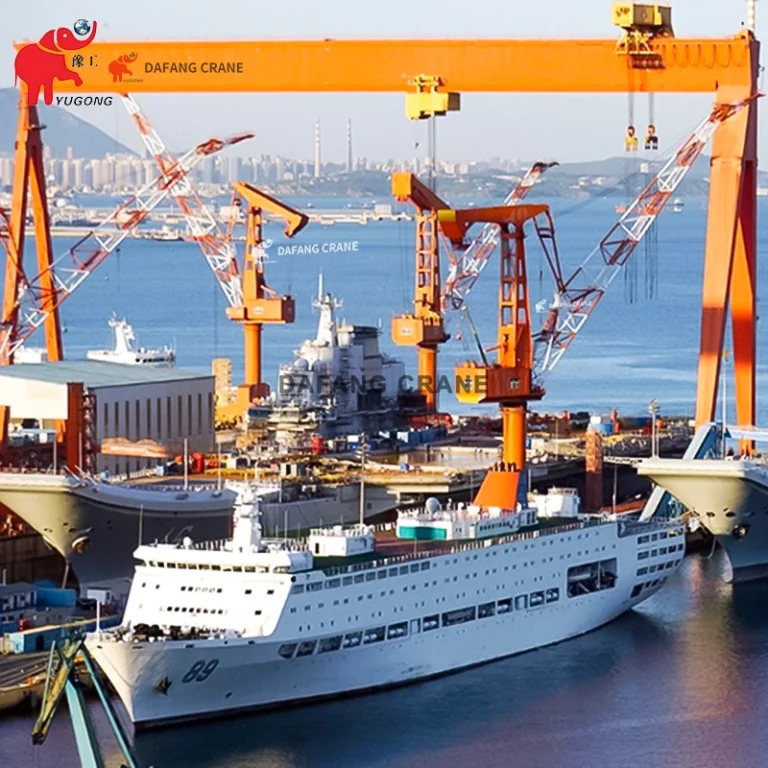
Die Goliath crane designation is applied to very large shipbuilding gantry cranes covering extensive yard areas with very high lifting capacity. Goliath cranes may span 100 meters or more and carry lifting capacities from 500 to over 1,000 tons, enabling them to handle large ship sections or, in some configurations, lift vessels directly. These cranes are installed at major naval shipyards and large commercial yards building the largest vessel classes, where block sizes exceed the capacity limits of standard heavy-duty gantry crane designs.
Goliath cranes provide extremely wide working coverage, reducing the number of crane positions required to cover the assembly area and enabling large blocks to be assembled in a single lifting zone. The engineering requirements for Goliath cranes are specialized, requiring detailed structural analysis, custom foundation design, and extensive integration work between crane and yard layout.
Rubber tyred gantry (RTG) cranes eliminate fixed rail infrastructure in favor of pneumatic tires, allowing flexible repositioning across open yard areas. In shipbuilding applications, RTG cranes are suitable for outdoor block staging areas, temporary material storage, and facilities where fixed rail installation is impractical. Their primary advantage is layout flexibility; their limitations include lower maximum capacity compared to rail-mounted systems and reduced positioning precision. RTG cranes in shipbuilding are typically used for material handling and logistics roles rather than precision block assembly operations.
Evaluating shipbuilding crane specifications requires understanding which technical parameters most directly affect performance in shipyard applications.
Crane capacity must be matched to the heaviest blocks in the construction program, with appropriate margin for future vessel size growth. Typical shipbuilding crane capacity ranges:
Capacity ratings must be interpreted with reference to the applicable lifting standard, the duty classification, and the crane's working envelope — capacity at extreme trolley positions may differ from capacity at mid-span.
Span is the distance between the crane's two rail tracks, determining the width of the working area the crane can cover. Shipbuilding applications typically require spans from 50 to 150 meters, depending on the width of the vessel being constructed and the layout of the assembly area. Wide span design requires careful attention to main girder stiffness and deflection control, as excessive deflection under load affects positioning accuracy and can create fatigue loading in the structure over time.
Shipyard cranes operate more intensively than cranes in many other industrial settings. Duty classification systems — including FEM (European Federation of Materials Handling) and ISO standards — define the combination of load spectrum and operating cycles that a crane is designed to handle over its service life. Shipbuilding applications typically require cranes designed to FEM duty class A6 or A7 (heavy to very heavy duty), ensuring the structure, mechanical components, and electrical systems are rated for sustained intensive use rather than occasional heavy lifts.
Modern shipbuilding gantry cranes use variable frequency drive (VFD) systems for all major motions, providing smooth acceleration and deceleration, adjustable speed ranges, and regenerative braking capability. Anti-sway control systems reduce load pendulum motion during transport, improving safety and reducing load settling time at the assembly position. Fine-positioning modes allow millimeter-level load placement control during block joining operations. Remote control and pendant control options provide operators with flexible positioning relative to the work being performed.
All structural steel requires appropriate surface preparation and anti-corrosion coating systems designed for marine environment service. Electrical enclosures, control panels, and motors must be rated for the humidity, salt, and contamination levels present at coastal shipyard locations. Wind load design must account for the full wind exposure of large-span structures at coastal sites, with storm tie-down systems provided to secure the crane when not in operation. Structural design should incorporate corrosion allowances in critical load-bearing members for extended service life.
Dafangkran provides customized shipbuilding gantry crane solutions designed for shipyards, offshore fabrication facilities, and marine construction projects worldwide. With engineering resources focused on heavy-duty gantry crane design and a manufacturing base capable of producing large-scale crane structures, Dafang supports shipbuilding customers from initial requirements definition through crane commissioning and long-term operation.
Dafang's manufacturing capability encompasses large-scale structural steel fabrication for crane main girders, supporting leg structures, and end trucks, along with integration of heavy-duty mechanical and electrical systems. Manufacturing processes are controlled to maintain dimensional accuracy in structures that must meet tight assembly tolerances when installed in the field. Load-carrying structural components are produced from steel grades appropriate to the design requirements, processed with qualified welding procedures and subject to documented non-destructive examination.
Shipyards have specific requirements that standard catalog products cannot fully address. Dafang provides engineering customization covering lifting capacity, crane span, lifting height, working envelope geometry, rail gauge, travel speed, control system specification, and environmental protection level. Customization is developed through a structured engineering process, with design documentation provided for customer review before manufacturing commences. This process ensures that the delivered crane matches the shipyard's production requirements, not a nearest-available standard product.
Crane quality is verified through a systematic inspection and testing program. Structural inspection covers dimensional verification and weld quality examination at key stages during fabrication. Mechanical systems are inspected for correct assembly and component specification compliance. Electrical systems are tested functionally before delivery, with documentation of test results provided. Load testing demonstrates actual crane performance at rated capacity and confirms that safety systems operate correctly under load. Test records are retained as part of the crane's quality documentation package.
Dafang shipbuilding crane solutions have been applied in shipyards, offshore fabrication facilities, and marine manufacturing operations across international markets. Application experience covers commercial shipbuilding, naval construction support facilities, offshore platform fabrication, and marine equipment manufacturing. This application diversity provides engineering insight into the varied requirements of marine industry customers that supports more accurate specification and design development for new projects.
Contact Dafang Crane engineers to discuss your shipyard lifting requirements. Our team provides technical consultation, capacity recommendations, and customized shipbuilding gantry crane solutions for new construction facilities and crane modernization projects worldwide.
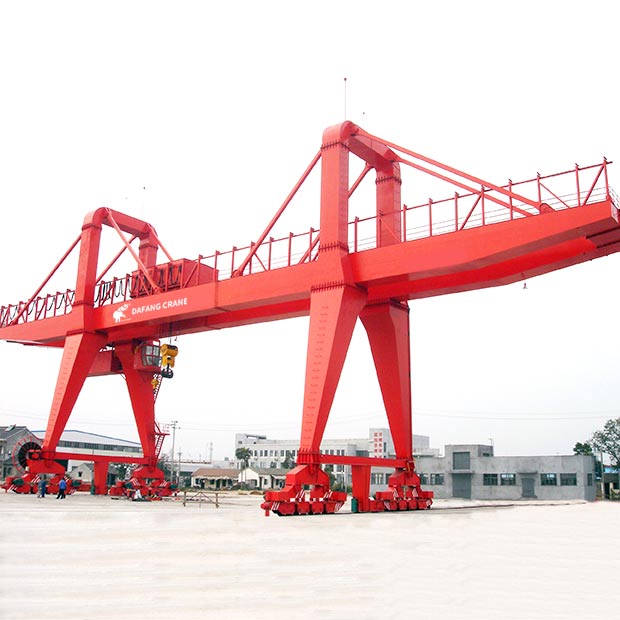
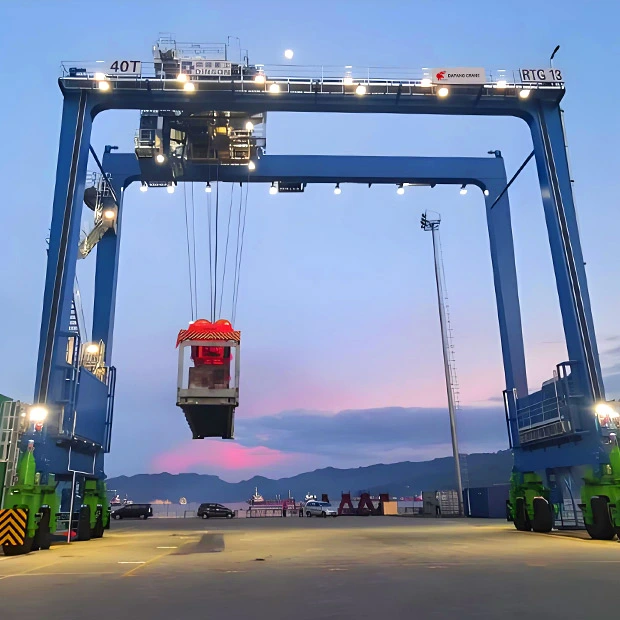
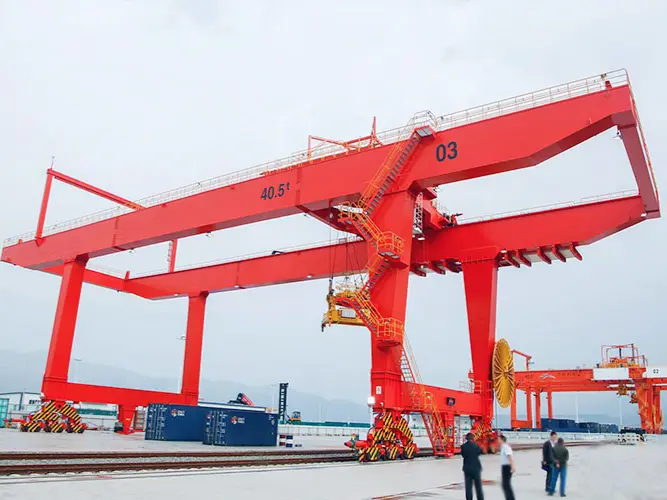
Port cargo handling refers to the processes and equipment used to load, unload, transfer, store, and manage cargo in marine terminals.
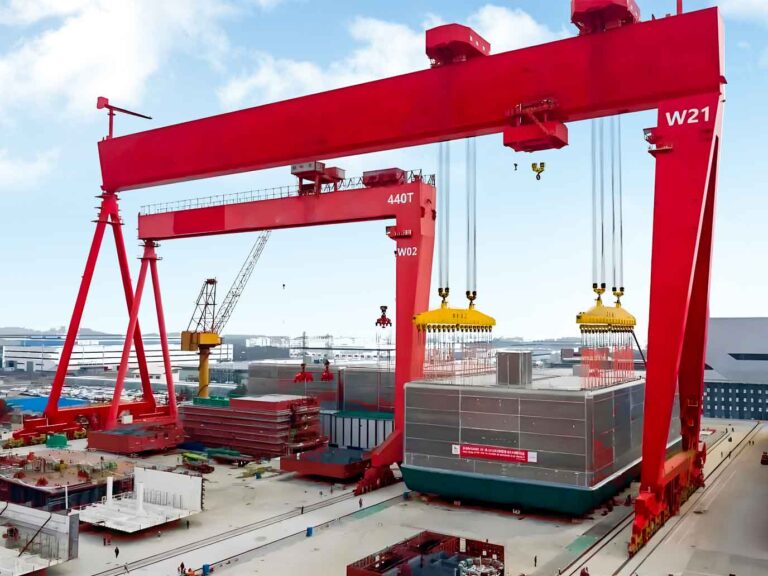
A Shipbuilding Gantry Crane is a heavy-duty lifting system designed for shipyards to transport and assemble large ship blocks.