
Produtos
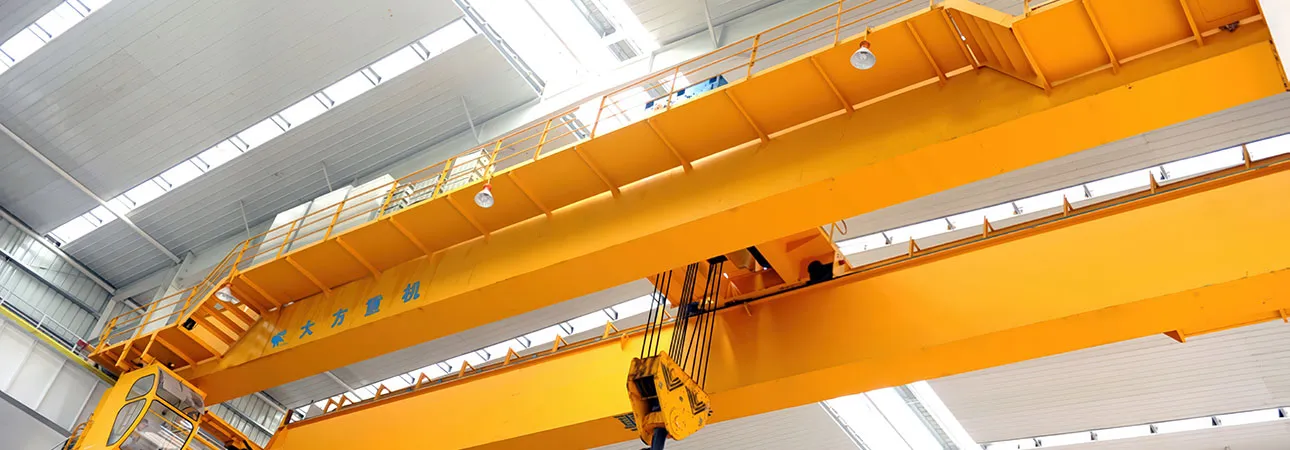
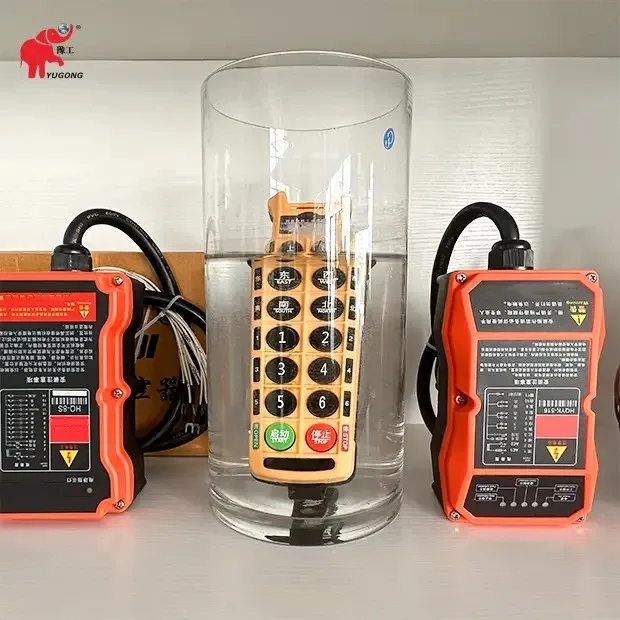

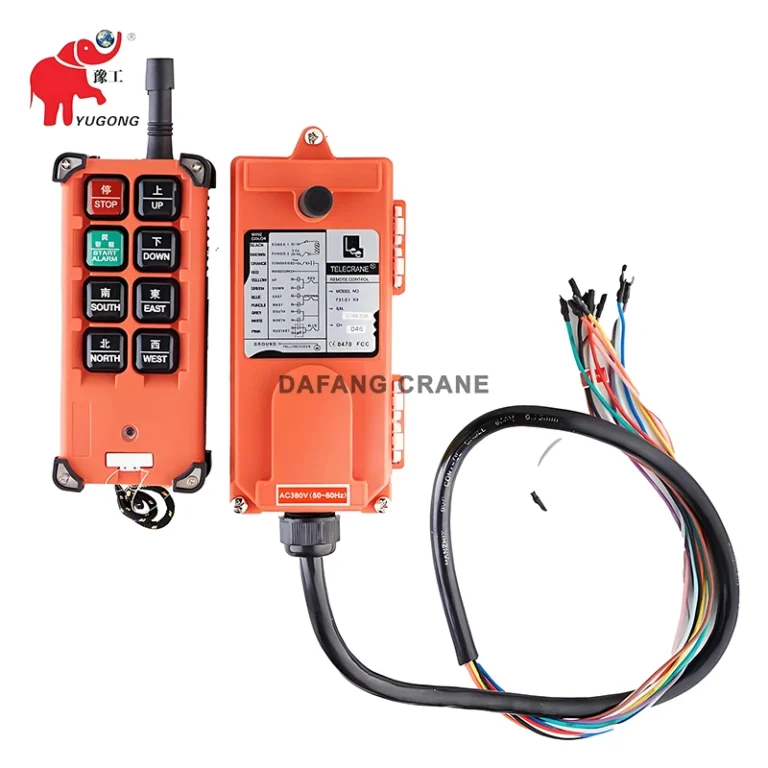
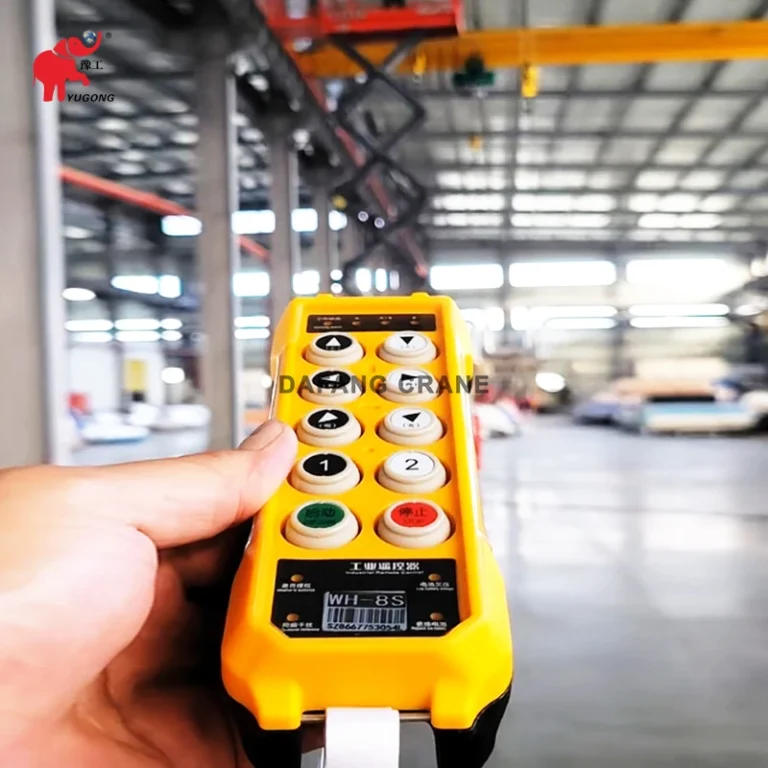
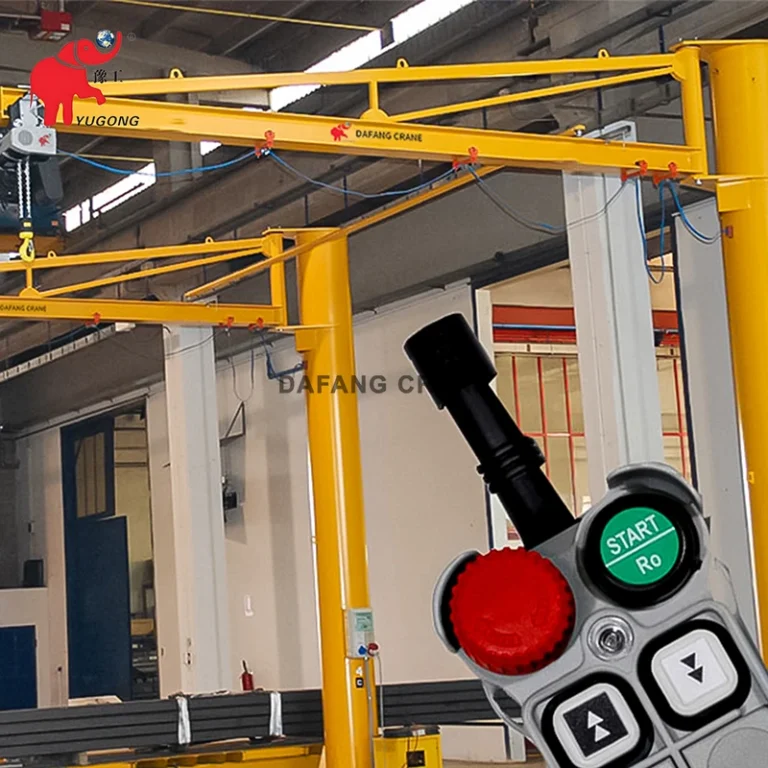
Dafang's crane wireless control system replaces pendant cables with 433/915 MHz FHSS radio, operating up to 100 m range at IP67 protection. It suits for pontes rolantes, gruas de pórtico, guinchos eléctricos, e lift platforms, across manufacturing, steel, and logistics sectors. CE-certified under Machinery Directive 2006/42/EC and rated ISO 13849 PL-d for functional safety.
A crane remote control system uses wireless signals to operate a crane from a distance, replacing traditional cab control systems or wired buttons. It enables precise control over crane operations, like starting, stopping, lifting, boom extension and retraction, slewing, and travel. Therefore, this remote control system enhances operator safety and improves loading and unloading efficiency.
The remote control replaces the physical pendant cables between operators and cranes with a radio frequency link. In this way, operators can move freely to the safest vantage point during lifting without losing control. The Dafang control system features 433 MHz or 915 MHz Frequency Hopping Spread Spectrum (FHSS) transmission. This technology is the same interference-resistant architecture specified in industrial automation standards. Therefore, FHSS provides reliable, latency-free command signals with an effective range of up to 100 meters in typical factory or yard environments.
Unlike fixed-cable control systems, it forces operators to stay within the load’s cable reach at all times. And the wireless system decouples the operator’s position from load location. In hazardous areas, this separation is the most effective way to reduce exposure to falling loads, heat radiation, and pinch points risks. Furthermore, if interference is detected, FHSS radio automatically switches across 50+ channels. This way can maintain command integrity without operator intervention.
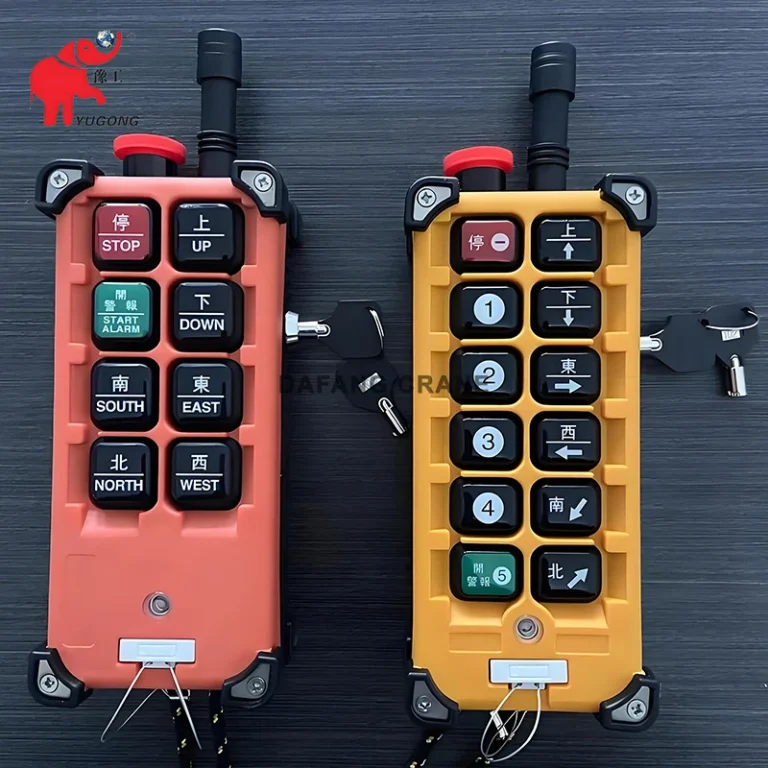
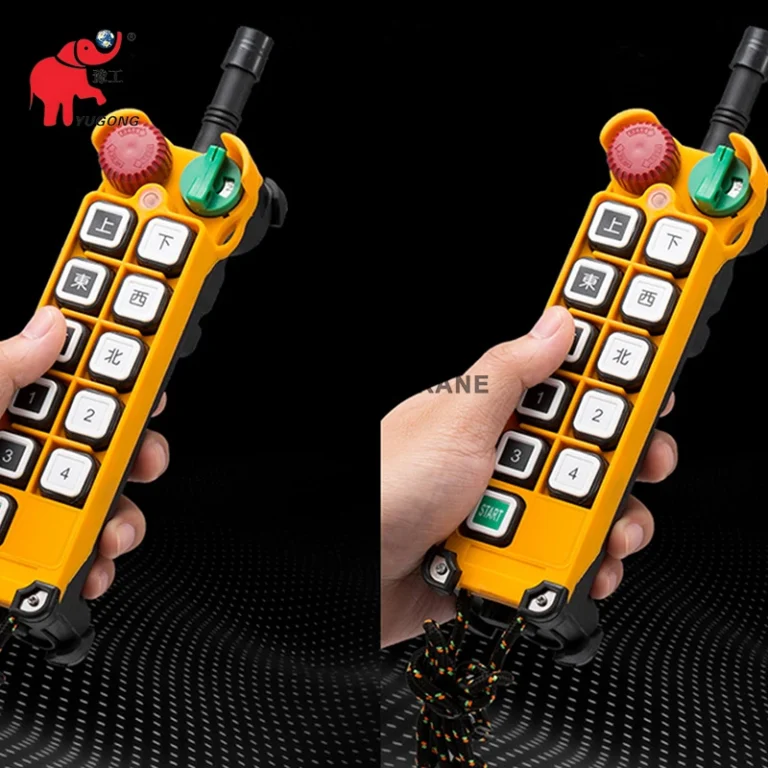
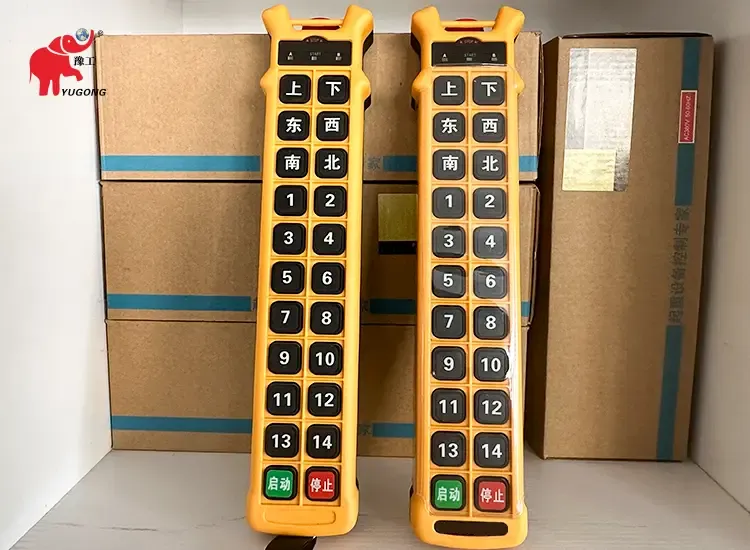
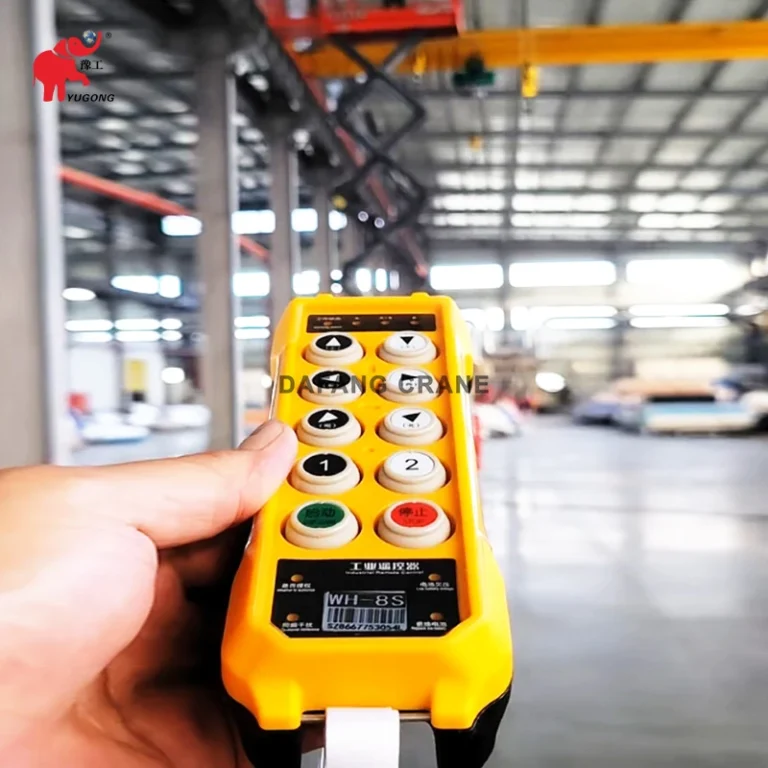
Dafang supplies two transmitter configurations to match different crane operations and operator skill levels:
Remote control system with push-buttons features a simple layout, with each button corresponding to the crane hoisting, crane moving left, trolley moving right. The push-button type suits standard overhead crane, gantry crane, and hoist operations where the motion set is fixed: hoist up/down, bridge left/right, trolley in/out, and emergency stop. Single-speed and two-speed button layouts cover most A3–A6 duty cycle applications. The housing conforms to IP67 (IEC 60529), and rubber over-mould bumpers protect the unit against drops, which is a relevant consideration in steel and fabrication environments.
Suitable for routine lifting operations with a fixed sequence of commands, such as transporting raw materials to designated locations within a workshop. Small lifting equipment: electric hoists, small single-girder overhead cranes, and lifting platforms.
Long service life: Transmitters typically use dry cell batteries or high-capacity lithium batteries, enabling them to operate for up to 10–15 hours. High reliability: Buttons have a low failure rate, signal transmission circuits are simple, and they offer strong resistance to noise interference.
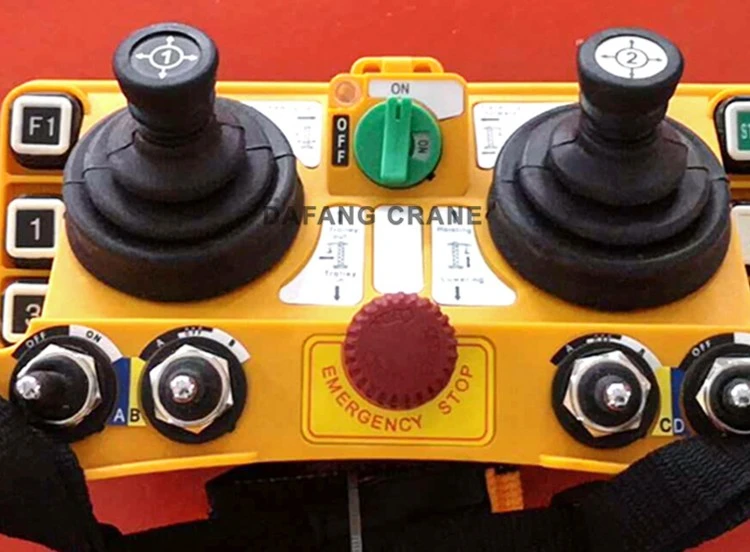
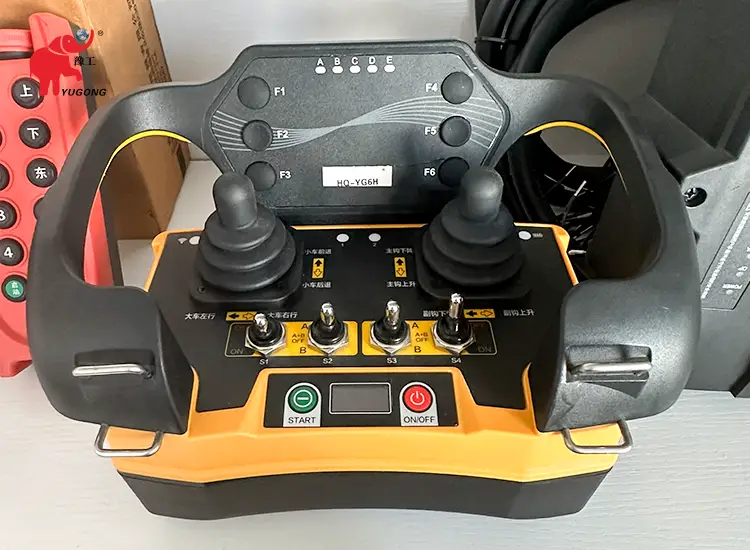
This industrial wireless joystick controller provides proportional speed control across all motion axes, which matters when positioning heavy or fragile loads within tight tolerances. The joystick control system features a multi-axis joystick design that enables continuous control of crane movements by moving the joystick forward, backward, left, and right. Speed ramps smoothly from zero to maximum in proportion to joystick deflection angle, thus reducing dynamic shock on the structure and slings. It allows for precise adjustment of movement speed and direction, thus making it ideal for applications requiring precise positioning.
This type is standard for ladle overhead cranes (metallurgy), precision assembly cranes (aerospace, automotive), and any application where load placement accuracy is below 20 mm. It is for lifting equipment with complex movements that require high precision and control efficiency. Heavy-duty lifting equipment: double-girder bridge cranes, port container cranes, and shipyard gantry cranes.
Precise Control: The joystick supports stepless speed control, allowing for fine-tuning of movements. High Efficiency: Supports multiple joysticks to synchronize multiple actions.
Explosion-proof remote controls undergo special treatment in both design and materials. The control handle housing is made of high-strength explosion-proof alloy, with the internal circuitry equipped with explosion-proof devices and other protective measures.
In chemical industry, for cranes for transporting materials within chemical industrial parks, and cranes for hoisting storage tanks. In energy industry, for oilfield cranes and specialized cranes for petrol stations. In mining industry, for underground coal mine cranes.
Excellent explosion-proof performance: Complies with explosion-proof standards such as Exd IIBT4 and Exd IICT6, suitable for various explosive environments. Strong environmental adaptability: The housing offers high levels of water and dust resistance, thus enabling to operate reliably in hazardous environments featuring high humidity and heavy dust.
the safety relay drops on transmitter out-of-range, dead battery, signal loss, or emergency stop activation; the crane halts within one control cycle regardless of motion state.
the radio hops across 50+ channels automatically; no manual frequency setting needed even in environments with multiple wireless systems operating simultaneously.
fully dust-tight and immersion-protected to 1 m depth per IEC 60529; suitable for outdoor yards, wash-down areas, and dusty casting or mining environments.
with over 16-hour runtime, a full shift with margin; low-battery visual and audible alert triggers at 20% remaining charge.
compliant for use in the EU, UK, and markets recognising CE marking, including automotive and aerospace supply chains.
mounts to the existing crane control panel; no rewiring of drives or safety circuits required for most standard EOT cranes.
The crane wireless control system applies wherever pendant control creates a safety or efficiency constraint. The following covers the majority of industrial crane applications:
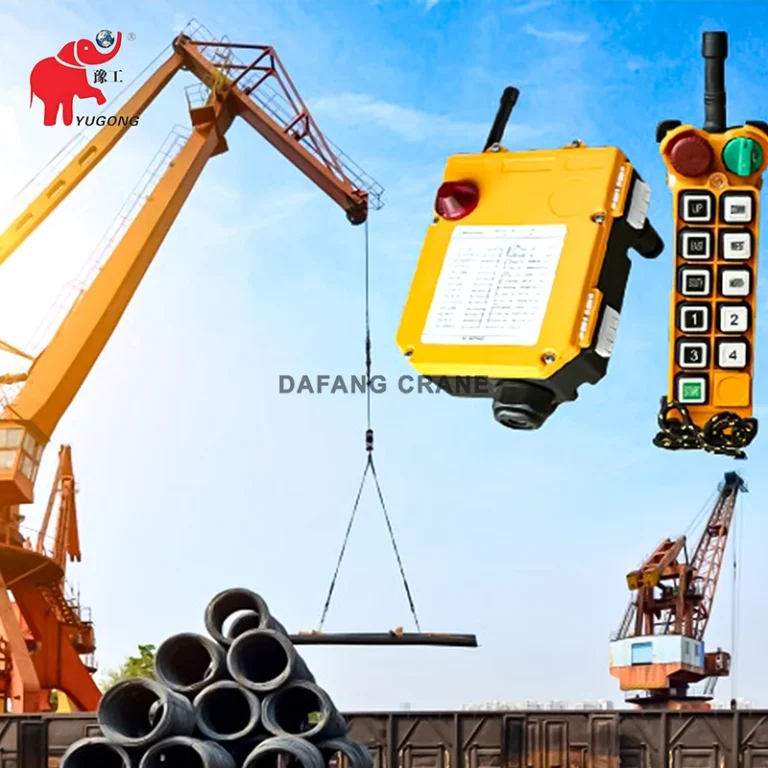
Indicative scenario: A steel fabrication workshop retrofitting wireless control to an existing 20-ton double-girder overhead crane (typical scenario, not a verified customer case). The receiver unit mounts to the crane's existing MCC panel in half a day; no drive system modification is required. Operators gain full 100 m freedom across the bay, eliminating the trailing cable that previously required weekly inspection for cuts and kinks.
| Parâmetro | Especificação | Reference Standard |
|---|---|---|
| Frequency Band | 433 MHz / 915 MHz FHSS (Frequency-Hopping Spread Spectrum) | FCC / CE RED Directive 2014/53/EU |
| Control Range | Up to 100 m (line of sight, standard); 50 m typical industrial | — |
| Transmitter Housing | IP67 rated, ABS/PC with rubber over-mould bumpers | IEC 60529 |
| Receiver Housing | IP67 rated, aluminium alloy enclosure | IEC 60529 |
| Bateria | Li-ion 3.7V / 2,600 mAh rechargeable; >16 h continuous use | — |
| Safety Function | Emergency stop (hardware), out-of-range auto-stop, low-battery warning | ISO 13849 PL-d |
| Control Channels | Up to 12 functions (push-button); proportional joystick available | — |
| Temperatura de Operação | -35°C to +80°C | IEC 60068-2 |
| Anti-interference | FHSS with 50+ channels; frequency agility auto-switch | — |
| Tandem Control | 1 transmitter controls 2 cranes independently or in tandem | FEM 1.001 §9 |
| Certificação | CE / ISO 9001:2015 / ISO 13849 PL-d | 2006/42/EC |
Joystick models, ATEX explosion-proof configurations, and custom channel mapping are available on request. Power supply: 100–240V AC charger included.
The comparison table below captures the operational differences that procurement and HSE teams typically weigh when justifying the transition from pendant to wireless:
| Dimensão | Pendant (Cable) Control | Wireless Control System |
|---|---|---|
| Operator mobility | Restricted — must follow cable path | Full freedom within 100 m radius |
| Line of sight | Often obstructed by load | Operator chooses safest vantage point |
| Trip hazard | Cable on floor — fall risk | No trailing cable on floor |
| Response to hazard | Must step clear before stopping | Emergency stop from any position |
| Cable wear cost | Regular replacement — wear, kinking | Nil — no physical cable to wear |
| Retrofit complexity | — | Receiver mounts to existing crane; no rewiring of drive |
| Multi-crane tandem | Not possible from one pendant | 1 transmitter, 2 cranes in sync |
| Safety rating | No formal classification | ISO 13849 PL-d |
Green column reflects Dafang wireless control system standard specification. Pendant data represents typical industrial pendant systems for comparison.
Line-of-sight range reaches 100 m. In a typical steel workshop with overhead steelwork and reflective surfaces, practical range is 50–70 m. FHSS anti-interference technology maintains signal integrity even when multiple wireless systems operate in the same area.
PL-d (Performance Level d, ISO 13849) means the safety function — emergency stop and out-of-range halt — meets a probability of dangerous failure per hour of less than 10⁻⁷. This rating matches the safety level required for Category 3 crane control circuits under EN 13849 and satisfies most industrial HSE audits.
Yes. The receiver connects to the existing crane MCC panel at the contactor level. No drive system rewiring is required for most standard EOT cranes. Dafang provides wiring diagrams matched to the customer's existing control schematic before shipment.
A joystick transmitter with proportional hoist control suits ladle cranes, because smooth speed ramp-up prevents molten metal spillage during acceleration. The joystick model also supports high-temperature environments; the IP67 housing protects against ambient heat and splatter.
Yes. Dafang ATEX-certified transmitter and receiver units are available for chemical plants. They are classified to ExdII Group IIB for use in Zone 1/Zone 2 hazardous areas. Documentation includes the ATEX Directive 2014/34/EU certificate and IECEx test report. Specify the gas group and zone classification when requesting a quote.
Henan Dafang Crane designs and manufactures crane control accessories over 20 years. The wireless control system ships as a factory-fitted option on all new crane orders or as a standalone retrofit kit for existing equipment.
Contact the Dafang technical team for channel configuration, ATEX specification, or a wiring compatibility review for your current crane installation.
A Dafang fornece pontes rolantes, pórticos, gruas, guindastes eléctricos e peças sobressalentes para gruas de alta qualidade, etc. Pode preencher o formulário abaixo, e nós entraremos em contacto consigo o mais rapidamente possível
Stella