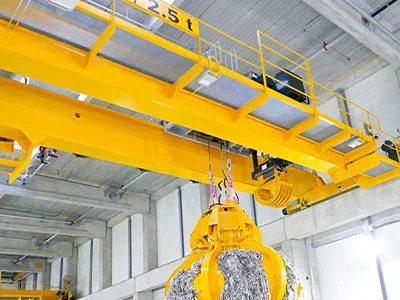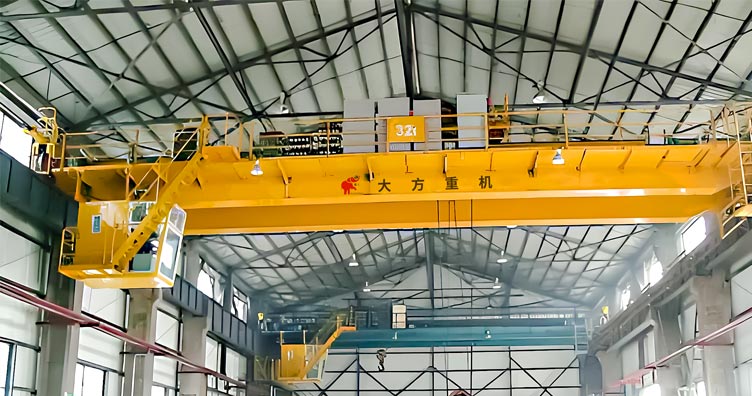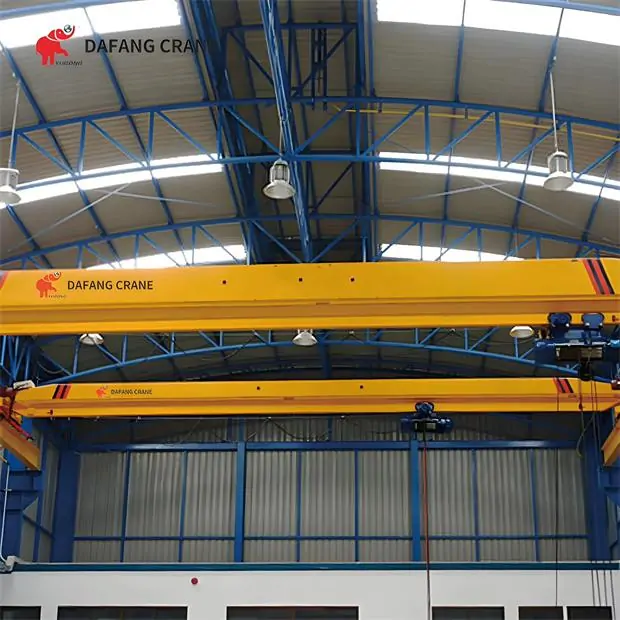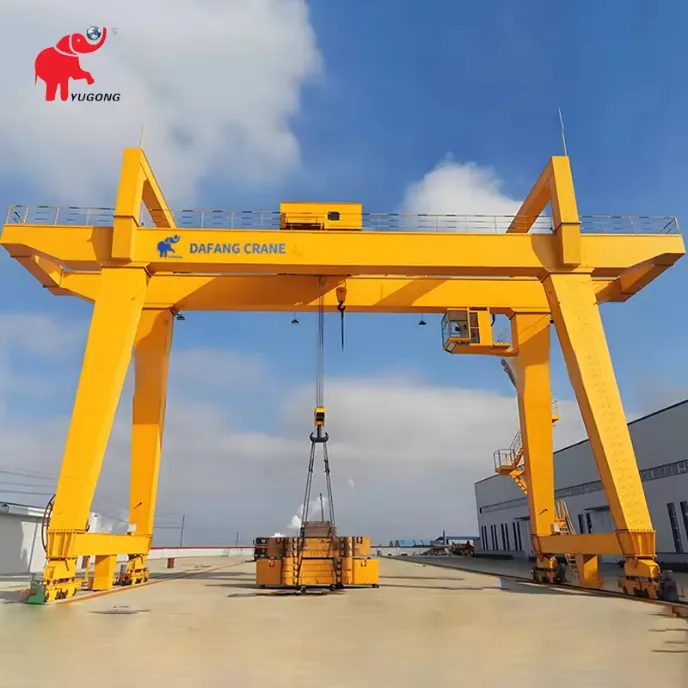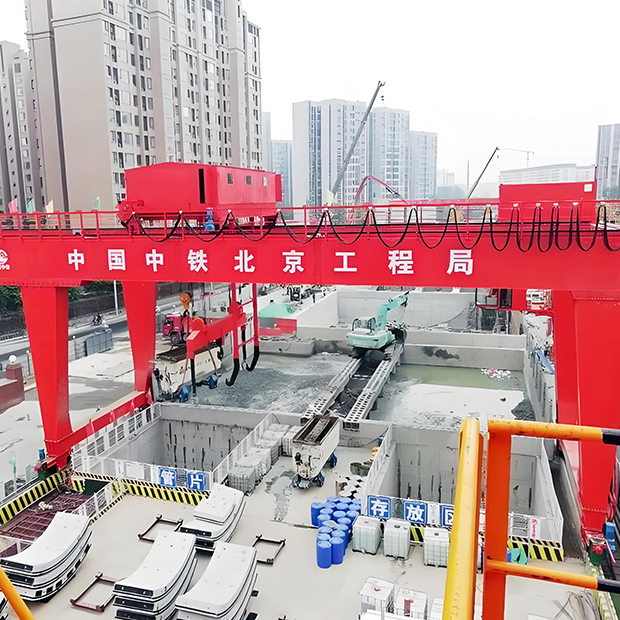







A single girder gantry crane — also called a single beam gantry crane — is a self-supporting ground-rail lifting system built from one main horizontal beam mounted on two inverted-U legs running on floor-level rails. Standard configurations cover lifting capacities from 1 to 32 tons and spans from 7.5 to 50 m, and can operate indoors or outdoors without relying on a building's structural steel. Indicative FOB factory prices from Chinese manufacturers run from roughly $4,500 for a compact 3-ton unit to $45,000 and above for a 32-ton cabin-controlled configuration — with span length and certification scope being the two largest price drivers between those points.
If you are already at the stage of comparing configurations or requesting quotes, the practical questions tend to be the same: MH box type or MH truss type? L-type for a space-constrained or semi-gantry layout? What working class is correct for your shift pattern? Which certifications ship with the crane, and what does the pre-order checklist look like?
This guide covers those questions in order — key specifications explained, Dafang model comparison, application scenarios, pricing, certifications, and a pre-order checklist — so you can walk into a supplier conversation with a confirmed specification rather than a rough idea.
Índice
Quick Specification Reference
| Parâmetro | MH Type (Box Girder) | MH Truss Type | L-Type |
|---|---|---|---|
| Capacidade de elevação | 1–32 t | 3–32 t | Customized for light-medium duty |
| Span | 7.5–30 m | 12–50 m | Up to ~25 m |
| Içar | CD1/MD1 electric hoist | CD1/MD1 electric hoist | CD/MD hoist or electric trolley |
| Classe operária | A4 | A4 | A3–A4 |
| Ideal For | Workshops, warehouses, general yards | Large outdoor yards, long spans, windy sites | Space-constrained facilities, semi-gantry layouts |
| Certificação | CE / ISO | CE / ISO | CE / ISO |
| Garantia | 3–5 years | 3–5 years | 3–5 years |
Not sure which model fits your site?
Obter um orçamento gratuito

Key Specifications Explained — What Each Number Controls
Capacity, Span, and Lifting Height
Rated capacity is the maximum single-lift load in tonnes — not the crane's self-weight, and not a theoretical breaking load. Choose a capacity that covers your heaviest regular lift with a margin: ISO 4301-1 requires a design factor of at least 1.25 over the rated load, and most workshops find that daily working loads sit at 60–70% of rated capacity. Sizing far above actual loads is not conservative — it changes the fatigue load spectrum and can actually reduce service life if the crane was designed and classified for a different duty pattern.
Span is the centerline distance between the two ground rails. It determines the width of working area the hoist can reach. For Dafang's MH box type, standard spans run 7.5 to 30 m; beyond 30 m, one leg is designed as a flexible leg to absorb minor rail gauge variation and reduce stress concentrations during travel. On the MH truss type, the lighter structure allows economical spans up to 50 m. Lifting height on a single girder crane is constrained by the hoist body: the electric hoist hangs below the girder bottom flange, so usable hook height equals the girder top height minus the hoist body depth. If your process requires maximum hook height inside a low-headroom building, confirm the hoist's minimum head-to-hook dimension in the technical specification — not just the crane's overall height.
Working Class and Duty Cycle
FEM / ISO 4301-1 working class A4 — the standard class for Dafang's MH series — suits regular production use across one or two shifts: assembly line transfers, workshop material handling, moderate-frequency warehousing. A3 covers lighter duty such as maintenance bays, storage yards with infrequent lifts, or occasional construction site use. If your crane will run continuously across three shifts or average more than 15–20 lifts per hour near rated capacity, request a written working class assessment before ordering. Running an A4 crane under A5 conditions accelerates structural fatigue and shortens the frame's service life well below design expectations.
Speed Parameters and Hoist Configuration
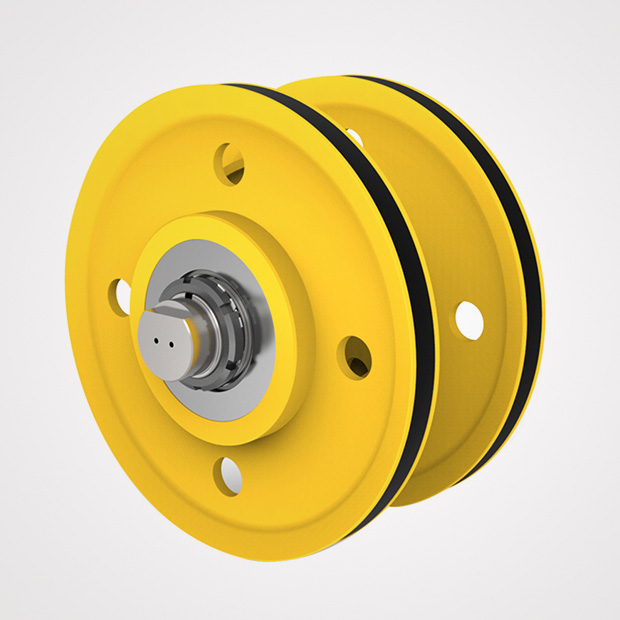
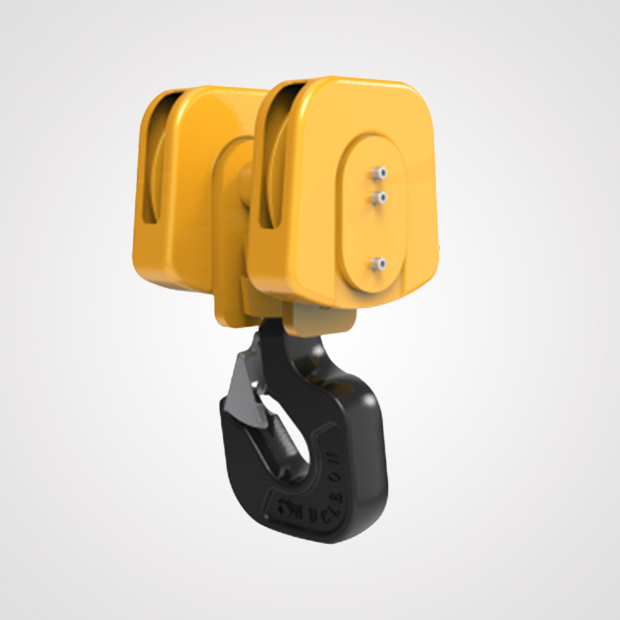
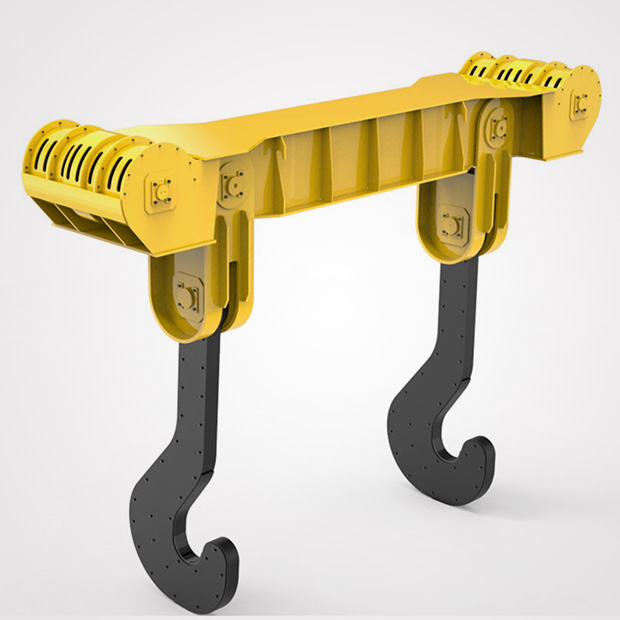
Dafang's MH series runs a dual-speed CD1/MD1 electric wire rope hoist: 0.8 m/min for fine positioning and 8 m/min for general transfer. The slow speed is used for precision placement — threading loads onto fixtures, landing mold sets onto tight clearances, or any application where positioning accuracy matters. Long-travel and cross-travel speeds are typically 20/30 m/min, covering most production and yard transfer cycles efficiently without excessive end-of-travel energy. Both ground pendant control and remote control are standard options; cabin control is available for high-span or high-duty configurations where the operator needs a fixed position with master switches.
Three Dafang Single Girder Models: Which One Fits Your Operation
This is where most generic guides stop being useful. All three Dafang models are single girder gantry cranes — the structural differences between them determine which one works for your specific facility and load pattern.


MH Type (Box Girder) — The Standard Workhorse for Workshops and Yards
O Pórtico de viga única tipo MH uses a solid-web, closed box-section main beam fabricated from Q235B/Q345B structural steel. The closed box profile provides high torsional rigidity, maintains deflection within standard limits at spans up to 30 m, and performs reliably in both indoor workshops and covered outdoor yards. Capacity from 1 to 32 tons at standard spans makes it the broadest-coverage model in Dafang's single girder line.
Choose the MH box type for production workshops, logistics warehouses, port terminal loading areas, and general outdoor storage yards with spans up to 28–30 m and regular A4 duty cycles. The sealed box construction also protects internal welds from the kind of surface corrosion that affects open-profile structures in humid or coastal environments — a practical consideration that rarely appears in brochures but matters significantly over a 10–15 year service life.
MH Truss Type — Long Spans, Open Yards, and Wind-Exposed Sites
O Pórtico rolante de treliça simples MH replaces the solid box beam with a triangular truss structure assembled from angle steel and channel steel members connected via shaft pairs. The truss design reduces main beam self-weight by approximately 30% compared to an equivalent solid-web box beam. That weight reduction serves two practical purposes: it makes economical spans from 12 to 50 m possible — spans where a box beam would be prohibitively heavy and expensive — and the open truss profile significantly improves wind resistance because wind load passes through the structure rather than acting on a solid face.
Choose the MH truss type for large outdoor yards, open construction sites, mine facilities, and any application requiring spans above 30 m. The modular shaft-pair connections also simplify disassembly and transport between project sites — a genuine advantage for contractors who relocate equipment when a job is complete. The tradeoff relative to the box type is the higher number of weld points in the truss structure, which requires more frequent weld inspection as part of routine maintenance.
L-Type — Space-Constrained Facilities and Semi-Gantry Layouts
O L-Type Single Girder Gantry Crane uses an L-shaped main beam cross-section with one rigid leg connected directly to the girder and one side designed to operate in close proximity to a wall or existing column. This reduces the lateral footprint that rail tracks require on one side of the facility — making the L-type the practical solution when a standard full-gantry layout would require relocating existing equipment, storage, or structural elements to make room.
Choose the L-type for limited-height or limited-width workshops, facilities where one wall must remain accessible for other operations, automobile manufacturing and light industrial assembly environments where compact design directly reduces aisle width requirements, and any semi-gantry layout where the crane's outer leg must clear a tight margin. The L-type supports light to medium material handling tasks with customized span and lifting height to match the site constraints — confirm the exact configuration with a Dafang engineer based on your floor plan.
Single Girder vs. Double Girder: Knowing When to Upgrade
Single girder configurations cover the majority of industrial lifting tasks below 32 tons, but three specific conditions make a double girder crane the correct specification. First, when hook height is critical: on a single girder crane, the electric hoist hangs below the bottom flange, consuming 400–600 mm of available hook height depending on hoist model. A double girder crane places the trolley between two beams, recovering that headroom. In a facility with a fixed roof clearance, this difference can determine whether the highest storage level is reachable at all. Second, when duty cycle exceeds A4: Dafang's single girder line is designed and certified to A4; applications running three continuous shifts near rated capacity consistently belong in an A5 or A6 classification, which requires a double girder structural design. Third, when capacity exceeds 32 tons on a regular basis: single girder structures can be engineered to higher capacities, but the structural economics typically favor a double girder configuration above 32 tons for any repetitive use scenario.
For everything else — A3 and A4 duty cycles at or below 32 tons, spans where single girder is structurally appropriate, and facilities where installation simplicity and lower capital cost are priorities — single girder is the correct choice. It is not a budget compromise; it is the right tool for the majority of industrial material handling applications.
Ready to confirm the model and get a quote for your project? The Dafang engineering team will evaluate your requirements—such as lifting capacity, span, headroom, and duty class—and provide a written proposal within one business day.
Obter um orçamento gratuitoTypical Application Scenarios
Manufacturing and Workshop Production Lines
In factory workshops, single girder gantry cranes handle raw material inbound, work-in-process transfer between machining or assembly stations, and finished goods outbound. The practical advantage over an overhead crane in this setting is structural independence: a gantry crane travels on its own ground rails, so adding lifting capacity to an existing workshop does not require a civil engineering project to reinforce the roof structure or add runway beams to building columns. A4 duty class covers most two-shift production environments, and the dual-speed hoist allows precision placement at assembly stations without slowing the overall transfer cycle.
Outdoor Yards, Construction Sites, and Precast Operations
Steel yards, precast concrete plants, and civil construction projects benefit from the crane's combination of load capacity and relocatability. The MH truss variant is particularly suited to these environments: lighter self-weight makes it easier to transport between job sites, the open truss handles outdoor wind loading effectively, and its modular assembly allows field disassembly and re-erection as the work front advances on a bridge or infrastructure project. For precast yards handling concrete panels, structural steel bundles, or large formwork sets, the 3–32 ton capacity range covers essentially all standard production volumes.
Warehousing and Port Terminals
Storage yards for steel coil, heavy fabricated assemblies, timber, and project cargo use single girder gantry cranes because outdoor ground rails are significantly cheaper to install than overhead crane runway structures. Dafang's MH series supports loading and unloading at small to medium port terminals and inland waterway facilities where cargo volumes do not justify a container crane or fixed quay crane. Lower capital cost and faster installation also make them practical for temporary project-site docks and seasonal operations.
Pricing, Lead Times, and What Moves Your Quote
Indicative Price Ranges (FOB Factory, China)
The following ranges are compiled from current market data and are provided as planning references only — not as quotation commitments. Final pricing depends on confirmed span, lifting height, hoist model, control mode, paint specification, and certification scope.
| Configuração | Indicative Range (USD, FOB factory) |
|---|---|
| 3 t, 10–15 m span, pendant control | $4,500 – $8,000 |
| 5 t, 12–18 m span, pendant / remote | $6,500 – $13,000 |
| 10 t, 16–20 m span, remote control | $9,000 – $19,000 |
| 16 t, 20–28 m span, remote / cabin | $15,000 – $30,000 |
| 20–32 t, 25–30 m span, cabin control | $23,000 – $48,000+ |
MH truss configurations at longer spans (35–50 m) will generally fall above the upper end of the equivalent capacity row, reflecting additional structural engineering and material for the extended span.
Five Factors That Move the Final Number
Span length is the largest single variable after capacity. Every additional metre of span increases girder weight, rail length, and structural complexity — doubling the span from 15 m to 30 m can add 40–60% to the crane's ex-works price at the same capacity. Classe operária changes the structural design: an A4 unit costs more than an A3 at identical capacity and span because fatigue life requirements drive heavier sections and higher-grade steel. Modo de controlo adds cost progressively — pendant is baseline, wireless remote adds a transmitter/receiver system and certified interlock, operator cabin adds the enclosed station with full electrical infrastructure. Certification scope adds both cost and lead time: CE marking under 2006/42/EC requires third-party conformity assessment; specifying BV, SGS, or TÜV inspection adds to this. Paint specification is frequently underestimated — a standard shop primer for dry indoor use and a multi-coat epoxy/polyurethane system for coastal outdoor installation can differ by 8–12% of the total crane cost.
Certificações e Conformidade
Which Certificates Your Market Requires
For shipments to European Union member states, CE marking under Machinery Directive 2006/42/EC is mandatory — the supplier must provide a Declaration of Conformity and a technical file compiled to the directive's requirements, plus Low Voltage Directive compliance for the electrical systems. For the United States and Canada, ASME B30.2 (Overhead and Gantry Cranes) and CMAA Specification 70 set the design and manufacturing baseline; OSHA 1910.179 governs on-site operation. For projects destined for Gulf states, Australia, or CIS countries, confirm the applicable local statutory standard before placing the order — GSO, AS 1418, and EAC each have their own inspection and documentation requirements. ISO 9001 quality management certification for the manufacturing facility is a broadly applicable baseline that any serious supplier should carry regardless of destination.
How to Verify Before You Pay
Three verifiable steps before releasing payment: request the EC Declaration of Conformity with the issuing body's details and confirm the body's accreditation is current; ask for the overload test report showing a 125% of rated capacity static test conducted before shipment; and request the ISO 9001 certificate with the certificate number and scope of certification visible. Do not accept a general statement that the crane "meets CE requirements" — a specific Declaration of Conformity referencing the applicable directive and harmonized standards is verifiable; a verbal assurance is not. Dafang holds CE and ISO certification as standard; for projects requiring additional third-party inspection (BV, SGS, TÜV), specify this in the purchase agreement before manufacturing begins.
Pre-Order Checklist: Eight Items to Confirm in Writing
Before finalizing a purchase order for a single girder gantry crane, confirm the following with your supplier in the technical agreement:
- Rail gauge and rail section — confirm the crane's wheel base matches your planned or existing track gauge, and that the specified rail section (e.g., QU70, P43) is compatible with your ground beam load capacity.
- Alimentação eléctrica — verify voltage (380 V / 415 V / 480 V), frequency (50 Hz / 60 Hz), and number of phases at your site. Non-standard voltages require additional electrical components and add cost and lead time.
- Working class with load spectrum — provide your estimated daily lift count and average load as a percentage of rated capacity. Do not simply write "A4" without confirming the underlying load spectrum; working class is determined by both utilization frequency and load ratio under ISO 4301-1.
- Available headroom — measure from floor to the lowest obstruction (roof trusses, HVAC runs, lighting fixtures) above the entire crane travel path. Confirm the crane's total height including the hoist's minimum dead-end dimension fits within that clearance with safe margin.
- Outdoor wind loading — for outdoor cranes, confirm the design wind speed for your location and whether wind-proof rail clamps with a travel interlock and an anemometer are included in the scope of supply, not treated as optional extras.
- Certification requirements — specify which certificates the crane must ship with, referenced by standard number (CE 2006/42/EC, ASME B30.2, ISO 9001, EAC, etc.). Specify any required third-party inspection body by name.
- Paint and corrosion specification — describe your operating environment (dry indoor, humid outdoor, coastal/saline, chemical-adjacent) and require the coating system in writing: primer type, topcoat type, and minimum dry-film thickness per layer.
- Spare parts and after-sales — confirm the availability and expected lead time for key wear items (wire rope, limit switch, control contactors, wheel sets) and the supplier's technical support response protocol for your region.
Confirm Your Specification and Get Your Price
Send your checklist parameters to Dafang Crane. The engineering team reviews capacity, span, headroom, duty cycle, and destination market requirements and returns a written model recommendation and indicative price within one business day.

FAQ
Q1:What is the difference between the MH box type and the MH truss type single girder gantry crane?
The MH box type uses a closed solid-web beam — higher torsional rigidity, standard spans up to 30 m, and better corrosion resistance due to the sealed profile. The MH truss type uses an open triangular lattice structure that is approximately 30% lighter, supports spans from 12 to 50 m, and handles outdoor wind loading more effectively because wind passes through the open frame rather than acting on a solid face. Choose box for enclosed or standard-span applications; choose truss for large outdoor yards, windy sites, or where the crane will be relocated between project sites.
Q2:How much does a single girder gantry crane for sale from Dafang typically cost?
A 5-ton MH unit at a 12–18 m span generally falls in the $6,500–$13,000 range FOB factory; a 10-ton configuration at 16–20 m span typically runs $9,000–$19,000. Span length is the largest cost variable after capacity — a longer span at the same tonnage can increase the price significantly. Certification scope, control mode, and paint specification are the next largest drivers. These figures are indicative planning references; request a project-specific quotation with confirmed span, lifting height, and duty class for an accurate number.
Q3:Can a single girder gantry crane be used outdoors in all weather conditions?
Yes, with the correct specification. Outdoor cranes require weatherproofed (IP54 or higher) electrical enclosures, wind-proof rail clamps with a travel interlock, corrosion-resistant paint systems matched to the environment, and — for sites exposed to high winds — an anemometer interlock that triggers automatic shutdown above the design wind speed. The MH truss variant is particularly suited to large open outdoor yards due to its lighter self-weight and superior wind resistance from the open truss profile. Confirm these provisions are in the purchase specification, not listed as optional extras.
Q4:What certifications should I ask for when buying a single girder gantry crane from China?
For EU destinations: CE marking with a Declaration of Conformity under Machinery Directive 2006/42/EC, plus LVD compliance for electrical systems. For the US and Canada: ASME B30.2 compliance documentation and OSHA 1910.179 conformance records. For all markets: the manufacturer's ISO 9001 certificate with visible scope and number, the overload test report at 125% of rated capacity, and — if required — a third-party inspection certificate from BV, SGS, or TÜV. Specify these requirements in the purchase agreement before manufacturing begins; adding certification scope after production is more costly and less verifiable.
Q5:How long does installation take after the crane arrives at the site?
A straightforward indoor installation of a 5–10 ton single girder gantry crane on pre-laid rails typically takes 3–5 days for an experienced team. If rail track installation, foundation anchoring, and electrical connection are included in the scope, allow 1–2 additional weeks depending on site conditions and local labor availability. A static load test at 125% of rated capacity — per ISO 9927-1 — should be completed and documented before the crane enters production service. Dafang can connect buyers with installation support and local service partners in many export markets; confirm this at the quotation stage.