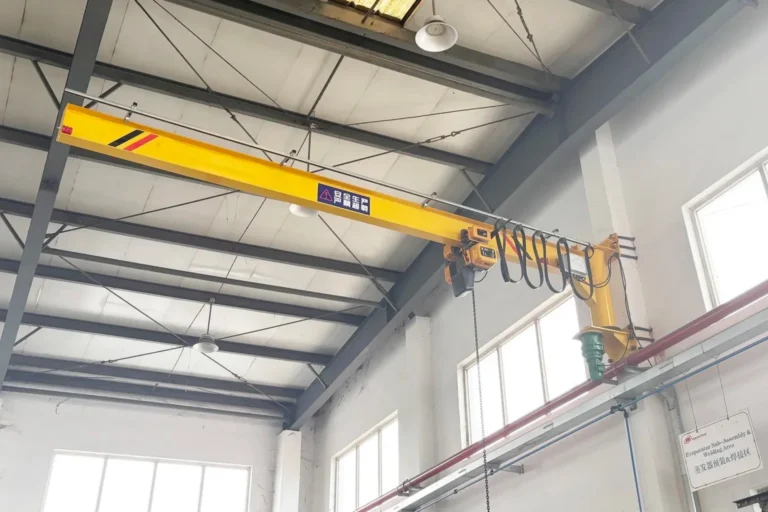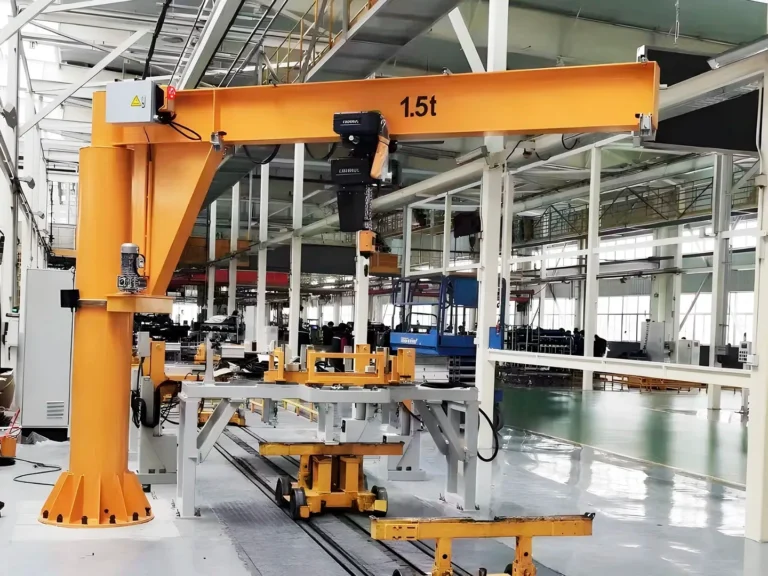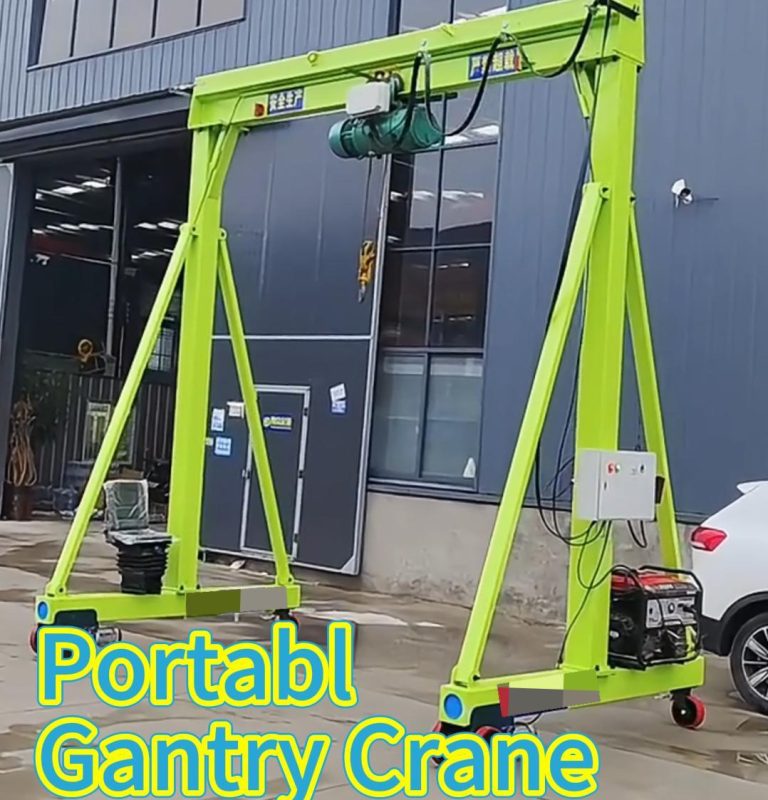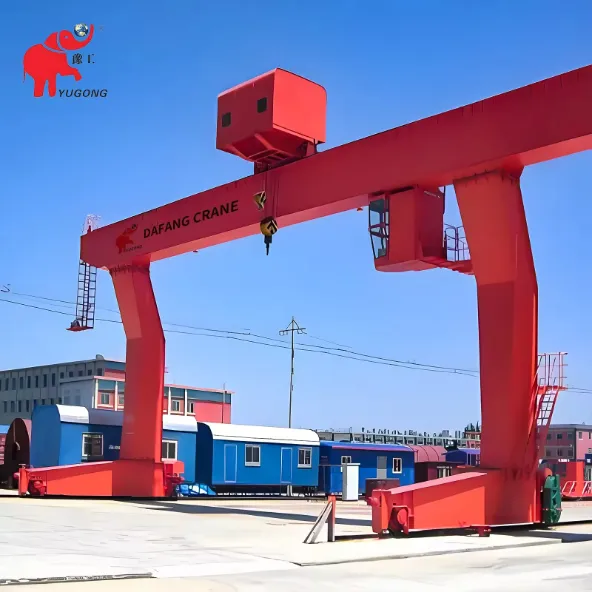







Modern manufacturing and warehouse environments demand flexibility that fixed infrastructure cannot provide. Businesses face increasing pressure to optimize space utilization, reduce installation costs, and adapt to changing production needs. This is where mobile gantry crane systems deliver transformative value.
A mobile gantry crane is a portable lifting system designed to move heavy loads without fixed runway structures, widely used in workshops, warehouses, maintenance areas, and industrial production lines. Unlike overhead cranes requiring permanent installation, mobile gantry cranes offer independence from structural modifications while maintaining significant lifting capacity and operational safety.
This comprehensive guide explains everything industrial decision-makers need to know about mobile gantry cranes—from fundamental principles and available types to practical selection criteria and supplier evaluation methods.
جدول المحتويات
What Is a Mobile Gantry Crane?
Definition and Core Purpose
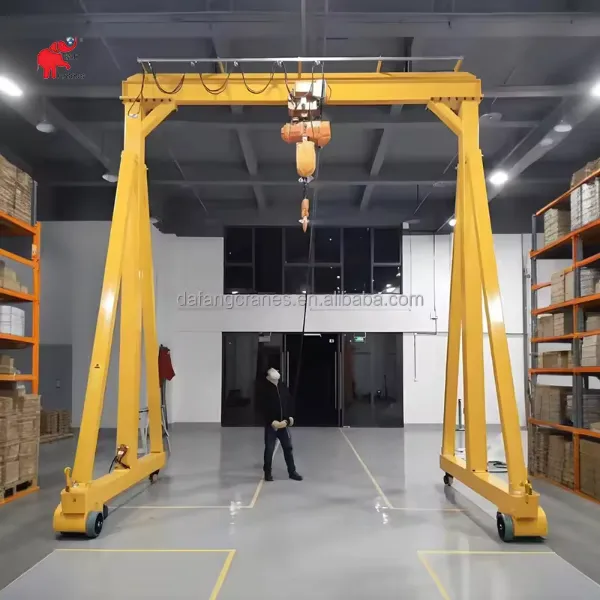
A mobile gantry crane represents a bridge between portable lifting equipment and permanent overhead systems. It combines the mobility advantages of smaller lifting devices with the capacity and precision of industrial hoisting technology. The system consists of a rectangular frame mounted on wheeled carriages, allowing full-site portability while maintaining structural integrity and load control.
The fundamental appeal of mobile gantry cranes stems from their independence from fixed structural support. Traditional overhead cranes demand extensive building modifications, reinforced roof trusses, and permanent runway installations—investments that often prove cost-prohibitive in existing facilities or temporary work environments. Mobile gantry cranes eliminate these barriers, deploying operational lifting capacity within hours rather than weeks.
احصل على عرض أسعار مجاني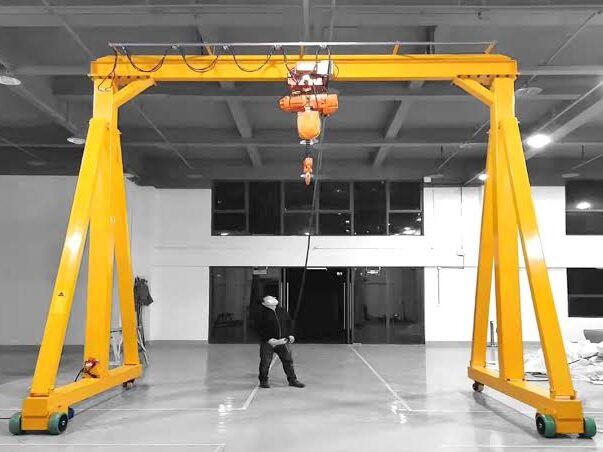
مبدأ العمل
Mobile gantry cranes operate on straightforward mechanical principles. The system comprises several integrated components working in coordination:
The load hooks to a motorized hoist suspended from the bridge beam. When activated, the hoist winch rotates, drawing wire rope around the drum and lifting the load vertically. The hoist mechanism includes mechanical brakes to hold suspended loads safely, even during extended positioning operations.
Horizontal load movement occurs through synchronized motion of the mobile base. Hand control pendants or wireless systems direct wheeled carriages to position the load laterally across the work area. The bridge beam traverses perpendicular to wheel movement, creating two-dimensional positioning capability. This combination enables precise load placement throughout the operational envelope.
The operator lowers loads through controlled hoist descent, guided by limit switches and load sensing systems. Modern mobile gantry cranes incorporate digital displays showing load weight, lift height, and positioning coordinates—critical data for safety compliance and operational optimization.
المكونات الأساسية
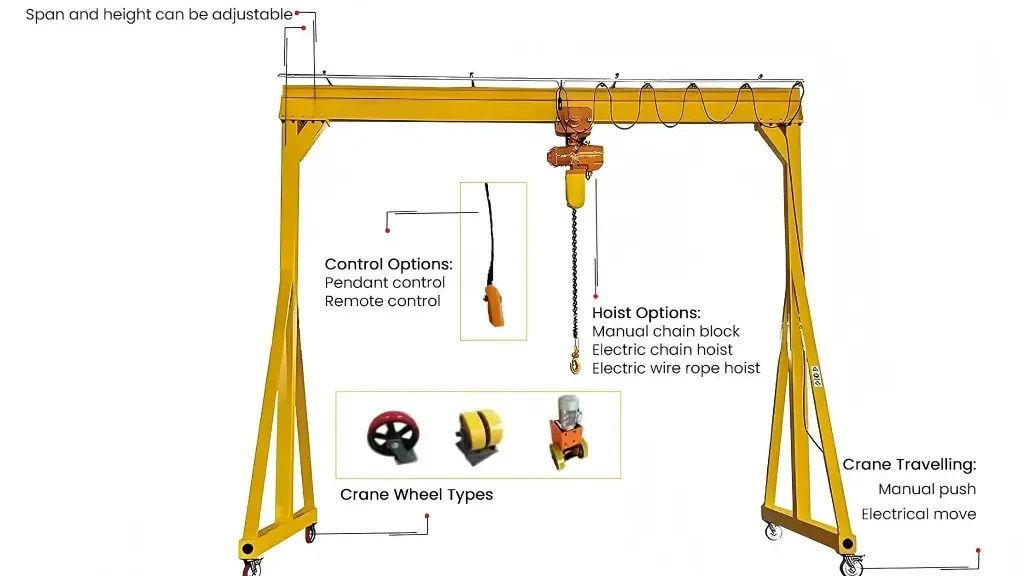
- Frame Structure: The horizontal main beam and vertical leg assemblies form a welded steel framework, engineered to distribute concentrated loads across the wheeled base without deflection or failure. High-carbon steel construction resists fatigue cracking during repetitive lifting cycles while maintaining dimensional stability across temperature variations common in industrial environments.
- Wheels and Mobility System: Pneumatic or polyurethane wheels mounted on independently rotating axles enable 360-degree movement. Wheel selection depends on application requirements—pneumatic wheels provide suspension for uneven surfaces, while polyurethane wheels offer smooth operation on finished warehouse floors. Manual push operation, battery-electric drive, or pneumatic propulsion options accommodate various mobility preferences and facility infrastructures.
- نظام الرفع: Motor-driven winches with sealed planetary gearboxes deliver mechanical advantage necessary for sustained lifting across the full capacity range. Brake systems holding loads under power loss employ spring-set, electrically-released mechanisms meeting industrial safety standards. Load cells or load pins integrated into the hoist assembly monitor suspended weight continuously, preventing capacity overload conditions.
- Beam Structure: The main beam combines rigidity with controlled deflection characteristics. Welded box-section construction provides torsional stiffness preventing twisting under eccentric loads. Some designs incorporate adjustable height trolleys, allowing hoist positioning across the beam width to optimize load handling around structural obstacles.
- نظام التحكم: Wired pendant controllers or wireless radio systems enable safe operator positioning for load visibility and directional guidance. Modern systems incorporate proportional speed control, allowing precise low-speed positioning during delicate load placements. Emergency stop functions provide immediate hoist and mobility shutdown capability independent of normal control circuits.
How a Mobile Gantry Crane Works
The Load Lifting Process
Operational sequences follow consistent patterns regardless of capacity or design variation. Understanding this process clarifies safety considerations and maintenance requirements.
- Initial Setup: The operator positions the mobile gantry crane directly above or adjacent to the load, ensuring adequate clearance between the load and vertical frame legs. Floor condition assessment precedes lifting—soft ground, deep ruts, or debris beneath wheels can shift weight distribution, creating tipping hazards. Outriggers or base widening options engage when available on higher-capacity models.
- Hook Attachment: The load attachment point must align vertically beneath the hoist hook to prevent swinging. The operator manually guides the hook descending from the bridge beam, ensuring proper orientation before load engagement. Four-point lifting bridles or adjustable spreader bars distribute weight across multiple attachment points, preventing load rotation and protecting load surfaces from contact damage.
- Hoist Activation: The operator activates the hoist control, driving the winch motor and rotating the drum. Wire rope winds onto the drum at controlled speed, progressively lifting the load. Initial motion occurs slowly, allowing the operator to verify load stability and attachment security. Once the load clears ground level and demonstrates stable hanging characteristics, the operator may increase speed.
- Load Elevation: As the load rises, the hoist continues winding rope until reaching the target elevation or limit switch activation. Load cells transmit real-time weight data to the control system, alerting the operator if load characteristics change unexpectedly—indicating potential attachment failure or load instability.
Horizontal Movement and Positioning
Load positioning requires coordinated control of bridge and wheel movements. The operator controls these systems through separate pendant controls or integrated joystick interfaces on modern equipment.
- Bridge Trolley Movement: The hoist trolley position adjusts along the bridge beam length, centering the load over the target area or providing offset positioning to place loads around structural obstacles. Motorized trolley drives enable automatic positioning, while manual chain hoists on budget models require operator physical exertion.
- Mobile Base Movement: Wheeled carriages move the entire frame assembly, transporting the suspended load across the facility. Operator control of wheel motors provides proportional speed adjustment, allowing high-speed positioning between work areas and low-speed precision placement during load settling.
Lowering and Placement
- Descent Control: Controlled hoist descent lowers loads to target surfaces or assembly points. Experienced operators adjust descent speed based on load height and positioning accuracy requirements—rapid descent from full height followed by meter-per-minute speeds during the final approach ensures both productivity and precision.
- Load Settling: As loads approach their resting surface, the operator reduces descent speed to minimal rates, allowing fine adjustments to horizontal position before load placement. Electronic limit switches, load cell data, and operator experience guide final positioning decisions.
- Load Release: Once the load contacts its resting surface and weight transfers to the supporting structure, the operator confirms load security before fully releasing the hoist tension. Partial weight maintenance—keeping the hoist slightly tensioned—provides load stability during precision assembly operations.
Types of Mobile Gantry Cranes
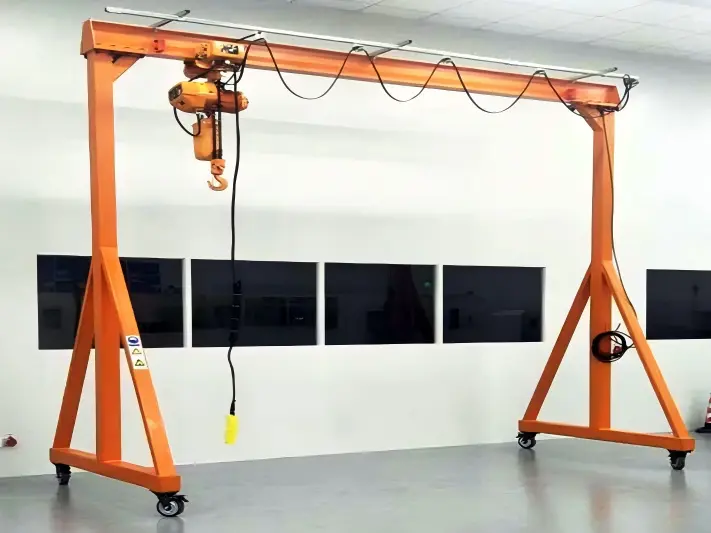
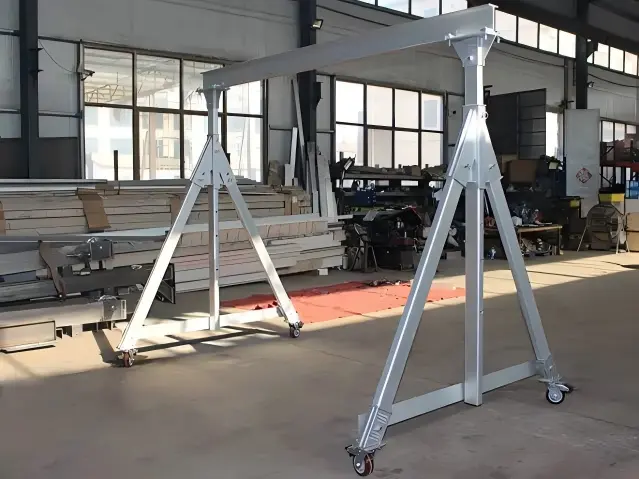
Adjustable Height Mobile Gantry Crane
Fixed Height Mobile Gantry Crane
Aluminum Portable Gantry Crane
Applications of Mobile Gantry Cranes
ورش عمل التصنيع
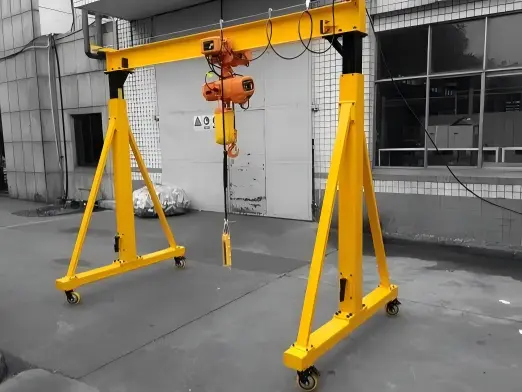
Production facilities utilize mobile gantry cranes throughout component assembly sequences. Engine block machining, transmission assembly, and chassis welding operations benefit from on-demand lifting capability positioned directly at work stations.
Mobile gantry cranes reduce inventory positioning requirements—components can stage closer to production lines rather than requiring central storage areas. This spatial efficiency translates to reduced material handling time and faster production cycle completion.
Quality control stations employ mobile gantry cranes for finished assembly lifting, positioning units for final inspection without requiring temporary floor jacks or manual lifting hazards.
Warehouses and Logistics Centers
Distribution centers operate under intense productivity pressure. Mobile gantry cranes enable rapid load positioning for carton consolidation, pallet staging, and shipment preparation without requiring overhead runway installations across vast facility spans.
High-rise storage operations utilize mobile gantry cranes for loading/unloading mezzanine levels where forklift access is impractical. The vertical lifting and horizontal positioning combination addresses three-dimensional material flow challenges.
Returns processing stations employ mobile gantry cranes for large equipment receiving and inspection, positioning items for damage assessment without requiring permanent installations in temporary processing areas.
Maintenance and Repair Stations
Heavy equipment maintenance facilities—automotive, agricultural, industrial machinery—depend on mobile gantry cranes for engine removal, component disassembly, and reassembly support. The mobility permits equipment positioning adjacent to work benches rather than requiring loads to travel to dedicated lifting stations.
Bearing puller operations, transmission rebuilding, and component replacement procedures utilize mobile gantry cranes for vertical load management while operators work horizontally at comfortable heights.
مواقع الإنشاءات
Temporary site installations require minimal infrastructure investment. Mobile gantry cranes positioned on job site work areas lift structural elements, mechanical systems, and finishing materials to elevation, eliminating transport distances and reducing material handling labor.
Small-scale commercial construction projects benefit from equipment rental flexibility—mobile gantry cranes deploy to specific construction phases rather than requiring permanent jobsite installations.
Equipment Installation Projects
Factory equipment installation, machinery relocation, and large device upgrades frequently employ mobile gantry cranes for positioning precision and operational flexibility. The equipment can reposition throughout multi-phase installation sequences.
Advantages of Mobile Gantry Cranes
High Mobility and Flexibility
The paramount advantage distinguishing mobile gantry cranes from fixed alternatives centers on positional flexibility. Equipment deploys to loads rather than requiring loads to travel to predetermined lifting stations, fundamentally restructuring facility workflows.
Production reorganization, seasonal demand fluctuations, and market adaptation strategies encounter minimal infrastructure constraints. Mobile gantry cranes adapt to evolving operational requirements without requiring building modifications or structural upgrades.
No Fixed Installation Required
Eliminating permanent runway installation, roof reinforcement, and structural engineering dramatically reduces project timelines and capital investment. Operational lifting capacity achieves deployment within hours of equipment arrival, compared to weeks or months for fixed system installation.
Existing facility modifications remain unnecessary. Old buildings, temporary structures, and economical facilities without ceiling reinforcement capacity become production-capable environments through mobile gantry crane deployment.
Cost-Effective Lifting Solution
Capital requirements for mobile gantry cranes remain substantially below fixed overhead crane systems, particularly when comparing installed system cost including building modifications, runway structural work, and installation labor.
Rental economics enable temporary or seasonal operations to access substantial lifting capacity without ownership investment. Equipment utilization rates across varied applications improve with mobile systems, justifying capital allocation more effectively than dedicated fixed installations.
Operational cost advantages emerge from simplified maintenance compared to elaborate fixed systems. Mobile gantry cranes require minimal routine maintenance and fewer specialized replacement parts compared to permanent installations requiring elaborate inspection protocols.
Easy Assembly and Relocation
User-friendly setup procedures enable deployment across facilities without requiring specialized installation contractors. Most portable gantry cranes assemble within minutes using provided hardware and straightforward procedures.
Relocation between facilities or production areas responds rapidly to evolving operational needs. Equipment transportability addresses temporary project requirements, seasonal workflow changes, and facility consolidation initiatives.
Suitable for Temporary Work Areas
Seasonal operations, temporary manufacturing contracts, and short-term equipment assembly benefit from mobile gantry crane flexibility. Capital investment justification for permanent installations disappears when operational duration remains limited—mobile systems provide economical alternatives.
Disaster recovery operations, emergency equipment repair, and crisis production capacity can deploy mobile gantry cranes with minimal lead time.
How to Choose the Right Mobile Gantry Crane
Define Load Requirements Systematically
Comprehensive load specification requires identifying not just maximum load weight, but load dimensions, center-of-gravity position, and attachment point limitations. Asymmetrical loads or unusual geometries demand specialized rigging arrangements.
Categorize anticipated loads by weight and frequency. Peak loads occurring rarely might justify temporary equipment rental, while regular operations justify ownership investment. Spreadsheet documentation of anticipated load characteristics supports equipment specification decisions.
Account for load combinations—simultaneous dual-load operations or loads approaching capacity simultaneously require consideration of duty cycle ratings versus single-load capacity ratings.
Evaluate Workspace Size and Constraints
Facility dimension measurements between walls, columns, and fixed equipment establish practical span limitations. Account for wheel size and under-vehicle clearance when assessing movement paths around production obstacles.
Ceiling height evaluation ensures adequate clearance between full-height extended loads and overhead sprinklers, electrical conduit, and structural members. Measure from floor to lowest overhead obstruction to establish maximum safe lifting height.
Traffic pattern analysis identifies areas where mobile gantry cranes need deployment frequency. High-traffic areas might benefit from higher-capacity permanent installations, while distributed load locations justify mobile flexibility.
Check Mobility Needs Realistically
Evaluate the frequency and distance of equipment repositioning between lift cycles. Equipment repositioning once per production shift likely justifies manual push mobility; equipment requiring repositioning multiple times daily justifies motorized drives.
Identify production area layout constraints affecting mobility. Steep ramps, confined passages, or outdoor surfaces might necessitate motorized systems with enhanced traction.
Consider operator preference and experience—experienced equipment operators develop proficiency with various control systems, while untrained operators benefit from intuitive control interfaces and proportional speed control systems.
Consider Frequency of Use
Daily production operations benefit from durable, well-maintained equipment with comprehensive service support. Occasional or seasonal operations might justify equipment rental rather than ownership.
Utilization projections should consider realistic operational duty. Equipment specified for continuous daily operation but used monthly represents capital inefficiency; conversely, undersized equipment limiting production throughput creates productivity losses exceeding equipment cost.
Equipment rental markets offer competitive alternatives for temporary or varying-capacity needs, eliminating storage, maintenance, and insurance costs associated with ownership.
Budget and Return on Investment
Capital budgeting should compare total installed cost including electrical work, floor preparation, and training against operational cost benefits including reduced material handling time and improved safety metrics.
Payback period analysis comparing equipment cost against productivity improvement provides financial justification for capital investment. Most industrial equipment investments demonstrate payback within 2-3 years when accurately accounting for labor savings and operational efficiency gains.
Financing options including equipment leases and rental-to-purchase arrangements provide capital flexibility for budget-constrained facilities.
Mobile Gantry Crane Supplier and Manufacturer Selection
Evaluate Engineering Capability
Successful manufacturers demonstrate proprietary structural design, customization capability, and engineering problem-solving experience. Evidence of engineering expertise includes original equipment design rather than imported designs with minor modifications.
Request structural analysis documentation—finite element analysis reports, stress calculations, and fatigue analysis supporting design claims. Legitimate manufacturers willingly provide technical justification for design decisions.
Consultation capability addressing application-specific requirements indicates depth of engineering resources. Manufacturers capable of adapting designs to unusual load configurations or facility constraints demonstrate problem-solving sophistication that simple equipment retailers cannot match.
Assess Manufacturing Experience
Longevity in the equipment market indicates proven reliability and sustained customer satisfaction. Manufacturers operating 10+ years demonstrate market viability and adequate capital for continuous improvement.
Production facility quality assessment—plant organization, quality control procedures, material handling practices—correlates with finished product quality. Factory visits or customer references provide insight into manufacturing discipline and attention to detail.
Production capacity and lead time capability should match operational urgency. Manufacturers with adequate production capacity deliver equipment within reasonable timeframes rather than imposing multi-month delays.
Verify Certification Standards
ISO 9001:2015 certification validates quality management systems throughout manufacturing. Third-party certification audits confirm documented procedures and compliance discipline.
Machinery Directive compliance (EU 2006/42/EC) ensures design conformity with European safety standards. CE marking on equipment demonstrates manufacturer assessment and compliance commitment.
FEM (Federation Européenne de la Manutention) guidelines provide engineering standards for lifting equipment design. Compliance with FEM 1.001 standards, for example, demonstrates structural design rigor across international specifications.
إمكانية التخصيص
Most industrial requirements exceed standard equipment capabilities. Manufacturers demonstrating customization experience—special height configurations, unusual hoist positions, specialized control systems—provide solutions addressing unique application requirements.
Engineering commitment to customization differs substantially between manufacturers. Genuine customization requires engineering analysis and design modification; superficial customization simply bolting aftermarket components onto standard equipment introduces reliability risks.
Lead time and cost implications of customization should be transparent. Straightforward modifications might add 4-6 weeks and 15-20% cost; extensive customization could require 12+ weeks and 50%+ cost increases.
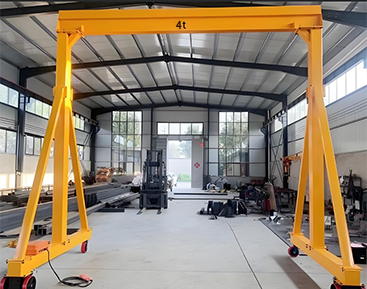
For example, a recently delivered 4 Ton Mobile Gantry Crane was engineered for heavy equipment installation and maintenance applications. The crane featured an adjustable span, portable steel frame, electric wire rope hoist, and lockable swivel casters, allowing flexible operation across multiple workstations while reducing installation time and labor requirements.
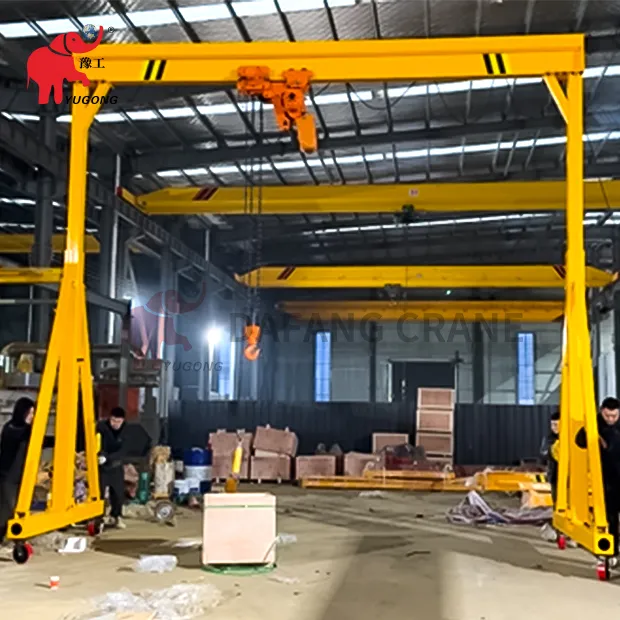
Another completed project involved a Mobile Gantry Crane designed for workshop material handling. The equipment provided a compact lifting solution for facilities where permanent overhead crane installation was impractical, helping improve lifting efficiency while minimizing infrastructure investment.
الخاتمة
Mobile gantry cranes deliver flexible, cost-effective lifting solutions for modern industrial environments. Unlike fixed overhead systems requiring extensive building modifications, mobile solutions deploy immediately while maintaining the safety and capacity standards your operations demand.
The key to successful implementation lies in three fundamentals: accurate load specification, facility evaluation, and supplier selection. Equipment from reputable manufacturers—those demonstrating ISO 9001:2015 certification, FEM standard compliance, and proven engineering expertise—ensures reliable performance throughout the equipment lifecycle.
Whether your facility requires automotive assembly support, equipment maintenance capability, or warehouse material handling flexibility, mobile gantry cranes adapt to your operational requirements without permanent infrastructure constraints.
Contact our industrial crane specialists for customized solution recommendations addressing your specific application requirements

الأسئلة الشائعة
What is a mobile gantry crane?
A mobile gantry crane is a portable lifting system featuring a rectangular steel frame mounted on wheeled carriages, equipped with an integrated hoist system for raising and lowering loads. Unlike fixed overhead cranes, mobile systems reposition to where loads reside, eliminating building infrastructure requirements and providing workspace flexibility.
What is a mobile gantry crane used for?
Mobile gantry cranes lift and position heavy loads in workshops, warehouses, maintenance facilities, and production areas. Applications include automotive assembly, equipment maintenance, machinery installation, load positioning during manufacturing processes, and material handling in distribution centers—anywhere requiring lifting capability without permanent infrastructure installations.
What is the difference between mobile and fixed gantry cranes?
Mobile gantry cranes deploy to varied locations with minimal installation requirement, remaining fully portable throughout their service life. Fixed gantry cranes mount permanently on ground-level rails requiring concrete pads and structural excavation. Mobile systems sacrifice maximum capacity and operational span for flexibility and cost-effectiveness; fixed systems optimize capacity and precision for dedicated applications.
Can mobile gantry cranes be used outdoors?
Standard mobile gantry cranes operate outdoors on level surfaces with appropriate floor preparation. Unprepared ground, deep ruts, or sloped surfaces create tipping hazards. Specialized outdoor designs with enhanced wheel systems and weather-sealed components better tolerate outdoor environments. Verify manufacturer specifications for intended environmental conditions.
How do you move a mobile gantry crane?
Manual push operation suits lighter equipment (under 3 metric tons). Operators position hands on designated handle points, pushing with body weight to overcome wheel rolling resistance. Motorized systems use proportional control pendant interfaces enabling precise speed and direction control. Wireless pendant controls allow operators clear load visibility from any facility location.